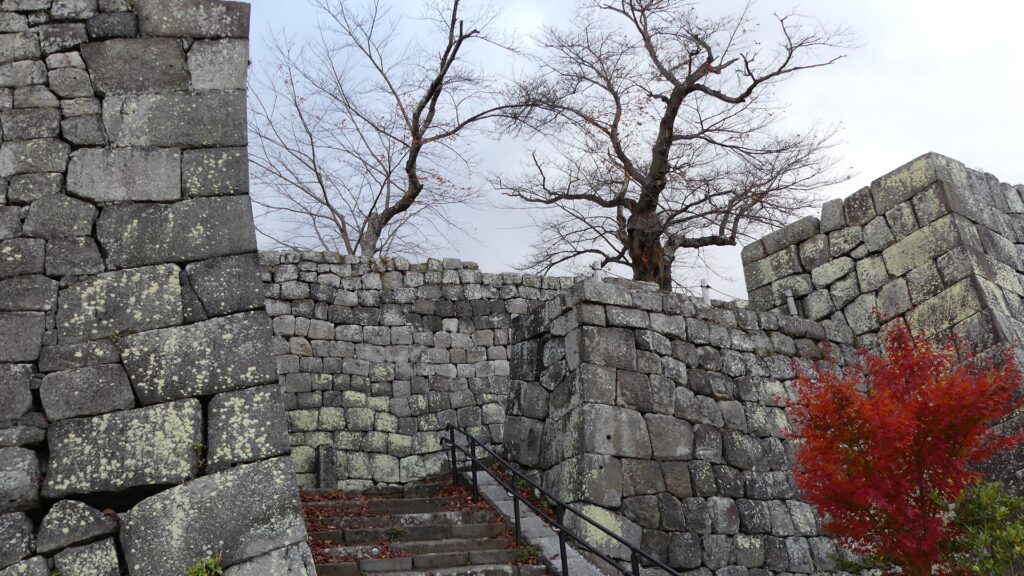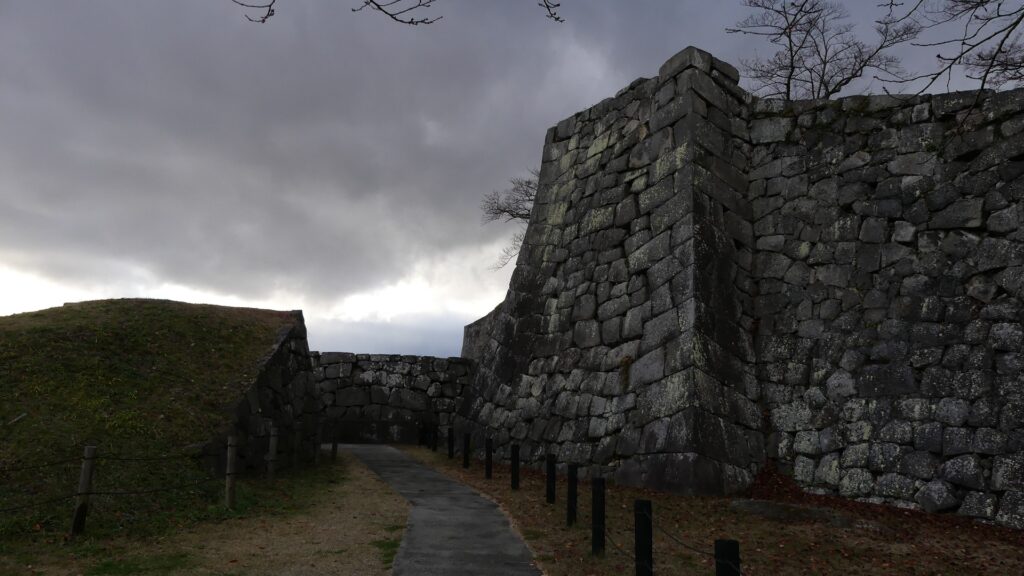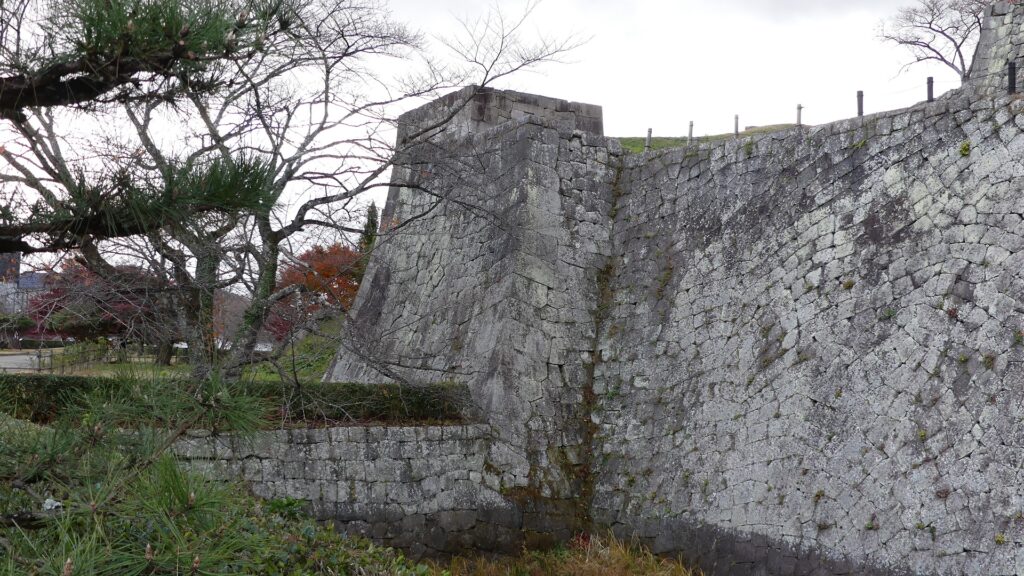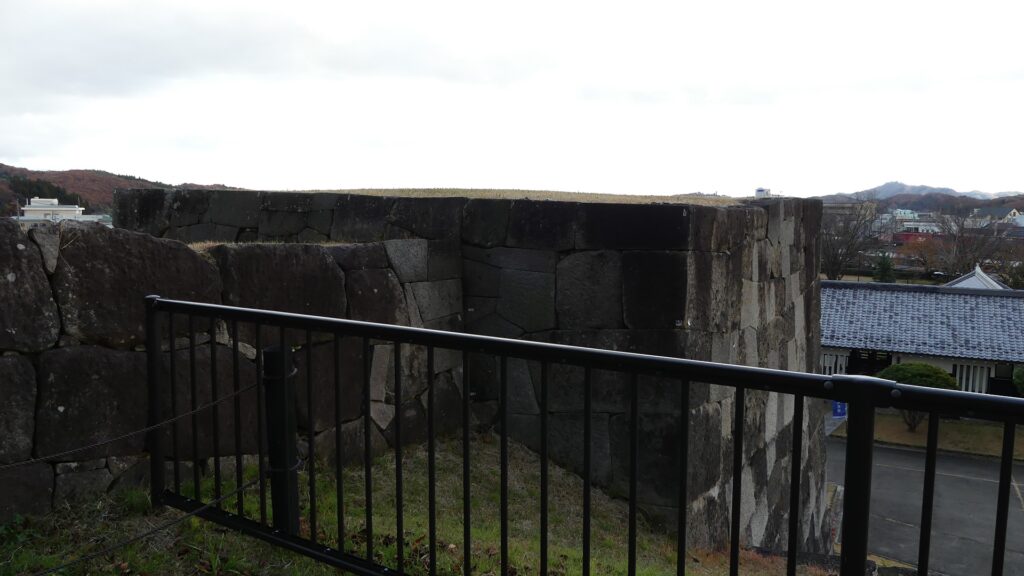
201.武蔵松山城 その2

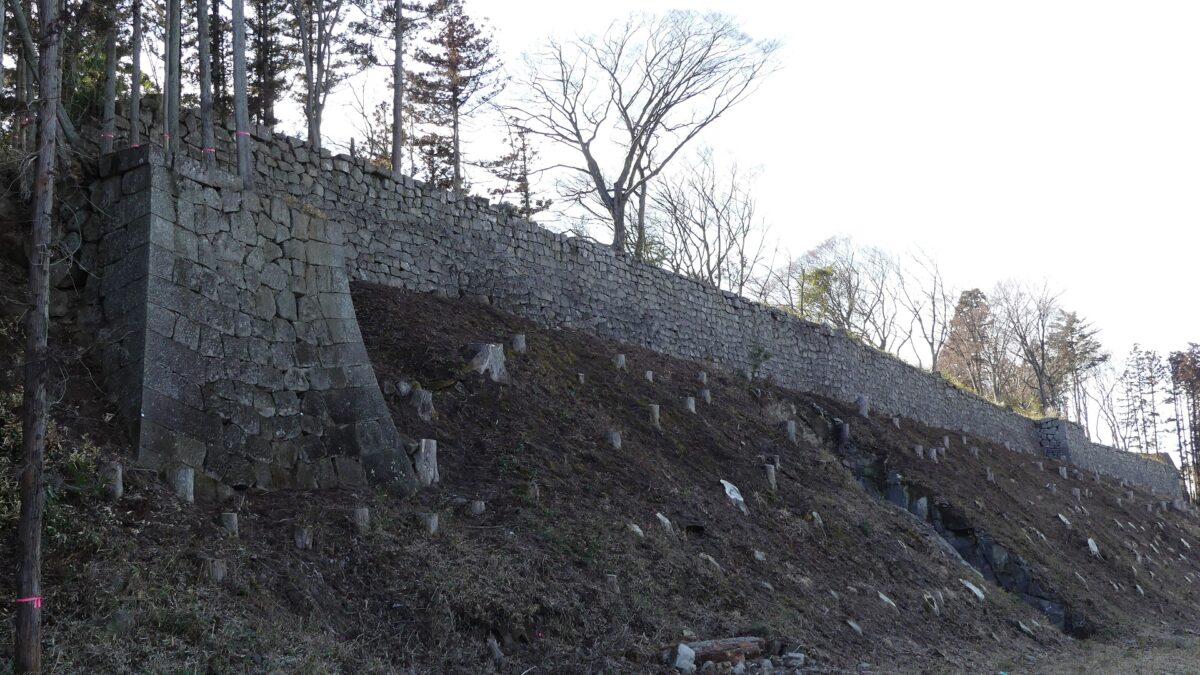
武蔵松山城の比高は40mくらいしかありません。そのため、この城では特徴ある防御システムを構築していました。それは、この城の主要部約2万7千㎡のうち、半分以上が堀か切岸に割り当てられていたということです。

現地案内

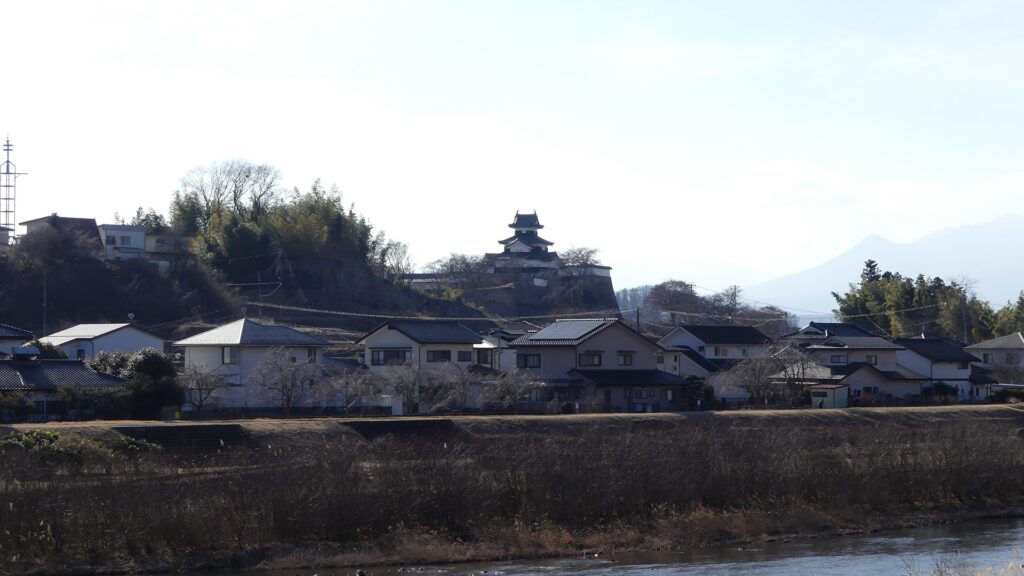
現在武蔵松山城跡は、これも有名な史跡である吉見百穴のとなりにあり、駐車場などビジターが訪れやすい環境が整っています。城跡は今でも市野川に囲まれていますが、周りには道路または歩道を通っています。

城周辺の航空写真

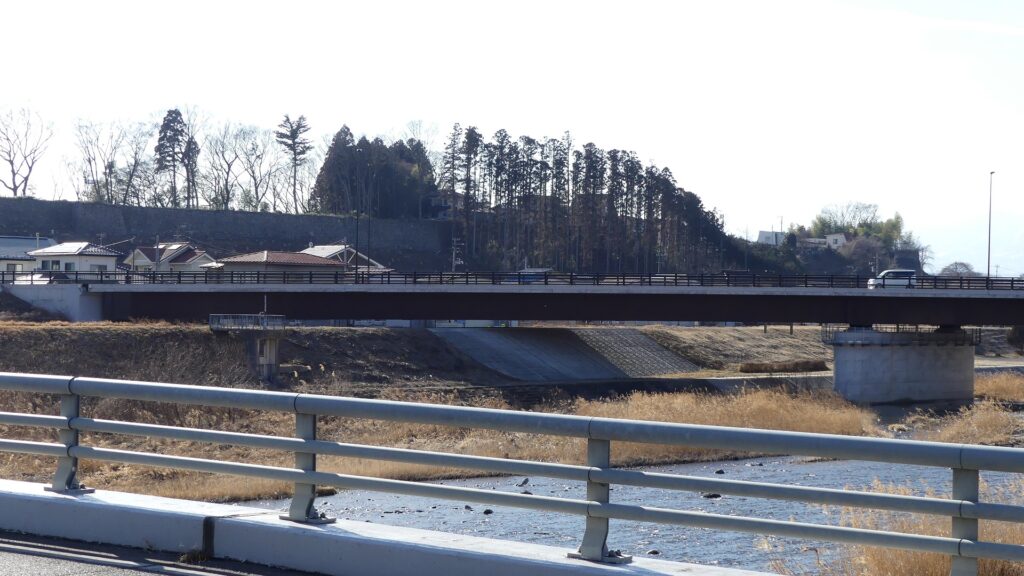
城跡を囲む市野川

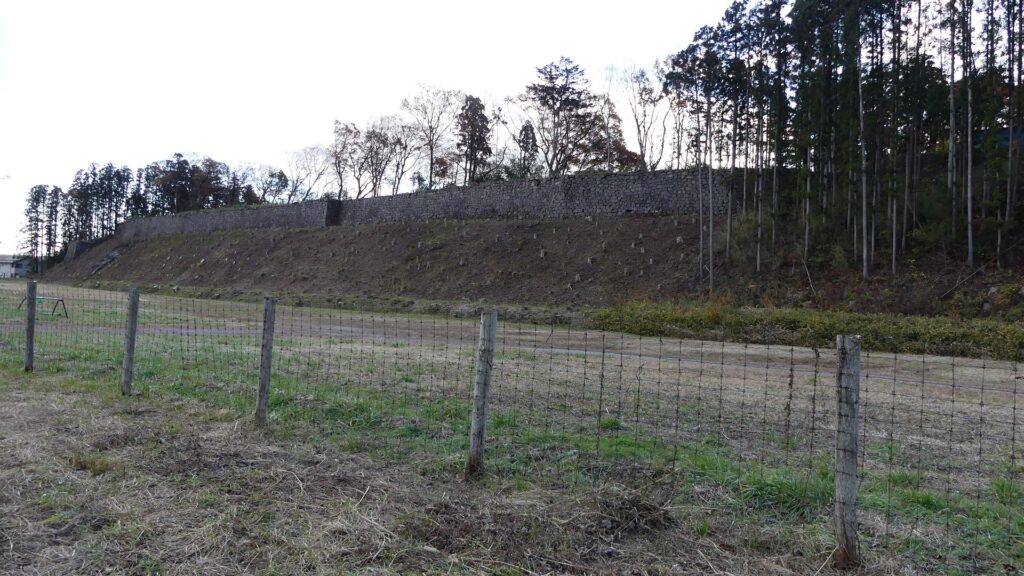
岩山を活用した史跡群

城があった城山の側面は岩がむき出しになっていて、城以外の史跡もあります(岩室観音堂、第二次世界大戦中の地下軍需工場跡、現代の岩窟ホテル跡)。

岩室観音堂
地下軍需工場跡
岩窟ホテル跡

特に岩室観音堂は、城があったときから存在し(現在の建物は江戸時代に再建)、観音堂建物は岩の上に直接建てられています。「懸造り」と呼ばれる珍しい形式です。観音堂の奥は谷間となっていて、城の搦手道の一つであったと言われています(現在は通行禁止)。通行禁止箇所の手前には、ハート形の岩穴(胎内くぐり)があり、ここをくぐると安産・所願成就のご利益があると言われています。

観音堂の建物
山の岩が建物の基礎になっています
観音堂裏手の谷間
ハート型の胎内くぐり

3つの出入口

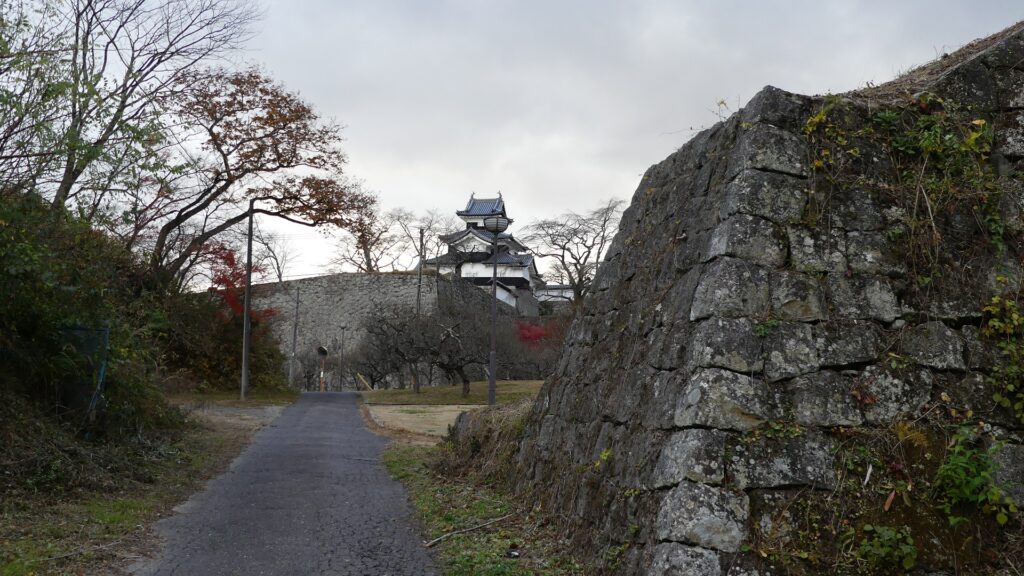
現在の城跡には概ね3つの出入口があります(大手口、根古屋口、搦手口)。このうち、歩きやすいのは根古屋口、距離が短いのは搦手口なのですが、おすすめは大手口です。城の防御システムがよくわかるからです。大手口に行くには、吉見百穴駐車場から出て左に曲がり坂を登っていきます。先に根古屋口入口を通り過ぎます(わかりずらいですが)。右側に「松山城跡」という看板が見えたら右に曲がって小径に入ります。右手の山側にもう1回看板が見えてきますが、ここが大手口の入口です。

城周辺地図、赤破線は駐車場から大手口までの道のり

右側の坂を登っていきます
こちらは根古屋口
ここを右折します
まっすぐ進みます
大手口に到着です

特徴、見どころ

特徴ある防御システム

武蔵松山城の比高(麓から頂上までの高さ)は40mくらいしかありません。更に大手口まである程度登っているので、ここからだともっと低いでしょう。そのため、この城では特徴ある防御システムを構築していました。それは、この城の主要部約2万7千㎡のうち、半分以上が堀か切岸に割り当てられていたということです。守備兵が使用できる平坦面は、約3分の1しかありませんでした。また、守備兵が駐屯する曲輪は通常は土塁に囲まれているのですが、この城にはほとんどそれがなく、代わりに柵が使われていたようです。平坦面をなるべく多くするためと、城からの見通しをよくするためでした。堀には土橋がほとんどなく、城の中心部に行くにはアップダウンを繰り返す必要があったのです。

城跡の案内写真、エンジ色の筋が堀のライン、現地説明版より

主要な曲輪には標柱や説明板がありますが、通路は山道のままで、休憩施設はありません。この城跡は現時点では私有地なので仕方ないでしょう。大手口から入って最初の主要曲輪は、曲輪4です。この曲輪は、現在は単なる平地ですが、先の方を見ると、深い空堀の向こうに三ノ曲輪が一段高い位置に見えます。もし曲輪4が敵に占領されても、三ノ曲輪から守備兵が有利な位置から反撃できるようになっています。

山道を進みます
曲輪4、この写真でもわかる通りこの曲輪には土塁があったそうです、向こうに見えるのは三ノ曲輪
三ノ曲輪から見た曲輪4

通路でもある空堀

その空堀は今でも人が通れるようになっていますが、最後の城主、松平氏のときには大手道だったと言われています。そのためか、根古屋口からのルートはこの堀にも通じていて、堀への入口部分は防衛のためジグザグになっています。曲輪4もその方向に張り出していて(進行方向右側、北側)、先端に櫓でもあったのではないでしょうか

曲輪4と三ノ曲輪間の空堀
根古屋口からのルート、左に曲がると堀に入っていけます
堀への入口
現地案内図に、根古屋口から空堀への通路を追記(赤矢印)
曲輪4の突出部
曲輪4から空堀への通路を見下ろしています

「武蔵松山城その3」に続きます。
「武蔵松山城その1」に戻ります。

29.Matsumoto Castle Part3

There are defense systems along the passage of the first floor of the Main Tower- machicolations, loopholes (for guns and arrows), and lattice windows. For instance, as many as 117 loopholes were built in this tower. They are the genuine article!

Features

Supporting Systems of Main Tower

You can enter the tower after entering the main enclosure through Kuro-mon (the black gate). It weighs about 1,000 tons on the unstable ground at its base, so 16 thick wooden “main support pillars” stand inside the stone wall base and a ladder-type support foundation was laid across the top of them.

The Kuro-mon gate
The entrance of the Main Tower
One of the 16 main support pillars was preplaced and is exhibited in the first floor
The layout of the 16 main support pillars, exhibited in the first floor
The illustration of the internal structure of the Main Tower (its lower part), exhibited in the first floor

Interior for Fighting

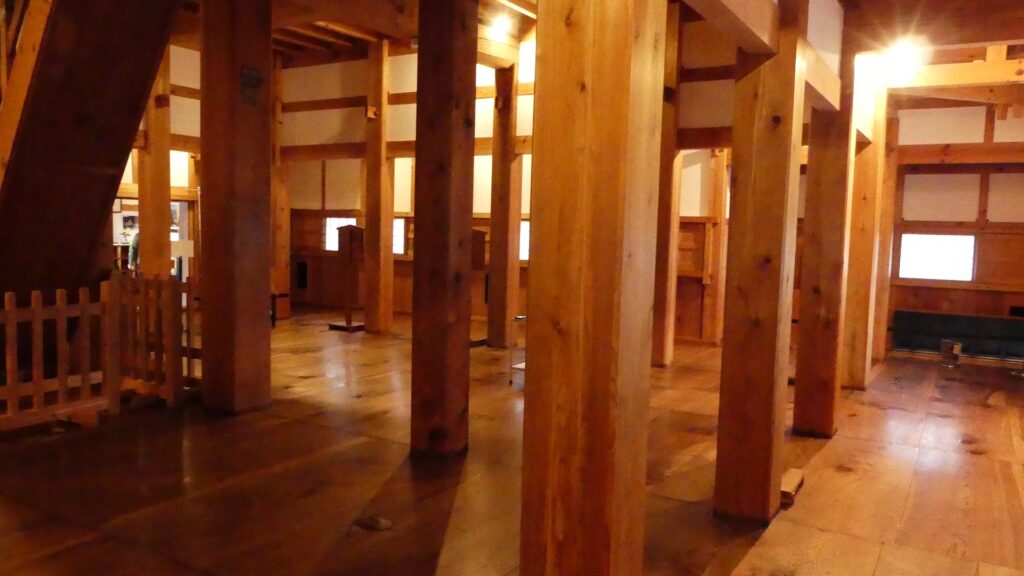
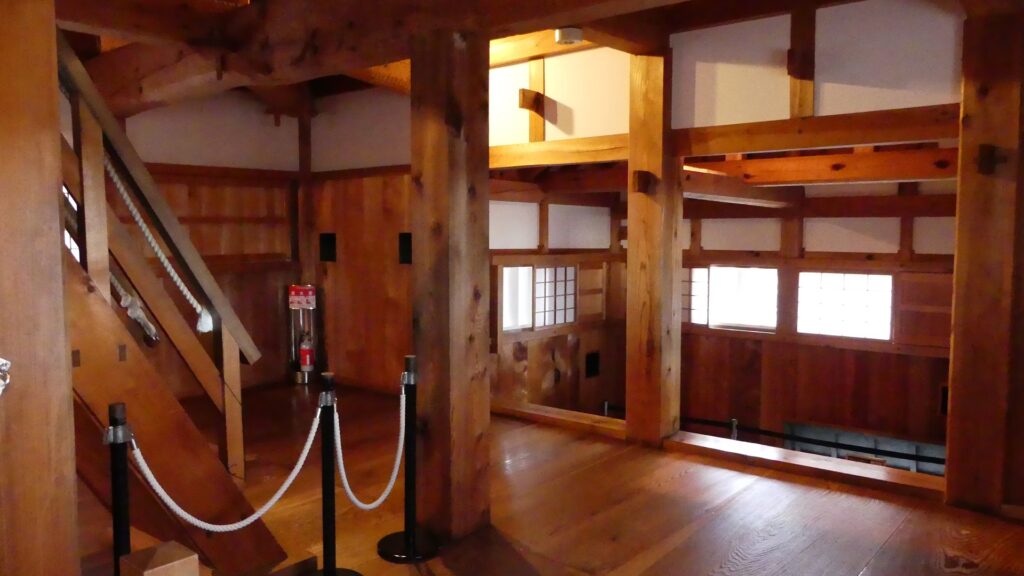
If you go into the first floor, you will see lots of other columns supporting the tower. The floor is separated into the central room, called “Moya”, and the surrounding defense passage, called “Musha-bashiri (directly means “warriors running”). The central room was used as storage and elevated about 50cm above the main passage. This is because the support foundation was doubled-up in this area.

The first floor (the central room)
The first floor (the defense passage), the central room on the left is elevated

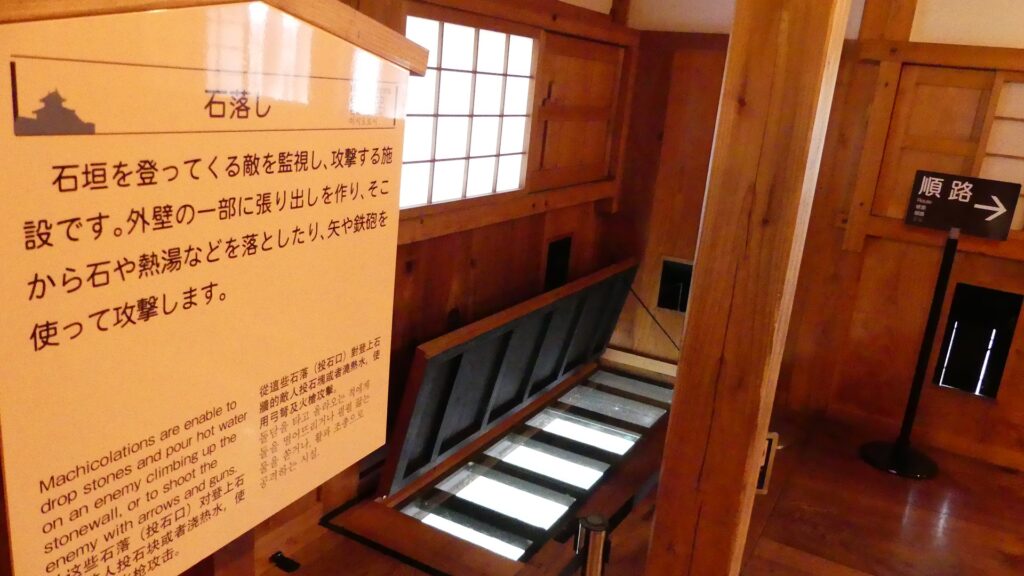
There are defense systems along the passage – machicolations (devices for dropping stones), loopholes (for guns and arrows), and lattice windows. For instance, as many as 117 loopholes were built in this tower. They are the genuine article!

The defense systems on the first floor
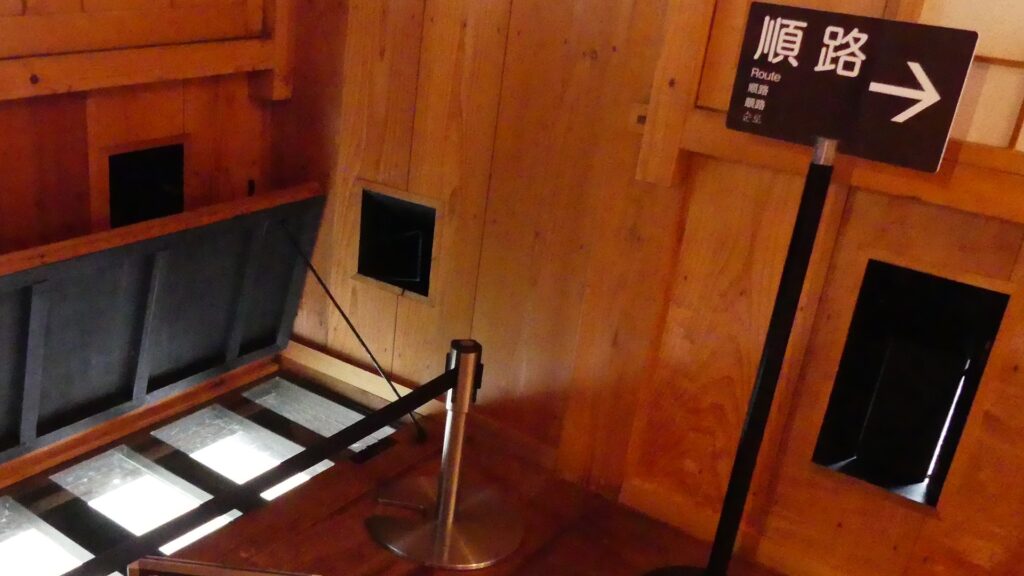
A machicolation called “Ishiotoshi”
The first floor (the first level) seen from the outside

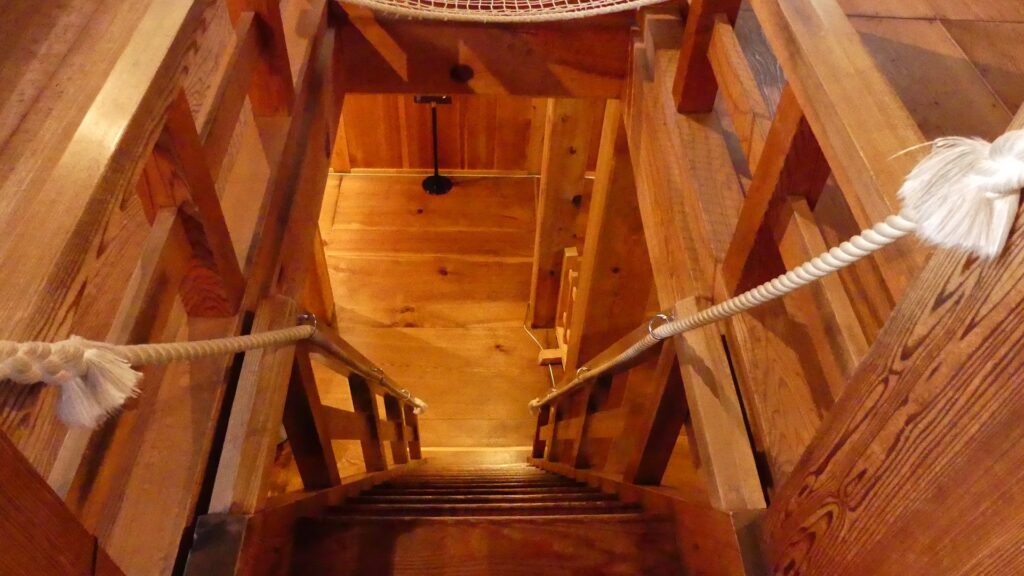
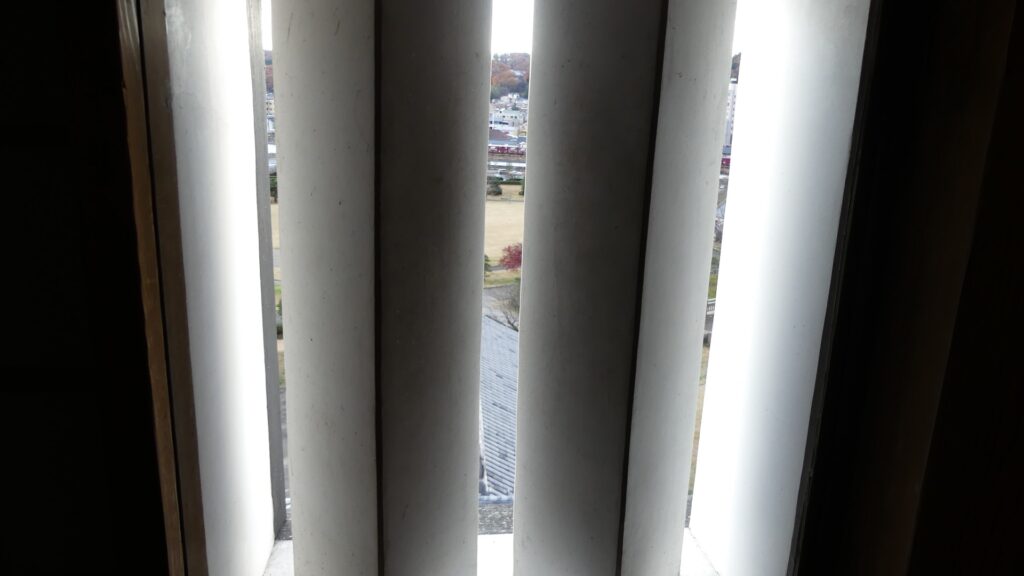
You can climb the steep steps to the next floor. The second floor is similar to the first one but brighter due to its wide latticed and non-latticed windows. It was used as a waiting place for warriors during an emergency. It is now used as Matsumoto Castle Gun Museum.

The wide latticed window on the second floor
The interior of the second floor
An exhibition of the Matsumoto Castle Gun Museum

Each Floor has Unique Feature

In contrast, the third floor is dark because it is an attic with no windows. It is thought to have been used mainly for storage.

The third floor

The fourth floor is also different from the others. It has fewer columns, high ceilings, and good lighting, so it is believed to have been the lord’s chamber. The steps from the fourth to the fifth are the steepest probably because of the high ceiling. Please be careful. (Taking photographs of the steps is prohibited in the tower, probably for safety and crowded-flow reasons.)

The fourth floor
A side view of the steps to the fifth floor

The fifth floor looks interesting because the back sides of the gables are visible in all directions. It was used as a conference room for the senior vassals.

The fifth floor
The back side of a gable
The fifth floor (the fourth level) seen from the outside

You will finally arrive at the top floor (6th), 22m above the ground. It was planned to have a veranda, but the plan was changed and the walls were built on there outside of the veranda. You can see the line where the veranda was intended to start on the floor. You can also see views of the outside through the wired windows between the walls. It was used as the headquarters of the lord during battle. If you look up at the underside of the roof, you will find the Nijurokuyashin god, which is believed to have saved this tower during the great fire during the Edo Period, worshiped on it.

The top floor
The part which was supposed to be a veranda
A view through the wired windows
The Nijurokuyashin god, worshiped on the underside of the roof

Later History

After the Meiji restoration, all of the castle buildings, excluding the Main Tower, were removed, and finally the tower was sold possible for scrap. Ryozo Ichikawa, a social campaigner came out, and asked the buyer to suspend the destruction of the tower. After that, he collected money by holding an exhibition and giving a detailed explanation in order to get it back, and was successful in the end. However, that was not enough for the tower. Such a large and old building is needed to do continuous maintenance to preserve it in the long term. In the middle of the Meiji Era, The tower began to lean at about six degrees due to the decay of the central columns, and bats began to live in it. Another savior, school head, Unari Kobayashi worked hard to repair the castle. At last, the tower was designated as a National Tangible Cultural Property in 1952. In addition, other primary gates of the castle, such as Kuro-mon and Taiko-mon have been restored. Matsumoto City is considering restoring the main gate as well.

The monument of Ryozo Ichikawa (on the left) and Unari Kobayashi (on the right), at the inside of the main enclosure
The photo of the Main Tower during the Meiji Era, owned by Matsumoto Castle Management Bureau (licensed under public domain via Wikimedia Commons)

My Impression

In conclusion, we can’t be completely sure exactly when and how the Main Tower was built. The history presented in this article is based on the official opinion of Matsumoto City. Some speculate that the Inui small main tower was first built, then, it was modified when the large main tower was added later because it looks like the newer multi-storied type. Others think that the large main tower originally had a different appearance from now, with the veranda on the top and more gables, and modified later. I think it is exciting for history fans to wonder which of these is the truth.

the Inui small main tower is on the left
The interior of the Inui small main tower, many logs are used for the tower, which is one possible explanation for the theory that the tower was first built

How to get There

If you want to visit there by car, it is about a 20-minute drive away from Matsumoto IC on the Nagano Expressway. There are few parking lots around the castle.
By public transportation, it takes about 15 minutes on foot from Matsumoto Station.
From Tokyo to the station: get Hokuriku Shinkansen bullet train and transfer to the Shinonoi Line at Nagano Station. Or take the limited express Azusa at Shinjuku Station.

Links and References

Matsumoto Castle, National Treasure of Japan, Official Website

That’s all. Thank you.
Back to “Matsumoto Castle Part1”
Back to “Matsumoto Castle Part2”

29.松本城 その3

天守一階の武者走りの通路沿いには多くの防御の仕組みが備わっています。石落とし、鉄砲狭間、矢狭間、武者窓などです。例えば、この天守には合計で117もの狭間が設けられています。これらは皆実戦を想定した本物なのです。

特徴、見どころ

天守を支える仕組み

天守に入場するにはまず黒門を経由して本丸に入ります。天守は不安定な地盤の上に約千トンもの重量があります。そのため、天守台石垣の中に16本の太い土台支持柱が埋め込まれて立っているのと、その上には「梯子胴木(はしごどうぎ)」と呼ばれる梯子状の木枠土台が載せられています。

黒門
天守入口
取り替えられた土台支柱柱のうちの一本、天守一階にて展示
16本の土台支柱柱の配置図、天守一階にて展示
大天守下部の構造図、大天守一階にて展示

実戦的な内装

天守一階に入ると、天守を支える多くの柱を目にするでしょう。一階は身舎(もや)と呼ばれる中央部分と、武者走り(むしゃばしり)と呼ばれる周りを囲む通路状のスペースに分かれています。中央の部屋は倉庫として使われていて、通路からは約50cmほど高くなっています。これは、土台がこの部分だけ二重になっているからです。

天守一階(身舎)
天守一階(武者走り)、左側の身舎が一段高くなっています

武者走りの通路沿いには多くの防御の仕組みが備わっています。石落とし、鉄砲狭間、矢狭間、武者窓(格子窓)などです。例えば、この天守には合計で117もの狭間が設けられています。これらは皆実戦を想定した本物なのです。

天守一階の防御装置
石落とし
外から見た一階部分

次の階へは急な階段を登っていきます。二階は一階と似ていますが、幅広な武者窓やその他の窓によって中は明るくなっています。ここは、非常事態が発生したときの武士たちの待機場所となっていました。今は「松本城鉄砲蔵」として使われています。

天守二階の武者窓(格子窓)
二階内部
「松本城鉄砲蔵」の展示

特徴ある各階

対照的に三階は窓がない屋根裏となっているのでとても暗いです。主に倉庫として使われたと考えられています。

天守三階

四階も他のどの階とも異なっています。この階にはあまり柱がなく、天井は高く、中も明るく作られています。よって、城主の御座所として使われたとされています。四階から五階に登る階段は、高い天井のために最も急になっています。気を付けて登ってください。(恐らく安全と円滑な移動のため、天守内での階段近辺撮影は禁じられています。)

天守四階
五階への階段を離れて撮影

五階の内装は面白いもので、四方が破風の裏側によって囲まれています。この階は重臣たちの会議所として使われたと考えられています。

天守五階
破風の裏側
外から見た五階(四層目)部分

そしてついに最上階(六階)に到着します。地面から22mの高さの場所です。ここには高欄が設けられる予定でしたが変更され、その外側に壁が作られました。床面には高欄とその内側を分ける仕切りが見て取れます。よって、外の景色を見るには壁越しの金網を通してということになります。ここは戦の際の指揮所として使われたと考えられています。最上階の屋根裏を見上げると、江戸時代の大火のときにこの天守を救ったと信じられている二十六神が祀られているのが見えます。

天守最上階
高欄となるはずだった部分
金網越しの景色
屋根裏に祀られた二十六夜神

その後

明治維新後、天守を除く全ての城の建物は撤去されて、天守もついに解体され廃材となるべく売却されてしまいました。そのとき、社会運動家の市川量造(いちかわりょうぞう)が現れ、買主に天守の取り壊しを待ってもらうよう要請しました。その後、彼は博覧会を開き、買い戻しの意義を説き、資金を集めることで買い戻しに成功したのです。ところが、それだけでは十分ではありませんでした。このような巨大で古い建物を長期間保存するには継続的なメンテナンスが必要です。明治中期には、天守は柱の腐りから6度傾いてしまい、中にはコウモリが住む有様でした。ここでもう一人の救世主、学校の校長であった小林有也(こばやしうなり)が登場し、城の修復に尽力しました。そして1952年には国宝に指定されました。更には近年、主要な門であった黒門と太鼓門が再建されています。松本市は大手門も復元することを検討しています。

本丸内になる市川量造(左)と小林有也(右)の記念碑
明治時代の天守写真、松本城管理事務所蔵 (licensed under public domain via Wikimedia Commons)

私の感想

結論として、実は天守がいつどのように築かれたかは正確にはわかっていません。この記事で紹介している天守の創建は、松本市の公式見解に基づいています。他説としては、乾小天守が最初に作られ、後に大天守が追加されたときに改修されたというものがあります。より新しい形式の層塔型に似た外見を持っているからです。また、大天守は当初は今と違う姿をしていたという説もあります。そのときには最上部に高欄があり今より多くの破風があったが、後に改造されたというものです。歴史ファンにとっては、どれが本当なのかいろいろ考えてみるのも楽しみの一つです。

左側が乾小天守
乾小天守内部、丸太柱が多く使われているのが最初に作られた根拠の一つとのことです

ここに行くには

車で行く場合:長野自動車道の松本ICから約20分かかります。城周辺にいくつか駐車場があります。
公共交通機関を使う場合は、松本駅から歩いて約15分かかります。
東京から松本駅まで:北陸新幹線に乗って長野駅で篠ノ井線に乗り換えるか、新宿駅から特急あずさ号に乗ってください。

リンク、参考情報

国宝 松本城、公式ホームページ
・「図説 国宝松本城/中川治雄著」一草舎
・「シリーズ藩物語 松本藩/田中薫著」現代書館
・「城の科学/萩原さちこ著」講談社ブルーバックス
・「よみがえる日本の城14」学研
・「日本の城改訂版第3号」デアゴスティーニジャパン

これで終わります。ありがとうございました。
「松本城その1」に戻ります。
「松本城その2」に戻ります。

error: Content is protected !!