114.Karasawayama Castle Part2

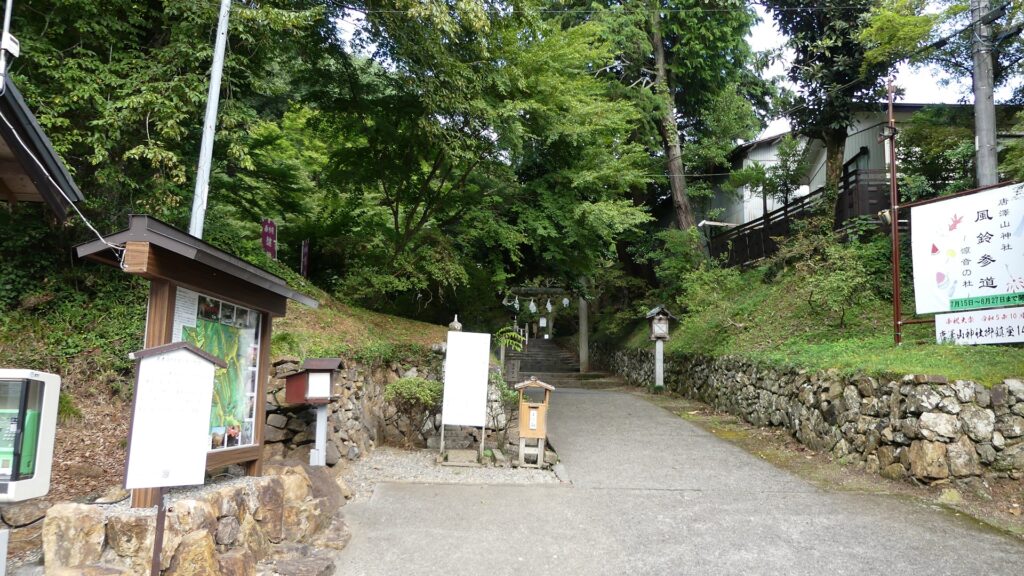
Today, the ruins of Karasawayama Castle have been well developed as Karasawayama Shrine. Many people visit the shrine to pray for something, hike the mountain, see a great view, and recently see lots of friendly cats living in the shrine. Of course, some of the visitors enjoy historical items at the site as well.

Features

Castle Ruins are developed as Karasawayama Shrine

Today, the ruins of Karasawayama Castle have been well developed as Karasawayama Shrine. Many people visit the shrine to pray for something, hike the mountain, see a great view, and recently see lots of friendly cats living in the shrine. These cats seem to have been strayed or abandoned, but are now fed by volunteers and visitors.
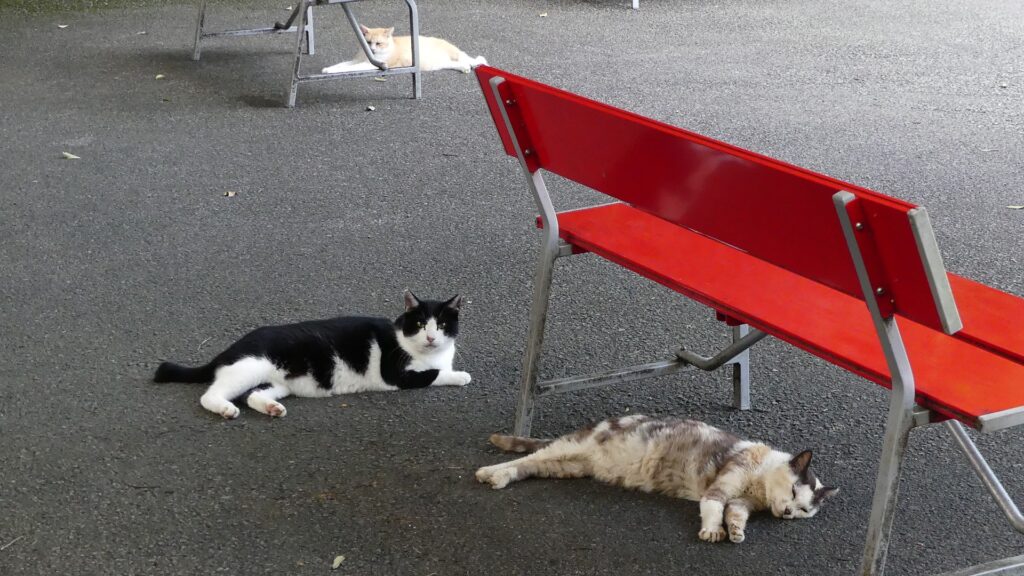
Some of the cats living in the shrine

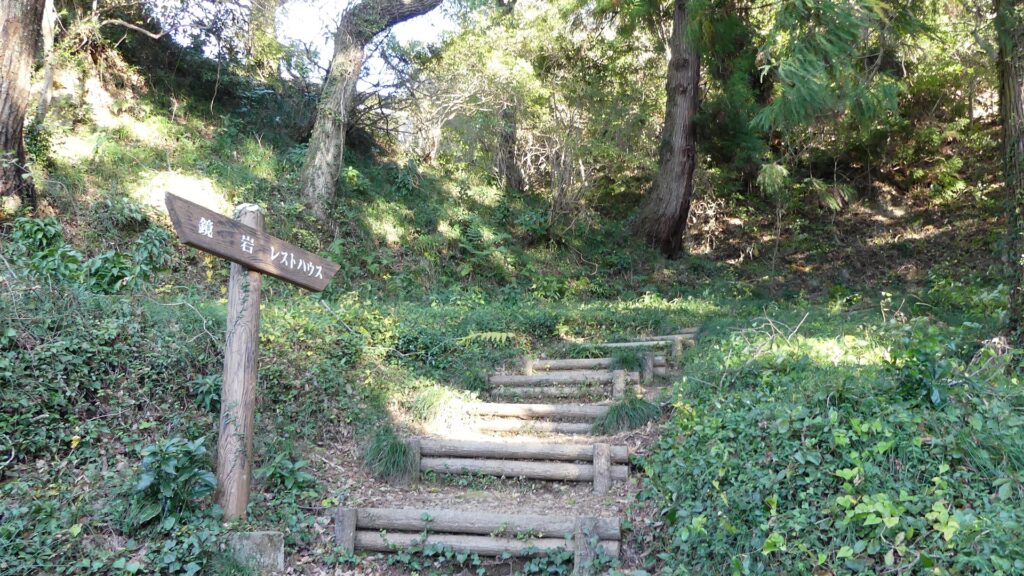
Of course, some of the visitors enjoy historical items at the site as well. There are main routes from the foot of the mountain to the top in the south and west, similar to the castle’s period. In addition, the current routes have been developed for both cars and hikers, which means there are at least four routes.

The map around Karasawayama Shrine
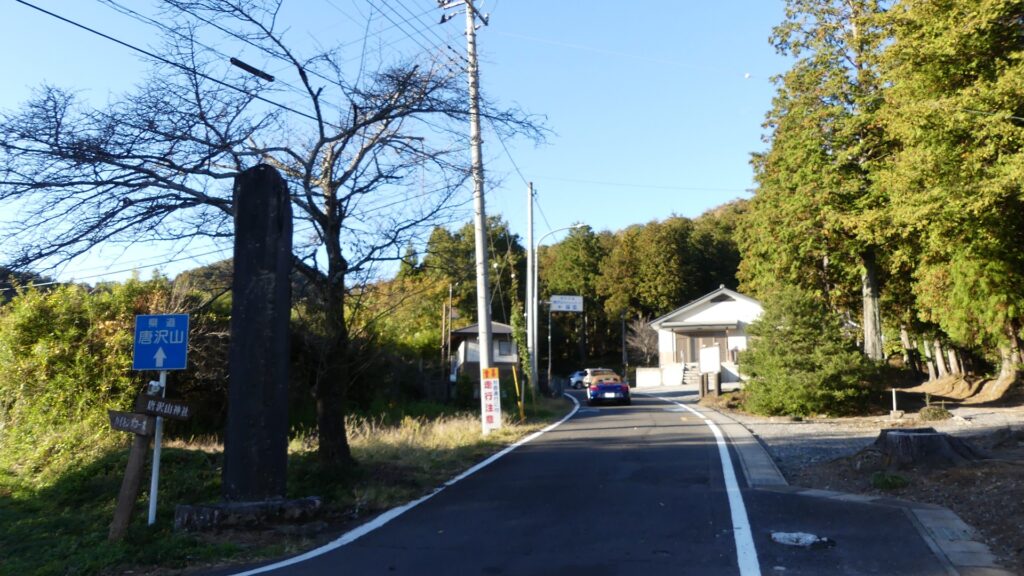
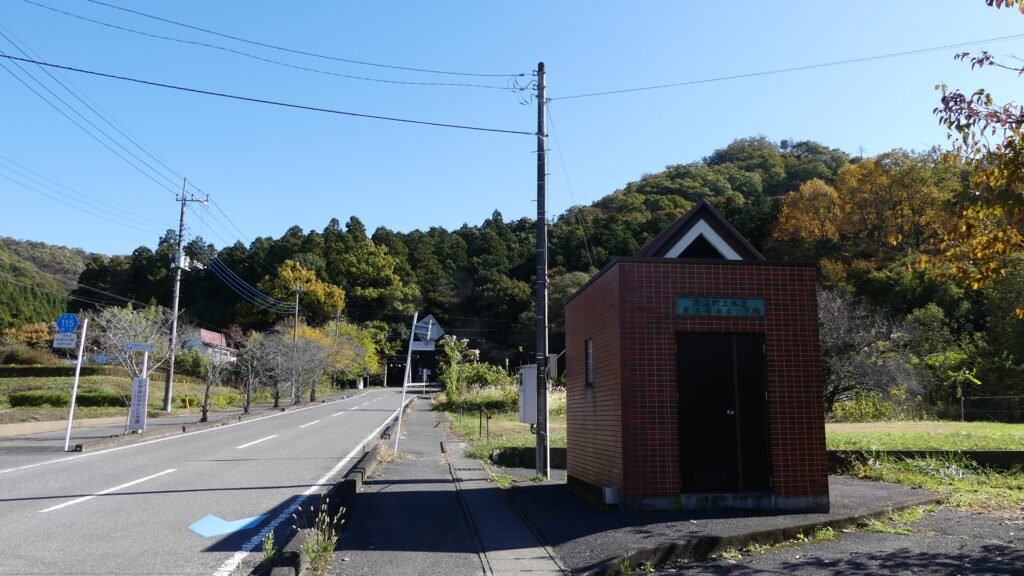
The southern route
The western route
The western hiking course (part of the original path)

Past and Current Routes

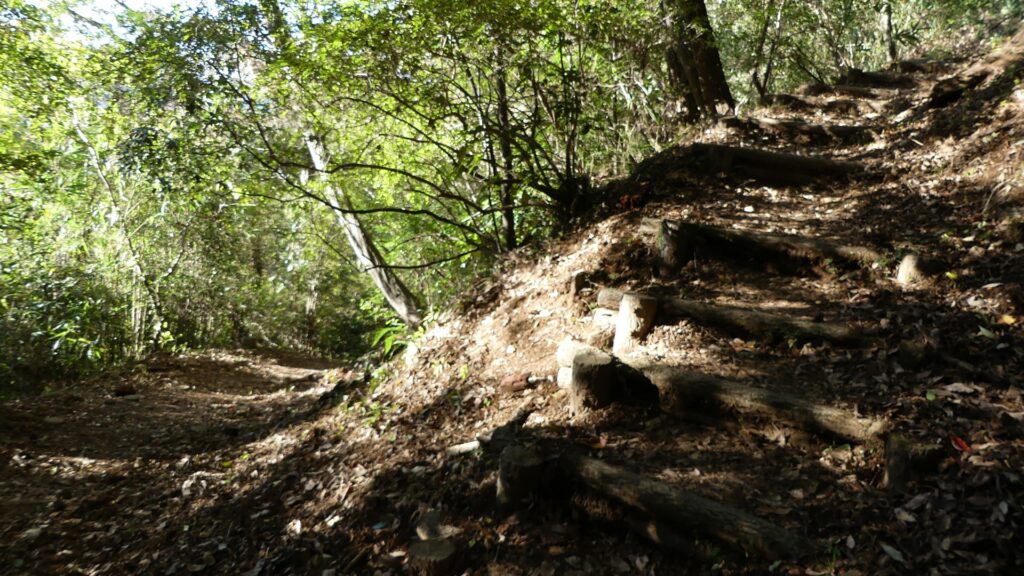
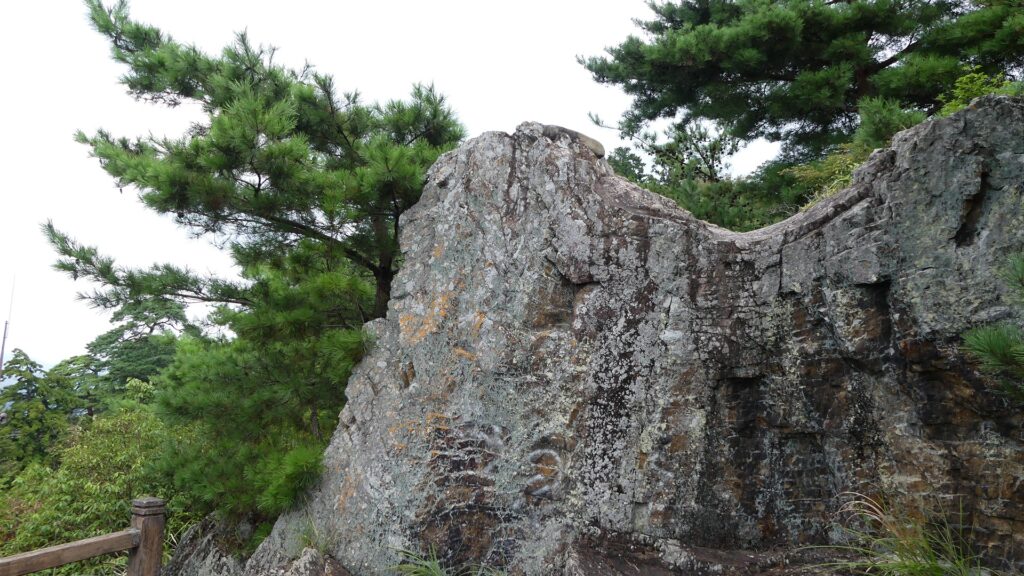
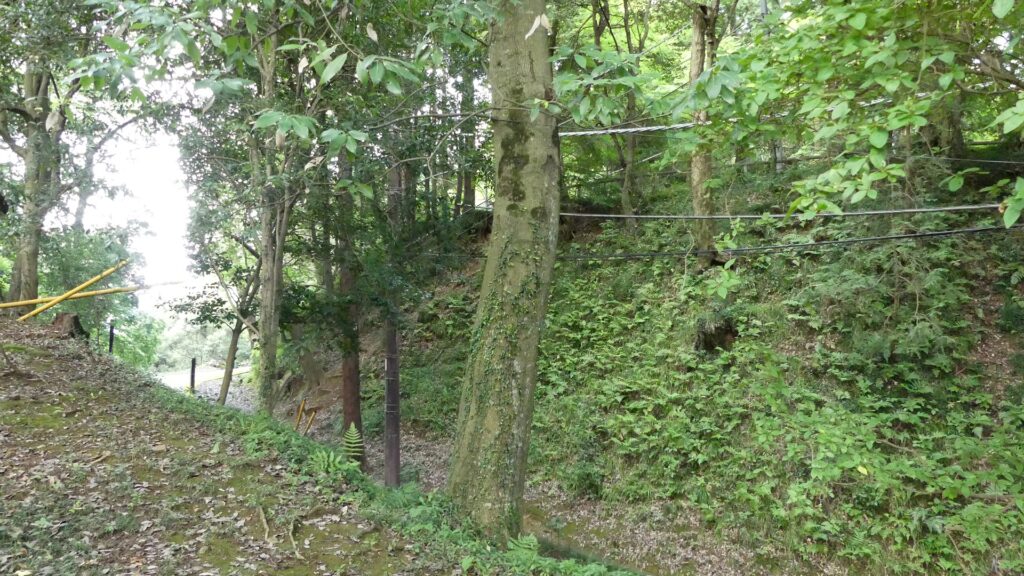
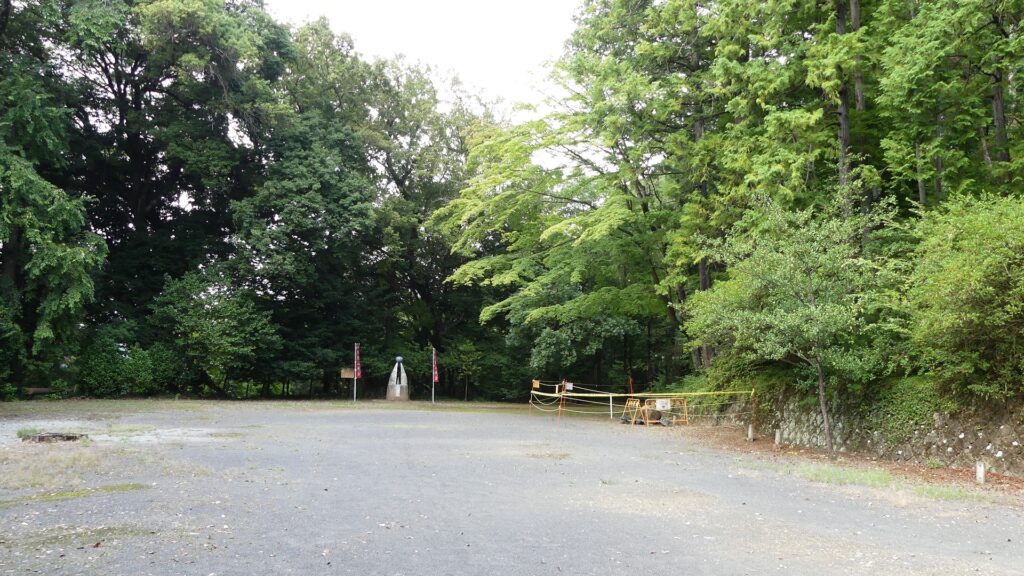
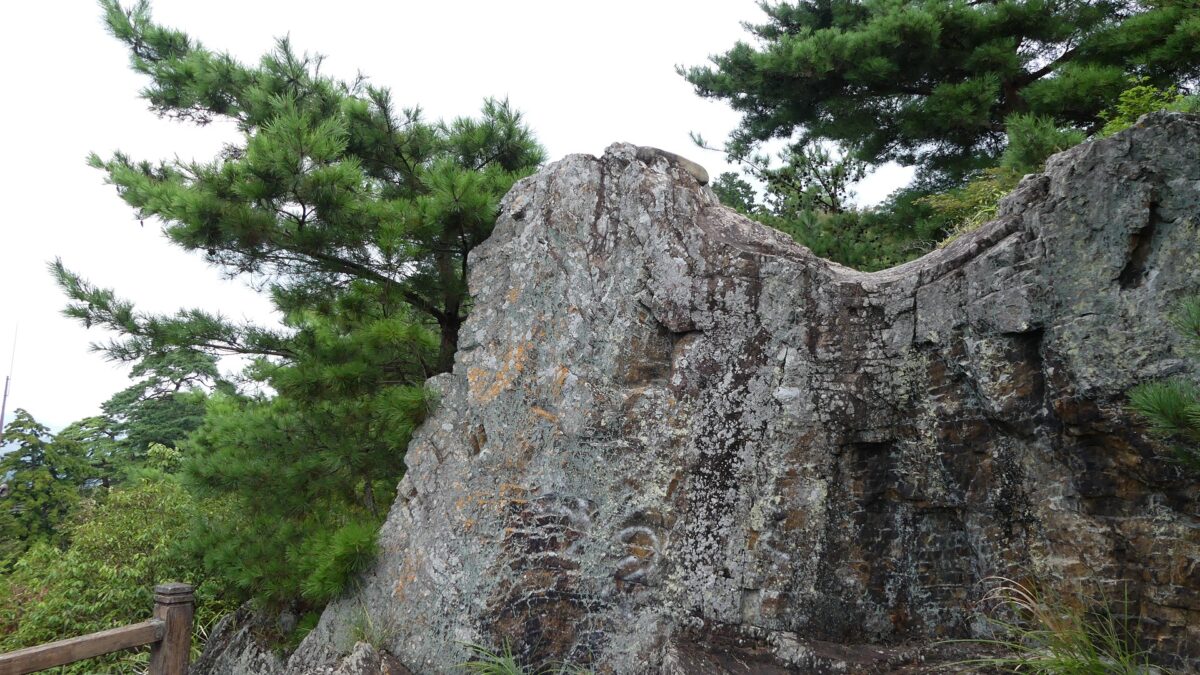
They are not the same as the original routes to the castle. For example, the two paved roads for cars from the two directions gather at the parking lot on the top. However, part of the road from the south was blocked by huge rocks near a remaining rock called Kagami-iwa (meaning the Mirror Rock). The two original paths to the castle gathered in front of the rocks and went to the Main Gate via zigzagging route.
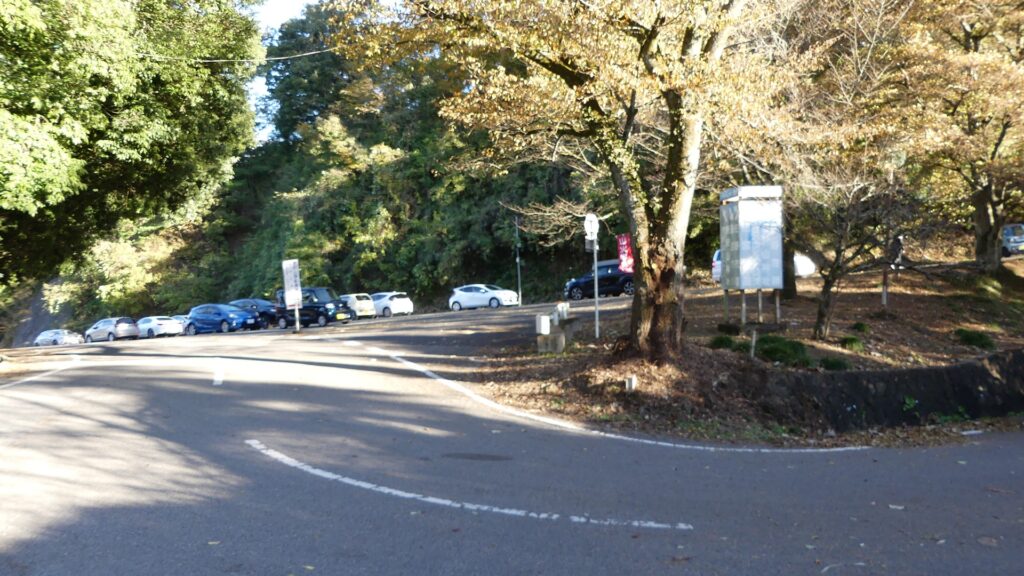
The current meeting point
The past meeting point
the Kagami-iwa Rock
The original path to the Main Gate

Attractions along Main Route

If you enter the Main Gate Ruins from the parking lot, you will see the ruins have a typical alternating entrance with stone walls (but mainly built or renovated during the Meiji Era). The main route goes to the center inside the gate, but there are also some attractions from side to side. There is another huge rock called Tengu-iwa (meaning the long-nosed goblin rock) on the right (the southern side), which was a lookout and defensive point, and is a great viewing spot. There is also a hill on the left (the northern side), called Hiraishi-yama (meaning the mountain for avoiding enemies’ arrows). It was named after the armor the Sano Clan passed down from Hidesato Fujiwara, their founder. Therefore, it must have been used as another defensive spot.

The map around the castle
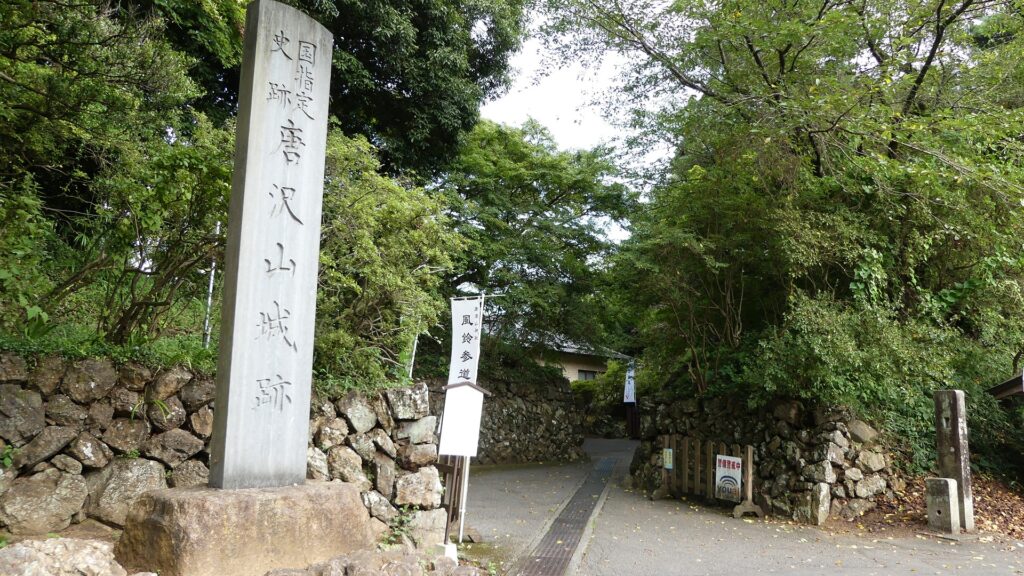
The ruins of the Main Gate
The main route
The Tengu-iwa Rock
A view from the rock
The Hiraishi-yama Hill

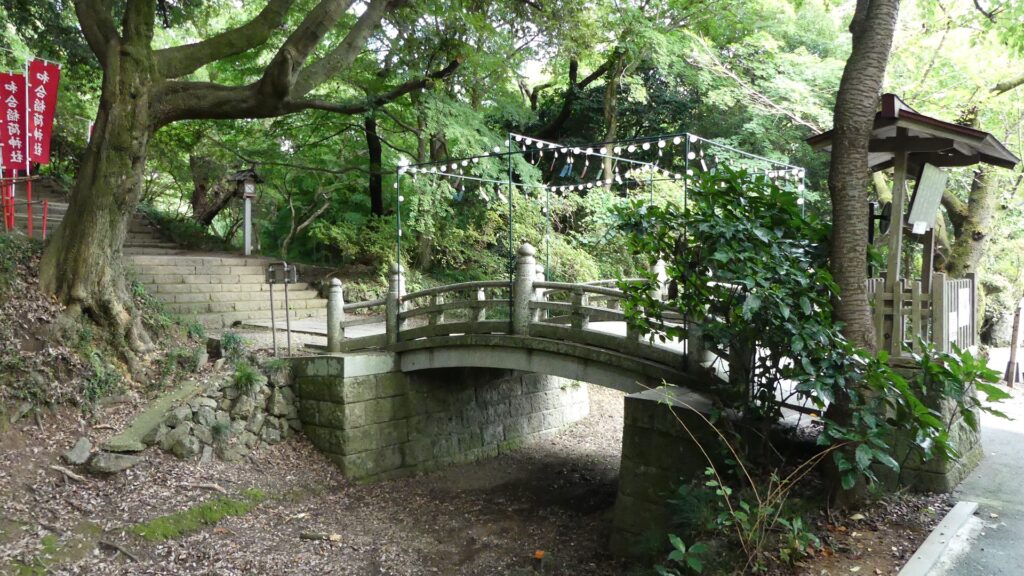
If you go ahead to the center on the main route, you will see a large well called Oi-no-ido on the left. It is 9m in diameter and over 8m deep and it still has spring water inside. The castle ruins have other wells, too. They were essential for the castle to be besieged for a long time. You will next see large and long dry moats, called Yotsumebori (meaning the fourth moat), which divided the main portion and the others. Only the fixed concrete arch bridge, called Shinkyo, goes over the moats. It was said to be originally a draw bridge which would have been fallen when a battle happened. People often say Uesugi Kenshin attacked this point but failed.
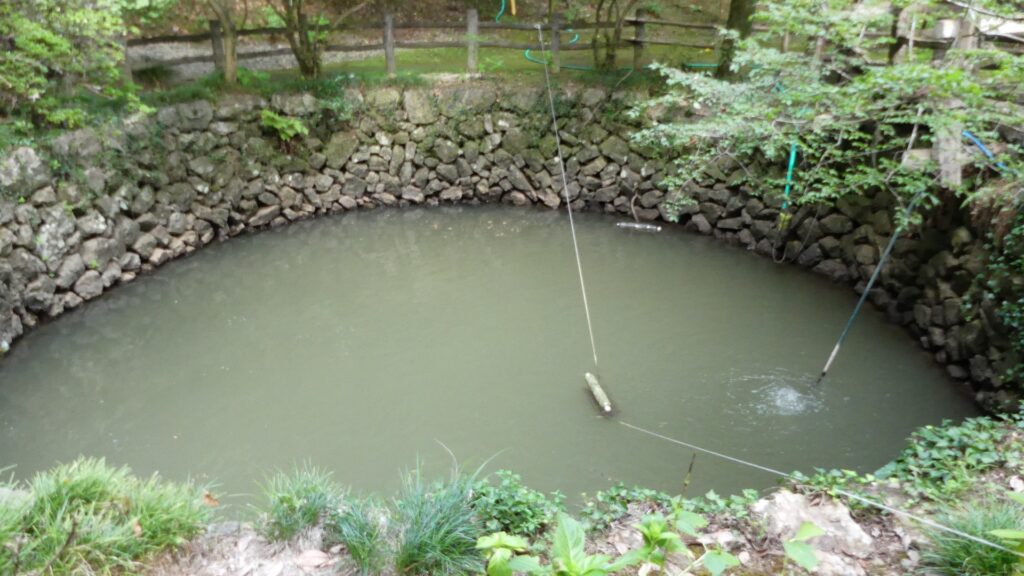
The Oi-no-ido Well
Kuruma-ido Well below the main enclosure
The Yotsumebori dry moats
The Shinkyo Bridge

Four tiered Major Enclosures

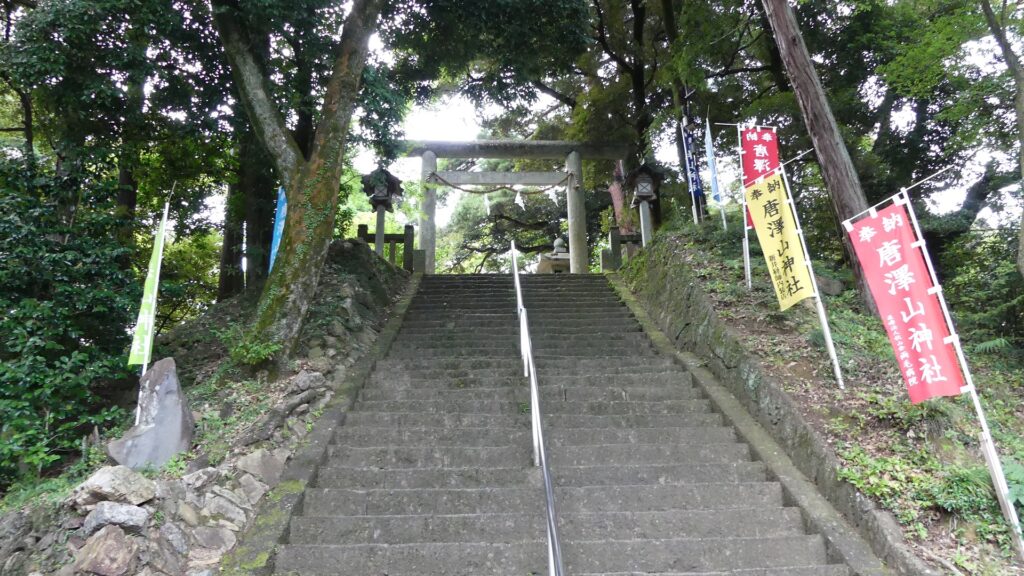
The main route as the shrine’s approach goes on right side of the main portion. The portion consists of four tired enclosures, the belt, third, second and main enclosures from the bottom to the top. In particular, the third enclosure is the largest, which was said to be used as a reception room. You can visit it via a side path. There will be a division point of the approach and the original main route. If you go straight on the approach, you will reach below the stone steps of the shrine on the main enclosure. Otherwise, you can turn left and get to the second enclosure. It is recommended for castle visitors to take the latter because you can see the great stone walls of the main enclosure close by on your right.

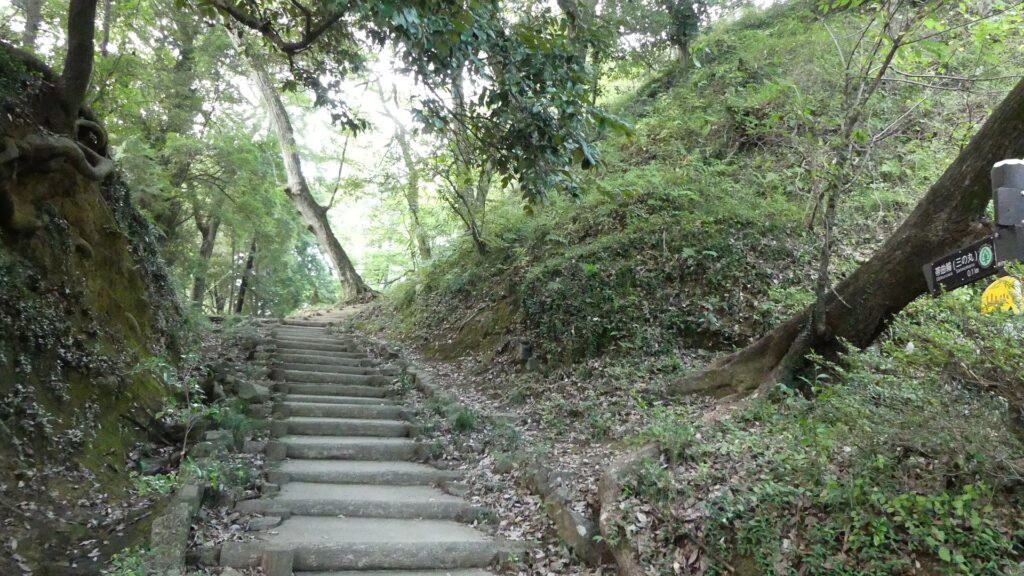
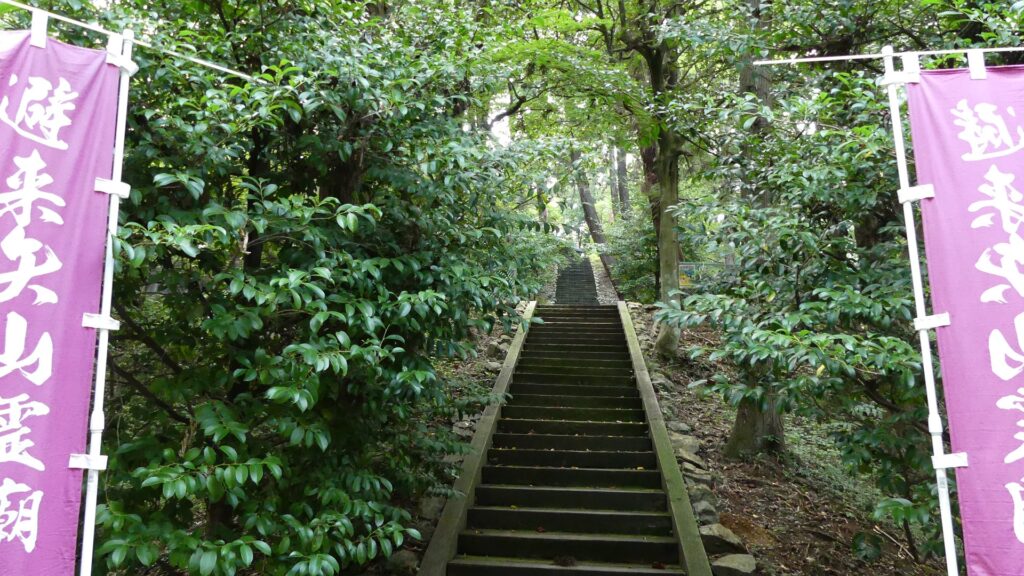
The approach to the shrine
The side path to the third enclosure via the belt enclosure
The belt enclosure
The third enclosure
The spot below the main enclosure
If you turn left, you will see the great stone walls on the right

To be continued in “Karasawayama Castle Part3”
Back to “Karasawayama Castle Part1”
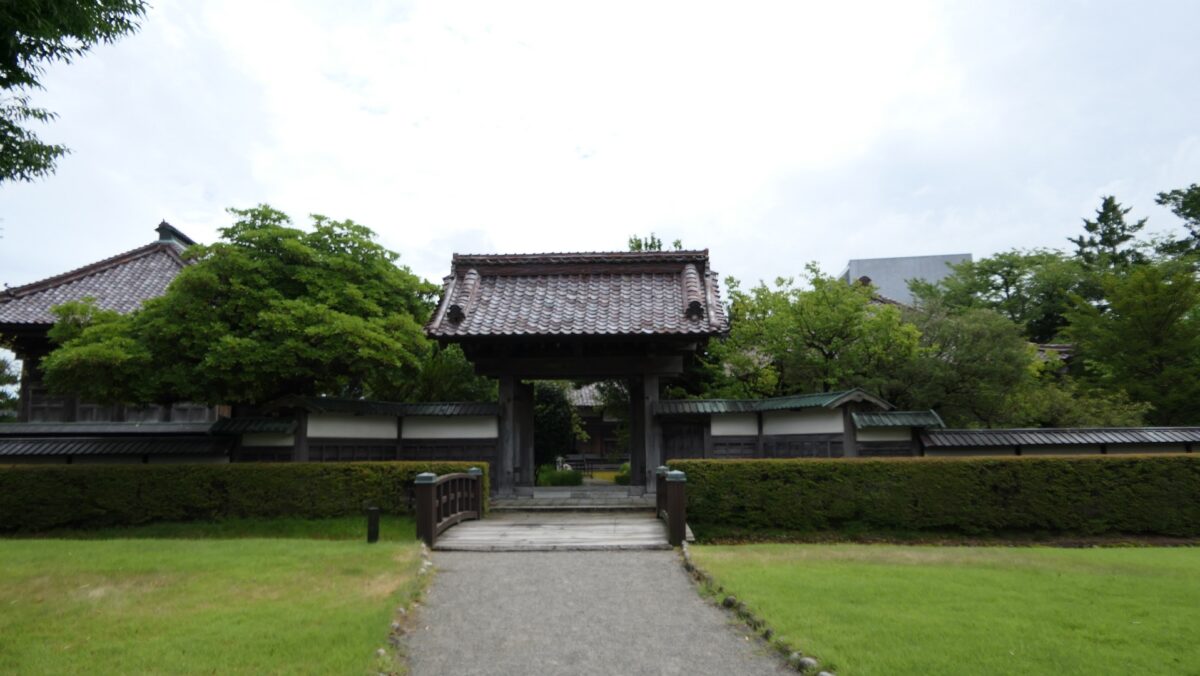
114.唐沢山城 その2

現在、唐沢山城跡は唐沢山神社としてよく整備されています。多くの人たちが神社を訪れ、何かをお祈りしたり、ハイキングをしたり、素晴らしい景色を楽しんでいます。最近では、神社に住み着いた人懐こい猫たちを見に来る人も多いです。もちろん、ここにある史跡を見に来る人もいます。

特徴、見どころ

唐沢山神社として整備

現在、唐沢山城跡は唐沢山神社としてよく整備されています。多くの人たちが神社を訪れ、何かをお祈りしたり、ハイキングをしたり、素晴らしい景色を楽しんでいます。最近では、神社に住み着いた人懐こい猫たちを見に来る人も多いです。ここにいる猫たちは、もとは野良猫か捨て猫だったようで、ここでボランティアやビジターのよって養われています。

唐沢山神社に住む猫たち

もちろん、ここにある史跡を見に来る人もいます。山麓から山頂へは、城があったときと同じように、南側と西側の2方面から向かいます。補足すると、現在の道は車道とハイキングコースがそれぞれ設定されているので、少なくとも都合4つのルートがあります(実際にはもっと多くのハイキングコースがあります)。

唐沢山周辺の地図

南登山口
西登山口
西側のハイキングコース(一部がオリジナルの城道)

現在と過去のルート

方面は一緒でも現在の道筋は、城時代のオリジナルのものとは違っています。例えば、2方面から来る舗装された車道は、山頂の駐車場の前で合流します。しかし南側から来る道の一部は、現在も残る「鏡岩(かがみいわ)」の近くで、かつては岩によって塞がれていた場所でした。オリジナルの道はこの岩の前で合流し、ジグザグの道を伝って大手門に向かっていました。

現在の合流地点
過去の合流地点
鏡岩
かつての大手門に向かう道

大手道沿いの見どころ

駐車場から大手門跡に入っていくと、石垣によって典型的な食い違いの虎口があります(この石垣には実際には明治時代に築かれたか、修繕されたそうです)。大手道は門の内側を中心部に進みますが、その左右にも見どころがあります。右側(南側)には天狗岩という別の巨岩があって、過去には物見台だったのでしょうが現在では素晴らしい見晴台になっています。左側(北側)には避来矢山(ひらいしやま)という丘があるのですが、その名前は佐野氏が先祖の藤原秀郷から受け継いだ鎧(敵の矢を避けることができるという云われがある)から由来しています。したがって、そこも防衛拠点であったのでしょう。

城周辺の地図

大手門跡
大手道
天狗岩
天狗岩からの景色
避来矢山

大手道をまっすぐ中心部の方に進んでいくと、左側に「大炊井戸(おおいのいど)」という大きな井戸が見えてきます。直径は9mあり、深さは8m以上で、今も水が湧き出ています。城跡には他の井戸もあり、かつての長い籠城戦にも耐えられるようになっていました。次には四つ目堀という名の長大な空堀があり、ここから先が城の主要部となります。神橋(しんきょう)というコンクリート製の固定橋のみが堀を渡っています。この橋はもとは曳橋で、戦いが起こったときには外されたと言われています。上杉謙信がここまで攻めてきたが撃退されたとも言われています。

大炊井戸
本丸下にある車井戸
四つ目堀
神橋

4段の主要曲輪群

大手道は神社の参道にもなっているのですが、城の主要部の右側を通っていきます。その主要部は4段の曲輪群から構成されています。下の方から、腰曲輪、三の丸、二の丸、そして本丸です。特に、三の丸はその中では最大で、かつては接客のための応接間があったと言われています。三の丸へは脇道を通って行きます。参道にはオリジナルの大手道との分岐点があって、まっすぐ参道を行けば本丸にある神社への石段下に着きます。そこを左に曲がっていくと、二の丸の方に行きます。城巡りに来た方であれば、左の方に曲がってください。右側の方に本丸の素晴らしい石垣が見えてきます。

神社参道
三の丸への脇道(帯曲輪経由)
帯曲輪
三の丸
本丸神社下
左に曲がった場合、右側に高石垣が見えます

「唐沢山城その3」に続きます。
「唐沢山城その1」に戻ります。

108.Tsurugaoka Castle Part3

You should also check out the partially remaining Chidokan domain school buildings in the third enclosure. They are the only remaining domain school buildings in the Tohoku Region, including two gates, the Confucian temple, a lecture hall and Oiri-no-ma Rooms which were used as the waiting rooms for the lord.

Features

Chidokan Domain School

You should also check out the partially remaining Chidokan domain school buildings in the third enclosure, on the opposite side of the Chidokan Museum. They are the only remaining domain school buildings in the Tohoku Region, including two gates, the Confucian temple, a lecture hall and Oiri-no-ma Rooms which were used as the waiting rooms for the lord.

The aerial photo around the castle

The front gate of the domain school
The Confucian temple
The lecture hall
The waiting rooms for the lord

The interior of the buildings are also used to exhibit the history of the school and the domain. The other missing buildings’ bases can be seen outside. The surrender ceremony of the Shonai Domain to the New Government Army was held at this site during the Meiji Restoration. In addition, the site of the domain school has been designated as a National Historic Site since 1951.

The exhibitions in the lecture hall
The living room for the load
The other missing buildings’ bases

Later History

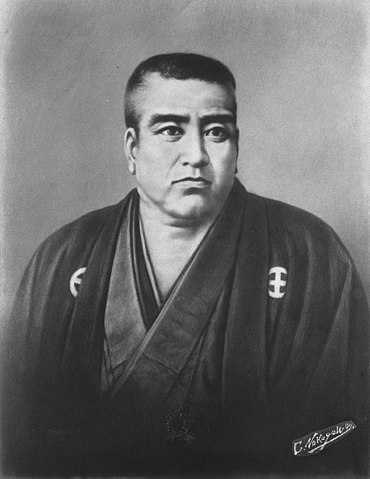
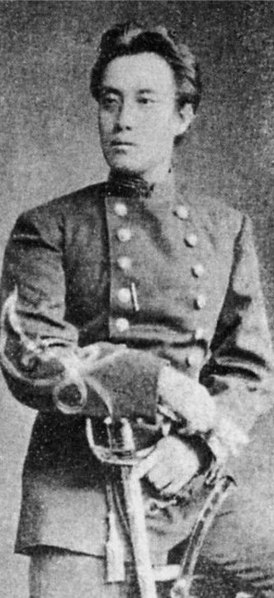
Despite the defeat of the domain, it was allowed to maintain its territory while its ally, the Aizu Domain,was transferred to a much smaller and poorer land. It’s believed this was possible because of the tolerance of the government’s leader, Takamori Saigo. On the other hand, the domain had to pay large sums of money, which was mainly funded by the Honma Clan, to the government in return for it. However, since then, the people in Shonai have greatly respected Saigo and the head of the domain, including the former lord, Tadazumi Sakai, visited and communicated with him. When Saigo rebelled against the government in 1878, known as the Seinan War, two warriors of Shonai supported and died with him. Even after Saigo was defeated, Shonai people still loved his works and published his last instructions in 1890, called Nanshu-ou-ikun, (meaning “the last instructions of the old Nanshu” (Saigo’s pen name)).

The portrait of Takamori Saigo by Edoardo Chiossone (licensed under Public Domain via Wikimedia Commons)
Tadazumi Sakai (licensed under Public Domain via Wikimedia Commons)

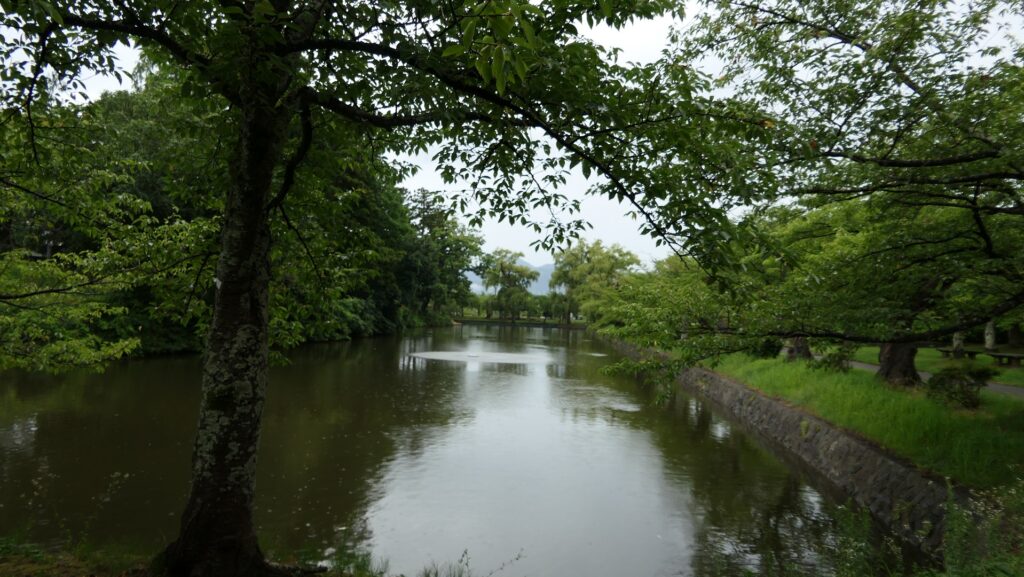
As for Tarugaoka Castle, it was abandoned in 1871 and turned into the Tsuruoka Park with all the castle buildings being removed in 1876. However, local people have been doing their best to maintain the castle ruins in a way of each period, as we can now see.

The Tsuruoka Park

My Impression

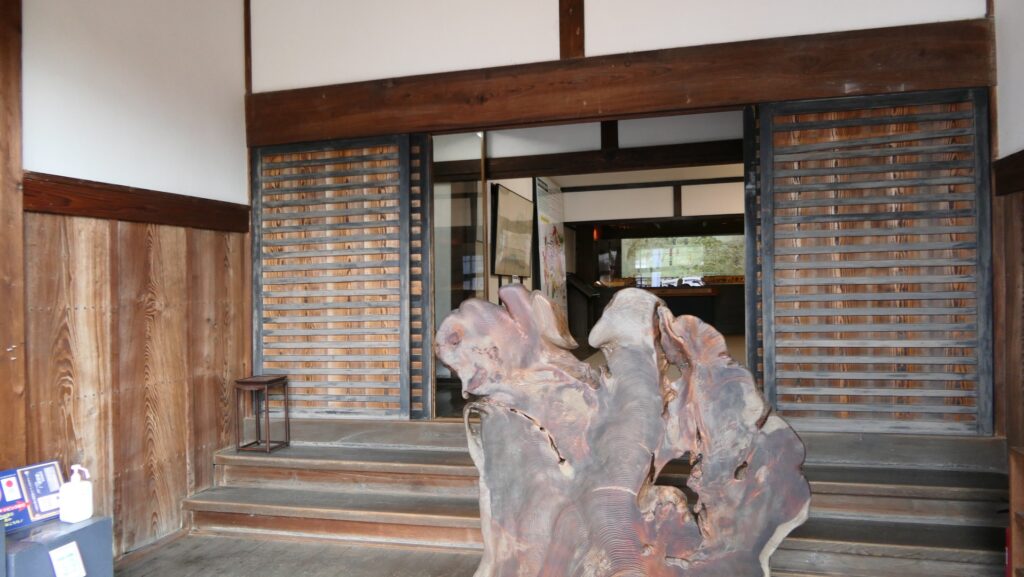
When I visited the ruins of Tsurugaoka Castle, I learned about its history in the three museums at the site, each which seems to focus on distinct perspectives. It felt like the Chidokan Museum focuses on the castle in the lord’s retreat, and the Taihokan Museum focuses on the famous historical local figures, and the Chidokan domain school focuses on the domain’s history. I was able to learn a lot about them in a short time and could feel the passion the locals have for passing on their culture and history to the next generations. I also want to visit Sakata City someday and its ruins of Kamegaoka Castle, which are the partner city and castle to Tsuruoka City and Tsurugaoka Castle.

The entrance of the retreat in the Chidokan Museum
The entrance of the Taihokan Museum
The entrance of the lecture hall in the Chidokan domain school

How to get There

If you want to visit there by car, it is about a 10 minutes drive away from Tsuruoka IC on the Yamagata Expressway. There are several parking lots around the park.
By public transportation, take the Shonai Kotsu Bus bound for Yunohama-onsen from Tsuruoka Satation and get off at the Shiyakusho-mae bus stop.
From Tokyo to the station: Take the Joetsu Shinkansen super express and transfer to the Inaho limited express at Nigata Station.

The parking lot beside the eastern entrance

That’s all. Thank you.
Back to “Tsurugaoka Castle Part1”
Back to “Tsurugaoka Castle Part2”

error: Content is protected !!