190.Yatsushiro Castle Part2

Rare stonewalls made of limestone, The contrast of the white limestone walls compliment the green water

Features

Contrast of White and Green colors

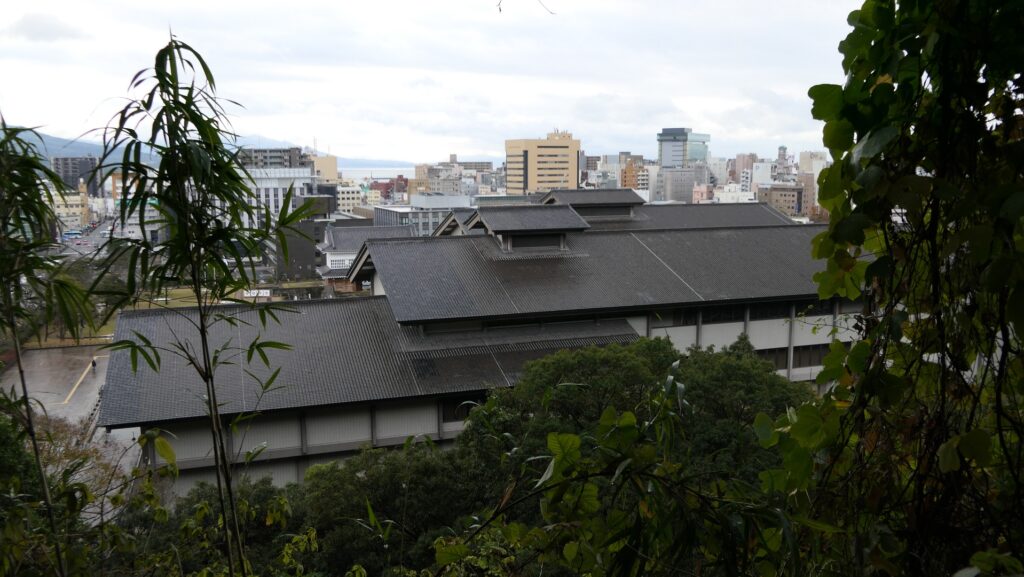
Today, the ruins of Yatsushiro Castle mainly remains as Yatsushiro Shrine including the Main Enclosure. The enclosure doesn’t have castle buildings, but still have its stone walls and the Inner Moat which are in a good condition. The castle was originally built near the sea, but you can’t see it at all around the ruins because of the land reclamation.

The aerial photo around the castle

Yatsushiro Shrine

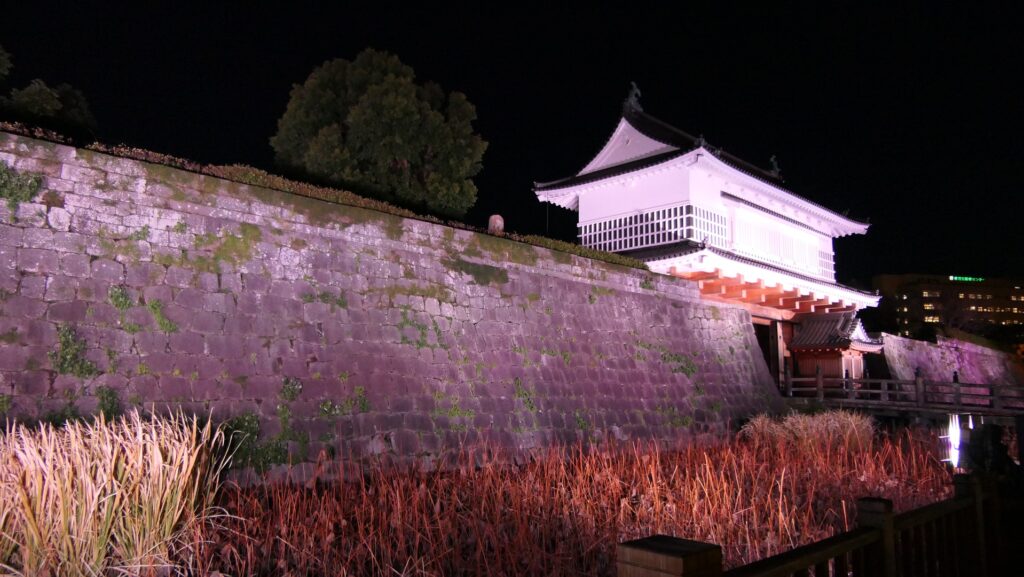
If you get close to the ruins from the city area, you will find they have a different atmosphere from other castles or ruins. The stone walls of Yatsusiro Castle partially looks white because they were built mainly using limestone, which is rare to see in Japanese castles. These stones have discolored with time like normal ones, so they must have looked much more white when they were new. The water in the Inner Moat comes from Kumagawa River, and it looks green because of algae in the river. The contrast of the white and green colors is unique and beautiful.

Getting close to the castle ruins
The stone walls use white limestones
The water in the Inner Moat comes from Kumagawa River

Overhanging Masugata square spaces

The enclosure has three entrances, two of which are original to the castle, and the other one was added when the shrine was established. The front is at the eastern side while the back is on the northern side. If you want to enter the front entrance, you can walk across Rankan-bashi or the Handrail Bridge whose one of its ornamental caps is intact, which has the year and month of when the castle was completed.

The Handrail Bridge at the front entrance
The ornamental cap which has the year and month of the castle’s completion, quoted from the website of Yatsushiro City

The overhanging Masugata square shape is also intact, surrounded by great stone walls. The stone wall base for Migaki-yagura Turret supports its left side and alternating stone walls stand on the back and right sides. You need to walk in and turn right to enter the inside of the enclosure. This design is very defensive.

The Handrail Bridge seen from the stone wall base for Migaki-yagura Turret, the front of the Masugata system overhangs towards the bridge
The Masugata system of the front entrance
The alternating stone walls surround the path to the center of the Main Enclosure

The back entrance on the north also has a similar design.

The back entrance

Outstanding Main Tower base

The highlight of the ruins is the stone wall base for the Main Tower at the northwestern corner of the Main Enclosure. The base has two tiers for the Large Main Tower and Small one. These towers were burned down by a lightning fire in 1672. After that, only the Small Main Tower was restored. Today, though only their stone wall bases remain, if you look at them from the outside of the Inner Moat, they look so great! The base for the Large Main Tower also supported the back entrance of the enclosure on the right side to prevent enemies form attacking it easily.

The base for the Large Main Tower on the left and the base for the Small Main Tower on the right
The stone wall base for the Large Main Tower at the northwestern corner of the Main Enclosure
The Large Main Tower base also supports the back entrance on the left

Unfortunately, you can’t climb up these Main Tower bases from the inside of the enclosure because of partially collapsing walls as of December 2022. Alternatively, you can climb up other stone walls to sit and rest, see a view around the castle, and understand how the castle was protected.

Looking up the Large Main Tower base from the inside of the Main Enclosure
It was prohibited to clime the Main Tower base as of December 2022
You cam climb the tops of other stone walls

To be continued in “Yatsushiro Castle Part3”
Back to “Yatsushiro Castle Part1”

190.八代城 その2

石灰岩でできた珍しい白色の石垣と、緑色の堀水とのコントラストを楽しめます。

特徴、見どころ

白と緑のコントラスト

現在、八代城跡は主に本丸にある八代神社として残っています。本丸には城の建物は存在していませんが、石垣や内堀がよい状態で残っています。この城はもともと海の近くに建てられたのですが、干拓が行われたため今では周辺に海は全く見えなくなっています。

城周辺の航空写真

八代宮

市街地の方から城跡の方に近づいていくと、他の城や城跡とは異なる雰囲気があることに気がつかれるでしょう。八代城の石垣は、主に石灰岩を使って築かれているので、部分的に白い色をしているのです。日本の城では珍しい例です。もっとも築城から時を経て退色し、他の石と同じようになってしまっているので、きっと新築時点ではもっと白かったに違いありません。内堀の水は球磨川から引かれていますが、川の中に藻が繁茂しているため緑色に見えます。白と緑のコントラストは独特で且つ美しいです。

城跡に近づいていきます
石垣に石灰岩(白い石)を使っています
内堀の水は球磨川から引いています

本丸の張り出し桝形

本丸には入口が3つありますが、その内の2つが城があった時代からのもので、もう一つは神社が設立されてときに追加されました。正面(大手口)は東側で、裏門(搦手口)は北側となります。正面入口から入ろうとする場合、欄干橋を渡っていきます。この橋の擬宝珠の一つは当初からのもので、城が完成したときの年月(元和八年二月)が記されています。

正面入口にある欄干橋
完成年月が記された擬宝珠、八代市ホームページより引用

張り出している桝形の形も明瞭に残っていて、素晴らしい石垣に囲まれています。桝形の左側には磨(みがき)櫓の石垣台があり、背後と右側には食い違いの石垣が立っています。よって本丸に入るには真っすぐ入った後、右に曲がっていく必要があります。とても防御に優れた仕組みになっています。

磨櫓石垣台から見た欄干橋、桝形の先端が橋の方に張り出しています
正面入口の桝形
本丸内部への食い違い石垣による通路

裏門の方も似たようなデザインになっています。

裏門(搦手口)

際立っている天守台石垣

八代城跡のハイライトは、本丸北西隅にある天守台石垣でしょう。この天守台は2段造りで、それぞれ大天守用と小天守用となっています。両天守は、1672年の落雷により焼け落ちてしまいました。その後、小天守のみが再建されました。現在では天守台のみが残っています。内堀の外側から眺めてみると、なかなか壮観です。大天守の天守台は本丸の裏門をその右側から守る役目も担っていて、敵が簡単に攻め入れないようになっていました。

左側が大天守台、右側が小天守台
本丸北西隅にある大天守台
左側の裏門の防衛にも一役買っています

2022年12月時点の情報となりますが、天守台の一部が崩れていて、残念ながら本丸の内側から天守台に登ってみることはできません。その代わりに、他の石垣の上に登って、そこで座ってゆっくりくつろぐことができます。そこから城の周りの様子もわかるので、城がどのように守られたのか理解できるでしょう。

本丸内側から大天守台を見上げる
2022年12月時点で天守台には登れませんでした
他の石垣の上には登ってみることができます

「八代城その3」に続きます。
「八代城その1」に戻ります。

101.Shinori-Tate Part2

A relaxing place for visitors

Features

Hakodate City partially restores Hall

Today, the ruins of Shinori Tate have been developed by Hakodate City. They are a relaxing place on the hill above the Shinori Fishing Port in the south. They still have the square space in its center, but with no buildings, which is surrounded by the earthen walls and dry moats outside. They are also covered with lawn, which look beautiful.

The ruins of Shinori Tate are above the town

There is the memorial monument of the battle between the “Japanese” and the Ainu people and a rest station in front of the ruins entrance. The entrance at the western side of the ruins, have double of the dry moats. If you want to enter the ruins, you can go across the bridge over the first moat and the earthen bridge over the second moat. They were restored by the city in the present time to show the late stage of the hall.

The aerial photo around the castle

The memorial monument in front of the ruins entrance
The rest station
The ruin entrance where you can see the double moats over there
The bridge over the first moat
the earthen bridge over the second moat

Center of Ruins

The center of the ruins is a square surrounded by the earthen walls, which just looks like one of the Japanese style castles’ enclosures which developed after Shinori Tate was built. According to the excavation team, there were three generation houses. The second or third ones were probably rebuilt after the hall was first captured by the Ainu people. How the first-generation houses were built is marked on the ground. The place of the former well is surrounded by four-sided plates. Many Chinese ceramic ware and Japanese potteries were found during the excavation. There are also two monuments of the hall, which were built by local people who first tried to preserve the ruins in the Taisho Era, about 100 years ago.

The center is surrounded by the earthen walls
The fat exhibition of the houses
The ruins of the well
The two monuments of the hall

Enjoying Great View

I recommend you stand or sit on the southern side of the earthen walls. You can enjoy a great view of the Tsugaru Channel on the front and a distant view of Hakodate Mountain on the right. If the weather is fine, you can also see the mainland over the channel. It must be a good experience for you to relax and refresh. If you have time, you should consider walking the path outside the earthen walls on the bottom of the dry moats. For example, the eastern side of the moats uses a stream, so you can see the hall was built using natural terrain as well.

The view of the Tsugaru Channel and the Shinori Fishing Port
The distant view of Hakodate Mountain
The bottom of the southern dry moat
The eastern dry moat using the stream
The northeastern corner of the earthen walls

To be continued in “Shinori-Tate Part3”
Back to “Shinori-Tate Part1”

error: Content is protected !!