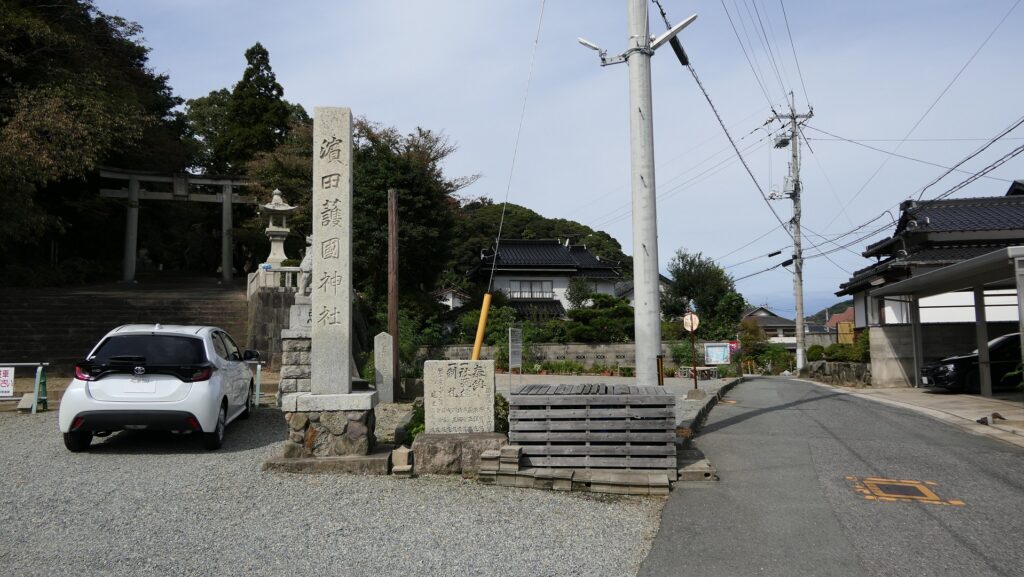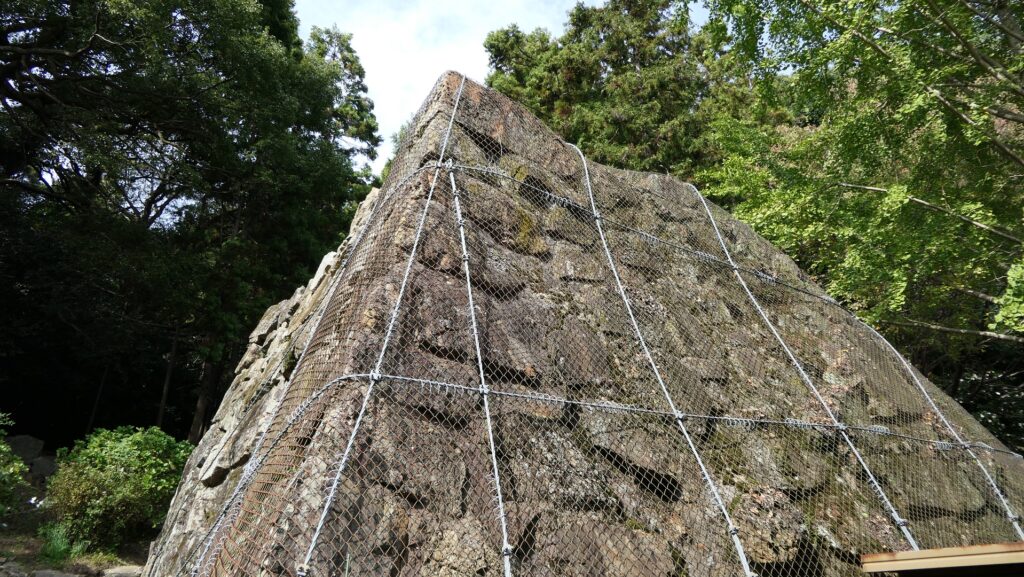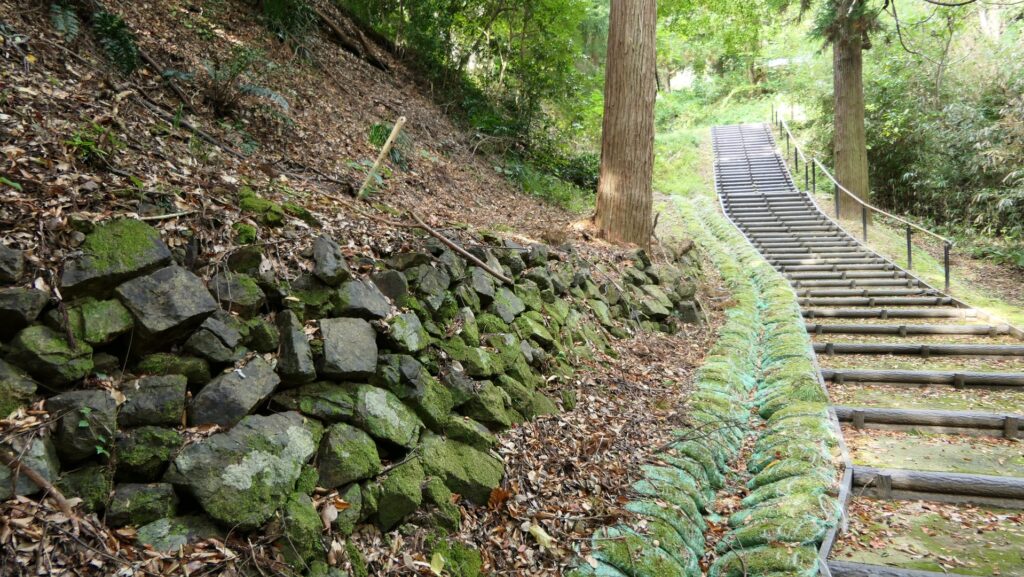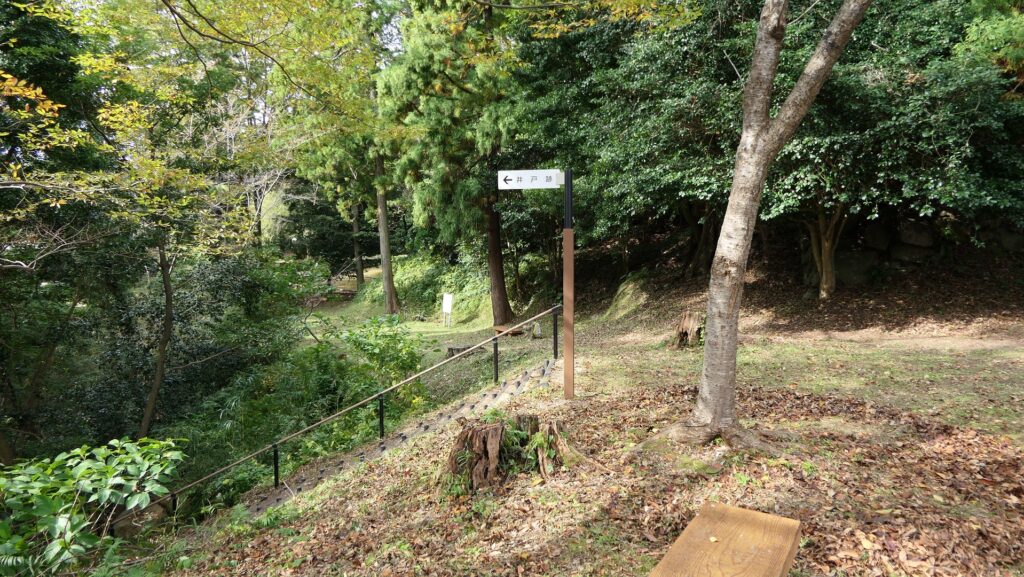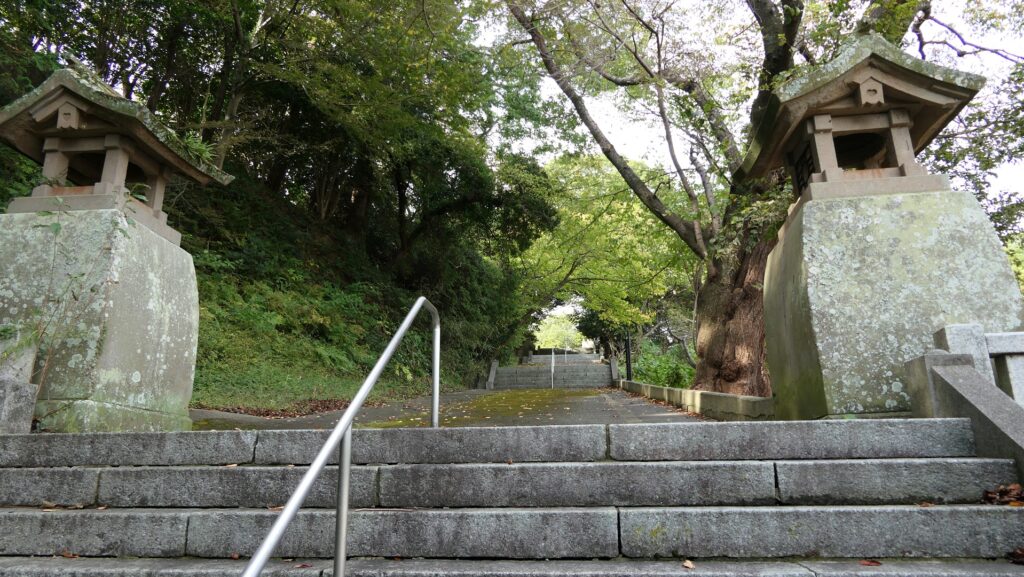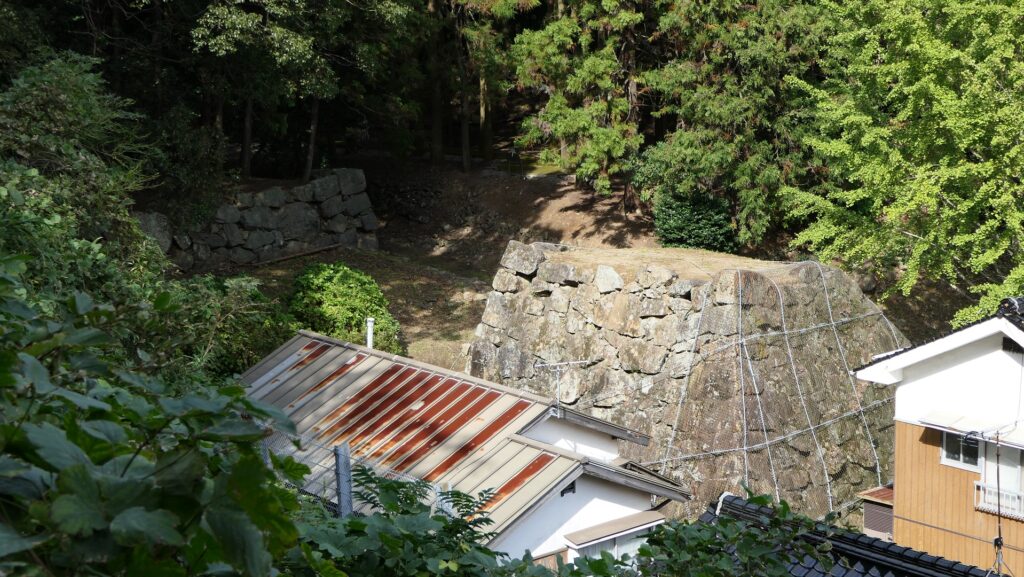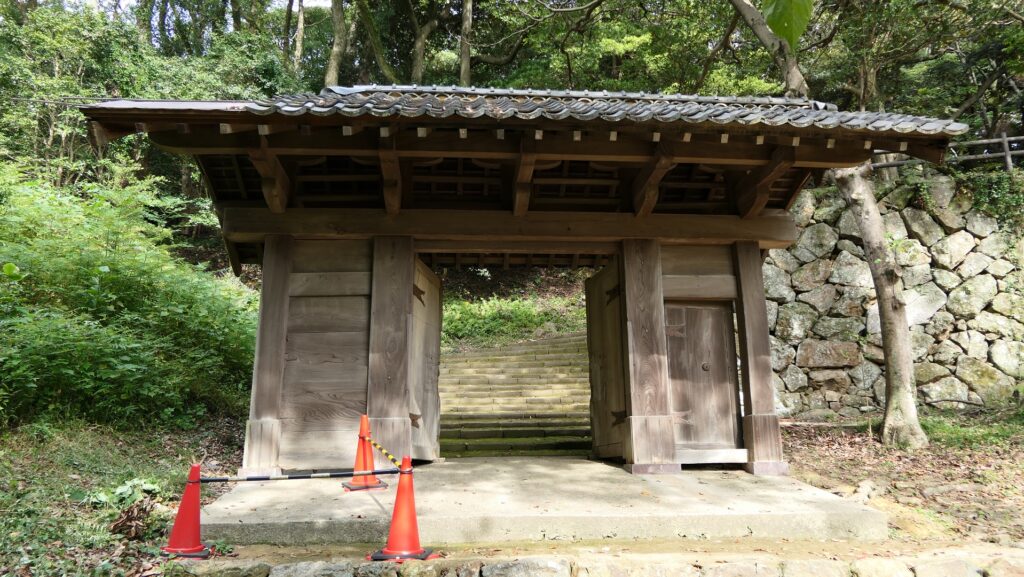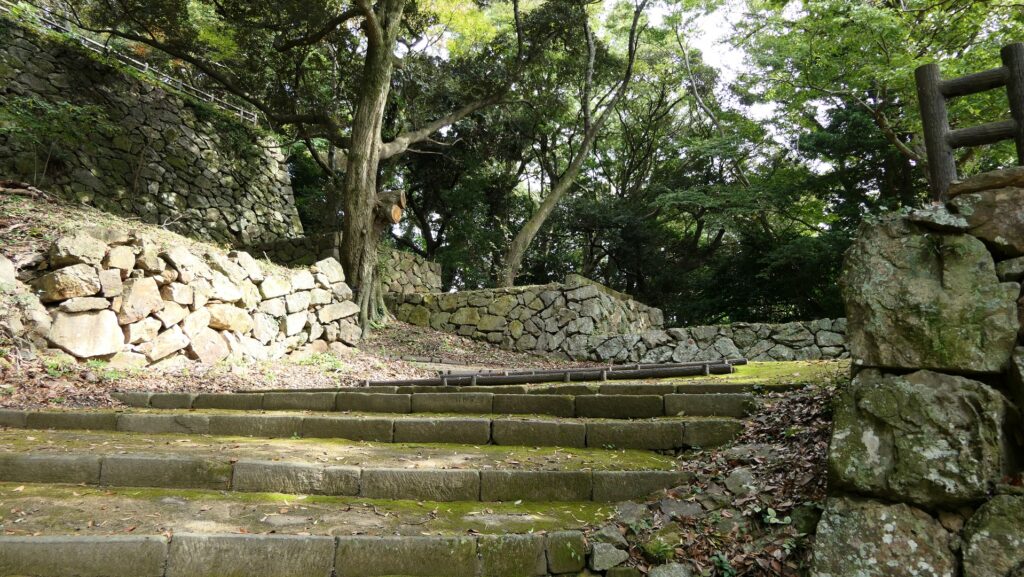
75.萩城 その2

城も町も見どころが満載です。

特徴、見どころ

二の丸を通って本丸へ

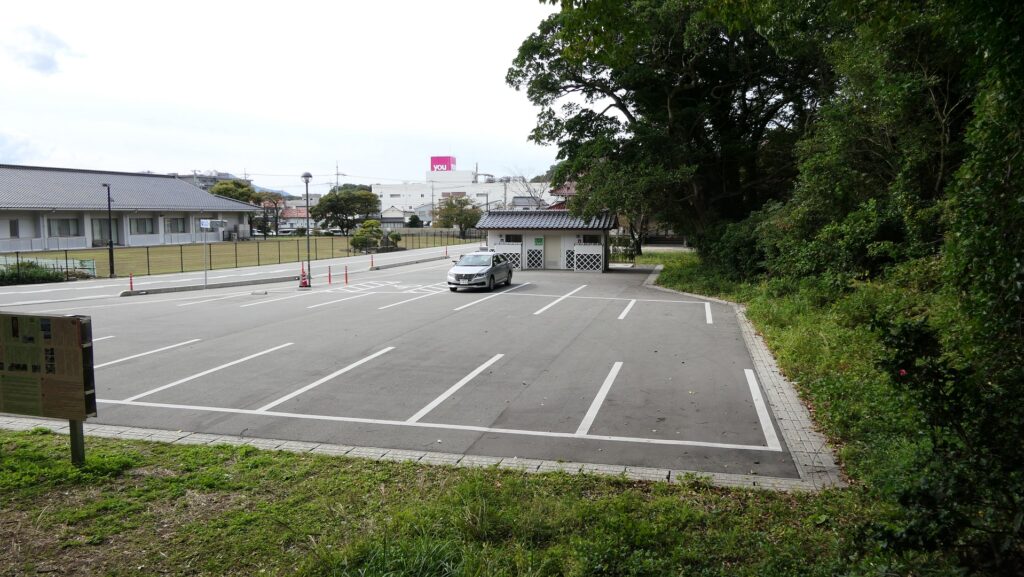
現在、萩市には数多くの歴史的観光地があります。江戸時代の古地図を使って、現在の街並みを巡ることができるとさえ言われています。まず最初に車で城跡の中心部まで行かれるのでしたら、二の丸の手前にある駐車場に停めることができます。駐車場の辺りはかつては中堀であったようで、1924年に萩運河が掘られたときにその残土により埋められてしまいました。そのため堀によって隔てられてはいませんが、駐車場の南の方には三の丸内の厚狭(あさ)毛利家の現存屋敷(長屋)があり、北の方は二の丸南門跡となります。

城周辺の地図

駐車場周辺
現存する厚狭毛利氏屋敷長屋
二の丸南門跡
城近くの萩運河

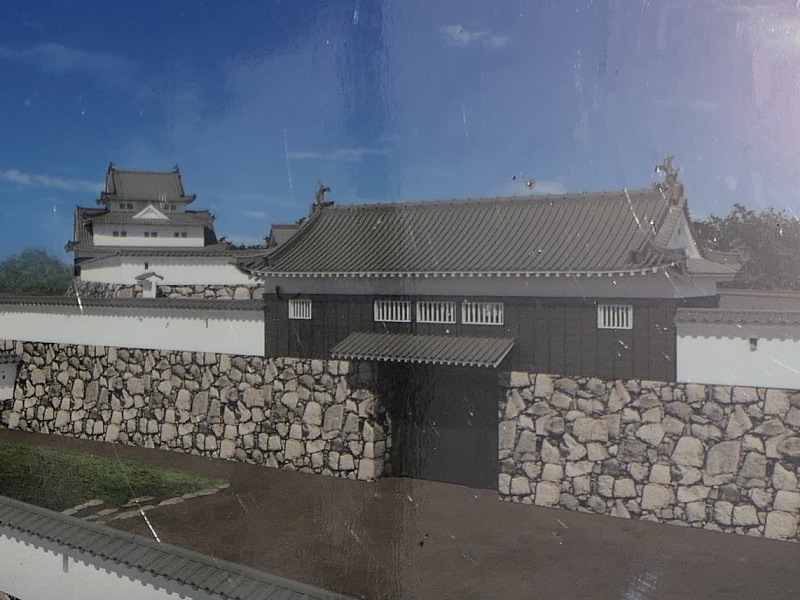
南門にはかつては櫓と石垣に囲まれた、桝形と呼ばれる四角い防御空間が二重に設置されていました。現在では残っている石垣によって、その形はわかるようになっています。門跡の内側の二の丸は民間に売却されているので、萩焼の店や茶室などが営業しています。

二重の桝形になっています
南門跡にある毛利輝元像
二の丸内にある萩焼の店

美しい天守台石垣

そうするうちに本丸に着きます。本丸には建物は残っていませんが、石垣と内堀が健在です。特に天守台石垣は、その隅石の部分が扇の勾配のようであり、背景の指月山と相まってとても美しく見えます。天守台の高さは約10mあり、天守そのものの高さは20m近くあったと言われているので、合わせると30m位あったことになります。

本丸
天守台石垣
天守台石垣と背景の指月山
天守の古写真、明治時代  (licensed under Public Domain via Wikimedia Commons)

規模の大きさがわかる本丸の遺跡

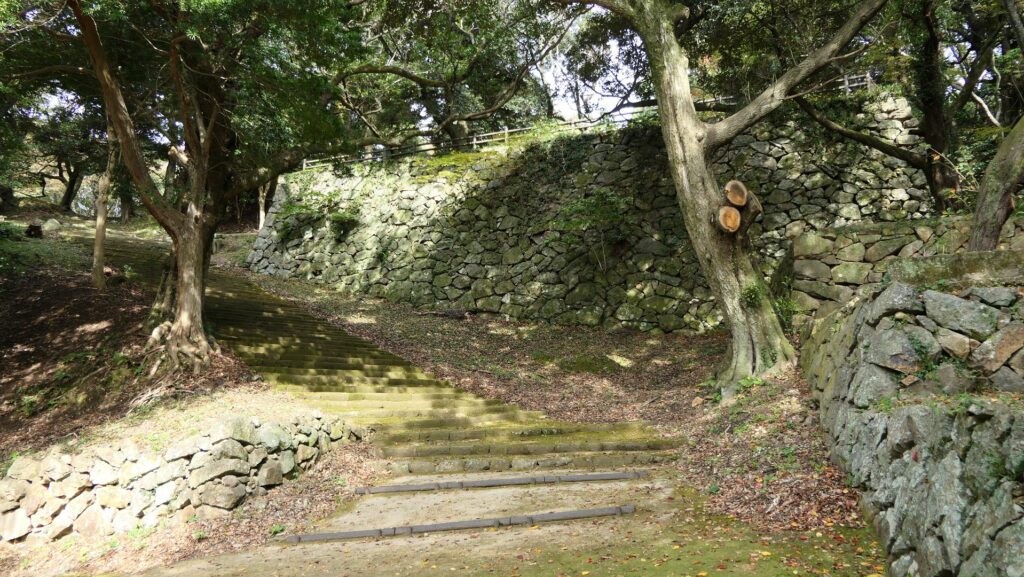
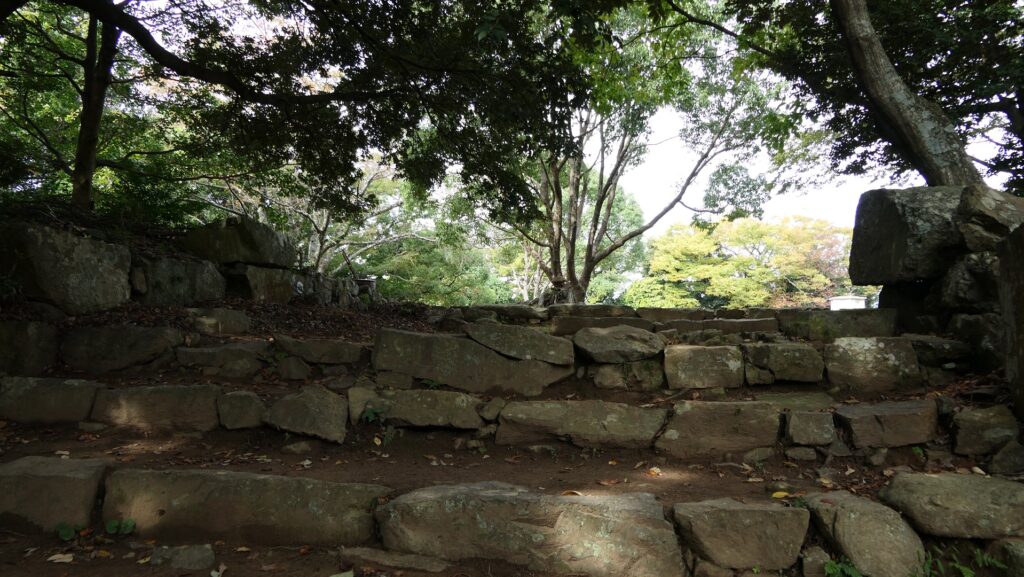
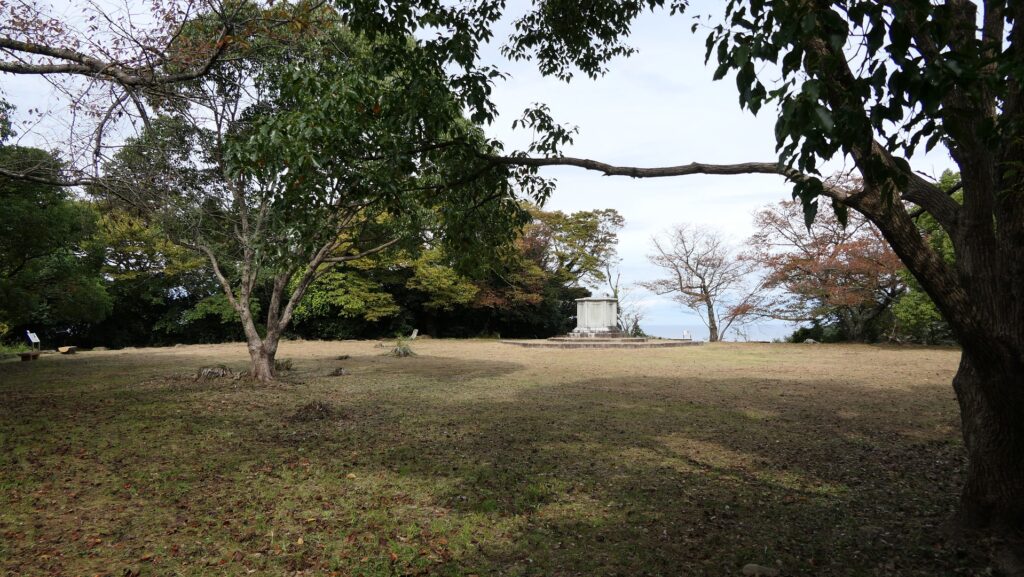
本丸は、指月公園の一部となっています。本丸に入るには、内堀にかかっている極楽橋を渡って、本丸内門から入ります。本丸の内部は基本的には広場になっていますが、明治時代に志都岐山(しづきやま)神社が創建されたのと、その後茶室などのいくつかの建物が別の場所から移転してきています。天守台の上に登ってみることができます。そこには、多くの天守の礎石が並んでいて、かつての天守がどんなに大きかったのか想像できるでしょう。

本丸門
天守台石垣に登ります
天守台上の礎石
天守台から本丸門方面を見ています

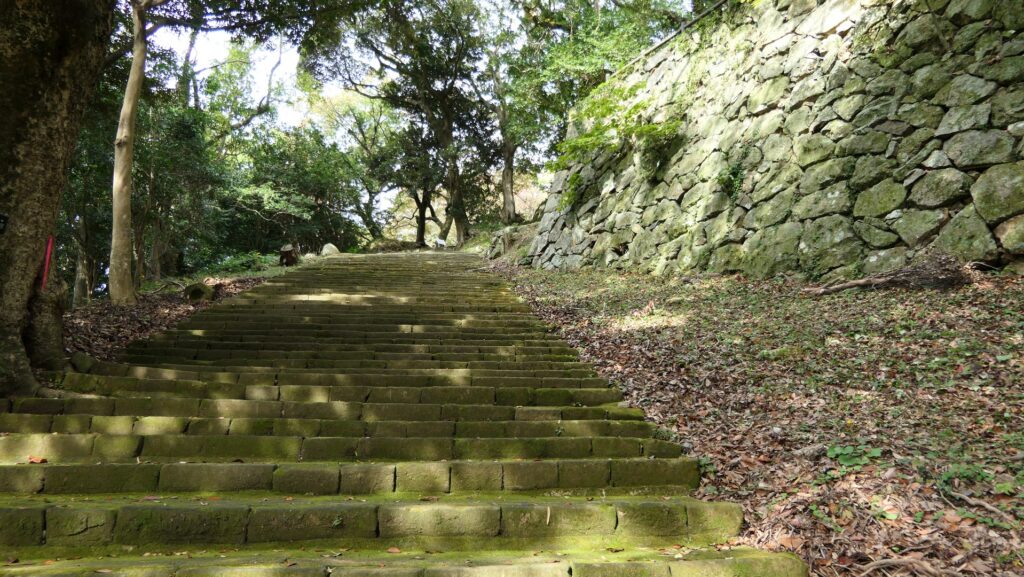
また、あまり目立たないが重要な役割を果たしたものとして、雁木(がんぎ)と呼ばれる幅広な石の階段にも注目してみてください。天守台と入口の門の中間にあります。この雁木は、日本の城で最も長大なものの一つと言われています。かつて石垣の上には土塀が築かれており、もし敵が城を攻撃してきた場合には、守備兵はこの雁木を登って塀越しに反撃できるようになっていました。

長大な雁木
雁木を登った石垣の上面、かつては土塀がありました
前面の石垣

海岸まで防御

また、東の方から城を眺めてみてはいかがでしょう。具体的には、二の丸東門跡から外に出て、菊ヶ浜から見る指月山はとても美しいです。また、山の麓の方を見てみると、長大な石垣が横たわっています。かつては、石垣の上に5基もの櫓が立っていて、その間には土塀も築かれていました。

二の丸東門跡
菊ヶ浜から見た指月山
海岸際に石垣が築かれています

現在は、その土塀の一部が復元されています。その石垣に近づいて、潮入門跡から海岸に出てみることもできます。

復元された土塀
潮入門跡
石垣の外はすぐ海岸です

「萩城その3」に続きます。
「萩城その1」に戻ります。

174.Ouchi Clan Hall/Konomine Castle Part2

A good combination of the hall and castle

Features

Hall is restoring little by little

Today, the ruins of Ouchi Clan Hall have been designated as a National Historic Site. They are still in the center of Yamaguchi City, which still have parts of names for its streets like “Oji” or Main Street and “Kouji” or Narrow Street similar to Kyoto. Ryufukuji Temple was built inside the hall ruins by Takamoto Mori who was a son-in-law of Yoshitaka Ouchi to worship Yoshitaka. The main building was moved from another in the Meiji Era, but it is very old (built in the Muromachi Period as old as the Ouchi Clan), and it is also an Important Cultural Property. While several researches and excavations have been done at this site, nothing about the Ouchi Clan’s Main Hall was ever found. This may be because it is still under the temple’s main building.

The aerial photo around the castle

The main building of Ryufukuji Temple

Instead, many other items regarding the hall were found. According to the achievements, some of them were restored at the site. For example, there are two restored gardens inside. One is the pond garden in the southeastern part, and the other is the dry landscape in the northwestern part. The earthen walls were also restored at the northern, western and southern sides of the ruins. The Western Gate and some stone work for the water moat were also restored at the western side.

The restored pond garden
The restored dry landscape (but it’s very small)
The restored earthen walls
The restored Western Gate
The restored stone work in the moat

Excavated Tsukiyama Hall Ruins

In north of Ochi Clan Hall Ruins, over the Tsukiyama-Kouji street, there is Tsukiyama Hall Ruins which was built as a villa. The southeastern part of them was excavated and developed as a historical park after a Japanese style restaurant had moved out from there to another site. Ruins of some buildings and dry moats were also found by the excavation team. The ruins were buried again for preservation and there are signboards and marks on the ground where they had been found. Historians speculate Norihiro Ouchi first used the hall as a retreat, then it was used to worship him after he died. That’s probably because the main part of the ruins are now used as Yasaka Shrine and Tsukiyama Shrine.

Tsukiyama Hall Ruins
You can see there was the Eastern Moat in the past by the mark and signboard
The photo of the excavated cross section of the Eastern Moat, exhibited by Yamaguchi City Museum of History and Folklore
Yasaka Shrine at Tsukiyama Hall Ruins

Konomine Castle Ruins are accessible

The ruins of Konomine Castle have also been designated as a National Historic Site. The castle was built on Konomine Mountain (at 338m above sea level), about 2km away from Ouchi Clan Hall. You can see the mountain standing out from the city area. You can access it by walking or driving. If you use a car, you can park at the mid slope of the mountain, however, you need to walk on the ridge to the top for about 500m.

The mountain where the ruins are can be seen from the city area
You need to walk on the ridge to the top

You will see some enclosures made of soil on the way there. They were thought to be built by the Ouchi Clan and used by the Mori Clan as well. The top is surrounded by stone walls which the Mori Clan built. They partially collapsed because the clan intentionally destroyed them when the castle was abandoned. You can see a nice view of the city area including the hall ruins. The castle and the hall makes a perfect combination.

One of the enclosures on the way
The remaining stone walls on the Main Enclosure
The inside of the Main Enclosure
A view of the city area from the Main Enclosure, the inside of the red circle is the Ouchi Clan Hall Ruins
A view of Konomine Castle Ruins from Ouchi Clan Hall Ruins

To be continued in “Ouchi Clan Hall/Konomine Castle Part3”
Back to “Ouchi Clan Hall/Konomine Castle Part1”

174.大内氏館・高嶺城 その2

館と山城の絶好のコンビネーション

特徴、見どころ

少しずつ進む大内氏館の復元

現在、大内氏館跡は国の史跡に指定されていますが、今でも山口市の中心部に位置しています。その辺りの通りは「~大路」や「~小路」と名付けられていて、京都に似ています。館跡の中には、毛利隆元が義父の大内義隆を祀るために創建した龍福寺があります。明治時代なってその本堂が他の場所からこちらに移されたのですが、建物自体はとても古く(大内氏と同時代の室町時代に建てられたものです)こちらも重要文化財に指定されています。この地では何回も調査や発掘が行われていますが、大内氏館そのものにに関するものは見つかっていません。寺の本堂の地下に眠っているからかもしれません。

城周辺の航空写真

龍福寺本堂

その代わりに館に関連する他のものが多く見つかっています。調査や発掘の成果に基づいて、現地にいくつか復元されたものがあります。例えば、敷地の内部に2つの復元庭園があります。一つは南東部にある池泉庭園で、もう一つは北西部にある枯山水です。館跡の北、西、南側には土塁も復元されています。西側には、西門と、石組み水路も復元されています。

復元された池泉庭園
復元された枯山水(ただし面積は小さいです)
復元された土塁
復元された西門
復元(または修復)された石組み水路

発掘された築山館跡

大内氏館跡の北側、築山小路を越えたところに、別邸として築かれた築山館跡があります。その南東部分が、そこにあった料亭が他の場所に移転した後に発掘され、歴史公園として整備されました。建物や空堀の痕跡が発掘によって発見されました。それらの遺跡は保存のために埋め戻されてしまったのですが、説明板や地面のマーキングによって、そこに何があったのかわかるようになっています。歴史家は、大内教弘がこの館を隠居所として最初に築き、彼が亡くなった後は彼を祀る場所になったと推測しています。館跡の主要部分が八坂神社や築山神社になっていることもその根拠の一つとされています。

築山館跡
東堀があった場所がわかるようになっています
発掘された東堀の断面写真、山口市歴史民俗資料館にて展示
築山館跡にある八坂神社

アクセスし易い高嶺城跡

高嶺城跡もまた、国の史跡に指定されています。この城は大内氏館から約2km離れた、標高338mの高嶺山の上に築かれました。市街地からでもこの山がそびえているのが見えます。歩いてでも、車でも城跡に行くことができます。車を使った場合は、山の中腹に駐車することができます。ただ、そこから頂上までは峰上を約500m歩いて行く必要があります。

市街地から見える城跡がある山
山の峰上を歩きます

その途中でいくつかの土造りの曲輪を目にしますが、最初は大内氏が築き、その後毛利氏によっても使われたと考えられています。頂上部分は石垣に囲まれており、これは毛利氏が築きました。部分的に崩れているのは、この城が廃城となったときに毛利氏が意図的に破壊したためです。そこからは、大内氏館跡を含む市街地をよく見渡すことができます。この城と館とは、完全に連携が取れる関係にあったのです。

頂上に行く途中にある曲輪
本丸に残る石垣
本丸頂上部
本丸から見た市街地、赤丸内は大内氏館跡
大内氏館跡から見た高嶺城跡がある山

「大内氏館・高嶺城その3」に続きます。
「大内氏館・高嶺城その1」に戻ります。

error: Content is protected !!