167.Shingu Castle Part2

Castle ruins with a mysterious atmosphere

Features

Developed as Tankaku Castle Park

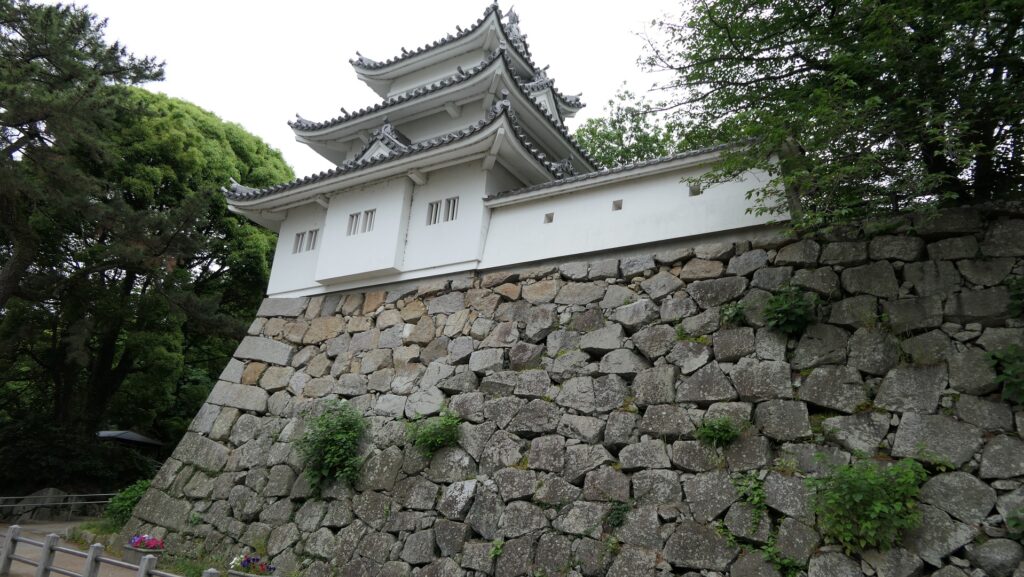
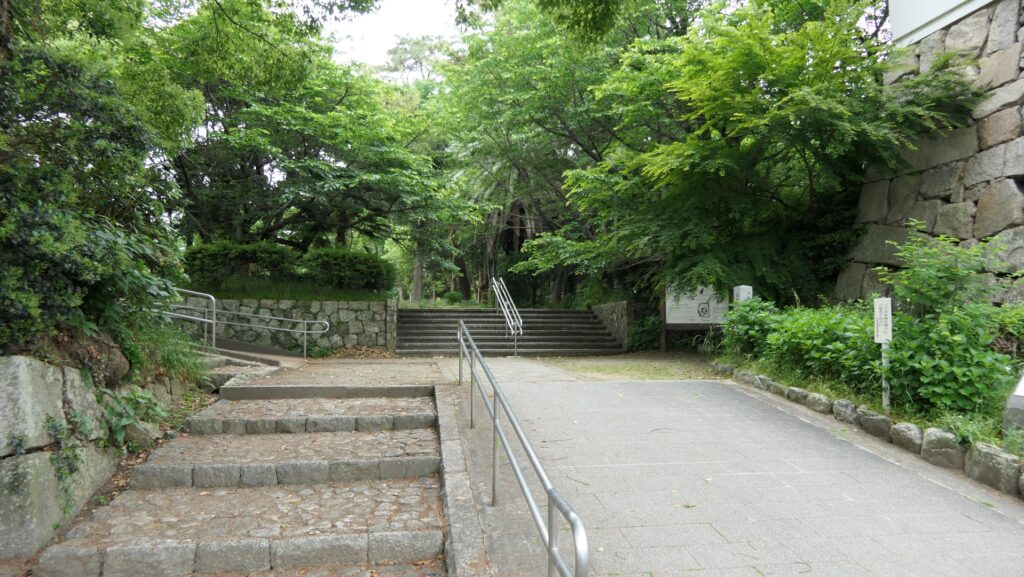
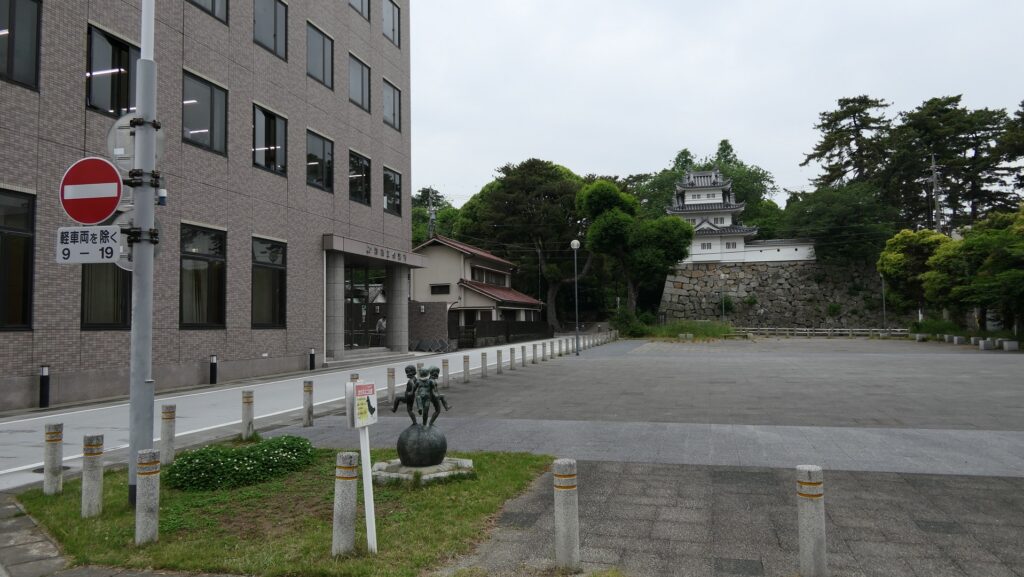
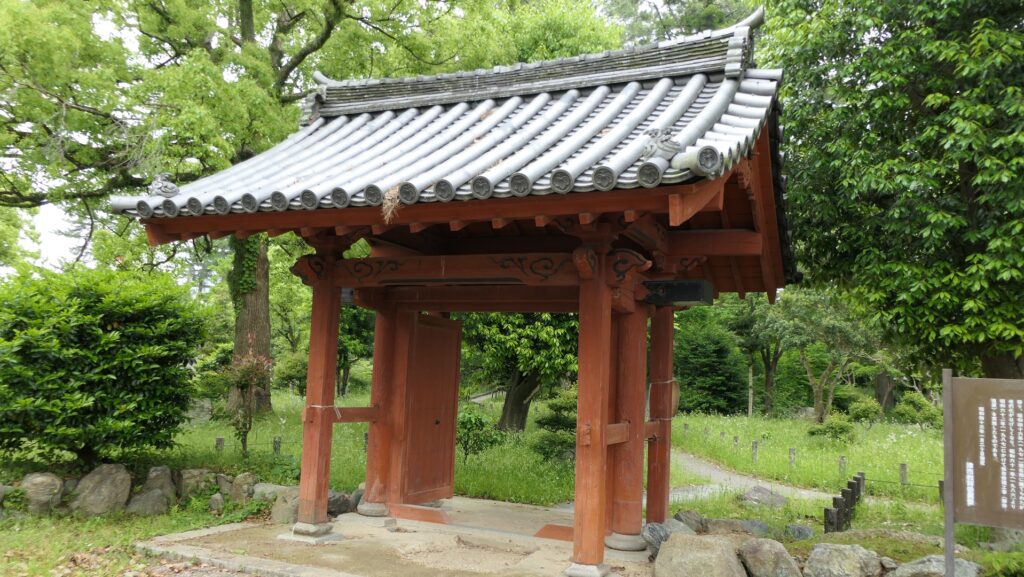
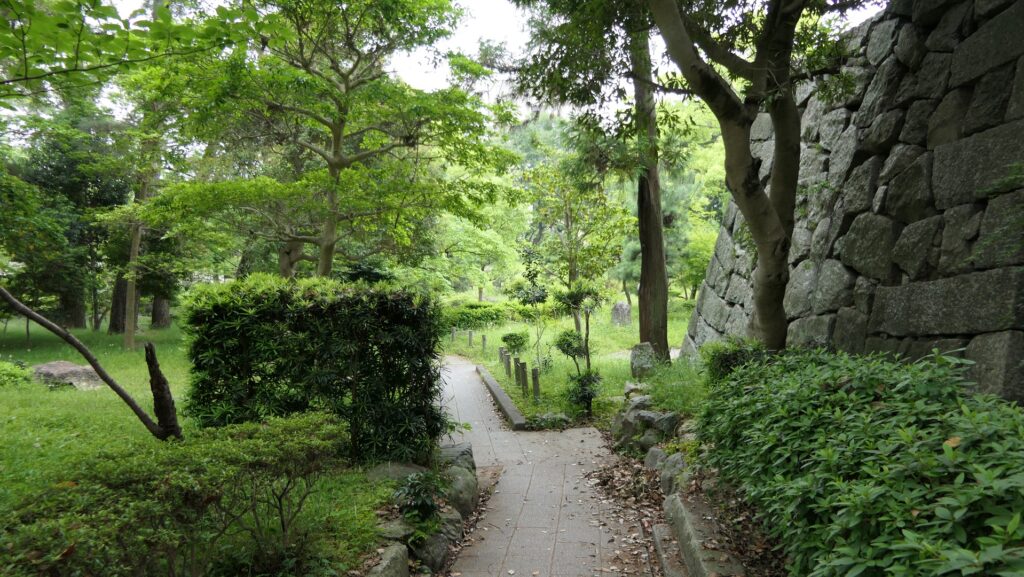
Today, the ruins of Shingu Castle have been developed by Shingu City as the Tankaku Castle Park. The park actually has a mysterious atmosphere because it consists of the castle ruins, the ruins of an amusement facility developed in the Showa Era, and the modern park facilities. It has two entrances but they were not originally for the castle. If you enter it from the main entrance on the western side, you will walk up the stairs to the hill for a while.

The map around the castle

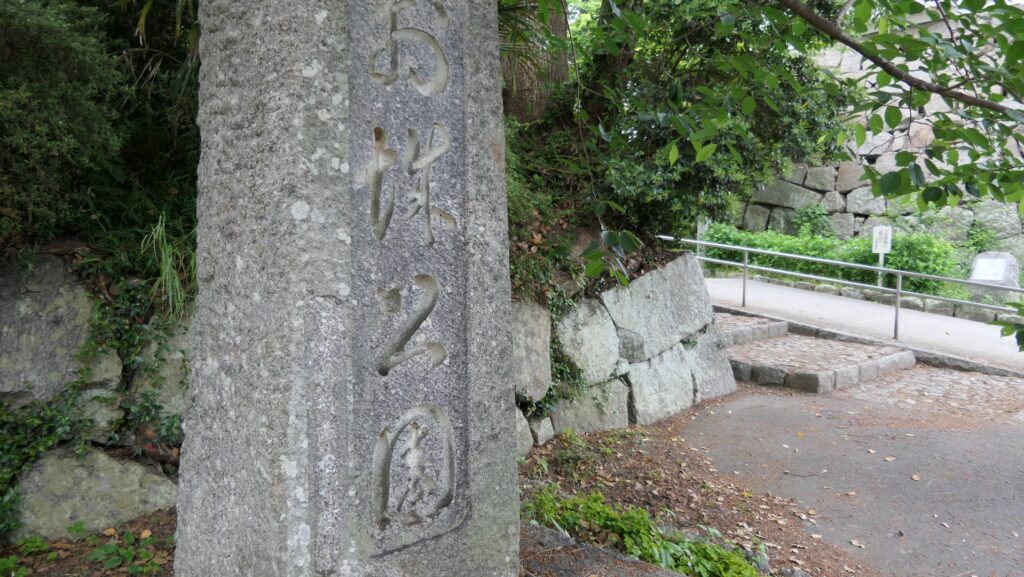
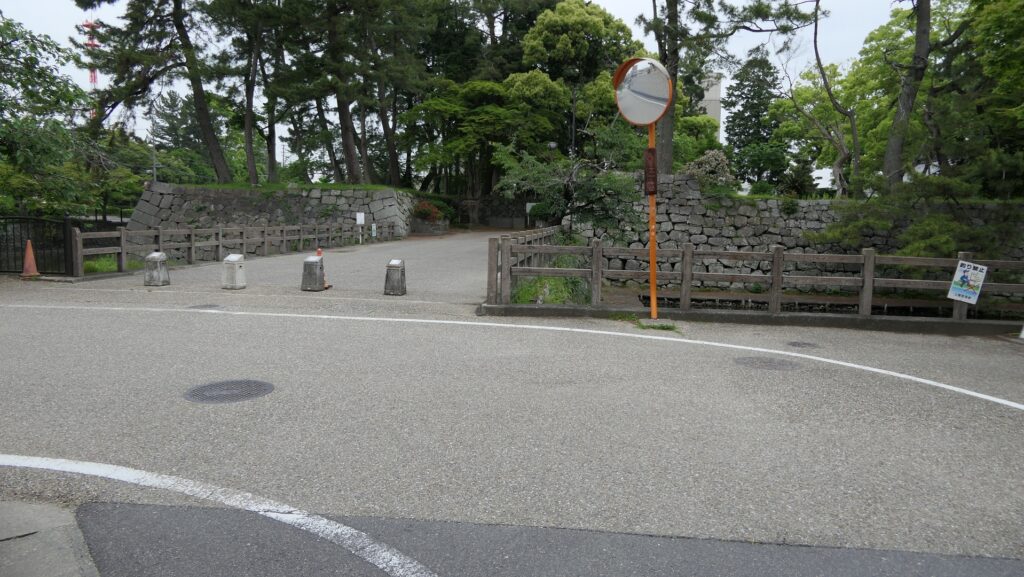
The main entrance of the park
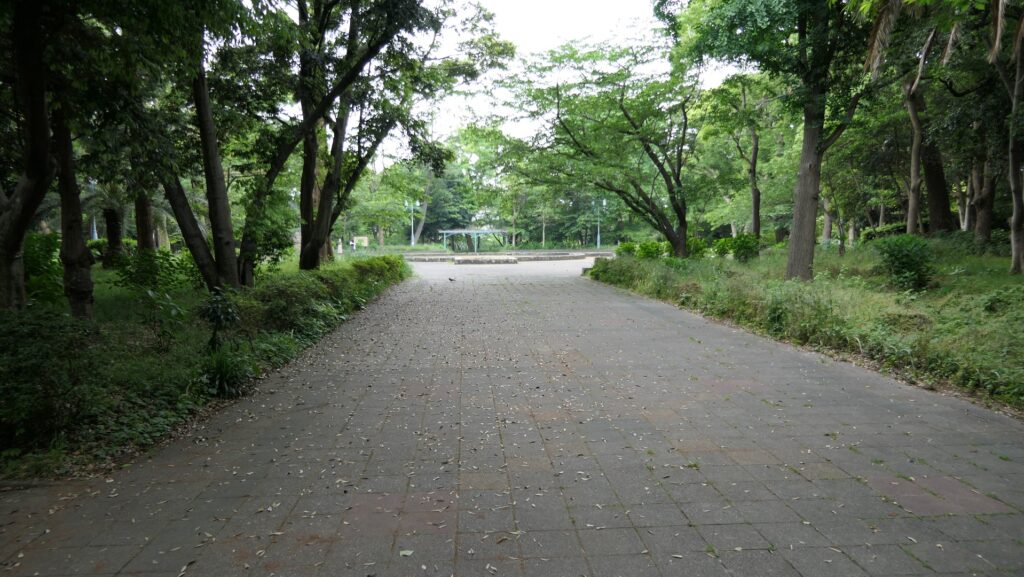
Walking up the stairs from the main entrance
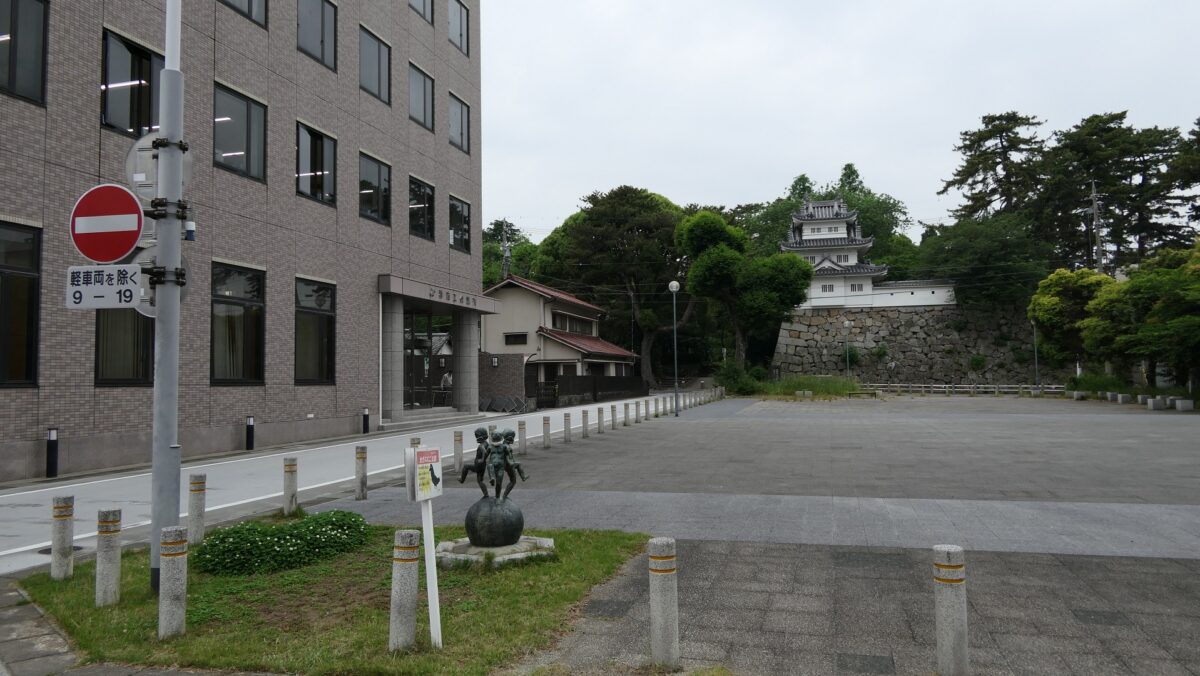
The eastern entrance of the park

Then, you will eventually walk on the original Main Route which comes from another side and meets at some point. You can see the rest of the original route goes down, but you can not to go there directly over the poles and ropes.

The meeting point with the original Main Route
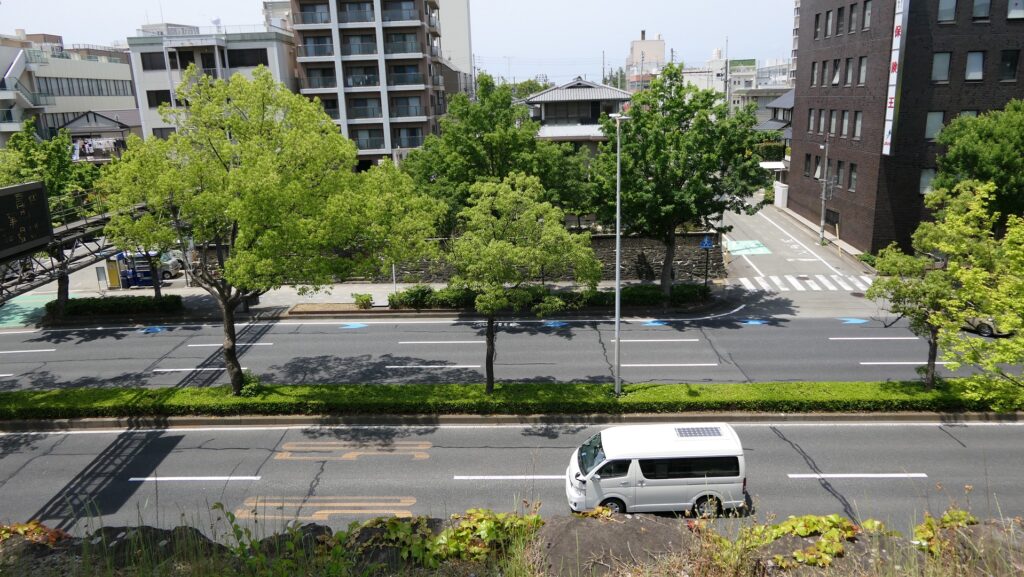
Looking down the original Main Route

If you want to go there, you need to go around the residential area which surrounds the route.

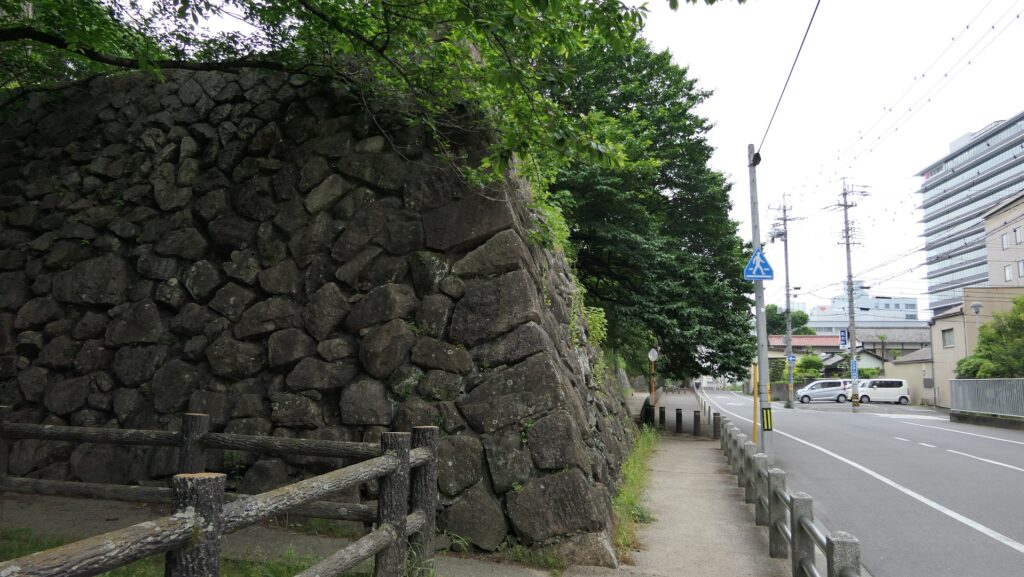
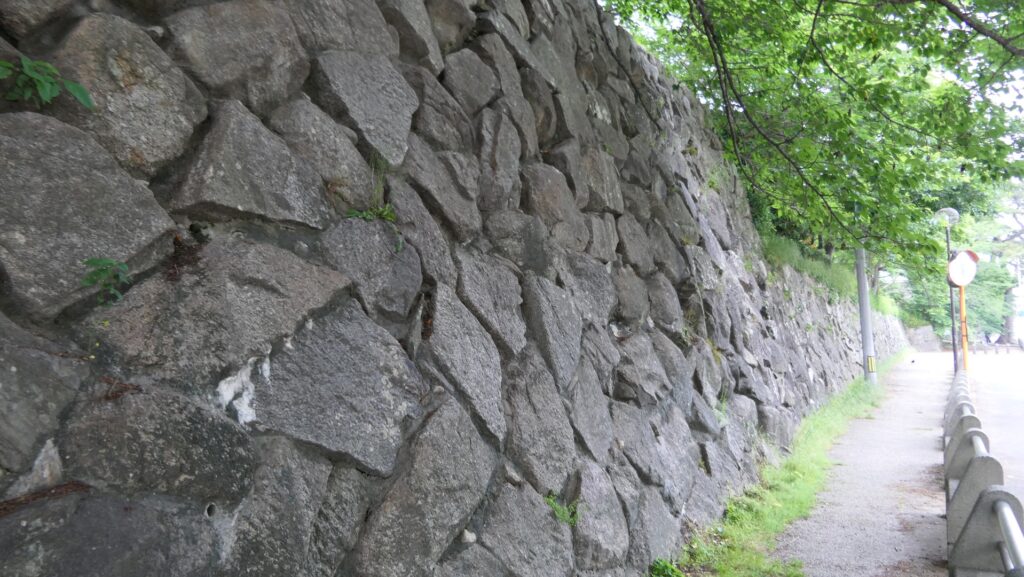
The remaining sone walls among the residential area
The original Main Route below the hill

Enclosures surrounded by Precise Stone Walls

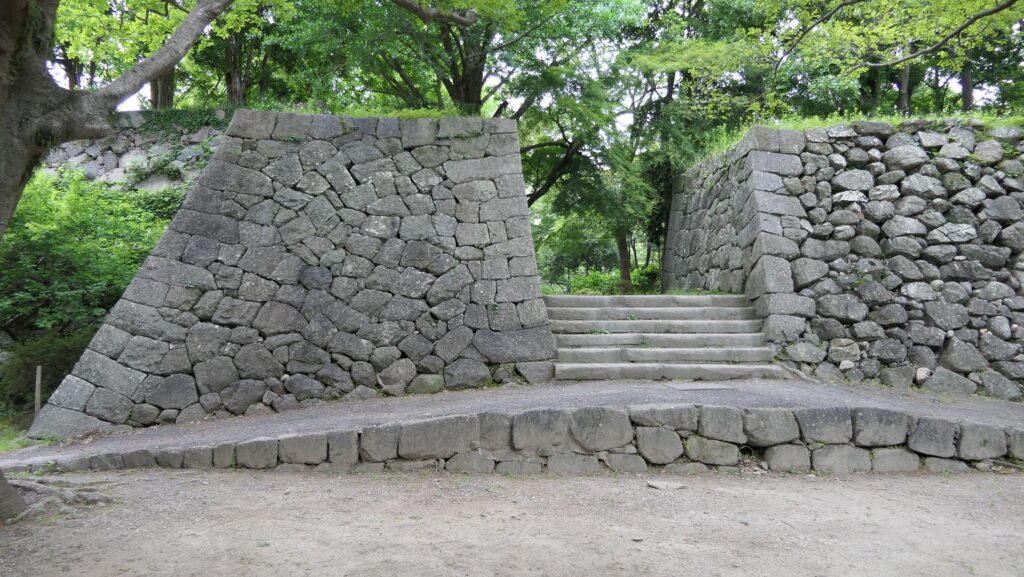
There are four enclosures on the hill, which are the Matsunomaru, Kanenomaru, Main, and Barbican from the west to the east, with only the stone walls remaining. The Matsunomaru Enclosure is the first one from the Main Route, whose entrance is a defensive square space surrounded by stone walls, called Masugata. This enclosure also has the route to the Water Supply Enclosure beside the river, it should have been the pivot point for defense.

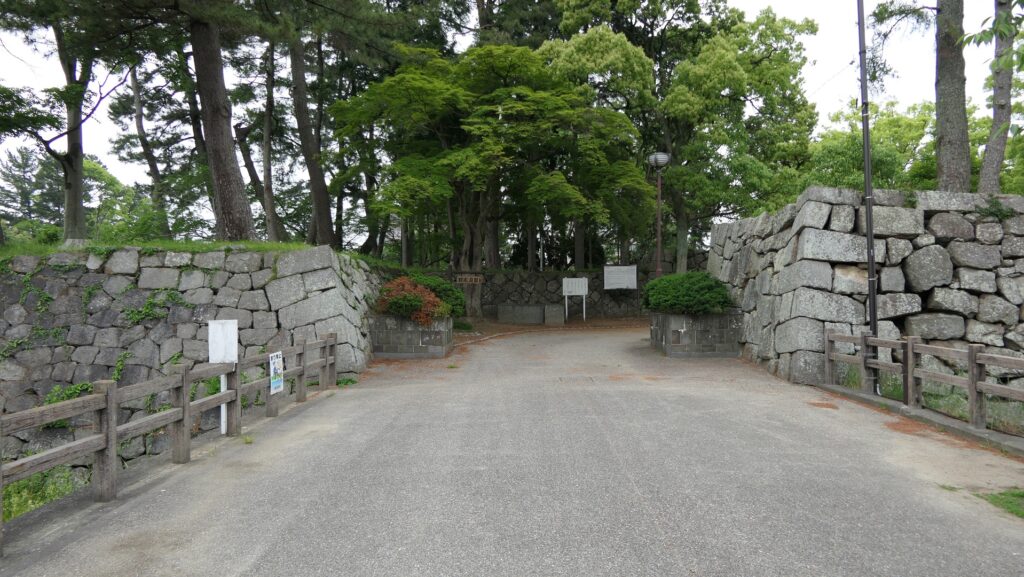
The entrance of the Matsunomaru Enclosure
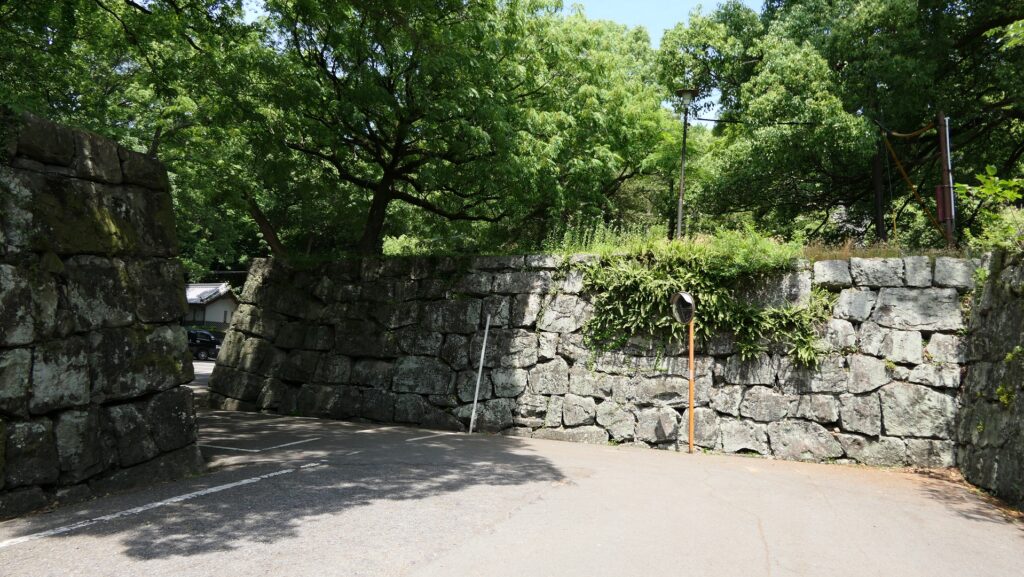
The defensive square space
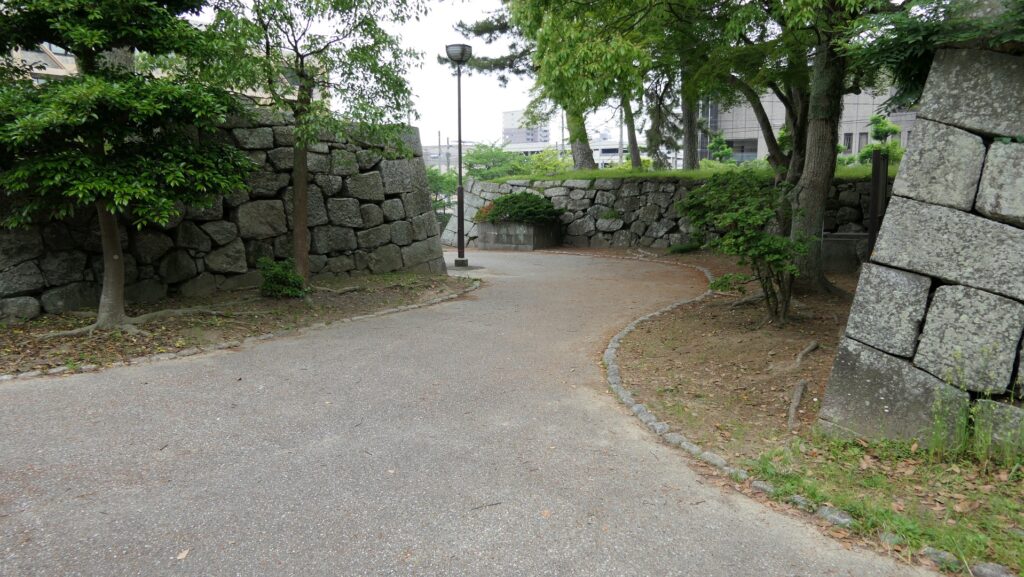
The inside of the Matsunomaru Enclosure
The route to the Water Supply Enclosure

The next is the Kanenomaru enclosure which has another Masugata entrance. Its stone walls were well processed and piled with precision, in a method called Kirikomi-Hagi. It had had the Main Hall for the lord in Asano’s period, but the hall was moved to the Second Enclosure at the foot during Mizuno’s period. It now has a square and a Japanese Garden which was probably built when it was used as a Ryokan or a traditional Japanese style hotel in the Showa Era.

The entrance of the Kanenomaru Enclosure
The defensive square space
The inside of the Kanenomaru Enclosure
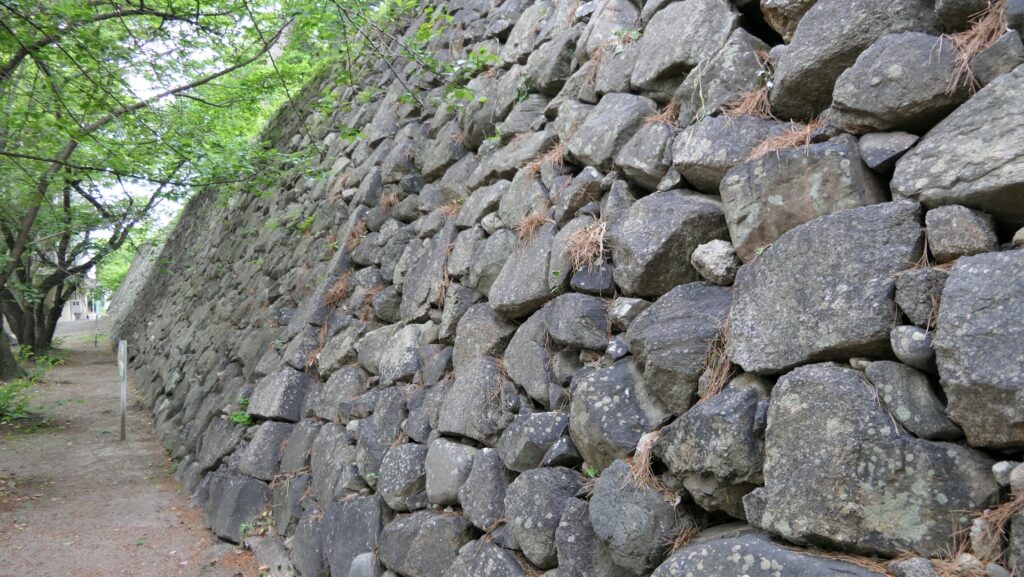
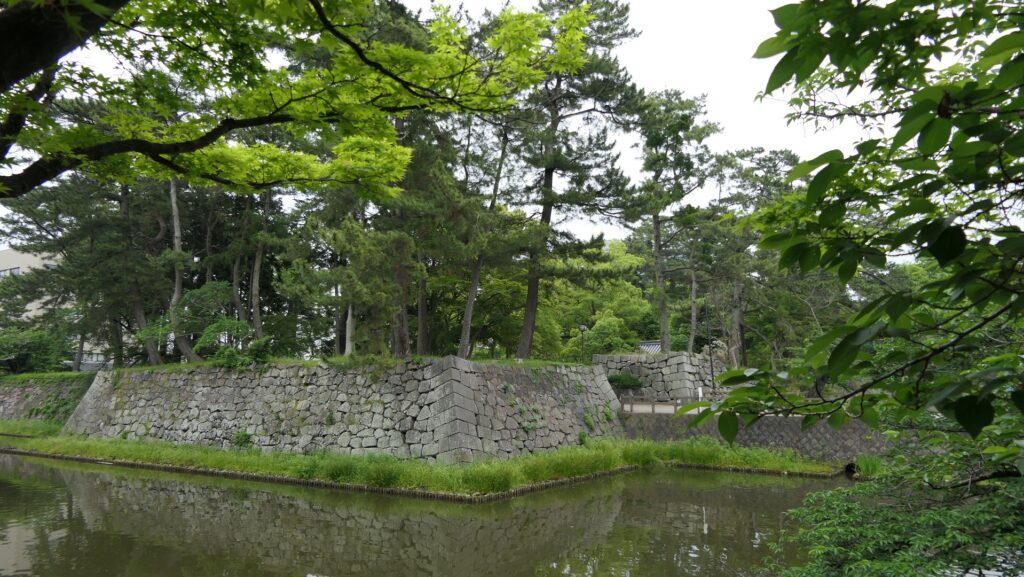
The stone walls of the Kanenomaru Enclosure seen from the foot of the hill

Main Enclosure with complex design

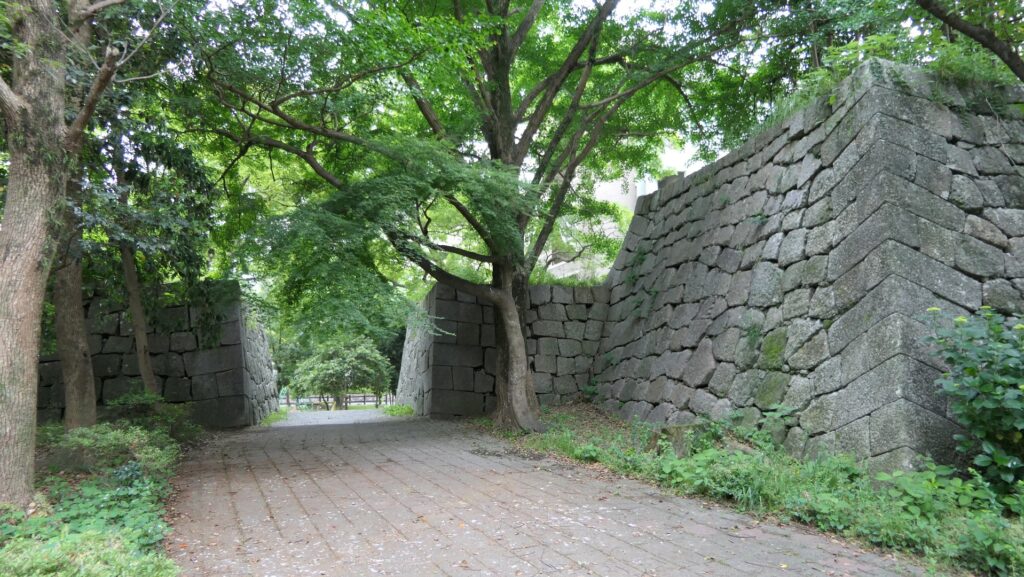
You will next reach the Main Enclosure, which has a more complex design. Basically, it has many different kinds of great remaining stone walls. First, it has doubled front gate ruins, especially, the second one is surrounded by stone walls piled with the most precision in the castle, using a method called Kikko-zumi or Piling like Tortoise Shell.

The map around the Main Enclosure

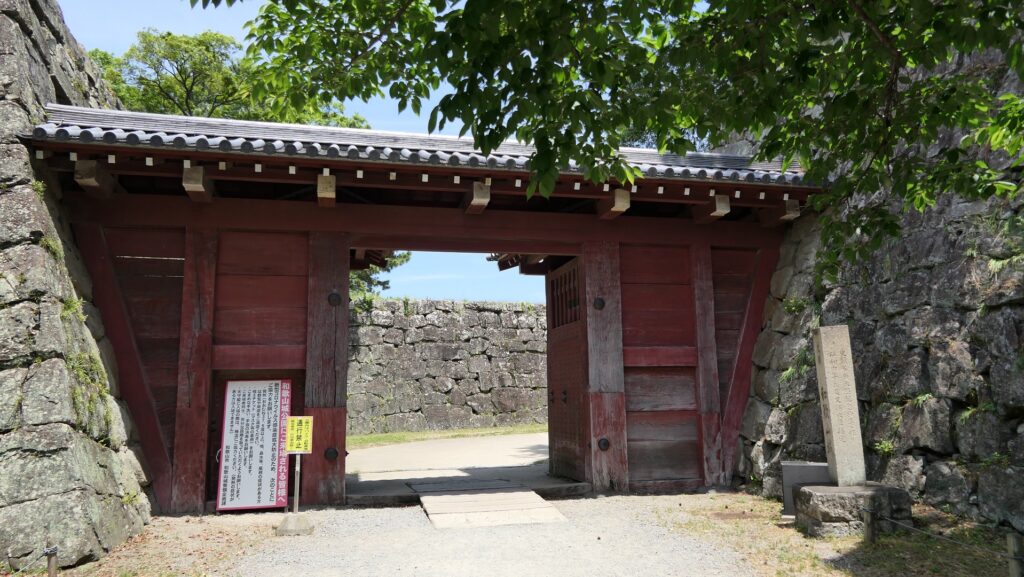
From the first gate ruins to the second gate ruins
The stone walls of the second gate ruins, built using a method called Piling like Tortoise Shell

Second, the stone walls of its Back Gate Ruins show an excellent surface treatment.

The stone walls of the Back Gate Ruins

Finally, the stone walls surrounding the enclosure are curved elaborately like a folding screen called Byobu-ore which made it possible for the defenders to counterattack to the enemies’ side.

The stone walls of the Main Enclosure, like a folding screen
The top of the folding screen stone walls

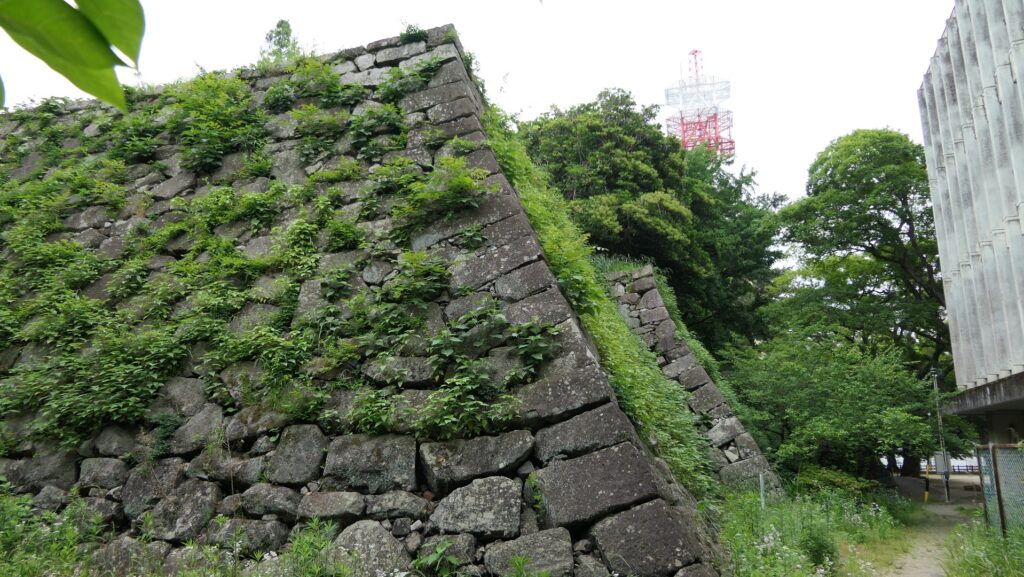
These stone walls have two tiers with the upper one being newer which was built by the Mizuno Clan, contrasted by the older lower tier which was built by the Asano Clan. The enclosure looks like a museum for stone walls.

The stone walls of the Main Enclosure have two tiers, but the lower one is covered with grass
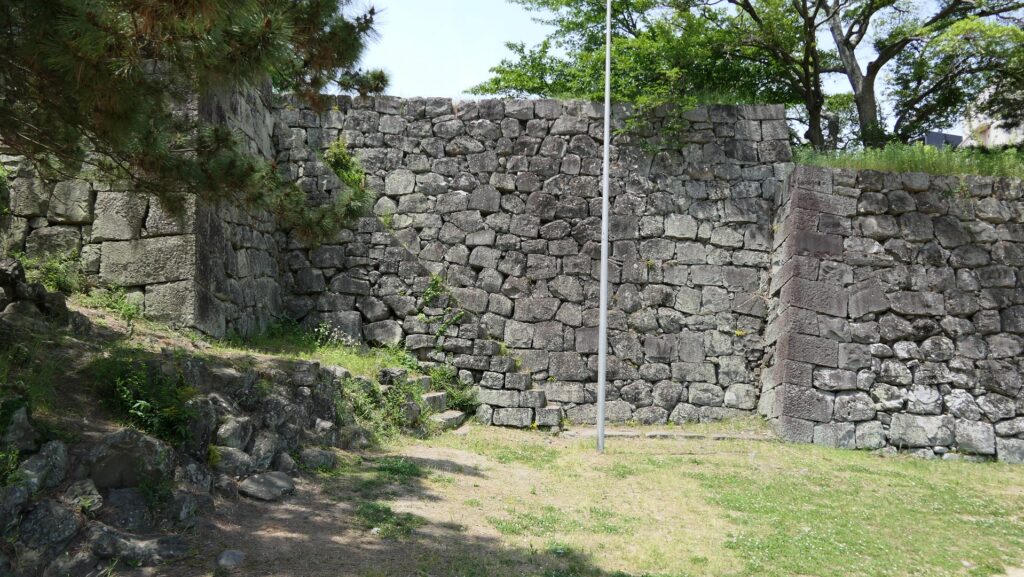
The stone walls of the Main Enclosure, seen from the Matsunomaru Enclosure

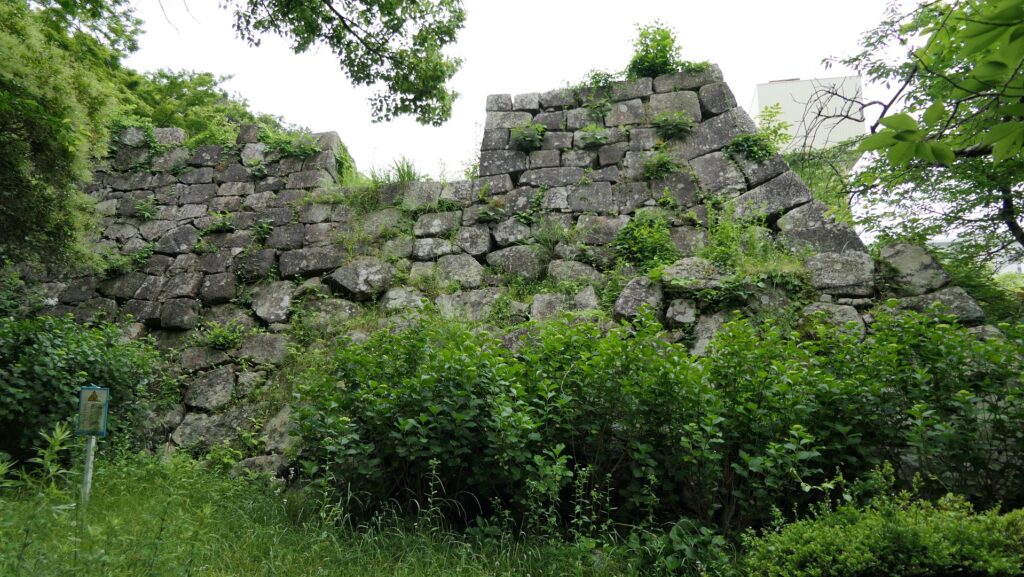
Unfortunately, the stone wall base for the Main Tower had mostly collapsed due to a typhoon in 1952. Only one side of it remains.

The few remaining stone wall base for the Main Tower

On the other hand, the enclosure was also heavily modified by several stairs and paths which could have been built using the collapsing stone walls. The added structures are supposed to have been built for the amusement facility during the Showa Era. Visitors may be confused to see these structures made of stones because there are not enough explanations for it.

The stone steps which were added in a later period
The enclosure is mixed with the original structures and added ones later

To be continued in “Shingu Castle Part3”
Back to “Shingu Castle Part1”

167.新宮城 その2

不思議な雰囲気を持った城跡

特徴、見どころ

丹鶴城公園として整備

現在、新宮城跡は新宮市により丹鶴城公園として整備されています。この公園には実に不思議な雰囲気があります。この公園は、城跡そのものに加え、昭和時代のアミューズメント施設跡と、現在の公園としての設備がミックスされているからです。公園には入口が2か所ありますが、両方とも城のオリジナルのものではありません。西側の正面入口から入ってからしばらくは、丘の上に向かって階段を登っていきます。

城周辺の地図

公園の正面入口
正面入口から階段を登っていきます
公園の東側入口

そうするうちに、違う方向から伸びてくるオリジナルの大手道と合流します。合流地点からは、その大手道が下っているのが見えますが、ポールにロープが張ってあって直接その道を通ることはできません。

オリジナルの大手道との合流地点
大手道を見下ろします

その大手道を歩いてみるには、周辺の住宅街の方に回り込んで行く必要があります。

住宅街に残る石垣
丘下に残る大手道

精密な石垣に囲まれた曲輪

丘上には、松ノ丸、鐘ノ丸、本丸、出丸の4つの曲輪が西方から東方に向かって並んでいます。現在では石垣のみが残っています。松ノ丸は、大手道から進んで最初に着く曲輪です。その入口は、桝形と呼ばれる、石垣に囲まれた四角い防御空間となっています。この曲輪からは、川沿いにある水ノ手郭へ向かう通路もあり、ここは防御の要の場所だっだのでしょう。

松ノ丸入口
桝形部分
松ノ丸の内部
水ノ手郭への通路

その次は鐘ノ丸で、この曲輪にも桝形があります。ここの石垣は、切り込みハギと呼ばれる、加工された石を精密に積み上げる方法で築かれています。浅野時代にはこの場所に御殿があったのですが、水野時代には丘の麓の二ノ丸に移転しました。現在は広場になっていますが、恐らくは昭和時代にここに旅館があったときに作られた日本庭園もあります。

鐘ノ丸入口
桝形部分
鐘ノ丸の内部
丘の麓から見た鐘ノ丸の石垣

複雑な構成の本丸

進んでいくと、本丸に到着しますが、ここは更に複雑な構成になっています。基本的に本丸には異なった種類の多くのすばらしい石垣があります。まず、ここには二重の正門跡があり、とりわけ二番目の門跡は、亀甲積みと呼ばれる方法による、この城では最も精巧に築かれた石垣に囲まれています。

本丸周辺の地図

一番目の門跡から二番目の門跡へ
亀甲積みになっている二番目の門跡の石垣

次に、搦手門跡の石垣には、当時としては最も高度な表面加工処理(面取り、谷目地により石表面を高く膨らませる石化粧法)が施されています。

搦手門跡の石垣

更に、本丸を囲む石垣は、屏風折れと呼ばれる、石垣のラインを巧みに曲げる方法で築かれ、城の守備兵が攻めてくる敵の側面を攻撃できるようになっています。

本丸の屏風折れの石垣
屏風折れ石垣の天端部分

本丸の石垣は二段積みになっていて、上段は水野氏によって後から築かれたもので、下段の方は浅野氏によって築かれた古い時代のものです。本丸はまるで石垣の博物館のようです。

二段になっている本丸石垣(下段石垣は草に覆われています)
松ノ丸から見た本丸石垣

しかし残念ながら、天守台石垣は、1952年の台風被害によりほとんど崩れてしまっています。1面のみ残っている状況です。

僅かに残る天守台石垣

一方、本丸には大きく改変されている部分があり、その崩れた石垣を使って作られたのであろう階段や通路があります。これらは昭和時代のアミューズメント施設が建設されたときに設置されたものと思われます。こういった後付けのものについての説明が十分ではないため、ビジターはこれらの石造りのものを見て、少し困惑してしまうかもしれません。

後付けされた石造りの階段
オリジナルの石垣と後付けの造作が混在

「新宮城その3」に続きます。
「新宮城その1」に戻ります。

155.Akagi Castle Part3

What was the most important value of this castle?

Features

Long narrow Western Ridge with Tiered Stone Walls

Consider visiting the western ridge as well. It has four tiered enclosures, which are also surrounded by stone walls, on the long narrow ridge. It had buildings including a warehouse. It doesn’t have a complex route like the eastern ridge, but the sides of it are artificially cut vertically to prevent enemies from attacking easily. If you look up the tiered stone walls to the Main Enclosure, they look so impressive.

The aerial photo around the castle

The western ridge seen from the Main Enclosure
Looking up the Main Enclosure from the western ridge
The stone walls of the Western Enclosure I
The stone foundations in the Western Enclosure II (Building ruins)
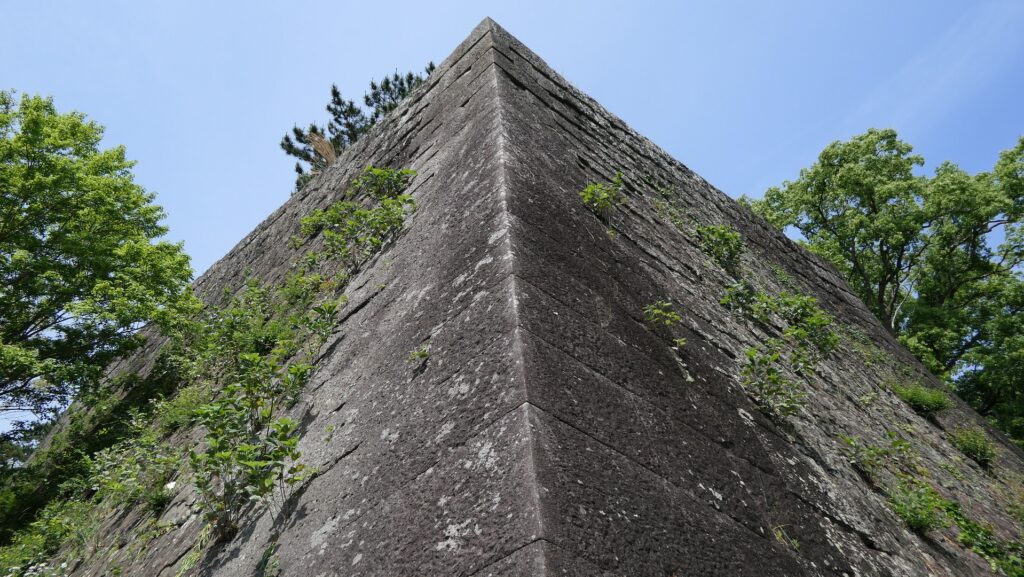
The tiered stone walls

You can also climb down from the edge of it to the valley between the eastern and western ridges, called the Southern Enclosures. It is thought to be used for living quarters as the remains of cooking stoves were found there, and it seems like an obvious location because of the convenience of access.

The edge of the western ridge
The Southern Enclosures seen from above (The Southern Enclosure II in the center)
The Southern Enclosures (The Southern Enclosure III in the front)

Later History

After Akagi Castle was abandoned, many of its stone walls collapsed. This was because some of them were destroyed by the final occupants of the castle to show the castle could be no longer used, and others collapsed naturally over long periods of time. The ruins also got overgrown with trees and bushes. However, since they were designated as a National Historic Site in 1989, Kumano City researched and restored the ruins mainly by re-piling and repairing the stone walls, finishing 2004. For example, they reused the original stones as much as possible, but in the parts where that was not possible, they built new stone walls like the original, indicating with signs that this was not original structure.

The Eastern Enclosure before the restoring, form the signboard at the site
The stone walls of the Eastern Enclosure II after the restoring

The ruins have recently become popular as they sometimes look like a Castle in the Sky above the clouds in certain weather conditions.

The image of the Castle in the Sky, form the signboard at the site

My Impression

Of the ten or so of Takatora Todo’s great works I think this is the first of them to be built. He was in an area which was still surrounded by possible enemies who were heavily armed. I also think when he built the castle, he considered how to protect himself and his soldiers during the construction even if they were attacked by guns. The layout of the castle seems to protect the center from direct gunfire. I believe one of the most important values of the castle was that Takatora achieved this combining the original conditions at the site such as natural terrain and current technologies like building stone walls.

The entrance of the Main Enclosure

How to get There

If you want to visit the castle ruins by car, it is about 40 minutes from Kumano-Odomari IC on the Kumano-Owase Road. There is a parking lot below the eastern ridge of the castle.
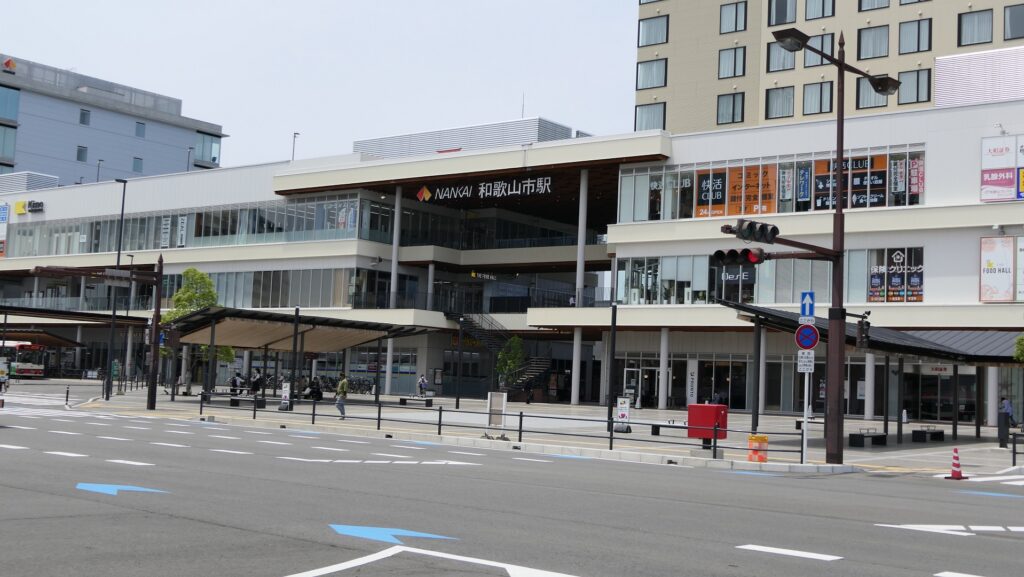
By public transportation, it would be better to use a rental car from Kumanoshi Station or Shingu Station on the JR Kisei Line as there are few or no buses for the site from these stations.
To get to these stations from Tokyo: Take the Tokaido Shinkansen super express, transfer to the Nanki limited express at Nagoya Station.

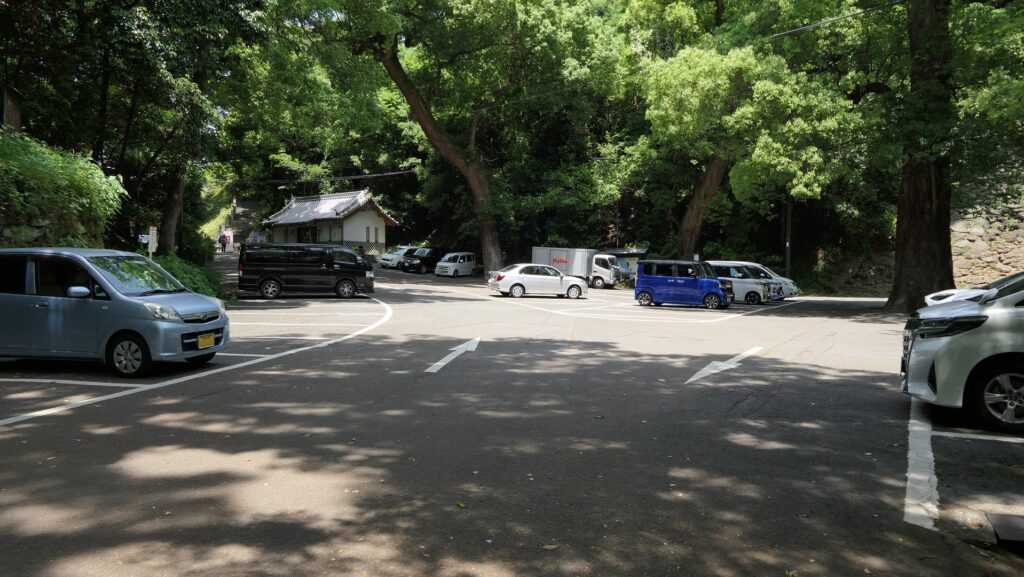
The parking lot
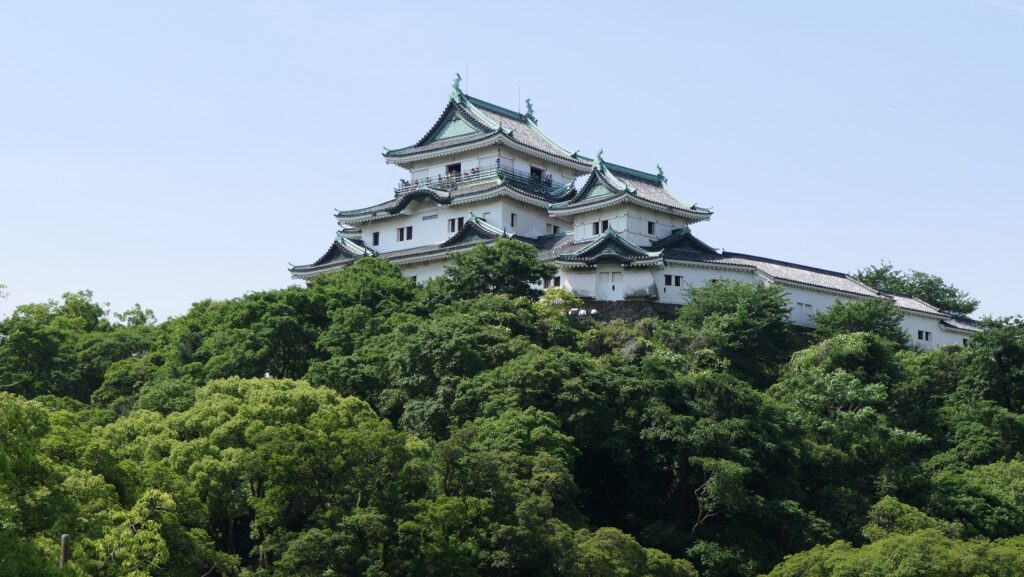
The castle ruins seen from the parking lot

That’s all. Thank you.
Back to “Akagi Castle Part1”
Back to “Akagi Castle Part2”

error: Content is protected !!