140.Genbao Castle Part2

A complex structured castle on the mountain

Features

Going to Castle Ruins through Trail

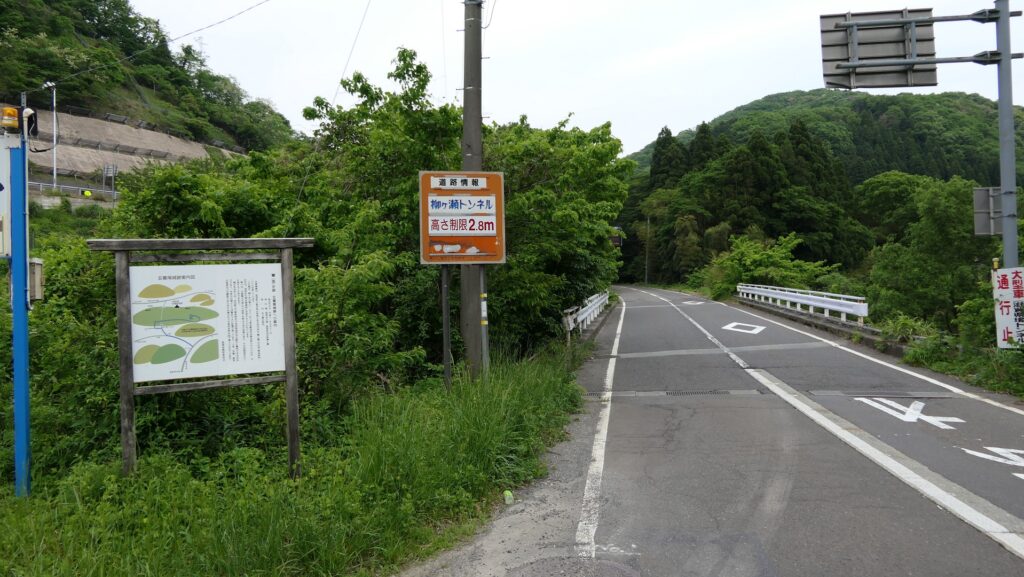
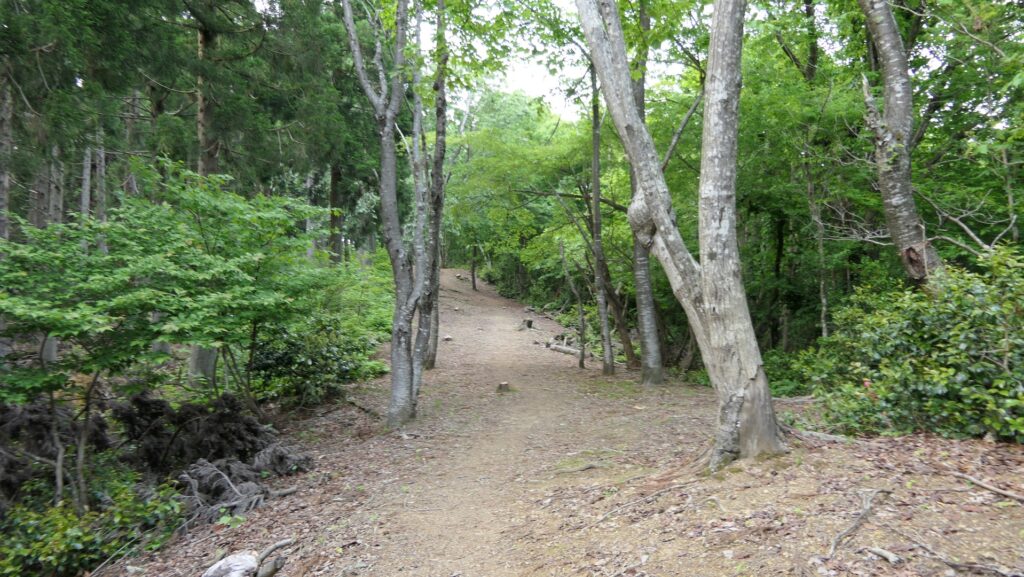
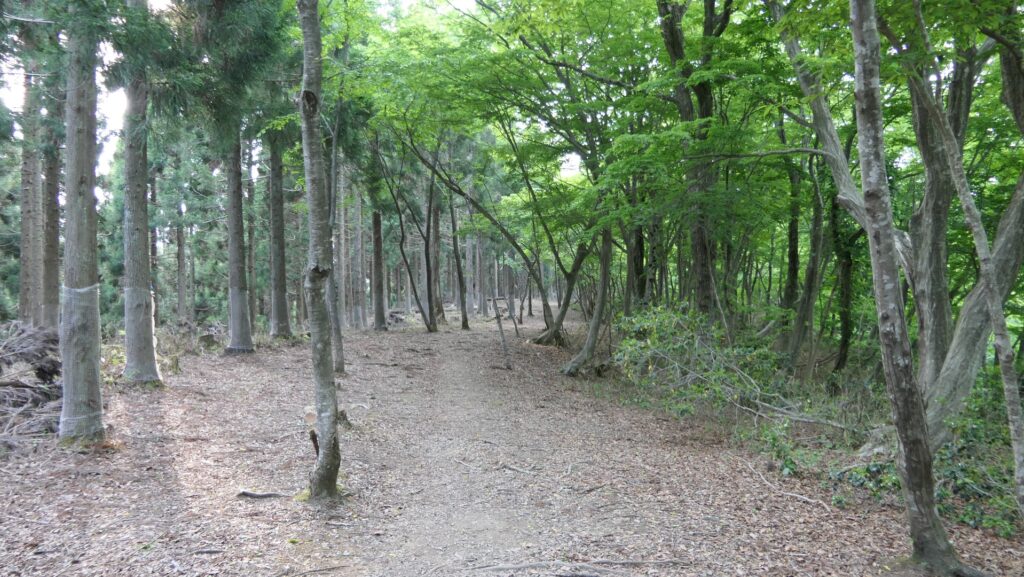
Today, the ruins of Genbao Castle have been well developed as a National Historic Site, even if they were at the top of a mountain. There are no castle buildings and only the foundations made of soil remained. However, it is good enough for us to understand what the castle was like because it was a specific battle castle. To reach the castle ruins, you need to walk for about 30 minutes from the parking lot. You will pass the old mountain pass called Tone-toge and climb the mountain where the castle was built.

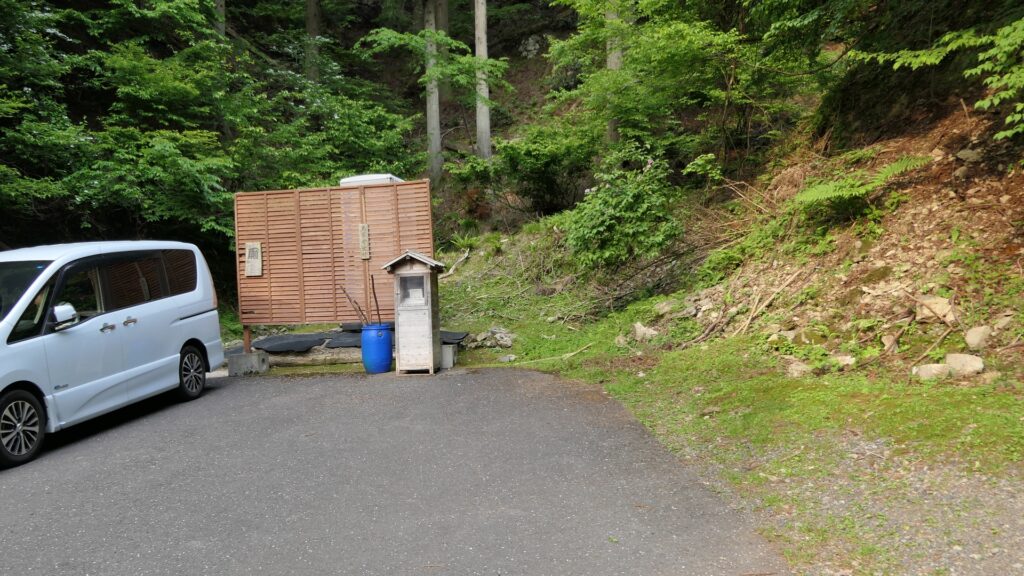
From the parking lot to the trail
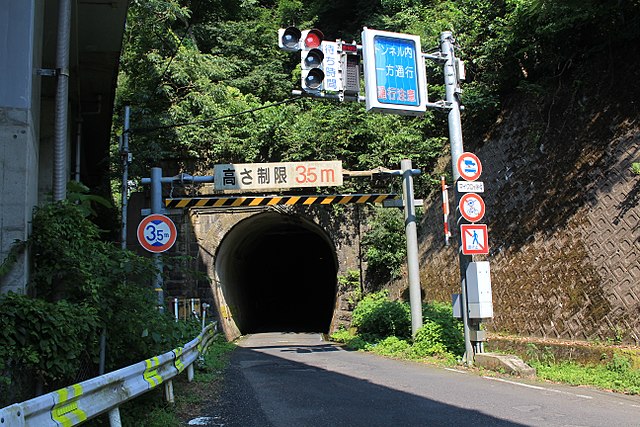
the Tone-toge mountain pass

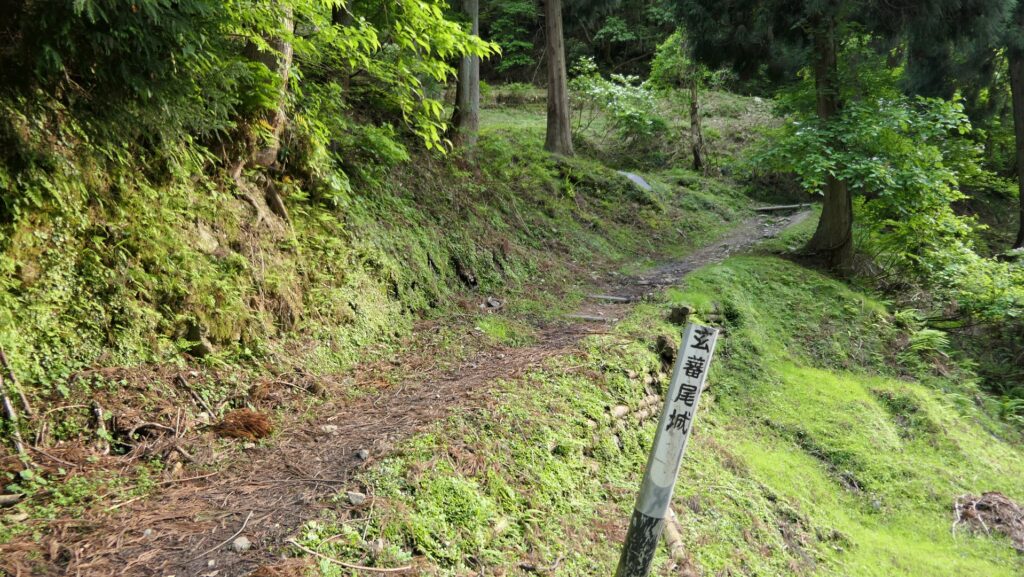
The mountain looks natural being covered by woods and bushes around the trail, so you may be wondering if the castle ruins were built in such a place. However, you will eventually reach where the castle ruins are more visible. This is because officials or volunteers would often cut down trees and bushes in order for people to see the ruins clearly.

The trail will go for a while
The castle ruins will eventually become visible

Complex route to Center of Castle

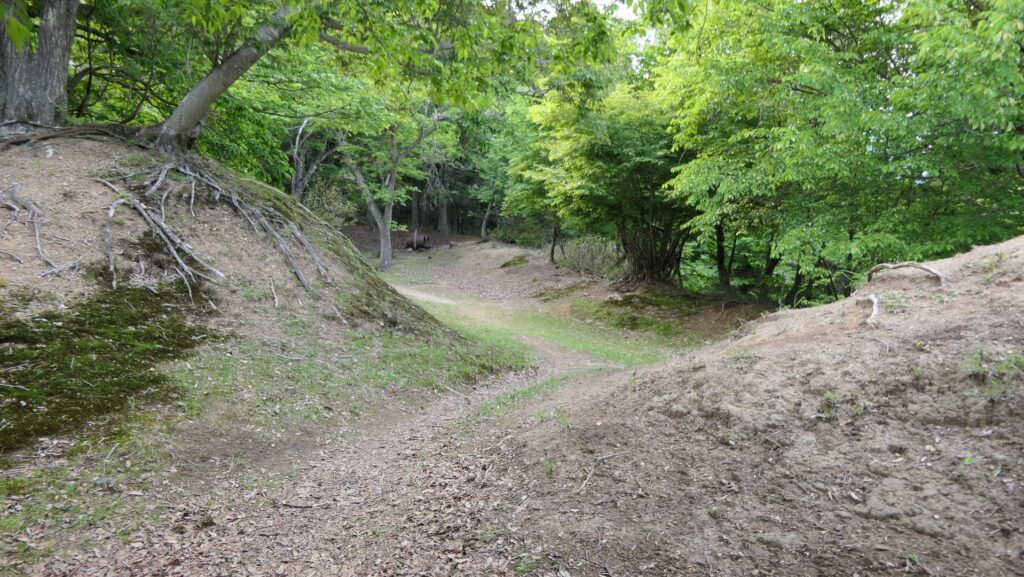
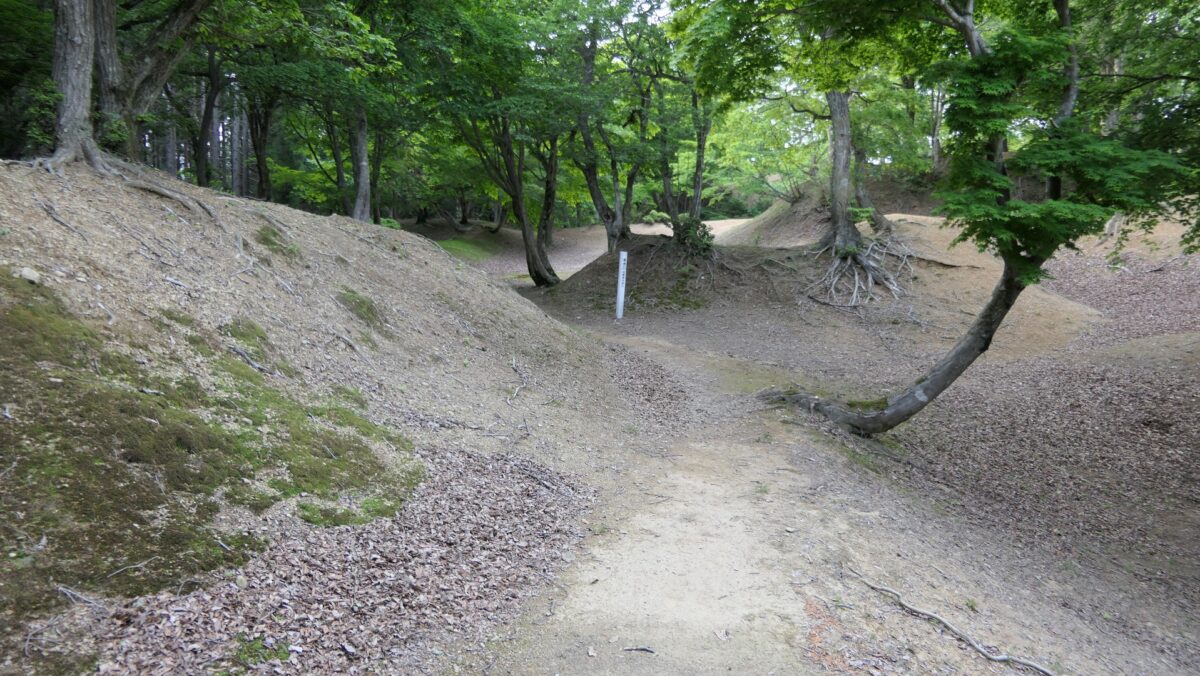
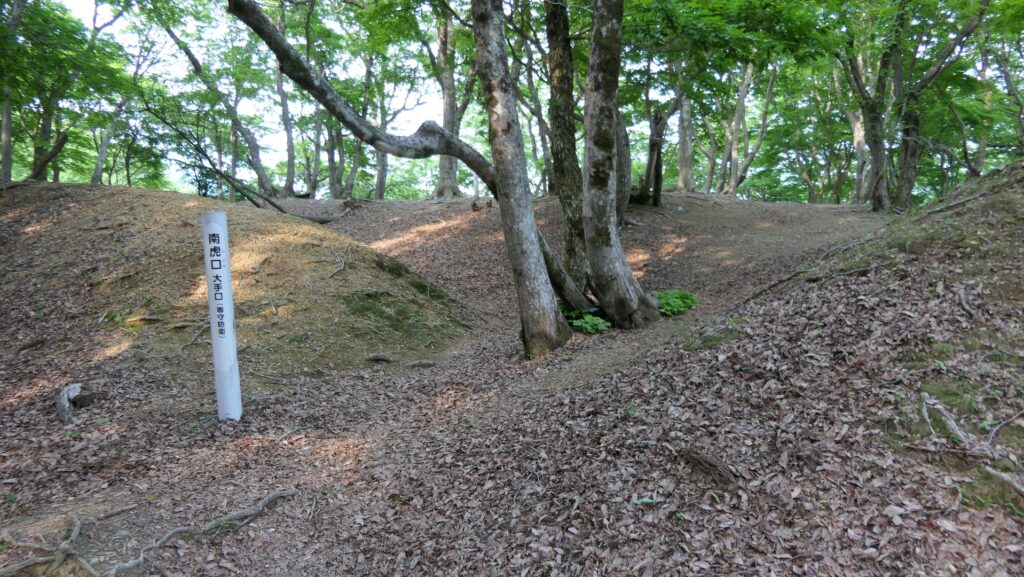
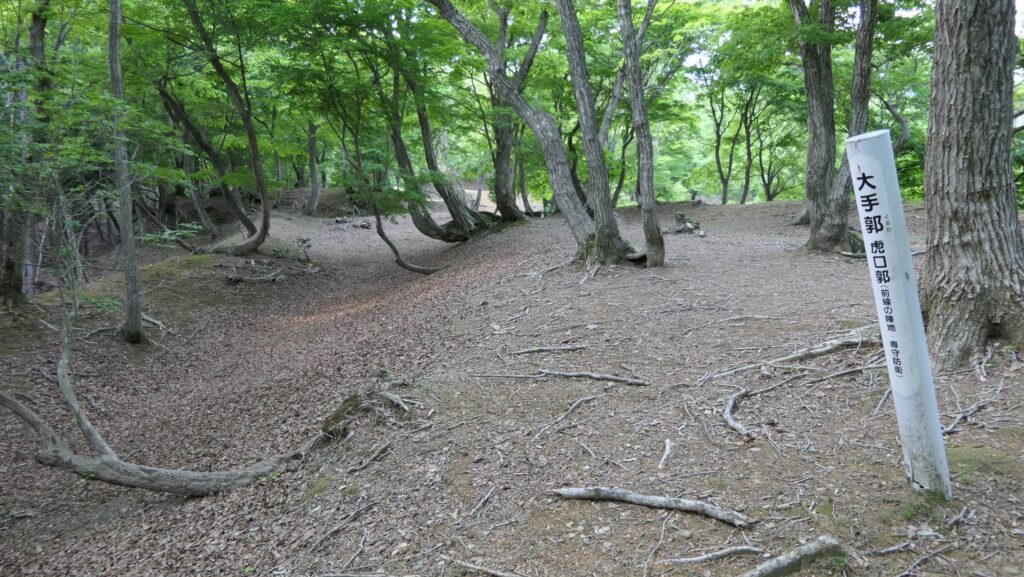
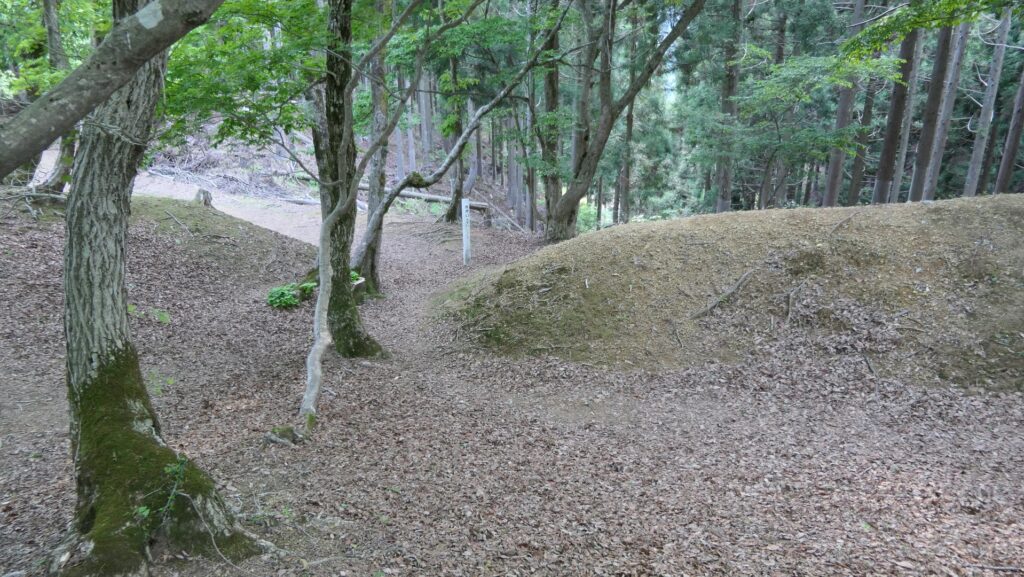
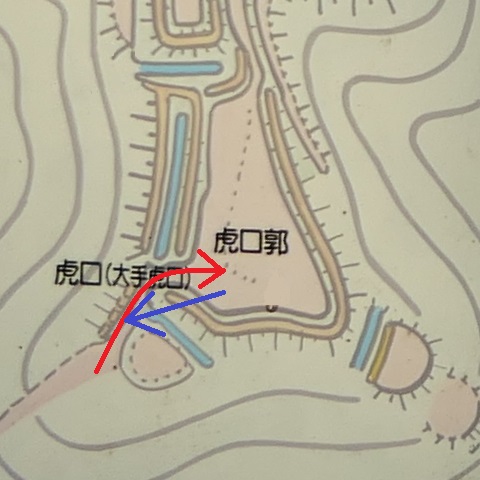
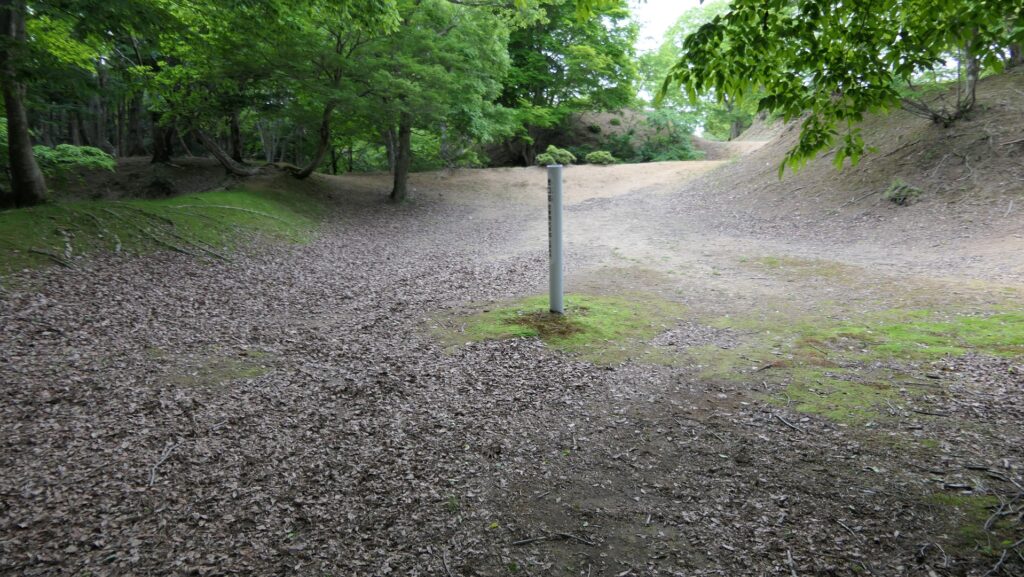
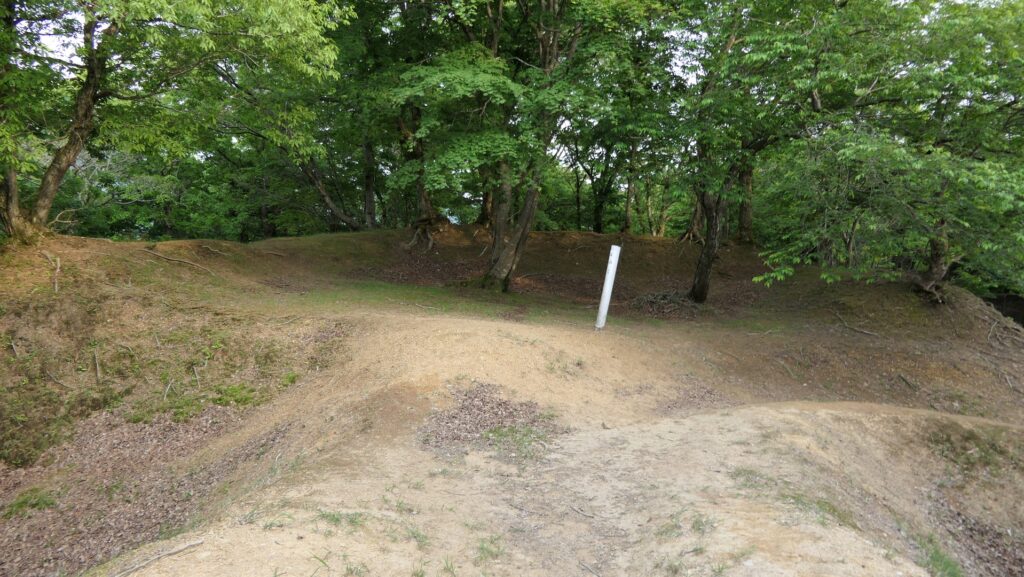
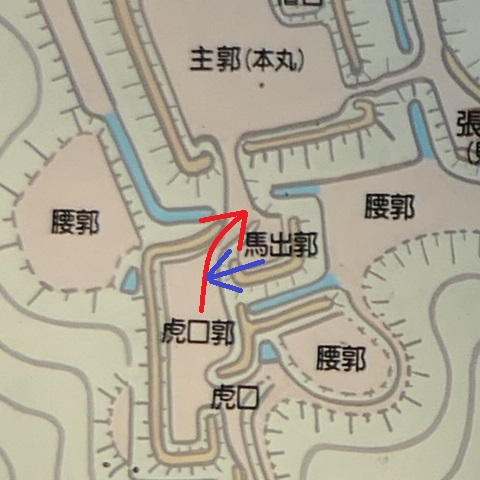
The trail to the castle ruins is from the south, which was the front side of the castle. You can still see the side was strongly protected. The enclosure you first meet is called the Enclosure I which is surrounded by earthen walls. The entrance of the enclosure is not open to the front in the south, but the left side in the west. That means you need to walk around the walls and turn right.

The map around the castle

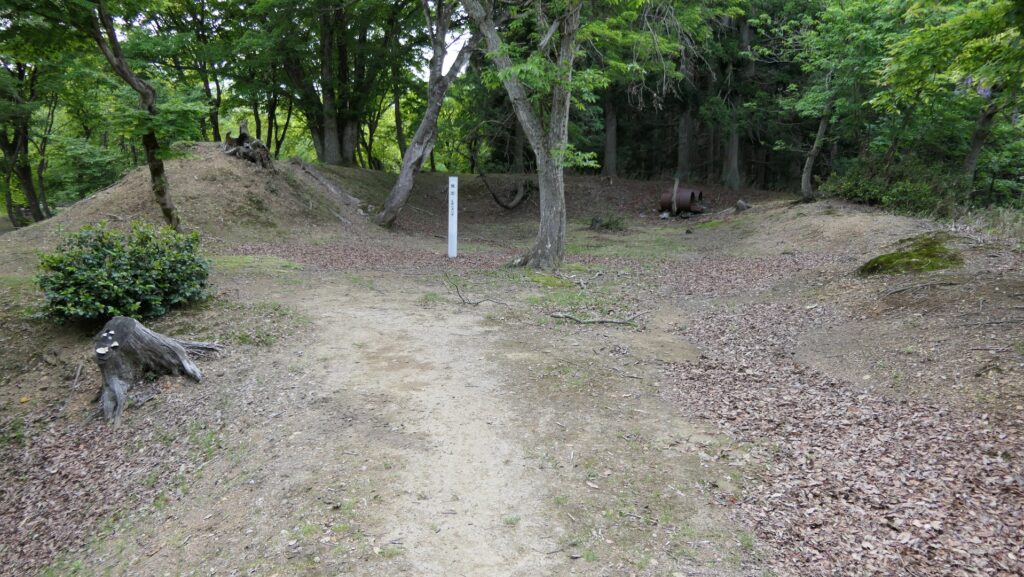
The entrance of the Enclosure I
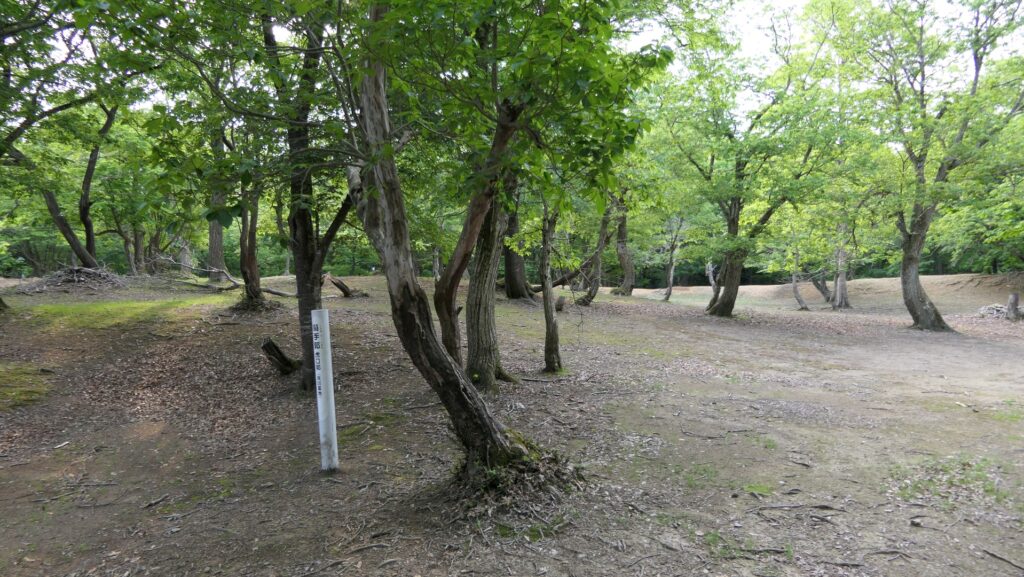
The inside of the Enclosure I
Looking back the entrance of the Enclosure I
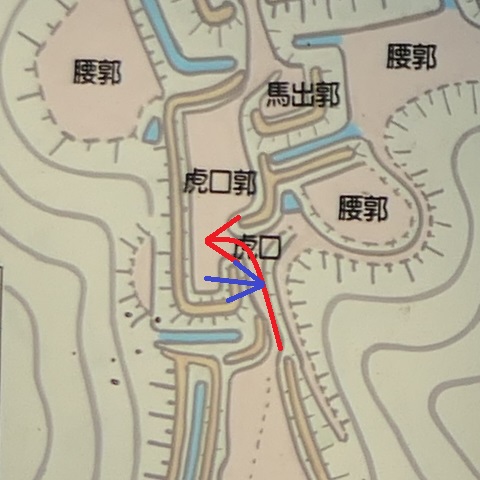
The route to the Enclosure I (the red arrow) and the counterattack from the enclosure (the blue arrow)

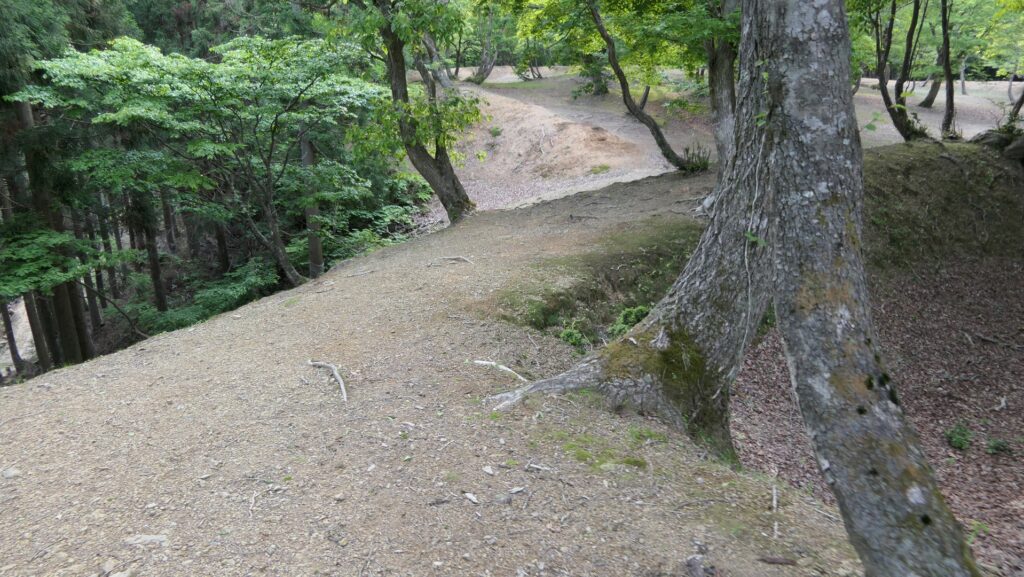
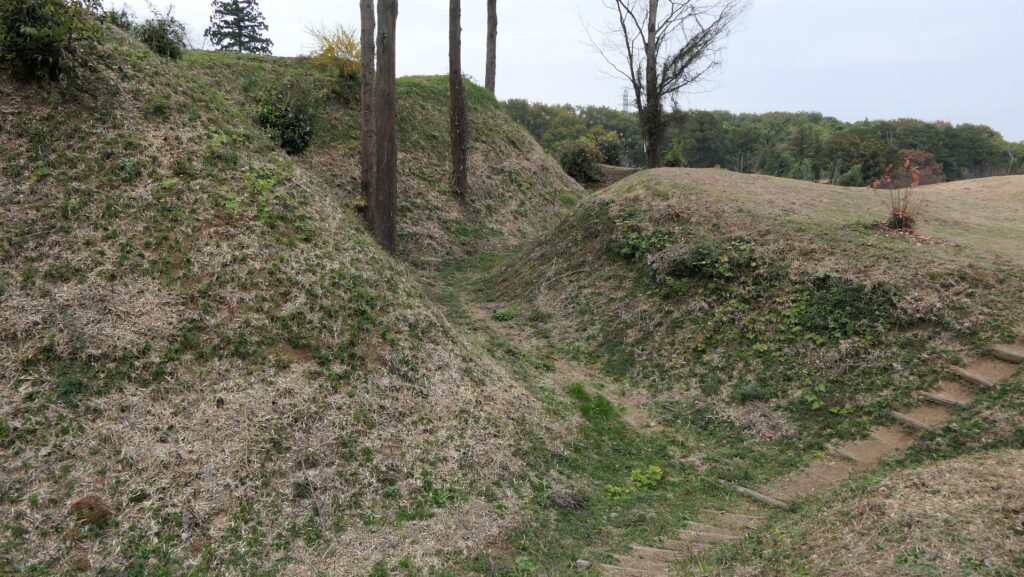
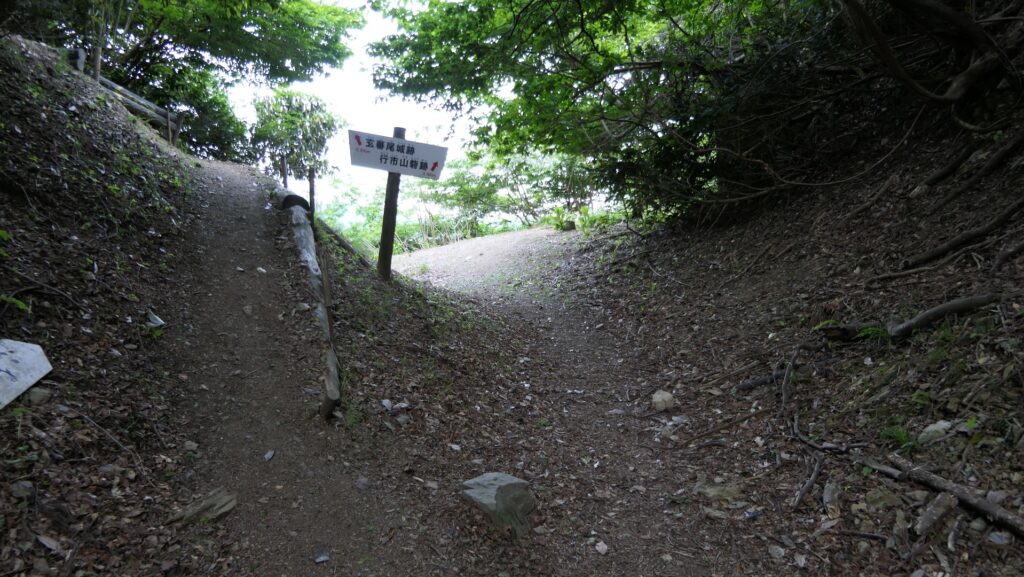
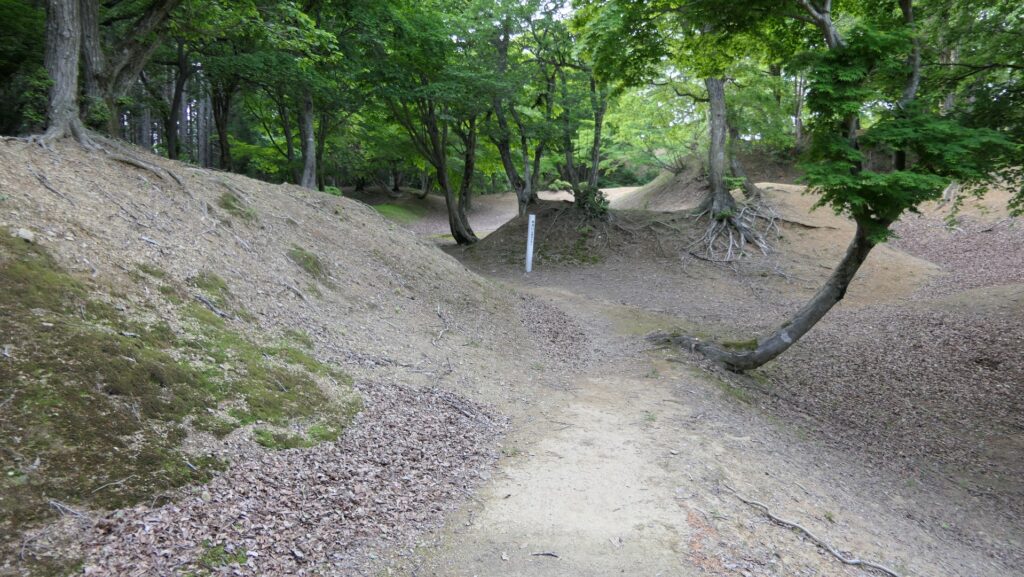
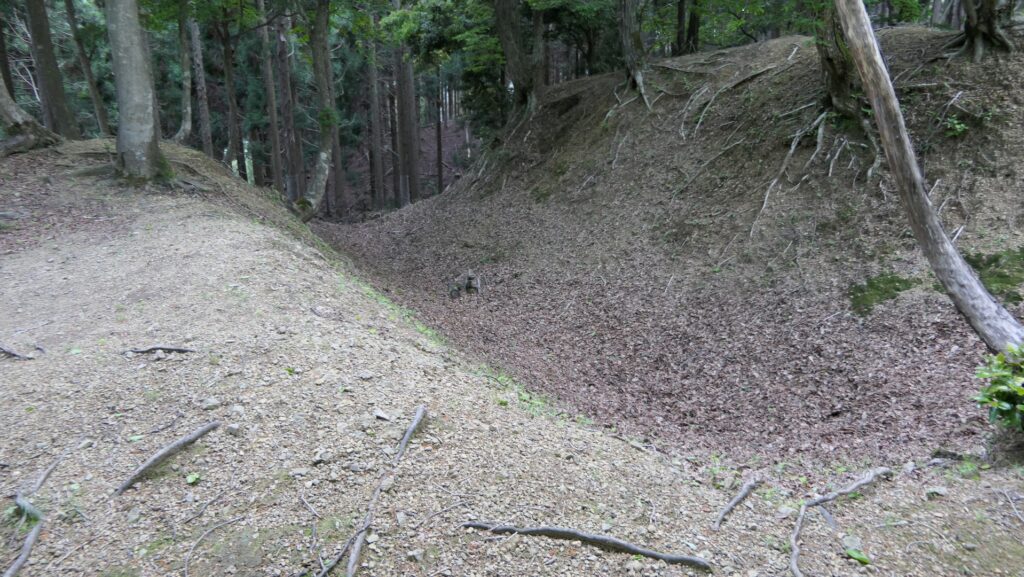
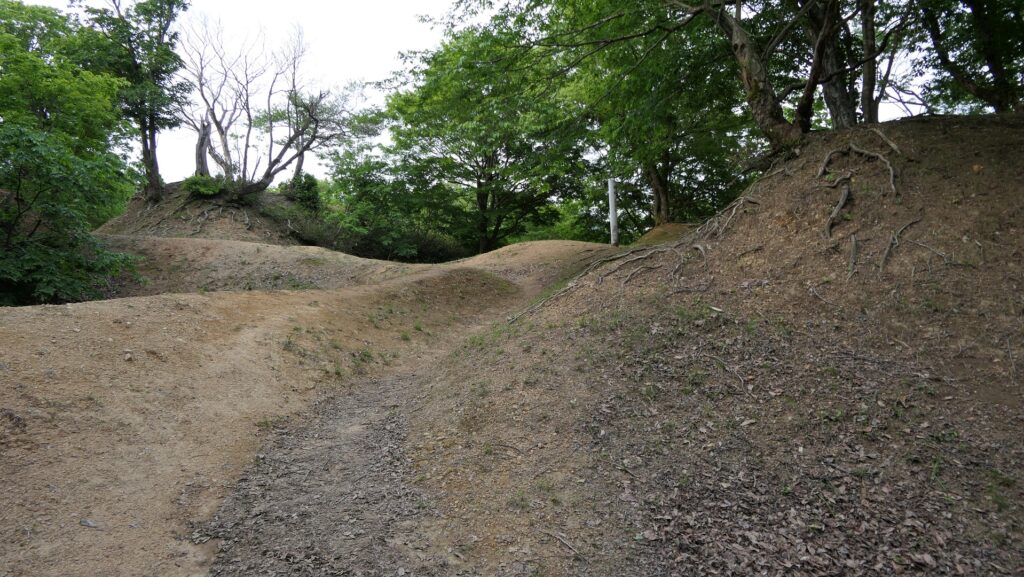
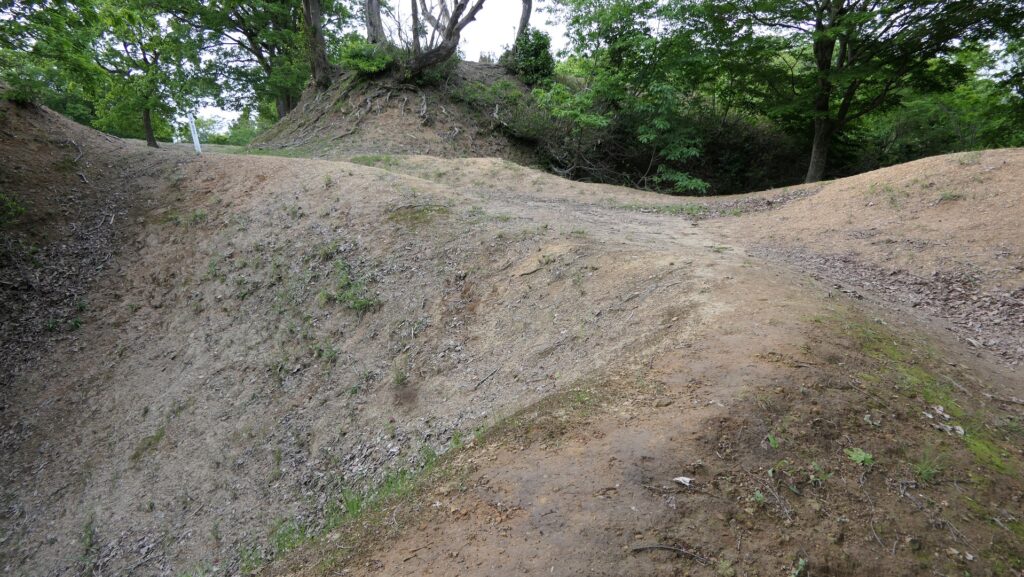
To get to the next one called the Koguchi Enclosure, you will have to walk on the narrow earthen bridge beside a ditch, and after that turn left.

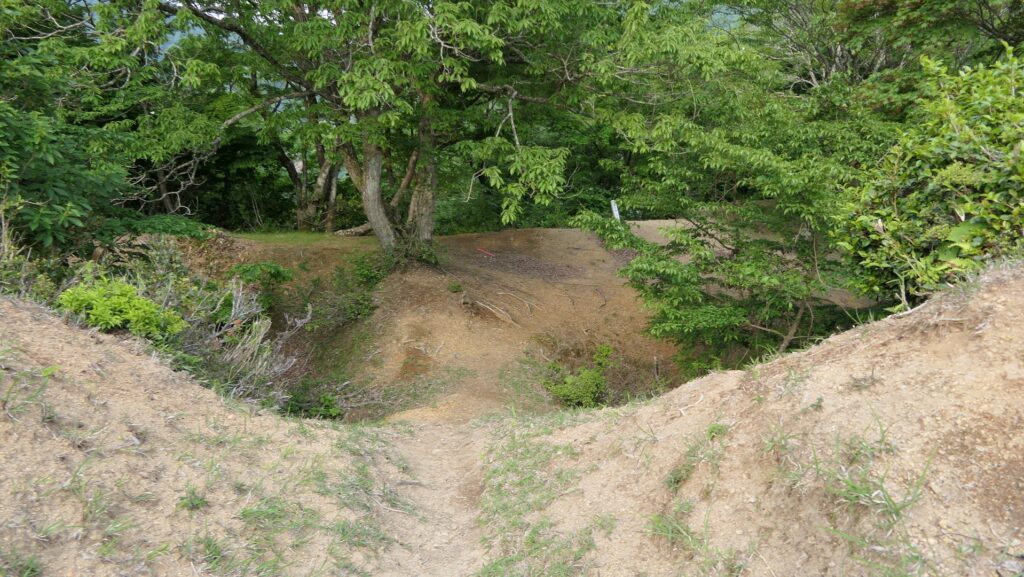
the narrow earthen bridge to the Koguchi Enclosure
The ditch beside the earthen walls limits the route for enemies to attack
The inside of the Koguchi Enclosure
The route to the Koguchi Enclosure (the red arrow) and the counterattack from the enclosure (the blue arrow)

The Main Enclosure is the next area, but one of its Umadashi Enclosures is in front of it to prevent anyone from entering directly. You need to turn right again from the Koguchi, go around the Umadashi, and cut through the front entrance of the Main Enclosure. If you were an enemy, your attack route could be limited and would be attacked from the side while turning several times.

Turning right to go around the Umadashi Enclosure
The earthen walls in front of the Main Enclosure are also narrow
The Umadashi Enclosure seen from behind
The route to the Main Enclosure (the red arrow) and the counterattack from the enclosure (the blue arrow)

Main Enclosure controls all directions

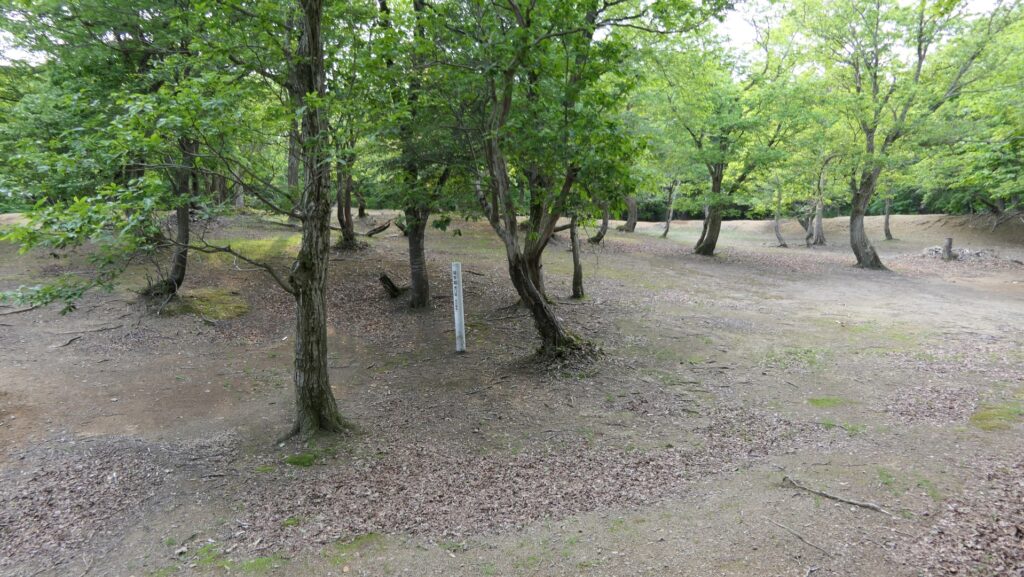
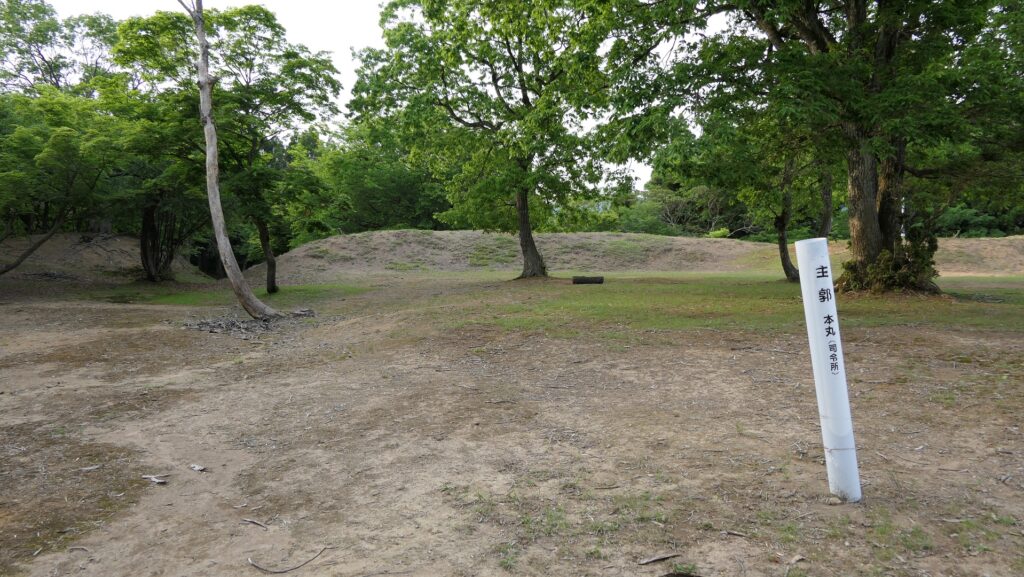
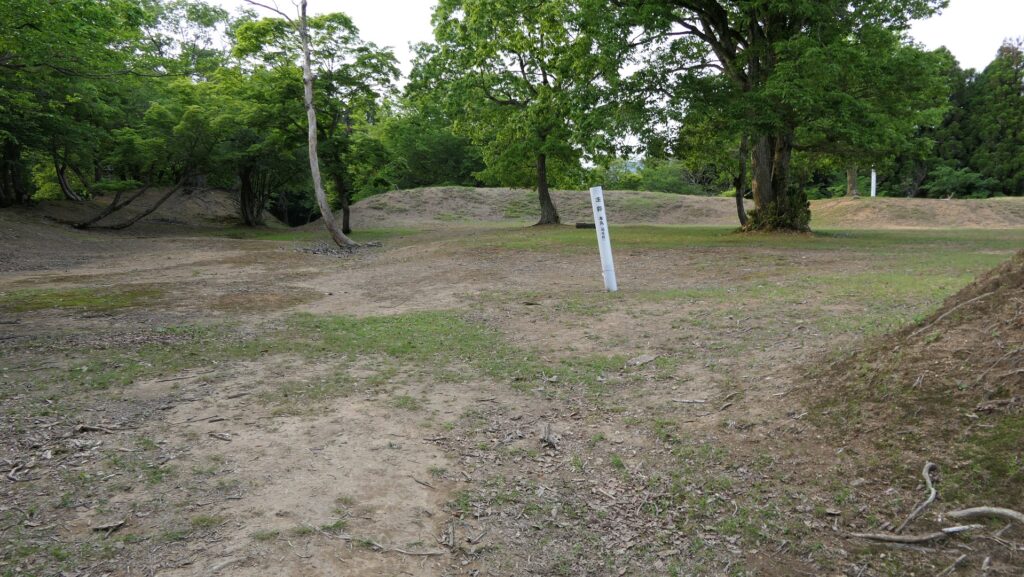
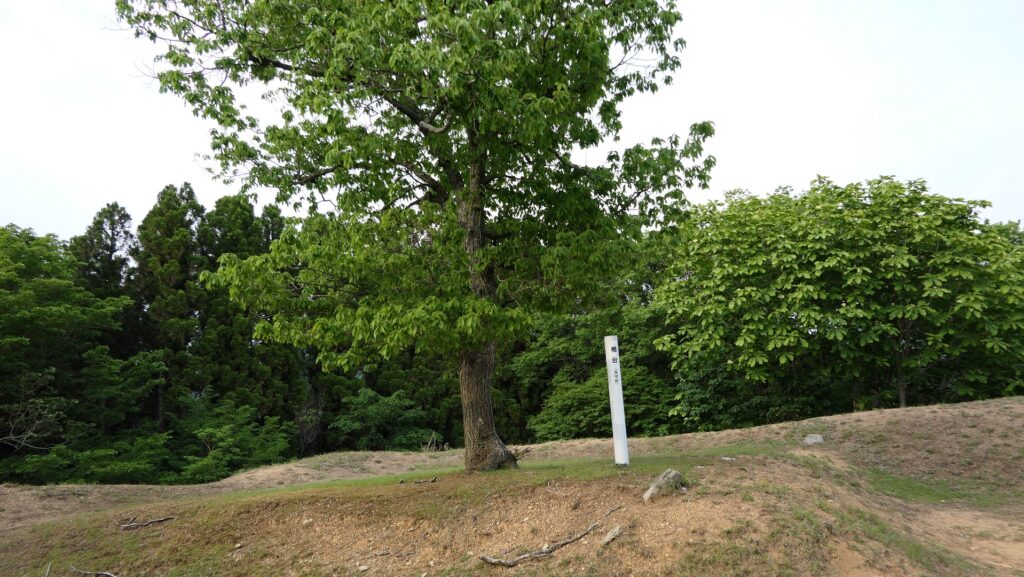
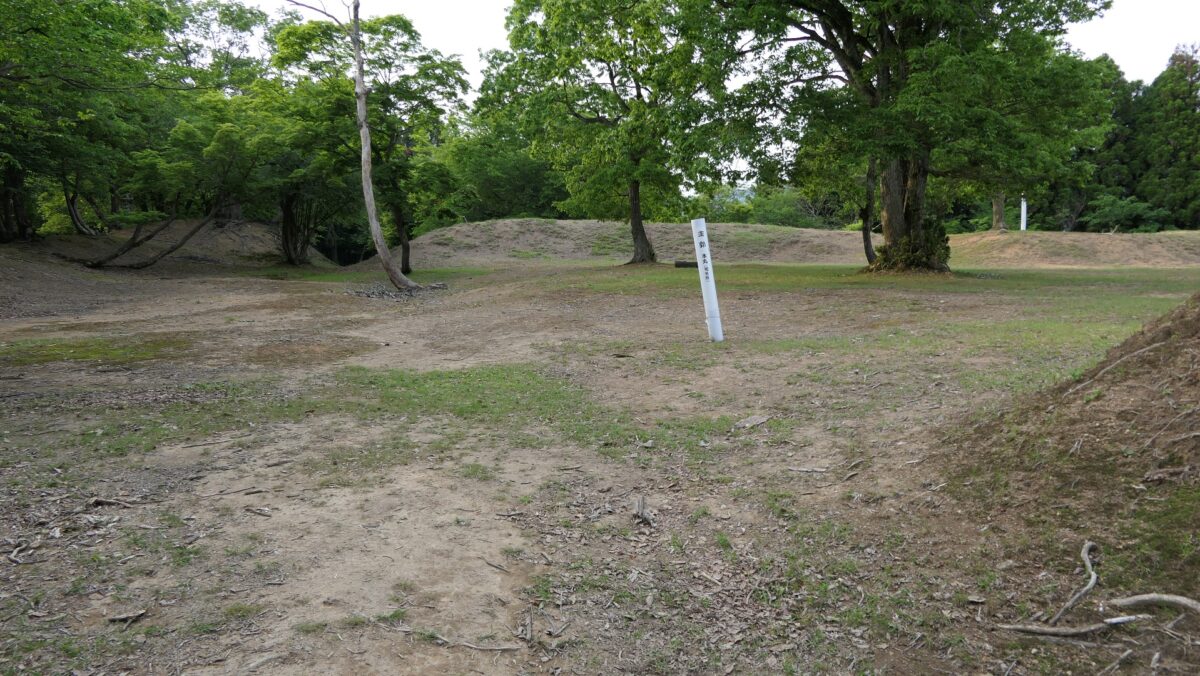
The inside of the Main Enclosure is a square, which is also surrounded by earthen walls. There is the earthen mound at the northeastern corner where the Main Tower or a large turret was built.

The inside of the Main Enclosure
The turret base at the northeastern corner

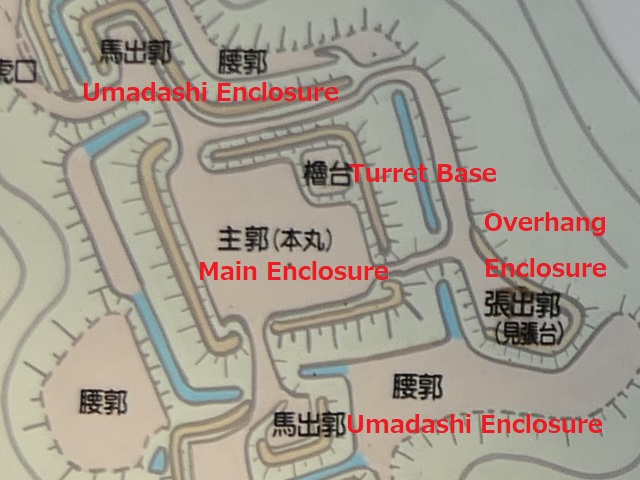
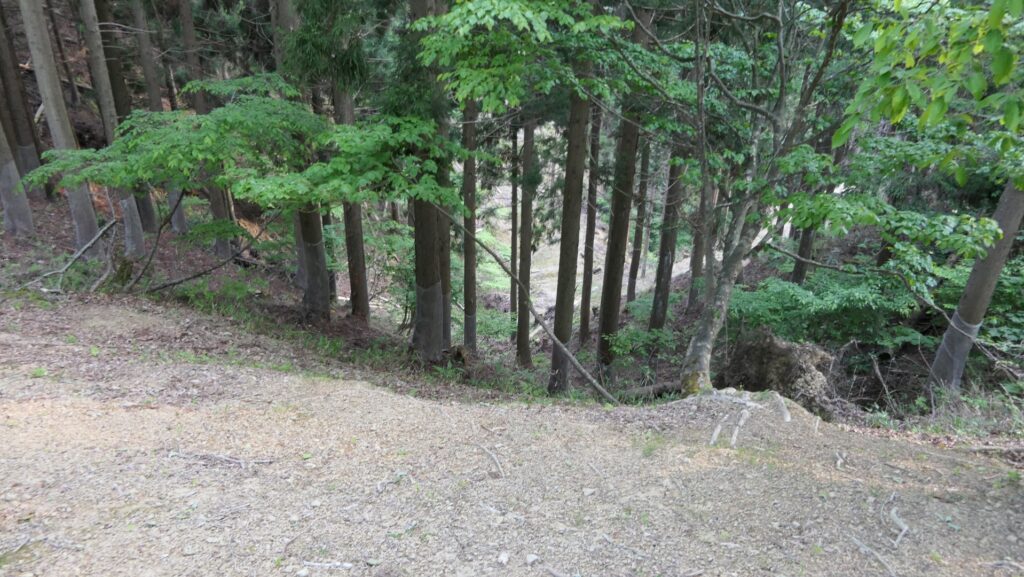
It has the other Umadashi Enclosure in front of the back entrance in the north. It also has a small entrance in the east with the Overhang Enclosure in front of it. The east of the Main Enclosure is a slope of the mountain. Historians say this structure proves the builders thought enemies could also attack from this direction as well. The west of it is a very deep valley which was difficult for enemies to attack from. However, a ditch was elaborately built in front of the earthen walls on this side.

The location map of the Main Enclosure, adding red English letters
The northern Umadashi Enclosure
The Overhang Enclosure at the eastern side
The steep slope at the western side

To be continued in “Genbao Castle Part3”
Back to “Genbao Castle Part1”

140.玄蕃尾城 その2

山上に複雑な構造を持っていた城

特徴、見どころ

山道を通って城跡へ

現在玄蕃尾城跡は山上にあるにも関わらず、国の史跡としてよく整備されています。城の建物はなくなっていて、土造りの基礎部分のみが残っています。それでもその城がどのようであったのか理解するには十分と思います。陣城専用で築かれたものだからです。城跡に至るには、駐車場から約30分歩いて行く必要があります。その間、古い峠道である刀根峠を過ぎて、山の方に登っていきます。

駐車場から山道へ
刀根峠

山道の周りは、自然の木々や繁みに覆われているように見えます。このような所に城跡があるのだろうかと思われるかもしれません。しかし、そのうち城跡がはっきりと見渡せる場所にたどり着きます。これは、役所や地元のボランティアの人たちが定期的に草木を伐採してくれているからなのでしょう。そのおかげでビジターが城跡をよく見学できるのです。

普通の山道が続きます
段々視界が開けてきます

複雑な城中心部へのルート

山道は南から城跡に向かっており、南側が城の正面でした。今でもこの方面が強力に守られていたことがわかります。最初に見えてきた曲輪は「郭1」と呼ばれており(現地では「大手郭」または「虎口郭」と表記されています)土塁に囲まれています。この曲輪の入口は、南側の正面には開いておらず、左の西側に向かって開いています。つまり、土塁を回り込んで右に曲って曲輪に入る必要があります。

城周辺の地図

郭1の入口(虎口)
郭1の内部
郭1の入口を振り返る
郭1への攻撃ルート(赤矢印)と郭1からの反撃方向(青矢印)

虎口郭と呼ばれる次の曲輪に進むには、傍らが堀切となっている細い土橋の上を歩いて行かねばなりません。そして左に曲がって曲輪に入ります。

虎口郭に向かう細い土橋
脇には堀切があり、進路が制限されます
虎口郭の内部
虎口郭への攻撃ルート(赤矢印)と虎口郭からの反撃方向(青矢印)

本丸はその先にあるのですが、その前には馬出郭があり、本丸に直接入れないようになっています。虎口郭からは再度右に曲がって、馬出郭を回り込んで本丸の入口に入り込むことになります。もし敵であったなら、その進撃ルートは限られたものになり、何度も曲がっているうちに側面から反撃されてしまうでしょう。

馬出郭を回り込むために右に曲がります
本丸前の土橋も細くなっています
背後から見た馬出郭
本丸への攻撃ルート(赤矢印)と馬出郭からの反撃方向(青矢印)

全方向に備えていた本丸

本丸の内部は広場となっていて、ここもまた土塁に囲まれています。北東の隅には土盛りがあり、天守か大櫓が建っていました。

本丸内部
本丸北東部の櫓台

本丸を見回してみると、全ての方角に対してよく牽制が効いていることがわかります。北側の裏手口にはもう一つの馬出郭があります。東側にも、本丸の手前に張出郭という小曲輪が配置されています。本丸の東側は山の斜面となっていますが、専門家は城の築城者はこの方面からも敵が攻めてくることを想定していたのではないかと言っています。西側はとても深い谷になっていて、これでは敵が攻撃するのは無理でしょう。ところが、この方角に対しても土塁の手前に巧みに堀切が作られました。

本丸の案内図
北側の馬出郭
東側の張出郭
西側の急斜面

「玄蕃尾城その3」に続きます。
「玄蕃尾城その1」に戻ります。

139.Sagaki-Kuniyoshi Castle Part3

A castle specialized for defense

Features

Main Enclosure on Top

You will finally arrive at the Main Enclosure on the top. From there, you can enjoy great views of Wakasa Bay in the east and the Sgaki town in the west. There are two entrance ruins called Koguchi. There is also a mud mound which might have had a turret or Main Tower. If you have more time, you can explore the enclosure lines on the ridge over the ditch in front of the Main Enclosure.

The map around the Main Enclosure

Looking up the Main Enclosure form the ditch
The Northwestern Entrance of the Main Enclosure, the one from the ditch
The partially remaining stone walls of the Main Enclosure
The inside of the Main Enclosure
Wakasa Bay seen from the Main Enclosure
The Sagaki town seen from the Main Enclosure
The base for the Southern Corner Turret of the Main Enclosure (for a turret or Main Tower)
The Eastern Entrance of the Main Enclosure, the one on the opposite side of the ditch
the enclosures over the ditch

Later History

In the beginning of the Edo Period, a monk, who joined the battle in the castle against the Asakura Clan, wrote his experience known as “The record of besiege of Kuniyoshi Castle” which spread throughout the period. That’s why the name Kuniyoshi became popular. The ruins were first scientifically researched in 1916. Mihama Town, which owns the ruins, has been excavating and developing the ruins as a historical site since 2000.

Some copies of “The record of besiege of Kuniyoshi Castle”, exhibited by the Wakasa Kuniyoshi Castle Historical Museum
The mountain foot part of the ruins

My Impression

Castles have had many functions such as being a lord’s home base, a base for offense, a strong point for defense, or even a government office. I think Sagaki-Kuniyoshi Castle was definitely specialized for defense, otherwise, the rebel army led by Katsuhisa Awaya would not have been able to repel the troops from the Asakura Clan as many as 5 times. When visiting the ruins, I was able to see and experience this with my own eyes.

The steep slope to the top
The mountain top part of the ruins

How to get There

I recommend using a car when you visit.
It is about a 10-minute drive away from Wakasa-Mihama IC on the Maizuru-Wakasa Expressway. There is a parking lot for visitors in front of the ruins.
If you want to use public transportation, it takes about 30 minutes on foot from JR Mihama Station to get there.
To get to Mihama Station from Tokyo: Take the Tokaido Shinkansen super express, transfer to the Hokuriku Line at Maibara Station and transfer to the Obama Line at Tsuruga Station.

Around the parking lot

That’s all. Thank you.
Back to “Sagaki-Kuniyoshi Castle Part1”
Back to “Sagaki-Kuniyoshi Castle Part2”

error: Content is protected !!