105.Shiroishi Castle Part1

Each independent lord was not allowed to have castles, excluding the only one the lord lived in, by the shogunate. However, Shiroishi Castle, where the Katakura Clan as a retainer lived in, remained as an exemption. This was probably due to Date’s strong influence as well as Katakura’s contributions.

Location and History

Castle owned by Katakura Clan, Senior Vassal of Date Clan

Shiroishi Castle is located in modern day Shiroishi City at the southern edge of Miyagi Prefecture. It was also located in the southern edge of the Date Clan’s territory during the Edo Period. The lords of the clan had the area around the castle being governed by their trusted senior vassal family, the Katakura Clan all through the period. The castle had a three level turret called the Large Turret which was actually equivalent to the Main Tower. That’s why the castle looked like a symbol of an independent lord.

The range of MIyagi Prefecture, the range of the Sendai Domain was larger than the prefecture

The restored Main Tower of Matsumoto Castle

The founder of the Katakura Clan, Kagetsuna Katakura served his master, Masamune Date from his childhood because Kagetsuna’s older sister, Kita became Masamune’s foster mother. Since then, Kagetsuna contributed to Masamune becoming the greatest warlord in the Tohoku Region during the late 16th Century by joining many battles and being a diplomatic agent with other warlords. When the ruler, Hideyoshi Toyotomi invaded the Kanto Region to complete his unification of Japan in 1590, Masamune was wondering if he should follow Hideyoshi or not. Kagetsuna advised Masamune to do so, and as a result, they were able to survive. Masamune eventually gave Kagetsuna the important Shiroishi area in 1602 after the Date Clan’s territory was fixed as the Sendai Domain by the Tokugawa Shogunate.

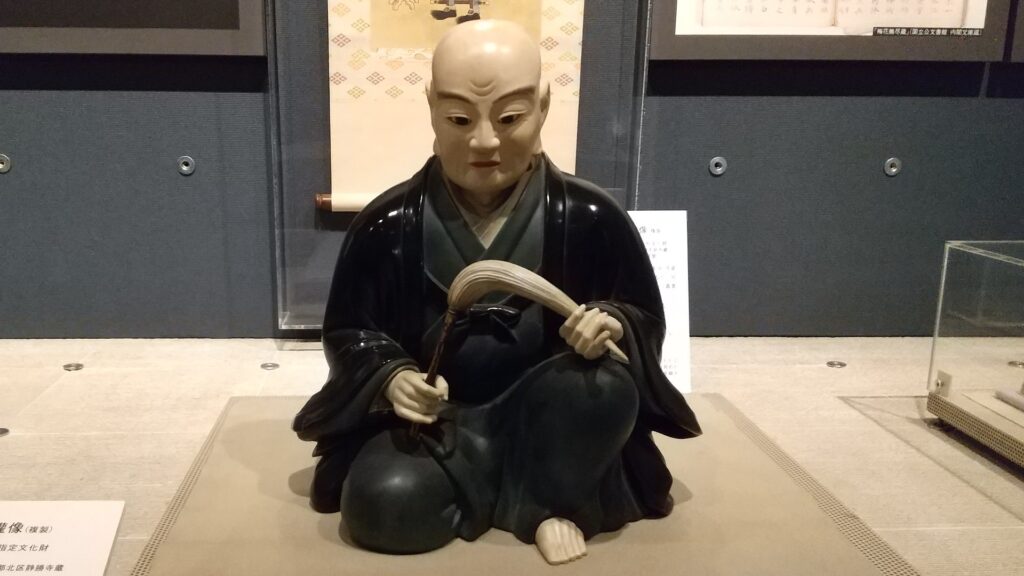
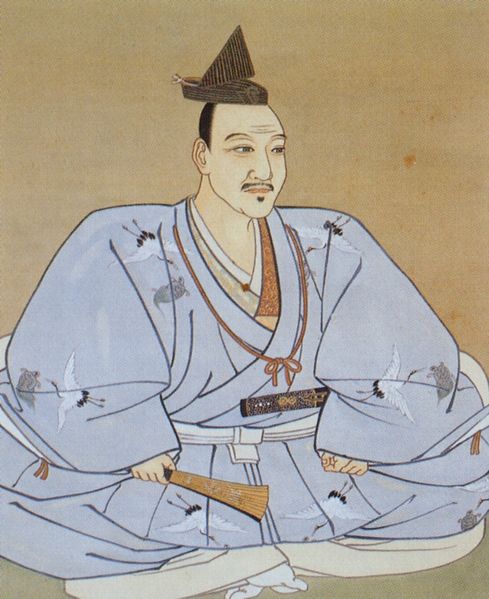
The portrait of Kagetsuna Katakura, owned by Sendai City Museum (licensed under Public Domain via Wikimedia Commons)
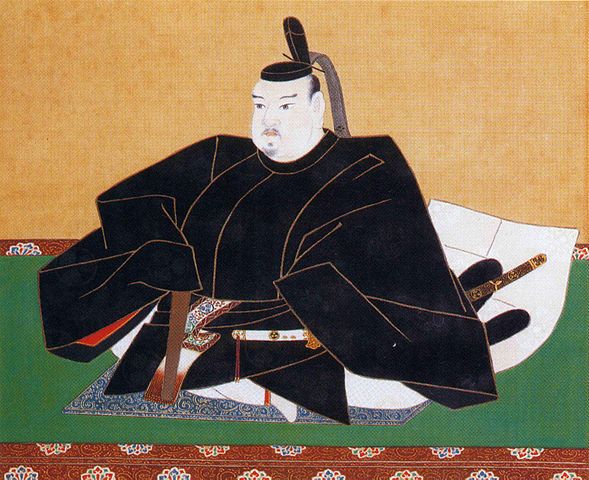
The portrait of Masamune Date, owned by Sendai City Museum (licensed under Public Domain via Wikimedia Commons)

Kagetsuna’s son, Shigenaga was very active in the summer campaign of the Siege of Osaka in 1615 where the shogunate defeated the Toyotomi Clan. There is a heroic story about him and his rival, Nobushige Sanada. They once fought each other in the battle, but Nobushige sent a letter (affixed to an arrow) to Shigenaga, which asked him to accommodate Nobushige’s children before his death. Kagetsuna accepted it, and then, Oume, Nobushige’s daughter would be Shigenaga’s second wife and another son, Daihachi would be a retainer of the Sendai Domain. One theory seems to be that Shigenaga took Oume away from Osaka Castle when it was falling and accommodated the other children when they later visited her in Shiroishi Castle. In either case, Shigenaga must have been a man of great capacity.

The portrait of Shigenaga Katakura, drawn in a Ukiyoe-painting, attributed to Yoshiiku Ochiai (licensed under Public Domain via Wikimedia Commons)
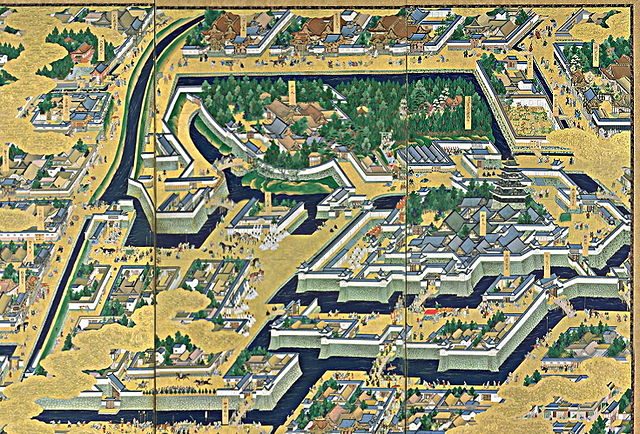
The summer campaign of the siege of Osaka folding screens, owned by Osaka Castle Museum (licensed under Public Domain via Wikimedia Commons)
The portrait of Nobushige Sanada, owned by Ueda City Museum (licensed under Public Domain via Wikimedia Commons)

Castle survives as exemption of One Castle per Province

Shigenaga’s successor, Kagenaga was also important for the domain. When an internal trouble of the Date Clan, called Date-sodo (feud), happened in 1671, the government of the domain got out of control due to a bloody affair at the shogunate court in Edo. Kagenaga stayed local to keep other retainers calm and kept the government. These events were decisive for the position of the Katakura Clan. In addition, each independent lord was not allowed to have castles, excluding the only one the lord lived in, by the shogunate. However, Shiroishi Castle, where the Katakura Clan as a retainer lived in, remained as an exemption. This was probably due to Date’s strong influence as well as Katakura’s contributions.

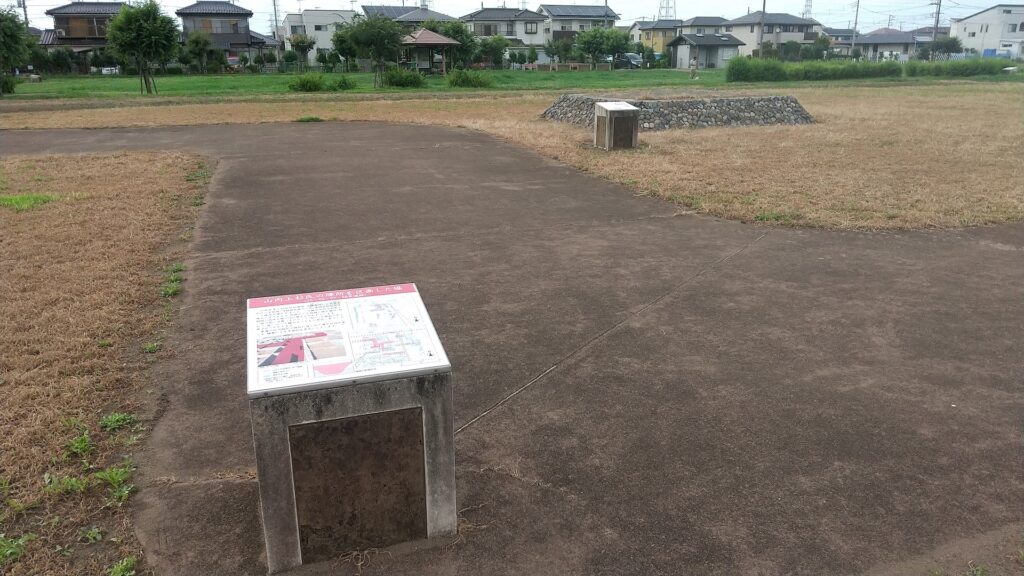
The ruins of Sendai Castle, the home of the Date Clan

Castle is completed by Gamo and Katakura Clans

As for Shiroishi Castle itself, it is uncertain when it was first built, but it was considered an important strategic location for transportation. After the unification of Japan by Hideyoshi Toyotomi, Satonari Gamo, a senior vassal of the clan owned and modernized the castle by building stone walls and the Main Tower. He would later improve several other castles like Kasama Castle, which can be seen as a hidden master of castle constructions. The Katakura Clan lived and improved the castle more based on the essential structures Satonari built.

The ruins of Kasama Castle

The castle had several enclosures on a hill. The Main Enclosure on the top had the main buildings of the castle, such as the three-level Main Tower, Main Gate, Back Gate, Main Hall, and two two-level turrets. They were exactly the same items as what other independent lords had. However, the Main Hall also had an interesting feature. The hall had two front entrances, one for locals and the other only for the lord of the Date Clan, the master of the Katakura Clan. The hall also had the rooms, called Onari-goten, where only the lord could stay.

The miniature model of Kasama Castle, exhibited by Shiroishi Castle History Museum
The miniature model of the main enclosure of Shiroishi Castle
The part of the Main Hall in the miniature model above, the entrance for the locals is marked by the blue circle and that only for the lord of the domain is marked by the red circle

The Katakura Clan also developed the castle town below the hill, where the retainers and other citizens lived in. Waterways were also developed in the town for defensive purposes and living. For example, there were Samurai residences in the Third Enclosure, part of the town, which was surrounded by the Sawabata River and the waterways. The residences were relatively smaller than other residences of independent domains. This was because the retainers under the Katakura Clan had lower incomes than those who served independent lords.

Part of the Illustration of Shiroishi Castle in the Sendai Domain, Oshu Region, the third enclosure along the Sawabata River is in the front, exhibited by the National Archives of Japan
The remaining Samurai residence along the Sawabata River

One of stages of Meiji Restoration

In 1868 during the Meiji Restoration, an important event happened to the castle again. Many domains against the New Government in the Tohoku Region held the Shiroishi Meeting in the castle. This was because the Sendai Domain was their leader and the castle could also be a hub for them. This event would be the trigger for the Boshin War between the government and the domains. However, the castle was eventually opened as its real master, the Sendai Domain had surrendered to the government.

The current Shiroishi Castle

To be continued in “Shiroishi Castle Part2”

105.白石城 その1

当時は幕府により、それぞれの独立大名はその居城以外の城の保有を禁じられていました。ところが、陪臣である片倉氏の住む白石城は、例外として存続を認められました。これは、大大名としての伊達氏の影響力の他にも、片倉氏の貢献度も考慮されたものと思われます。

立地と歴史

伊達氏の重臣、片倉氏の城

白石城は現在の宮城県南端にある白石市にあります。この城はまた、江戸時代には伊達氏の領国の南端でもありました。伊達氏の当主は江戸時代を通して、この地域の支配を信頼していた重臣、片倉氏に任せていました。この城には「大櫓」と呼ばれた三階櫓がありましたが、実際には天守と言えるようなものでした。そのため、この城は独立した大名のシンボルのように見えました。

宮城県の範囲と城の位置、仙台藩の範囲は宮城県よりも広大でした

白石城の復元天守

片倉氏の初代、片倉景綱(かたくらかげつな)は子どものときから主君の伊達政宗に仕えていました。景綱の姉、喜多(きた)が正宗の乳母となっていたからです。それ以来、景綱は多くの戦いに参戦し、また他の戦国大名との交渉窓口として活躍しました。その貢献もあり、16世紀後半に正宗は東北地方随一の戦国大名となりました。1590年に豊臣秀吉が天下統一を果たすため関東地方に侵攻したとき、正宗は秀吉に臣従すべきか否か思案していました。景綱は政宗に臣従するよう助言し、その結果、伊達氏は生き残ることができたのです。やがて、徳川幕府により伊達氏の領国が仙台藩として確定されると、正宗は1602年に重要な白石地域を景綱に与えました。

片倉景綱肖像画、仙台市博物館蔵  (licensed under Public Domain via Wikimedia Commons)
伊達政宗像、仙台市博物館蔵 (licensed under Public Domain via Wikimedia Commons)

景綱の息子、重長(しげなが)は、幕府が豊臣氏を滅ぼした1615年の大坂夏の陣で活躍しました。その最中に起こったとされる、彼とその対戦相手であった真田信繁との英雄談があります。両軍が戦いを交えた後、信繁が重長の陣に矢文を放ったのです。その中には、信繁が最期を迎える前に子ども達を引き取ってほしい旨が記されていました。重長はそれに同意しました。その子どもたちは、娘の阿梅(おうめ)が後に重長の後妻となり、息子の大八(だいはち)が仙台藩士となりました。その話とは違って、重長は大坂城が落城しようとしている中、阿梅を連れ帰り、他の子どもたちは後に、白石城にいる阿梅を訪ねて行ったという説もあります。どちらが正しいとしても、重長は度量の大きい人物だったと言えます。

「太平記拾遺四十二 片倉小十郎重綱(重長より前の名乗り)」落合芳幾作 (licensed under Public Domain via Wikimedia Commons)
大坂夏の陣図屏風、大阪城天守閣蔵 (licensed under Public Domain via Wikimedia Commons)
真田信繫像、上田市立博物館蔵 (licensed under Public Domain via Wikimedia Commons)

一国一城令の例外として存続

重長の後継ぎ、景長(かげなが)もまた藩で重きをなしました。1671年に伊達騒動と呼ばれるお家騒動が起こったとき、藩政は一時制御不能となりました。抗争する派閥同士が江戸での評定の場で流血事件を起こしていたのです。景長は領国に残り、他の藩士たちを鎮めて藩政を正常に保ちました。こういった出来事によって、片倉氏の地位は盤石となりました。また、当時は幕府により、それぞれの独立大名はその居城以外の城の保有を禁じられていました(一国一城令)。ところが、陪臣である片倉氏の住む白石城は、例外として存続を認められました。これは、大大名としての伊達氏の影響力の他にも、片倉氏の貢献度も考慮されたものと思われます。

仙台藩の本拠地、仙台城跡

蒲生氏、片倉氏の改修によって完成

白石城そのものに関しては、最初にいつ築城されたかは定かではありません。しかし、交通の要衝を抑える戦略的な立地にある城とされてきました。豊臣秀吉による天下統一の後は、蒲生氏の重臣である蒲生郷成(がもうさとなり)がこの城の城主となり、石垣や天守を築いて近代化を行いました。彼は後に笠間城などの改修も行っていて、隠れた築城の名人と言ってもよい人物です。片倉氏は、郷成が築いた城の基本骨格の上に、更なる改修を加えたのです。

笠間城跡

この城の主要な曲輪群は丘の上にありました。頂上部分には本丸があり、そこには三層の天守、大手門、裏門、御殿、2基の二階櫓などの主要な建物がありました。これらは、他の独立大名が持っていたものと全く遜色がありません。しかし、その本丸御殿には興味深い特徴がありました。御殿には2つの玄関があり、一つは藩士用、もう一つは片倉氏の主君(藩主)である伊達の殿様専用でした。また、御殿には「御成御殿」と呼ばれる殿様専用の区域もありました。

城主要部の模型、白石城歴史探訪ミュージアムにて展示
本丸の模型、白石城歴史探訪ミュージアムにて展示
上記模型の御殿部分(青丸赤丸を付加)、青丸内が藩士用の中ノ口式台、赤丸内が藩主専用の御成式台

また、片倉氏は丘の下に、藩士と町人たちが居住するための城下町も整備しました。城の防衛と生活の便のため、町には水路が巡らされました。例えば、城下町の中にあった三の丸には武家屋敷が建てられ、沢端川(さわばたがわ)と水路に囲まれていました。これらの屋敷は、他の独立大名の家臣の屋敷より比較的小さいものでした。片倉氏に仕える家臣の収入が、独立大名の家臣より少なかったからです。

「奥州仙台領白石城絵図」部分、手前側が沢端川に沿った三の丸、出典:国立公文書館
沢端川沿いに残る武家屋敷

幕末史の舞台の一つ

1868年の明治維新のとき、重大な出来事が再び城に起こりました。新政府に反抗する東北地方の多くの藩が、この城で「白石会議」を開いたのです。仙台藩はリーダーの藩の一つであり、白石城の位置が各藩の要の位置にあったからです。この会議は、新政府とこれらの藩(奥羽越列藩同盟)との間の戊辰戦争の引き金になりました。ところが、仙台藩が政府に降伏してしまったことで、白石城も開城することになりました。

現在の白石城

「白石城その2」に続きます。

114.Karasawayama Castle Part1

The last lord of the castle, Nobuyoshi Sano built high stone walls on the main portion of the castle, which was a rare case in the region. It must have been done with help from Hideyoshi Toyotomi because he and his retainers had built many similar stone walls in western Japan.

Location and History

Sano Clan builds Castle during Sengoku Period

Karasawayama Castle was located in modern day Sano City, Tochigi Prefecture, which was a large mountain castle beside the northern edge of the Kanto Plain. Tradition says that a famous general, Hidesato Fujiwara built it in 972 during the Ancient times. However, historians think that it was created by the Sano Clan, who were descendants of Hidesato and governed the castle for a long time. According to the results of the research and studies, the clan first lived in a hall at the western foot of the mountain until the 15th Century. It was thought that the castle was built or developed by the clan on the mountain when many battles happened in the Kanto Region, during the Sengoku Period. Other popular mountain castles in the region like Kanayama and Minowa Castles were built at the same time to protect the owners under the severe conditions. The Sano Clan first used the mountain castle in the cases of emergency, but eventually lived in it to survive.

The range of Sano City and the location of the castle

The relief map around the castle

The ruins of the Sano Clan’s residence (current Koshoji Temple)
The ruins of Karasawayama Castle
The ruins of Kanayama Castle
The ruins of Minowa Castle

Kenshin Uesugi devotes to capture Castle

On the other hand, great warlords, who wanted to rule over the region, thought they would need to get Karasawayama Castle because of its advantageous location. Kenshin Uesugi was one of them and was devoted to do it. There is a symbolic episode when he first invaded the Kanto Region around 1560. He visited Karasawayama Castle with few vassals, which was surrounded by his enemy, the Hojo Clan’s large troops, to persuade the lord of castle, Masatsuna Sano to support him until he succeeded. However, every time Kenshin returned to his home, Kasugayama Castle in Echigo Province, the Hojo Clan got its territory back and forced local lords to support it. Masatsuna was one of them and he had to switch allegiance.

The portrait of Kenshin Uesugi, owned by the Uesugi Shrine (licensed under Public Domain via Wikimedia Commons)
The ruins of Kasugayama Castle

Kenshin, who is considered one of the strongest generals, got angry and attacked the castle, but was not able to capture it by force as it was really strong. Even when Masatsuna surrendered to Kenshin, they would do the same things after Kenshin went back. As a result, they fought with each other at least five times. Kenshin once banished Masatsuna from the castle and sent his relative and vassals to govern it. However, he finally returned the castle to Masatsuna for some reasons. He might have felt the difficulty of how to control this distant site.

The portrait of Masatsuna Sano, owned by Daianji Temple (licensed under Public Domain via Wikimedia Commons)

High stone walls are built with help of Hideyoshi Toyotomi

The Kanto Region, including Karasawayama Castle, eventually belonged to the Hojo Clan during the 1570’s and 1580’s. It sent its relative, Ujitada Hojo to govern the castle like Kenshin had used to do. On the other hand, Masatsuna’s relative, Fusatsuna Sano ran away from the region to western Japan to serve Hideyoshi Toyotomi who was the ruler of Japan at that time. Fusatsuna led Hideyoshi to the region when they invaded it in 1590, which resulted in Fusatsuna getting the castle back as the lord. However, Hideyoshi seemed to also want to control the castle. He made the little brother of his close vassal, Nobutaka Tomita to be the successor of Fusatsuna, which would be called Nobuyoshi Sano, the last lord of the clan and the castle. This could be because his rival, Ieyasu Tokugawa was moved by him to the region. He wanted to have Ieyasu monitored by someone reliable.

The Portrait of Hideyoshi Toyotomi, attributed to Mitsunobu Kano, owned by Kodaiji Temple (licensed under Public Domain via Wikimedia Commons)

Karasawayama Castle was built on a large mountain which had several ridges. Lots of enclosures were also built on the top and the ridges which had turrets, lookouts, guard houses and shooting points to monitor and attack enemies. These ridges or enclosures were divided by deep ditches to prevent enemies from invading easily. There are two main routes in the south and west, which gathered at the meeting point in front of the Main Gate near the top, which were controlled by the castle’s soldiers. The foot area was used as the lords and senior vassals’ residences surrounded by thick and long earthen walls for defense. They had been developed and improved by the Sano, Uesugi, and Hojo Clans for a long time.

Karasawayama Mountain where the castle was built
The remaining earthen walls at the foot of the mountain
The ruins of the residence of a sennior vassal at the foot of the mountain called Hayato-Yashiki

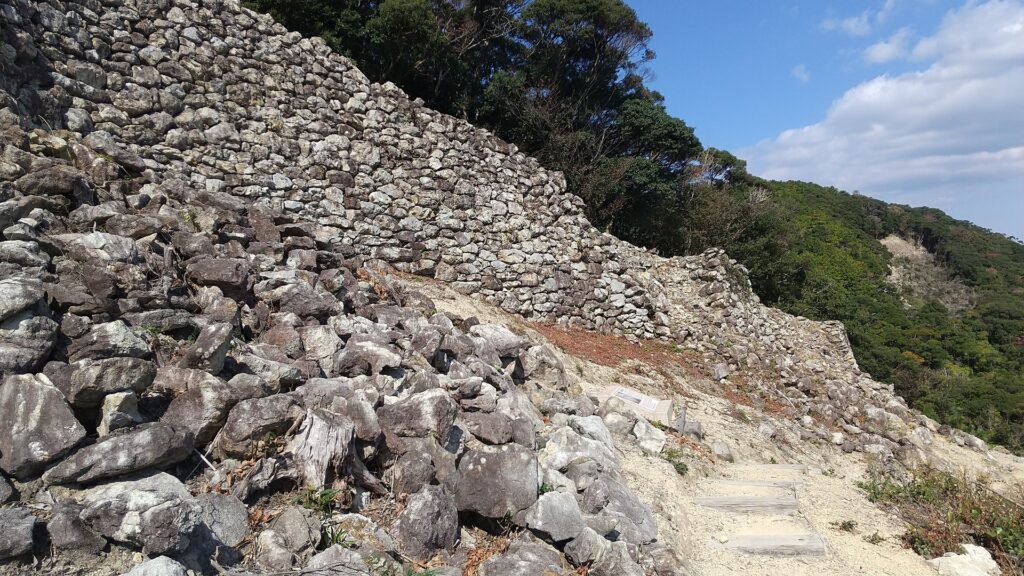
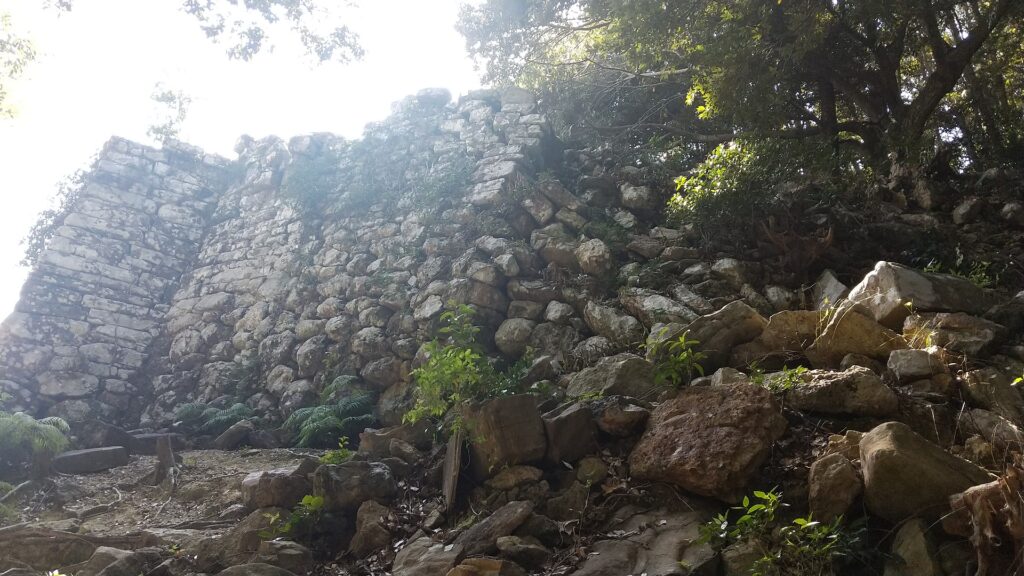
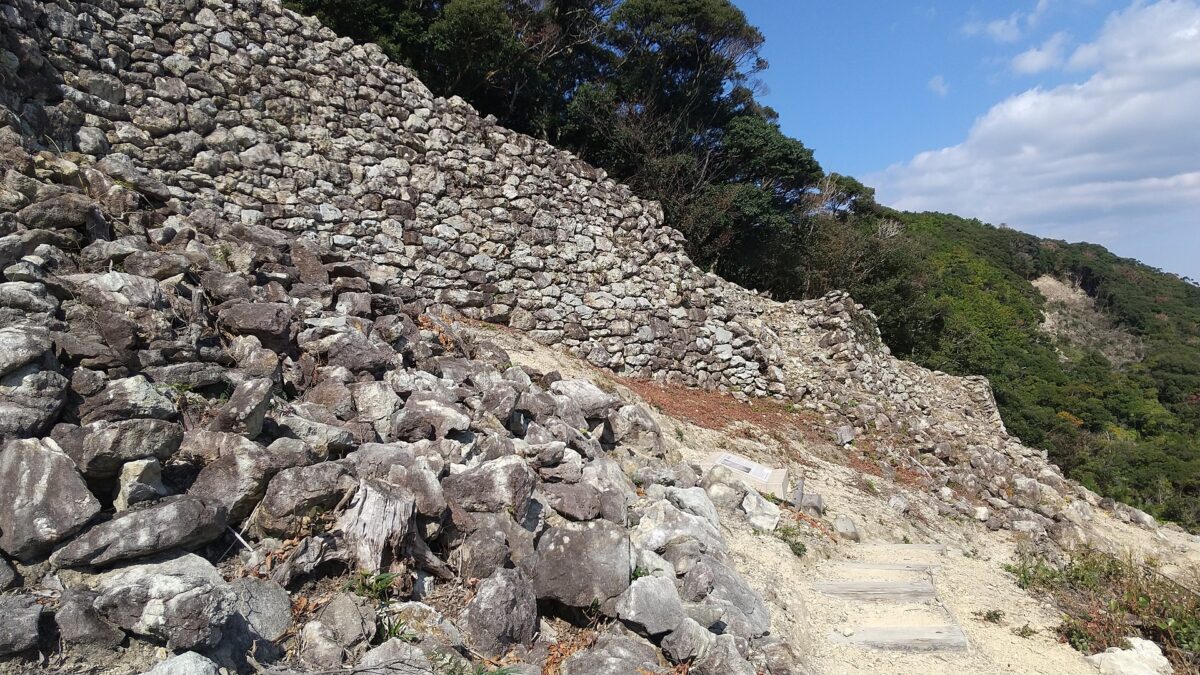
The castle’s foundations were basically made of soil, which was a common way of building castles in eastern Japan at that time. However, the last lord, Nobuyoshi built high stone walls on the main portion of the castle, which was a rare case in the region. It must have been done with help from Hideyoshi because he and his retainers had built many similar stone walls in western Japan. On the other hand, Ieyasu still didn’t have the techniques and guilds for building such high stone walls. That meant the stone walls of strong Karasawayama Castle must have been a big threat to Ieyasu.

The high stone walls of Karasawayama Castle

Life of Castle suddenly ends, ordered by Ieyasu Tokugawa

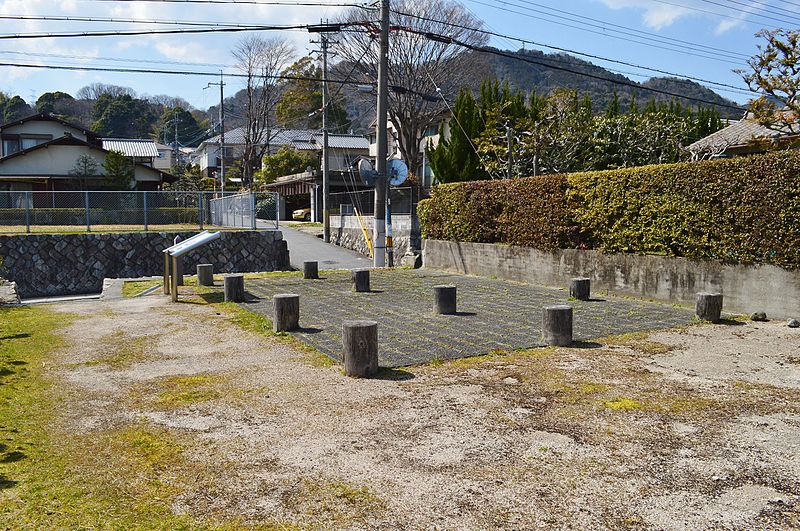
When Ieyasu got the power to be the ruler around 1600 after Hideyoshi died, Nobuyoshi somehow survived by supporting Ieyasu. However, the declinations of Karasawayama Castle and the Sano Clan suddenly occured. In 1602, Ieyasu ordered Nobuyoshi to move from Karasawayama to Sano Castle in a plain area nearby. It was said that the reason for it was that it could be rude for Nobuyoshi to look down on Ieyasu’s home, Edo Castle from the mountain castle. Nobuyoshi was finally fired by Ieyasu in 1614 due to being implicated for a crime of his brother, Nobutaka Tomita. Overall, Ieyasu seemed to want to remove possible rebels like Nobuyoshi with strong castles like Karasawayama.

The Portrait of Ieyasu Tokugawa, attributed to Tanyu Kano, owned by Osaka Castle Museum (licensed under Public Domain via Wikimedia Commons)
The ruins of Sano Castle

To be continued in “Karasawayama Castle Part2”

error: Content is protected !!