Tadakatsu Sakai, the founder of the Shonai Domain, was wondering which castle would be better for his home base, Tsurugaoka or Kamegaoka. His decision was to take Tsurugaoka because he thought Tsurugaoka would be the political center while Kamegaoka would be commercial with Sakata port and town.
Location and History
Shonai Domain has Political Tsurugaoka and Commercial Sakata
The Shonai area of Yamagata Prefecture is a granary on the Shonai Plain, which is known for Shonai Rice. There are two large cities, Tsuruoka and Sakata, in the area. When the area was governed by the Shonai Domain during the Edo Period, the cities shared their respective roles. Tsuruoka was political and Sakata was commercial. Turuagaoka Castle was located in the current Tsuruoka City, which was the home base of the domain, ruled by the Sakai Clan.
The ranges of Tsuruoka and Sakata Cities and the location of the castle
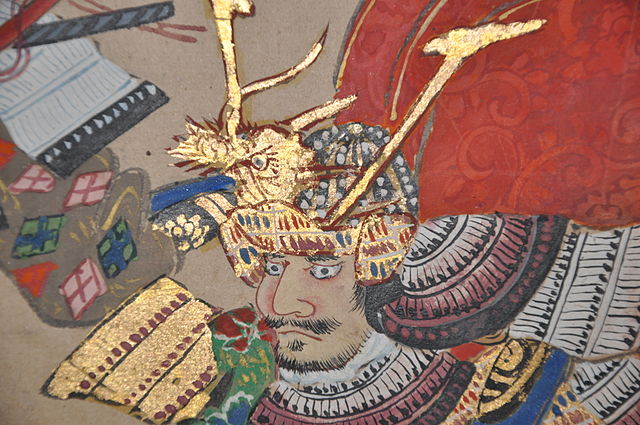
The castle was originally called Daihoji Castle which was first built by a local lord, the Muto Clan, sometime in the early Middle Ages. It was one of their several castles, and its size was still small. As time passed by, the area was targeted by greater warlords from outside, such as the Uesugi and Mogami Clans in the late 16th Century during the Sengoku Period. These clans battled over this area while the power of the Muto Clan declined. Daihoji Castle and Tozenji Castle, which was located in the current Sakata City, were improved by them. In the early 17th Century when the Tokugawa Shogunate was established by Ieyasu Tokugawa, the Shonai area was governed by Yoshimitsu Mogami, based in Yamagata Castle. He renamed Daihoji Castle to Tsurugaoka (meaning the Hill of Cranes) and Tozenji Castle to Kamegaoka (meaning the Hill of Turtles). Cranes and turtles (and Pine trees) have been lucky words for Japanese people because they believed these animals had longer lives than humans. He did it after he had heard that a big turtle was found at the seaside near Tozenji Castle. However, the Mogami Clan was banished by the shogunate in 1622 due to their internal troubles after Yoshimitu died.
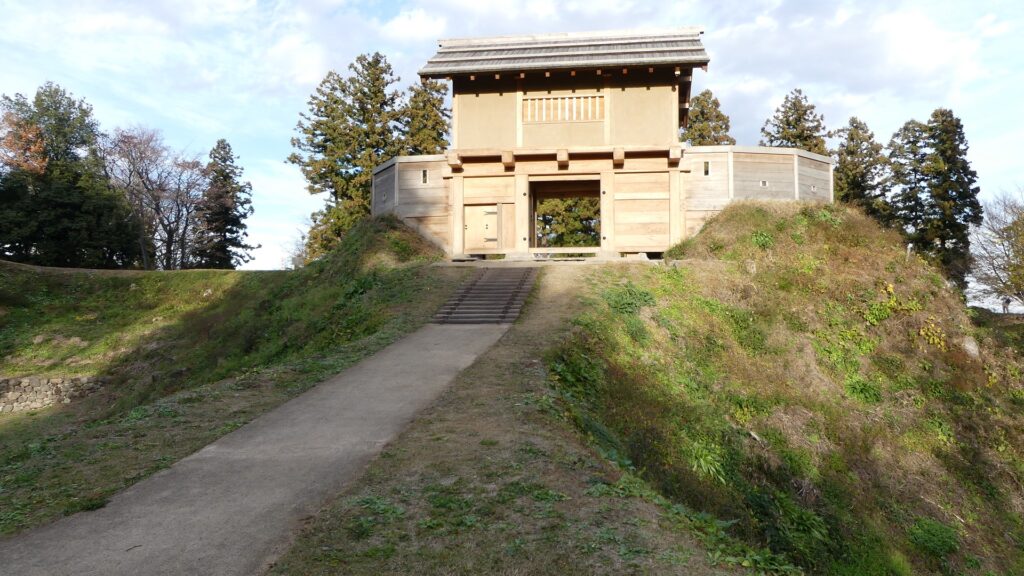
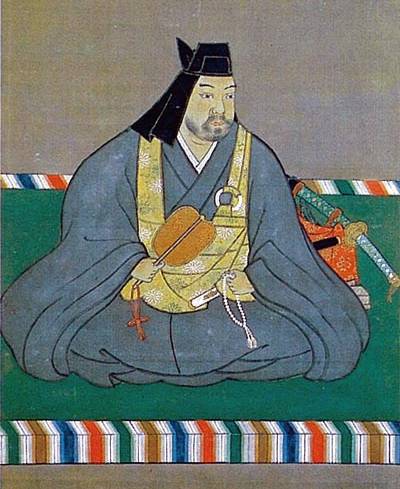
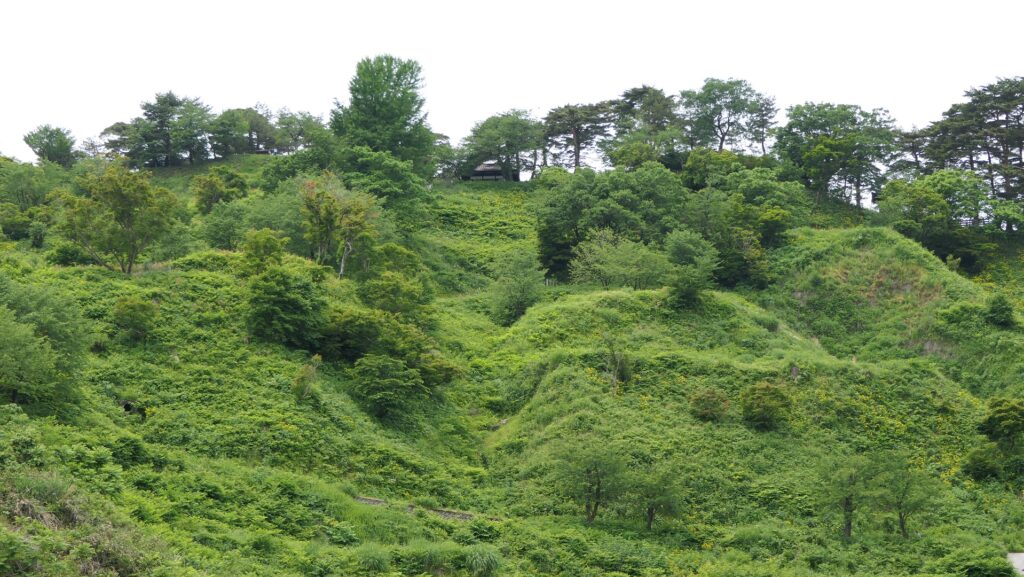
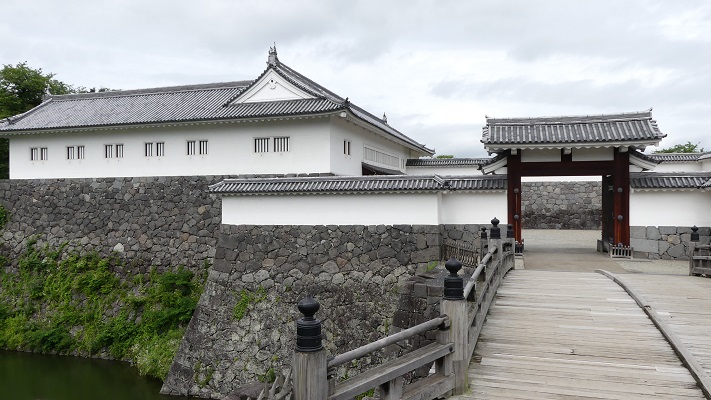
Yoshiaki Mogami from Battle of Hasedo Standing Screen (licensed under Public Domain via Wikimedia Commons)The ruins of Yamagata Castle
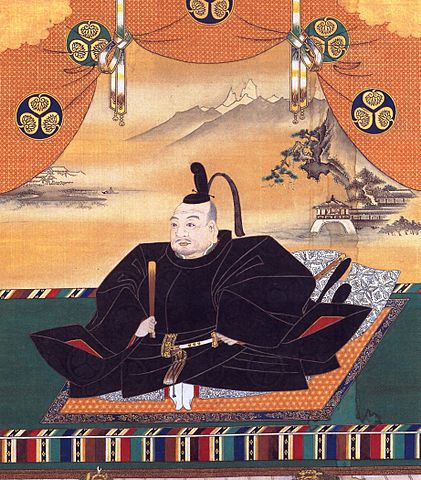
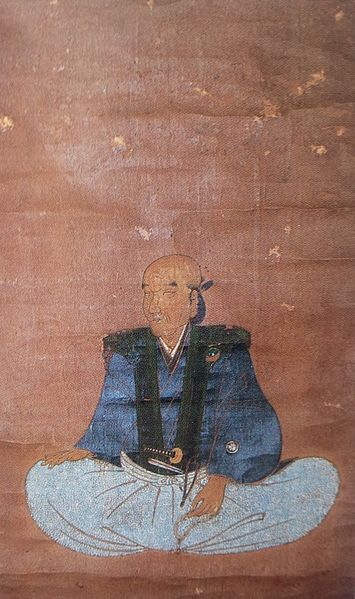
The territory of the Mogami Clan was apportioned to several other lords, one of which, the Shonai area was given to Tadakatsu Sakai as the founder of the Shonai Domain. He was a grandchild of Tadatsugu Sakai, known as One of the Four Generals Serving Ieyasu Tokugawa. That’s why the Sakai Clan had been a senior vassal of the shogun and had loyalty to the shogunate. Tadakatsu was wondering which castle would be better for his home base, Tsurugaoka or Kamegaoka. In terms of defense, Kamegaoka was better. However, his decision was to take Tsurugaoka because he thought Tsurugaoka would be the political center while Kamegaoka would be commercial with Sakata port and town.
The portrait of Tadakatsu Sakai, owned by Chido Museum (licensed under Public Domain via Wikimedia Commons)
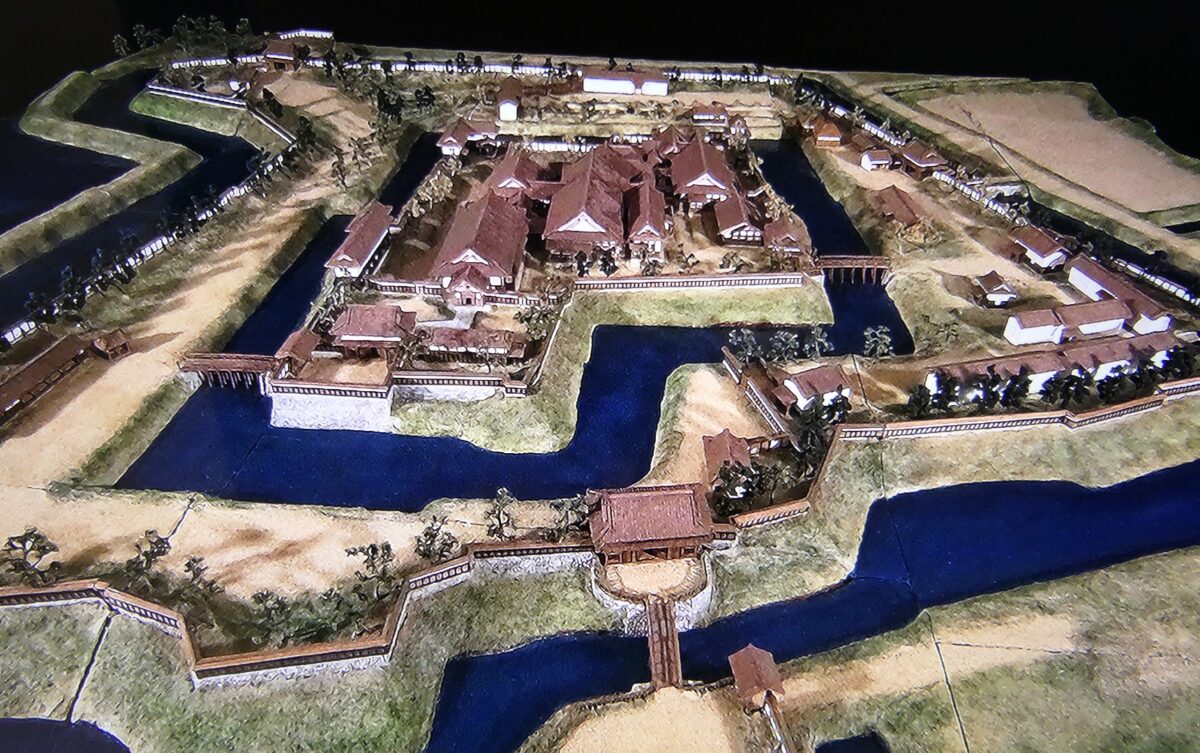
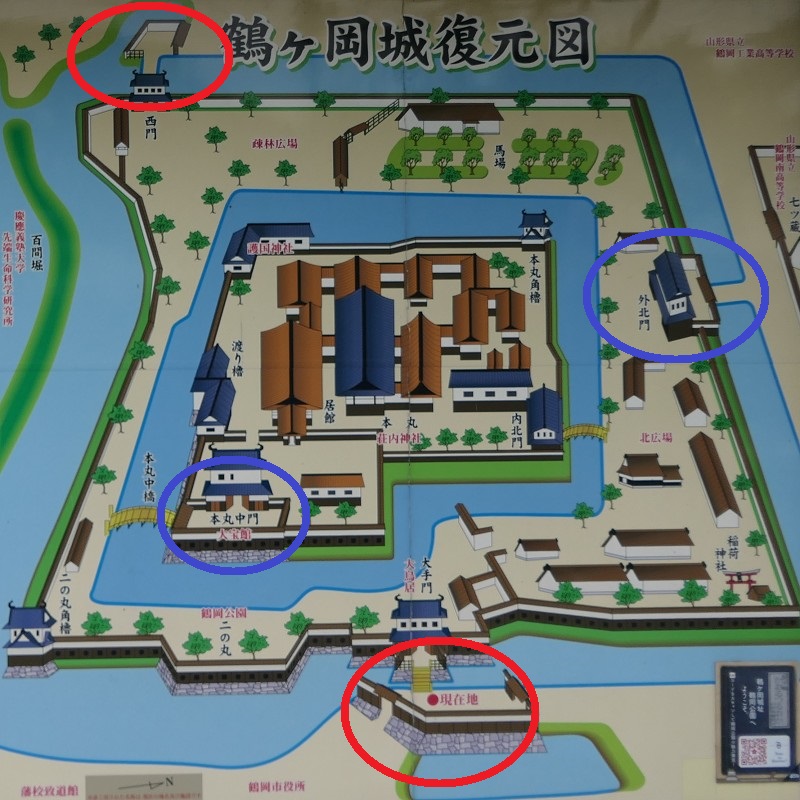
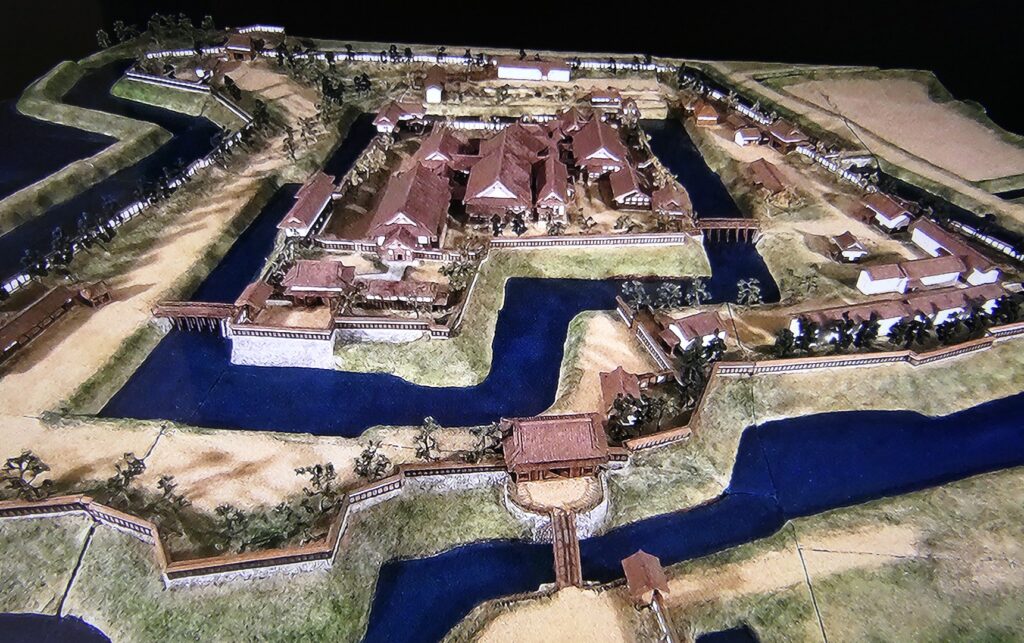
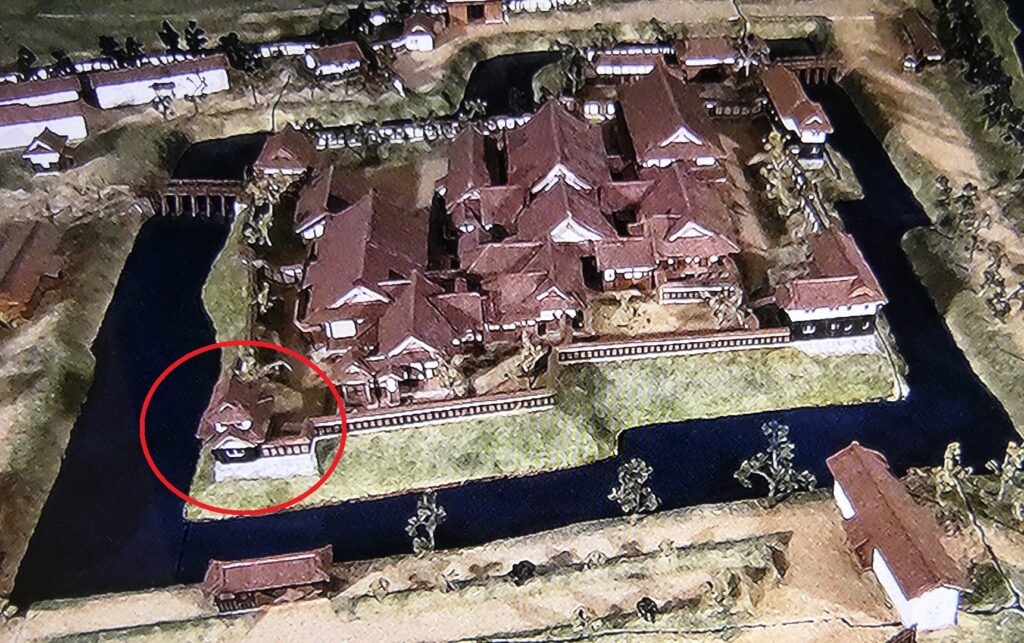
Originally, Tsurugaoka Castle was said to have had only the Main and Second Enclosures made of soil, with simple residences, surrounded by double water moats, on a plain land. It would be too small for the Sakai Clan’s home base and not defensive when a battle happened there. So, Tadakatsu started to improve the castle by building the large Third Enclosure and the castle town outside. The Main Hall for the lord was also built in the Main Enclosure. The Main and Second Enclosures had five entrances, which were protected by the Masugata system or the Umadashi system which the Tokugawa relatives had used to build. The Masugata refers to a square defensive space inside the gate and the Umadashi is a small round enclosure which sticks out from the gate. On the other hand, the castle had few stone walls, still mostly made of soil, and had no Main Tower unlike other castles of the Tokugawa relatives. A two-level turret was built on a corner of the Main Enclosure as a substitute of the tower. Overall, the castle can be seen as a mixing of the legacy of the area and the Tokugawa method.
The reconstruction of Tsurugaoka Castle from the signboard at the site, adding colored circles, the Umadashi systems in the red circles and the Masugata systems in the blue circlesThe miniature model of the castle, seen from the same direction as above (the east), exhibited by Chido MuseumThe main enclosure in the miniature model, seen from the west, the substitute for the Main Tower is in the red circle
Deadlock and Reform of Government
The early government of the Shonai Domain was actually unstable. Tadakatsu’s tax policy was harsh because he wanted to have more income to contribute to the shogunate. However, the Tohoku Region including the Shonai area often suffered damage from cold weather, droughts, and floods. Despite these variable situations, the domain asked the farmers to pay the same amount of taxes every year. That resulted in many farmers fleeing the area, having huge debt, and even selling their families, leaving the area devastated.
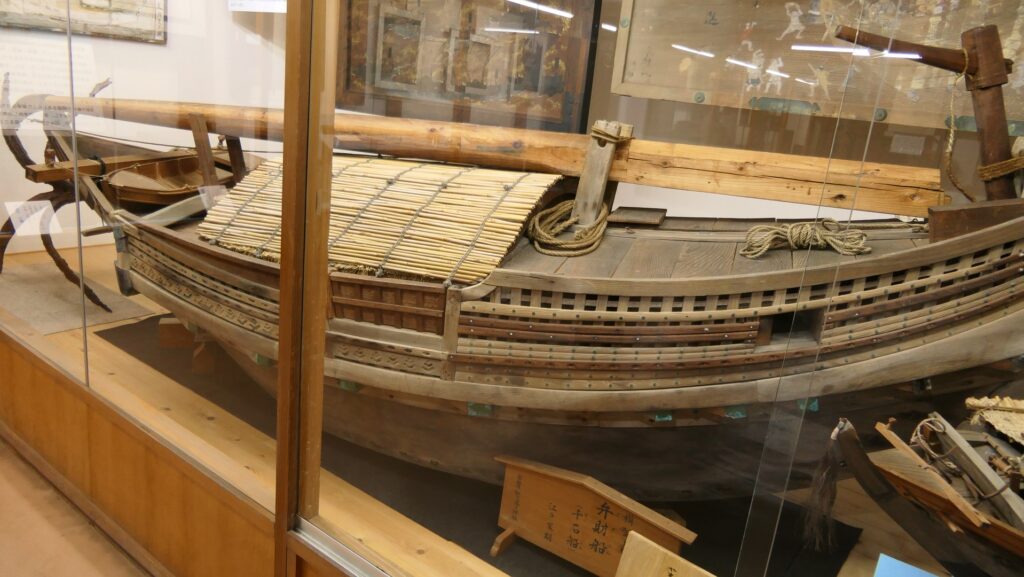
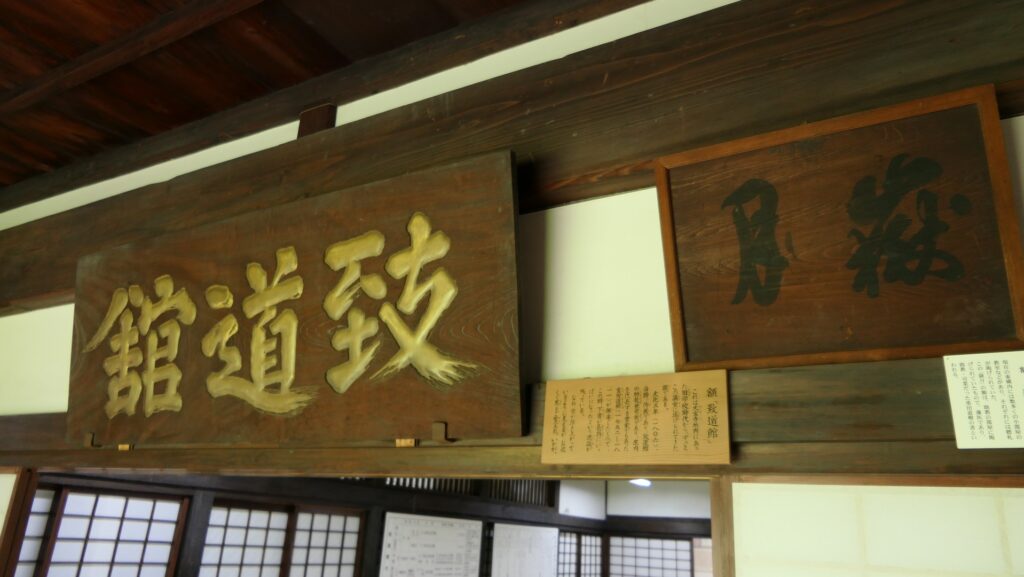
A wealthy merchant of Sakata town, Mitsuoka Honma saved the domain during the late 18th Century. Ocean voyages were prohibited by the shogunate due to its policy of closing the country, but coastal sailing in small crafts became a major mean of transportation. Sakata port was one of the transport hubs, which made the town and merchants so rich. That’s why the domain asked Mitsuoka for help to solve its financial problems. He provided not only enormous tax money but also was in charge of financial matters of the domain. The domain changed the ways to treat the farmers flexibly as well. It also opened the domain school called Chidokan in 1805 to educate the domain retainers. The situation was getting better and the people in the area became united.
The miniature model of a large Japanese junk called Benzai-sen, which was used for the coastal sailing, exhibited by Chido MuseumThe tablet of Chidokan domain school, which was used during the Edo Period
Reform is proven during End of Edo Period
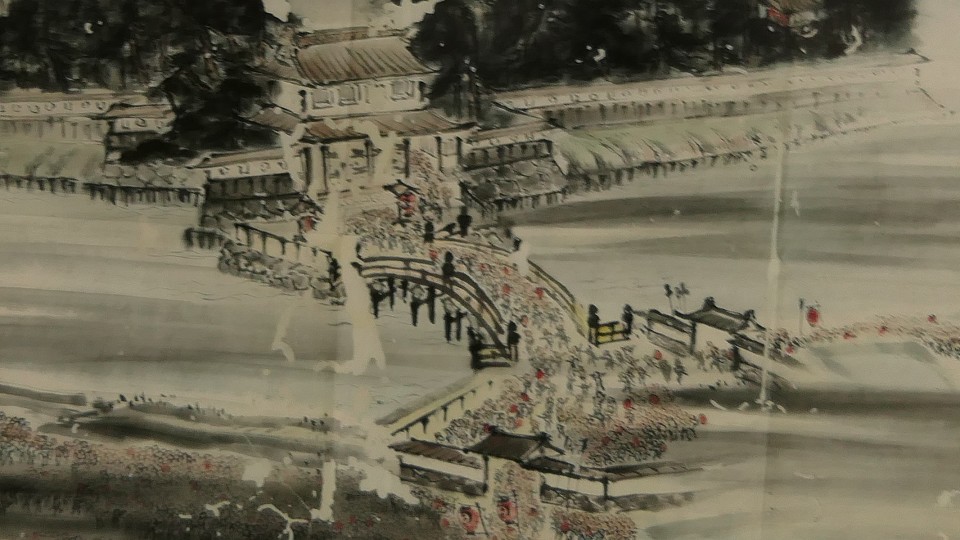
The result of the reform was proven in 1840 when the shogunate ordered the Shonai Domain to move to another and the Matsudaira Clan would be expected to come from the Kawagoe Domain. The movement of the people including farmers in the Shonai Domain against the shogunate’s decision occurred. They urged the shogunate that they wanted to be with the lords of the Sakai Clan. In fact, the movement might have been triggered by suggestions from some warriors, who didn’t want to move, that the next lord would be too strict. As a result, the order was canceled, which was a very rare case during the Edo Period.
The picture of people celebrating the cancelation of the movement in front of the castle, exhibited by the domain school
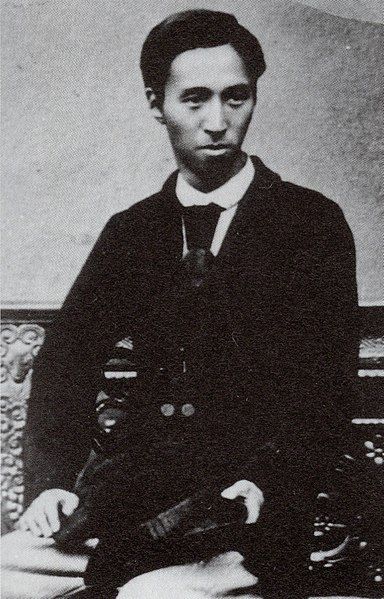
When the shogunate collapsed and the new government was established in 1868 during the Meiji Restoration, several domains in the Tohoku Region, including the Shonai Domain, made an alliance to be against the government. The Shonai’s troops led by a senior vassal, Genba Sakai were organized by warriors, farmers and even merchants, and were very strong. This was because the Honma Clan imported advanced foreign weapons and gave them to the troops. They repelled the Government Army and attacked other domains supporting the government instead. However, all of their allies were defeated or surrendered to the government before the last lord, Tadazumi Sakai also decided to surrender though his troops and Tsurugaoka Castle were intact.
Genba Sakai, in the early Meiji Era (licensed under Public Domain via Wikimedia Commons)