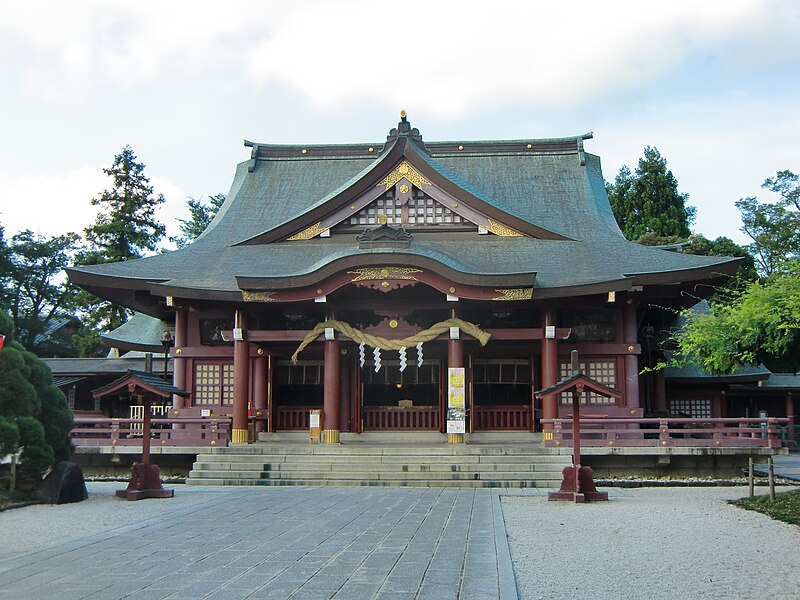
153.Kitabatake Clan Hall Part1

The lord of the Kitabatake Clan reigned at the clan’s hall, called the Taki Palace. The hall had a great Japanese garden which still remains. The group eventually became a great warlord clan in the early 16th Century.

Location and History

Southern Court Noble family becomes Warlord

Kitabatake Clan Hall was the home base of the Kitabatake Clan which governed Ise Province which is the modern day Mie Prefecture between the 14th and the 16th Centuries. The clan was a unique lord’s family who was originally a noble but finally became a warlord until they were taken over by Nobunaga Oda. Kitabatake Clan Hall was also uniquely located in the Taki area which was inconvenient but defensive so that clan was able to survive for a long time.

The range of Ise Province and the location of the castle

In the Period of Northern and Southern Courts during the 14th Century, Emperor Godaigo of the Southern Court sent his trusted vassal, Chikafusa Kitabatake to eastern Japan to govern the region. Chikafusa and his son, Akiie fought against the lords of the Northern Court, as a general. As a result, their relatives in the Tohoku Region remained as a noble birth lord family, called Namioka Palace, which lived in Namioka Castle until the late 16th Century. Similarly, Akiie’s little brother, Akiyoshi was sent to Ise Province and he was assigned as its Governor in 1338. Ise Province consisted of the eastern part facing the sea and having Ise Grand Shrine, one of the most important shrines for the Imperial family, and the western part of mountain areas having the routes to Yoshino in Yamato Province (now Nara Pref.), the home of the Southern Court.

The portrait of Emperor Godaigo, owned by Shojokoji Temple (licensed under Public Domain via Wikimedia Commons)
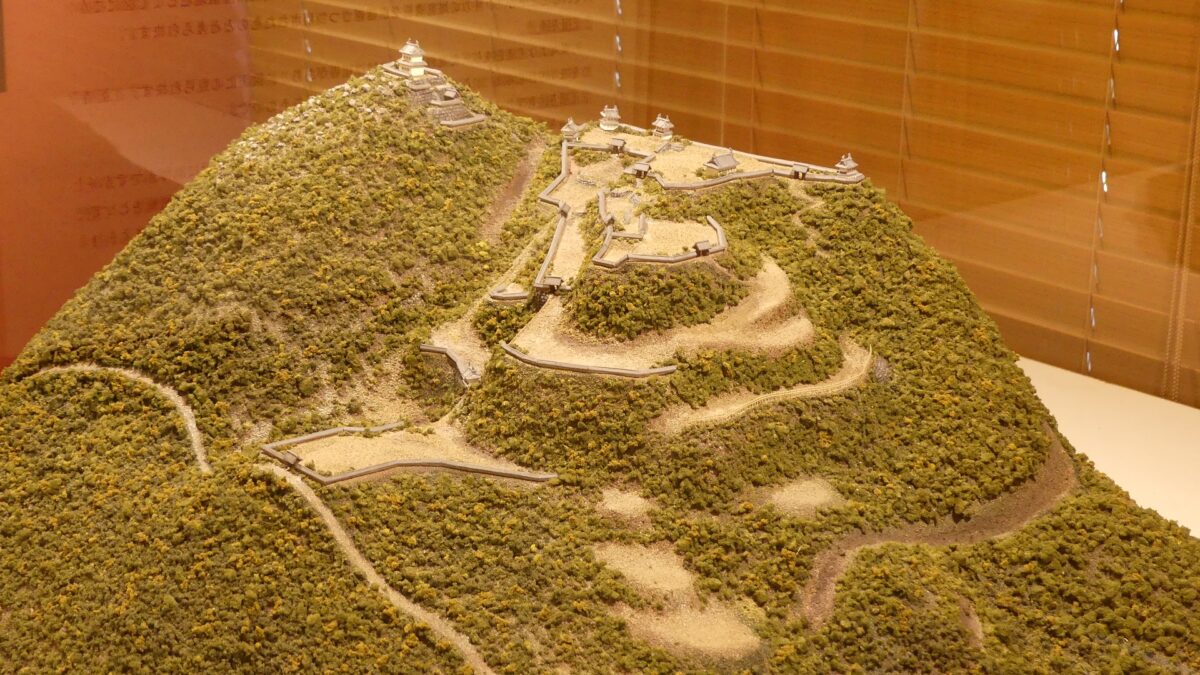
The statue of Akiie Kitabatake in Kitabatake Shrine
The ruins of Namioka Castle

The Kitabatake Clan in Ise Province also battled the Northern Court and eventually chose their home at a place in the defensive western part, which would be the Taki area. The area was on the way to the Ise Main Road connecting Ise Grand Shrine and Yamato Province, which was considered important. However, it was a small basin along the Yatemata River, surrounded by mountains. There were 7 entrances to the area, which were all on steep mountain passes or deep valleys. That meant the area itself was very defensive.

The relief map of the Taki area with its 7 entrances

The sitting statue of Akiyoshi Kitabatake, exhibited by Misugi Home Museum  (licensed via Wikimedia Commons)
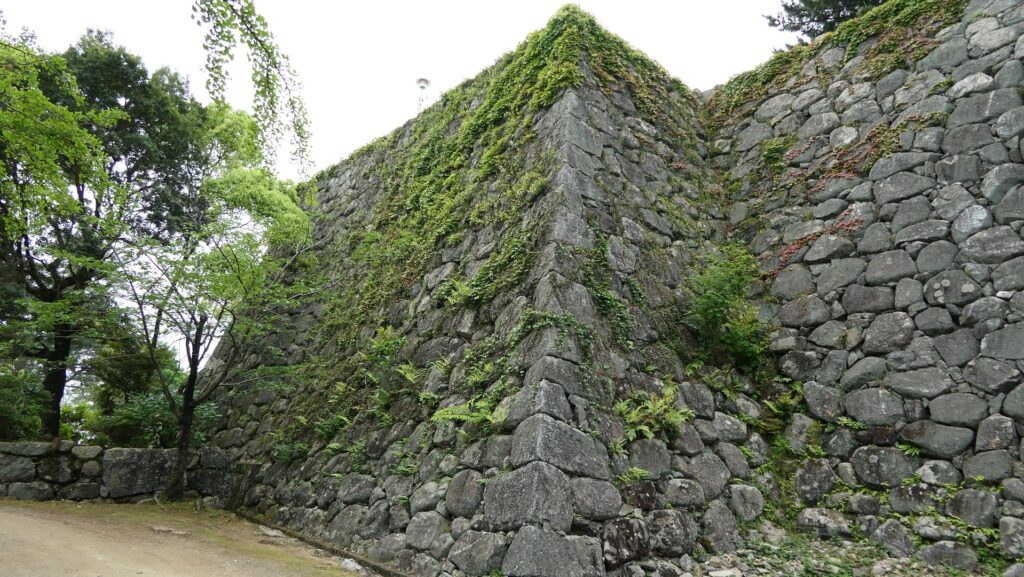
Unfortunately, the Southern Court eventually declined and the Ashikaga Shogunate supporting the Northern Court was established. The Kitabatake Clan somehow managed to survive, however, they sometimes opposed the shogunate about how to treat the descendants of the Southern Court. The clan first built their hall in a land surrounded by the Yatemata and the other two rivers in three directions and mountains in the west. The land was leveled to three tiers, the upper one was about 3m above the middle one and surrounded by long stone walls, so it seemed that the Main Hall was built on the upper tier. These stone walls are thought as one of the earliest ones built for warriors’ halls or residences. They were piled vertically using natural oval-shaped river stones, unlike typical stone walls for castles later, piled with a slant, using processed stones.

The excavated stone walls of the upper tier

Castles are built to protest Hall

The shogunate troops sometimes attacked the territory of the Kitabatake Clan from the west. As a result, the clan started to build new castles in that direction to protect their hall. They first built the final castle for emergencies on a mountain about 80m above the hall. It had a simple main enclosure on the top and belt enclosures around with passes. The western edge of the mountain was cut by a deep ditch where only the narrow earthen bridge could be used.

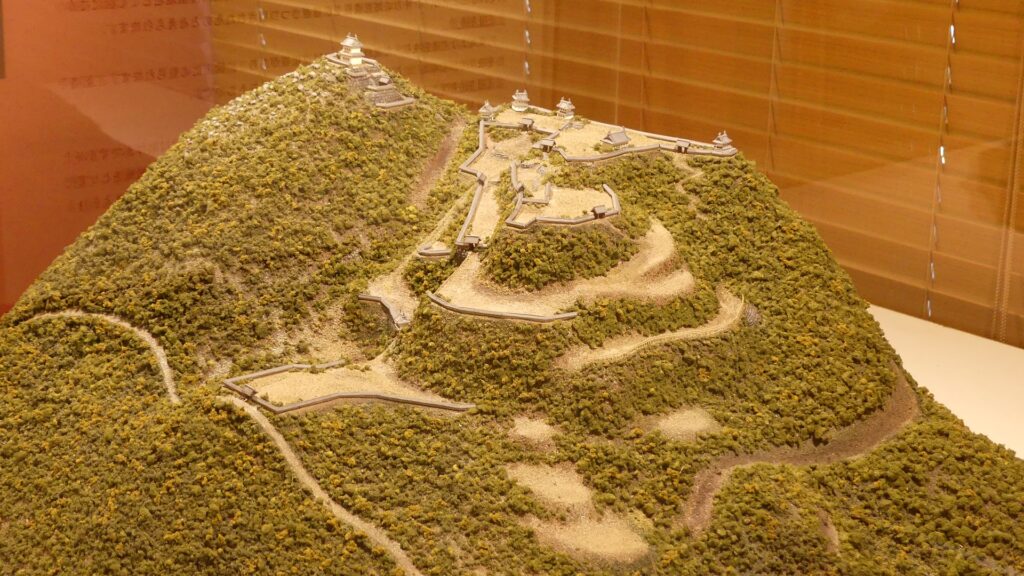
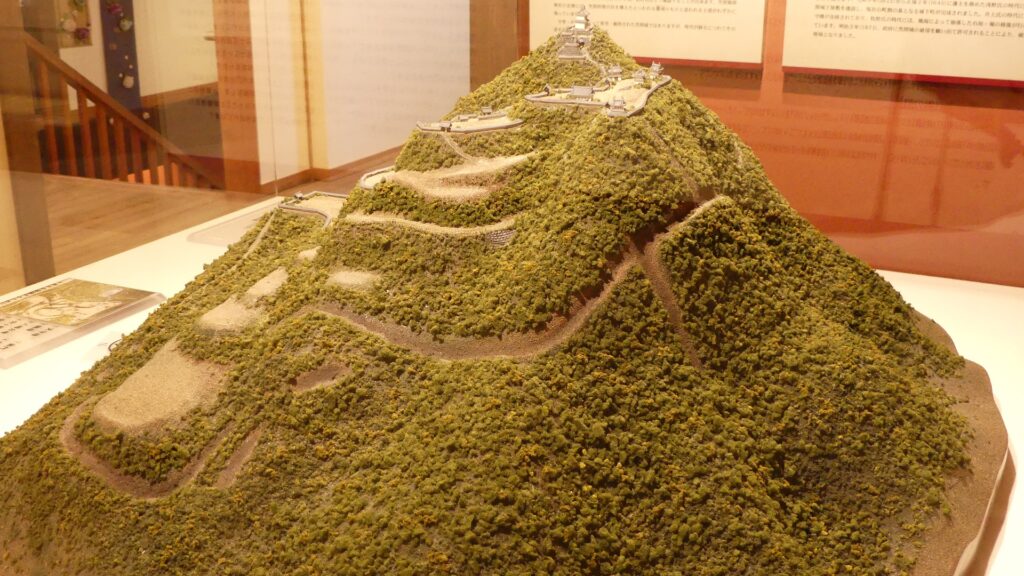
The relief map around the castle

The layout of the final castle, from the signboard at the site, adding the red English letter
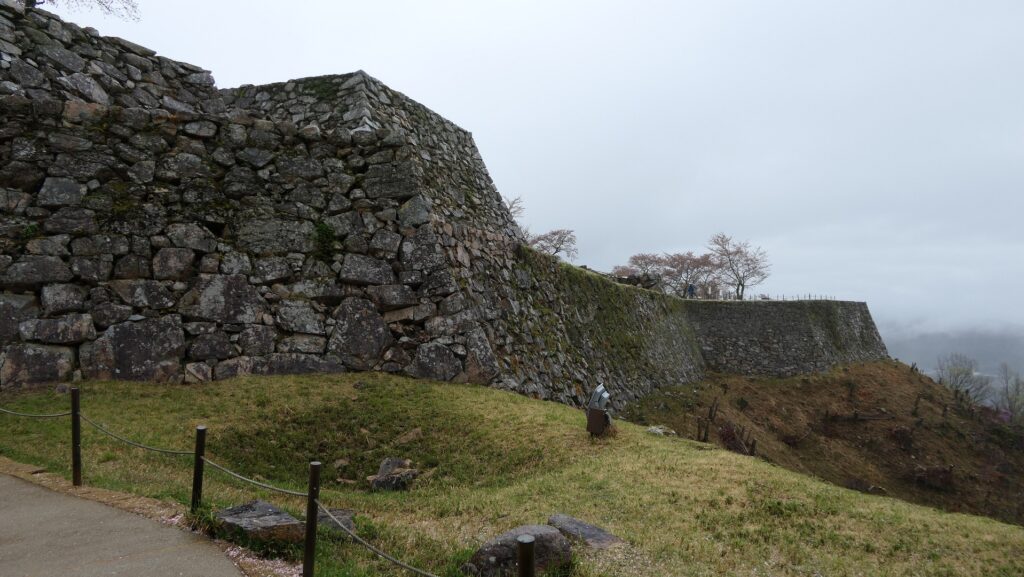
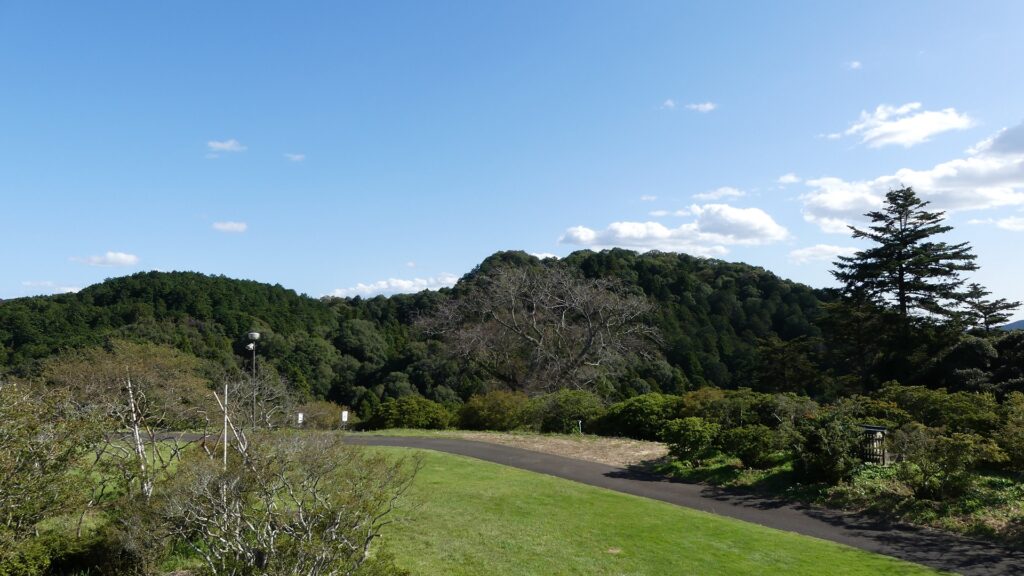
The ruins of the final castle

The clan also built a larger castle over the pass towards the west, called Kiriyama Castle. The castle was located on another mountain about 160m above the final castle, which was much harder to access for enemies as well as defenders. Therefore, the castle seemed to be used as a lookout usually and for being besieged in cases of emergency. As a result, the clan was able to prevent the enemies from invading the Kitabatake’s territory.

The ruins of Kiriyama Castle

Prosperity and Destruction of Kitabatake Clan

After that, the clan and the shogunate made peace with each other, which made the government of the clan in Ise Province stable. Their several branch clans, such as the Kozukuri Clan, were sent to various places of the province and the lord of the Kitabatake Clan reigned at the clan’s hall, called the Taki Palace. The hall was also expanded to have a great Japanese garden which still remains. The group eventually became a great warlord clan in the early 16th Century and its influence reached the peak in the middle of the century when the 7th lord, Tomonori Kitabatake was the lord.

The remaining Kitabatake Clan Hall Ruins Garden
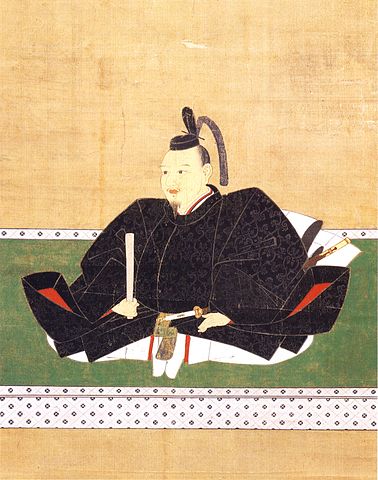
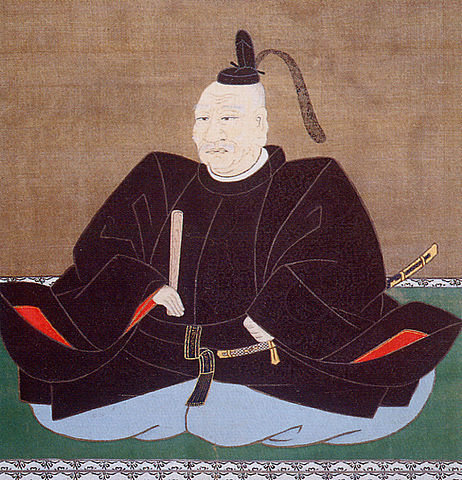
The portrait of Tomonori Kitabatake, owned by Iseyoshida Library (licensed under Public Domain via Wikimedia Commons)
However, a new threat came from Owari Province, north of Ise. Nobunaga Oda, who would later be the ruler of Japan, started to invade Ise Province in 1568. Moreover, the relative Kozukuri Clan turned supporting Nobunaga. Tomonori had to move to his home from the hall to Okochi Castle near the battle fields. The Kitabatake and Oda Clans made peace in 1569 under the terms of Nobunaga’s son, Nobukatsu being adopted as the Kitabatake Clan’s successor. This was actually the starting point of taking the Kitabatake Clan over by the Oda Clan. Tomonori was finally killed by Nobukatsu in 1576. The castles in Ise Province, including Kitabatake Clan Hall, were captured by the Oda’s troops at the same time.

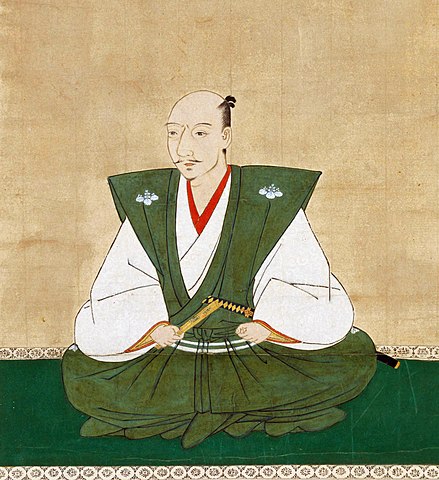
The portrait of Nobunaga Oda, attributed to Soshu Kano, owned by Chokoji Temple, in the late 16th century (licensed under Public Domain via Wikimedia Commons)
The portrait of Nobukatsu Oda, owned by Sokenji Temple (licensed under Public Domain via Wikimedia Commons)
To be continued in “Kitabatake Clan Hall Part2”

153.北畠氏館 その1

北畠氏の当主は、多気御所と呼ばれた本拠の館で君臨していました。豪華な日本庭園も造られ現存しています。この一族は16世紀初頭には有力な戦国大名となりました。

立地と歴史

戦国大名となった南朝出身の貴族

北畠氏館は、14世紀から16世紀の間、現在の三重県にあたる伊勢国を支配した北畠氏の本拠地でした。北畠氏はユニークな大名家で、もともとは貴族だったのがついに戦国大名になりましたが、最後には織田信長に家ごと乗っ取られてしまいました。北畠氏館も独特な立地で、不便ではあるが防御力に優れる多気地域というところに館が築かれました。その結果、北畠氏は長い間存続できたのです。

伊勢国の範囲と城の位置

14世紀の南北朝時代に、南朝の後醍醐天皇は、信頼する臣下の北畠親房を東日本にその統治のために派遣しました。親房とその息子の顕家は武将として、北朝型の大名たちと戦いました。その結果、彼らの親族は東北地方に残り、高貴な生まれの大名として浪岡御所と呼ばれ、16世紀後半まで浪岡城を居城としていました。同様に、顕家の弟の顕能(あきよし)が伊勢国に派遣され、1338年には国司に任命されました。伊勢国は、海に面した東部と山間部の西部に分かれていました。東部には、皇室にとって最も重要な神社の一つ、伊勢神宮がありました。西部には、南朝の本拠地である大和国(現在の奈良県)の吉野に通じる街道が通っていました。

後醍醐天皇肖像画、清浄光寺蔵 (licensed under Public Domain via Wikimedia Commons)
北畠神社内にある北畠顕家像
浪岡城跡

館があった地域自体が自然の要害

伊勢国の北畠氏も北朝方と戦っていて、自然本拠地は防御力の強い国の西側に置くことになりました。そして選ばれたのが多気地域たっだのです。この地域には伊勢神宮と大和国をつなぐ伊勢本街道が通っていて重要視されました。しかしその場所は八手俣(やてまた)川沿いの山に囲まれた小さな盆地でした。この地域の出入り口は7箇所ありましたが、全て峻険な峠道か、深い谷間でした。つまり、この地域自体が自然の要害だったのです。

多気地域の起伏地図、7箇所の出入口も示しています

北畠顕能座像、美杉ふるさと資料館蔵  (licensed via Wikimedia Commons)
不幸なことに南朝の勢力はやがて衰え、北朝を支持する足利幕府が設立されます。北畠氏は何とか生き残りましたが、しばしば幕府に対して南朝の子孫の取り扱いについて抗議しました(南北朝合体のときに約束された両統からの皇位継承が反故にされたことなど)。北畠氏はまず、西に山を控え、残りの三方を八手俣川に囲まれた敷地に館を建設しました。その敷地は三段に造成され、上段は中段よりも約3m高く、長い石垣によって囲まれていました。その上段に御殿が建てられていたようです。そこに築かれた石垣は、武士の館や住居のために作られたものとしたは最古に属すると考えられています。石垣は、楕円形の自然の川原石を垂直に積み上げたもので、後世の城に見られるような加工された石を傾斜を作って積み上げたものとは違っていました。

発掘された敷地上段の石垣、現地説明板より

館を守るために次々と築城

北畠氏の反抗により、幕府は軍勢を送り、北畠氏の領地を西側から度々攻撃しました。そのことで、北畠氏は本拠を守るためにその方角に向かって新しい城を築き始めました。最初は館の背後の山、約80m上方に非常事態に備えた詰めの城を作りました。その城は簡単な構造で、頂上に本丸があり、その周りを通路とともに腰曲輪が設けられていました。その山の西側の峰には、深い堀切が作られ、それを渡る細い土橋によってのみ通行可能になっていました。

城周辺の起伏地図

詰めの城の縄張り図、現地説明板より
詰めの城跡

また、その通路を渡った西側に向かって、もっと大きな城も築きました。それが霧山城で、詰めの城よりも更に約160m高い別の山にありました。敵にとっても味方にとっても、近づくだけでも困難な場所でした。したがって、その城は通常は物見のために使われ、非常事態が発生したときには籠城のために使われたと思われます。その結果、北畠氏は敵の領地への侵入を防ぐことができました。

霧山城跡

北畠氏の繁栄と滅亡

その後、北畠氏と幕府は和解し、伊勢国における北畠氏の支配は安定しました。木造(こづくり)氏などの北畠氏の支族は、伊勢国の各地に派遣され、北畠氏の当主は、多気御所と呼ばれた本拠の館で君臨していました。館も拡張され、豪華な日本庭園が造られ、それは現存しています。北畠氏一族は16世紀初頭には有力な戦国大名となり、7代目当主の北畠具教(とものり)が国を治めていた16世紀半ばにその勢力はピークに達しました。

現存する北畠氏館跡庭園
北畠具教肖像画、伊勢吉田文庫所蔵 (licensed under Public Domain via Wikimedia Commons)
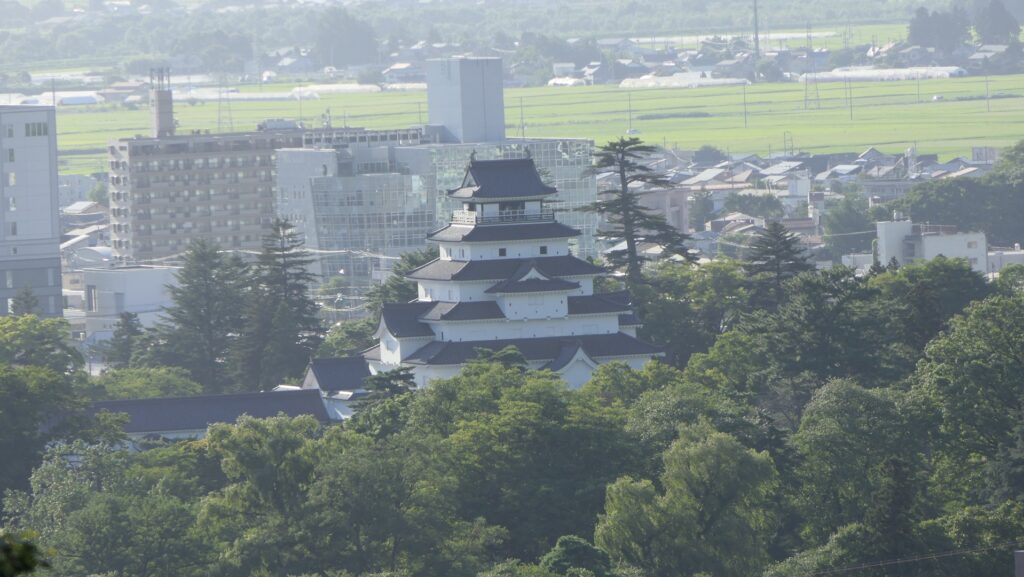
ところが、伊勢の北、尾張国から新たな脅威が訪れます。後に天下人となる織田信長が1568年に伊勢国への侵攻を開始したのです。更に、一族の木造氏も信長の味方となりました。具教は本拠を、戦場により近い大河内城に移さなければならなくなりました。北畠、織田両氏は1569年に、信長の息子、信雄を北畠氏の跡継ぎに迎えるという条件で講和しました。このことは実際には、織田氏による北畠氏乗っ取りの始まりとなりました。具教は1576年に信雄により殺されてしまい、同じ頃に北畠氏館を含む伊勢国の各城は、織田軍により占拠されました。

織田信長肖像画、狩野宗秀作、長興寺蔵、16世紀後半 (licensed under Public Domain via Wikimedia Commons)
織田信雄肖像画、総見寺蔵 (licensed under Public Domain via Wikimedia Commons)
「北畠氏館その2」に続きます。

111.Mukai-Haguroyama Castle Part1

Moriuji Ashina. who became a great warlord, retired, transferred the headship of the family to his son and started the construction of a new castle as his retreat, which would be Mukai-Haguroyama Castle.

Location and History

Origin of Castle’s name

Mukai-Haguroyama Castle was located in the Aizu area of the modern day Fukushima Prefecture. Regarding castles and ruins, the area is much more known for Wakamatsu Castle which was the home base of the Aizu Domain during the Edo Period. However, the castle had been called Kurokawa Castle when the Ashina Clan owned it and the clan had a much larger Mukai-Haguroyama Castle than Kurokawa Castle at that time. The mountain that Mukai-Haguroyama Castle was built on was originally called Iwasaki Mountain, so the castle was first called Iwasaki Castle as well. Alternatively, the mountain was called Mukai-Haguroyama Mountain, which means the mountain opposite of Haguroyama Mountain. These two mountains actually look like they are standing in a row, so the castle was eventually called Mukai-Haguroyama Castle sometime later.

Wakamatsu Castle seen from Odayama Castle Ruins
Mukai-Haguroyama (or Iwasaki) Mountain on the left and Haguroyama Mountain on the right, seen from Odayama Castle Ruins

Ashina Clan settles in Aizu area

The Ashina Clan originally came from the Sawara Clan, a branch family of the Miura Clan, which was a senior vassal family of the Kamakura Shogunate in the early Middle Ages, which was based in Miura Peninsula of Sagami Province (now Kanagawa Pref.). After Yoritomo Minamoto, the founder of the shogunate invaded the Tohoku Region in 1189, the Sawara Clan got a territory in the Aizu area for their contributions. Some of the clan settled in the area and renamed their family names, such as the Inawashiro, Kitada, and Shingu Clans. In the early 14th Century when the Ashikaga Shogunate was established, the Ashina Clan, another branch family of the Sawara Clan, was active in the Tohoku Region including the Aizu area, who called itself “the Aizu Governor”. As a result, the clan moved their home base from Ashina in Miura Peninsula to the Aizu area and built a new hall called Otakaki-no-tate in the middle of the century, which would later be known as Kurokawa Castle.

The location of the castle and the birthplace of the Ashina Clan

However, the Ashina Clan was not able to govern the area easily because the other relatives of the Sawara Clan and other local clans did not obey the Ashina Clan just with its authority. The Ashina Clan needed to force them to obey the clan by force, otherwise it had to defeat them. For example, the Ashina Clan battled and defeated the Kitada and Shingu Clans. All of which, including the Ashina Clan, came from the same Sawara Clan. Another relative, the Inawashiro Clan became a senior vassal of the Ashina Clan after they fought with each other. The Ashina Clan also needed to prevent great lords outside the Aizu Area, such as the Date, Nikaido, and Satake Clans from invasion of the area. The lords of the Ashina Clan usually lived in Kurokawa Castle in the plain Aizu Basin. They also built Odayama Castle on Odayama Mountain beside the basin, about 1.5km away from Kurokawa Castle, as a final place for emergencies. Such a combination can also be seen in the cases of other clans over the whole country during the Sengoku Period. Odayama Castle was also used as their ancestors’ graveyard.

The relief map around Kurokawa Castle

The ruins of Odayama Castle (its Main Gate)
The ruins of the Ashina Clan’s graveyard

Moriuji Ashina builds Mukai-Haguroyama Castle as his Retreat

The Ashina Clan’s power reached its peak when Moriuji Ashina, the lord of the clan at that time, reigned in the middle of the 16th Century. His government of the Aizu area became stable and he also had diplomatic relationships with other great warlords in Japan, like Kenshin Uesugi, Shingen Takeda, and Masamune Date, which meant he became a great warlord as well. What he did next was retire and transfer the headship of the family to his son and start the construction of a new castle in 1861 as his retreat and the replacement for Odayama Castle, about 5km away from Kurokawa Castle in the south, which would be Mukai-Haguroyama Castle. However, the castle was too large for the retreat and the replacement, in fact, Moriuji still had the real power of the clan and the castle looked like a new home base for the clan. The construction lasted for 8 years until 1568, which resulted in one of the largest mountain castles in the Tohoku Region. The castle was built using soil, which was a typical method of building castles in eastern Japan, and had uncountable enclosures protected by structures using and processing natural terrain, such as deep dry moats, thick earthen walls and artificial vertical cliffs.

The portrait of Moriuji Ashina, from the database of Historiographical Institute, the University of Tokyo (licensed under Public Domain via Wikimedia Commons)
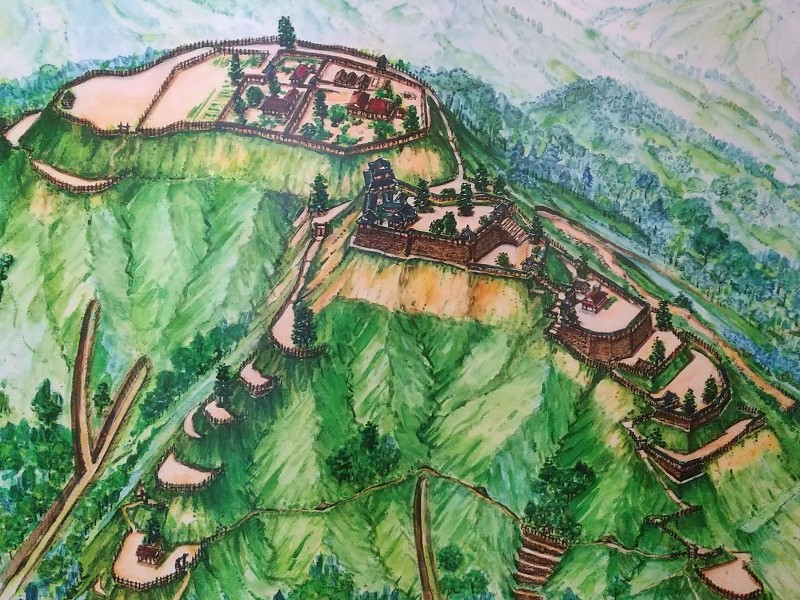
The imaginary drawing of Mukai-Haguroyama Castle, from the signboard at the site

Castle is abandoned after being followed by Several Loads

The Ashina Clan’s power decreased after Moriuji died in 1580 as his successors died young. Because of that, the clan and its senior vassals had to accommodate their new lord from a great warlord outside to maintain their territory. The candidates were ones from the Satake Clan and the Date Clan. As a result, they concluded that the successor would come from the Satake Clan, named Yoshihiro Ashina in 1587. However, this event caused a split in the clan, into the faction in power and the other supporting Date. In 1589, Masamune Date started to invade Ashina’s territory. Yoshihiro tried to repel the invasion, but many of his senior vassals, including the relative Inawashiro Clan, supported the Date’s side or left him. He was defeated by Masamune in the battle of Suriagehara and escaped form the Aizu area to his parents’ home. This battle resulted in Kurokawa Castle, the home base of the Ashina Clan being captured by Masamune and the clan’s destruction.

The portrait of Masamune Date, owned by Sendai City Museum, (licensed under Public Domain via Wikimedia Commons)
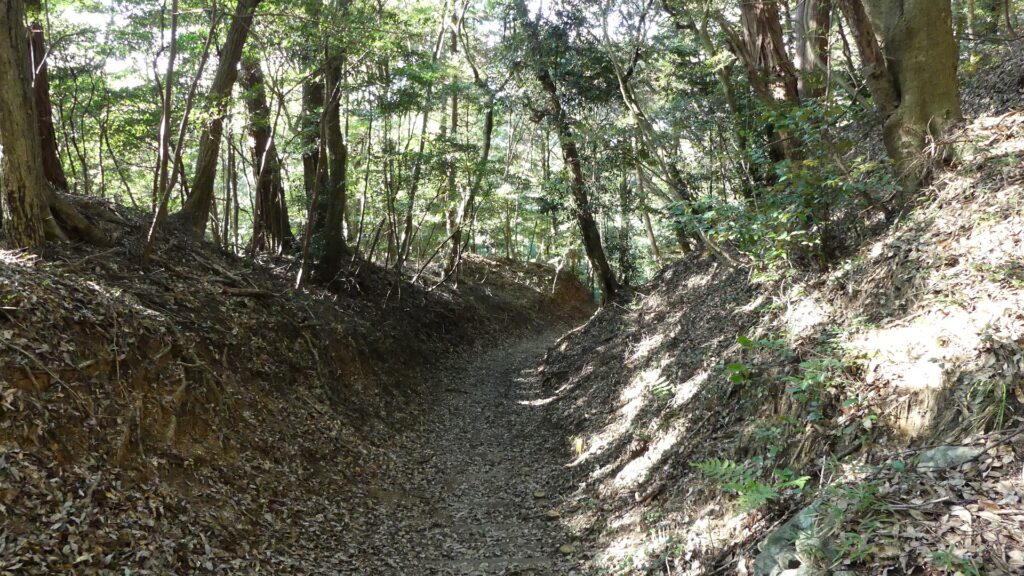
Mukai-Haguroyama Castle was followed by Masamune Ujisato Gamo, and Kagekatsu Uesugi like they used Kurokawa Castle (renamed to Wakamatsu Castle). This was because they still needed to use it as a final castle for emergencies like a battle. However, the castle was eventually abandoned after Kagekatsu was transferred to Yonezawa Castle in 1601 due to the defeat in the decisive battle in 1600 against Ieyasu Tokugawa who would be the founder of the Tokugawa Shogunate.

The portrait of Ujisato Gamo, owned by Aizu Wakamatsu Library (licensed under Public Domain via Wikimedia Commons)
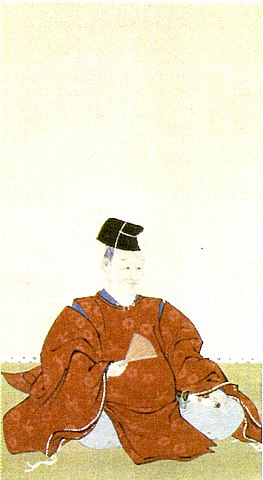
The portrait of Kagekatsu Uesugi, owned by Uesugi Shrine (licensed under Public Domain via Wikimedia Commons)
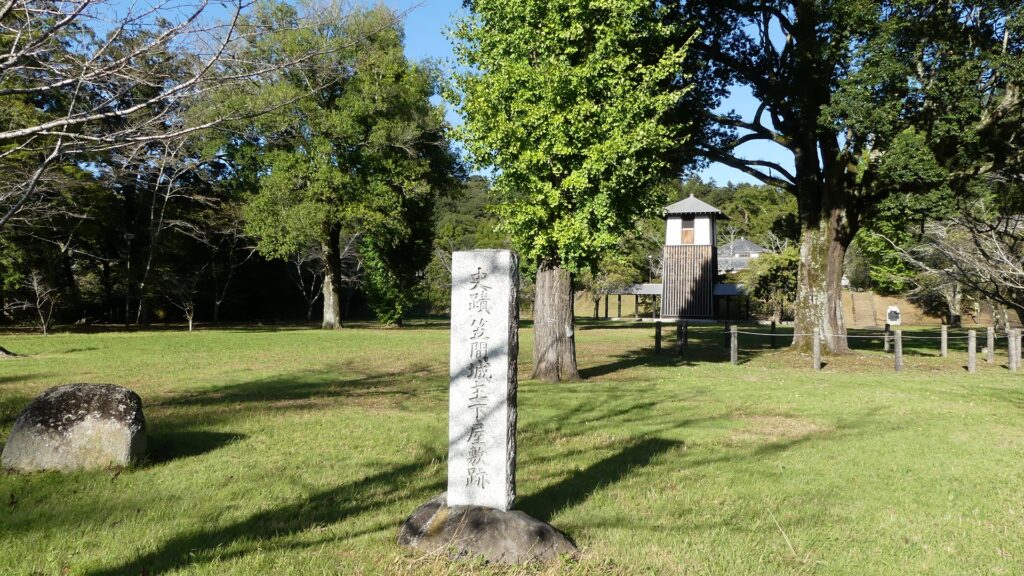
The ruins of Mukai-Haguroyama Castle

To be continued in “Mukai-Haguroyama Part2”

error: Content is protected !!