127.Shinpu Castle Part2

You can see the completed version of Takeda’s method for building castles.

Features

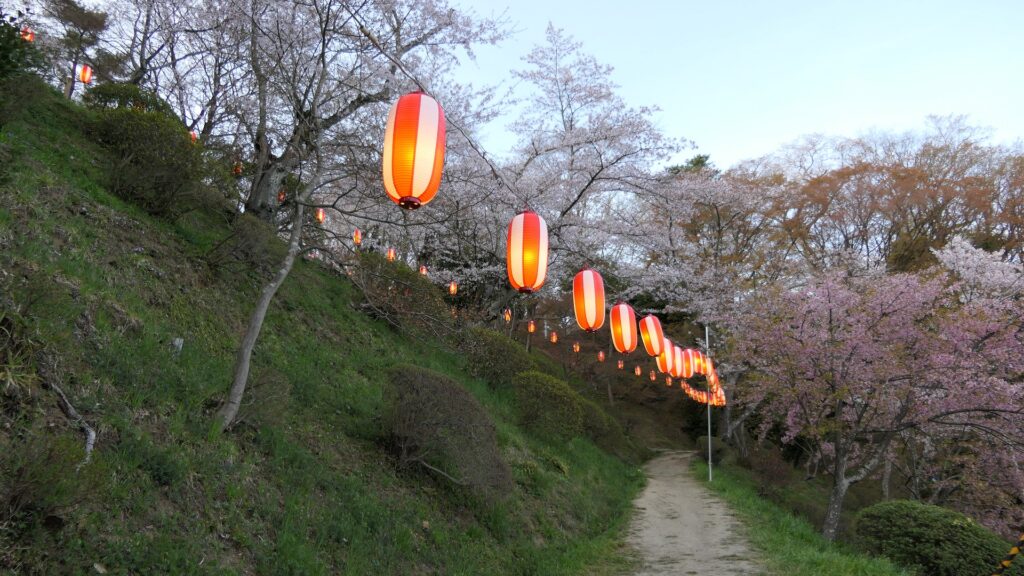
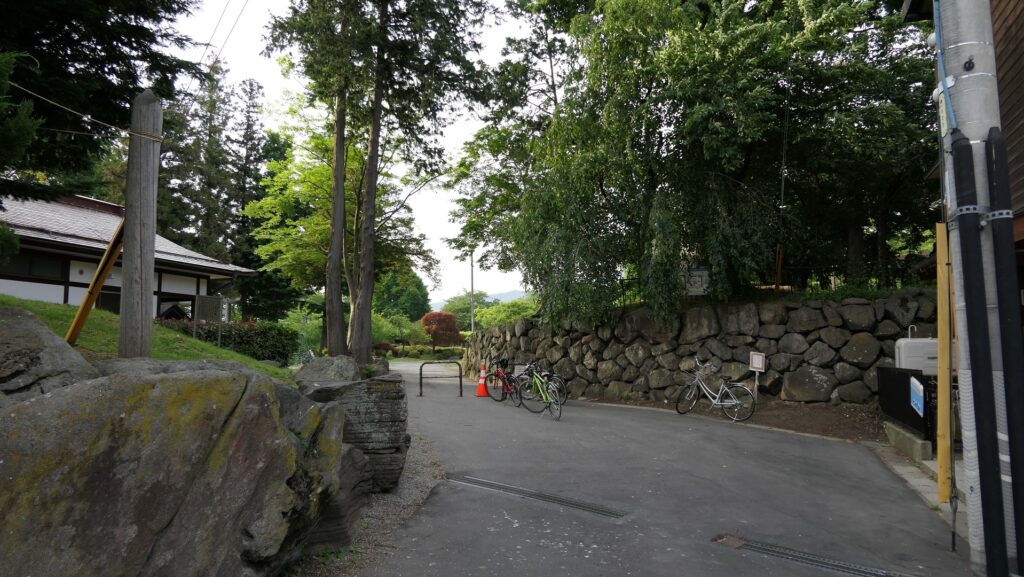
The ruins of Shinpu Castle is open to the public. Visitors usually enter the ruins from the eastern side using two trails which were either built in the present time. One of them is the very steep approach with stone steps to the shrine on the top of the mountain. The other is the gentle steep footwalk going around the mid slope of the mountain to the south. I recommend using the latter if you want to look around the ruins.

The approach to the shrine
The footwalk for visitors

Powerful ruins of Main Gate and Umadashi system

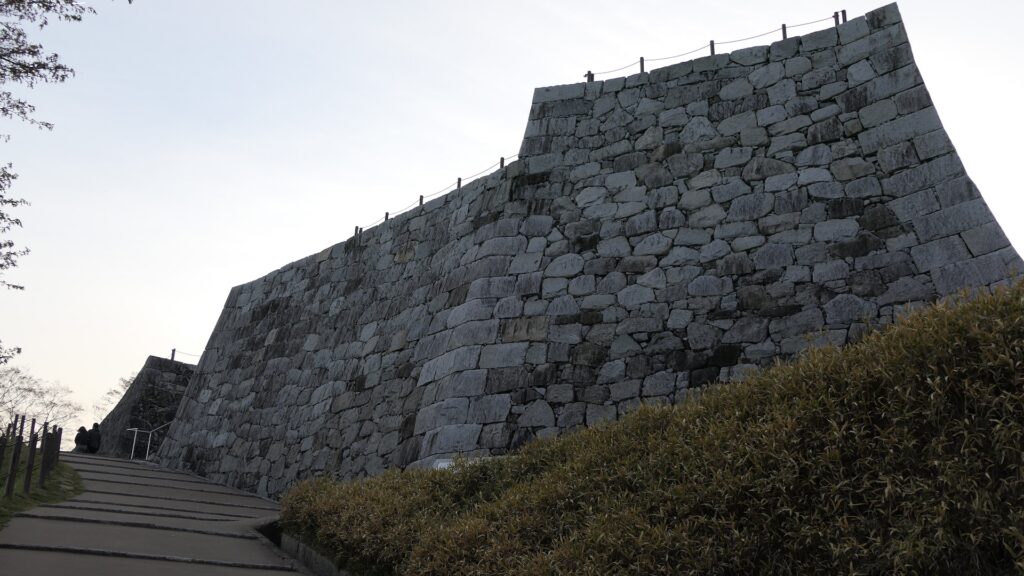
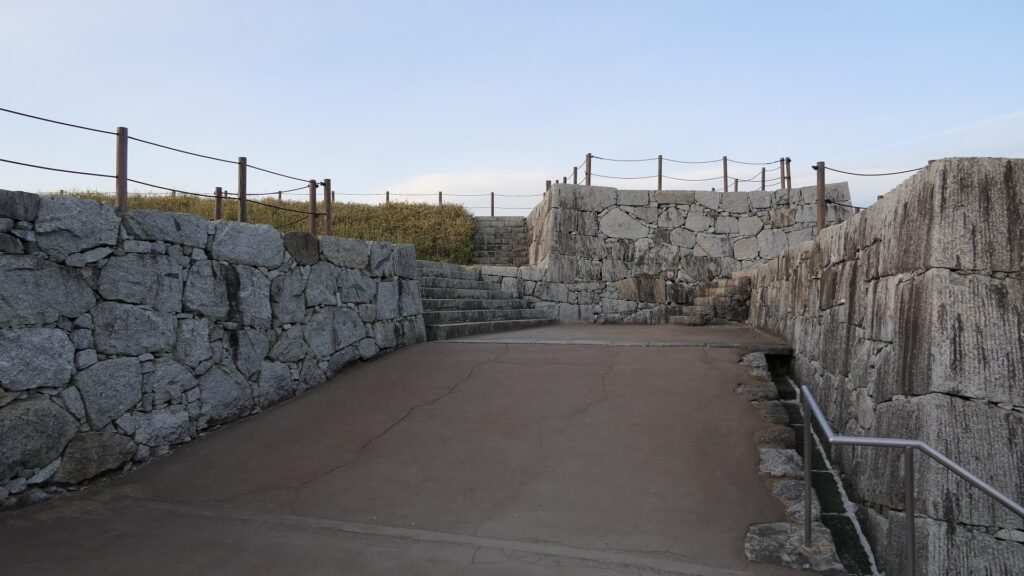
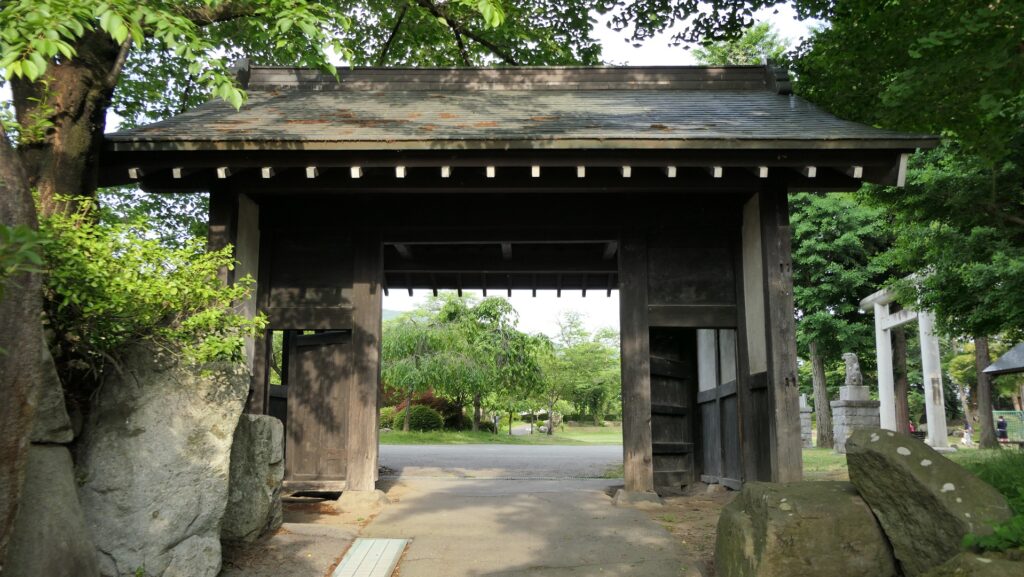
The footwalk goes under the Third Enclosure above the Main Gate. You can walk down from the inside to the outside of the ruins of the gate. The gate ruins are still surrounded by the earthen walls.

MarkerMarkerMarkerMarkerMarker
Main Enclosure
Leaflet, © OpenStreetMap contributors
The map around the castle

The ruins of the Main Gate

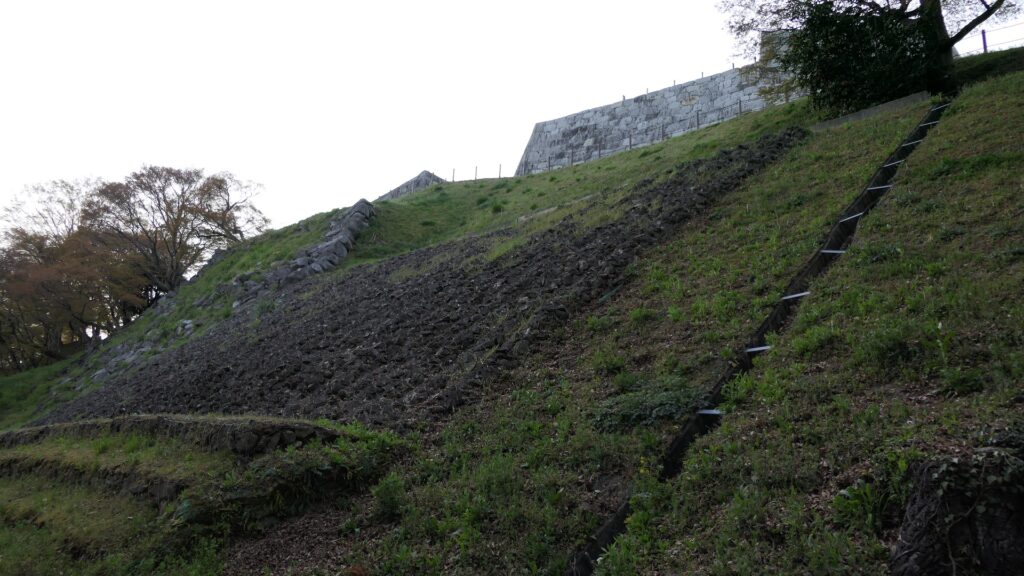
The ruins of the Umadashi system remain outside the gate. Umadashi was Takeda’s unique defense system which is a round shaped stronghold sticking out of a gate. It usually had a convex moon shaped moat in front of it to make it more protective. The defenders could also counter the attackers from the sides. The ruins of Umadashi in Shinpu Castle are very large and you can clearly see the shapes of the stronghold and the moat.

The imaginary drawing of the Umadashi part (from the signboard at the site)
The round shaped stronghold of Umadashi
The convex moon shaped moat of Umadashi
The side part of the stronghold

Main Enclosure which worships Takeda

Going back to the footwalk, you can walk up to the Main Enclosure through the Second Enclosure. The Main Enclosure is largest one and on the top of the mountain, which had Katsuyori Takeda’s Main Hall. The excavation team recently found the foundation of the hall gate and the traces of the leveling probably done by Tokugawa.

The Main Enclosure of Shinpu Castle

The only things that remained was the Shinpu-Fujitake Shrine which worships Katsuyori and the shrine which worships the war deaths in the battle of Nagashino on the spacious area.

The Shinpu-Fujitake Shrine
The steep approach that can be seen from the shrine
The shrine which worships the war deaths in the battle of Nagashino

You can see a good view from there including the Kamanashi-gawa River below and the mountains above.

A view from the Main Enclosure

Also pay attention to Back Gate

You can also walk down to the northern part of the castle from the Main Enclosure. Passing the ruins of the well and the wooden bridge, you will reach the ruins of the back gate called Inui-Mon.

MarkerMarkerMarkerMarkerMarker
Well
Leaflet, © OpenStreetMap contributors
The map of the northern part of the castle

the ruins of the well
The ruins of the wooden bridge
The imaginary drawing of the wooden bridge (from the signboard at the site)

The gate was built in the Masugata style which had a square space sandwiched by two gate buildings, which could prevent enemies from attacking easily. The earthen walls surrounding the space still remain intact and the foundations of the gate were also found.

The ruins of the Back Gate
The Masugata space which is surrounded by the earthen walls

To be continued in “Shinpu Castle Part3”
Back to “Shinpu Castle Part1”

127.新府城 その2

武田流築城術の集大成を見学できます。

特徴

新府城跡は一般に公開されています。観光客は通常、東側から2つの山道を通って城跡に入っていきますが、両方とも現代に作られたものです。一つは山の頂上にある神社に向かう参道の石段で、とても急です。もう一つは、山の中腹を南側に回り込む緩やかな坂の歩道です。城跡を見て回るのであれば、後者の方をお勧めします。

神社に向かう参道
観光客用の歩道

迫力ある大手門と馬出し跡

歩道は三の丸の下、大手門の上のところを進んでいきます。門跡の内側から外側に歩いて行けます。門跡はまだ土塁に囲まれています。

MarkerMarkerMarkerMarkerMarker
大手門
Leaflet, © OpenStreetMap contributors
城周辺の地図

大手門跡

門の外側には馬出しの跡が残っています。馬出しは武田独特の防御の仕組みで、門の外側に丸い形の陣地が突き出しているものです。通常は三日月形の堀が前面にあり、より防御力を増していました。また、防御側は側面から反撃に出られるようになっていました。新府城の馬出し跡はとても大きく、陣地や堀の形をはっきりと見ることができます。

馬出し部分の想像図(現地説明板より)
馬出しの丸い陣地部分
馬出しの三日月堀部分
馬出し陣地の側面部分

武田を祀っている本丸

歩道の方に戻ると、二の丸を経由して本丸に登っていきます。本丸は一番大きな曲輪で山の頂上にあり、武田勝頼の御殿がありました。発掘により、館の門の基礎と、恐らく徳川によりそれが埋められた痕跡が見つかりました。

新府城の本丸

現在この広いスペースにあるのは、勝頼を祀る新府藤武神社と長篠の戦いの戦死者を祀る霊社だけです。

新府藤武神社
神社から見る急坂の参道
長篠の戦いの戦死者を祀る霊社

本丸からは、上方には山々の、下方には釜無川の素晴らしい景色が見えます。

本丸からの景色

搦手門跡にも注目

本丸からは、城の北側部分に下って行くことができます。井戸跡と木橋跡を過ぎると、乾門と呼ばれた搦手門跡に着きます。

MarkerMarkerMarkerMarkerMarker
井戸
Leaflet, © OpenStreetMap contributors
城北側の地図

井戸跡
木橋跡
木橋の想像図(現地説明板より)

この門は桝形形式で作られ、二つの門の建物が、四角い空間を挟んでいて、敵の攻撃を防げるようになっていました。土塁が今もその空間を囲んで残っていて、門の基礎部分も見つかっています。

搦手門跡
土塁に囲まれた桝形

「新府城その3」に続きます。
「新府城その1」に戻ります。

25.Kofu Castle Part3

Castle ruins which should be more popular

Features

Other Attractions outside Castle ruins

Two restored gates called Uchimatsukage-mon Gate and Kaji-kuruwa-mon Gate are open to the public road at the western foot of the hill. they look like the entrances of the castle, but they were the gates between other enclosures, which means the castle was so large in the past.

MarkerMarkerMarker
Uchimatsukage-mon Gate
Leaflet, © OpenStreetMap contributors
The map around the castle

The restored Uchimatsukage-mon Gate
The restored Kaji-kuruwa-mon Gate
The miniature model of the main portion of Kofu Castle, adding the location of the two gates (an exhibition in the Inari Turret)

Finally, I recommend walking outside the eastern side of the hill to have a better look of the high stone walls. The walls are 17m high which are one of the highest ones in eastern Japan. The method of piling the stones is called Nozura-zumi using natural stones, so they look very natural. The method became popular when the castle was built. You can see them close by from the road alongside them which was part of the Inner Moat.

The high stone walls at the eastern side
The stone walls are 17m high
The present route goes alongside the stone walls

Later History

After the Meiji Restoration, Kofu Castle was abandoned and all the buildings of the castle were demolished. The ruins were turned into the industrial experimental station such as for silk making and brewing. After that, the ruins partly became a park, but the rest was turned into the city area. They were first designated as a Prefectural Historic Site in 1968. Yamanashi Prefecture has been developing the park investigating the ruins and restoring the castle buildings. They were finally designated as a National Historic Site in 2019.

A picture of the castle ruins about 100 years ago (licensed by 江戸村のとくぞう via Wikimedia Commons)
Part of the castle ruins were turned into the Yamanashi prefectural office
The tower in this picture is the Shaon-to Tower built in 1922

My Impression

I think Kofu Castle may not be so popular for its potential. It could be because people usually think Kofu City is a legacy of the Takeda Clan. Kofu Castle was built after Takeda. However, if you visit and learn about the castle, you will find that the city was clearly developed based on the castle. The restored castle buildings look good, and the remaining stone walls are particularly great. The stone walls look rough, but are piled wisely. We can enjoy seeing the contrast everywhere in the castle.

The stone walls of Kofu Castle (in the central part)
The stone walls of Kofu Castle (in the eastern part)
The Main Enclosure that can be seen from the base for a Main Tower

How to get There

If you want to visit there by car:
It is about 15 minutes away from Kofu-Showa IC or Kofu-Minami IC on the Chuo Expressway.
There are several parking lots around Kofu Station.
By train, it is very close to Kofu Station.
To get to Kofu Station from Tokyo: Take the limited express Azusa or Kaiji at Shinjuku Station, and get off at Kofu Station. It takes about 1 hour and a half.

Kofu Station that can be seen from the base for a Main Tower
The limited express Azusa (licensed by MaedaAkihiko via Wikimedia Commons)

Links and References

Kofu Castle, Kofu City

That’s all. Thank you.
Back to “Kofu Castle Part1”
Back to “Kofu Castle Part2”

error: Content is protected !!