133.Samegao Castle Part2

A typical mountain castle using natural terrain

Features

Three Routes to Castle Ruins

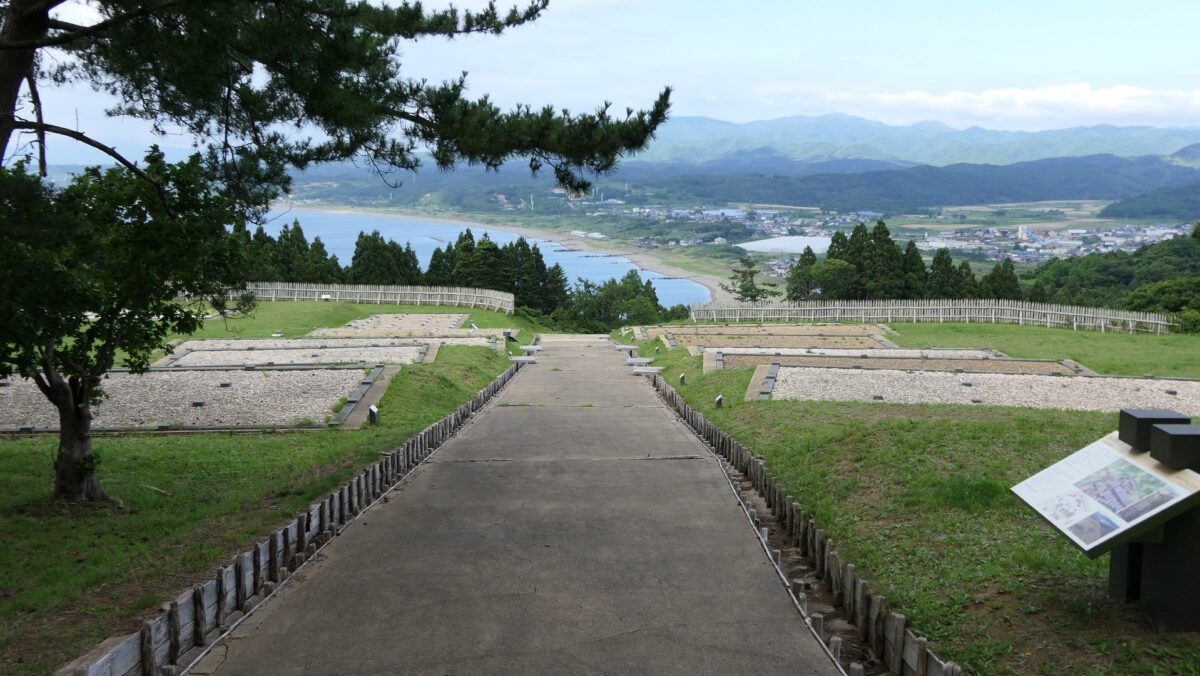
Today, the ruins of Samegao Castle have been developed as part of a historical park called the Hida Historical Village, which also includes ancient house ruins and groups of burial mounds. If you drive to the ruins, you can use the parking lot beside Hida Shrine which also has a long history. You can also stop by the information center of the park from the parking lot, where you can get a guide for the ruins.

The map around the castle

The park entrance
a restored ancient house
The information center

There are three routes to the castle ruins, which are the Eastern, the Northern and the Southern Routes. The former two routes start from the information center. In addition, the northern one has few historical items, so if it is the first time for you to visit the ruins, the eastern one would be better. The northern one can be used when you return.

The three routes, from the signboard at the site, upwards is west on the map, adding the red letters
The Northern Route
The well ruins along the Northern Route, called “Kagetora Spring”

Going on Eastern Route

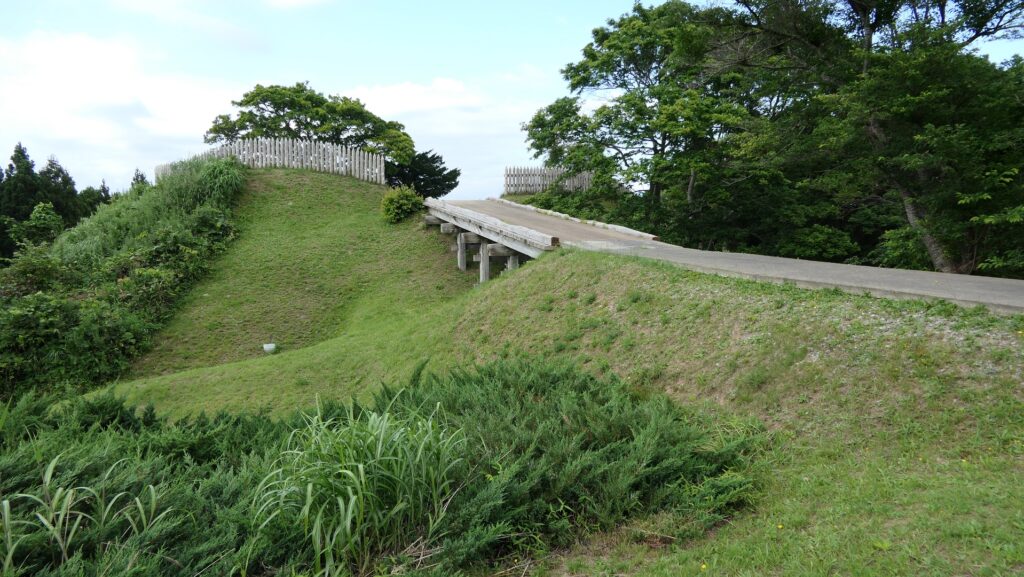
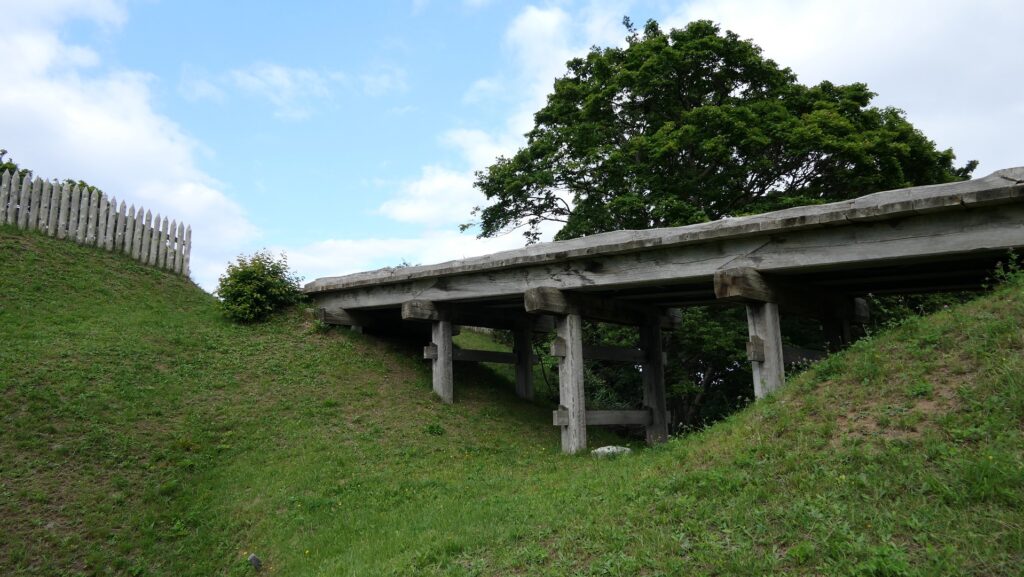
If you choose the Eastern Route as the original back route of the castle, you will walk on the route which goes on or beside the ridge of the mountain. You will eventually see the sign for “O-horikiri” or “Large Ditch 6” in Japanese. This is around the entrance of the ruins. You will come to Large Ditch 5, followed by several other ditches. The route is cut narrow over these ditches.

The relief map around the castle

The Eastern Route
The sign for “Large Ditch 6” on the right
Large Ditch 6
The sign for “Large Ditch 5”
Large Ditch 5
The earthen bridge on the route is cut narrow over these ditches

Then, you will be in the Eastern First Enclosure which seems to have been a lookout.

Getting close to the Eastern First Enclosure over another ditch
The Eastern First Enclosure
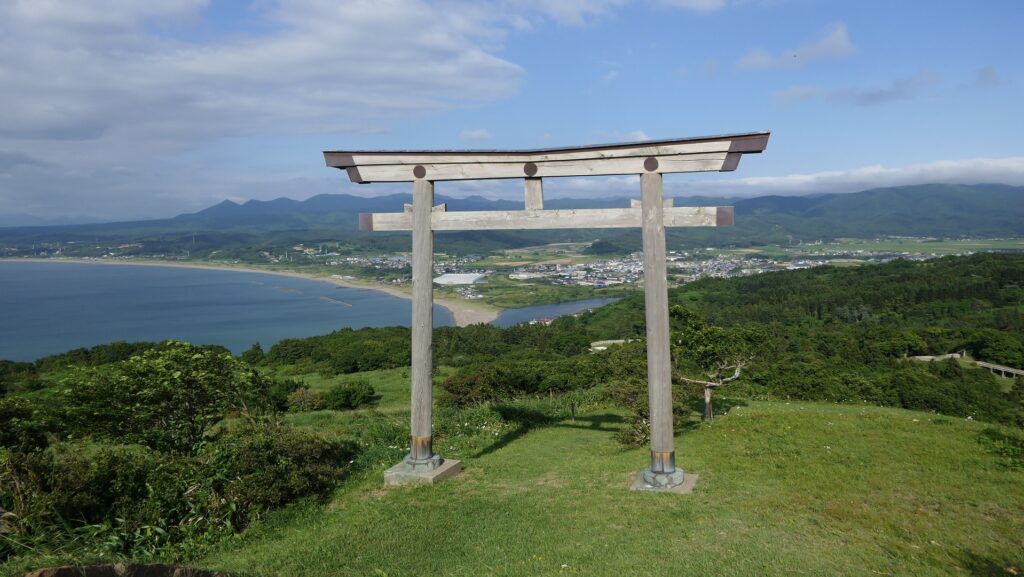
A view from the Eastern First Enclosure

After passing Ditch 6, you need to climb a very steep slope with a rope to the next enclosure. This must have been an important point for defense in the past.

The very steep slope after Ditch 6
You need to climb this slope with a rope
Looking down the steep slope from above

You will soon reach Large Ditch 1, which is also the meeting point of the Eastern and the Southern Routes.

Large Ditch 1
The meeting point of the Eastern and the Southern Routes

Second and Third Enclosures on Southern Route

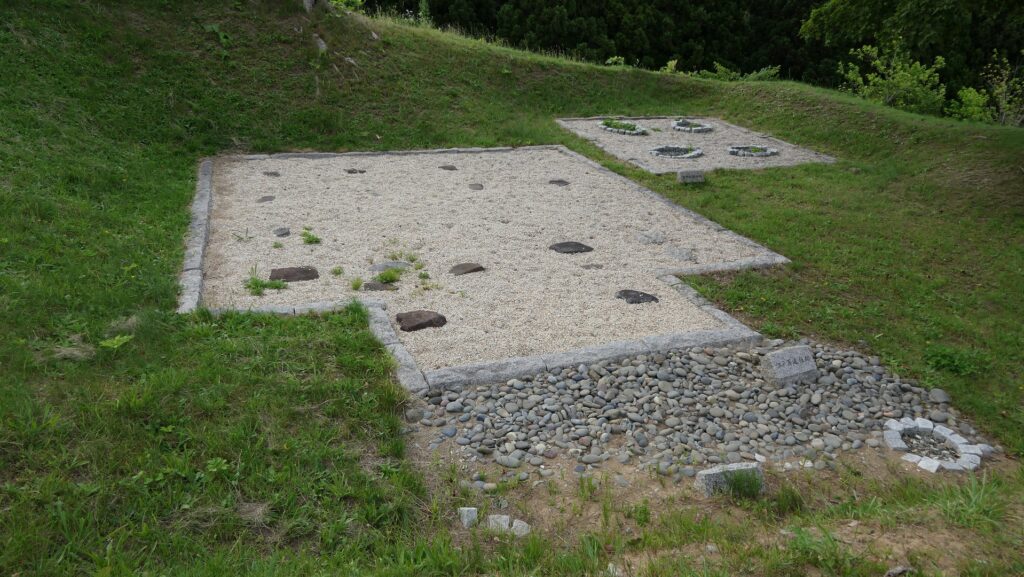
In fact, the Southern Route was the original main route of the castle. The route zigzags through a valley and on another ridge to make enemies attack slowly. The Third and Second Enclosures are the last parts of the route after the ruins of the gateway for defense, called Koguchi. The excavation team found traces of a fire from both enclosures, probably because of the Otate Rebellion. In particular, a burned rice ball was found in the Third Enclosure, which may have been the portable ration for a soldier.

The Southern Route
The gateway ruins
The Third Enclosure
The Second Enclosure

To be continued in “Samegao Castle Part3”
Back to “Samegao Castle Part1”

133.鮫ヶ尾城 その2

自然の地形を生かした典型的な山城

特徴、見どころ

3つの登城道

現在、鮫ヶ尾城跡は「斐太(ひだ)歴史の里」という名の歴史公園の一部として整備されています。ここには古代住居の跡や古墳群などもあります。もし車でこちらに来られるのでしたら、これも長い歴史を持つ斐太神社のそばにある駐車場に停めることができます。また、駐車場からは斐太歴史の里総合案内所に立ち寄ると、城跡に関する様々な案内をしてもらえます(冬期間は営業していませんので注意)。

城周辺の地図

公園入口
復元されている古代住居
総合案内所

城跡へは東登城道、北登城道、南登城道の3のルートがあります。前の2つのルートは総合案内所がスタート地点となります。ちなみに、北登城道はあまり史跡がありませんので、この城跡に初めて行かれるのであれば、東登城道がおすすめです。北登城道は帰りに使ってはいかがでしょう。

3つの登城道(現地説明板より、上方が西)
北登城道
北登城道沿いに残る井戸跡「景虎清水」

東登城道を行く

東登城道は、もとは城の搦手道でした。もしそこから登られるのであれば、山の峰の上や、そこに沿って歩いて行くことになります。そのうち、「大堀切6」という標柱が見えてきます。その辺りが城跡の入口となります。そして、「大堀切5」という場所からまたいくつかの堀切が続きます。このルートが堀切を超える場所では両側を細くカットされています。

城周辺の起伏地図

東登城道
右側に「大堀切6」の標柱
大堀切6
「大堀切5」標柱
大堀切5
堀切を渡る土橋は両側を細くカットされています

そうするうちに東一ノ丸に着きますが、ここは物見のための場所だったようです。

また堀切を越えて東一ノ丸に近づきます
東一ノ丸
東一ノ丸からの景色

その後、「堀切6」を過ぎると、坂はとても急になり、次の曲輪に行くのにロープにつかまって登る必要があります。過去には、この場所は防衛上の重要拠点だったに違いありません。

「堀切6」の後の急坂
ロープが必要なほどの急坂です
急坂を上から見下ろしています

やがて「大堀切1」に至ります。ここは東登城道と南登城道が合流する場所です。

大堀切1
東登城道と南登城道の合流地点

南登城道上の二ノ丸と三ノ丸

実は、南登城道が城の大手道だったのです。このルートはジグザグに谷や他の峰を通っていて、敵の攻撃を弱らせるようになっていました。虎口と呼ばれる防御関門の後、三ノ丸と二ノ丸がこのルートの最終地点になっています。発掘調査によれば、両方の曲輪で恐らくは御館の乱による火事の痕跡が発見されました。特に三ノ丸では、兵士の携帯食だったであろう焼けたおにぎりが見つかっています。

南登城道
虎口跡
三ノ丸
二ノ丸

「鮫ヶ尾城その3」に続きます。
「鮫ヶ尾城その1」に戻ります。

128.Yogaiyama Castle Part3

More needs to be done to improve this historical site

Features

Strong defense in Back side

If you have time, you should check out the back side of the castle. This is because the ridge on the back is very narrow, so original trail and the ruins along it seem to remain as it was. The Main Enclosure and the enclosure behind it are divided by an artificial ditch to prevent enemies from attacking form the back. The ditch is partly supported by stone walls to avoid collapsing, which is rare in Japanese castles.

The ditch using stone walls divides the Main Enclosure and the back

The map around the castle

Moreover, two earthen lookout platforms are in line on the ridge at the back of these enclosures. They are also partly supported by stone walls or stone mound, which are also uncertain who built or improved it.

One of the lookout platforms
The stone walls supporting the platform
The trail gets thin between the platforms

The trail goes beside the platforms and between them, which was made thin cut by vertical moats both sides. That meant the defenders on the platforms would see and counterattack enemies easily.

The trail between the platforms
Looking up the platform from the thin trail
Overlooking the trail from the platform

Later History

In the Edo Period, a stone statue of the Takeda Fudoson or Acala, which worshiped Shingen Takeda, was built in an enclosure between the Gate Ruins No.2 and No.3. It has since been called the Fudo Enclosure. After the Meiji Restoration, the castle site continued to deteriorate, so local people built the stone monument of the birthplace of Shingen Takeda in 1929 to preserve them. The title of the monument was written by Heihachiro Togo, a famous admiral of the Japanese Imperial Navy. The castle ruins have been designated as a National Historic Site since 1991.

the Takeda Acala
The stone monument for the birthplace of Shingen Takeda at the Main Enclosure

My Impression

I recommend visiting both ruins of Yogaiyama Castle and Takeda Clan Hall at the same time because you will be able to see how the Takeda Clan protected their home base. They must have been like one castle or a set. On the other hand, let me ask one thing to Kofu City. In the ruins of Takeda Clan Hall, excavations and studies are often being done in recent years. However, why have the ruins of Yogaiyama Castle not been developed? More explanations is needed for historical fans at the site. Some parts of the ruins are covered with bushes. I hope in the future that the city will develop this mountain castle ruins as a set with Takeda Clan Hall.

The ruins of Takeda Clan Hall
A Masugata entrance of Takeda Clan Hall (The northern entrance of the Western Enclosure)
Excavations are ongoing at Takeda Clan Hall Ruins
A situation of Yogaiyama Castle Ruins

How to get There

I recommend using a car when you visit the castle ruins because there are few buses to visit them.
It is about a 20-minute drive away from Kofu-minami IC on the Chuo Expressway. There is a parking lot in front of the trail entrance to the castle ruins.
If you want to use public transportation, you can take the Yamanashi-Kotsu Bus bound for Sekisuiji Temple from JR Kofu Station and ride to the end. It takes about 15 minutes on foot from the bus stop to get the entrance.
To get to Kofu Station from Tokyo: Take the limited express Azusa or Kaiji at Shinjuku Station.

The parking lot in front of the trail entrance

That’s all. Thank you.
Back to “Yogaiyama Castle Part1”
Back to “Yogaiyama Castle Part2”

error: Content is protected !!