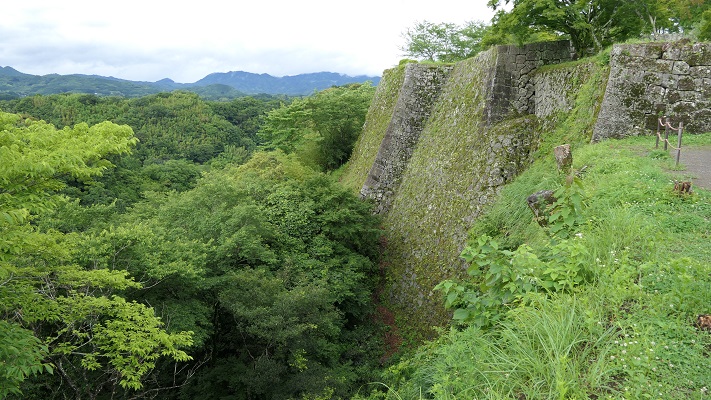
The warriors maintained the castle for a long time.
Features
Umaarai Rock, Second Enclosure and Photo spot
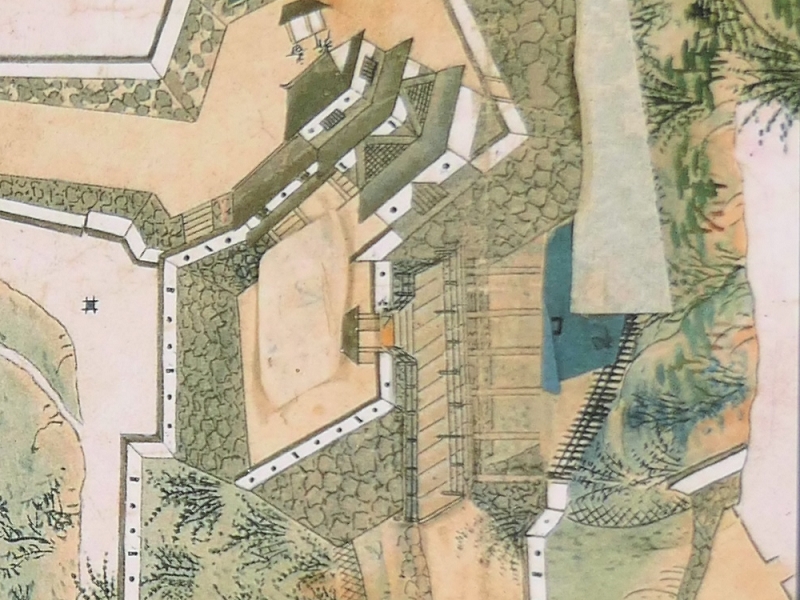
The map around the castle
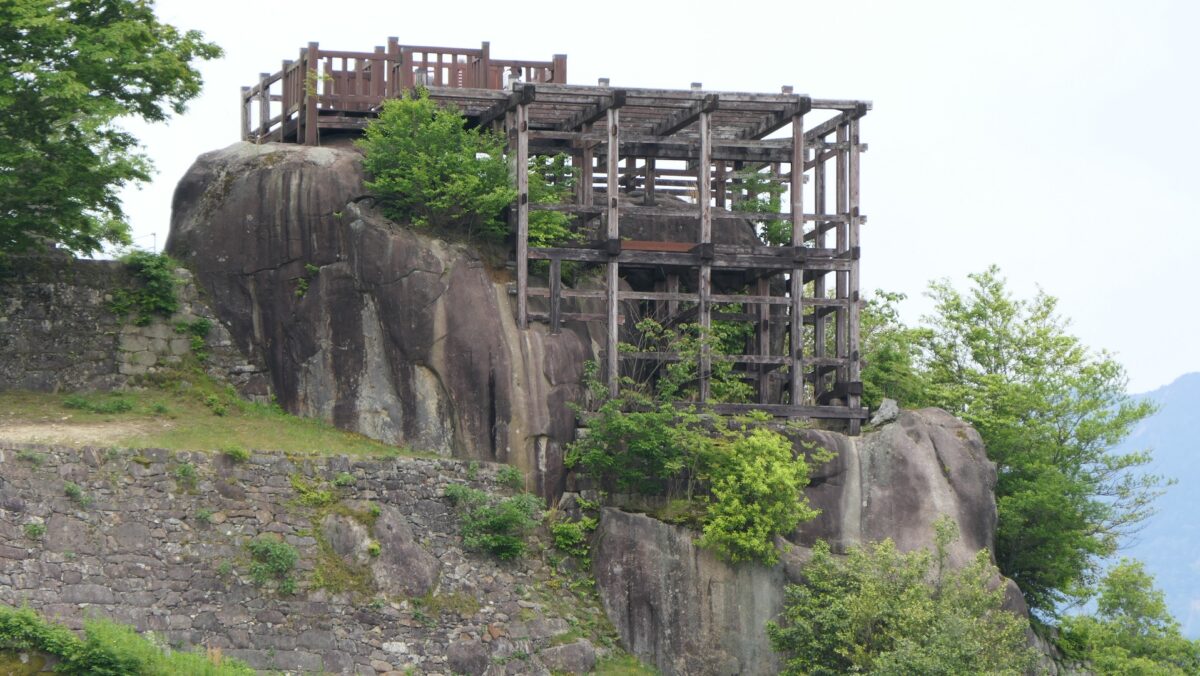
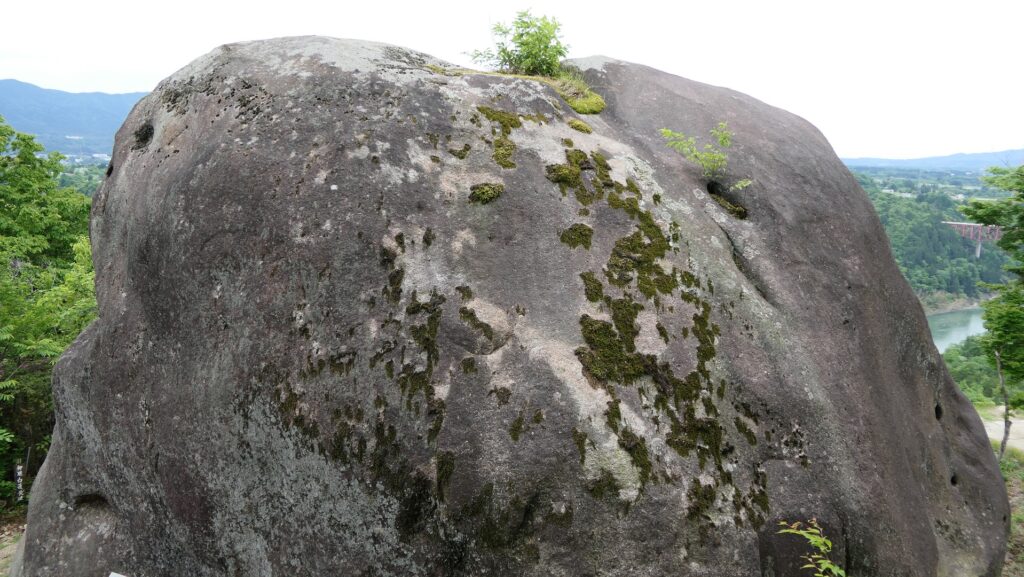
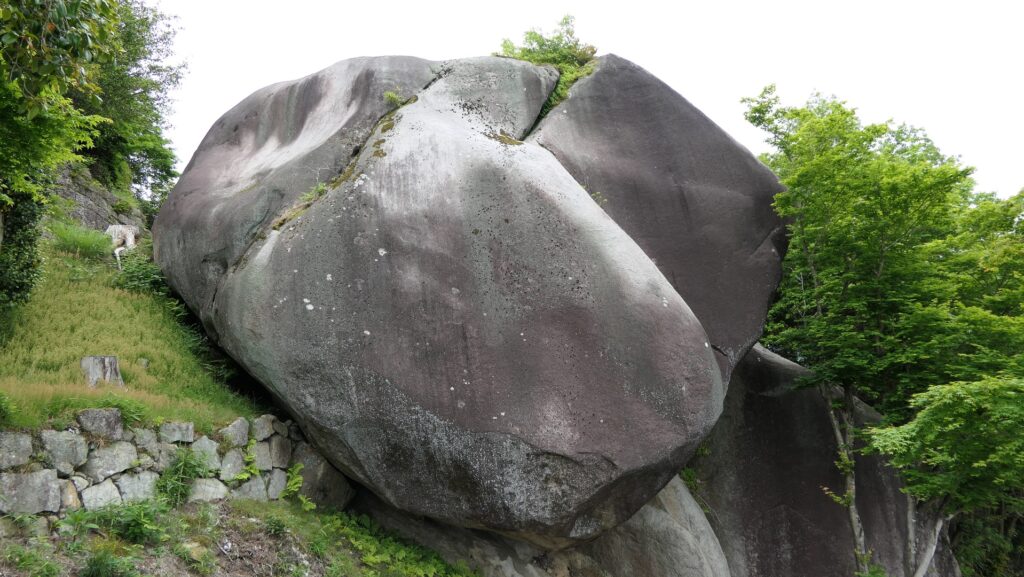
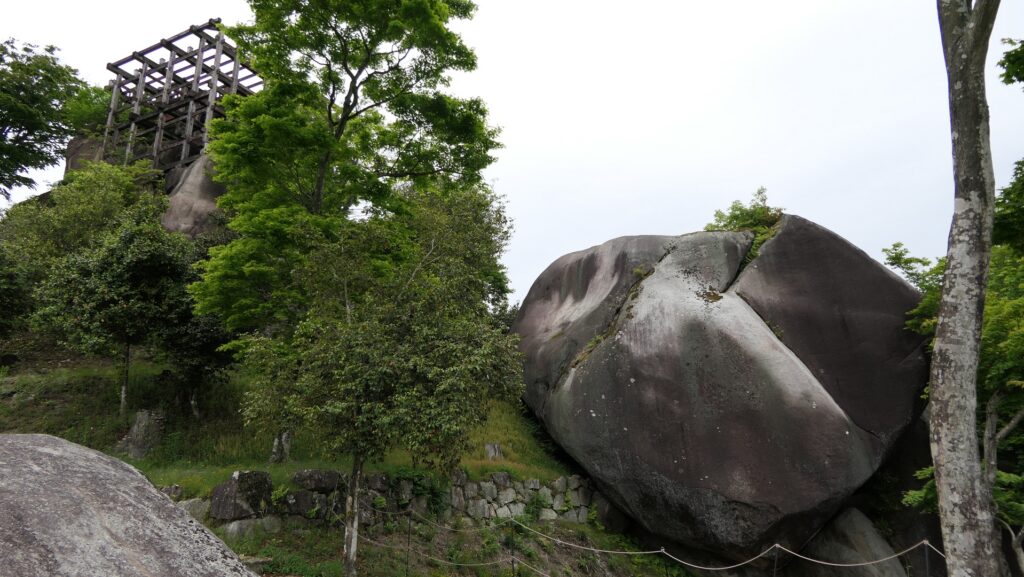
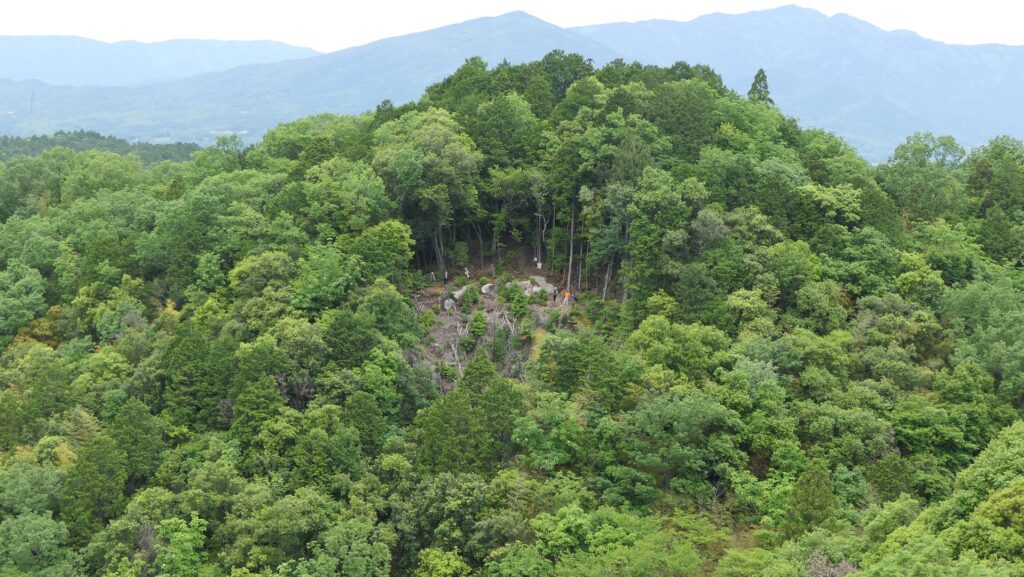
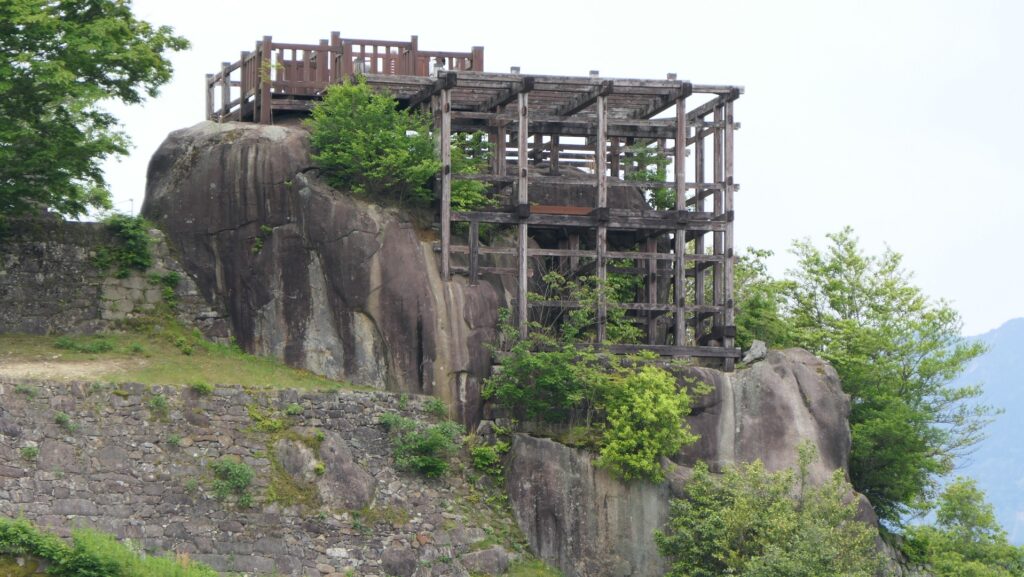
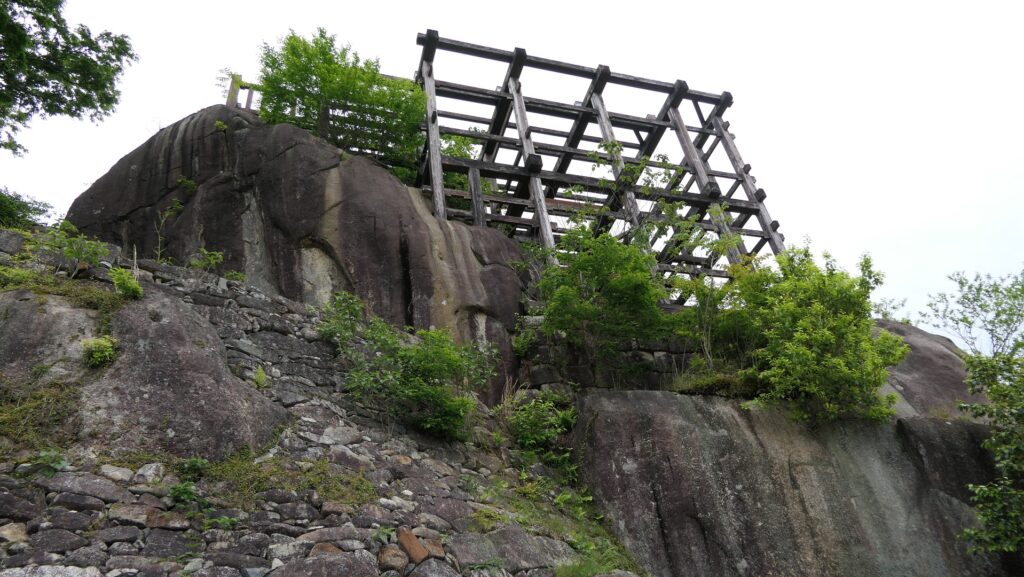
If you climb down from the top on another route, you can see the biggest rock around, called Umaarai-iwa, just below the Main Tower base, whose perimeter is about 45m. It should make you feel power of nature.
The Uma-arai Rock seen from aboveA side view of the Uma-arai RockThe rock is below the base
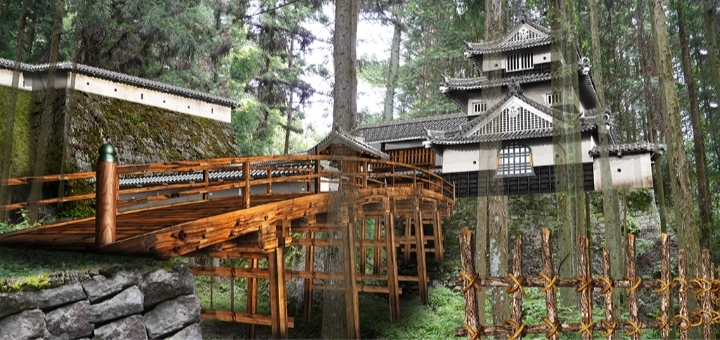
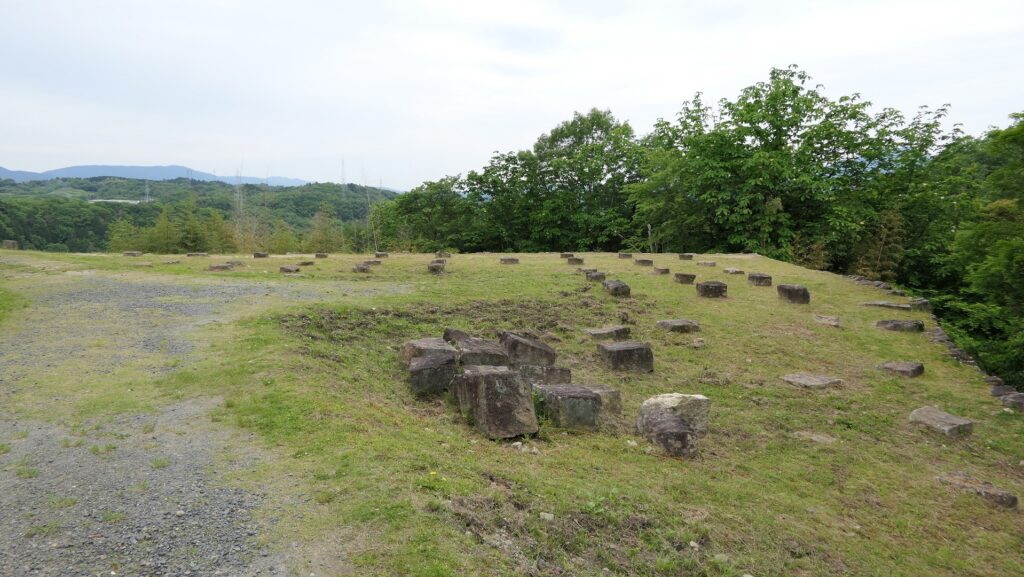
The Second Enclosure is far below from the top, where the Main Hall for the lord was in the past. The hall was built hanging out from the enclosure by also using the Kake-zukuri method.
The Second EnclosureThe Second Enclosure is far below from the base
In addition, if you want to take in a great whole view of the ruins, you can take another return route to the photo spot.
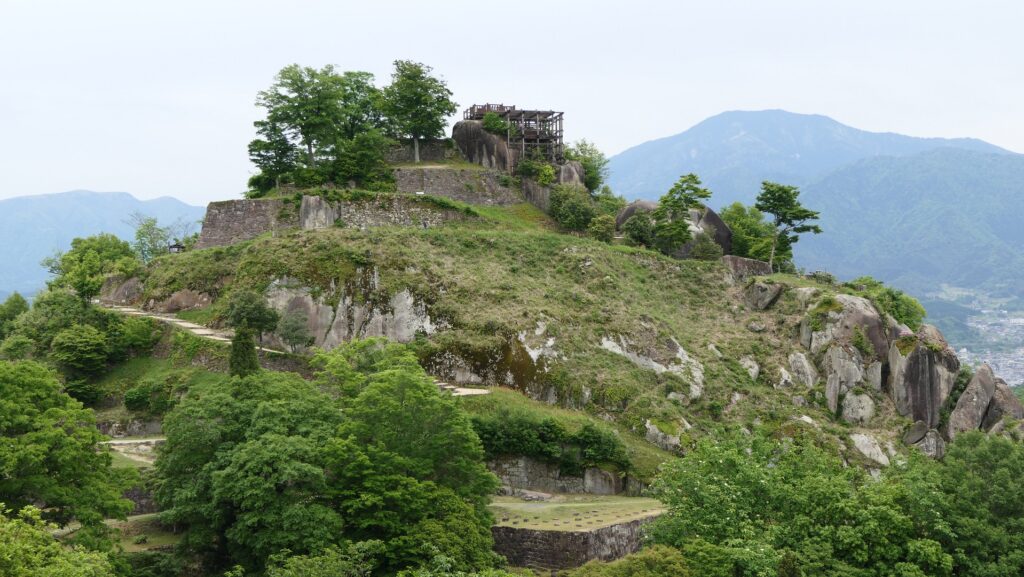
You can go the side road to the photo spot, near the soldiers’ barracks ruinsThe photo spot seen from the observation platformA whole view of the ruinsYou can see the base on the top well
Later History
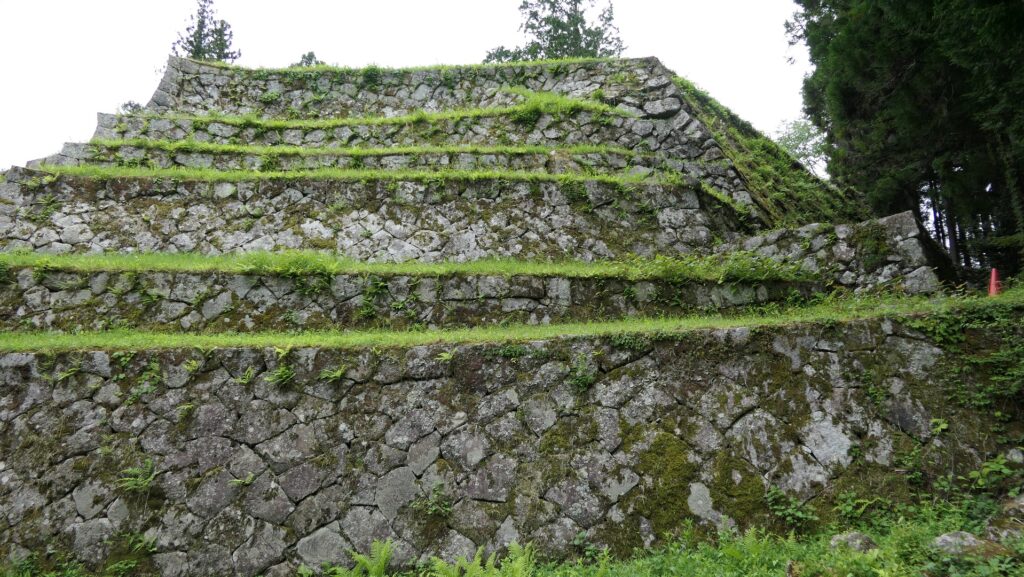
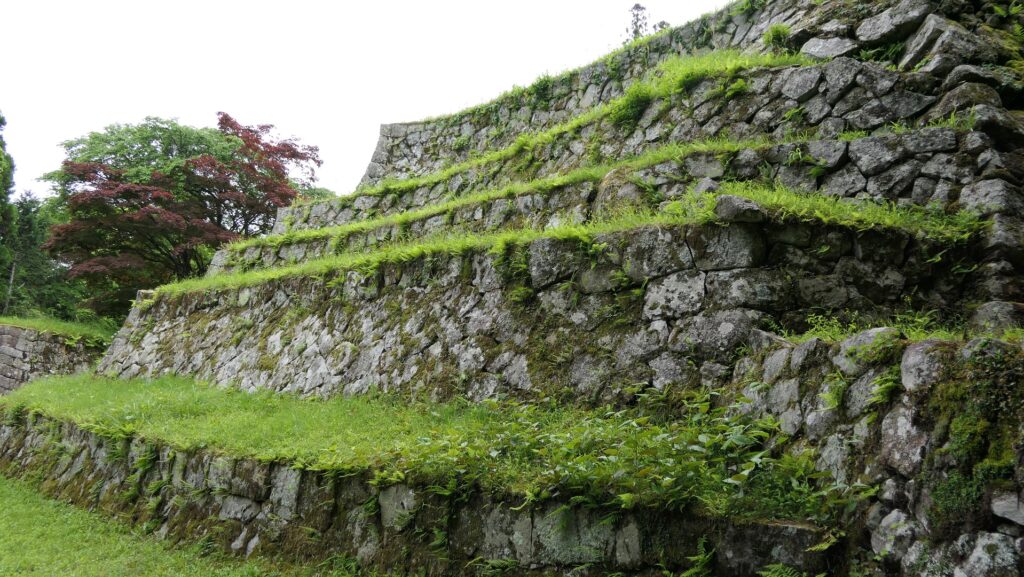
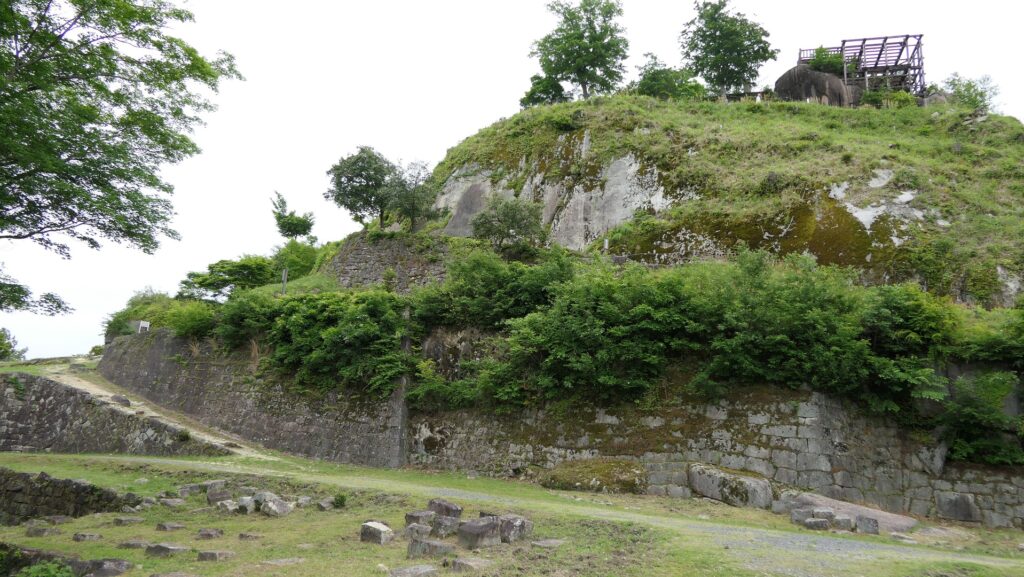
After the Meiji Restoration, Naegi Castle was abandoned and all the buildings of the castle were demolished. The mountain the castle was located on was returning to nature, being covered with trees. However, the ruins of Naegi Castle were designated as a National Historic Site in 1981 because the foundation of the castle ,including its stone walls, remained intact. The ruins recently became popular due to their unique features, such as the combination of natural rocks and stone walls, and great views. Some trees were cut down to see the main portion of the ruins clearly for visitors.
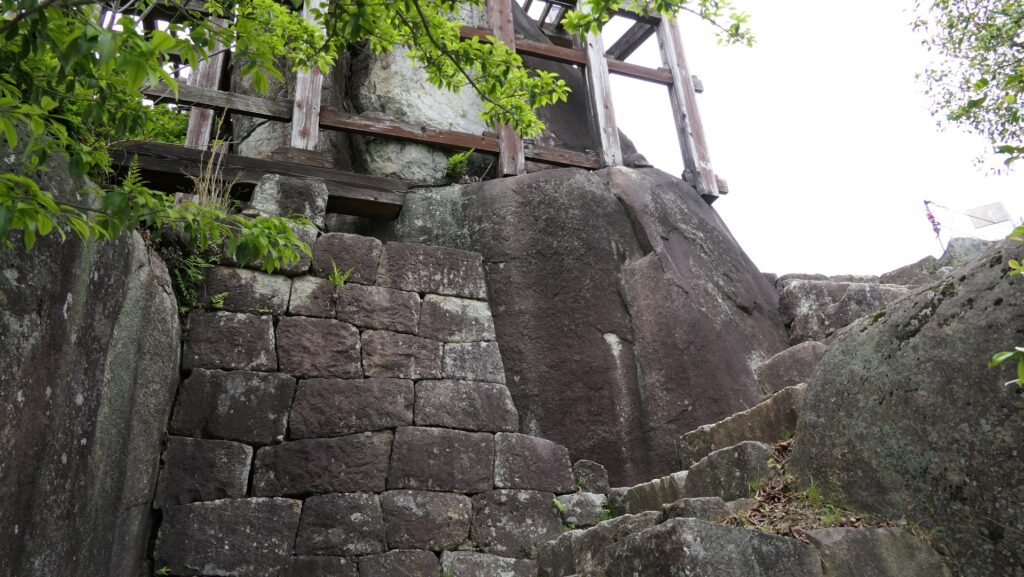
Looking up the baseThe corroboration of the Kake-zukuri columns, stone walls and natural rocks at the base
My Impression
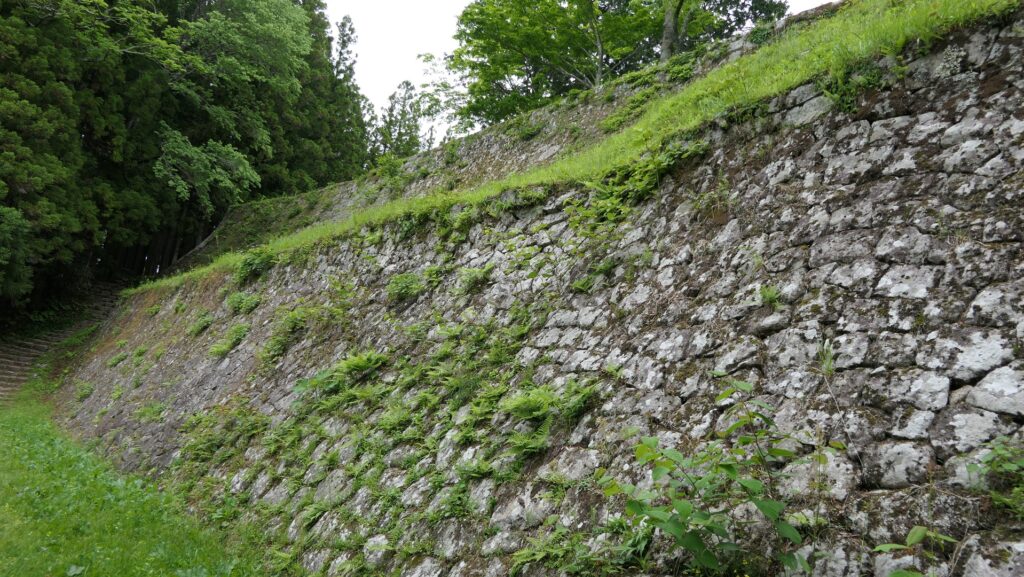
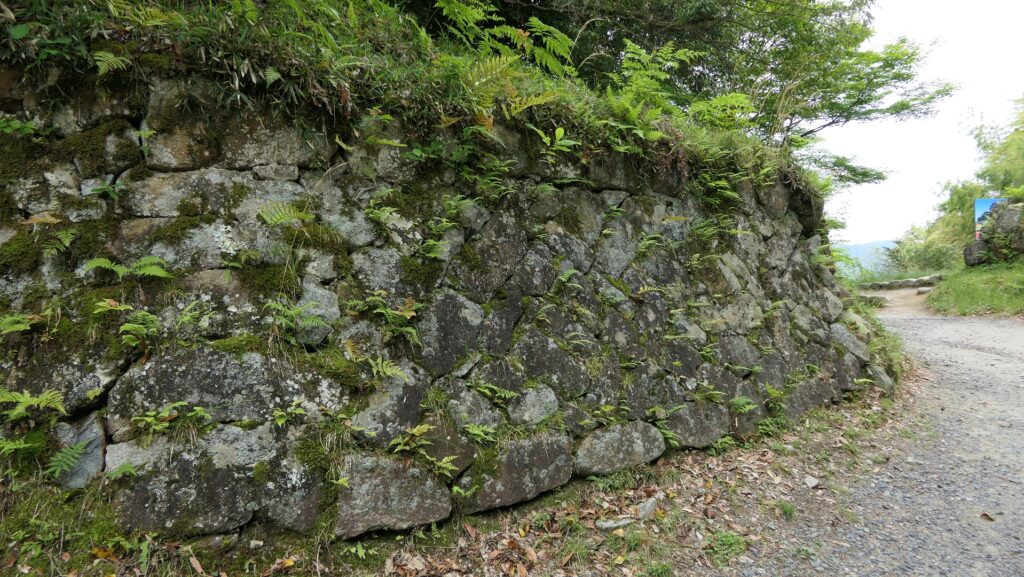
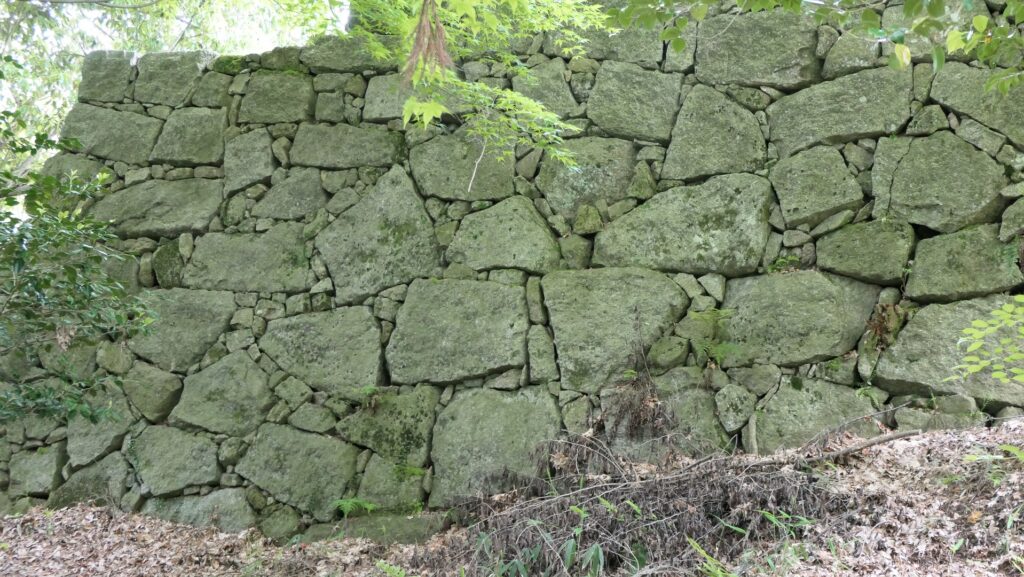
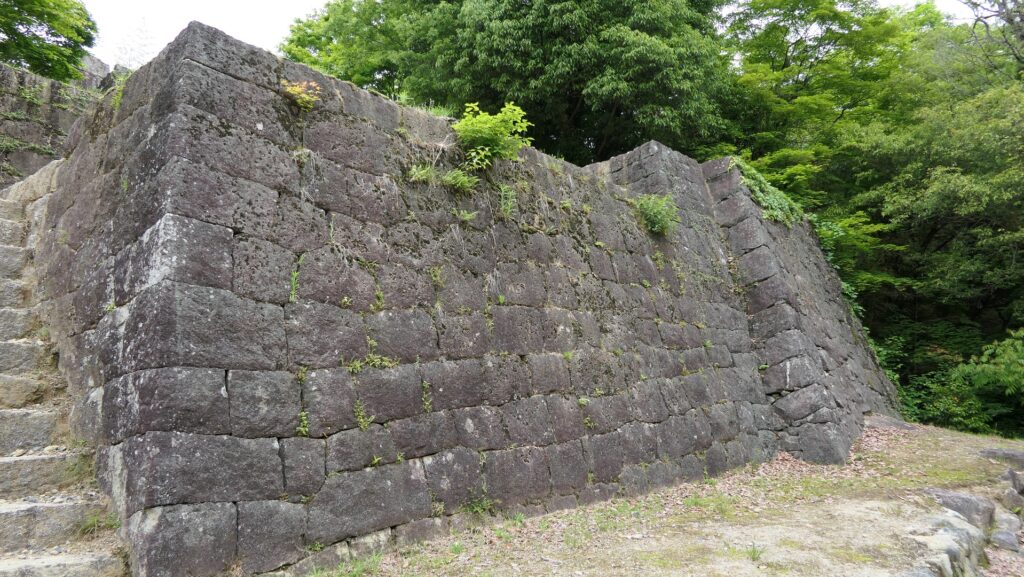
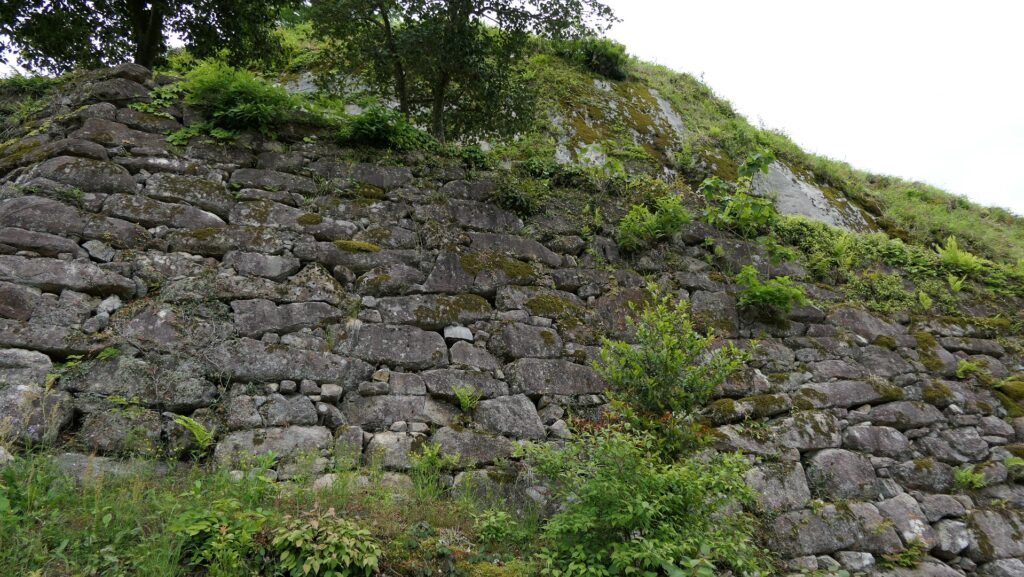
It is said that there were six types of stone walls in Naegi Castle, ranging from the oldest one using natural stones to newer advanced ones. That meant the Naegi Domain continued to build or repair them under the severe living condition for over 250 years in the peaceful Edo Period. I was very impressed by that.
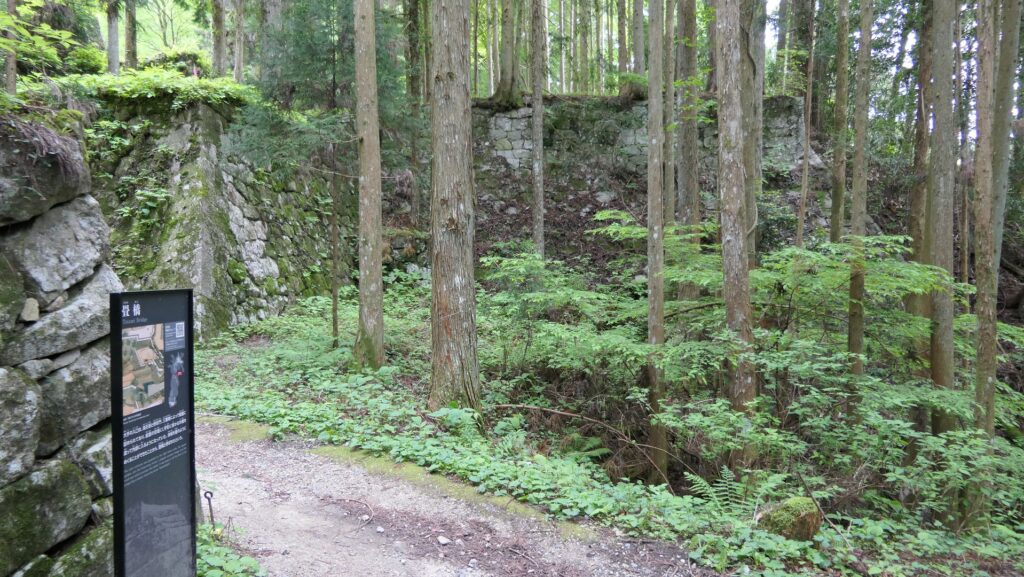
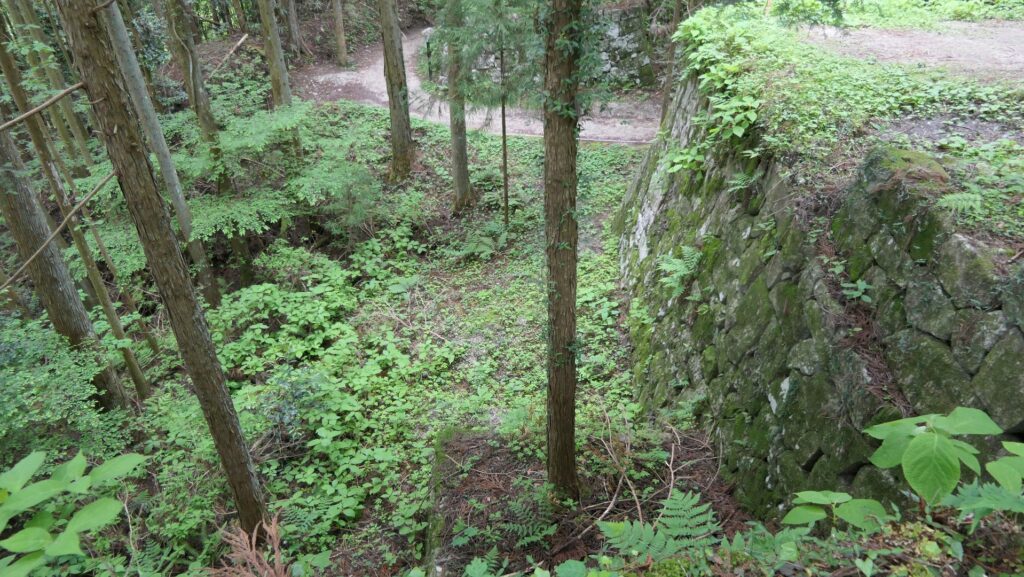
The stone walls piled in a way called Tani-zumi or the Form of a Vally, near the entrance of the ruinsThe stone walls piled in a way called Uchikomi-hagi like piling roughly processed stones, at the Northern Gate Ruins, in the back of the Large Turret RuinsThe stone walls piled in a way called Kirikomi-hagi like piling precisely processed stones, at the Large Turret RuinsThe stone walls piled in a way called Nozura-zumi like piling natural stones, around the starting point to the top
I remember an example of a similar case to Naegi Castle, called Oka Castle in the Kyushu Region. The castle was likewise built on a rocky mountain. It was very defensive but hard to live in, so the warriors immediately disappeared after the Meiji Restoration.
The ruins of Ona Castle
How to get There
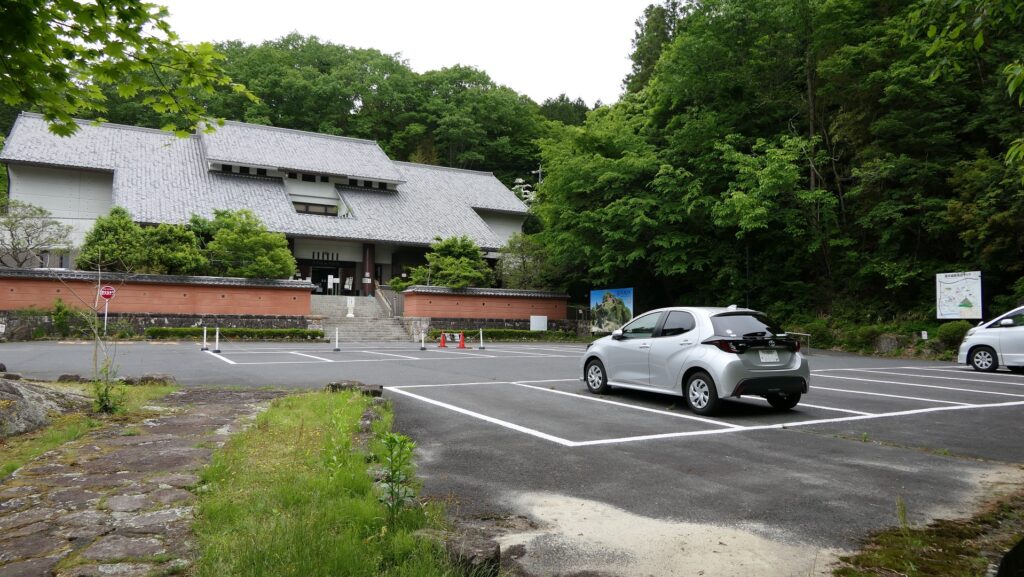
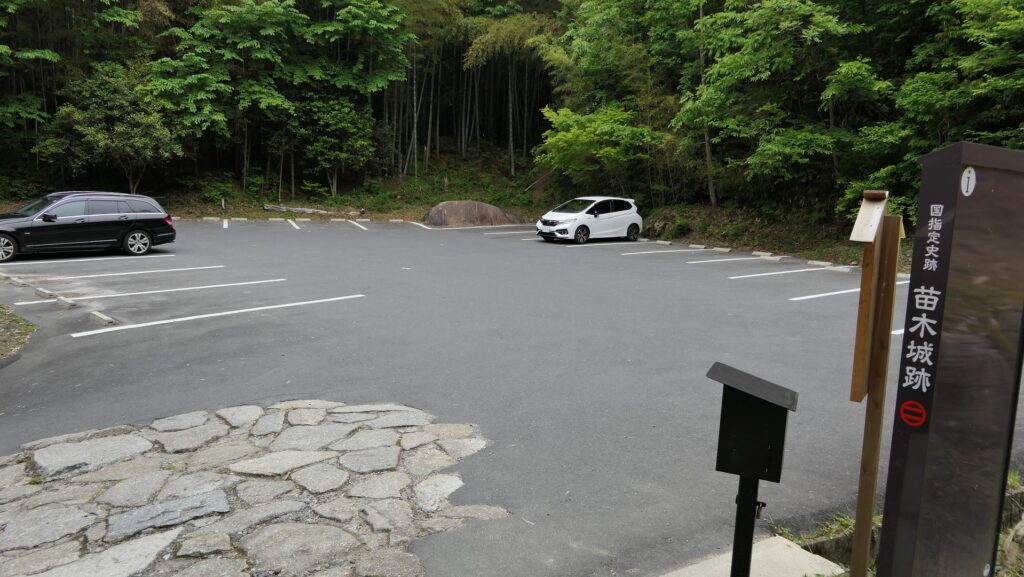
I recommend using a car when you visit the castle ruins. It is about a 10-minute drive away from Nakatsugawa IC on the Chuo Expressway. There are several parking lots around the ruins. If you want to use public transportation, you can take the Kita-Ena-Kotsu Bus bound for Tsukechikyo-Kuraya-Onsen or Kashimo-Sogo-jimusho from Nakatsugawa Station and get off at the Naegi bus stop. It takes about 20 minutes on foot from the bus stop to get there. To get to Nakatsugawa Station from Tokyo or Osaka: Take the Tokaido Shinkansen super express and transfer to the Chuo Line at Nagoya Station.
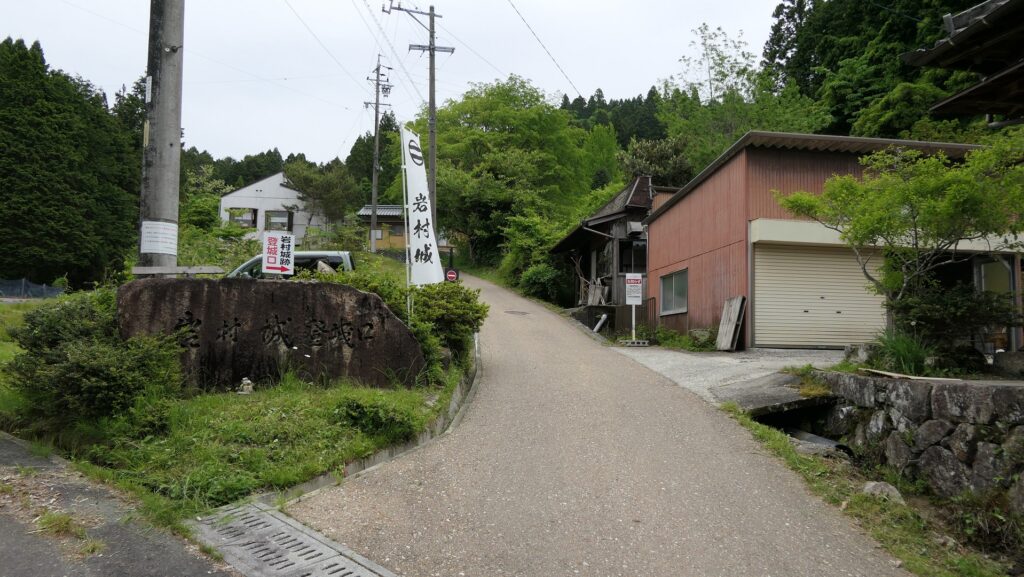
The parking lot of Naegi Toyama Historical MuseumThe parking lot in front of the ruins entrance