134.Toyama Castle Part2

A site mixed with original and imitation items

Features

Appearance very different from past

Today, the ruins of Toyama Castle became Toyama Castle Park which is open to the public. The appearance of the park is much different from the original state of the castle in some ways. First, the Jintsu-gawa River was rerouted from the northern side of the castle to flow in another direction in 1899. Only a stream called Matsu-kawa River flows in the original position. Second, only the Main Enclosure and the Western Enclosure remain as the park, which were tied by burying the water moat between them. Finally, no castle buildings remain but some imitation items were built. Further details on that later.

The aerial photo around the castle
The Matsu-kawa River flowing in the former Jintsu-gawa River
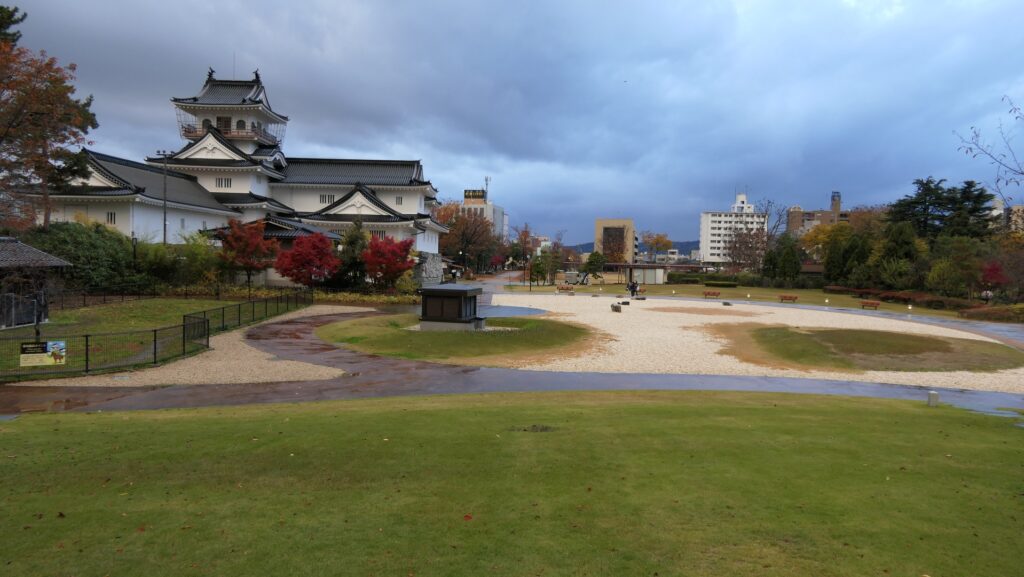
The inside of the park

Original Stone Walls, Water Moats and Moved Gate

The highlights of the remaining items are the stone walls, part of the water moats, and the moved Chitose Hall Gate from the Eastern Barbican Enclosure. If you enter the park from the south, you can walk across the only remaining earthen bridge. The bridge is over the only remaining water moat to the ruins of the front gate called Kurogane-mon or the Iron Gate with the stone walls.
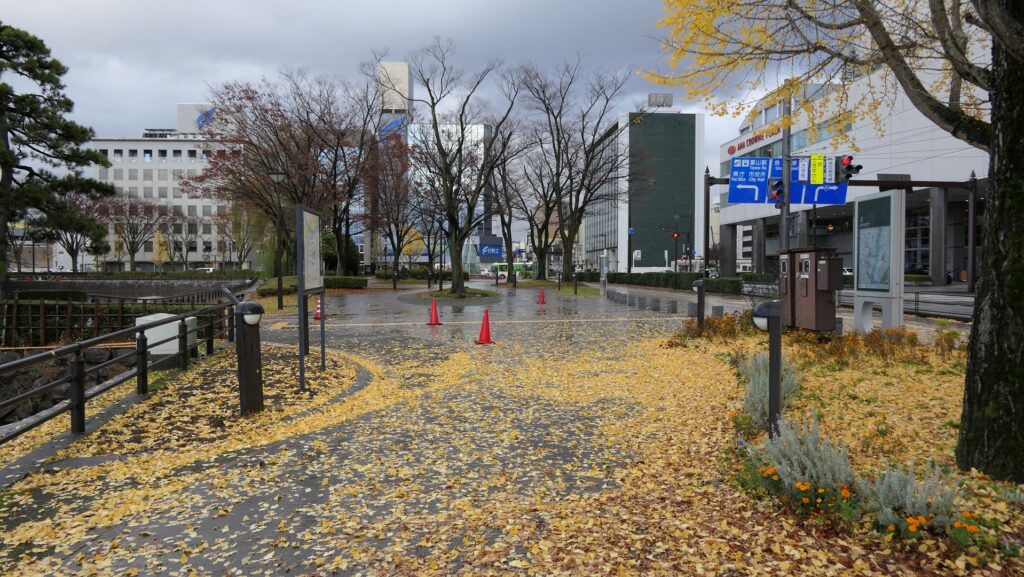
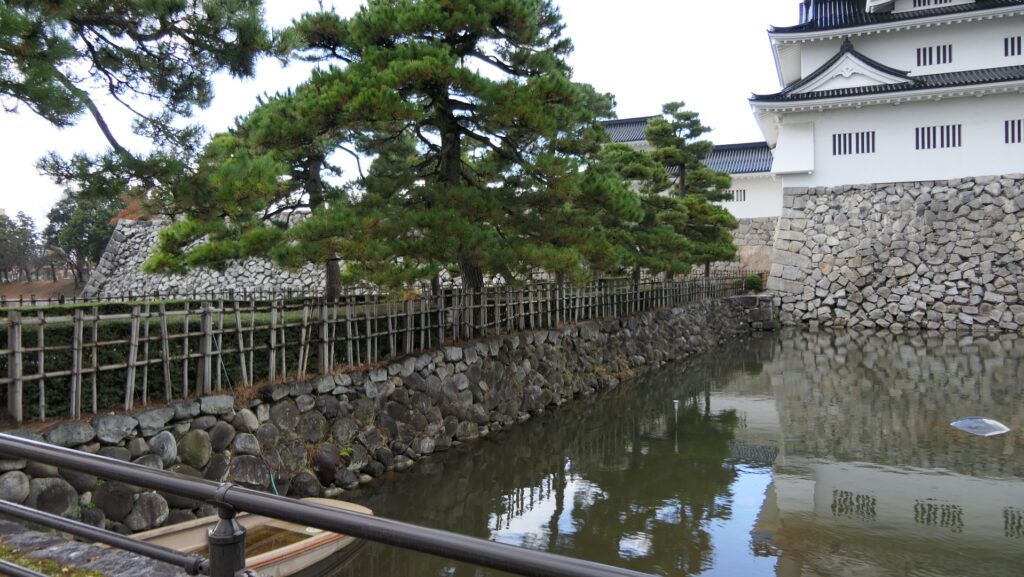
The Second Enclosure Ruins
The earthen bridge to the park
Crossing the earthen bridge

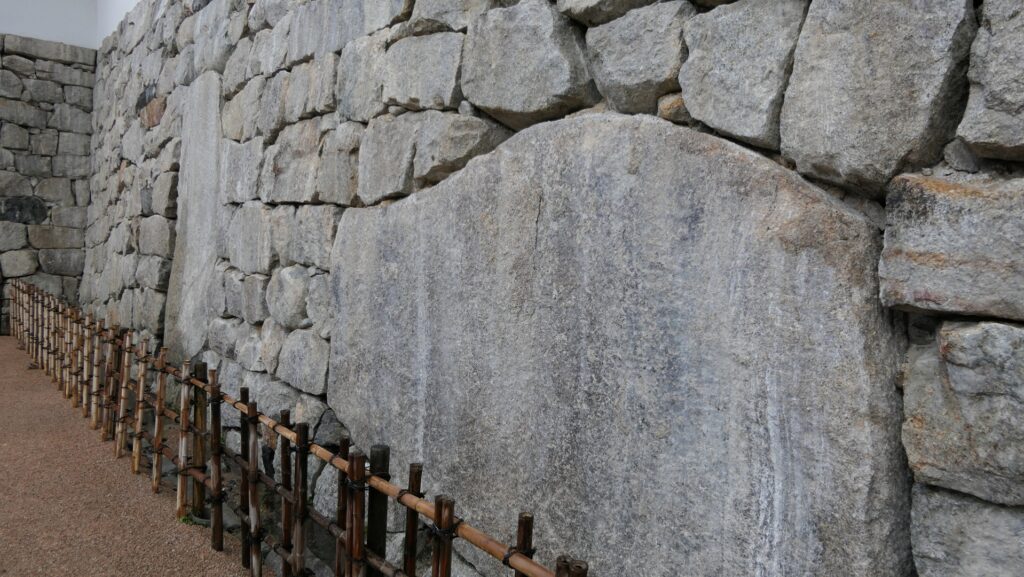
The stone walls include five huge ornate stones called Kagami-ishi or the Miller Stones. These stones look great and showed the authority of the lord in the past. This area is the most likely to be the original Toyama Castle.
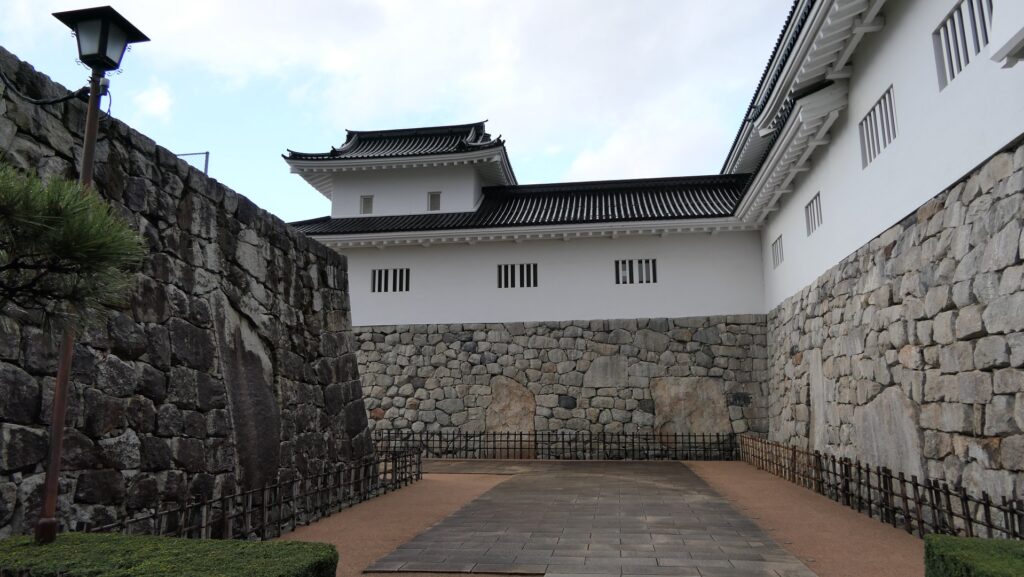
The ruins of the Iron Gate
The stone walls of the Iron Gate, including the ornate stones
The ornate stones look great

The other remaining stone walls of the back gate are at the northeast part of the castle. The Chitose Hall Gate is beside the stone walls.
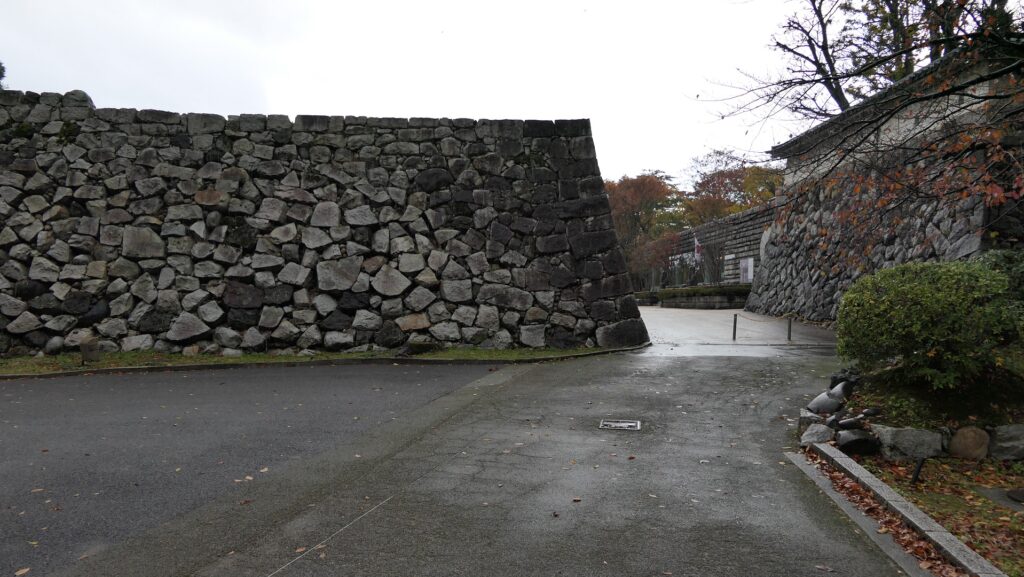
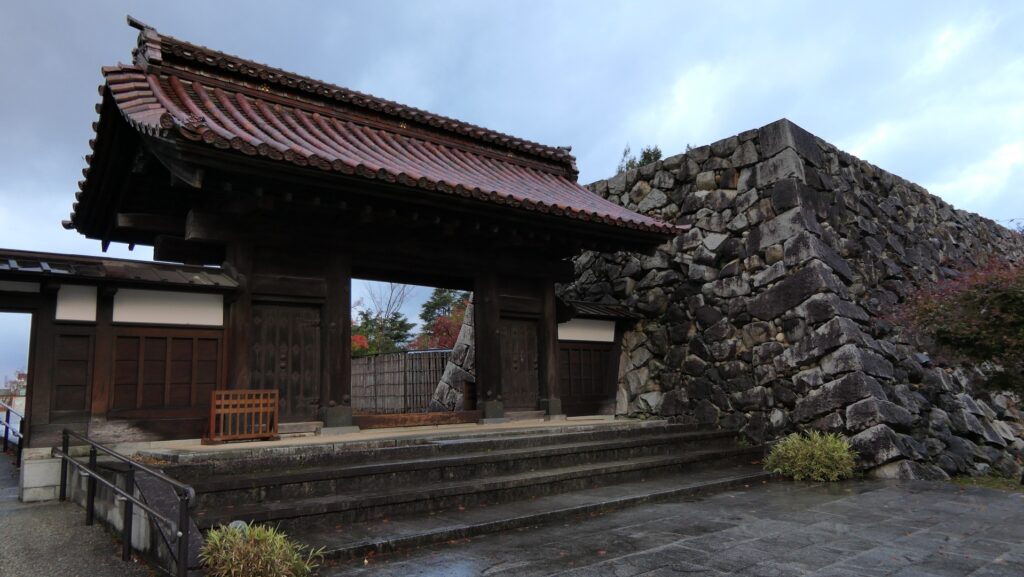
The stone walls of the Back Gate
The Chitose Hall Gate beside the stone walls

Imitated Stone Walls and Main Tower

On the other hand, another feature of the castle, the earthen walls can hardly be seen at the site. The outline of the Main Enclosure was originally made using the earthen walls connecting the stone walls. However, the outside part is covered with the imitation stone walls built recently. The inside of it was also piled up with some stones earlier on.
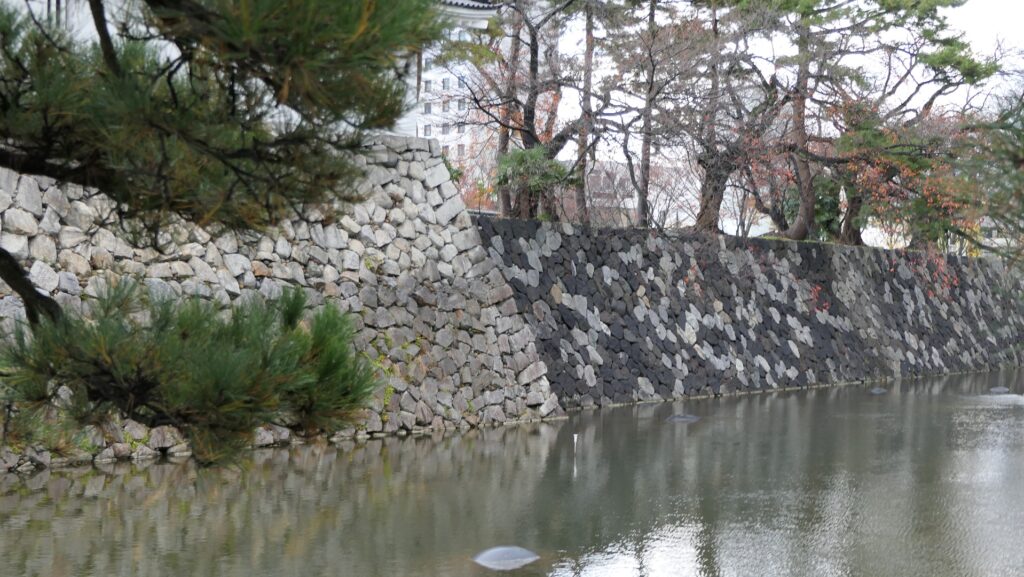
The stone walls on the left are original while those on the right are imitated
The inside of the earthen walls was also piled up with stones

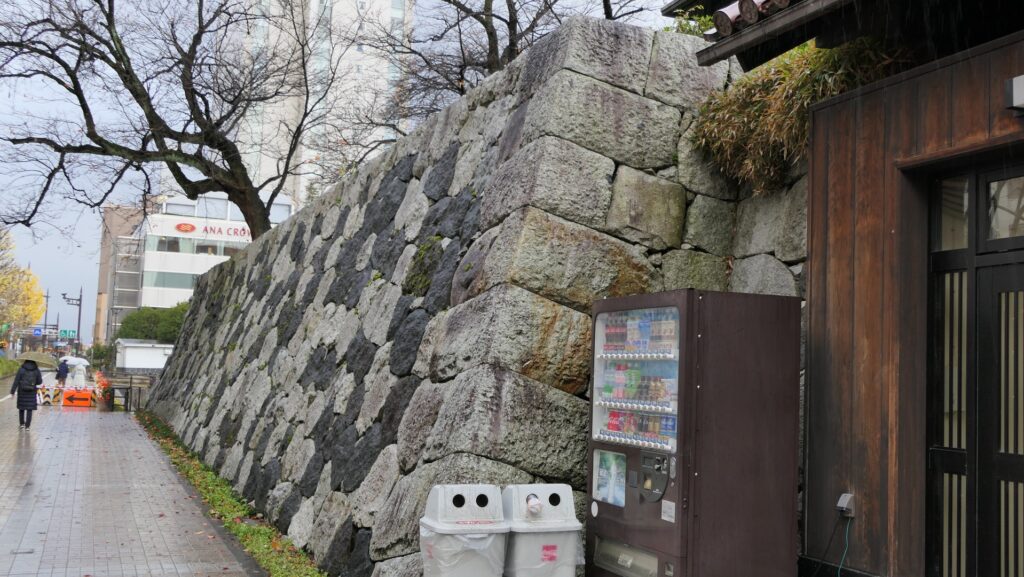
There are signboards which give information about the original stone walls at the site, but no explanation for the stone walls which were built in the present time. Visitors might be confused or misunderstand what the castle was like.
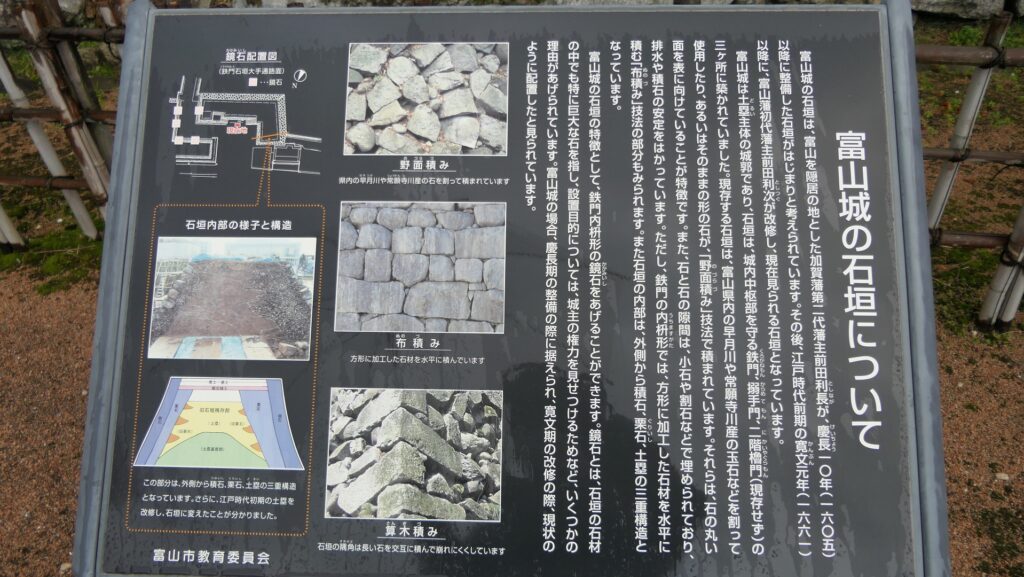
The signboard for the original stone walls
there is no information for the imitated stone walls

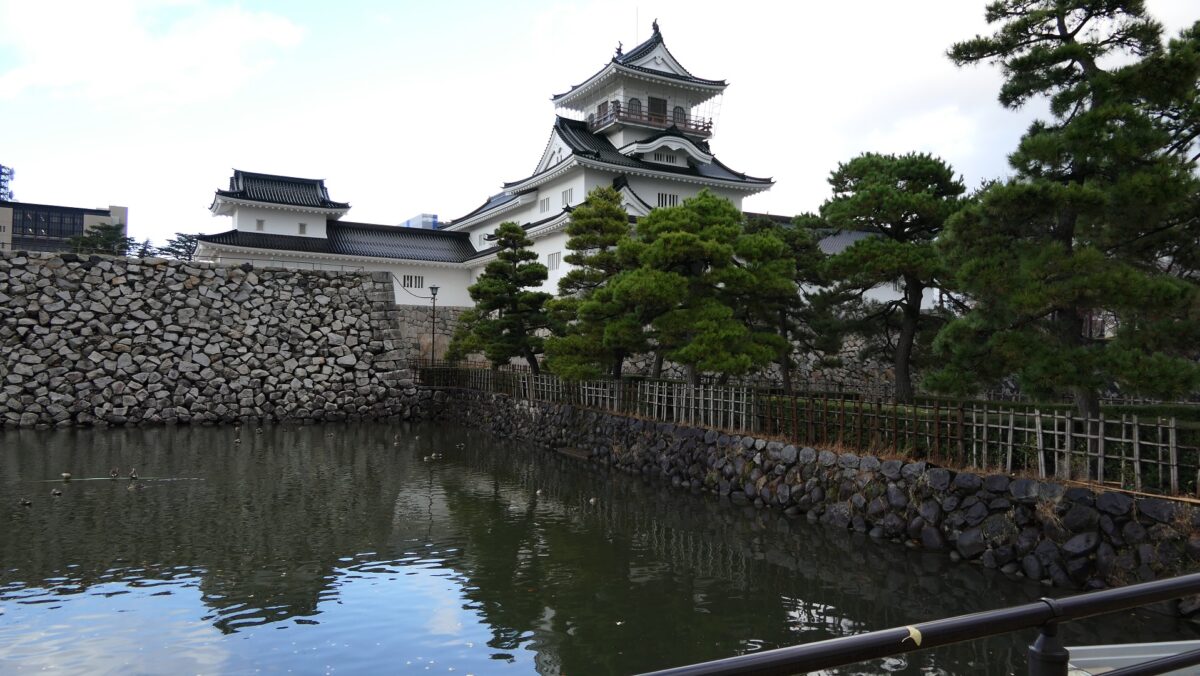
The building of Toyama Municipal Folk Museum is on the stone walls of the Iron Gate as the imitation Main Tower, where you can learn more about Toyama Castle inside. It has been a long time since its launch in 1954, so it has also become a symbol of Toyama City. Now the imitation building fits in with the original stone walls.
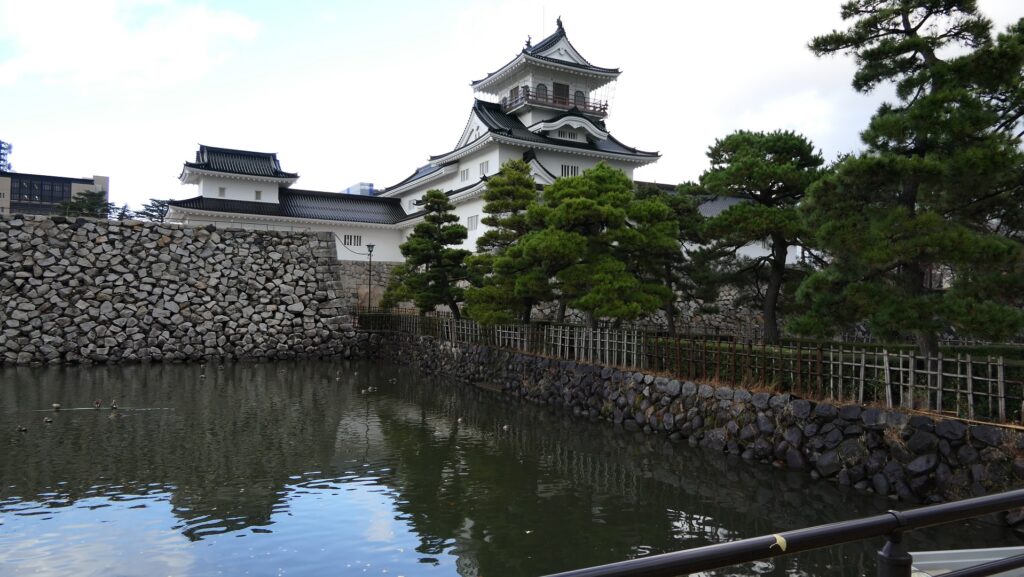
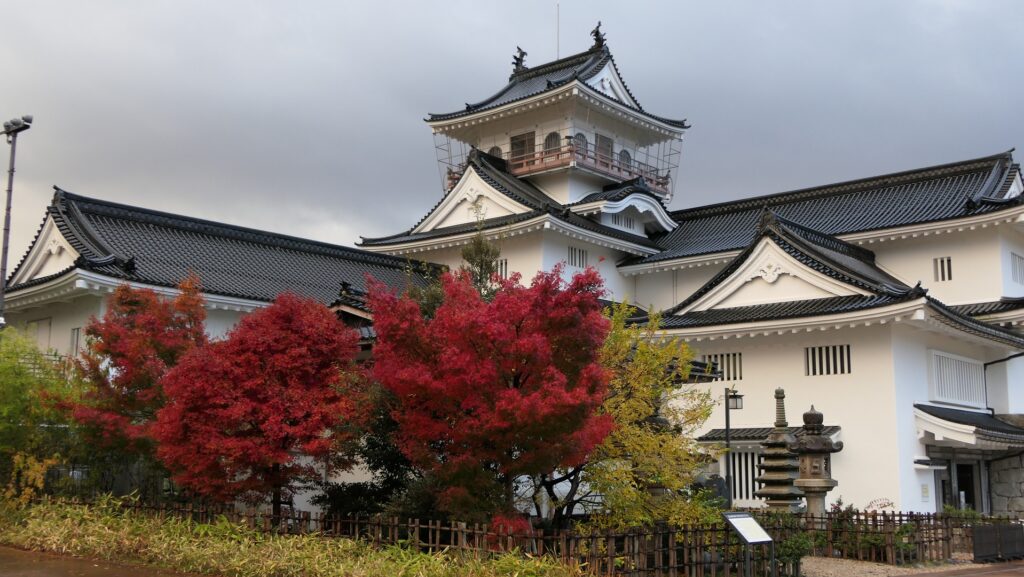
The imitation Main Tower built on the stone walls of the Iron Gate
The Imitation Tower seen from the inside of the park

Another art museum building which looks like a turret is also built on the stone walls of the back gate. The citizens of the city might think Toyama Castle originally had the Main Tower and was built entirely using stone walls.
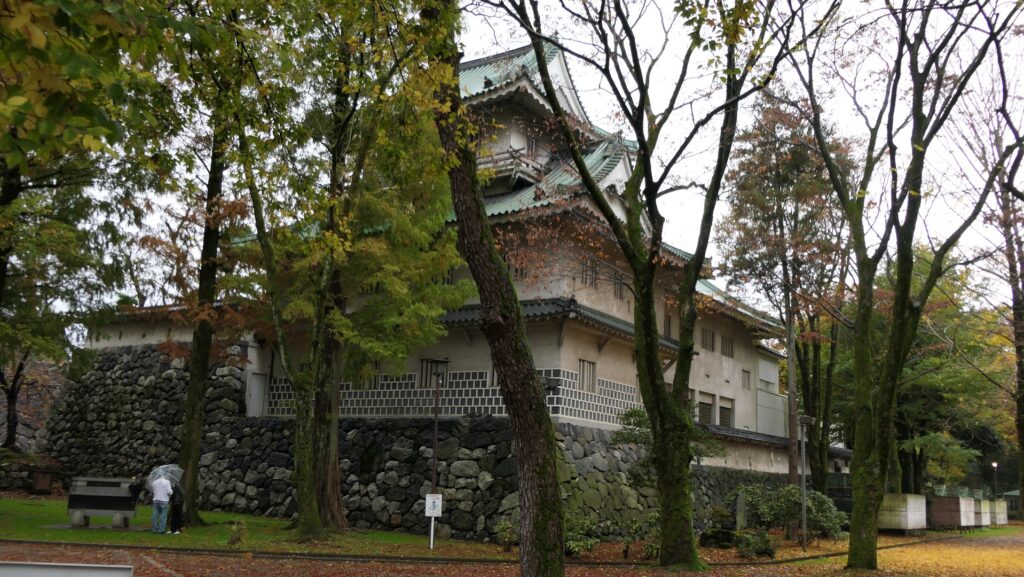
The art museum built on the stone walls of the Back Gate

To be continued in “Toyama Castle Part3”
Back to “Toyama Castle Part1”
134.富山城 その2

オリジナルとイミテーションが混在する城跡

特徴、見どころ

かなり変化した外観

現在、富山城跡は富山城址公園として一般に公開されています。公園の現状は、いくつかの点で元々あった状態からかなり異なっています。まず第一に神通川が1899年に、城の北側から他の場所に河道が付け替えられています。今は松川という小川が、元の河道の一部を流れているのみです。次に、公園として残っているのは本丸とに西の丸のみで、その間にあった水堀は埋められ、つながっています。最後の点として、城の建物は残ってはいませんが、模擬の建造物がいくつか作られています。この点については、この後述べます。

城周辺の航空写真

元の神通川の河道を流れる松川
公園の内部

オリジナルの石垣、水堀、移築門

現存しているもののうち、一番の見どころは、石垣、水堀の一部、そして東出丸から移設された千歳御門でしょう。もし南側から公園に入られるのであれば、唯一残っている土橋を渡って行けます。この土橋は、これもまた唯一残っている水堀を渡って、石垣がある鉄(くろがね)門と呼ばれる正門跡に通じています。

土橋の前にある二の丸跡
公園に通じる土橋
土橋を渡って行きます

石垣には、鏡石とよばれる5つ大きな飾り石がはめ込まれれいます。これらの鏡石はとても見栄えがしますし、過去には城主の権威をも示していたのでしょう。この場所は、もっとも元の富山城らしいと言えるでしょう。

鉄門跡
鉄門跡の石垣とその中の鏡石
鏡石は迫力があります

他の現存している石垣は、城の北東部分の裏門跡のところにあります。千歳御門は、その石垣の傍らにあります。

裏門の石垣
千歳御門と裏門石垣

イミテーションの石垣、模擬天守

その一方で、もう一つのこの城の特徴であった土塁は、ほとんど見ることができません。本丸の外周は、もともと土塁を使って作られており、石垣部分をつないでいました。ところが、土塁の外側部分は、最近模擬の石垣により覆われてしまっています。内側部分もまた、以前に石が積み上げられています。

左側がオリジナル、右側がイミテーションの石垣
土塁の内側も石積みされています

オリジナルの石垣がある場所には説明板があり、その石垣の情報を得られるのですが、現代になって築かれた石垣には何の説明もありません。観光客が、昔はどのような城だったのか知ろうとしても、混乱するか誤解しかねません。

オリジナルの石垣の説明板
模擬の石垣には何の説明もありません

鉄門の石垣の上には、模擬天守として、富山市郷土博物館が建てられています。その中では、富山城のことをより学ぶことができます。1954年の開館以来、長い期間が経過し、今では富山市のシンボルになっています。模擬天守であってもオリジナルの石垣によく合っています。

鉄門の石垣の上に建てられた模擬天守
模擬天守の公園内から見た姿

裏門の石垣の上にも、櫓のような外観の美術館が建てられています。富山市民の人たちは、富山城には元から天守があり、城全体が石垣に覆われていたと思っているかもしれません。

裏門の石垣の上に建てられた美術館

「富山城その3」に続きます。
「富山城その1」に戻ります。

119.Sugiyama Castle Part3

Castle layout researchers focus on Sugiyama Castle.

Features

Main Enclosure, Center of Castle

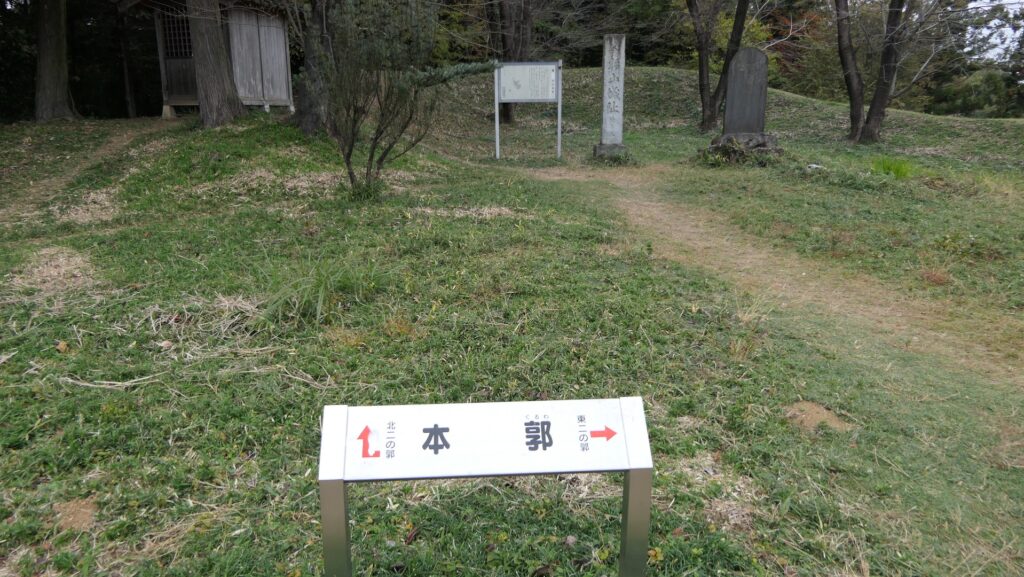
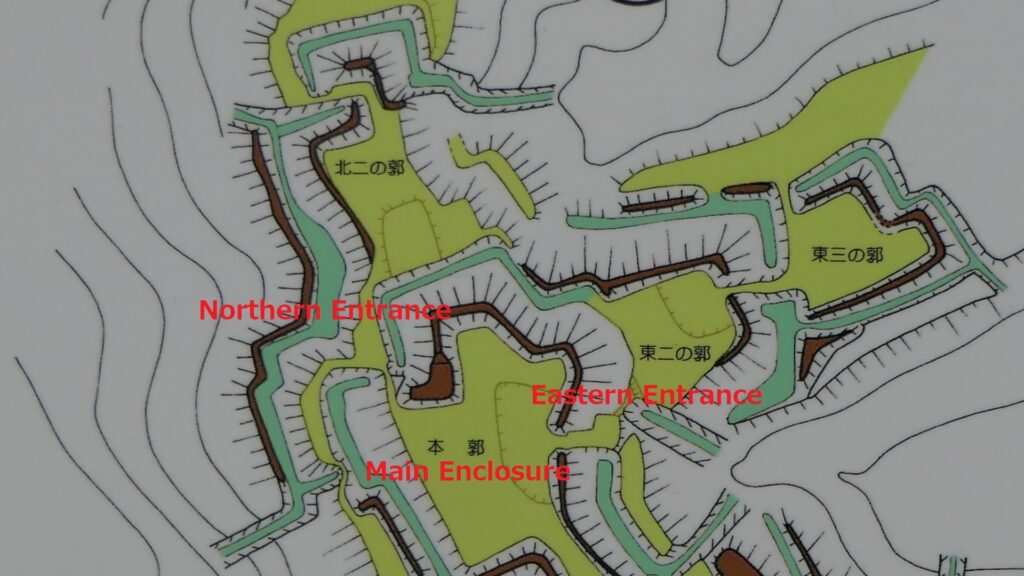
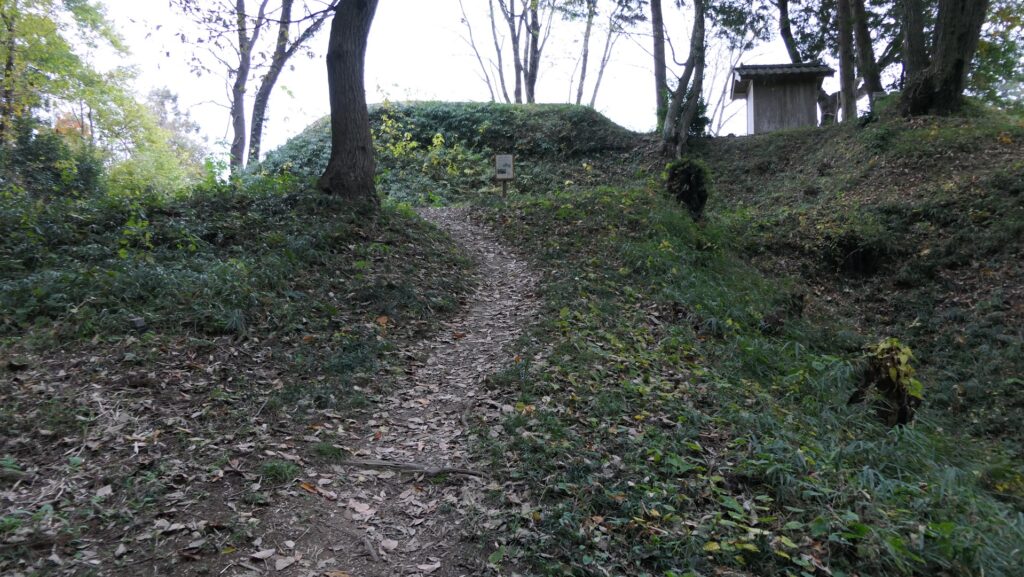
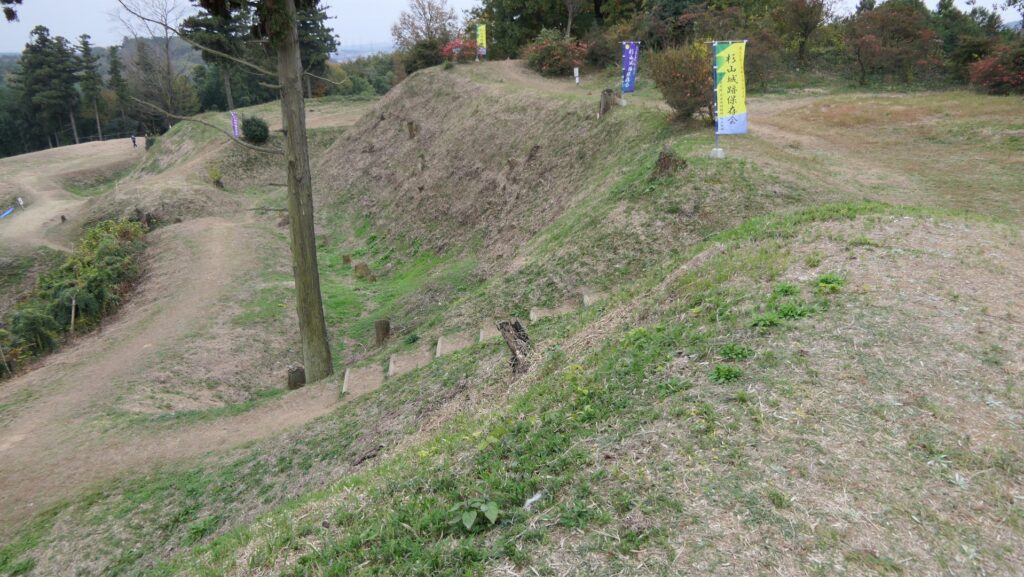
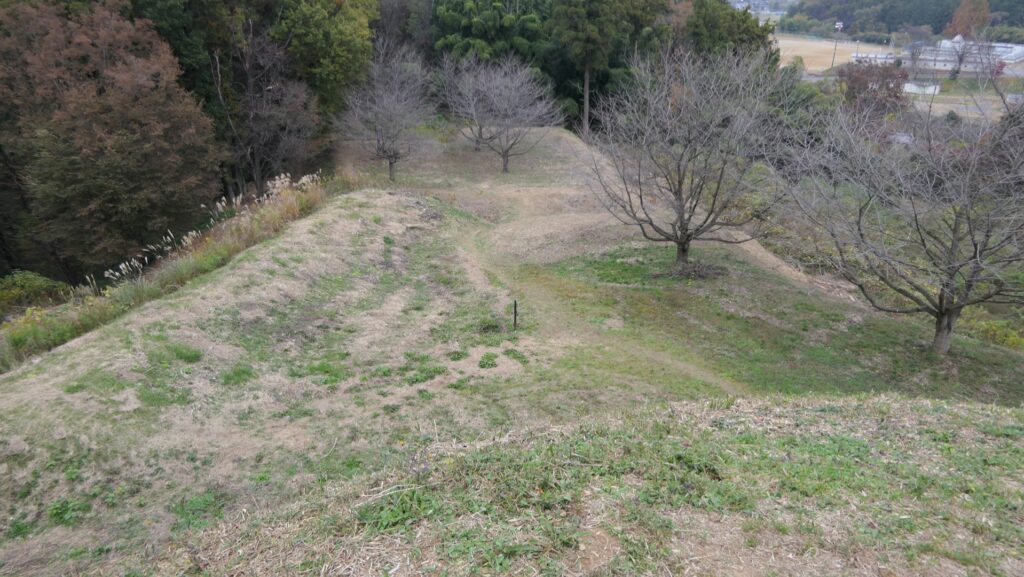
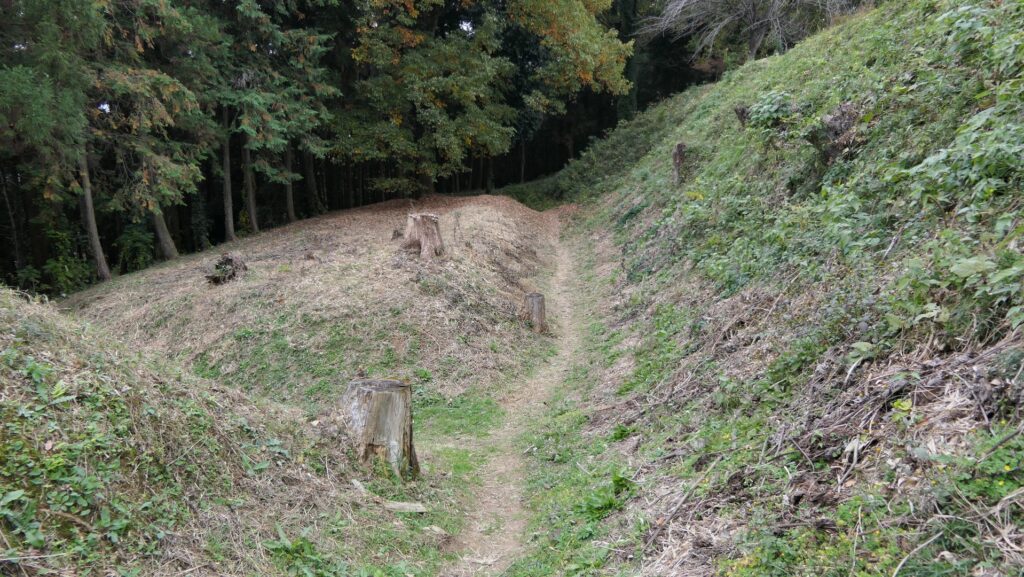
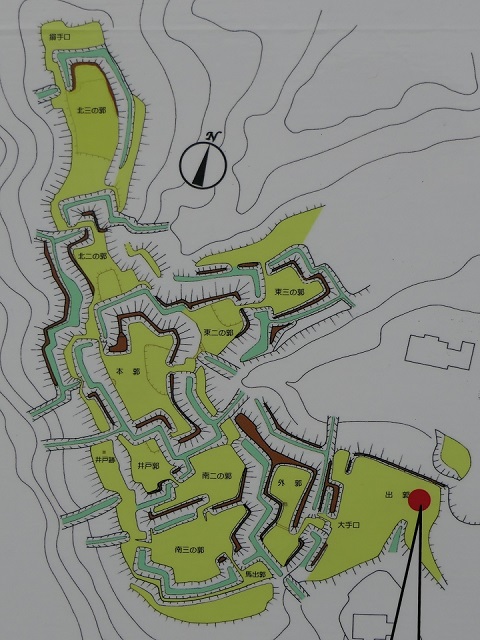
The Main Enclosure is the largest and highest one in the castle. It has three entrances in the south, north and east. The north and east ones were also strictly protected by other enclosures and dry moats like you simulated in the south. The lord of the castle would be able examine the situation in all directions clearly and give the appropriate instructions.

The Main Enclosure
The locations of the Main Enclosure and the northern and eastern enclosures
The Northern Entrance of the Main Enclosure
The Eastern Entrance of the Main Enclosure
The eastern enclosures seen from the Main Enclosure

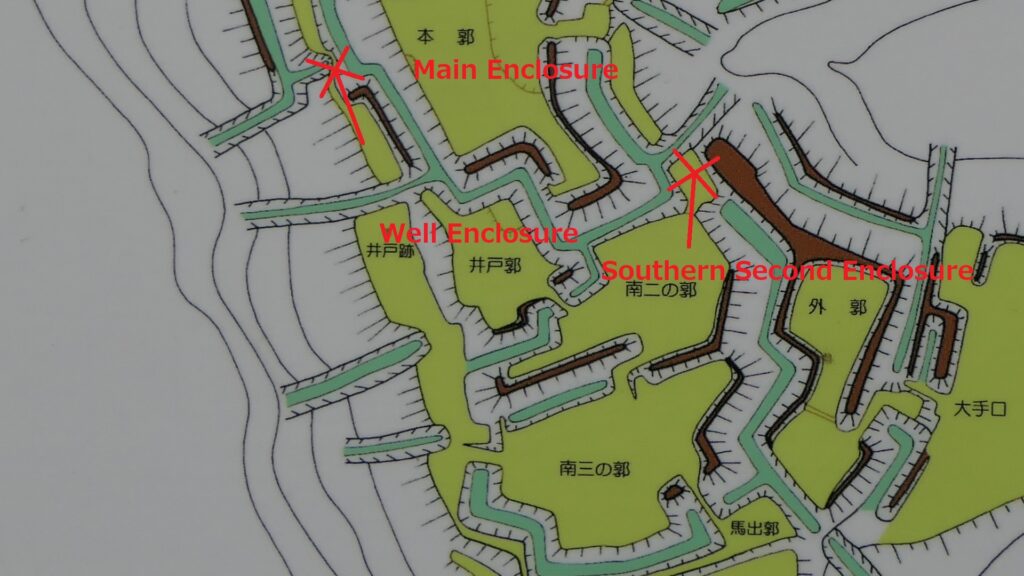
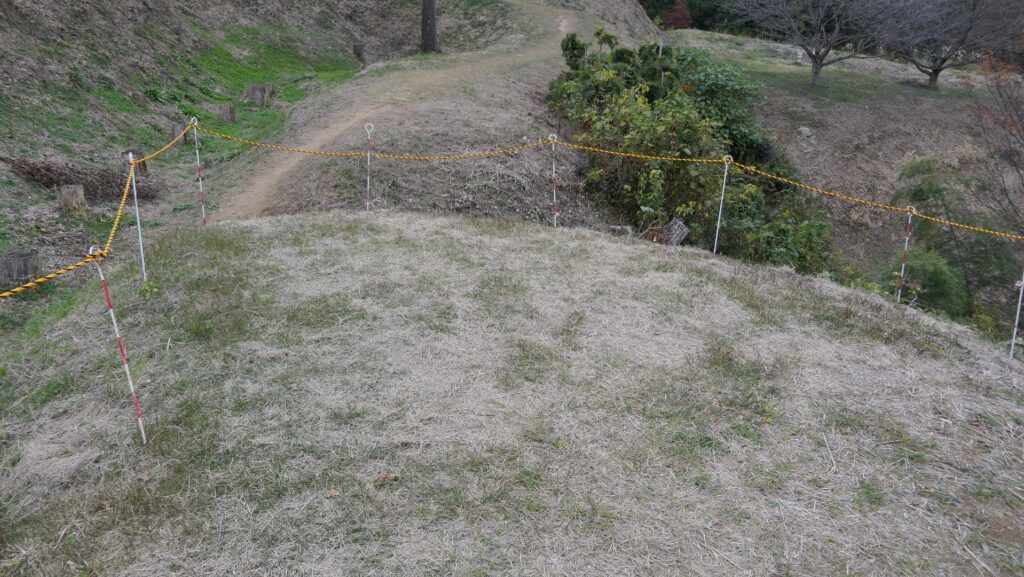
In addition, some bypass routes are set in the castle, but some of them are dead-end alleys. If you see the layout of the castle, you may think it looks like a maze. It’s true for enemies, but it’s a well-designed fortress for defenders.

The locations of the spots which are supposed be dead-end alleys
The dead-end alley at the Southern Second Enclosure
The dead-end alley beyond the Well Enclosure

Later History

The ruins of Sugiyama Castle were not known to the public until around 1980s. Only the researchers who studied the layout of castles were interested in this castle. They published the dictionaries and magazines which featured the layout of castles since 1987. The layout drawing of Sugiyama Castle has been one of the most featured ones in these books. The castle became popular little by little. After the excavations between 2002 and 2007, the ruins became a National Historic Site in 2008. It is considered one of the “Hiki Castles Ruins”.

This location map is also a good layout drawing

My Impression

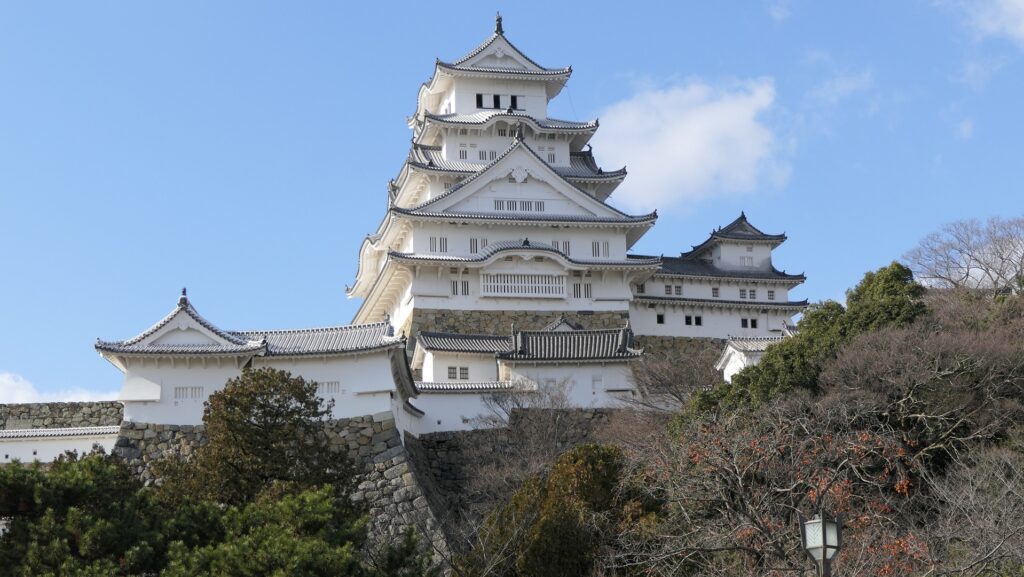
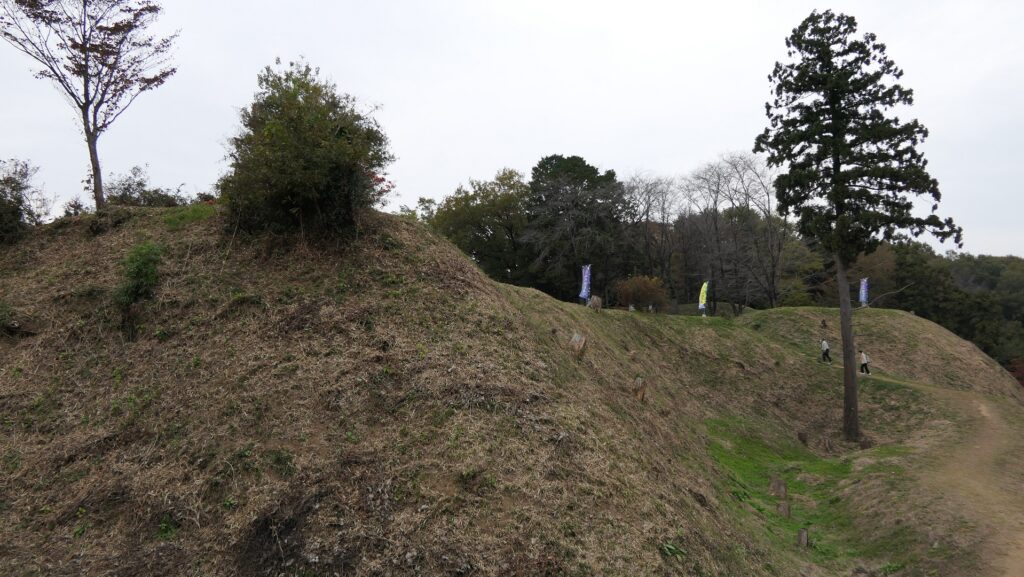
I imagine if Sugiyama Castle was much larger, and equipped with turrets, gates, and stone walls, it would look like the great castles built much later, such as Himeji Castle. This means Sugiyama Castle could be the pioneer of the advanced castle design. However, I rather prefer the effort of building the castle to its historical value. The unknown builders of the castle must have had a small budget, resources, workers, and little time because the purpose of the castle was limited. They thought hard to create their great work under the difficult situation. It may have been easier for them to build a great castle if they had enough resources. I think Sugiyama Castle is also a good lesson for us about how to use limited resources to create good work.

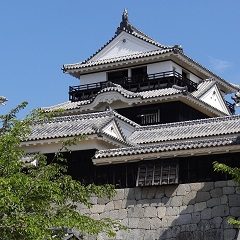
Himeji Castle
The ruins of Sugiyama Castle

How to get There

I recommend using a car when you visit the ruins.
It is about 15 minutes away from Ranzan-Ogawa IC on Kanetsu Expressway.
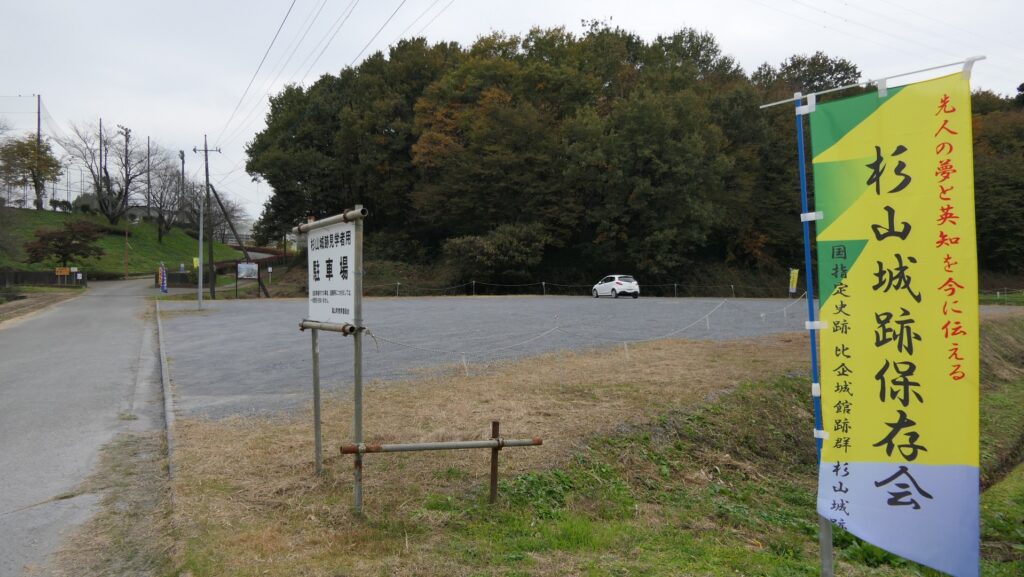
The ruins offer a parking lot.
By public transportation, take the Tokigawa-cho route bus bound for Seseragi Center from Musashi-Ranzan Station on the Tobu-Tojo Line and get off at the Taguro bus stop.
It is about 20 minutes on foot from the bus stop.

The parking lot at the ruins

That’s all. Thank you.
Back to “Sugiyama Castle Part1”
Back to “Sugiyama Castle Part2”

error: Content is protected !!