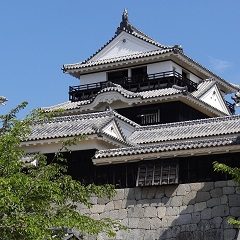
192.角牟礼城 その3

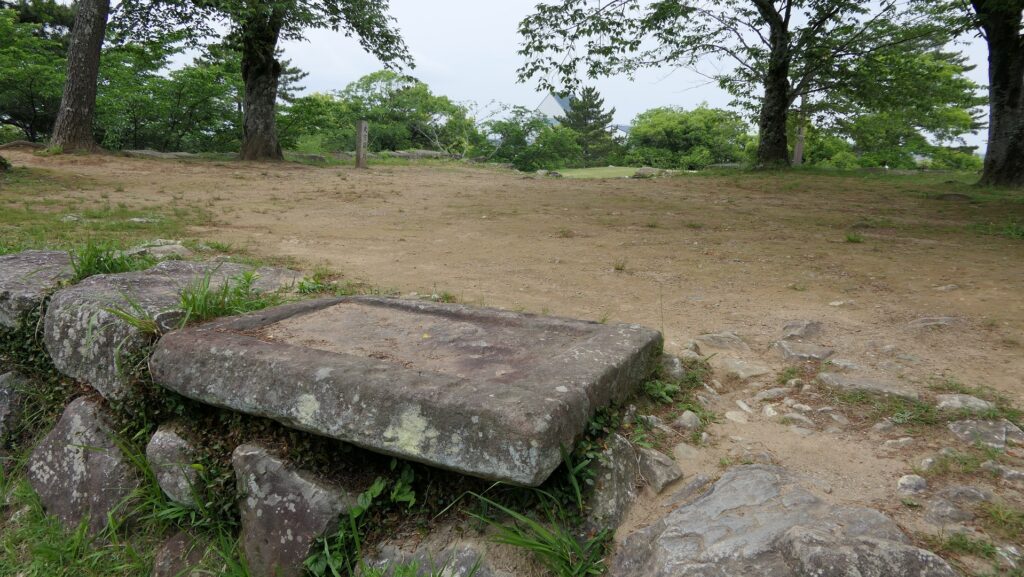
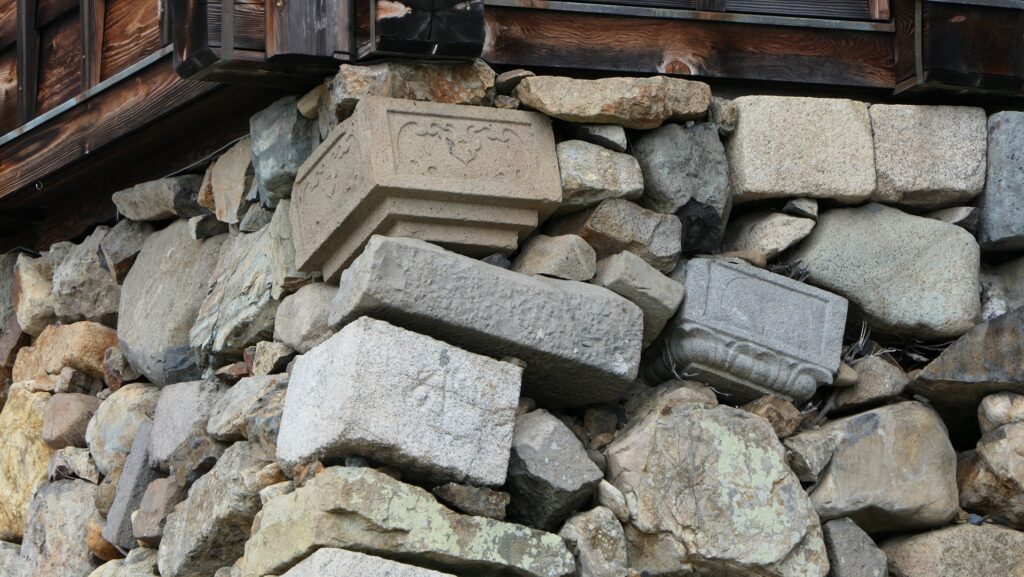
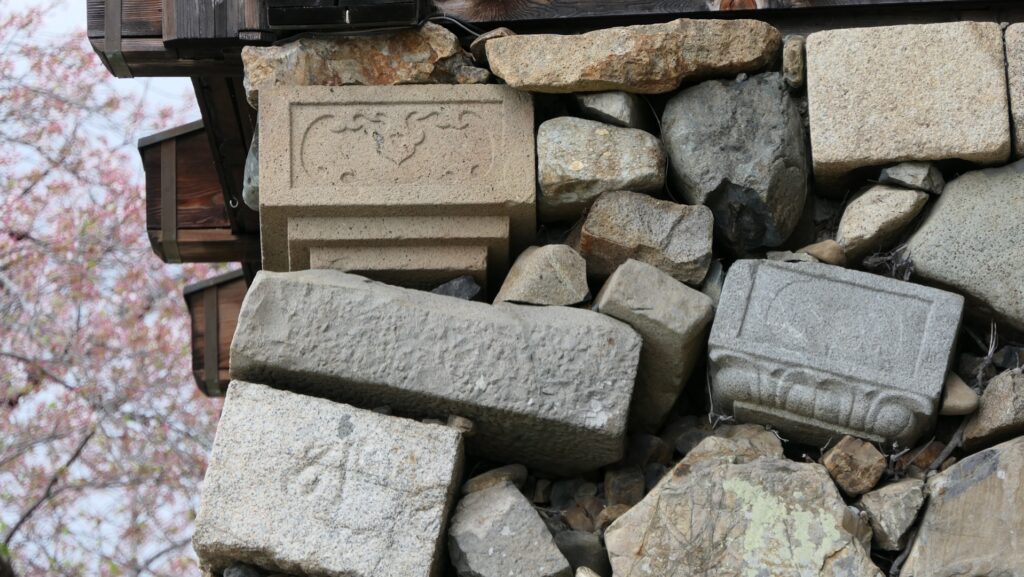
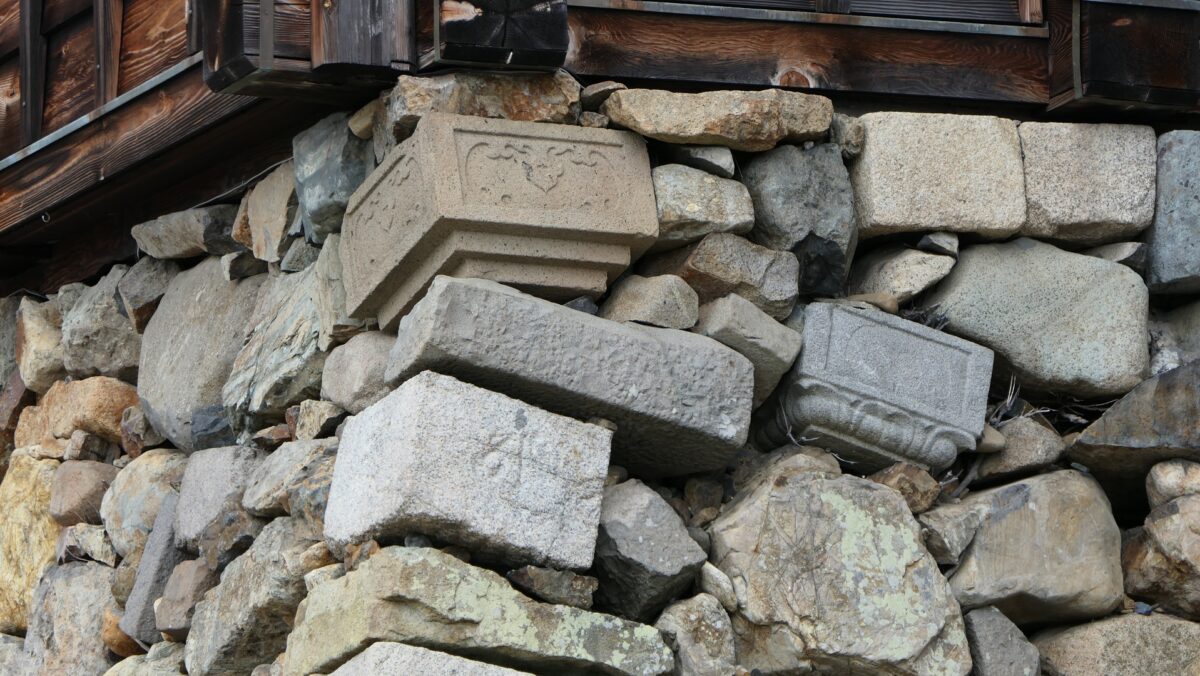
頂上にある本丸には多くの石が横たわっていす。毛利高政が本丸の北側だけに築いた石垣を修理中ということです。

特徴、見どころ

本丸は改修途中か

ところが、これまでとちがって頂上の本丸は違う様相です。本丸の周りには石垣がありませんが、人工的に山肌を削った土造りの切岸があります。これもまた、高政がやってくる前にこの城で採用された手法です。この曲輪を回り込んでいく自然の山道風の通路を歩いていきます(本丸にまっすぐ通じる工事用の通路が別途ありますが、ビジターは使わないようにとの掲示があります)。

城周辺の地図

本丸の周りの切岸
本丸にまっすぐ通じる工事用通路
山を回り込んで本丸に向かう道

その途中には展望所があり、多くのメサやビュートを伴う玖珠地域の素晴らしい眺めを楽しむことができます。とても美しい景色です。

展望所
玖珠地域の素晴らしい景色

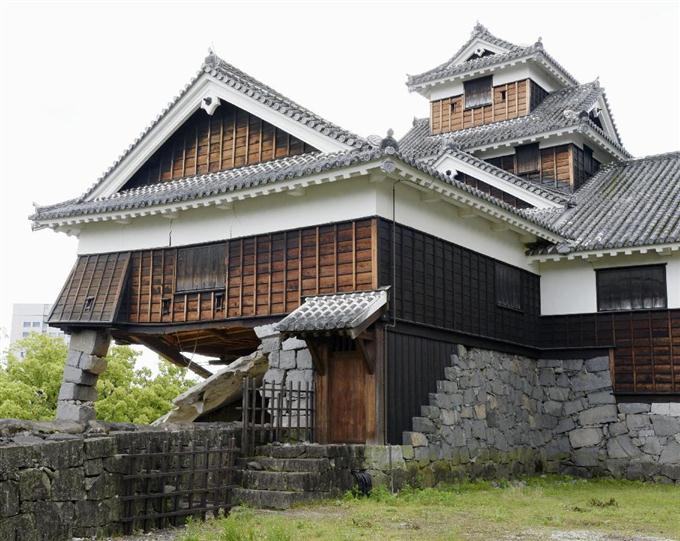
そして頂上にある本丸に着くのですが、そこには多くの石が横たわっているが見えます(2023年5月時点)。これは、高政が本丸の北側だけに石垣を築いていたことによります。これが崩れて今修理中ということのようです。高政は、転封の直前まで、本丸も改修しようとしていたのかもしれません。

本丸虎口
本丸内部
修繕中の石垣の石

山麓の森藩に関する史跡

山麓では、久留島氏が設立して森藩に関する見どころもあります。藩主は、現在は公園になっている陣屋に居住していました。また、陣屋のとなりの丘の脇には、回遊式の池泉庭園を造り、その庭園は今でも残っています。

久留島氏が作った庭園

その手前には、7mの高さの一枚岩が立っていて「童話碑」と彫刻されています。この岩は陣屋に元々あったものではありませんが、藩があったころに近くの川の船着き石として使われていました。1949年になってそこから現在の場所に移され、町出身の著名な童話作家、久留島武彦にちなんで名付けられました。彼は、城主一族の子孫でした。

庭園前にある童話碑

城主だった頃の久留島氏はまた、丘の上に石垣を築き、その上に「栖鳳楼(せいほうろう)」という茶室を建設しました。これも現存しています。この茶室は、城を築くことを許されていなかった藩主が、城の代わりにしたものだと言われています。

栖鳳楼 (licensed by ムカイ via Wikimedia Commons)

その後

角牟礼城の調査は1993年に始まりました。それによって、城跡には今に至るまで、天下統一のとき、秀吉の部下たちが多くの地域で築いた穴太積みの石垣が、ここでもよい状態で残っていてることがわかりました。また、この城跡では中世から江戸時代にかけての城の進化のプロセスが見て取れることもわかりました。その結果、城跡は2005年に国の史跡に指定されました。玖珠町は、この町を童話の里であるとともに、穴太積みの石垣が残る地としてもアピールしています。

角牟礼城の穴太積みの石垣

私の感想

玖珠地域を訪れたとき、私はそこにとても独特の雰囲気を感じました。この地域が山に囲まれていて、この中にある小さな山や丘がちょっと変わっていて、後からこれらがメサやビュートであるとわかりました。この地域の自然の特徴からその歴史に関する民話も生まれています。この町の愛称「童話の里」にも結び付く何かがあったのかもしれません。角牟礼城もこの地域の特徴と外から来た人たちが交わり、よりユニークな存在になったのでしょう。この辺りを旅することがあれば、玖珠地域と角牟礼城に立ち寄ってみてはいかがでしょう。

角牟礼城の三の丸の石垣

ここに行くには

車で行く場合:大分自動車道の玖珠ICから数分のところです。城跡周辺にいくつか駐車場があります(山上の三の丸のところや山麓にある公園など)。
公共交通機関を使う場合は、JR豊後森駅から梶原行きの大分交通バスに乗って、山麓にある上伏原バス停で降りてください。そこから山頂に向かう山道を登って行くことができます。
東京または大阪から豊後森駅まで:大分空港か福岡空港まで飛行機で行って、レンタカーを借りるのがよいかもしれません。

リンク、参考情報

角牟礼城跡、玖珠町観光協会
・「よみがえる角牟礼城/石井進監修、玖珠町編集」新人物往来社
・「歴史群像179号、地形から読み解く 瀬戸内の海賊城と近代要塞」学研

これで終わります。ありがとうございました。
「角牟礼城その1」に戻ります。
「角牟礼城その2」に戻ります。

192.Tsunomure Castle Part2

The path to the top becomes zigzagging and the highlight of the castle, the great Ano-zumi high stone walls appear soon.

Features

Third Enclosure as Parking lot

Today, the ruins of Tsunomure Castle have been developed by Kusu Town since they were designated as a National Historic Site in 2005. If you drive to the ruins, you can go from the foot of the mountain to the Third Enclosure at the middle of the slope through the paved forest road. However, please be careful when passing each other as the road is narrow. The Third Enclosure has become a parking lot which is still surrounded by stone walls. You can also see some collapsed stones lying around the enclosure. Some historians speculate that they came from the Climbing Stone Walls which the builder, Takamasa Mori might have brought and built from his experience of the invasion of Korea.

The map around the castle

The entrance of the forest road
The Third Enclosure became a parking lot
Some of the lying stones around the enclosure

Great Ano-zumi High Stone Walls

You will walk from the Third Enclosure to the center of the ruins above. You will also see some Vertical Moats made of soil on the slopes to prevent enemies from moving freely, which had been built before Takamasa came. That’s why the final version of the castle was mixed with the older and newer items. The path to the top becomes zigzagging and the highlight of the castle, the great Ano-zumi high stone walls appear soon. These stone walls made of natural stones and rubble, which remain for about 100m long by over 7m high, may look rough but were actually piled elaborately. You can feel the unique techniques of the past stone guild.

The vertical dry moats
Climbing the zigzagging path
The high stone walls
The stone walls, built in the Ano-zumi way, look so great

Going to Second Enclosure after passing Main Gate Ruins

You will next pass the Main Gate Ruins beside the current path, which had the defensive Koguchi entrance and its turret gate. The gate was also the entrance of the Well Enclosure, a lifeline of the castle. In fact, the gate was once called “the Back Gate” by local people and historians according to traditions, however, it is now considered “the Main Gate” as the studies about the castle improve. Please make sure that some of the official pamphlets and signboards still say it is the Back Gate. In that case, you need to understand it is actually the Main Gate.

The ruins of the Main Gate
A signboard still says it is the Back Gate Ruins, inside the red circle in Japanese

You will eventually walk up to the Second Enclosure, which is also surrounded by stone walls. The excavation team found stone foundations for some buildings in the enclosure. The enclosure also had the Western Gate Ruins, which had a gate with roof tiles and entrance, similar to the Main Gate. In addition, the gate was once called “the Main Gate”. Overall, the area above the Ano-zumi stone walls below the second enclosure was certainly modernized by Takamasa Mori.

Going to the Second Enclosure
The stone walls of the Second Enclosure
The inside of the Second Enclosure
The ruins of the Western Gate

To be continued in “Tsunomure Castle Part3”
Back to “Tsunomure Castle Part1”

191.Nakatsu Castle Part3

Nakatsu City planned to replace old stones with new ones to re-pile the walls because it didn’t think the stones were original. The construction was just on the point of starting.

Features

Many Shrines in Main Enclosure

There are now many shrines in the Main Enclosure such as Nakatsu Shrine, Nakatsu Grand Shrine, and Okudaira Shrine. An interesting one among them is Kii Shrine, which worships a local warlord, Shigefusa Kii who was invited but murdered in the castle by Nagamasa Kuroda, Yoshitaka’s son. A tradition says Nagamasa established the shrine because he was feared by a ghost of Shigefusa’s revenge and regretted his action.

The map around the Main Enclosure

Nakatsu Shrine
Nakatsu Grand Shrine
Okudaira Shrine on the left
Kii Shrine, quoted from the Tourism Nakatsu Yabakei website
The portrait of Shigefusa Kii, owned by Tentokuji Temple (licensed under Public Domain via Wikimedia Commons)

Third and Second Enclosures

The Third Enclosure is next to the Main Enclosure, but has become the city area. It has the Main Gate Ruins to the center of the castle, where the past visitors had to pass one more gate, Kuro-mon to reach the Shiki-mon Gate of the Main Enclosure. You can still see part of the great stone walls of the Main Gate among the modern residences.

The map around the castle

The current THird Enclosure
The remaining stone walls of the Main Gate, the front part was first built by the Kuroda Clan and the back part was added by the Hosokawa Clan to make a defensive square space called Masugata
The inside of the gate was like this illustration, the remaining part is marked white, the Kuro-mon Gate and the Shiiki-mon Gate are below it, from the signboard at the site

The other neighboring Second Enclosure has become a park where you can see some remaining stone foundations of Samurai residences.

The Second Enclosure Park
The ruins of the Samurai residences

Fukuzawa’s Old House

Another recommendation you can visit is the old house of Yukichi Fukuzawa, about 1km away from the enclosure in the east. He bought this house when he was 16 years old and lived in it until 19. He came from a lower warrior class in the Nakatsu Domain, so the house can be seen as an example of those which lower class warriors lived in. The house is well maintained, for instance, the thatched roof of it is supported by wooden bars. A storehouse made with thick earthen walls also remains beside the house, where Yukichi studied on its second floor.

Fukuzawa’s Old House
The interior of the house
The supported thatched roof
The storehouse where Fukuzawa studied

Later History

After the Meiji Restoration, Nakatsu Castle was abandoned and all the castle buildings, except for the Main Hall in the Main Enclosure, were demolished. The hall was used as a government office for a while, but was burned down in 1877 by a disturbance during the Seinan War. After that, the castle ruins were used for the several shrines and the Imitation Main Tower was built in 1964. A recent topic about the castle ruins was that there was an internal controversy among the officials of Nakatsu City when it was planning to repair the stone walls opposite the riverside in the Main Enclosure in 2002. The department in charge planned to replace old stones with new ones to re-pile the walls because it didn’t think the stones were original. The construction was just on the point of starting. However, the Cultural Heritage Division argued that the wall might be original and should be preserved. As a result, the stone walls were repaired using the old stones, as it had been discovered that they were the original ones used when Yoshitaka Kuroda first built the castle. The city announced that they are the oldest remaining stone walls in the Kyushu Region.

The repaired stone walls which use the original stones

My Impression

When I visited the current Nakatsu Castle, I was little confused that the site was mixed with the original items and many ones added later such as the Imitation Tower and the shrines. However, as I learned about history of the castle and people in Nakatsu, I understood that these items came from how they made great efforts on maintaining the castle and ruins. I also understood that running castle buildings can be difficult for private sectors which need profit to continue operating. Please give it your consideration to visit Nakatsu Castle when you travel around Nakatsu City.

The Imitation Main Tower seen from the riverside

How to get There

If you want to visit there by car, it is about a 15 minutes drive away from Sadanomi IC on the Nakatsu-Hita Road. There are several parking lots around the park.
By public transportation, it takes about 15 minutes on foot to get there from JR Nakatsu Station.
From Tokyo or Osaka to Nakatsu Station: Take the express bus to Oita Station from Oita Airport after using a plane, and get the train on the Nippo Line from the station.

A parking lot beside the Main Enclosure

Links and References

Nakatsu Castle Official Website

That’s all. Thank you.
Back to “Nakatsu Castle Part1
Back to “Nakatsu Castle Part2”

error: Content is protected !!