191.中津城 その2

一般的には新しい石垣はより加工された石を使います。ところが、中津城の石垣の場合は真逆のように見えるのです。

特徴、見どころ

民営となっている模擬天守

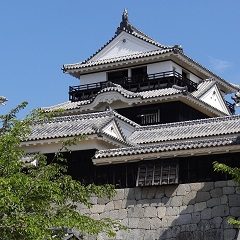
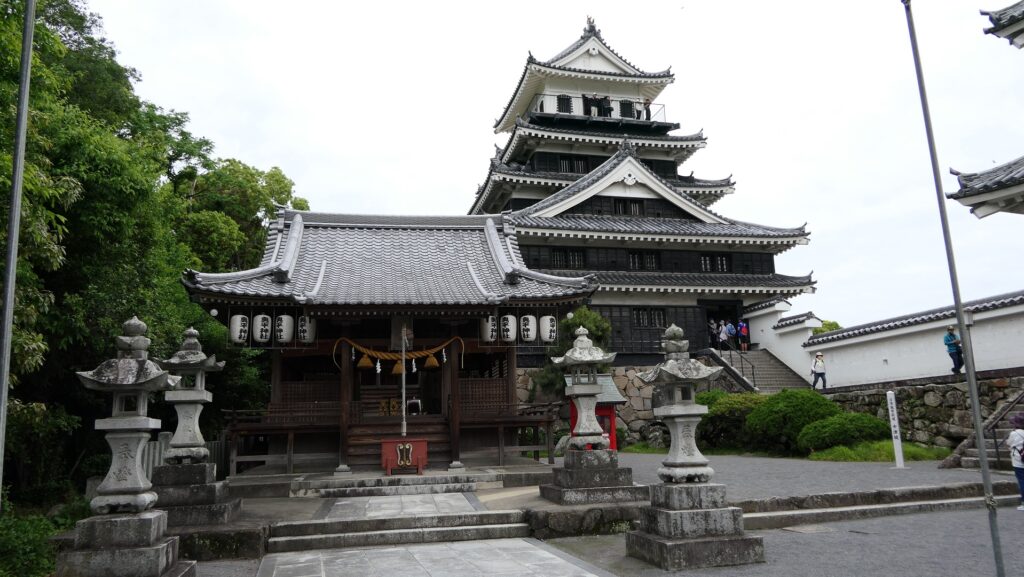
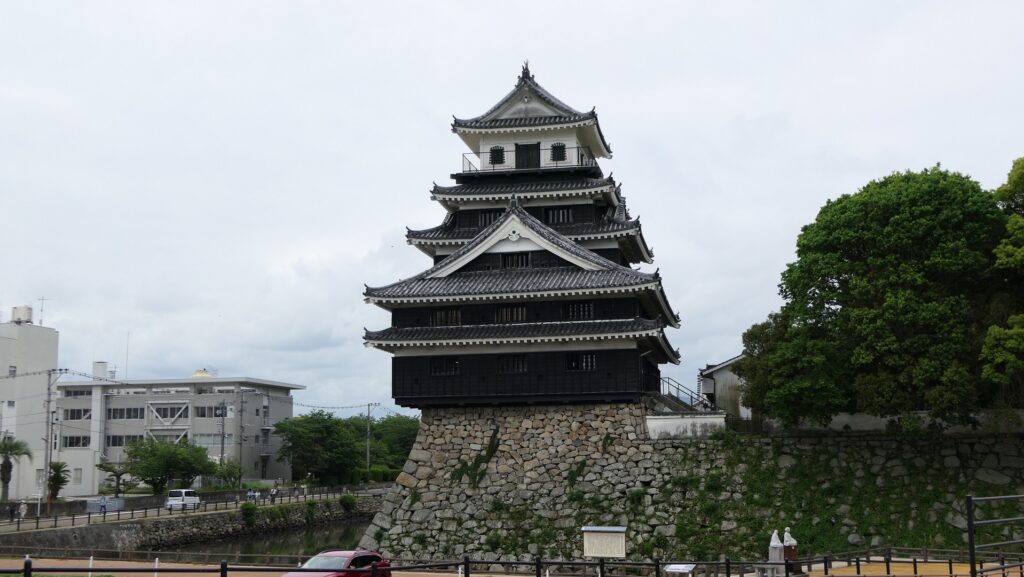
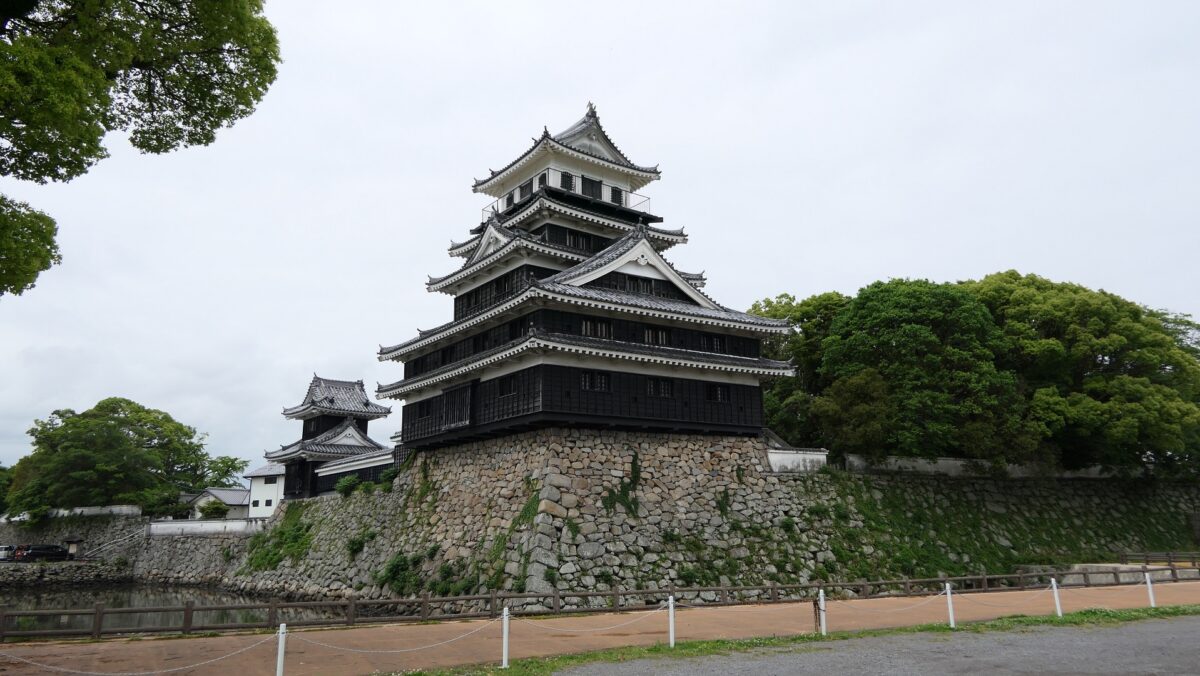
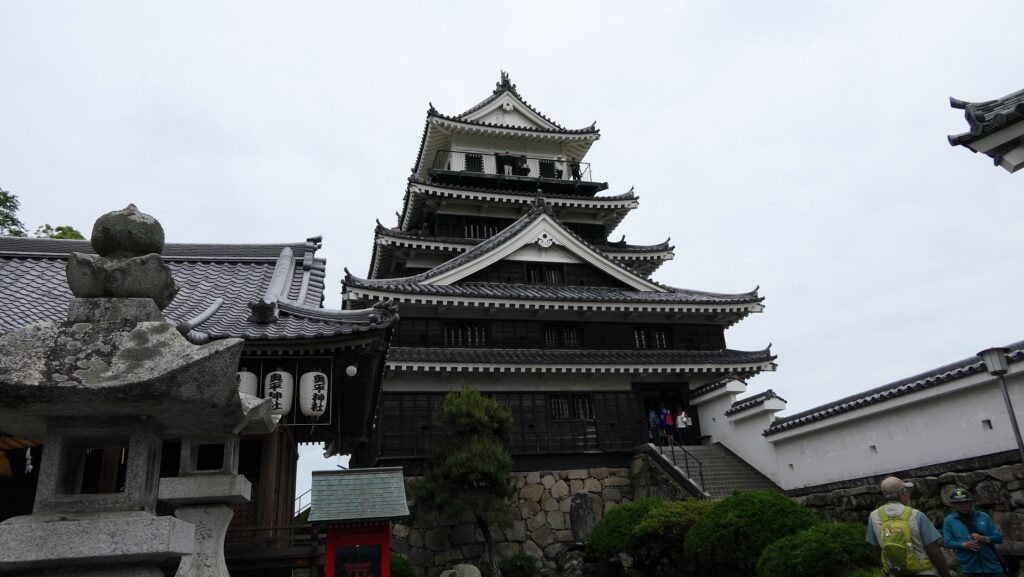
現在、中津城跡は「中津城公園」という観光地として整備されています。そのように言う理由は、城跡の本丸石垣の角に、大変よく目立つ五層の天守があるからです。しかし、これは模擬天守であり、元はオリジナルの他の櫓があった場所に建てられたものです。以前城主であった奥平家が経営していた会社が、観光振興のために建設したのです。その経緯によりこの天守では、奥平家歴史資料館として奥平氏が支配した中津藩の歴史を主に展示しています。しかし赤字運営のために、奥平家は天守を他の民間会社に売却しました。現在の中津城は、唯一の民間経営の城とされていて、現地では民間企業らしくお客を呼び込む従業員の姿が見られるかもしれません。もし、城の創立者である黒田孝高のことをより知りたければ、天守の手前にあって、中津市が運営している黒田官兵衛資料館に行ってみてはいかがでしょう。

中津城の模擬天守
模擬天守の入口側
天守(奥平家歴史資料館)の中の様子
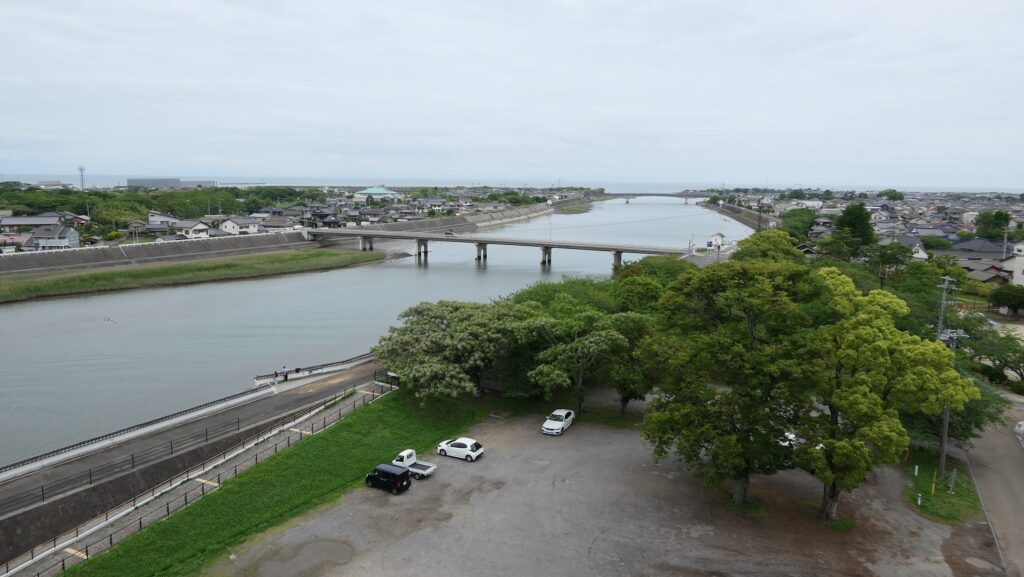
展望台から見える中津川の眺め
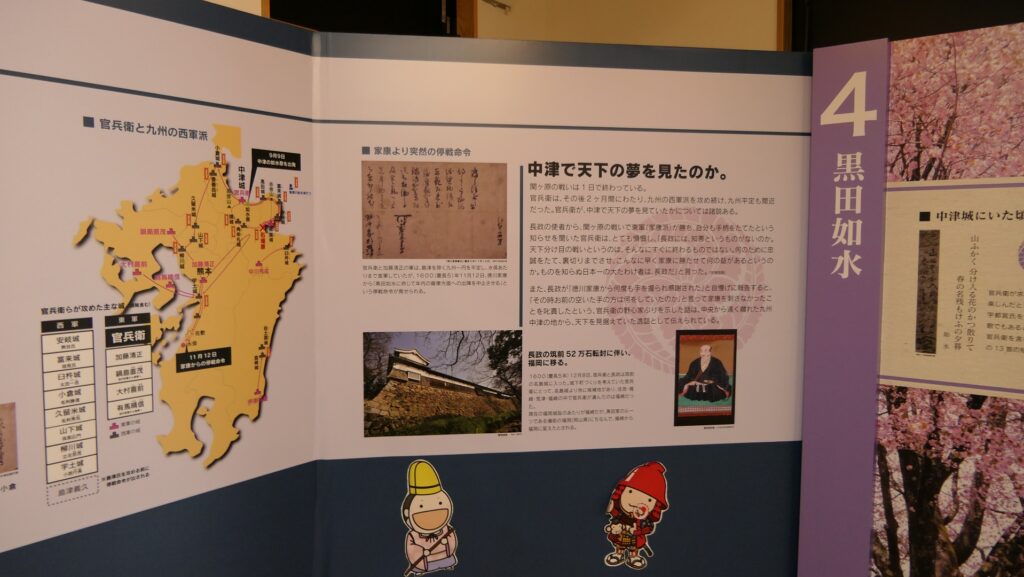
黒田官兵衛資料館の展示の一部

黒田時代と細川時代の石垣が共存

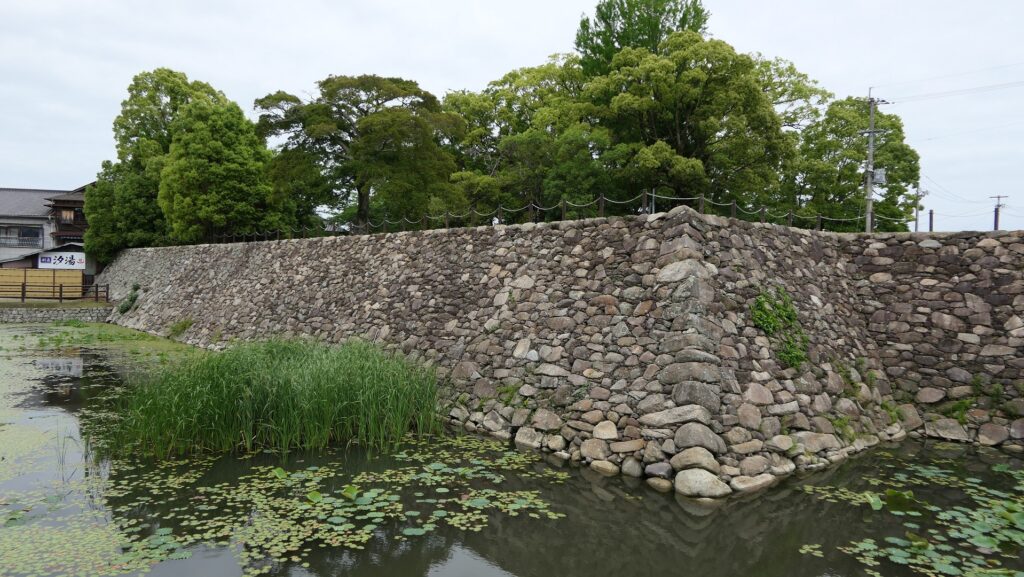
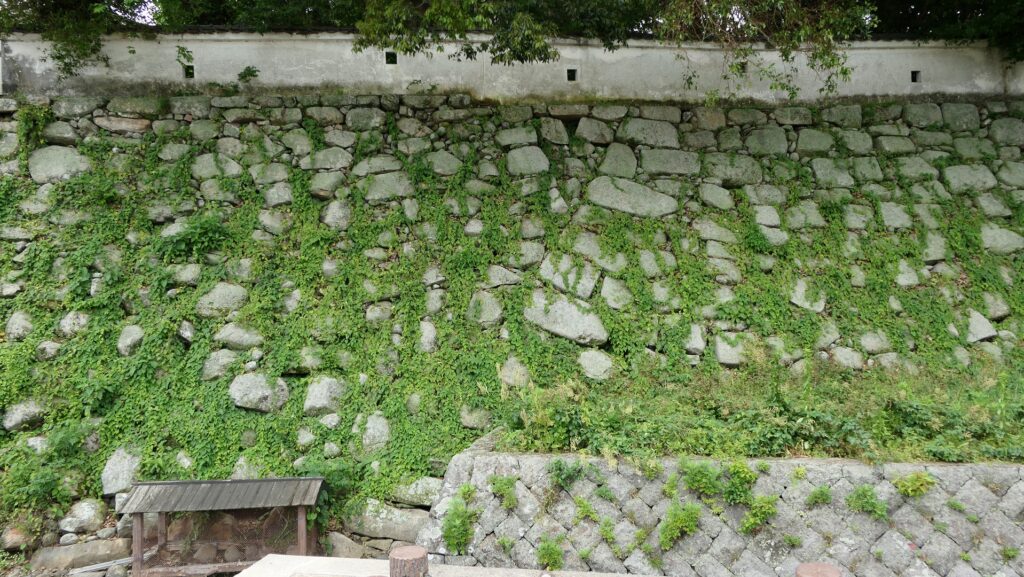
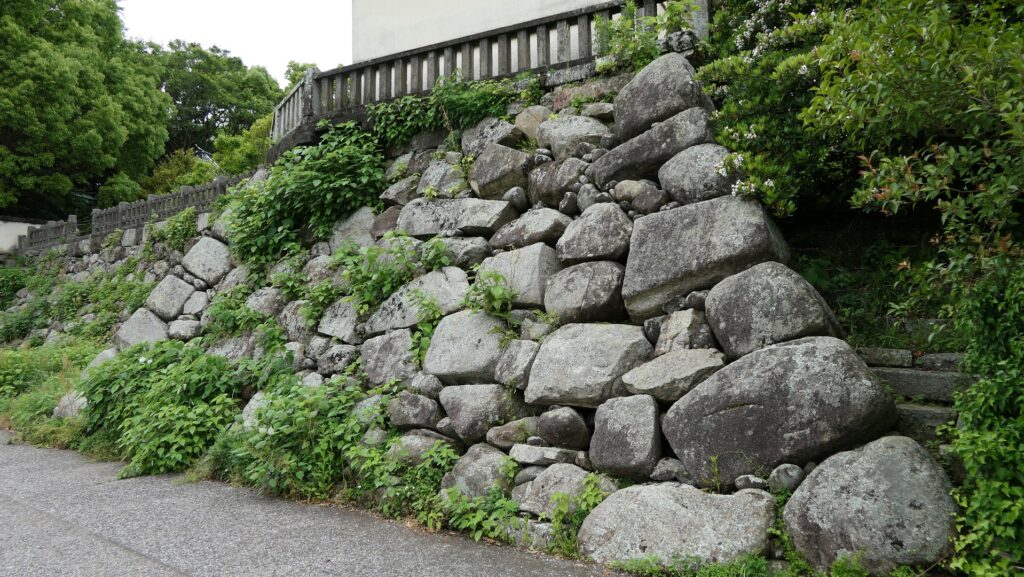
城に関する歴史的遺物は、石垣や水堀など、主に本丸にあります。本丸北側の石垣を見てみると、石垣は右側の古い部分と左側の新しい部分に分かれています。古い部分のかつては角であった継ぎ目がはっきりと見て取れます。一般的には新しい石垣はより加工された石を使います。ところが、中津城の石垣の場合は真逆のように見えるのです。左側の新しい石垣の石は自然石で、右側の古い石垣の石は前者よりずっと加工されているのです。その理由は、創始者の黒田孝高が新しい城の建設を急ぐために、近くにある古代山城の唐原山城(とばるさんじょう)の石を運んできて使ったからだそうです。

城周辺の航空写真

左側が細川時代の新しい石垣、右側が黒田時代の古い石垣
天守の石垣は細川時代のものか?

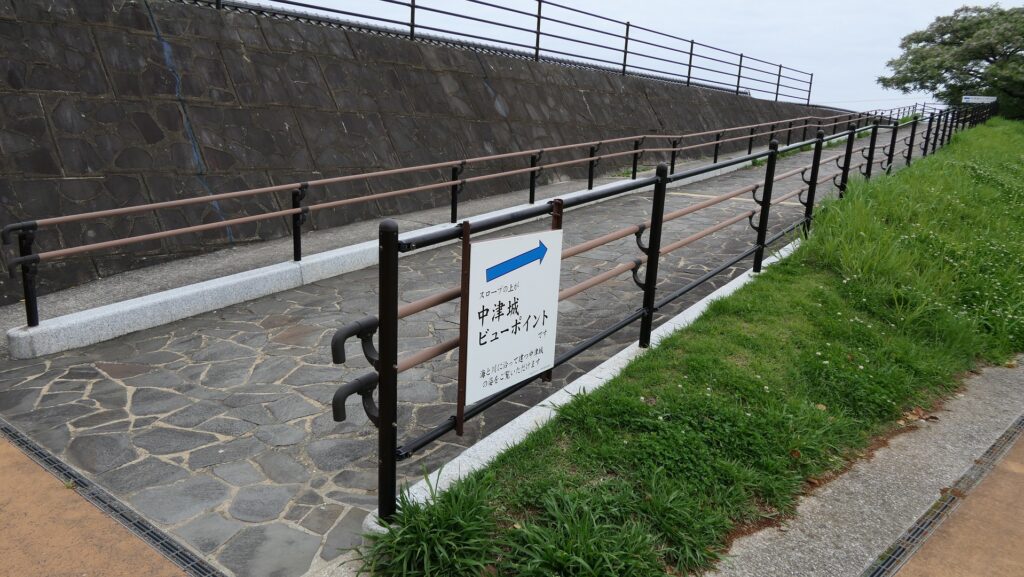
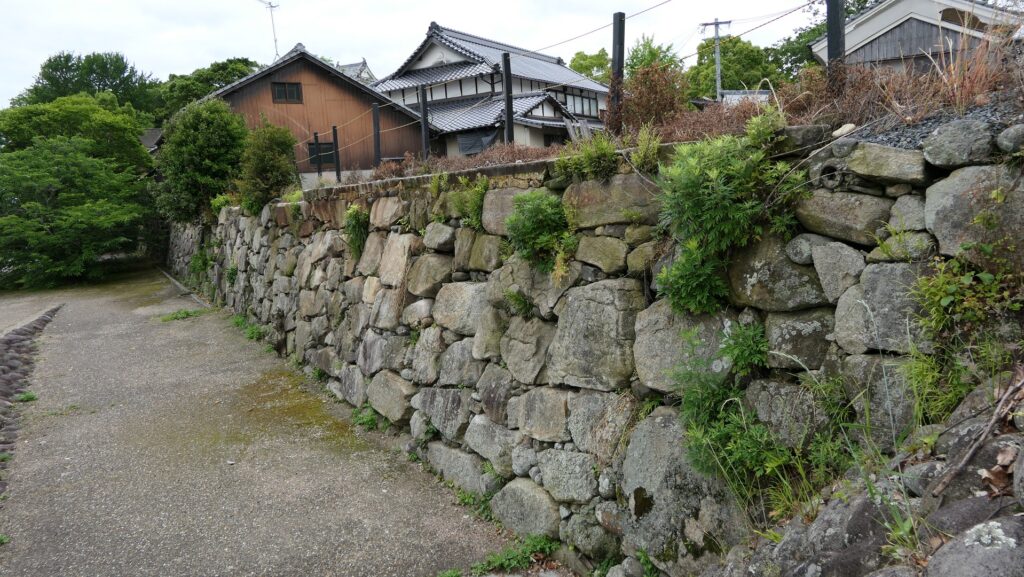
本丸は今でも中津川沿いに位置していますが、その間は遊歩道があるコンクリートの護岸壁となっています。川と城を一緒に眺めながら遊歩道を歩いてみるのもよいでしょう。古代山城にあった石を使って築かれた石垣が、川沿いに並んでいます。この石垣の上に建物を築くことで、川の方から見た城の見栄えが良くなるようにしていたと思われます。しかし今ではその石垣の上に現代の住居や神社の建物があって、面白いコントラストとなっています。本丸の端には水門の石垣があって、過去には城と川が直接つながっていたことがわかります。

川沿いの遊歩道へ
川沿いに残る黒田時代の石垣
この石垣台の上に天守のような大櫓があったかもしれないようです
石垣の一部には現代住宅が乗っかっています
水門跡の石垣 (licensed by Mukai via Wikimedia Commons)

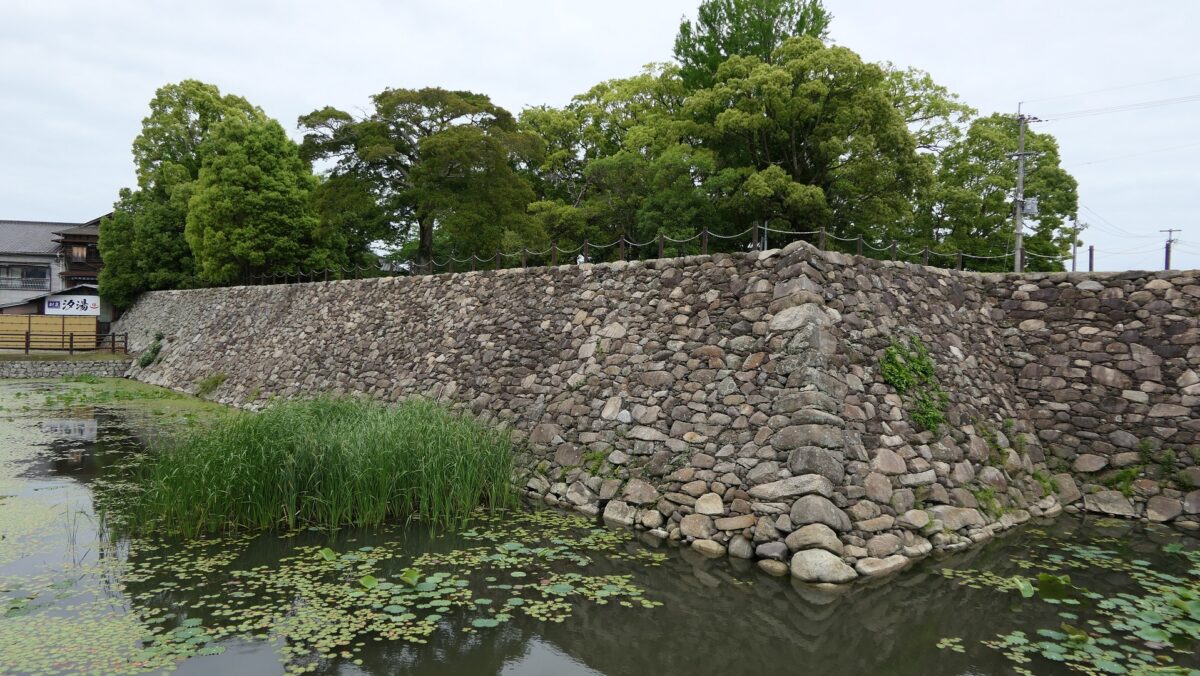
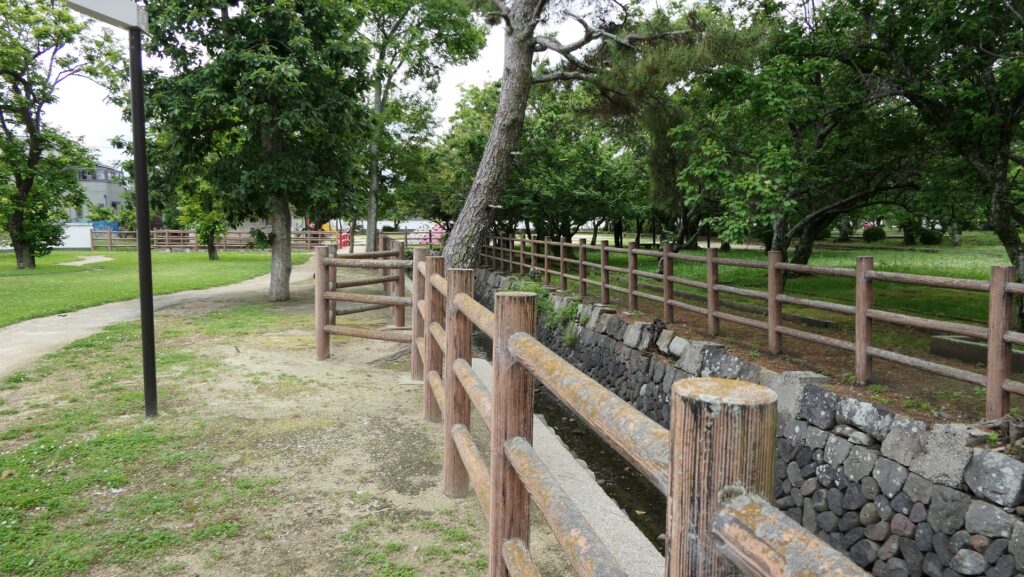
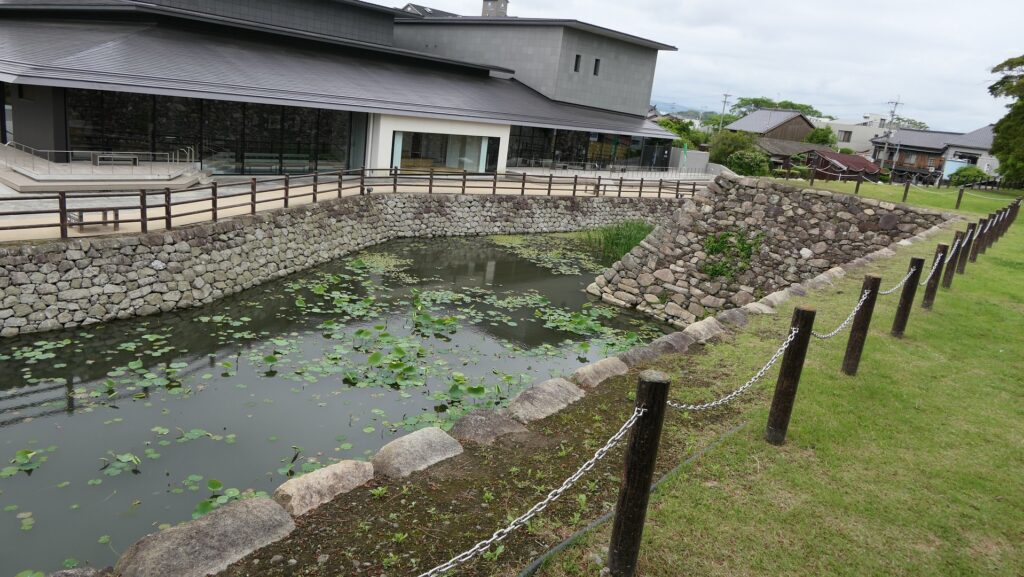
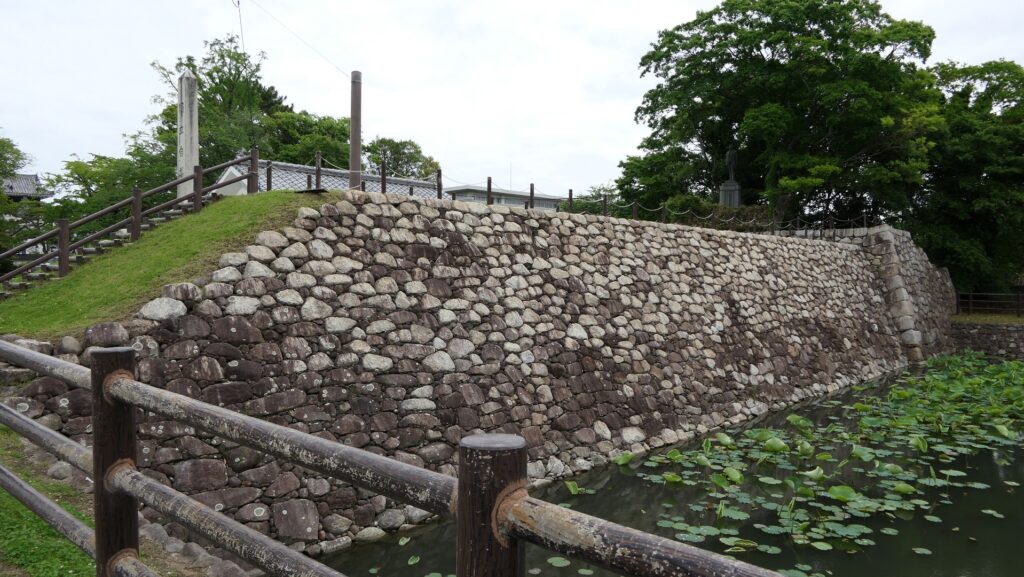
川の反対側には、孝高が最初に築いた別のタイプの石垣があります。この石垣は長く伸びていますが、そんなに高くはありませんし、細川氏の時代に使われていたものより小さな自然石を使って築かれています。最近になって手前にある水堀と一緒に修繕されて、その周りを歩いてみることができます。

川と反対側にある石垣と堀
向かい側には遊歩道と中津市歴史博物館があります

本丸の新旧正門

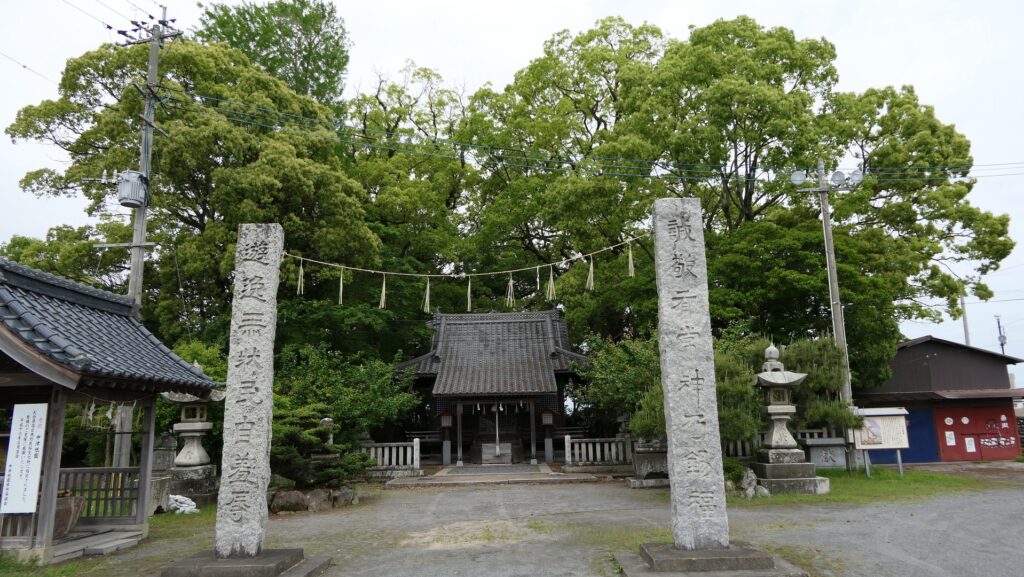
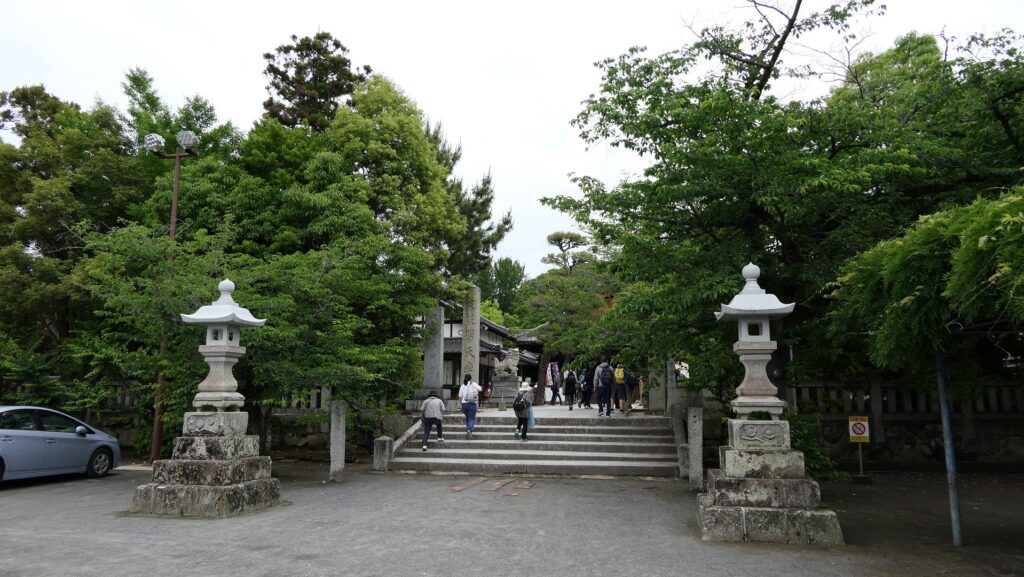
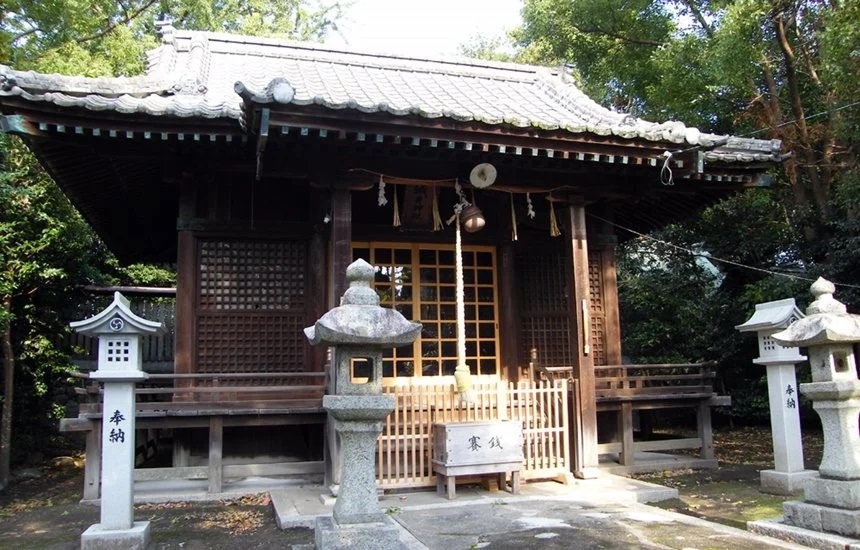
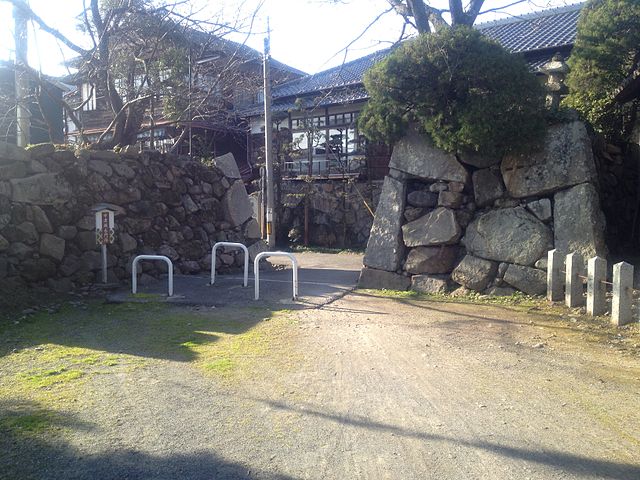
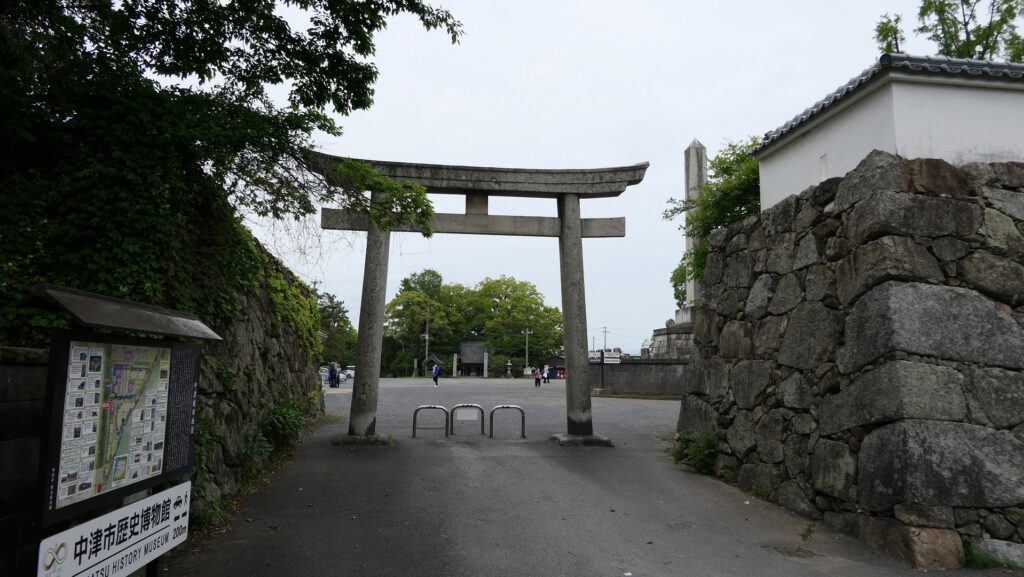
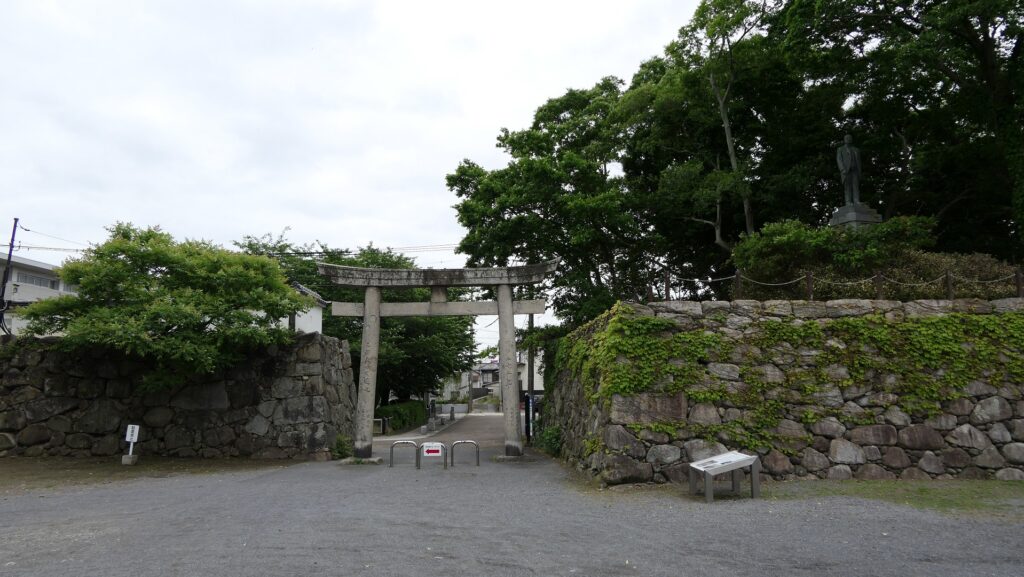
更には、神社の鳥居がある本丸の正面入口では、その石垣の断面を見ることができます。それは、この入口が明治時代にこの石垣を壊した場所に作られたからで、鳥居は昭和になってから建てられました。

本丸の正面入口
石垣の断面(内部に見える石垣が黒田時代のもので、細川時代に積み増しているようです)
入口のもう片側の石垣は上半分が撤去されていましたが復元されています

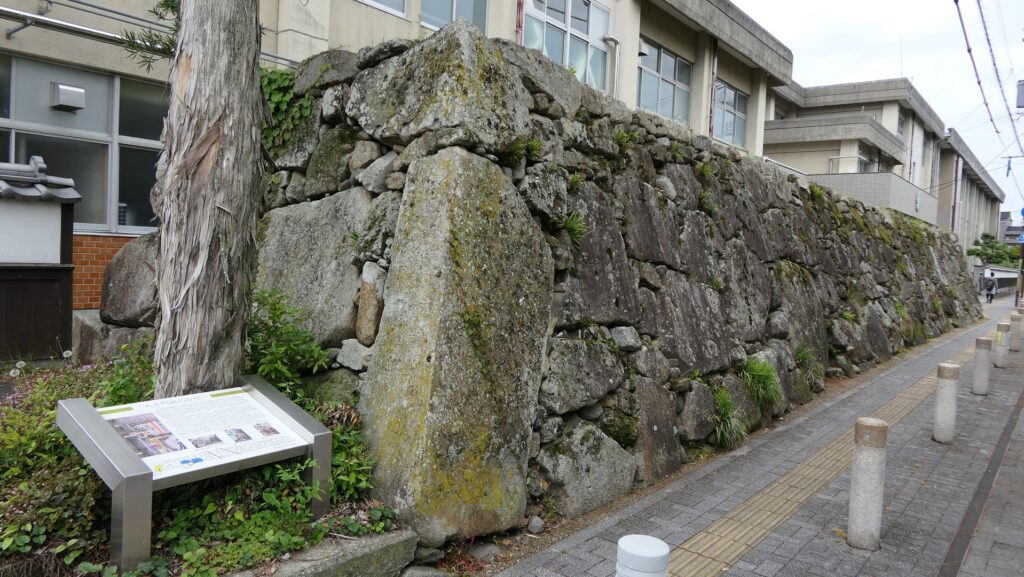
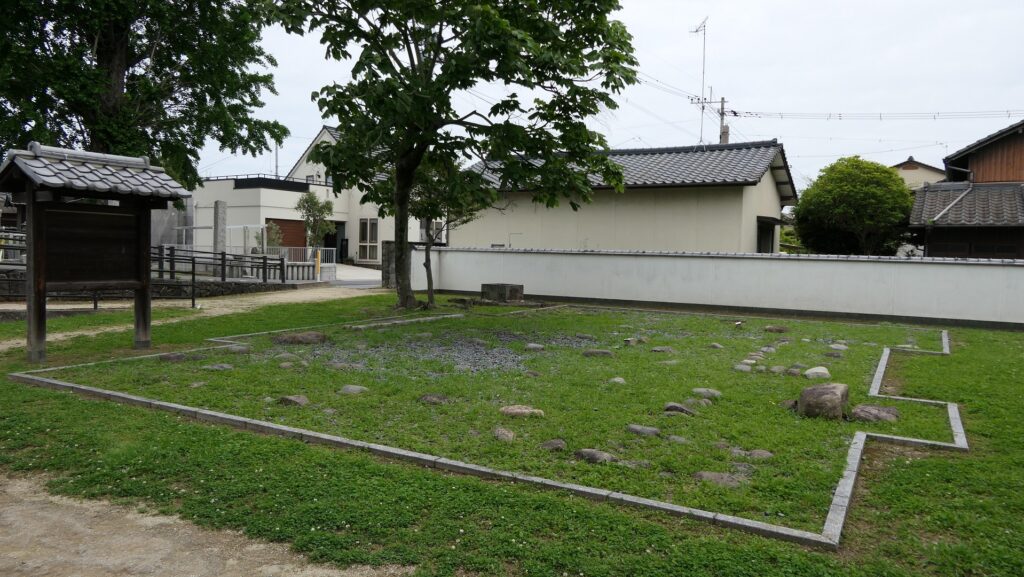
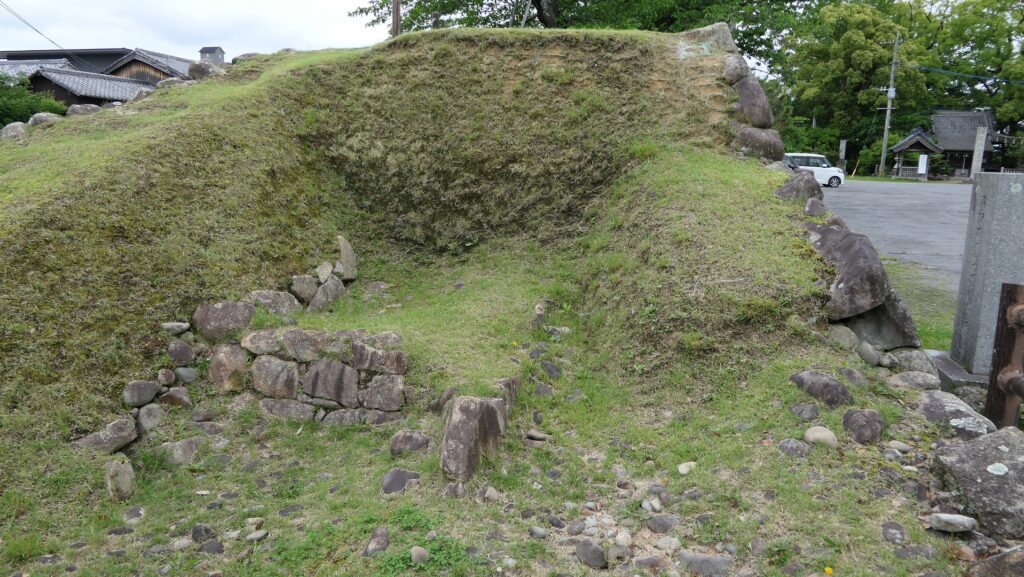
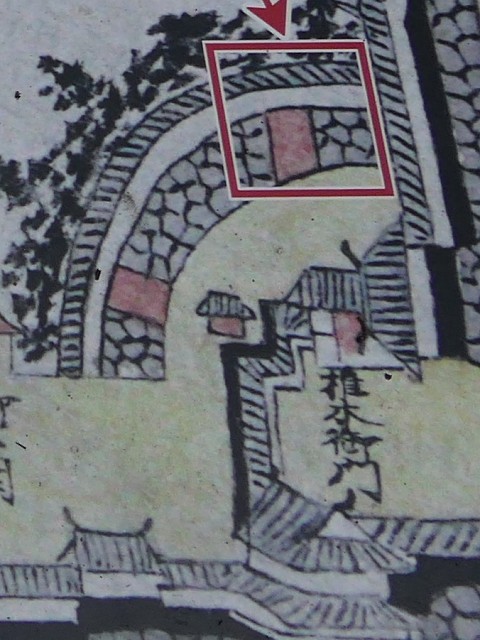
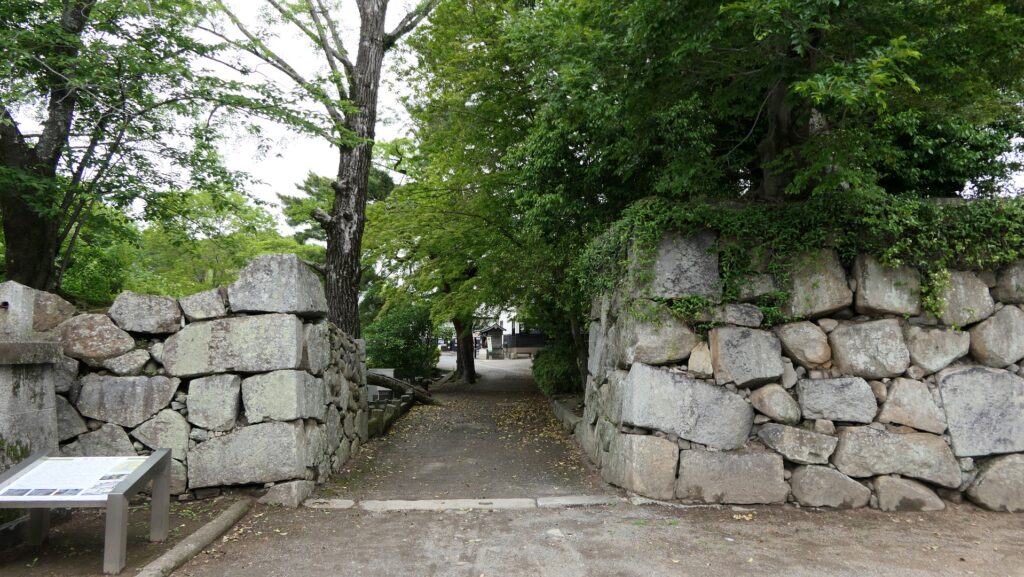
この現在の正面入口の近くには、オリジナルの本丸正門である椎木門(しいきもん)跡があります。この場所は今も石垣に囲まれています。この門の背後には防衛のために別の石垣で囲まれた扇形のスペースがあったのですが、今では一部しか残っていません。

椎木門跡
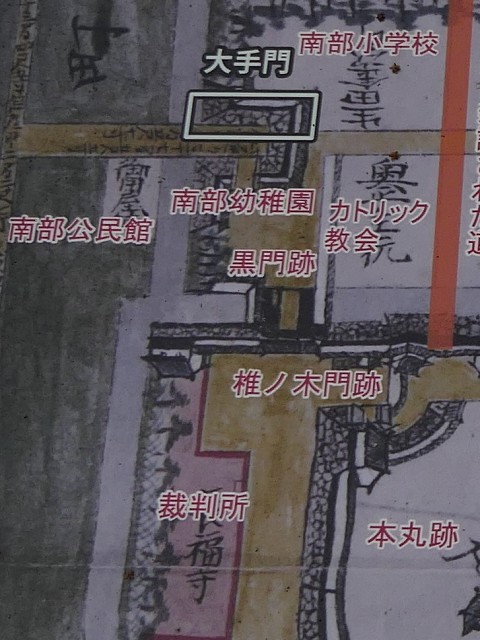
扇形の石垣のうち残存部分
かつてはこのようになっていました、現地説明版より(赤枠内が残存部分)
今は門の内側は開けています

「中津城その3」に続きます。
「中津城その1」に戻ります。

191.Nakatsu Castle Part1

Yoshitaka Kuroda, who built Nakatsu Castle, is known to many Japanese people as the military strategist of Hideyoshi Toyotomi. However, he was actually a working general and a secretary under Hideyoshi.

Location and History

Yoshitaka works hard for Unification of Japan with Hideyoshi Toyotomi

Nakatsu Castle was located in Buzen Province which is equivalent to the eastern part of Fukuoka Prefecture and the northwestern part of Oita Prefecture. The province was also the northernmost part of Kyushu Island which was connected with the Main Island of Japan through Kanmon Straits. The castle was built on a delta in the estuary of Nakatsu River flowing into Buzen Sea, in the central part of the province, by Yoshitaka Kuroda (he is more often known as Kanbe Kuroda or Josui Kuroda after he retired). He is known to many Japanese people as Gunshi or the military strategist of Hideyoshi Toyotomi who was the ruler of Japan in the end of the 16th Century. However, the degree was given by later people like historians, critics, and novelists, he was actually a working general and a secretary under Hideyoshi.

The range of Buzen Province and the location of the castle

The portrait of Yoshitaka Kuroda, owned by Sofukuji Temple (licensed under Public Domain via Wikimedia Commons)

Yoshitaka was originally a senior vassal of a local lord, the Kodera Clan in Harima Province (now the southern part of Hyogo Province). When Hideyoshi invaded the Chugoku Region, which included the province, as a general under Nobunaga Oda, Yoshitaka supported Hideyoshi by providing his own Himeji Castle to Hideyoshi. After that, he did his best to help complete the unification of Japan by Hideyoshi. A famous story about him in the early stage is that he was confined for about one and a half years in Arioka Castle when he visited to persuade Murashige Araki who had decided to be against Nobunaga. While Hideyoshi had become the ruler after Nobunaga was killed by Mitsuhide Akechi, Yoshitaka worked at Hideyoshi’s beck and call. For example, he negotiated with the Mori Clan in the Chugoku Region to divide territories into each other without battles. When the invasion of Kyushu happened in 1587, Yoshitaka set the stage for Hideyoshi’s arrival by fighting against local lords or making them surrender.
The remaining stone walls of Himeji Castle Yoshitaka built
The Portrait of Hideyoshi Toyotomi, attributed to Mitsunobu Kano, owned by Kodaiji Temple (licensed under Public Domain via Wikimedia Commons)

Yoshitaka builds Castle in his territory in Bungo Province

After the invasion, Yoshitaka was given part of Buzen Province by Hideyoshi. His territory was small for his contribution so far, because, it has been said it was because Hideyoshi feared Yoshitaka’s potential power. However, some suggest that it could have been because Yoshitaka was a Christian which Hideyoshi had banned from spreading just after the invasion. Yoshitaka at first lived in Umagadake Castle, one of mountain castles which were common then, but launched the construction of Nakatsu Castle in 1588, which would be considered one of the Three Great Sea Castles in Japan, together with Imabari and Takamatsu Castles. Its location was decided by Yoshitaka for the convenience of the government and transportation, but probably also instructed by Hideyoshi. Hideyoshi’s other retainers also built sea castles in their new territories in the Kyushu Region during the same period, such as Kokura, Oita-Funai, and Yatsushiro Castles, which were used for the preparation for the invasion of Korea planned by Hideyoshi as well.
The remaining stone walls of Nakatsu Castle the Kuroda Clan built
Imabari Castle
Takamatsu Castle
The ruins of Yatsushiro Castle

Nakatsu Castle was also one of the earliest modernized castles with turrets and stone walls in the region. The Main Enclosure was in the center but along the estuary and had a gate directly to it, which is a rare case in Japanese castles. The Second Enclosure was in the front of the sea and the Third Enclosure was in the back. All of them were on the delta which looked like a folding fan. The number of the turrets was 22 at its peak, but the Main Tower was not built for some reason.

The old map of Nakatsu Castle, from the signboard at the site, there are the Second, Main, and Third Enclosures from above to the bottom

Did Yoshitaka want to be Ruler?

The highlight of Yoshitaka’s life came when the decisive battle happened in 1600 between the East Quad led by Ieyasu Tokugawa and the West Quad by Mitsunari Ishida after Hideyoshi died. Yoshitaka joined the East Squad with his son Nagamasa, who fought with Ieyasu against Mitsunari in the Battle of Sekigawara in central Japan. Yoshitaka himself stayed at Nakatsu Castle, and after he left, he captured castles in Kyushu, which other lords in the West Squad owned, one by one. The Battle of Sekigahara, where Ieyasu defeated Mitsunari, ended in only one day on the 15th of September. However, Yoshitaka continued to invade the region for about two more months until Ieyasu stopped him. Yoshitaka had already captured all the Kyushu Region with his allies except for the territory of the Shimazu Clan in southern Kyushu. This made people later speculate that Yoshitaka would have liked to be the ruler, but only he knew the answer. The Kuroda Clan was promoted to be the lord of much larger territory of Fukuoka Domain including Fukuoka Castle before Yoshitaka died in 1604.

The statues of Yoshitaka and his wife at the current Nakatsu Castle
The Portrait of Nagamasa Kuroda, the first lord of Fukuoka Domain, owned by Fukuoka City Museum (licensed under Public Domain via Wikimedia Commons)
The ruins of Fukuoka Castle

Castle is followed by Nakatsu Domain which promotes learning Western sciences

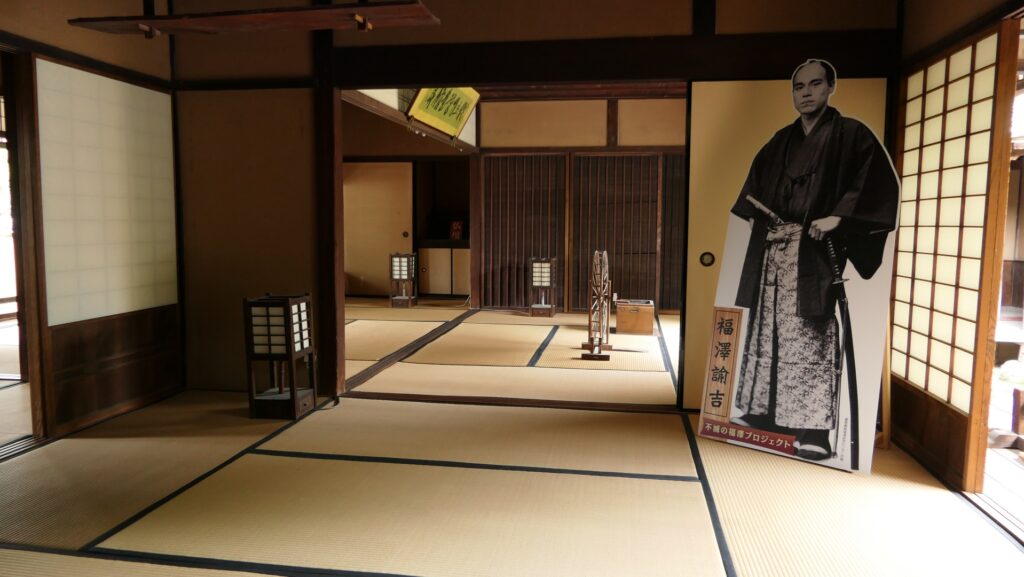
Nakatsu Castle was followed by the Hosokawa Clan as their branch castle. The castle survived even after the Law of One Castle per Province, issued by the Tokugawa Shogunate in 1615. It is said this was because Sansai Hosokawa, the father of the lord used it as his retreat. The castle was finally governed by the Okudaira Clan as the Nakatsu Domain until the end of the Edo Period. A remarkable event during the period was that the lords promoted learning about the Western sciences through Dutch language, called Rangaku. Japanese people were usually not allowed to learn them because trading the Western items and communicating with the Western people were strictly limited. Only the trading with Dutch at the Dejima trading house in Nagasaki and visiting Edo by the head of the house every four year were allowed. However, the third lord, Masashika Okudaira started to promote it after seeing his mother’s broken bones were mended by Western medicine. Ryotaku Maeno, who first translated a book of Western medicine with his colleagues such as Genpaku Sugita, was the domain’s doctor. Yukichi Fukuzawa, who was a great philosopher and educator in the Meiji Era, came from lower class samurais of the domain but started in life by learning Rangaku.

The portrait of Sansai Hosokawa, owned by Eisei Bunko Museum (licensed under Public Domain via Wikimedia Commons)
The portrait of Masashika Okudaira, owned by Jishoji Temple (licensed under Public Domain via Wikimedia Commons)
The portrait of Ryotaku Maeno, from the book “Ika-Sentetsu Partraits” in 1936 (licensed under Public Domain via Wikimedia Commons)
Yukichi Fukuzawa, around 1891 (licensed under Public Domain via Wikimedia Commons)

To be continued in “Nakatsu Castle Part2”

191.中津城 その1

中津城を築いた黒田孝高(官兵衛、如水)には豊臣秀吉の軍師であったという印象があるでしょう。しかし実際には秀吉の下、現場で働く武将で、かつ秀吉の秘書官のような存在であったようです。

立地と歴史

秀吉とともに天下統一を推進

中津城は、現在の福岡県東部と大分県の北西部を合わせた地域に相当する豊前国にありました。豊前国はまた、九州の最北端に当たり、関門海峡を通じて日本の本州とつながっていました。中津城は、豊前国中央部の豊前海に流れる中津川河口のデルタ地帯に、黒田孝高(くろだよしたか)によって築かれました(彼は通称の黒田官兵衛か、隠居後の黒田如水の名前の方がよく知られています)。孝高は多くの日本人とっては、16世紀終盤に天下人となった豊臣秀吉の軍師であったという印象があるでしょう。しかしながら、この称号は、歴史家、評論家、小説家など後の人たちによって与えられたものであって、孝高自身は実際には秀吉の下、現場で働く武将で、かつ秀吉の秘書官のような存在であったようです。

豊前国の範囲と城の位置

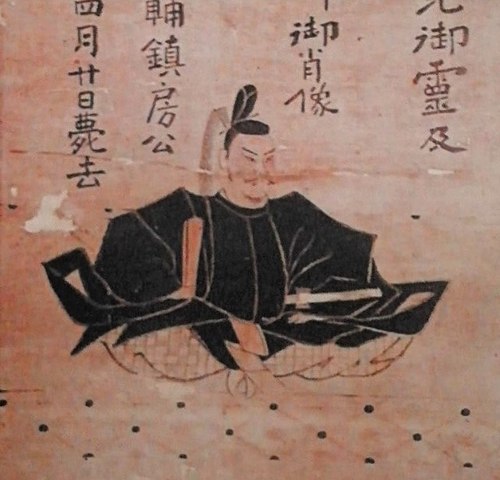
黒田孝高肖像画、崇福寺蔵 (licensed under Public Domain via Wikimedia Commons)

孝高はもともと、播磨国(現在の兵庫県南部)の国人領主であった小寺氏の重臣でした。秀吉がまだ織田信長の部将だったころ、播磨国を含む中国地方に侵攻したときに、孝高は自身の居城である姫路城を秀吉に差し出すことで、秀吉を支えたのです。その後、秀吉による天下統一事業に全身全霊をもって尽くしました。孝高の初期時代で有名なエピソードとしては、信長に背いた荒木村重に対して居城の有岡城に説得に出向いたところ、囚われて約1年半もの間幽閉されたというものがあります。明智光秀により信長が殺され、秀吉が天下人となっていく間、孝高は秀吉の手足となって働きました。例えば、中国地方の毛利氏とは、戦わずに双方の境界線を決めるための交渉を行いました。また、1587年に九州侵攻を行う際には秀吉が到着する前に、地元領主と戦うか降伏させるかして、お膳立てを行ったりしました。

姫路城に残る孝高の時代のものとされる石垣
豊臣秀吉肖像画、加納光信筆、高台寺蔵 (licensed under Public Domain via Wikimedia Commons)

領地の豊前国に中津城を築城

九州侵攻の後は、孝高は秀吉によって豊前国の一部を領地として与えられました。その領地はそれまでの孝高の貢献に比べると小さく、それは秀吉が孝高の秘めたる力(天下を狙える力)を恐れたからだと言われてきました。しかし実際には、孝高がクリスチャンであり、侵攻の直後にキリスト教の布教を禁止した秀吉にとって心証が悪かったからだと指摘する人もいます。孝高は当初、当時一般的であった山城の一つである馬ヶ岳(うまがだけ)城を居城としていましたが、1588年に中津城の建設を開始しました。そしてその城は、今治城高松城と並んで、日本三大海城と言われるようになります。城の立地は、統治や交通の利便性から、孝高によって決められたのですが、秀吉の示唆も恐らくあったでしょう。秀吉の他の部将たちも同時期に、九州地方に得た新しい領地に、小倉城、大分府内城八代城などの海城を築いているのです。これらの城は、秀吉が計画していた朝鮮侵攻(当時は唐入りと称されました)の準備のためにも使われました。

中津城に残る黒田氏の時代の石垣
今治城
高松城
八代城跡

中津城は、九州地方ではもっとも初期に、櫓や石垣などで近代化された城の一つでした。本丸は城の中心にありましたが、河口沿いにあって川に直接通じる門がありました。日本の城では珍しい事例です。二の丸は海に向かって手前側にあり、三の丸は奥の方にありました。これらの曲輪群はデルタ上にまとまっていたので、扇の形のように見えました。最盛期には櫓が22基もありましたが。何らかの理由で天守は築かれませんでした(初期の頃の「天守の番衆」を定めた文書が残っていて、当初には天守があった可能性がありますが、大櫓のような建物を天守と称していたのかもしれません)。

中津城旧地図、現地説明版より、上から二の丸、本丸、三の丸の順に並んでいます

中津城から天下を狙ったのか

孝高の人生のクライマックスが、秀吉の死後1600年に起こった、徳川家康率いる東軍と石田三成率いる西軍との天下分け目の戦いのときに訪れました。中日本での関ヶ原の戦いで三成と直接戦った息子の長政とともに、孝高は東軍に加わっていました。孝高自身は中津城に留まり、そこから出陣して西軍に属していた大名たちの城を一つずつ落としていきました。家康が三成を倒した関ヶ原の戦いは9月15日の一日で決着がついてしまったのですが、ところが、孝高は家康が止めるまでの約2ヶ月もの間、九州地方を攻め続けました。孝高は同盟者とともに、南九州の島津氏の領地以外、九州地方の全てを制覇したのです。このことで、後の人たちは孝高には天下人になる野望があったのではないかと推測するのですが、その答えは本人しかわからないでしょう。黒田氏は戦功により、もっと大きな領地を得て福岡城を含む福岡藩の方に移っていきました。その後、孝高は1604年に亡くなりました。

中津城にある黒田孝高夫妻の石像
福岡藩初代藩主、黒田長政肖像画、福岡市博物館蔵 (licensed under Public Domain via Wikimedia Commons)
福岡城跡

城は中津藩として継続し、藩内には蘭学が普及

中津城は、細川氏の支城として引き継がれました。城は1615年に徳川幕府が発布した一国一城令の後でも生き残りました。これは、この城が細川氏当主の父親である細川三斎の隠居所として使われたからだと言われています。そして最終的には奥平氏が中津藩として江戸時代末期までこの城を支配しました。その時代の間で特筆すべき出来事といえば、「蘭学」と呼ばれた、オランダ語の書物を通じた西洋の文物の習得を藩主が奨励したことでしょう。当時の日本人は通常、西洋の文物に接することを厳しく制限されていました。長崎出島のオランダ商館における貿易と、原則4年に1回の商館長の江戸訪問のみが許されていました。しかし中津藩においては、3代目の藩主の奥平昌鹿(おくだいらまさしか)が、彼の母親の骨折が西洋医学により治療されたのを見てから、蘭学の普及を始めました。西洋の医学書を日本で最初に同僚の杉田玄白とともに翻訳した前野良沢は、中津藩の藩医でした。明治時代の著名な思想家で教育者の福沢諭吉は、中津藩の下級藩士でした。彼は藩の門閥制度にかなり反感を持っていましたが、蘭学を学ぶことが世に出るきっかけとなったのです。

細川三斎(忠興)肖像画、永青文庫蔵 (licensed under Public Domain via Wikimedia Commons)
細川三斎(忠興)肖像画、自性寺蔵 (licensed under Public Domain via Wikimedia Commons)
前野良沢肖像画、藤浪剛一「医家先哲肖像集、1936年」より (licensed under Public Domain via Wikimedia Commons)
福沢諭吉、1891年頃 (licensed under Public Domain via Wikimedia Commons)

「中津城その2」に続きます。

error: Content is protected !!