Noshima has become a deserted island. You can’t go there by yourself because of the state of the island. If you want to go there, you need to book a boat tour from Miyakubo fishing port on the weekends.
Features
Island looking like Unsinkable Warship
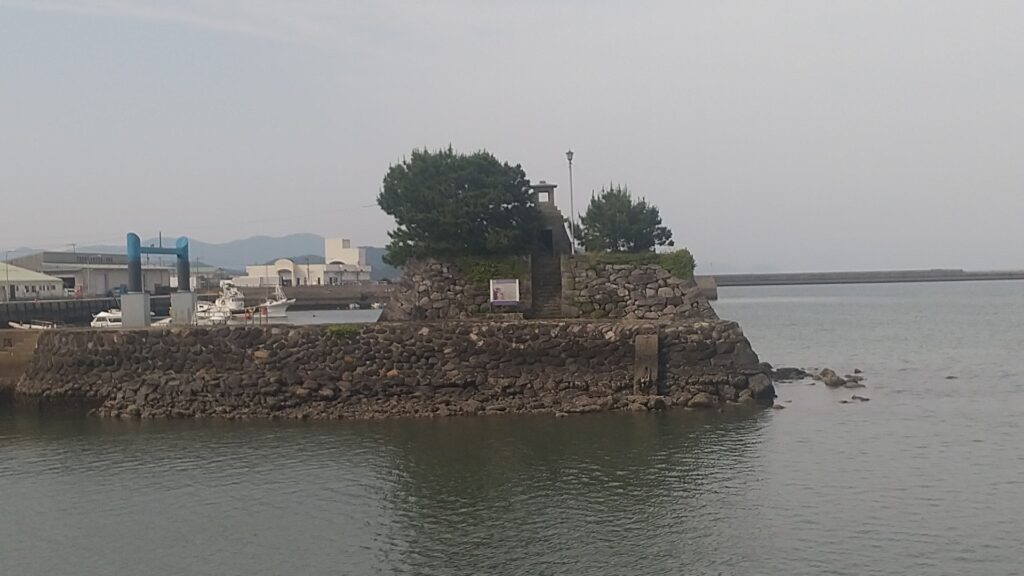
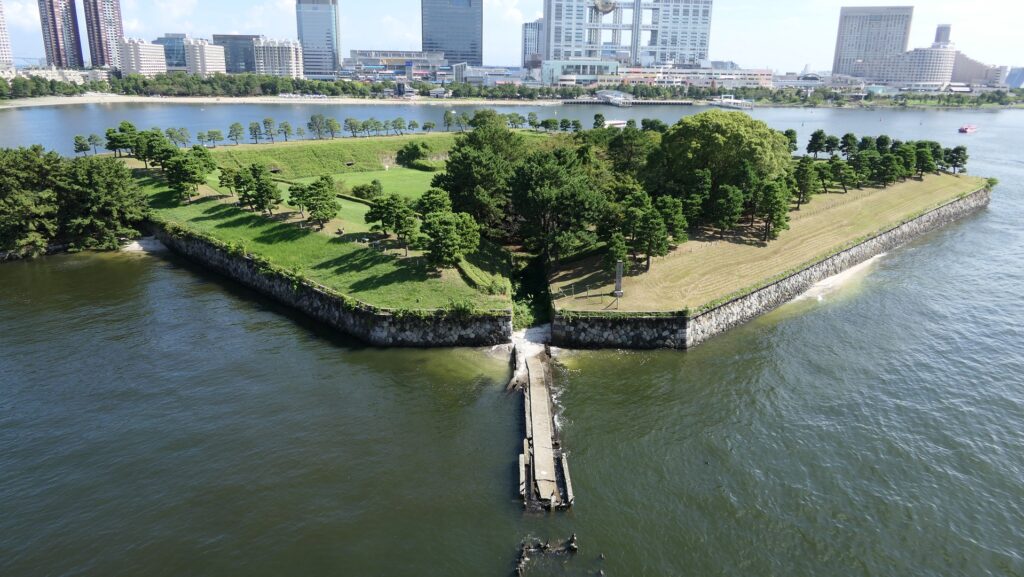
Today, Noshima unfortunately has become a deserted island. If you see Noshima from other places such as the seaside of Oshima Island and Mt. Kareiyama observation park on the island, Noshima looks like an unsinkable warship. This is partially because Noshima Island has been developed by the officials to maintain its original conditions of its castle ruins as they are a National Historic Site. That’s why the ruins don’t have trees and bushes, so that you can see the shapes of its enclosures vividly.
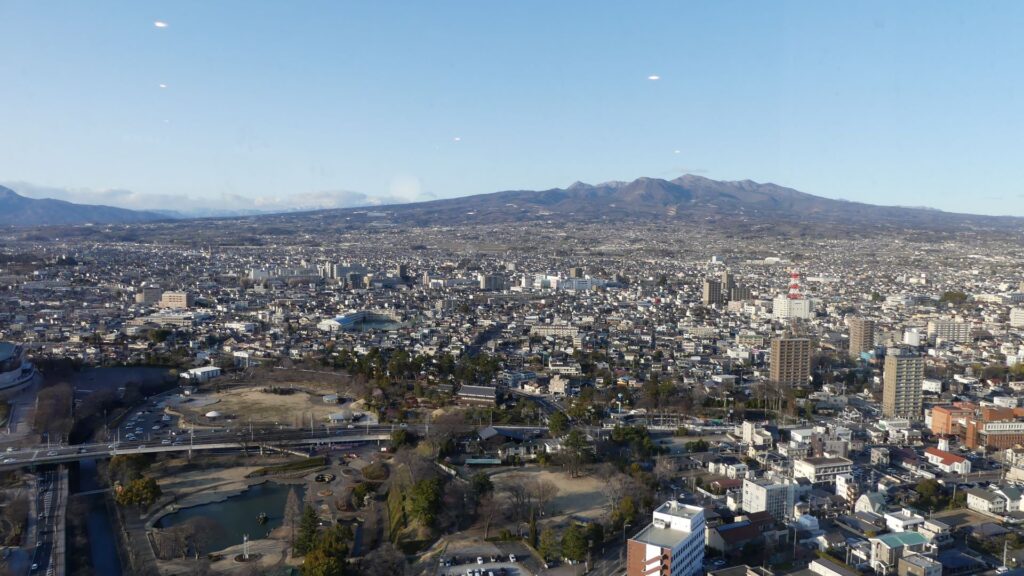
The observation platform of Kareiyama MountainNoshima Island, seen from the platform
Going to Castle Ruins by attending Boat Tour
Despite the development, you can’t go there by yourself because of the state of the island. If you want to go there, you need to book a boat tour from Miyakubo fishing port on the weekends. (However, the tour could be canceled due to the lack of participants, if it’s less than 10.) If you board on the boat, the captain will operate it smoothly like a sailor of the Murakami Navies.
The Miyakubo fishing portBoarding the boatGoing to the castle ruins
The boat will approach around the island in a few minutes. There is another smaller island called Taizaki-jima, like a satellite island of Noshima. It was said that both islands were once connected by a suspension bridge. Taizaki Island still has a small shrine on it, but visitors usually can’t go there because there is no bridge today. In addition, the sea between them is very dangerous because it is too shallow for any ships to pass during low tide.
The castle ruins are coming into viewTaizaki IslandThe shallows between the two islands
The aerial photo around the castle
Wild Tides around Island
Your boat will not reach Noshima Island so easily because the tides around it are usually wild. For example, the tide around its northeastern cape usually swirls, which causes ships to turn without professional operations.
The eastern side of Noshima IslandThe northeastern cape of the islandThe tide is swirling
Your boat will go around north of the island seeing its northern beach called Funadamari (meaning the boat pool). The beach has terraced design with a passage, so It was thought that the Navy members unloaded cargo there. There are also lots of postholes around the shore, called “Gansho(reef) Pit”, which were said to be used for mooring. However, it is still uncertain how the Navies used them because there are over 400 holes around the island including dangerous spots. You may see only a few of the holes as they were buried again for preservation or are covered from the tide.
The Funadamari boat poolYou can see some of the postholes
Going to Third Enclosure after landing
Your boat will eventually come alongside the pier at the southwestern beach, one of the few safe spots of the island. There are shore protections with restored stone mounds and the ruins of a repair shop nearby. That’s why this place was thought to be used as a maintenance yard.
Getting close to the pierThe beach is guarded by the shore protections
The tour guide will introduce you to the attractions of the castle ruins on the island after landing. The tour course is safe and well developed with paths and wooden steps for visitors though there are no castle buildings.
Following the guide
The castle ruins have several enclosures; the main enclosure on the top, surrounded by the second enclosure, the lower third enclosure, and the others on the island’s capes. The tour group will first go to the third enclosure from the beach. Stone foundations were found by the excavation team, which were thought to be used as houses or warehouses. Earthenware jars and valuable chinaware were excavated there, so they might have been stored as a type of fee from travelers’ ships or by the navies’ tradings.
The third enclosureLooking towards the main enclosure from the main enclosureThe third enclosure, seen from the Kareiyama Mountain
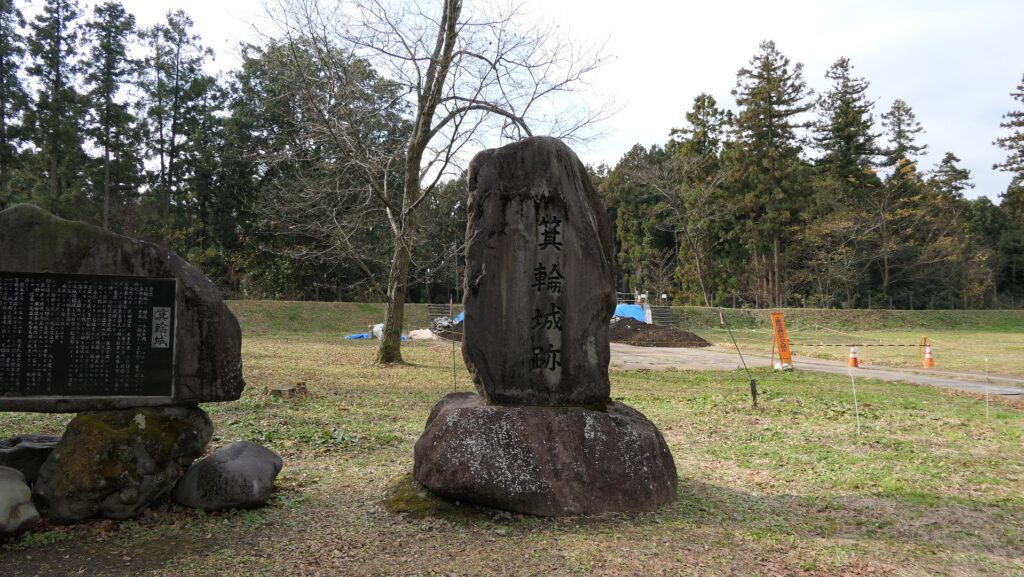
Noshima Castle was located on Noshima Island, which is in a narrow strait called Miyakubo-Seto, and part of the Geiyo Islands in the Seto Inland Sea. It was also built and operated by the Noshima-Murakami Clan, one of the three Murakami Navies which were very active around these islands.
Location and History
Murakami Navies, Excellent Guides of Seto Inland Sea
Noshima Castle was located on Noshima Island, which is in a narrow strait called Miyakubo-Seto, and part of the Geiyo Islands in the Seto Inland Sea. It was also built and operated by the Noshima-Murakami Clan, one of the three Murakami Navies which were very active around these islands. Before modern times, sailing along the coast was a major way of transportation. Seto Inland Sea was one of the most important sea routes, which connected central and western Japan. However, the Geiyo Islands area has lots of islands and narrow straits, which made the sea currents fast and difficult. For example, in Kurushima Strait, the direction and speed of the current frequently changes mainly due to the pull of the moon. Ships are still now required to follow instructions from the sea traffic center and its traffic signals.
The Kurushima Strait
The location of the castle
In the Middle Ages, boatmen and pilots, who sailed there, were required to have great competence instead. In addition, sailing alone could be very dangerous at that time as the police power of the central government was still weak. Each area was governed by a local lord or others, such as pirates. People at that time thought travelers should pay a toll when they passed others’ territories. The Murakami Navies, which were also some of the local lords, came out to guarantee safe travel to ships around the islands. The earliest record about them in 1349 says the Noshima-Murakami Clan guarded the sea around Yuge Island. Their system was roughly as follow: they escorted ships which had paid protection money (basically 10% of the value of the cargo), otherwise, they became pirates by chasing the ship using their boats called Kobayabune (meaning “small fast boat”).
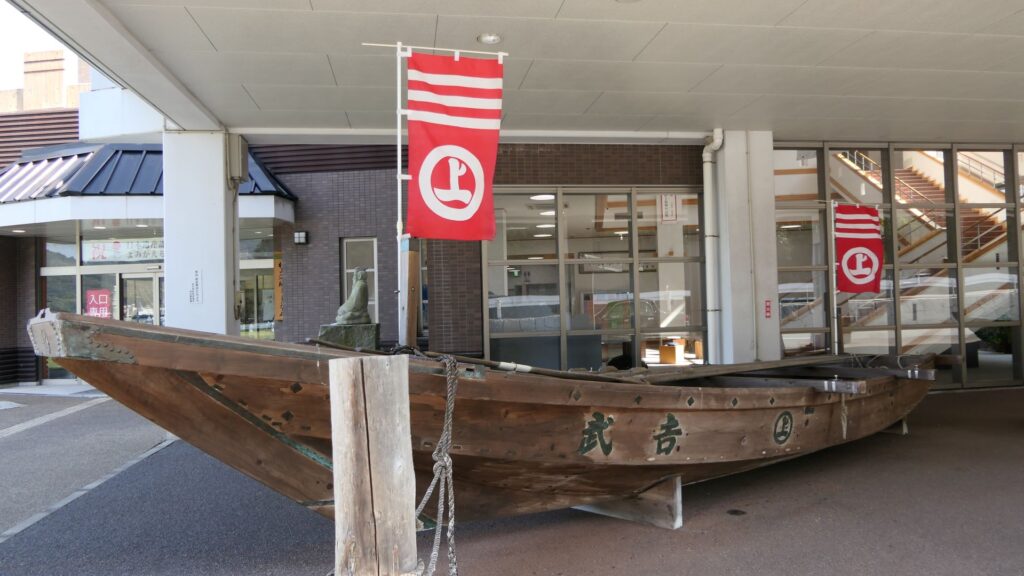
The restored Kobayabune boat, exhibited by Murakami KAIZOKU Museum
Home of Noshima-Murakami Clan
The navies were eventually divided into three clans: the Innoshima-Murakami, Noshima-Murakami, and Kurushima-Murakami Clans. Their territories were based on the northern, middle, and southern Geiyo Islands respectively. Noshima is a small island in the Miyakubo-Seto Strait which is between Ushima Island to the north and Oshima Island to the south. The strait was on one of the shortest paths for ships to pass through the Seto Inland Sea. However, the speed of the current is at most around 10 knots and kept changing constantly. The sea around the island is shallow and kept swirling, which is uncontrollable for regular ships. For the navy members, Noshima is about 300m away from Oshima Island where they usually live, so they could communicate verbally. That meant they could immediately ask or provide help to each other in the event of an emergency. From the top of Noshima, they were able to see the whole strait, beacon fires on mountains of Oshima Island and even Shikoku Island over Oshima between the mountains. Overall, it was suitable for the home base of the Noshima-Murakami Clan.
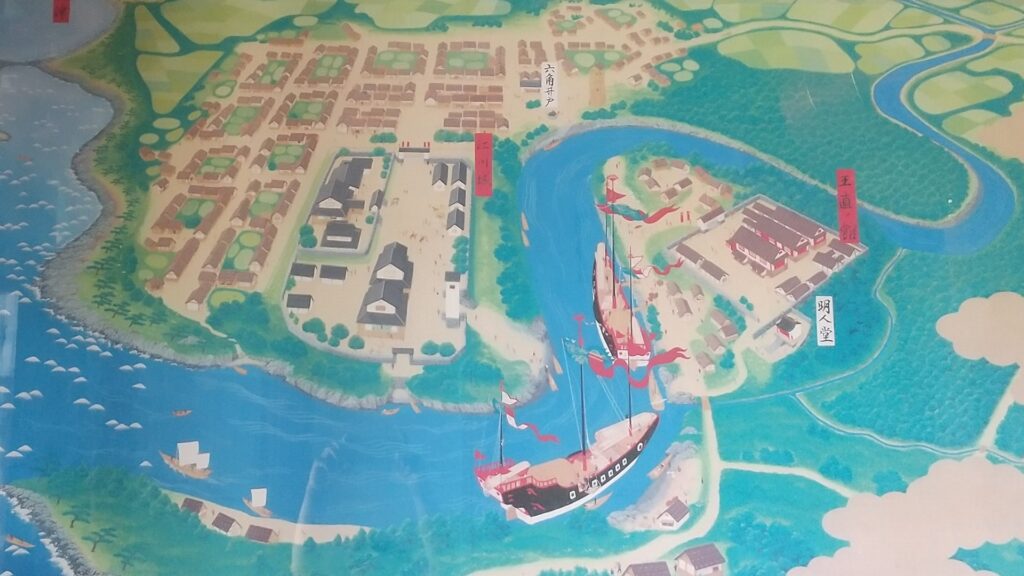
The diorama of the area around Noshima Island (marked by the red circle), exhibited by Murakami KAIZOKU MuseumThe Oshima Island seen from Noshima Castle Ruins, can we communicate with voice? The ruins of Koga Yashiki residence in the Oshima Island, which was said to have been the residence of the Noshima-Murakami Clan
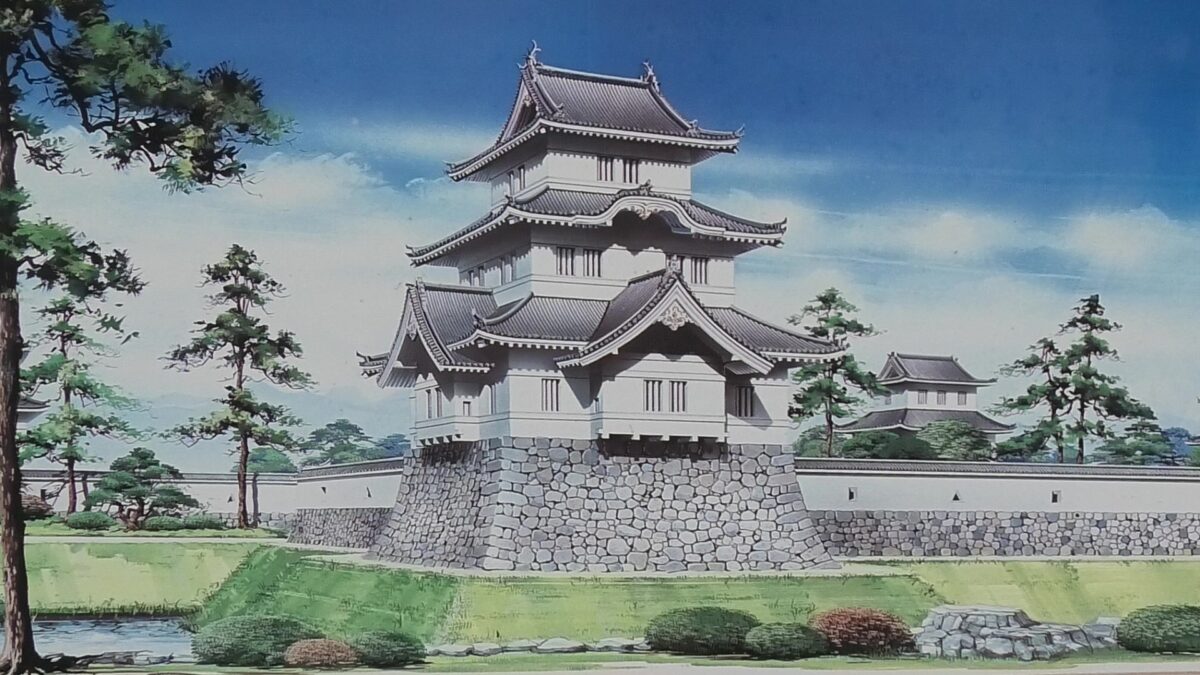
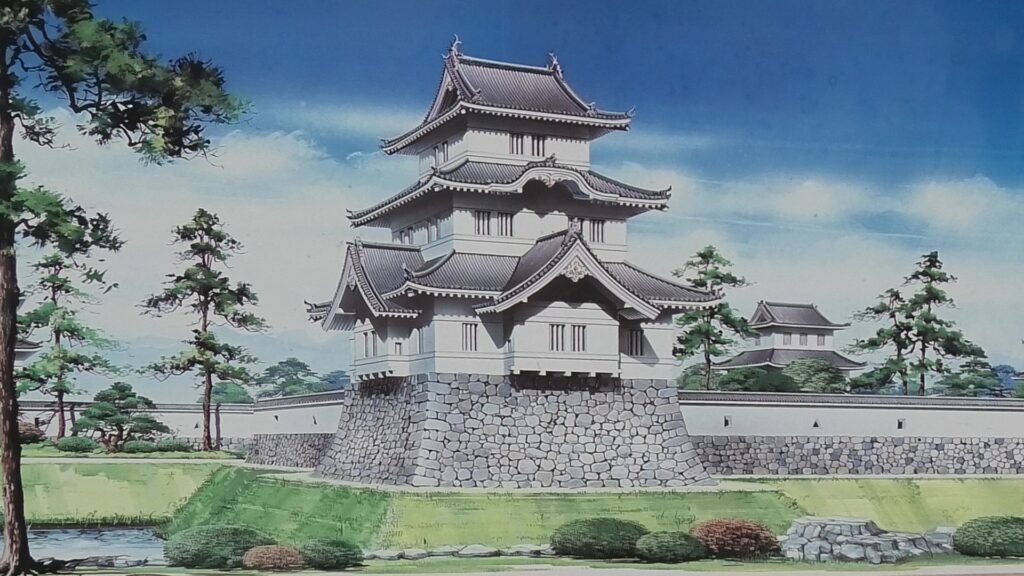
They operated Noshima Castle on the island between the 14th and 16th Centuries. Several enclosures and buildings were built after leveling the land. The navy members lived in or were stationed at the site not only to guard the strait, but also to trade and fish. The defensive systems of the castle were few, excluding artificial vertical cliffs on the sides, because its sea barrier was strong. Instead, they constructed harbors, landing places and maintenance yards at the seaside. On the other hand, the island didn’t provide water, food and other supplies they needed, which had to be brought from other islands.
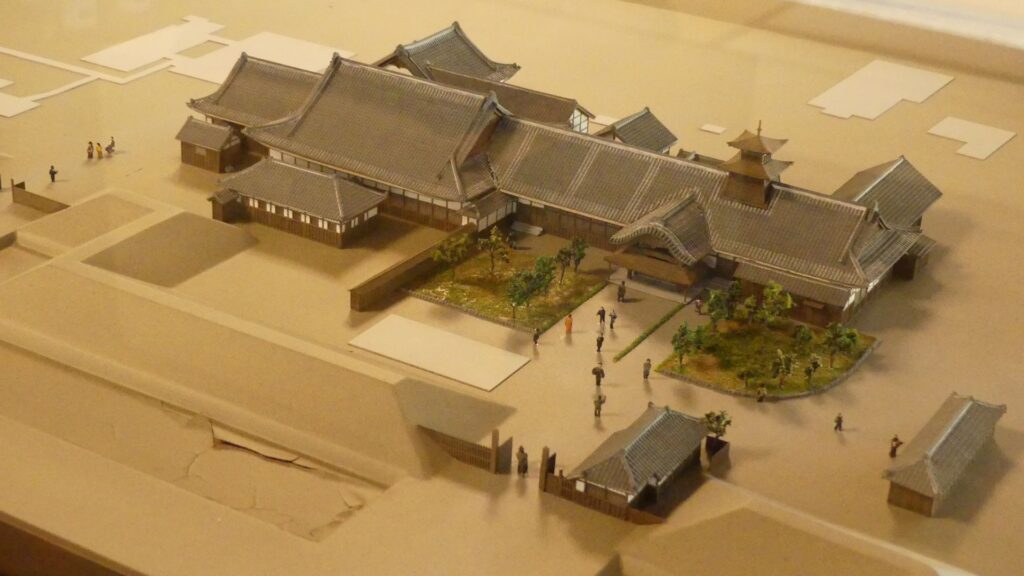
The imaginary drawing of Noshima Castle, exhibited by Murakami KAIZOKU Museum
“Largest Pirates of Japan”
The Murakami Navies also often joined battles to support other warlords. In the case of the Noshima-Murakami Clan, it had a good relationship with the Kobayakawa Clan, a branch of the Mori Clan which was the greatest warlord in the Chugoku Region nearby. They needed the superior navy power to survive during the harsh Sengoku Period. Other warlords, such as the Otomo Clan, also invited the Noshima-Murakami Clan. When it once switched to the Otomo’s side, the Kobayakawa Clan, which also had a navy, attacked and blocked Noshima Castle by interrupting the supplies (laying siege) to the castle until it returned to the Kobayakawa’s side.
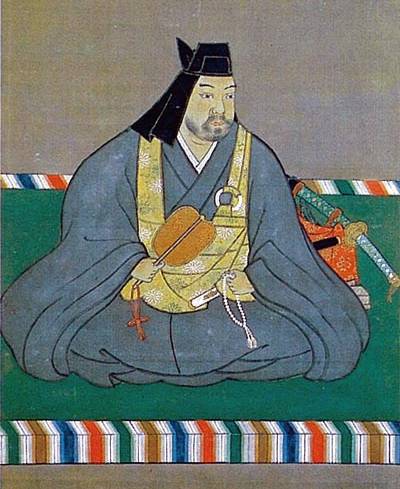
The portrait of Takakage Kobayakawa who was the clan’s lord at that time, owned by Beisanji Temple (licensed under Public Domain via Wikimedia Commons)
The power of the Noshima-Murakami Clan reached its peak when Takeyoshi Murakami was the lord during the late 16th Century. The most popular battle his navy fought in was the First Battle of Kizugawaguchi between the Mori and Oda Clans in 1576. In this battle, the Mori’s navies, supported by the Takeyoshi’s navy, who tried to bring supplies to Ishiyama Honganji Temple (currently Osaka Castle), and blocked by the Oda’s navies. Tekayoshi’s navy attacked the Oda’s ships with bombs, which eventually burned and sank. The supply operation was a success. In 1586, a Portugal missionary, Luis Frois visited Noshima Castle while sailing the Seto Inland Sea. He recorded in his book “The History of Japan” that they were the largest group of pirates. His crew was given a passport-flag which would guaranteed his safe voyage considerably.
The imaginary drawing of the First Battle of Kizugawaguchi, exhibited by Murakami KAIZOKU MuseumThe imaginary drawing of Luis Frois‘s visit to Noshima Castle, exhibited by Murakami KAIZOKU MuseumOne of the remaining passport-flags, owned by Yamaguchi Prefectural Archives (licensed under Public Domain via Wikimedia Commons)
Sudden Ending of Navies and Castle
The three Murakami Navies basically cooperated with each other, however, they eventually took different paths. The Kurushima-Murakami Clan switched to the Oda’s side through the invitation of Hideyoshi Hashiba, who would later be the ruler. Therefore, Takeyoshi occupied the Kurushima’s territory. However, this would be a misfortune for him. In the process of the unification of Japan by Hideyoshi, he was asked to return it to the Kurushima by Hideyoshi. He seemed to want to maintain his clan’s independence. However, when the Kobayakawa Clan, which was the current boss of the Noshima-Murakami Clan, was transferred to the Kushu Region by Hideyoshi, Takeyoshi finally had no choice but to leave all his territories including Noshima Castle.
The current Noshima Castle Ruins, seen from the Oshima Island