157.Hachimanyama Castle Part2

The castle ruins and modern tourist spot could be seen on the mountain.

Features

Going to Top by Cable Car

Today, visitors usually get to the ruins of Hachimanyama Castle by boarding the cable car from the foot of the mountain. The platform of the car at the foot is near the Himure Hachimangu Shrine which was moved there when the castle was built. The Hachimanbori Moats and the old town atmosphere also remain around as a popular tourist spot.

The map around the castle

The platform of the cable car
The Worship Hall of the Himure Hachimangu Shrine (licensed by 663highland via Wikimedia Commons)
The Hachimanbori Moats and the old town atmosphere

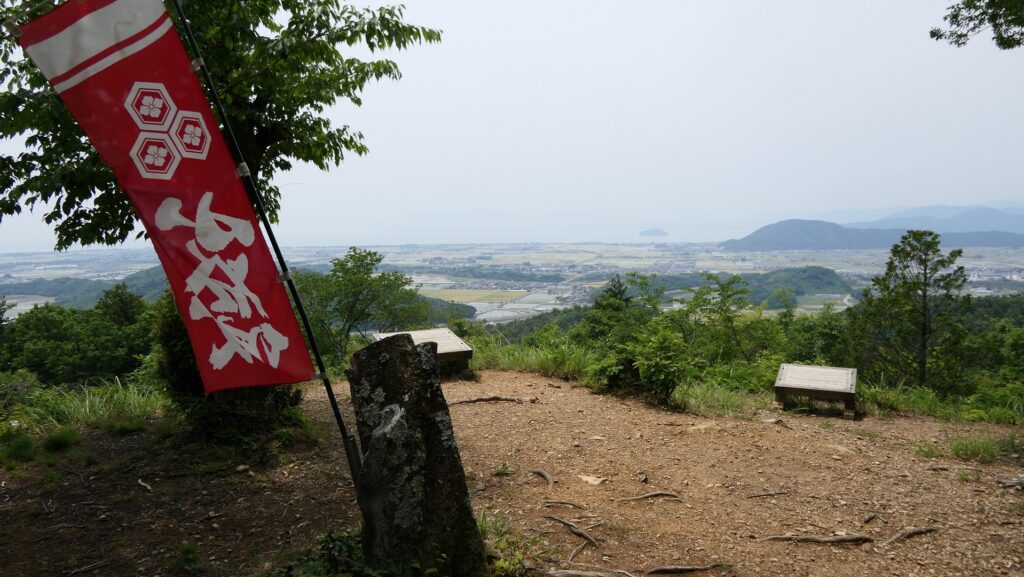
The cable car will bring you to the platform on the mountain in few minutes. The platform is below the Second Enclosure where the observation platform faces the city area in the southeast. Many people enjoy a good view while you can also see some remaining old stone walls of the enclosure.

A view from the cable car
The observation platform at the Second Enclosure
A view from the Second Enclosure
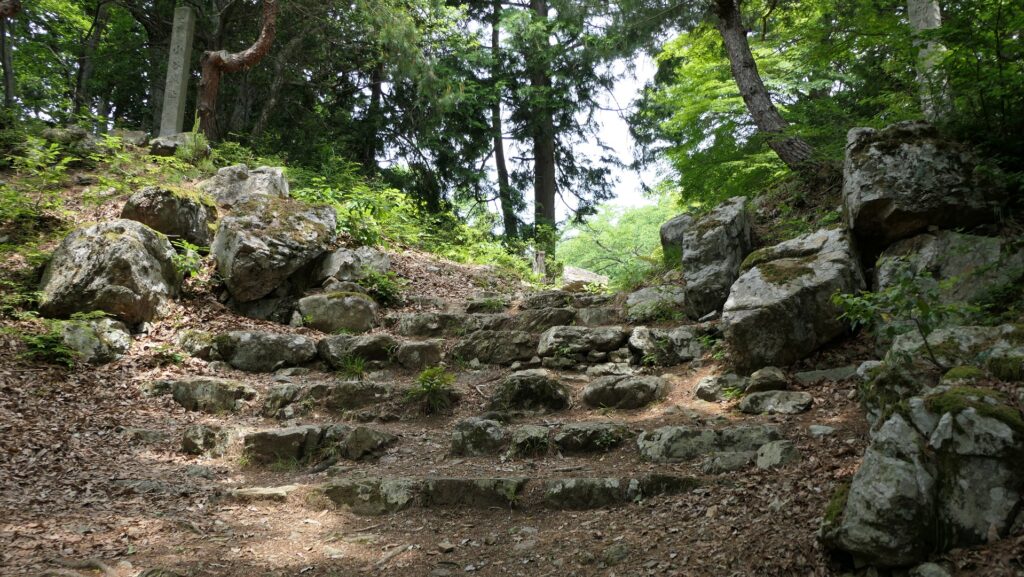
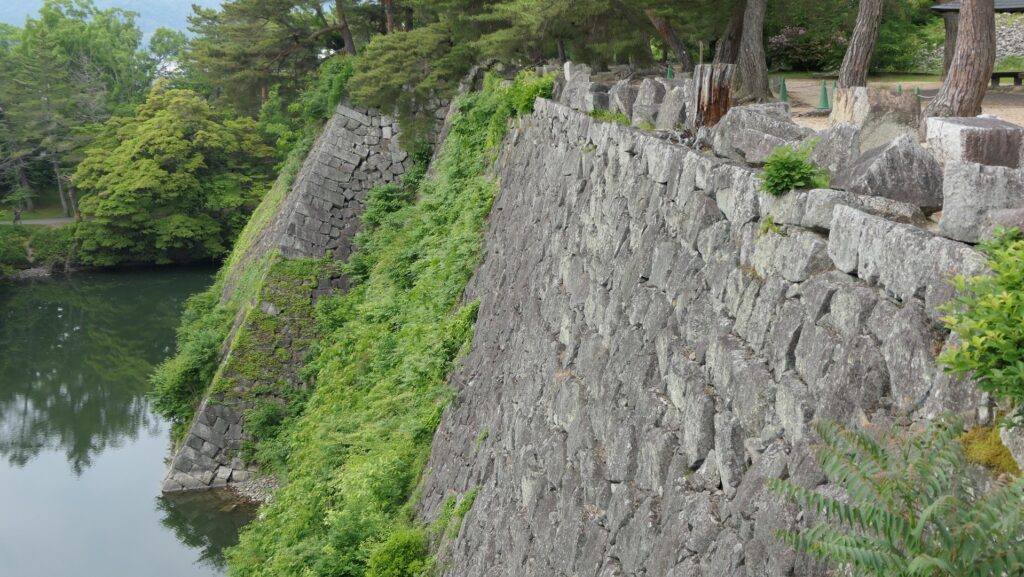
The stone walls around the Second Enclosure

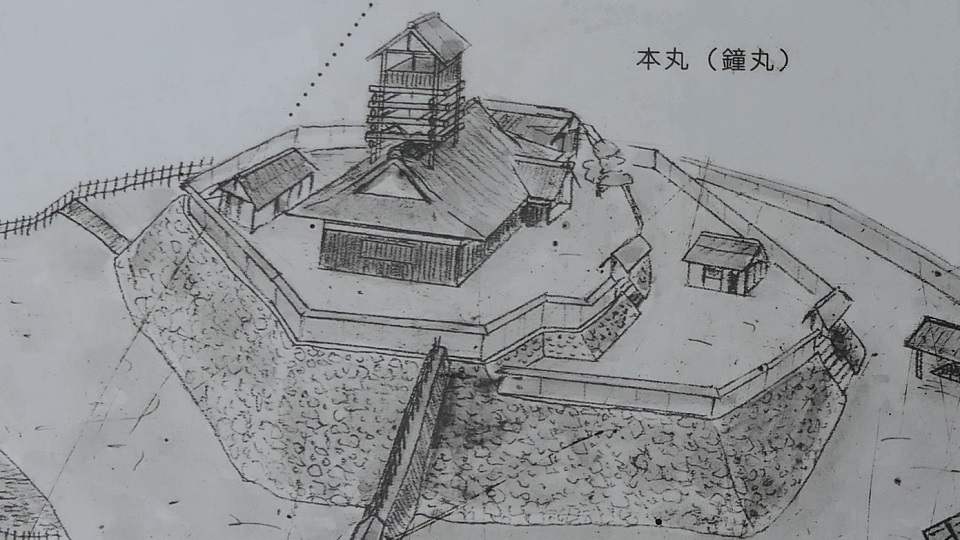
Zuiryuji Temple in Main Enclosure

The Main Enclosure, the center of the castle, is now used as the Zuiryuji Temple which Hidetsugu’s mother, Tomo established. In fact, the temple was moved there from Kyoto in 1961 of the present time, however, it is absolute suitable for this castle. The entrance of the temple consists of a defensive square space surrounded by stone walls, called Masugata. That’s because it was also the original entrance of the enclosure. The temple uses the Imperial chrysanthemum crest because Emperor Go-Yozei helped Tomo first build it and some members of the Imperial family became its chief priest.

The aerial photo around the castle

The Zuiryuji Temple at the Main Enclosure
The doors use the Imperial chrysanthemum crests
The defensive square space inside the doors

View Spots in Northern and Western Enclosures

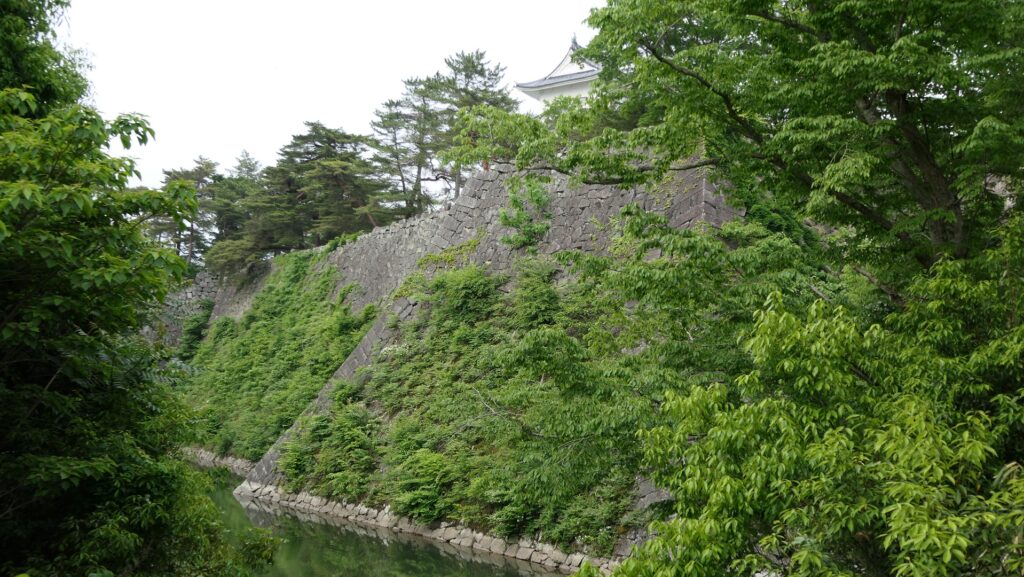
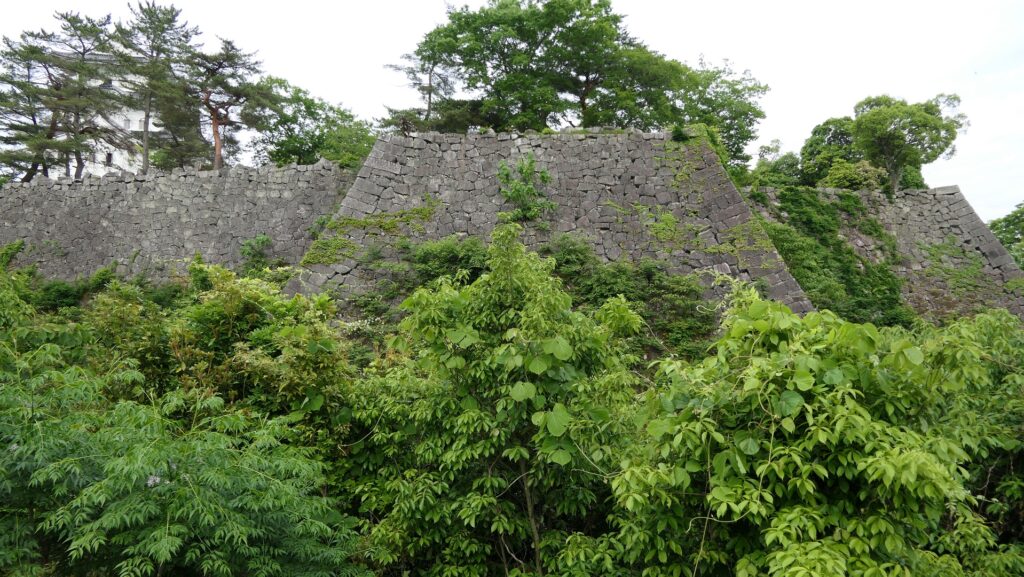
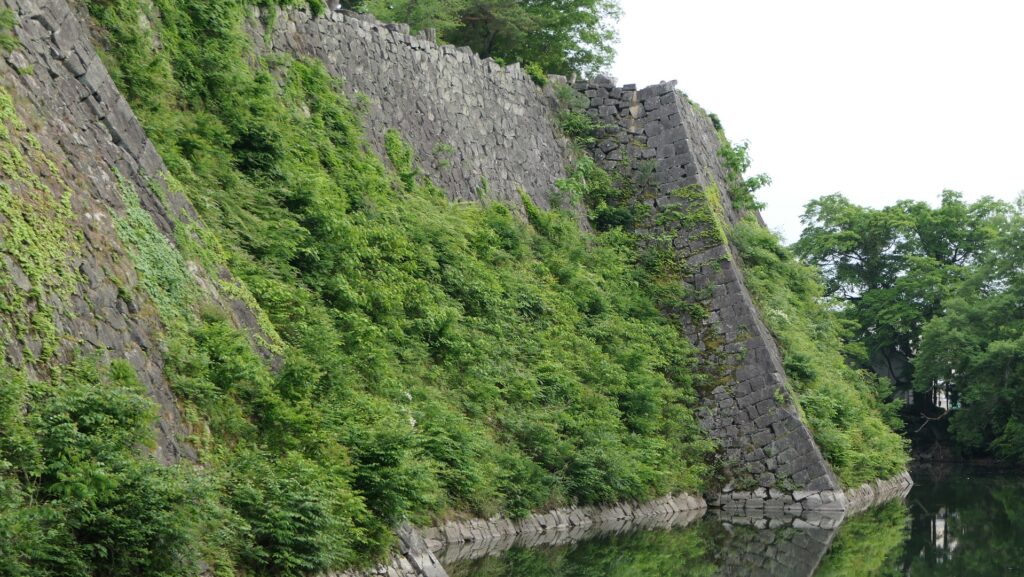
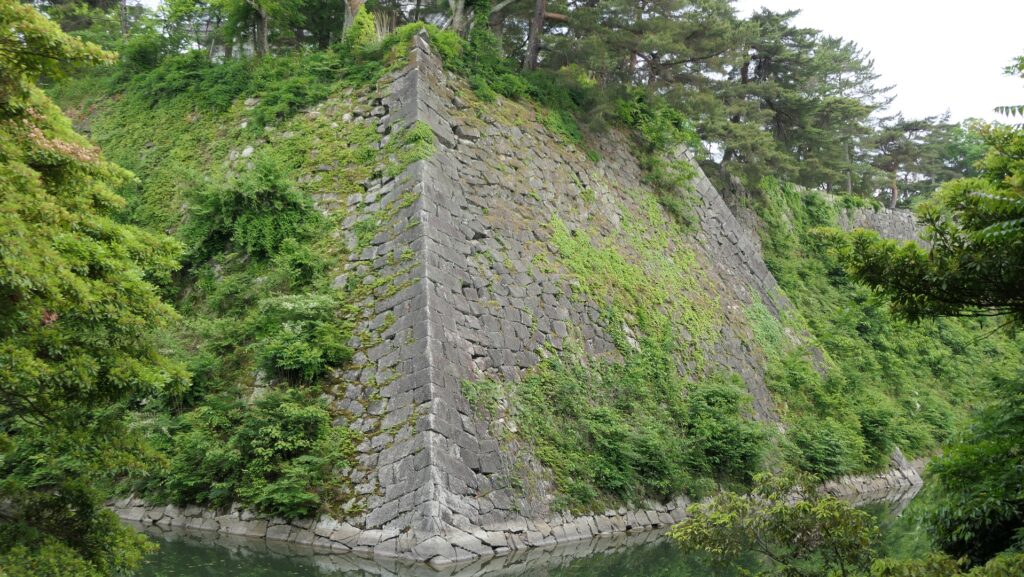
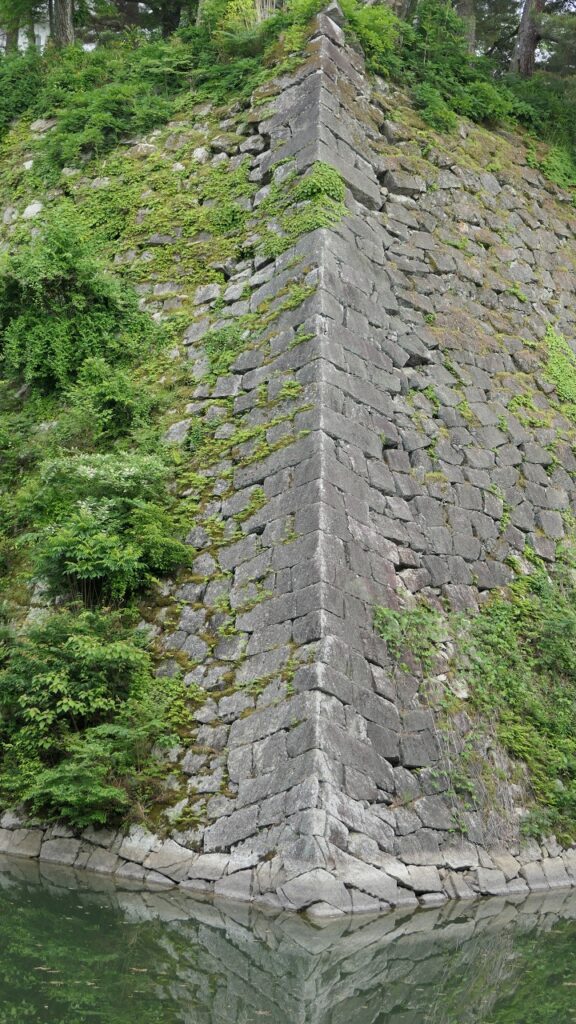
You can go to other enclosures by passing the Belt Enclosure as the route around the Main Enclosure. The high stone walls surrounding the Main Enclosure look old, wild but so great like those of Azuchi Castle. Historians are still not sure if these stone walls were completed by Hidetsugu or the Kyogoku Clan following him. A corner of them becomes round vertically, and it is not uncertain if the condition is original or it was from deterioration.

The stone walls around the Main Enclosure
The vertically round corner of stone walls

If you go to the Northern Enclosure which is another good viewing spot, you can see a view of the mountains with the ruins of Azuchi and Kannnonji Castles in the north.

The Northern Enclosure
A view from the Northern Enclosure
The ruins of Azuchi and Kannonji Castles

You can also go to the Western Enclosure with a view of Lake Biwa in the west.

The Western Enclosure
A view from the Western Enclosure

My recommended Barbican Enclosure

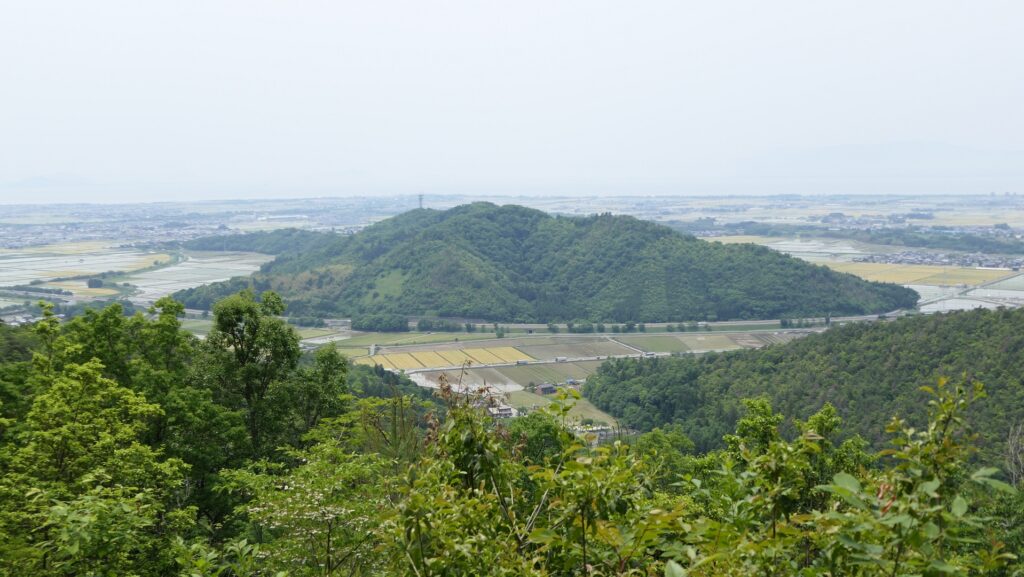
I recommend you go to the Barbikan Enclosure or Demaru because it was recently re-developed. The trees and bushes around the enclosure were cut down for a better view. You can get there by going down along the trail from the Western Enclosure. You will see a panorama view of the city area and you can imagine this enclosure should have been a good lookout.

The Barbican Enclosure
A view from the Barbican Enclosure
You can see the Barbican Enclosure from the city area (inside the red mark)

You can also walk around the stone walls of the enclosure close by, which is about 4m high. However, please watch your step as its foundation is on the steep and rough slope.

The stone walls of the Barbican Enclosure and a view form it
The corner of the stone walls (its round shape is rare)
The stone walls are illuminated at night

To be continued in “Hachimanyama Castle Part3”
Back to “Hachimanyama Castle Part1”

157.八幡山城 その2

山の上には、城跡と現代的な観光地が同居しています。

特徴、見どころ

ロープウェイで山上へ

現在、八幡山城跡を訪れるビジターは通常山麓からロープウェイに乗っていきます。その山麓側のロープウェイ乗り場は、城が築かれたときにそこに移されたとされる日牟禮(ひむれ)八幡宮の近くにあります。八幡堀や古い街並みも周辺に残っており、人気のある観光地になっています。

城周辺の地図

ロープウェイ乗り場
日牟禮八幡宮拝殿  (licensed by 663highland via Wikimedia Commons)
八幡堀と古い街並み

ロープウェイに乗れば、数分で山上のロープウェイ駅に到着します。その駅は、城跡の二の丸の下の方にあり、少し登って二の丸に行くとそこは展望所になっていて、南東の方角に市街地を見渡せます。多くの人たちが素晴らしい景色を楽しんでいますが、城跡としても古い石垣が周辺に残っています。

ロープウェイの中
二の丸にある展望所
二の丸からの眺め
二の丸周辺の石垣

本丸にある瑞龍寺

城の中心地であった本丸には、今は秀次の母親ともが創建した瑞龍寺が建っています。実は、この寺は現代の1961年に京都からここに移ってきたのです。しかし、この城にとっては全く相応しい決断であったと思います。この寺の入り口部分は、桝形と呼ばれる、石垣に囲まれた四角い防御空間となっています。もともとここが本丸の入口だったからです。この寺は、皇室の菊の御紋章を使っていますが、これは後陽成天皇が、ともによるこの寺の創建を援助し、その後は皇室から寺の門跡を輩出したことに由来します(そのため、別名として村雲御所(むらくもごしょ)とも呼ばれています)。

城周辺の航空写真

本丸にある瑞龍寺
門扉には菊の御紋章が使われています
門の内側に残る桝形

北の丸、西の丸のビュースポット

本丸の周りの通路となっている腰曲輪を通って、他の曲輪に行くことができます。本丸を囲む高石垣は、古く粗野にも見えますが、安土城の石垣のようにとても立派です。しかし歴史家によれば、その石垣を完成させたのは秀次なのか、またはその後を継いだ京極氏なのかまだわからないそうです。その中には、石垣の角のラインが縦に丸まってしまっているものがありますが、元々こうだったのか、それとも劣化してしまったものなのでしょうか。

本丸周りの石垣
角が丸まっている石垣

北の丸に行っていただくと、そこもビュースポットとなっていて、北の方に安土城跡や観音寺城跡がある山々が見えます。

北の丸
北の丸からの眺め
安土城跡と観音寺城跡

また、西の丸では西の方に琵琶湖を見渡すことができます。

西の丸
西の丸からの眺め

おすすめの出丸

そして、最近再整備された出丸にも是非行っていただきたいです。この曲輪の周辺の草木が伐採されており、眺望が確保されています(出丸からだけでなく、市街地などからも出丸がよく見えるようになっています)。西の丸から山道を少し下ったところに出丸があります。そこに行けば、市街地をまるでパノラマのように見渡すことができます。また、この曲輪が絶好の見張り台として機能していたことも、容易に想像できます。

出丸
出丸からの眺め
出丸は市街地からも見えます(赤円の中)

それから、この曲輪を囲む石垣を間近に見ながら周りを歩いてみることもできます。この曲輪の石垣の高さは約4mとのことです。ただし、足場は急で不安定な斜面になっているので気を付けてください。

出丸の石垣と市街地の眺め
出丸の石垣(角が丸くなっているのは珍しいそうです)
ライトアップ用の機材もあります

「八幡山城その3」に続きます。
「八幡山城その1」に戻ります。

140.Genbao Castle Part3

The ruins were discovered after 400-year sleep.

Features

Largest Enclosure in back

If you want to go out of the Main Enclosure from the back entrance, you will need to turn left and right on the narrow route through the other Umadashi Enclosure like the front side. This means the back side of the castle was also protected heavily. The Enclosure II is at the very back and was the largest of the Castle. Therefore, Historians speculate it was used as a military post. On the other hand, the entrance of the enclosure to the outside is very simple and had no defensive capability. Historians also speculate this part had been uncompleted before the Battle of Shizugatake happened.

The map around the castle

The back entrance of the Main Enclosure
The narrow earthen bridge connecting the Main Enclosure and the Enclosure ii
The inside of the Enclosure II
the entrance of the Enclosure II to the outside

Later History

Genbao Castle was eventually abandoned after Katsuie was defeated in 1583. The ruins of it were buried naturally and returned to nature covered with trees and bushes for over 400 years. However, a local historian discovered the ruins after his research based on some records and traditions in 1980. The ruins were finally designated as a National Historic Site in 1999. The ruins are now considered as very rare ones which clearly shows the who, the when and the why the castle was built. Historians can see that the techniques used in the castle were those used in the period when the Battle of Shizugatake happened.

The Main Enclosure of Genbao Castle

My Impression

I was surprised to see such a complex structured castle was built on the top of a mountain. I was also convinced to learn the reason for why it was built. I remember that there is another complex structured castle ruins made of pure soil the same as Genbao, called Suginaya Castle in Saitama Prefecture. However, unlike Genbao, it is quite uncertain the who, the when and the why it was built. Some historians think Sugiyama Castle was built in the same period as Genbao Castle because they are similar. On the other hand, others argue that they are, in fact, different in some ways. Either way, it is also an interesting discussion.

The ruins of Sugiyama Castle

How to get There

I recommend using a car when you visit the castle ruins.
It is about a 20-minute drive away from Kinomoto IC on the Hokuriku Expressway. There is a parking lot beside the entrance of the trail to the castle ruins.
After getting off from the IC, go along the National Route 365 to the north, turn right to the Prefectural Road 140 at the junction, and go through the Yanagase Tunnel. This tunnel had originally been used for the former Hokuriku Railway Line until 1964 and turned into the current road. Make sure that it is a one-way traffic which is controlled by the traffic light. Just after coming out of the tunnel, turn right to the forest road to the parking lot.
If you drive from the north of the ruins, such as Fukui Prefecture, go along the National Route 8 to the south, turn left to the Prefectural Road 140 at the junction, and turn left to the forest road in front of the Yanagase Tunnel.

The parking lot beside the entrance of the trail
The Yanagase Tunnel (licensed by Alpsdake via Wikimedia Commons)
The northern starting point of the Prefectural Road 140

That’s all. Thank you.
Back to “Genbao Castle Part1”
Back to “Genbao Castle Part2”

error: Content is protected !!