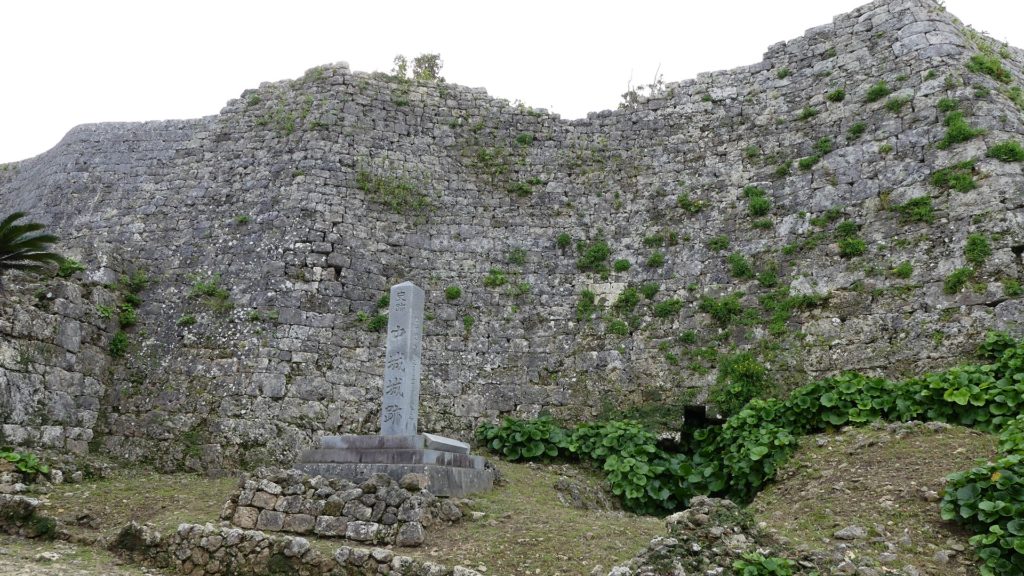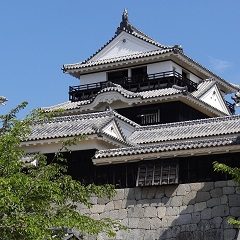
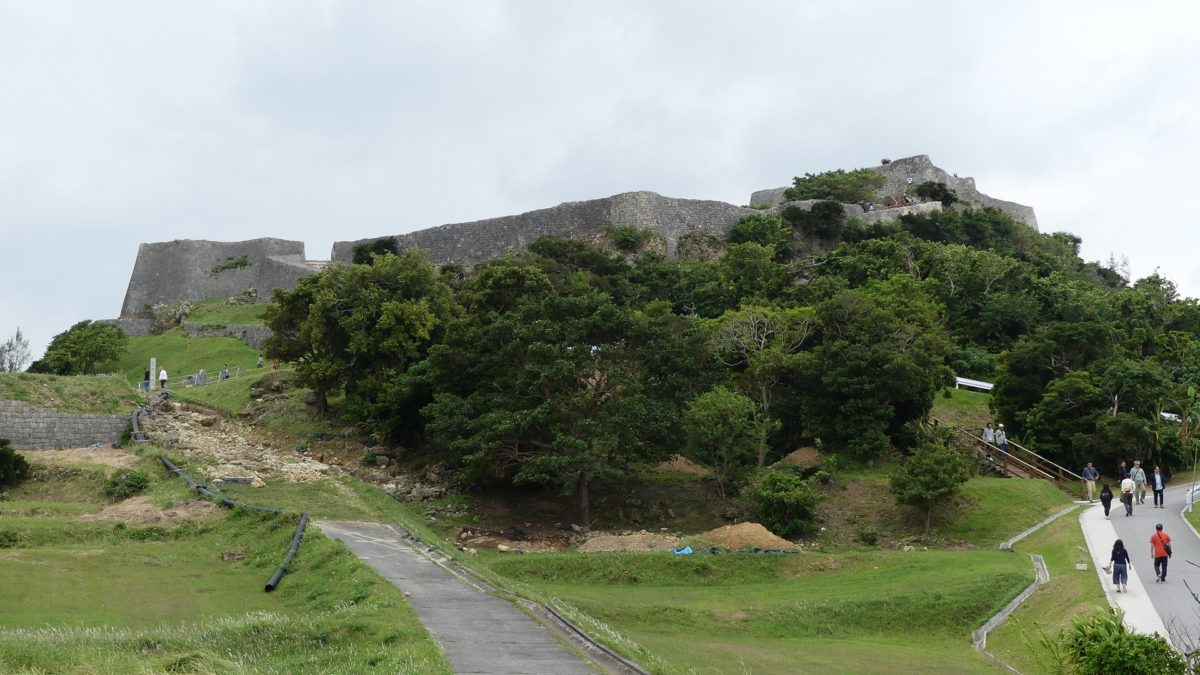
99.中城城~Nakagusuku Castle

宮殿のような優雅な城跡です。
Elegant castle ruins looking like a palace

立地と歴史~Location and History

繁栄する琉球とグスク~Prospering Ryukyu and Gusuku

14、15世紀ころ、琉球諸島(現在の沖縄諸島)は貿易によって栄えました。当時、中国の明王朝は海外の国との民間貿易を禁じていました。その代わりに、日本(琉球とは違う国とみなされていました)、朝鮮、東南アジア諸国は、琉球を通して中国と交易していました。中国は、琉球が頻繁に朝貢することと、諸国と貿易することを認めたからです。結果的に、琉球には「按司」と呼ばれた有力な豪族が多く現れ、中国や他国と貿易を行い、力をつけていきました。
Around the 14th and 15th centuries, the Ryukyu Islands (what is now Okinawa Islands) prospered thanks to trading. At that time, the Ming Dynasty that governed China banned private trading with foreign countries. Instead, countries like Japan (considered different from Ryukyu), Korea, and South East Asians traded with China through Ryukyu, because China allowed Ryukyu to bring a tribute frequently as well as to trade with them. As a result, many powerful clans in Ryukyu called “Aji” traded with China and other countries, and had great power.

琉球王国の進貢船、沖縄県立博物館・美術館~A tribute ship from the Ryukyu Kingdom, Okinawa Prefectural Museum and Art Museum collection(licensed under Public Domain via Wikimedia Commons)

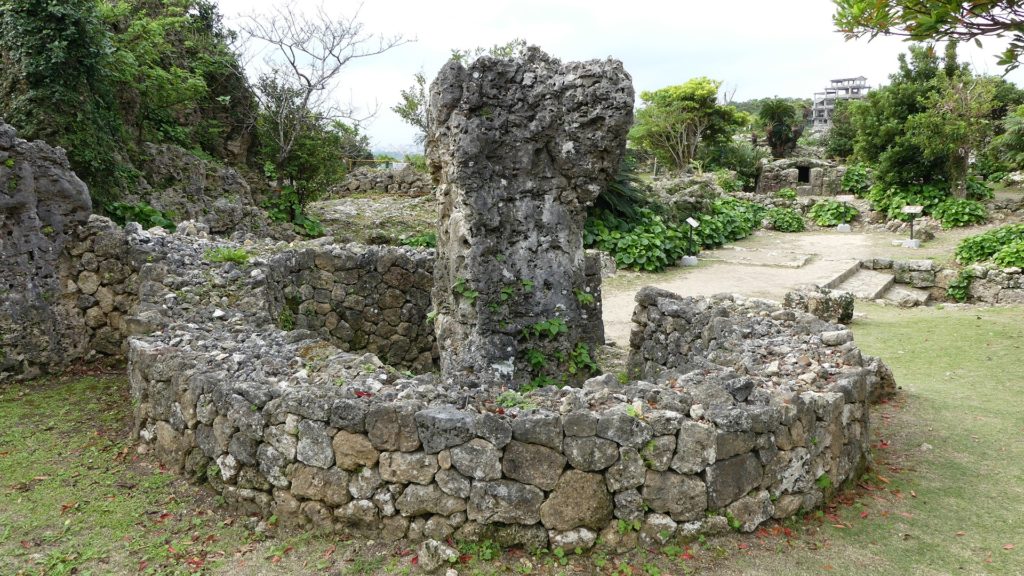
彼らは沖縄諸島一帯に、300以上の大規模な要塞を築き「グスク」と呼ばれました。グスクは城のようでもありましたが、館や礼拝所としても使われたようです。中城城はもっとも大きなグスクの一つであり、グスク跡としてももっともよく保存されているものの一つです。
They built over 300 large-scale fortresses called “Gusuku” around the Ryukyu Islands. They looked like a castles, but they could also be used as a hall or shrine. Nakagusuku Castle was one of the largest Gusuku, and is one of the best preserved Gusuku ruins.

城の位置~The location of the castle

中城城の完成~The completion of Nakagusuku Castle

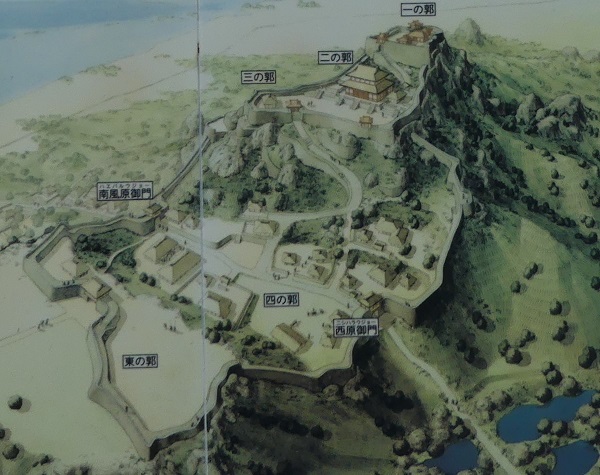
中城城は最初14世紀中頃に先中城按司によって築かれました。城は、沖縄本島にある標高160mの丘の上にあり、東側は天然の要害として高い崖となっていました。また、わずか2kmのところに、当時は貿易港であった八木港がありました。先中城按司は、一の郭、二の郭、南の郭、西の郭といった主要な曲輪を作りました。15世紀になって琉球王国の重臣であった護佐丸が三の郭、北の郭を加えて城を完成させました。
It is said that Nakagusuku Castle was first built in the mid 14th century by Sachi-Nakagusuku Aji clan. The castle was located on a 160m high hill on Okinawa Island with a high cliff in on the east as natural barrier. It was also only 2 km away from the Yagi Port which was once a trade port. Sachi-Nakagusuku Aji clan built the main parts of the castle, such as the First Enclosure or Ichinokaku ,the Second Enclosure or Ninokaku, the South Enclosure or Minaminokaku, and the West Enclosure or Nishinokaku. In the 15th century, a senior vassal of the Ryukyu Kingdom, Gosamaru completed the castle, adding the Third Enclosure or Sannokaku, and The North Enclosure or Kitanokaku.

現地にある城跡の模型~The miniature model of the castle ruins at the site

護佐丸の乱~Gosamaru Rebellion

護佐丸は、王国に反抗していた勝連城の有力な按司である阿麻和利から王国を守るため、中城城に滞在していました。ところが、護佐丸は阿麻和利によって王国への反逆者として仕立てられてしまいます。護佐丸はそれを知って嘆き悲しみ自ら命を絶ってしまったのです。これは阿麻和利が王国や護佐丸をだましたのだと言われていますが、真相は不明です。その後、阿麻和利も王国により討たれてしまったからです。
Gosamaru stayed at the castle to protect the Ryukyu Kingdom from another powerful Aji called Amawari at Katsuren Castle who was against the Kingdom. However, Gosamaru was considered as a rebel against the Kingdom by Amawari. Gosamaru felt very sad about it, and killed himself. It is said that Amawari deceived the Kingdom and Gosamaru, but the details are uncertain, as Amawari was also defeated by the Kingdom later.

城周辺の地図~The map around the castle

その後、この城は王国の王子の所有となりました。江戸時代に王国が日本の薩摩藩の支配下にあった間は、城は番所として使われていました。
After that, the castle was owned by the Prince of the Kingdom. During the Edo Period, when the Kingdom was under the Satsuma Feudal Domain of Japan, the castle was used as a guardhouse.

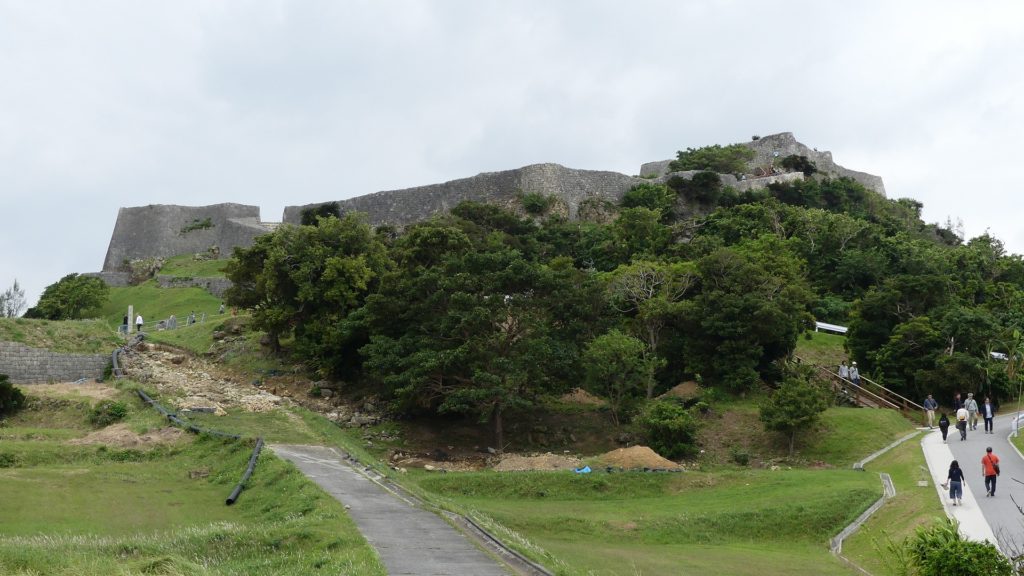
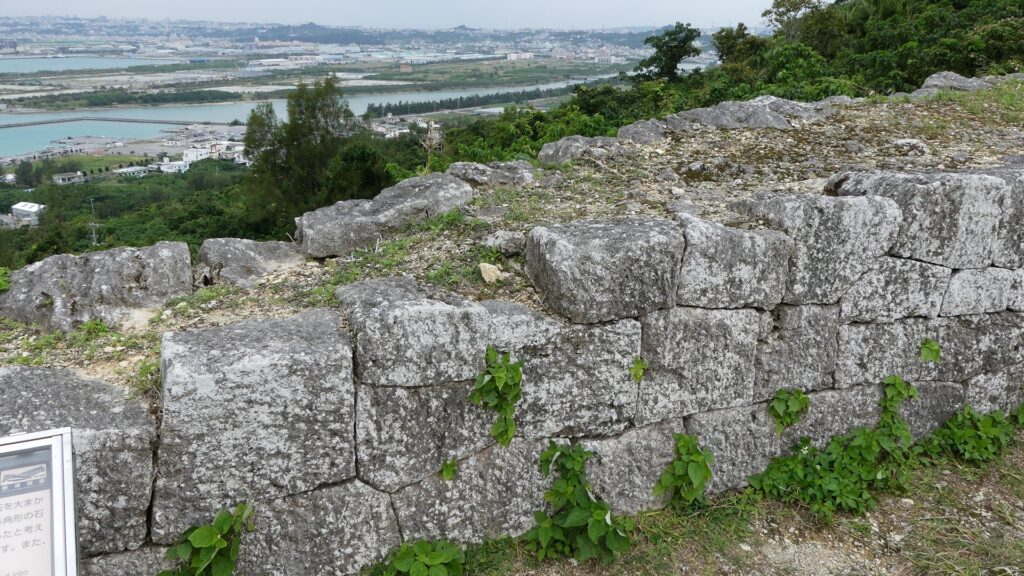
中城城跡~The ruins of Nakagusuku Castle

特徴~Features

城周辺の航空写真~The aerial photo of around the castle

城跡に入る~Entering the Castle Ruins

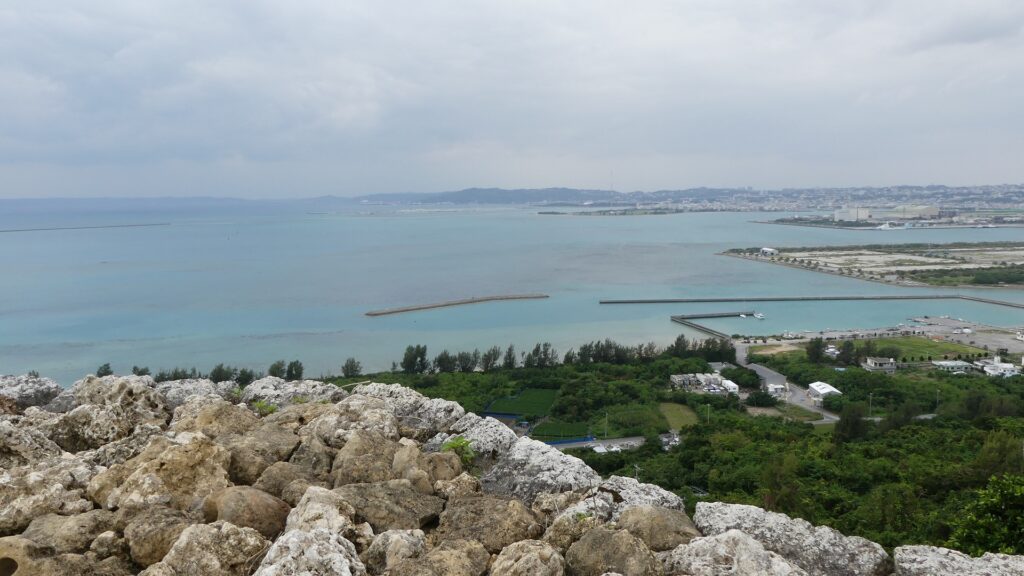
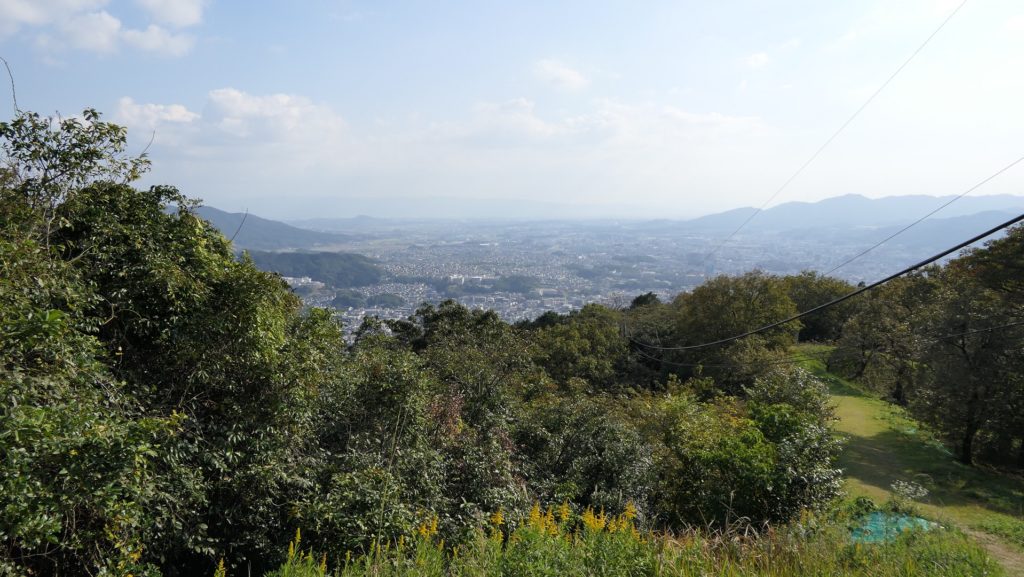
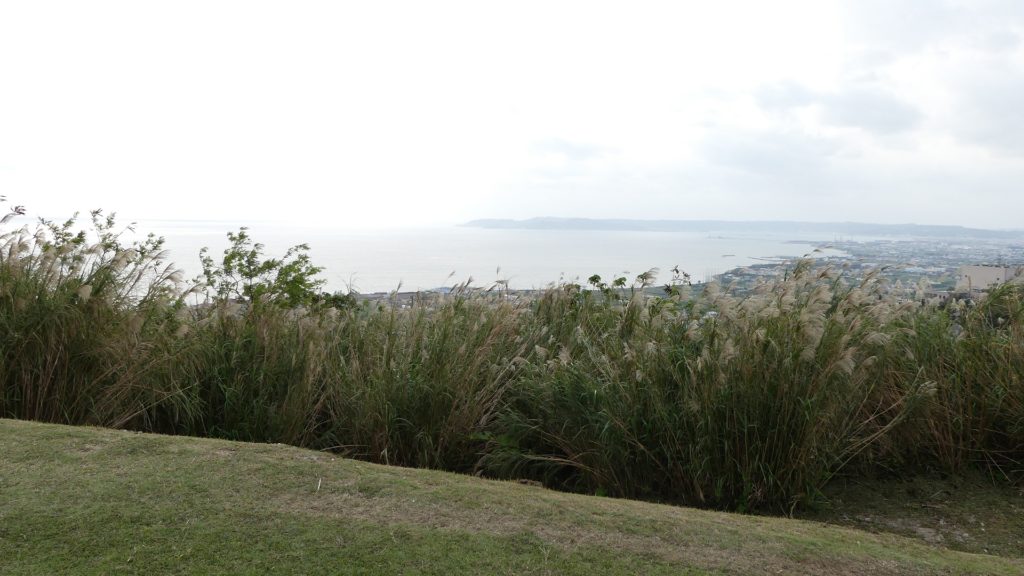
現在、中城城跡は今でもとてもよい場所にあると言えます。城跡は島が狭くなっている部分の高い場所にあるので、東は太平洋の、西は東シナ海の素晴らしい景色を見渡すことができます。この城の城主は、敵味方の動きを容易につかめたことでしょう。
Now, the ruins of Nakagusuku Castle still have a very good location. They are located on a high point where the island is narrow, so you can have a great view of the Pacific Ocean on the east and the East China Sea on the west. That meant that a lord of the castle was able to see the movement of his friends and enemies.

城跡から見た太平洋~A view of the Pacific Ocean from the ruins

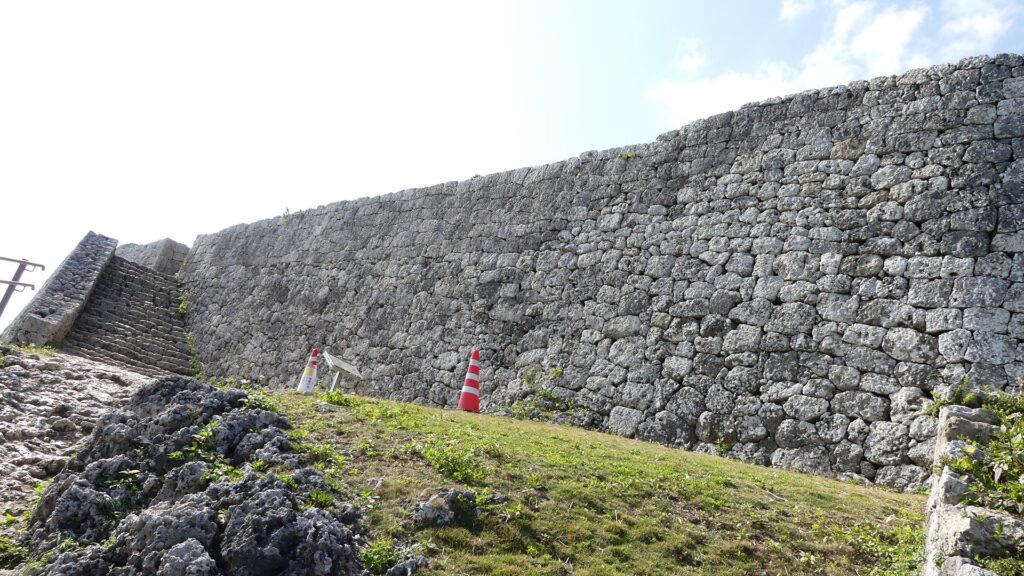
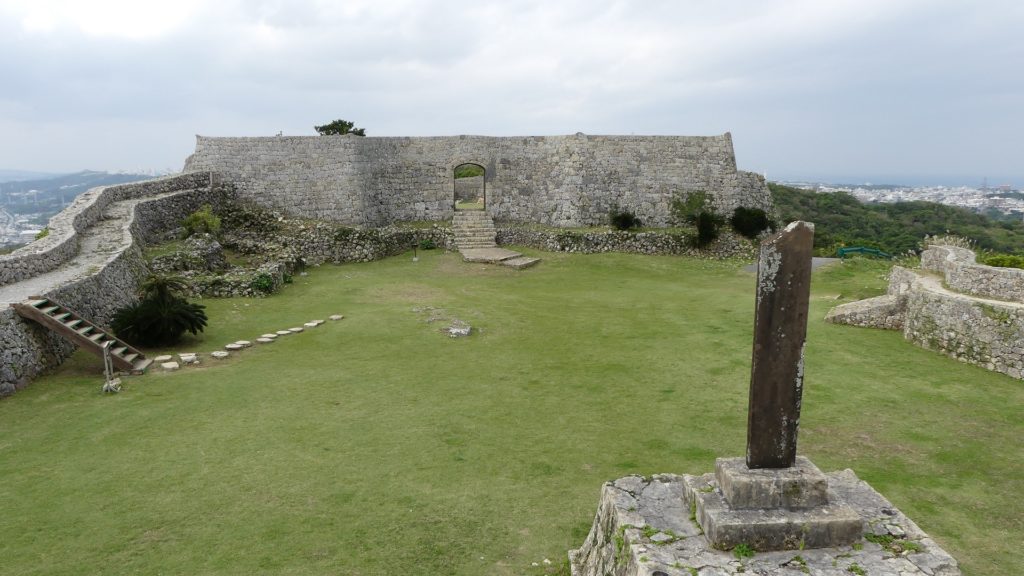
観光客が城跡の入口に入ると、カートで城の正門の近くまで乗せていってもらえます。そこからその門まで登っていきますが、それは西の郭の入口でもあります。この郭は、一の郭と南の郭に隣り合っています。一の郭の素晴らしい高石垣が見えることでしょう。
When visitors enter the entrance of the ruins, they are driven near the front gate of the castle by a cart. You can walk up to the gate which is also the entrance of the West Enclosure. The enclosure is next to the First Enclosure and South Enclosure. You can also see the great high stone walls of First Enclosure.

正門~The front gate
一の郭の高石垣~The stone walls of the First Enclosure

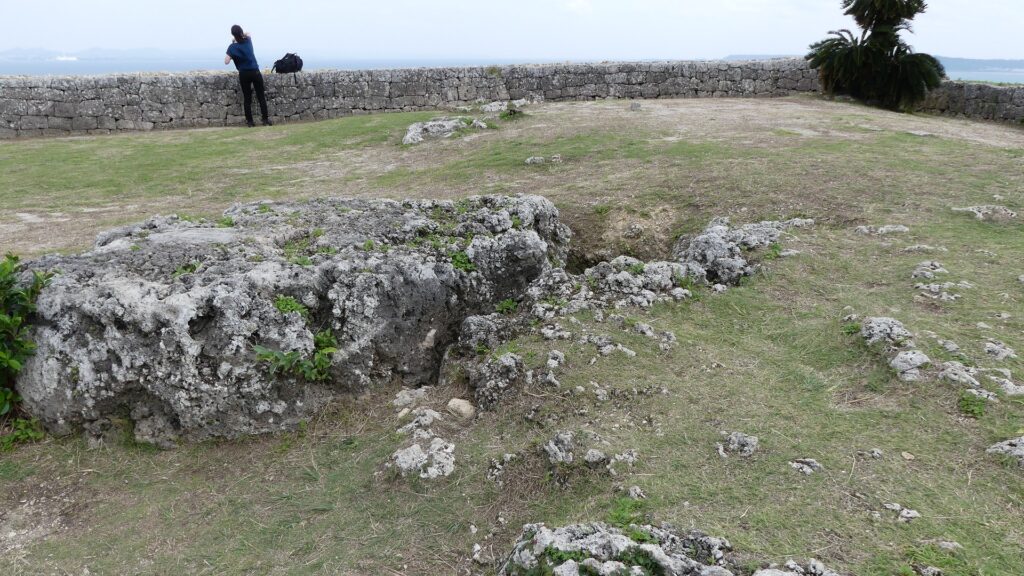
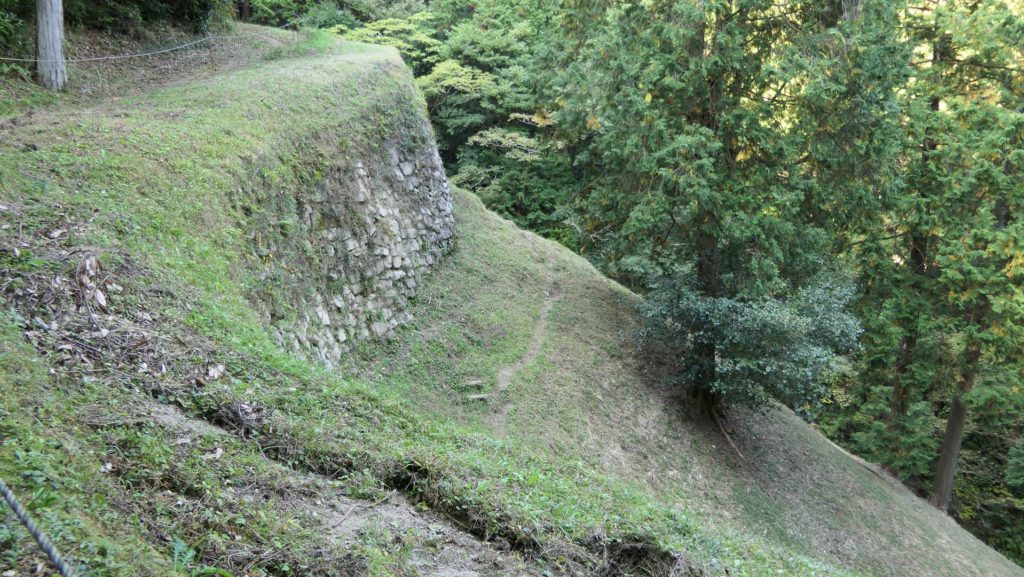
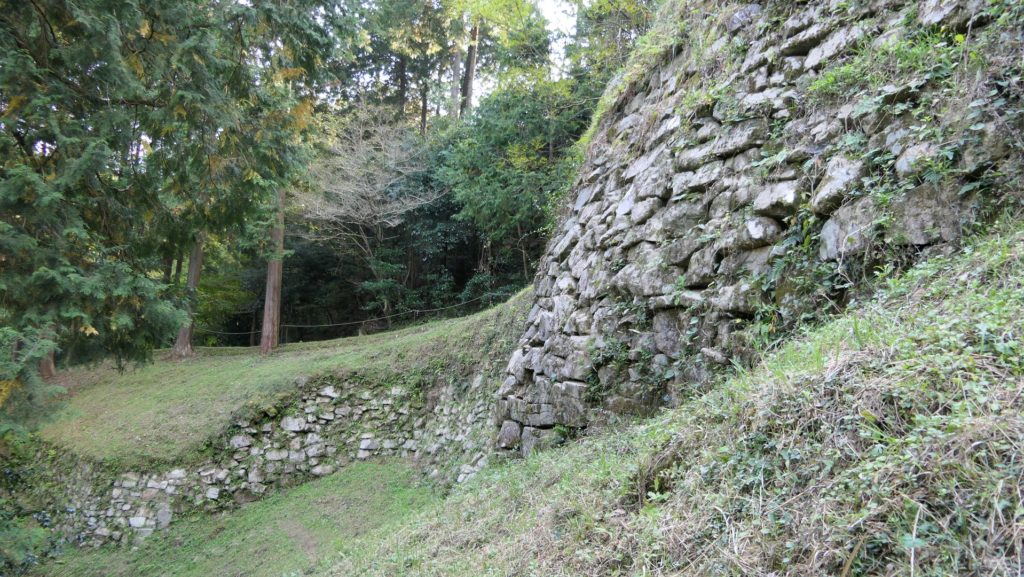
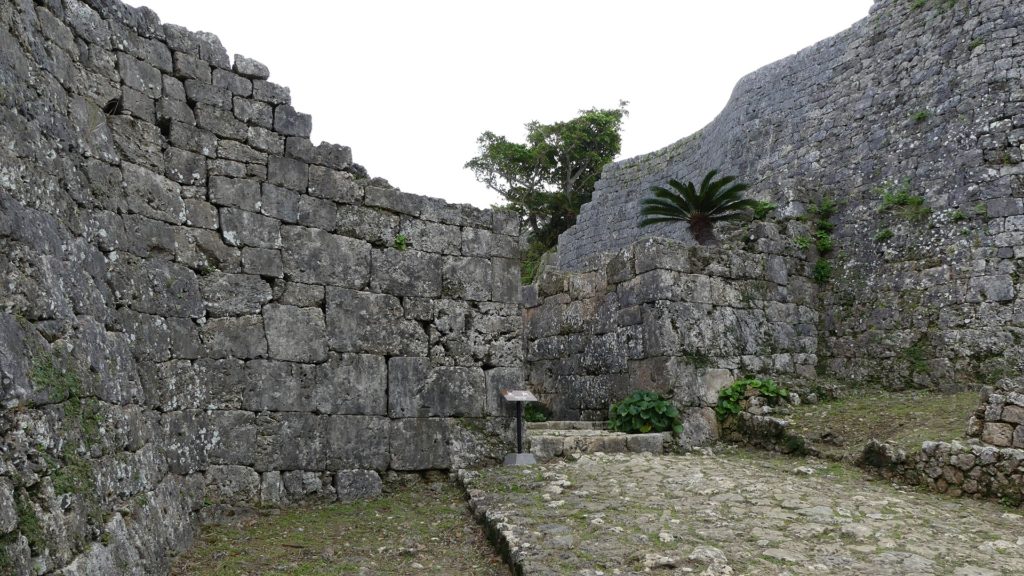
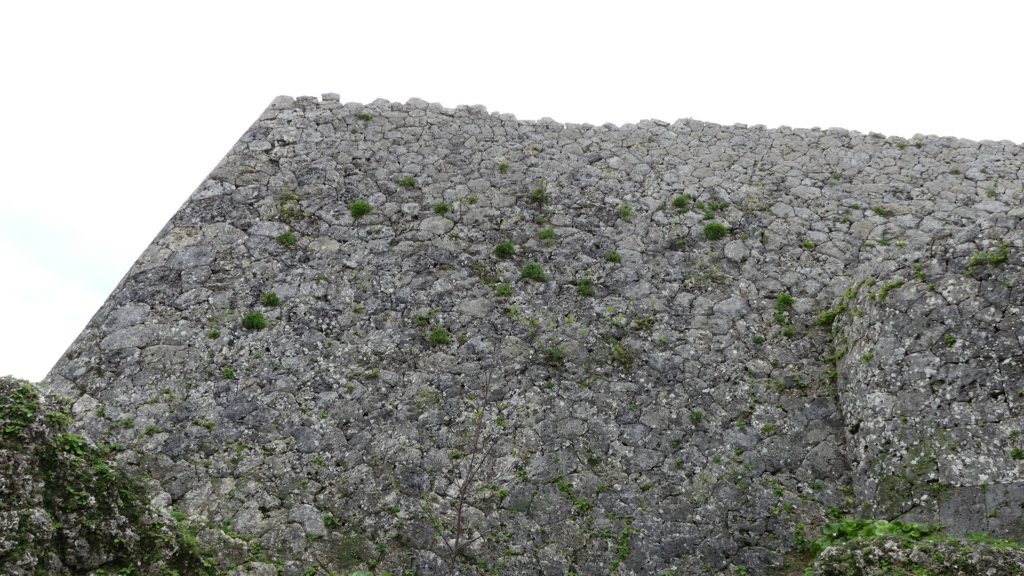
更に南の郭の入口に進みます。この郭は城で最も古い部分と考えられています。その石垣が部分的に自然の石灰岩により積まれていて、「野面積み」と呼ばれる原始的な方式によるからです。この郭には3箇所の拝所跡があり、例えばその一つでは雨乞いを祈願していました。
You can go further to the entrance of South Enclosure. The enclosure is thought to be the oldest part, because its stone walls were partly piled with natural lime stones, a primitive method called “Nozura-zumi”. There are three places for worship in ruins in the enclosure, such as one where you could pray for rain.

南の郭へ進みます~Going to the South Enclosure
南の郭の入口、写真の右上部分は野面積みです~The entrance of the South Enclosure, the upper right portion in this picture is built with “Nozura-zumi”
雨乞イノ御嶽(拝所)~The place of praying for rain

素晴らしい石垣と景色~Wonderful Stone Walls and Views

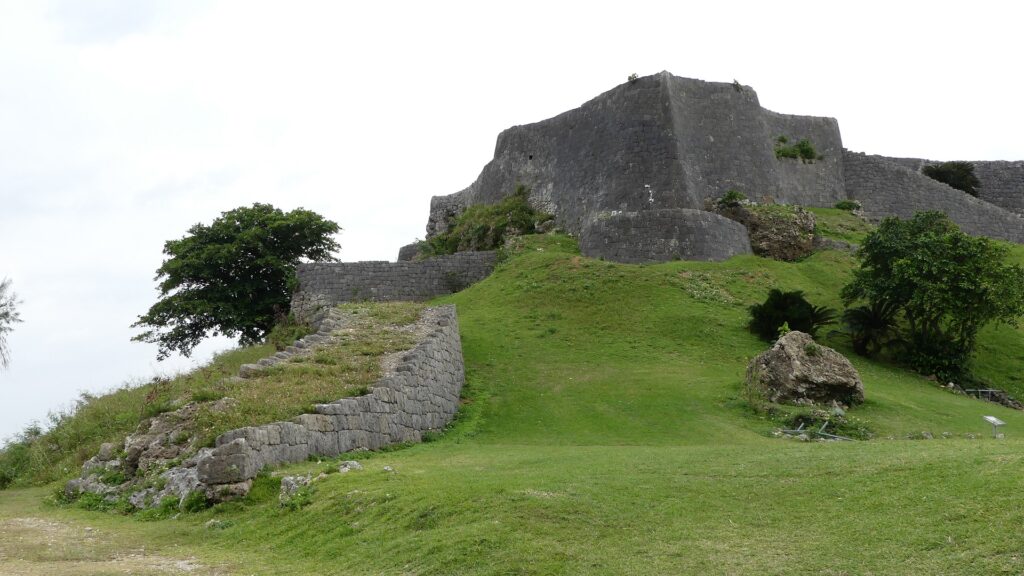
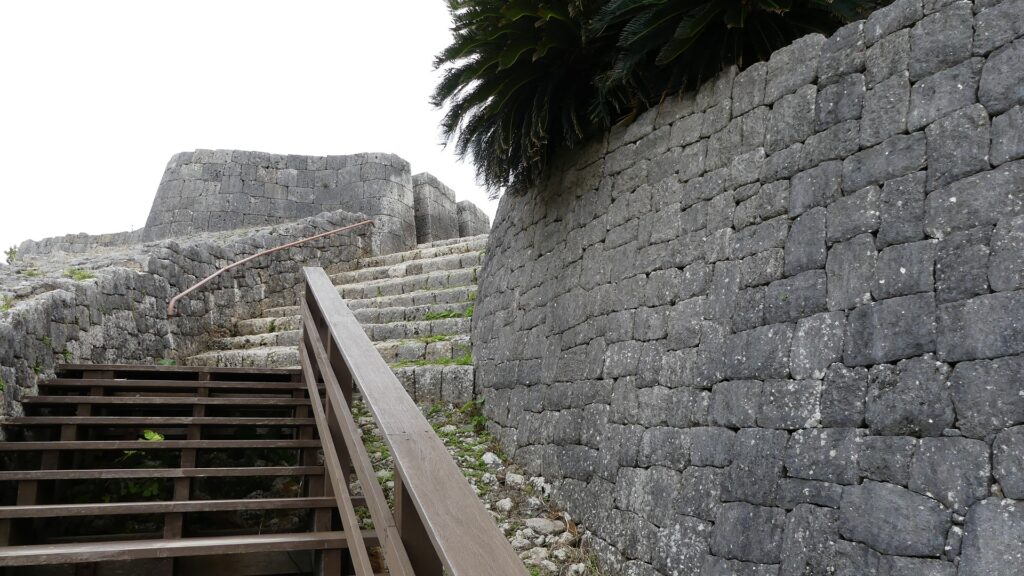
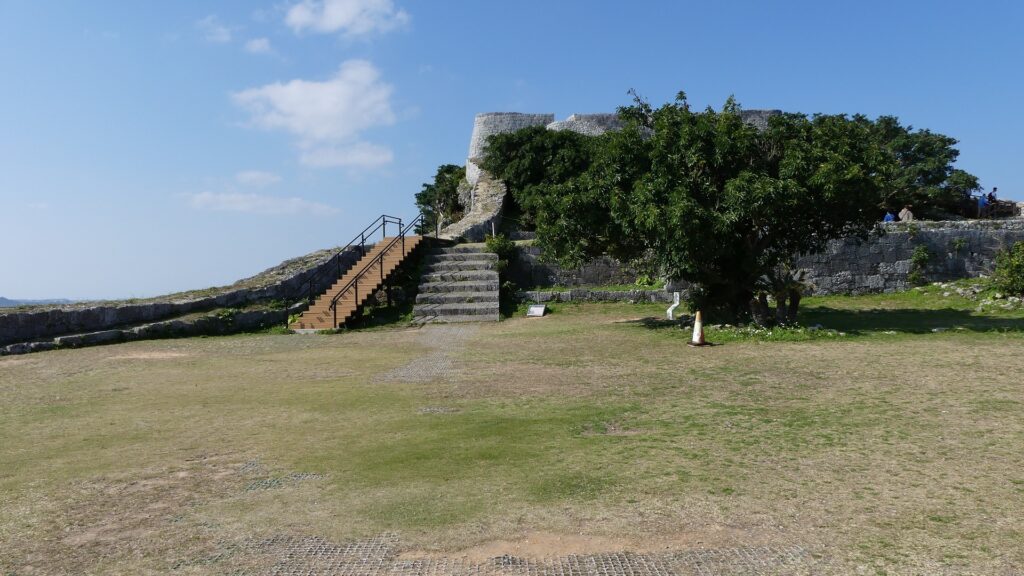
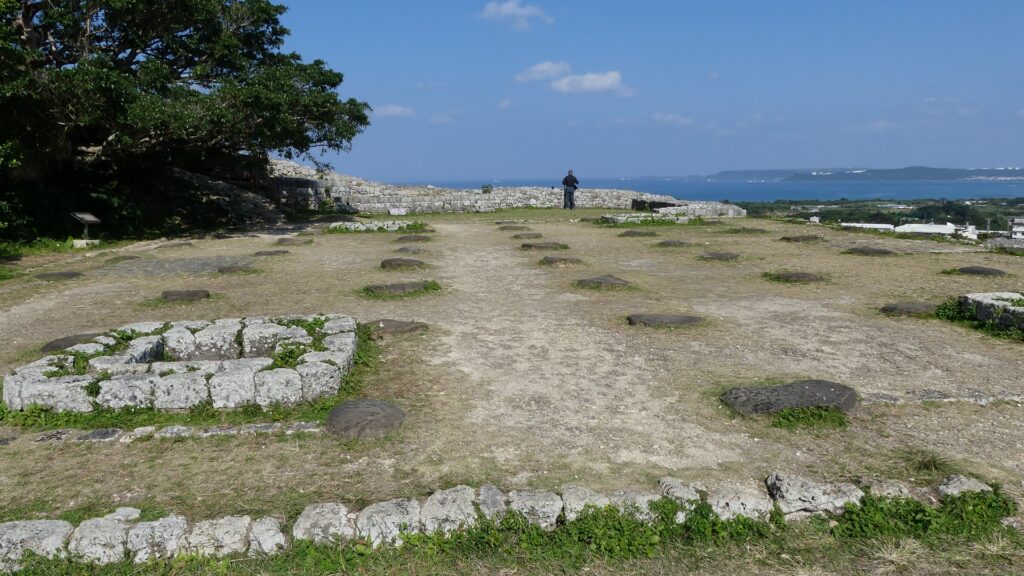
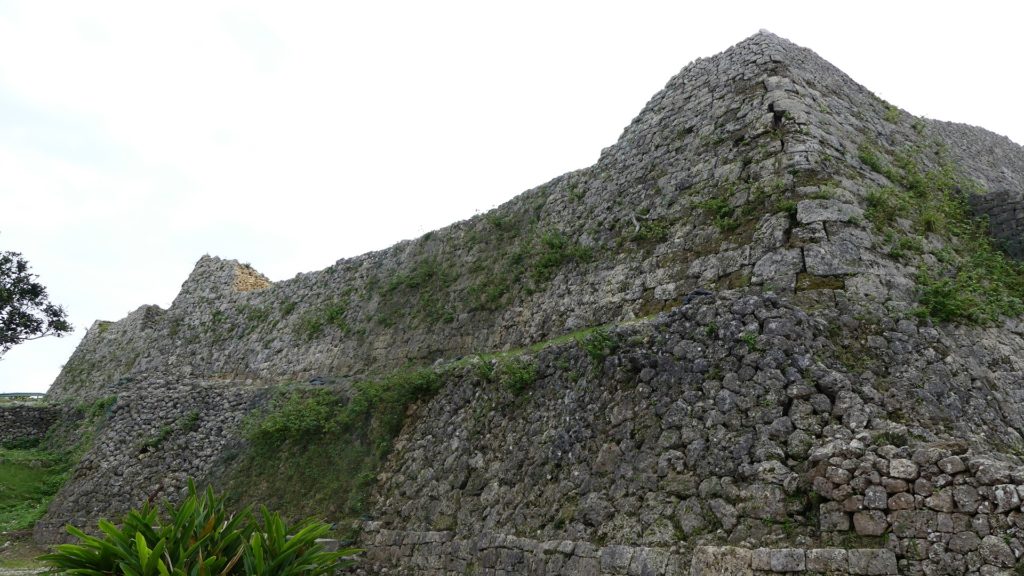
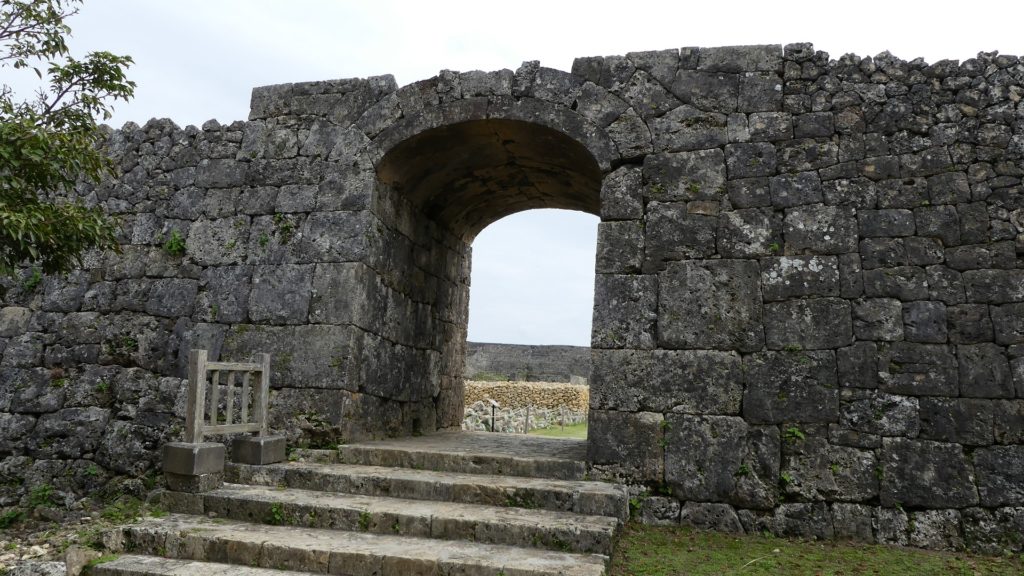
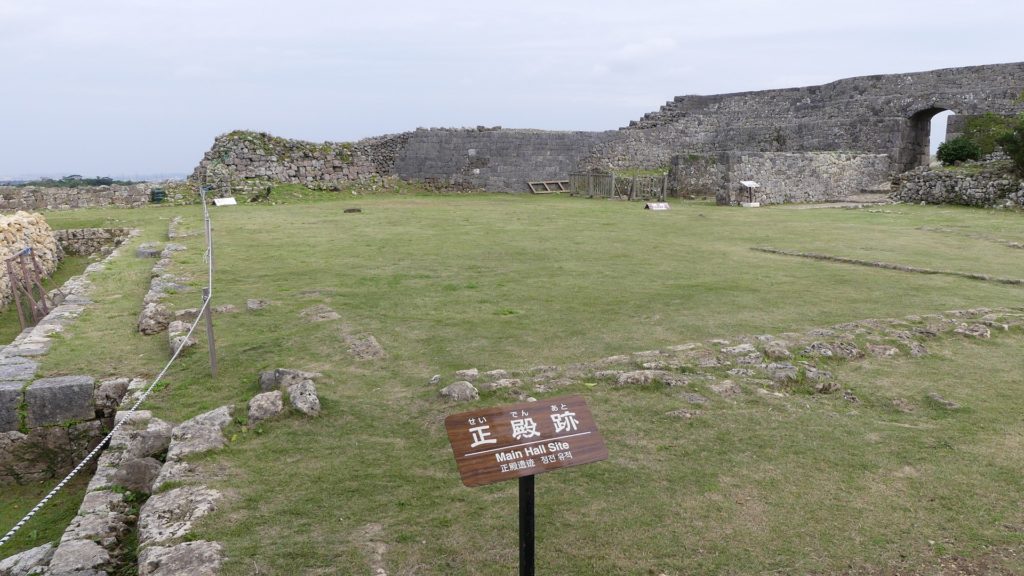
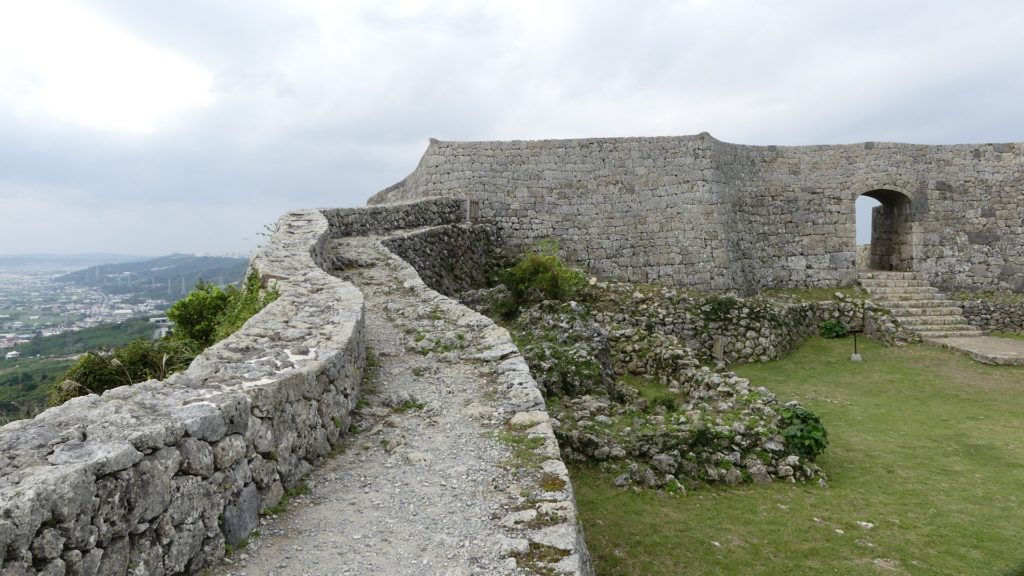
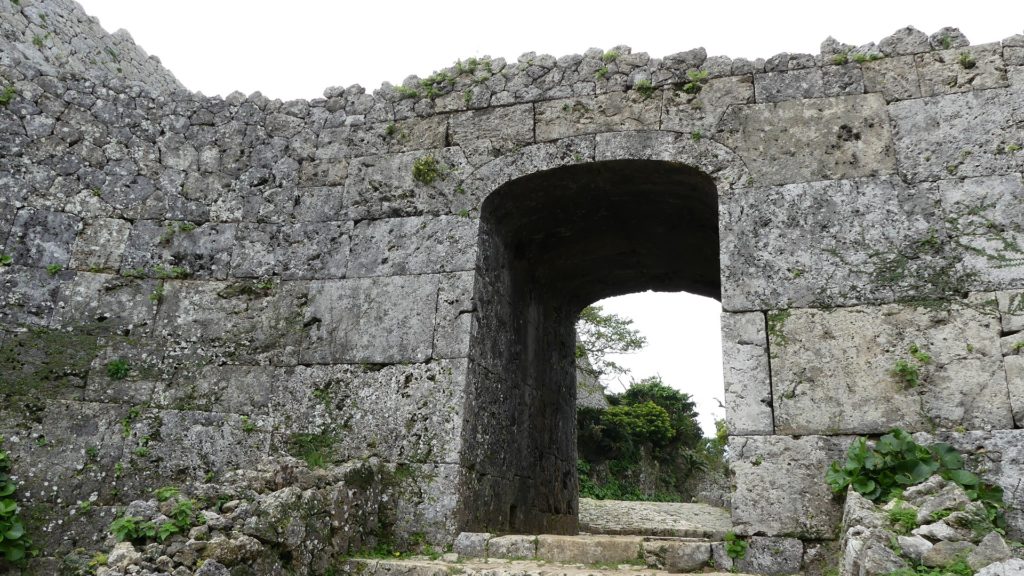
南の郭から、アーチ型の門を通って一の郭に進みます。この門は護佐丸がこの城を拡張したときに作ったと言われています。一の郭は、この城の中心であり、最も大きい郭です。ここには正殿がありました。ここの石垣は、四角く加工した石灰岩により築かれており、「布積み」と呼ばれます。この方式は南の郭のものより進歩しており、このため一の郭は南の郭より後に作られたようです。また、石垣の上には展望台があり、太平洋の絶景を見渡すことができます。二の郭がまた隣りにあります。その郭の石垣の輪郭はとても美しいです。
From the South Enclosure, you can go to the First Enclosure through the arch entrance gate. It is said that Gosamaru had this arch shaped when he improved the castle. The First Enclosure is the main and largest enclosure of the castle. There was the main hall in it. Its stone walls were built with processed square lime stones, a method called “Nuno-zumi”. The method is more developed than the South Enclosure’s, so the First Enclosure seemed to have been built after the South Enclosure. There is also the observation deck on the stone walls where you can have a great view of the Pacific Ocean. The Second Enclosure is the next one. The shape of this enclosure’s stone walls is very beautiful.

一の郭へのアーチ門、石垣は布積み~The arch entrance gate to the First Enclosure, its stone walls are built with “Nuno-zumi”
正殿跡~The ruins of the Main Hall
一の郭から見た太平洋~The Pacific Ocean from the First Enclosure
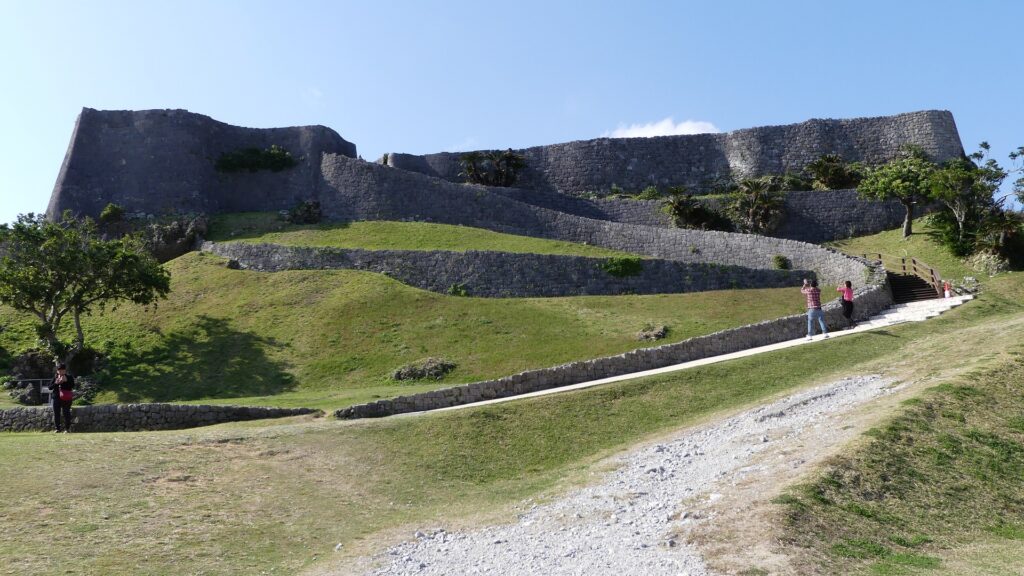
二の郭の石垣~The stone walls of the Second Enclosure

護佐丸の貢献~Work of Gosamaru

護佐丸が後から追加した北の郭に行くには、一旦西の郭に戻る必要があります。北の郭には「ウフガー」と呼ばれる井戸の跡があります。それまでは城の内部には井戸がなかったので、これも護佐丸により築かれました。
You need to go back to the West Enclosure to go to the North Enclosure which was added by Gosamaru later. The North enclosure has the ruins of a well called “Ufugaa”. The well was also built by him, as the castle didn’t have no well inside.

北の郭にある井戸~The well at the North Enclosure

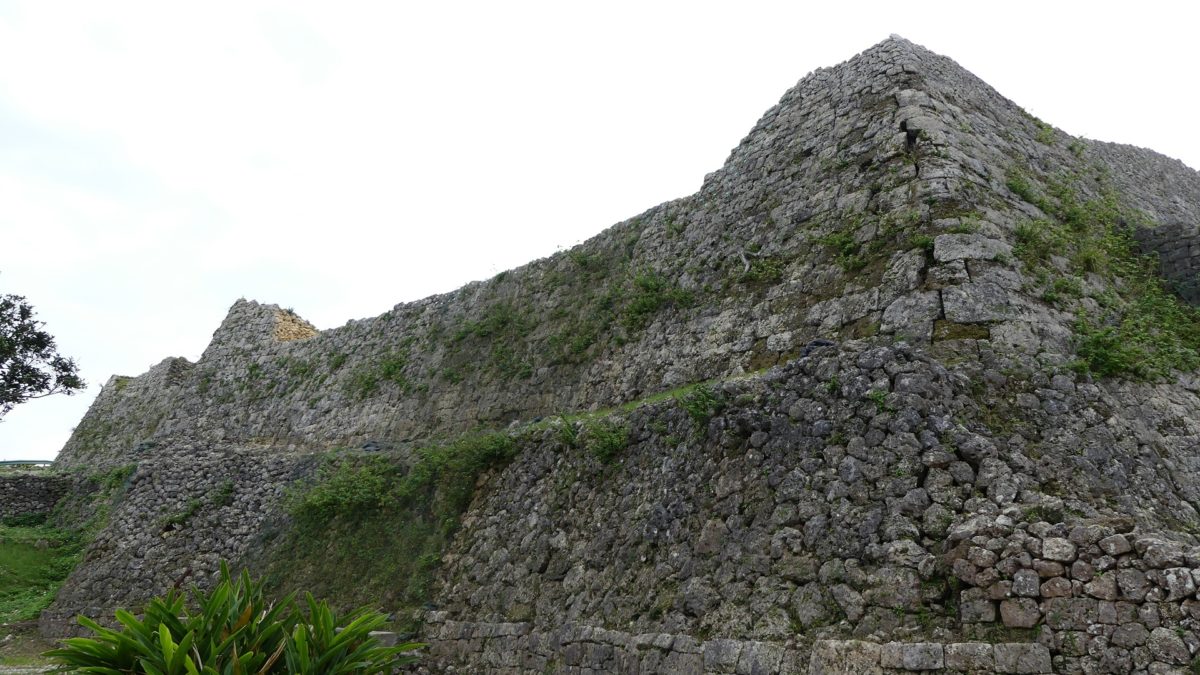
最後の三の郭には北の郭から向かいます。この郭は最も新しい郭で、アーチ型の裏門があり、護佐丸が築きました。北の郭と三の郭の石垣は、「相方積み」といわれる方式で作られています。この方式は加工した石灰岩をランダムに、しかし強固に積んでいくもので、この城では最も進化した複雑なものです。それでこれらの郭が最新とわかるのです。
You can walk from the North Enclosure to the Third Enclosure, the last one. The enclosure is also the newest one with the arch shaped back gate that Gosamaru built. The North and Third Enclosures have stone walls built in the method called “Aikata-zumi”. This method refers to piling randomly processed lime stones solidly. It is the most advanced and complex way in the castle, so we can see these enclosures are the newest.

三の郭~The Third Enclosure
裏門~The back gate
相方積みで積まれた三の郭の石垣~The stone walls of the Third Enclosure built with “Aikata-zumi”

その後~Later History

明治維新後、日本政府により琉球王国は廃止され、日本の一つの県になりました。城は中城村の役場として使われていました。第二次世界大戦で焼けてしまうまでは何らかの建物が残っていたようです。更には、日本陸軍が城に駐在し、陣地を作り始めました。ところが、その後すぐ命令により他に移っていきました。そのために石垣や土台など城の遺跡が現在までよく保存され残っているのです。この遺跡は2000年に琉球王国のグスク及び関連遺産群として世界遺産に登録されています。
After the Meiji Restoration, the Ryukyu Kingdom was abolished, as it was taken in as one of Japan’s prefectures by the Japanese Government. The castle was used as the village office of Nakagusuku Village. Some buildings seemed to remain until they were burned during World War II. In addition, the Japanese Army once stayed at the castle and started to build a position. However, they were ordered to moved to another soon after. That’s why the ruins of castle (stone walls, foundation etc) remain well preserved until today. They have been on the World Heritage List as Gusuku Sites and Related Properties of the Kingdom of Ryukyu since 2000.
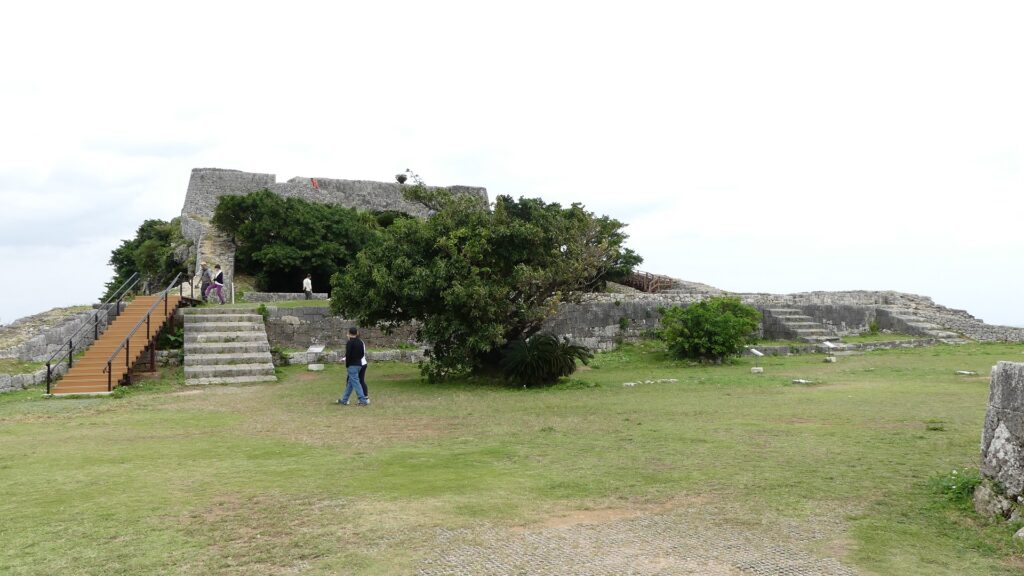
石垣の下の日本軍が掘った壕~The shelter that the Japanese Army dug under the stone walls

私の感想~My Impression

日本の本土では、石垣造りの城が一般化するのは16世紀のことです。戦での鉄砲の使用への対応と、建築技術の向上が要因であると言われています。沖縄では、石垣造りの城が本土より2世紀も早く出現しました。その理由の一つは、石灰岩が加工しやすいこともあったでしょう。もちろん戦いのための城であるからには、より強力な城にする必要もありました。更にもう一つの理由は、グスクの城主たちは彼らの権威や信仰を表したかったのだと思います。それでこんなにも美しく見えるのでしょう。
In Japan mainland, castles with stone walls became popular in the 16th century. It is said that the needs for wars using guns and developing construction technology caused that change. In Okinawa Island, castles with stone walls appeared two centuries earlier than on the mainland. One of the reasons for that was that lime stones were easier to process. Of course, the castles were used for a battle. Stronger castles were another reason. I think that another reasons was the lords of the “Gusuku” castles wanted to show their authority and faith, so that’s why they look very beautiful.

二の郭~The Second Enclosure

ここに行くには~How to get There

ここに行くには、車を使うことをお勧めします。
那覇空港から:
車の場合、那覇空港自動車道に名嘉地ICから入り、西原JCTで沖縄自動車道に合流し、北中城ICで降りてください。城跡はそこから5km以内で、駐車場もあります。
I recommend you to visit it by car.
From the Naha Airport:
By car, enter Naha Airport Expressway at the Nakachi IC, join Okinawa Expressway at the Nishihara JCT, and get off the expressway at Kita-Nakagusuku IC. The ruins are within 5 km from the IC, and offers a parking lot.

リンク、参考情報~Links and References

沖縄の世界遺産、中城城跡Nakagusuku-jo site, World Heritage of Okinawa
・「琉球王国、東アジアのコーナーストーン/赤嶺守著」講談社(Japanese Book)
・「列島縦断「幻の名城」を訪ねて/山名美和子著」集英社新書(Japanese Book)

85.福岡城~Fukuoka Castle

この城に天守はあったのでしょうか?
Did the castle have a Main Tower or not ?

立地と歴史~Location and History

古代から重要な地~Important place from Ancient times

城の位置と筑前国の範囲~The location of the castle and the range of Chikuzen Province

福岡城は元々、現在の福岡市にあたる、赤坂山とその脇にあった草ヶ江入り江周辺の地域にありました。古代には、ここには鴻臚館という中国や朝鮮からの人々をもてなす迎賓館がありました。中世の鎌倉時代に、武士たちが元の襲来を撃退したとき、ここで戦いがありました。1600年黒田氏は、筑前国福岡藩52万3千石の石高を、徳川幕府により与えられました。彼らは当時福崎と呼ばれていたこの場所に新しい城を作ることにしました。
Fukuoka Castle was originally an area around a mountain called Akasaka-yama and an arm of the sea called Kusagae beside the mountain, in what is now Fukuoka City. In ancient times, there was a guest house called Kouro-kan to used to host people from China and Korea. In the Kamakura Era of the Middle Ages, when the warriors repelled the Mongol Invasion, they battled the enemy there. In 1600, the Kuroda clan was granted the Fukuoka Domain of Chikuzen Province with an earning of 523,000 koku in rice by the Tokugawa Shogunate. They decided to build a new castle in this area called Fukuzaki then.

鴻臚館の遺跡~Thr ruins of Kouro-kan
赤坂の戦い、「蒙古襲来絵詞」より~Battle of Akasaka from “The picture scrolls of the Mongol invasion attempts against Japan”(licensed under Public Domain via Wikimedia Commons)
福岡藩初代藩主、黒田長政肖像画、福岡市博物館蔵~The Portrait of Nagamasa Kuroda, the first lord of Fukuoka Domain, owned by Fukuoka City Museum(licensed under Public Domain via Wikimedia Commons)

山と入り江を大改造~They reformed Mountain and Arm of Sea

彼らは山の形を整え、谷を埋め、本丸、二の丸、三の丸といった曲輪を南から北に向かって配置しました。また、山の部分を囲む内堀を、西側は草ヶ江入り江を利用することで、他の方角は掘削することで作り出し、城の東側にある那珂川と接続させました。
They reshaped the mountain and filled valleys, and set the Main Enclosure or “Honnmaru”, the Second Enclosure or “Ninomaru”, and the Third Enclosure or “Sannomaru” from south to north. They also created the inner water moat surrounding the mountain part by using the Kusagae arm of the sea as the western part, digging other direction parts, and connecting to the Naka River, the east of the castle.

福岡城下絵図~Part of an illustration of Fukuoka Castle(現地説明板より、from a sign board at the site)

結果的にこの地域は、広大な要塞となりました。これが福岡城です。城の正面は北の方角の海に向いており、「下ノ橋大手門」「上ノ橋大手門」「赤坂門」という3つの大きな門がありました。本丸がある城の後方には「追廻橋」という裏門が1つあるだけでした。本丸だけでも20もの櫓が高く屈曲した石垣にそびえていました。
As a result, the area became a huge scale fortress called Fukuoka Castle. The front of the castle faced the sea in the north with three large gates called “Shimonohashi-Ote-mon”, “Kaminohashi-Ote-mon”, and “Akasaka-mon”. The back of the castle, where Honmaru was located, had only one back gate called “Oimawashi-bashi” bridge. Honmaru itself had as many as twenty turrets on high and curved stone walls.

福岡城の模型~A miniature model of Fukuoka Castle(福岡城むかし探訪館~Fukuoka Castle Ruins Visitor Center)

天守の謎~Mystery of Main Tower

この城に関して興味深いことは、天守があったかどうかです。石垣の天守台は確かにありました。しかし、遺物、文献、図面といった天守の証拠となるものは見つかっていません。ところが、歴史家の中には、天守はあったはずと言う人もいます。江戸時代初期のある大名の手紙に、黒田候は幕府がどう思うか心配なので、天守を壊すことにしたと書いてあるのです。実に興味をそそる記述です。
An interesting question regarding the castle is if it had a Main Tower (“Tenshu”) or not. It had the stone wall base for Tenshu, but there are no evidence of Tenshu such as relics, documents, and drawings. However, some historians say that the castle must have had Tenshu, as a letter in the early Edo Period written by another lord says Kuroda would destroy their Tenshu because they were afraid of what Tokugawa Shogunate might think. It’s very intriguing.

上記の模型の天守部分は無色になっています~The part of the Main Tower is made uncolored in the model

特徴~Features

城周辺の航空写真~The aerial photo of around the castle

二つの公園~Two Parks

現在、福岡城跡は2つの公園に別れています。1つは舞鶴公園で、城の主要部分に当たります。もう1つは大濠公園で、もともとは草ヶ江入り江だったものが、大濠と呼ばれた城の内堀となった所です。ただ、大きな池のようにも見えます。それは、大昔は海の一部だったからなのです。
Now, the ruins of Fukuoka Castle are divided into two parks. One of them is Maiduru Park which was the primary part of the castle. The other one is Ohori Park which was originally Kusagae arm of the sea, then became an inner moat of the castle, called Large Moat or “Ohori”. Ohori Park still has the large moat, but it looks like a large pond. You can see that`s because it was part of the sea a long time ago.

大濠公園~Ohori Park

舞鶴公園は、更に広々としています。多くの遺跡が散らばっています。城の北部にあった三の丸の3つの門のうち、下ノ橋大手門だけが現存しています。2階建ての櫓門であり、ほぼ元あった通りの姿となっています。この門は明治時代に一旦単層に改造されました。2000年に一部が火災に遭った後、現在あるように復元されました。
Maiduru Park is even more spacey, so a lot of ruins are disseminated. Only the Shimonohashi-Ote-mon Gate remains out of the three front gates at Sannomaru, the north part of the castle. It is a two-story turret gate which looks nearly like the original one. It was once modified to a one-story gate in the Meiji Era. After the gate partly burned in 2000, it was restored as it is today.

下ノ橋大手門(遠景)~Shimonohashi-Ote-mon Gate, A distant view
下ノ橋大手門(近景)~Shimonohashi-Ote-mon Gate, A close-range view

三の丸地区~Area of Third Enclosure

上ノ橋大手門跡の方から公園に入ると、大きな空き地があります。江戸時代、ここには三の丸の多くの居住や統治のための屋敷がありました。その後は、平和台球場のような近代施設が建設されました。1999年に球場が撤去された後発掘が行われ、城があった遥か前には迎賓館である鴻臚館があったことがわかりました。鴻臚館跡展示館では、発見された遺物が展示されています。また、福岡城むかし探訪館では福岡城の歴史を学ぶことができます。
If you enter in the park through the ruins of Kaminohashi-Ote-mon Gate, you can see a large vacant area. There were many halls for living and governance at Sannomau in the Edo Period. After that, modern facilities were built there, such as the Heiwadai Stadium. After the stadium was demolished in 1999, the Excavation team found out that there was an ancient guest house called Kouro-kan long before the castle. You can see the findings of the excavation in Kourokan Ruins Exhibition Hall, as well as the history of the castle in Fukuoka Castle Ruins Visitor Center.

上ノ橋大手門跡~The ruins of Kaminohashi-Ote-mon Gate
現在の三の丸~The present Third Enclosure
平和台球場の記念碑~The monument of the Heiwadai Stadium
鴻臚館跡展示館~Kourokan Ruins Exhibition Hall
鴻臚館の遺物~Some of the findings of the excavation in Korokan Ruins Exhibition Hall

二の丸、本丸へ~To Second and Main Enclosures

城周辺の地図~The map around the castle

二の丸と本丸へは、三の丸から登っていきます。二の丸は本丸を囲んでいます。二の丸に関しては、2階建てで50mの長さがある多門櫓が現存しています。この櫓は城の裏口にあり、現在も堅く守っているように見えます。1971年には重要文化財にも指定されました。
You can climb from Sannomaru to Ninomaru and Honmaru. Ninomaru is surrounding Honmaru. Regarding to Ninomaru, there is a two-story and over 50m long turret called “Tamon-Yagura” that remains in its original state. It was located at back entrance of the castle, so even now it looks very defensive. It was also designated as an Important Cultural Property in 1971.

三の丸から見た二の丸~The Second Enclosure from the Third Enclosure
現存する多門櫓~The remaining Tamon-Yagura Turret

本丸は城のもっとも高い位置にあります。巨大な天守台に石垣が際立っています。前述した通り、研究者はこの石垣の上に天守があったのかどうか考察しています。ここからは福岡市一帯を見渡すことができます。祈念櫓は本丸で唯一残っている建物です。この櫓は一旦他の場所に移されましたが、1983年に元の場所に戻されました。
Honmaru was at the highest point of the castle. The large stone wall base for Tenshu is outstanding. Researchers wonder if the Tenshu was on the base, as I mentioned above. You can observe the whole area of Fukuoka City from there. Kinen Turret is the only remaining building at Honmaru. It was once moved to another, but returned to its original position in 1983.

天守台(外側)~The base for the Main Tower, the outside
天守台(内側)~The base for the Main Tower, the inside
天守台からの眺め~A view from the base for the Main Tower
祈念櫓~Kinen Turret

その後~Later History

黒田氏は、現在は福岡市として知られている城とその城下町を江戸時代末期まで統治しました。明治維新後、城のほとんどの建物は撤去されるか、近代施設に置き換えられました。第二次世界大戦前は軍の基地、戦後は平和台球場といった具合です。城跡は舞鶴公園と大濠公園となっています。最近、福岡市はこの2つの公園を合わせたセントラルパーク構想を発表しました。また、残っている文書を基に福岡城のいくつかの櫓を、発掘の成果を基に鴻臚館の建物を復元するとのことです。それには長い期間がかかります。
The Kuroda clan continued to govern Fukuoka Castle and the castle town, that are now known as Fukuoka city, until the end of the Edo Period. After the Meiji Restoration, most of the buildings in the castle were demolished or replaced with modern facilities like the Army base before World War II, or the Heiwadai Stadium after the war. The ruins of the castle have been turned into Maiduru Park and Ohori Park. Recently, Fukuoka City has announced that it will develop the Central Park, including the two existing parks. The city will also restore some of Fukuoka Castle’s turrets, based on the documents that remain as well as the buildings of Kouro-kan, based on the excavation’s findings. They expect the restoration will take a long time.

1990年頃の城周辺の航空写真~The aerial photo of around the castle around 1990

私の感想~My Impression

私は、福岡城には一時完成したか、建設中の天守があったのではないか、ただし幕府の権威を憚って計画的に自ら解体したのではないかと思っています。それが天守があった証拠が見つからない理由でしょう。また、最近の人たちはあまり福岡城跡を歴史公園として見てこなかったように思います。レジャー、運動、そしてオフィスビルとしての用途のためです。しかしながら、この城跡はまだまだ史跡として大きな潜在能力を持っています。今後城の建物が充実してきたら、また訪れてみようと思います。
I guess that Fukuoka Castle once sported a completed or under construction Main Tower, but Kuroda had to destroy it systematically by themselves considering the Shogunate’s authority. That’s why there is no evidence of the Main Tower.
I also think that recent people have not been interested in the ruins of Fukuoka Castle as a historical park. They think the parks are for leisure, exercise, or officials buildings. However, the ruins still have a great potential for a historic site. I will be waiting for some buildings to be renovated so I can visit them again.

裏御門跡~The ruins of the Back Gate

ここに行くには~How to get There

福岡市地下鉄空港線の赤坂駅または大濠公園駅から徒歩で10分以内です。
車の場合:都市高速の天神北または西公園ランプから約3kmのところです。舞鶴公園に駐車場があります。
It takes less than 10 minutes From Akasaka or Ohori-Koen station on Kuko line, Fukuoka City Subway to get there on foot.
If you want to go there by car: It is about 3 km away from the Tenjin-kita or Nishi-koen Ramp on Urban Expressway. Maiduru park offers a parking lot.

リンク、参考情報~Links and References

福岡城むかし探訪館~Fukuoka Castle Ruins Visitor Center(Only Japanese?)
・「よみがえる日本の城20」学研(Japanese Book)
・福岡市「セントラルパーク構想」(Fukuoka City Official Document)

189.鞠智城~Kikuchi Castle

It was mysterious, but its achievement took root.
この城は不思議な存在でしたが、その成果は地域に根付きました。

外郭から見た復元された鼓楼~The view of the restored drum tower from the outline

立地と歴史~Location and History

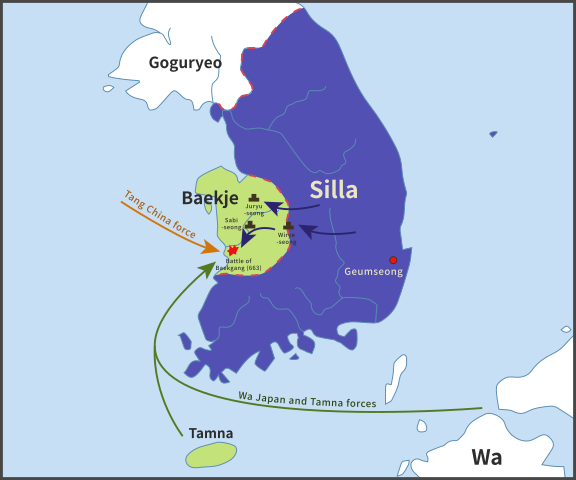
鞠智城は西日本における古代山城の一つです。663年の朝鮮での白村江の戦いの後、朝廷によって築かれました。日本は百済国を助けようとしたのですが、唐と新羅の連合軍に敗れてしまったのです。天智天皇は連合軍の日本への侵攻を恐れ、山城の建設を命じ、それは百済からの難民の力を借りて行われました。そのため、これらの城は「朝鮮式山城」とも呼ばれています。
Kikuchi Castle was one of ancient mountain castles in western Japan. It was built by the Imperial Court after the Battle of Baekgang, Korea in 663. Japan tried to help Baekje, but was beaten by the ally of Tang and Silla. Emperor Tenchi was scared of invasion by the alley, so he ordered to build these castles with the help from the refugees from Baekje. That’s why these castles are also called “Korean style mountain castles”.

白村江の戦いの図~The map about the Battle of Baekgang(licensed by Samhanin via Wikimedia Commons)

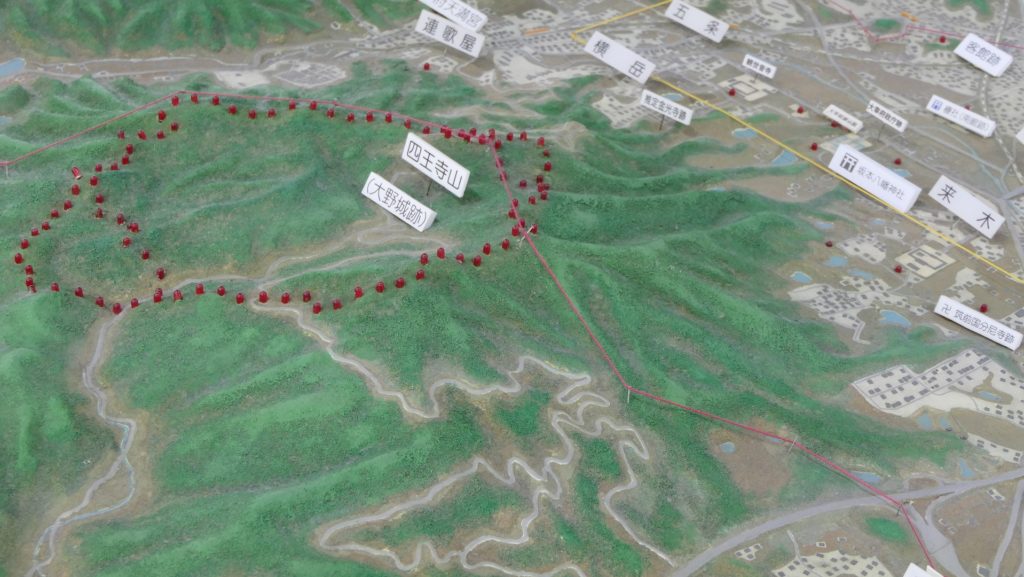
鞠智城は、九州地方で記録されている5つの山城のうちの一つです。その他は、大野城、水城、基肄城、金田城です。これらの城は侵攻があった場合に想定される進路に沿って置かれました。しかしながら、鞠智城については少し変なのです。大野城が近くにある大宰府政庁からは60kmも離れていて、もう一つの想定攻撃路である有明湾からも30km離れていました。この城は補給基地であったとか、やはり有明での攻撃に備えたものだという人もいます。ある歴史家は、百済からの難民の収容施設だったのではないかと言っています。なぜならこの周辺地域は、百済との貿易や文化面で関わりがあったからです。事実、この遺跡の貯水池跡から百済観音像が発見されました。加えて、この場所は他の古代山城と比べて低い位置にあり、居住にも適していました。
Kikuchi Castle was one of the five recorded ones in Kyushu region. The others were Ono, Mizuki, Kii, and Kaneda. They had their locations on the way or alongside of expected routes for the invasion. However Kikuchi was a little strange. It was about 60 km away from the Dazaifu government, near Ono Castle, and nearly 30 km from Ariake Bay, another possible attack route. Some speculate it could have been a supply base or preparation for an attack on Ariake. A historian says that the castle could nave been an accommodation for refugees from Baekje, because the area around the castle had been related to Baekje’s in trading and culture. Indeed, a Baekje Buddha statue was excavated from the ruins of the water reservoir. In addition, this site is lower than other ancient mountains castles that made it livable for people.

九州地方の5つの記録された古代山城の位置~The location of five recorded ancient mountain castles in Kyushu region

その後侵攻の危機は去ったのですが、この城は10世紀まで約200年に渡って使われました。この城の歴史の後半においては、軍事拠点、政庁、それに倉庫として使われたようなのです。城の周辺地域は肥沃になり、貿易でも繁栄しました。城が廃城となって約300年後、菊池氏が日本の武士団の頭領となり、侵攻してきた蒙古軍と戦いました。
Despite the crisis of the invasion being resolved, the castle was used for about 200 years until the10th century. In the later stages of its life, it seemed to be an army base, government office, and storage. The area around the castle became fertile and prosperous with trading. About 300 years after the castle was abandoned, the Kikuchi clan fought with the Mongolian Invasion as the leader of Japanese warriors.

菊池武房、「蒙古襲来絵詞」より~Takefusa Kikuchi from “The picture scrolls of the Mongol invasion attempts against Japan”(licensed under Public Domain via Wikimedia Commons)

特徴~Features

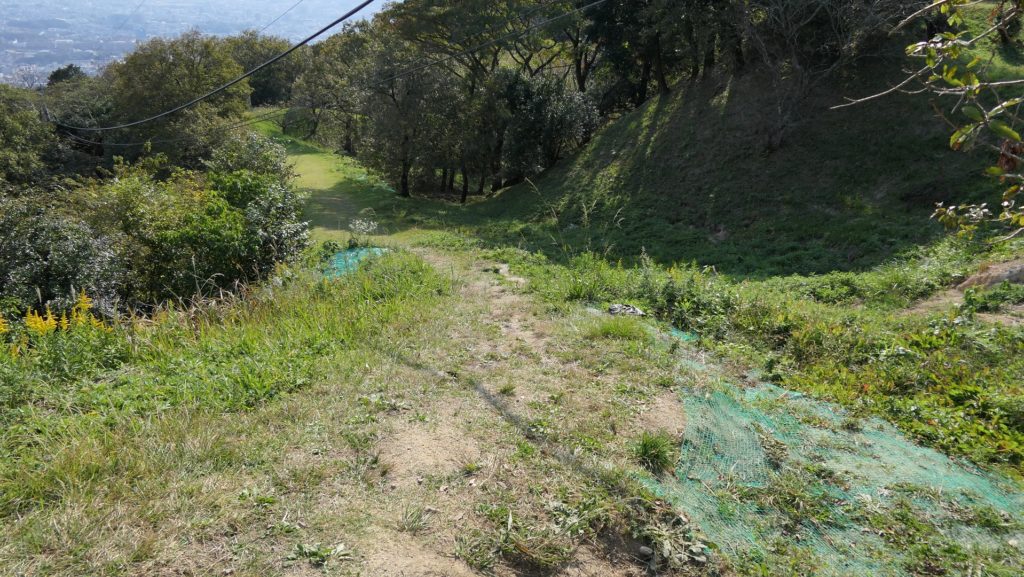
近世の城が持つイメージとは違い、この城の主な構造物は、外周が3.5kmに及ぶ外郭部分です。そこには4つの門があり、その間には版築による土塁が続いていました。
Unlike the image of early modern age castles, the main structure of the castle is outlined with a perimeter about 3.5 km long. It had four gates and walls between them were made from rammed earth.

城周辺の地図~The normal map around the castle

外郭土塁の一部~Part of the earthen walls on the oitline

外郭沿いの歩道は現在トレッキングコースになっています。門跡を一つ一つたどっていくことで、城がどのくらいの大きさだったのかがわかります。
The path along the outline is now used for trekking. You can see the ruins of the gates one by one, and feel how large the castle was.

歩道は外郭の土塁に沿っています~The path goes alongside the earthen walls on the outline

駐車場から一番近いのは深迫門で、通用門として使われたとみられます。
The nearest one from the parking lot is Fukasako Gate which could have been used as the side entrance.

深迫門跡~The ruins of Fukasako Gate

次に現れるのは堀切門で、ここが正門だったようです。
The next comes Horikiri Gate which could have been the main entrance.

堀切門跡~The ruins of Horikiri Gate

池の尾門というもう一つの門跡まで見て回ることができます。
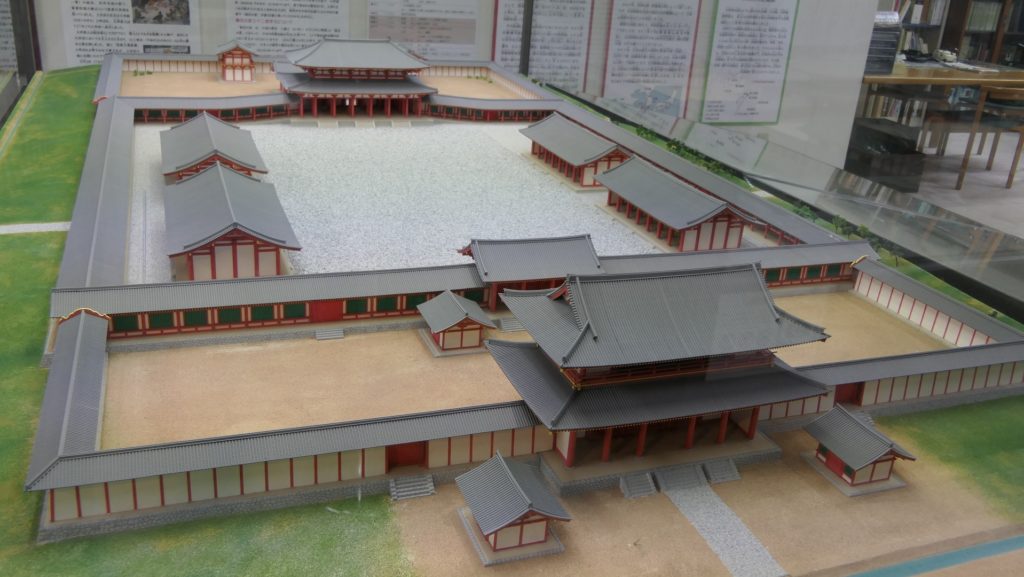
外郭の内側には、恐らく鼓楼として使われたであろう三層の塔があり、最近発掘の成果により復元されました。この塔は平面が八角形でした。これは百済から取り入れた様式であり、古代日本ではとても珍しいものです。
You can go ane see another ruins of gate called Ikenoo Gate.
Inside of the outline, the three-layer tower, probably used as the drum tower, has been restored recently with the success of excavation. This tower is octagonal which came from the Baekje style, making it very unique to ancient Japan.

復元された鼓楼~The restored drum tower

兵舎や倉庫といった別種の建物も復元されています。
Other types of buildings such as barracks and warehouses have also been restored.

復元された兵舎~The restored barrack(licensed by 小池隆 via Wikimedea Commons)
復元された倉庫~The restored warehouse(licensed by 小池隆 via Wikimedea Commons)

その後~Later Life

10世紀に廃城となった後、城跡は畠となりました。それもこの地域の繁栄を表しているのかもしれません。この地域が最初に遺跡として調査されたのは1937年のことでした。1967年から2010年に渡っては32回も発掘が行われました。それ以来、研究者はシンポジウムを開催し、この城についての議論を深めています。城跡は歴史公園「鞠智城」として整備されており、鼓楼などの建物が復元されています。
After being abandoned in the 10th century, the ruins of the castle were turned into a farm. That might have shown the prosperity of this area. This area was first researched as ruins in 1937. It was excavated 32times between 1967 and 2010. Since then, while researchers have held symposiums and debated issues with the castle, the ruins has been developed as a historical park called “Kikuchi Castle”. Several buildings such as the drum tower have been restored.

1970年代の城跡周辺の航空写真~The aeriel photo of the area around the castle ruins in the 1970s

最近の城跡周辺の航空写真~The recent aerial photo around the castle ruins

今でもまだ畠が少し残っています~Few farm still remains now

私の感想~My Impression

この城跡は西側に面しているため、晴れた日の夕方には美しい夕日を見ることができます。それは絶好の写真スポットでもあります。私としては、公園の中央にある復元建物を見るだけではなく、歩道に沿った門の跡も見て回っていただきたいです。もっとこの城のことが理解できるでしょう。できたら岡山県の鬼ノ城のように門の一つでも復元されたらと思います。そうすれば世界中から観光客を呼び寄せることも可能かもしれません。
As the ruins face the west direction, you can see the beautiful sunset on a sunny evening. It can also be a good photo spot. I recommend visiting the restored buildings at the center of the park as well as the ruins of the castle’s gate ruins along the sidewalk to know more about the castle. I hope a gate might someday be restored, like Ki-no-Jo in Okayama Prefecture. That way, the castle may attract many people from around the world.

復元された鬼ノ城の西門~The restored Western Gate of Ki-no-Jo

ここに行くには~How to get There

ここに行くには車がお勧めです。九州自動車道植木ICから約20分、熊本空港から約40分かかります。歴史公園に駐車場があります。
I recommend using a car to get there. It takes about 20 minutes from the Ueki IC on Kyushu Expressway, or about 40minutes from Kumamoto Airport. The park offers a parking lot.

リンク、参考情報~Links and References

歴史公園鞠智城・温故創生館(Only Japanese?)
・「古代山城「くくちのき(鞠智城)」九州王朝再興の夢舞台」松見正宣著、文芸社(Japanese Book)
・「古代山城 鞠智城を考える―2009年東京シンポジウムの記録」笹山晴生監修、山川出版社(Japanese Book)

error: Content is protected !!