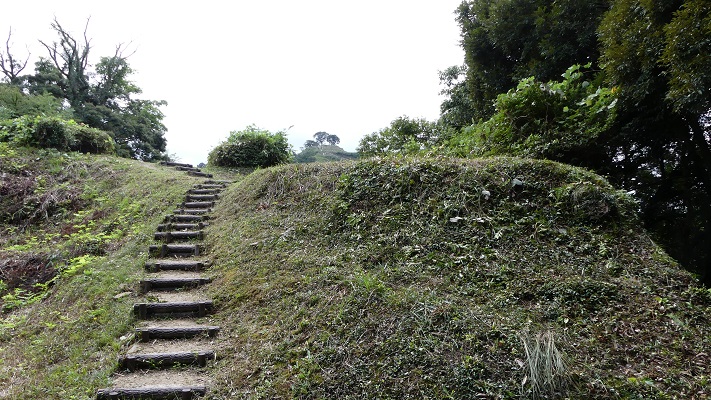
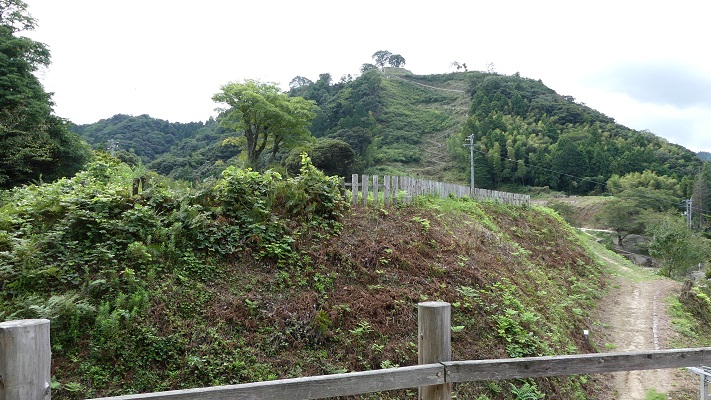
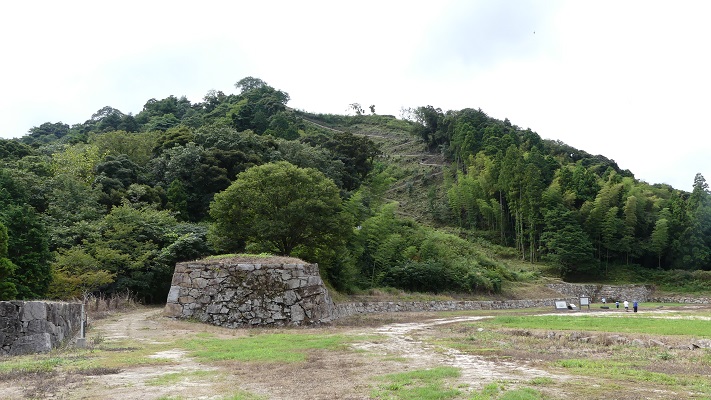
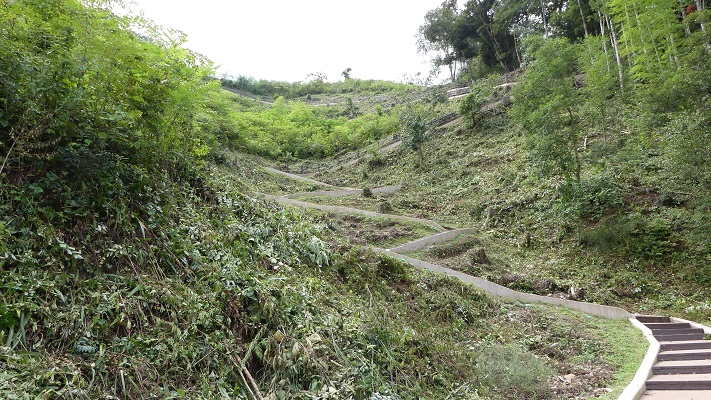
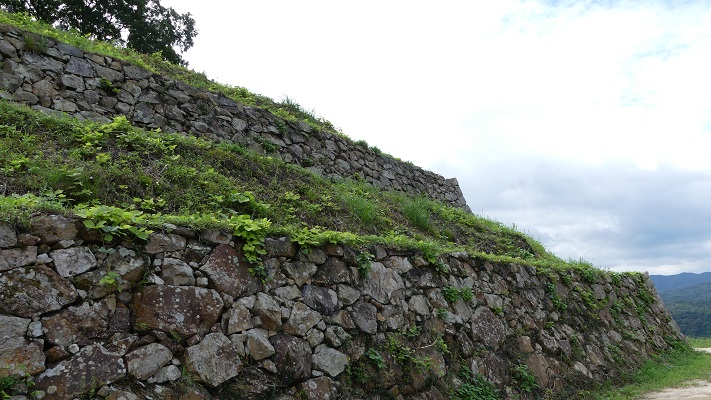
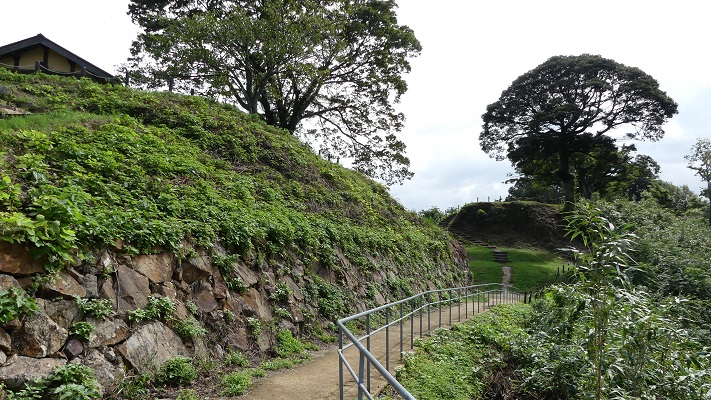
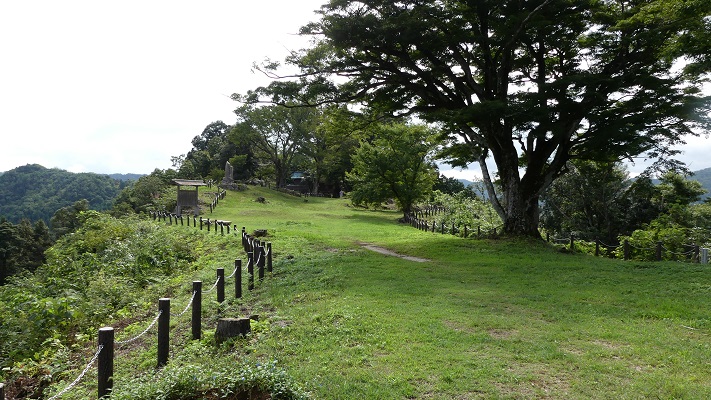
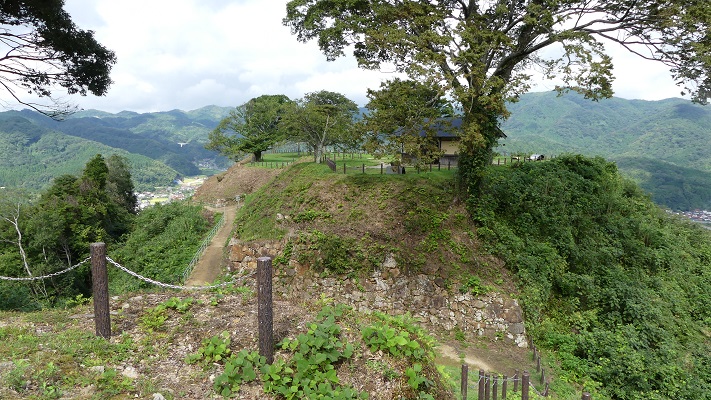
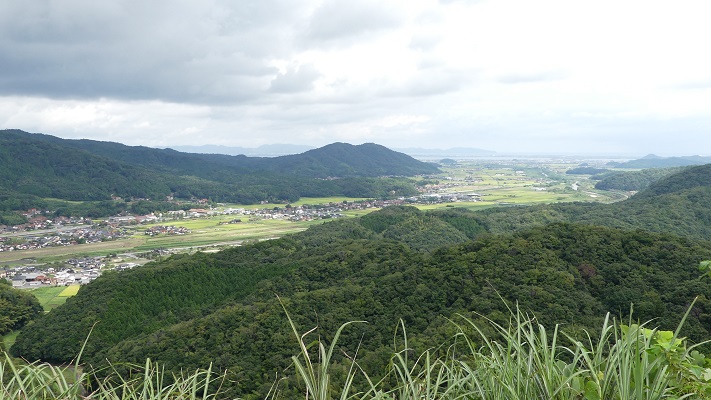
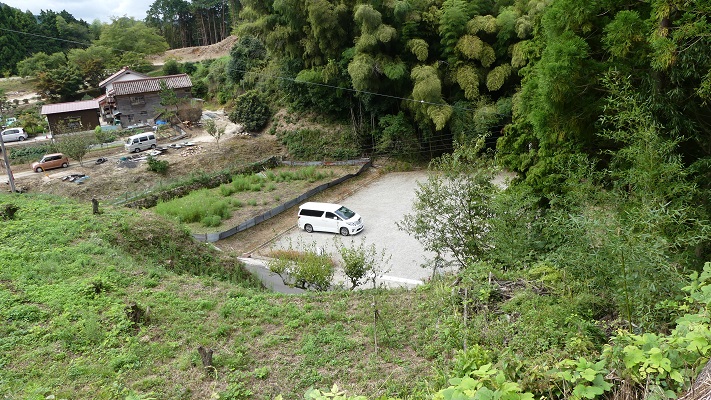
You can realize the Mori Clan’s long history by walking along the tour route.
Later History
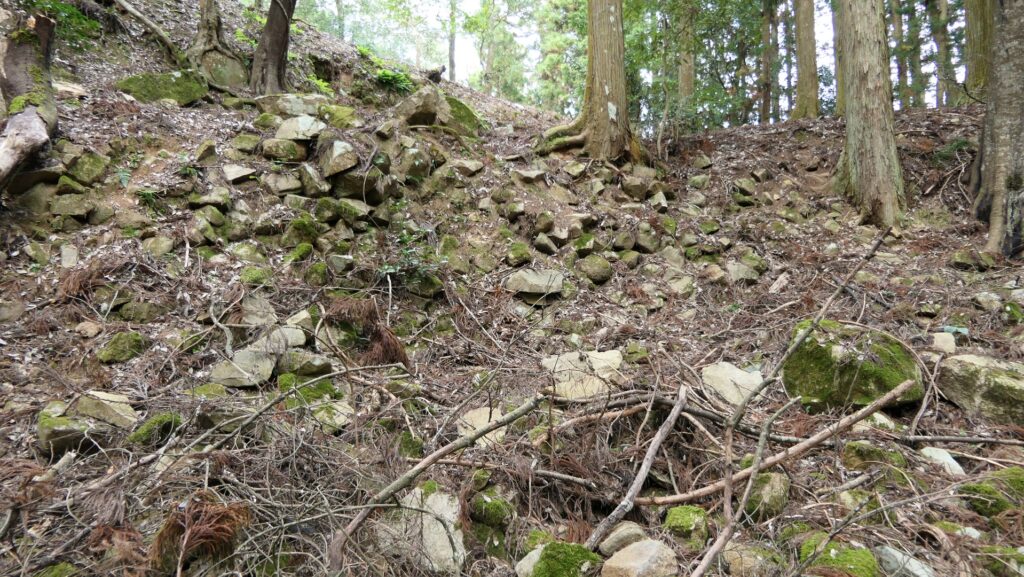
After Yoshida-Koriyama Castle was abandoned, the Asano Clan managed to own its area during the Edo Period. This was because the Mori Clan’s territory had been reduced due to the their lost in the Battle of Sekigahara in 1600. The Asano Clan destroyed the stone walls of the castle after the Shimabara Rebellion in 1637. The Tokugawa Shogunate ordered the lords in western Japan to do it so that even abandoned castles would not be reused by other rebels.
The destroyed stone walls of the Third Enclosure
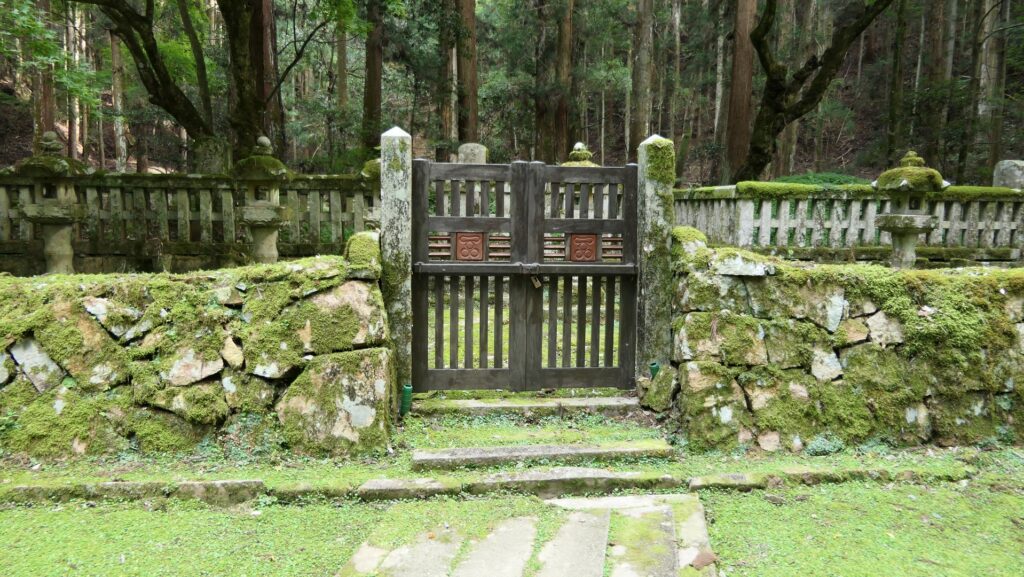
By contrast, the grave of Motonari Mori, which was built at part of the castle by his grandchild, Terumoto Mori, has been maintained. The Asano Clan allowed the lord and warriors of the Choshu Domain by the Mori Clan to pay a visit to the grave. As a result, warriors of other domains also visited it as the holy spot for a great warlord. After the Meiji Restoration, the grave was developed further, gathering the graves of other ancestors of the Mori Clan probably because the Choshu Domain was one of the victorious clans of the restoration. The castle ruins have been designated as a National Historic Site since 1940.
The grave of Motonari Mori in the castle
Features
Going to Entrance of Castle Ruins
Today, if you drive to the area around the ruins of Yoshida-Koriyama Castle, you will find some names of the local area like Katsura and Fukuhara. They are the origins of the Mori Clan’s senior vassals until the end of the Edo Period. History fans might be excited to just see them.
The map around Yoshida Town, Akitakada City
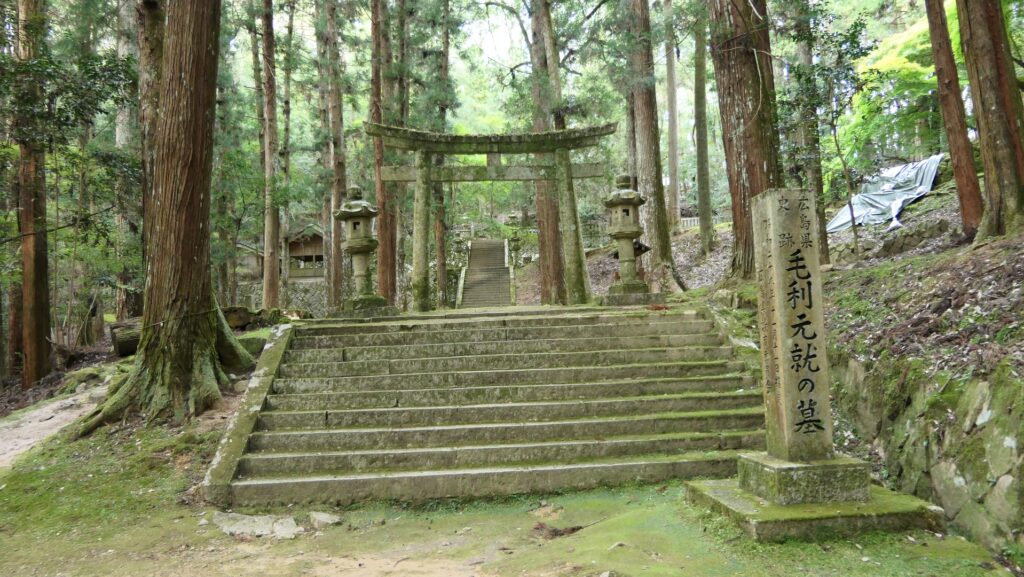
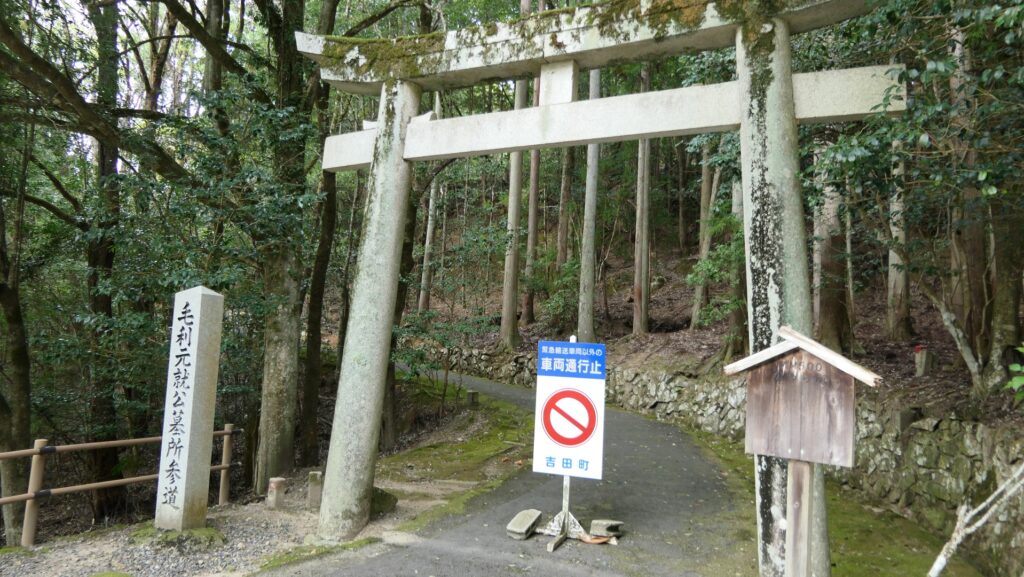
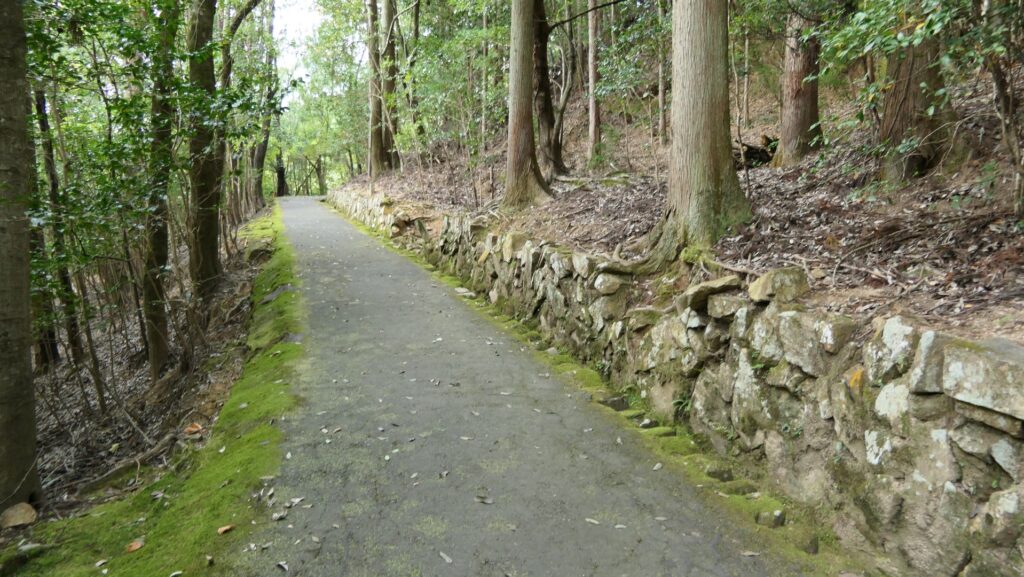
There is the tour route which is recommended by officials. Its starting point is the shrine gateway of Motonari’s grave, beside the parking lot at the foot of the mountain. If you walk along the approach towards the grave for a while, you will reach it. This may be the most developed place in the castle ruins as the holy spot. There is also Toshunji Temple Ruins which was established by Terumoto there and eventually moved to Hiroshima, Hagi and Yamaguchi with the lords of the Mori Clan.
The map around the castle
The shrine gateway of Motonari’s graveThe approach towards the graveThe grave of MotonariToshunji Temple Ruins
Trail on Ridge of Mountain
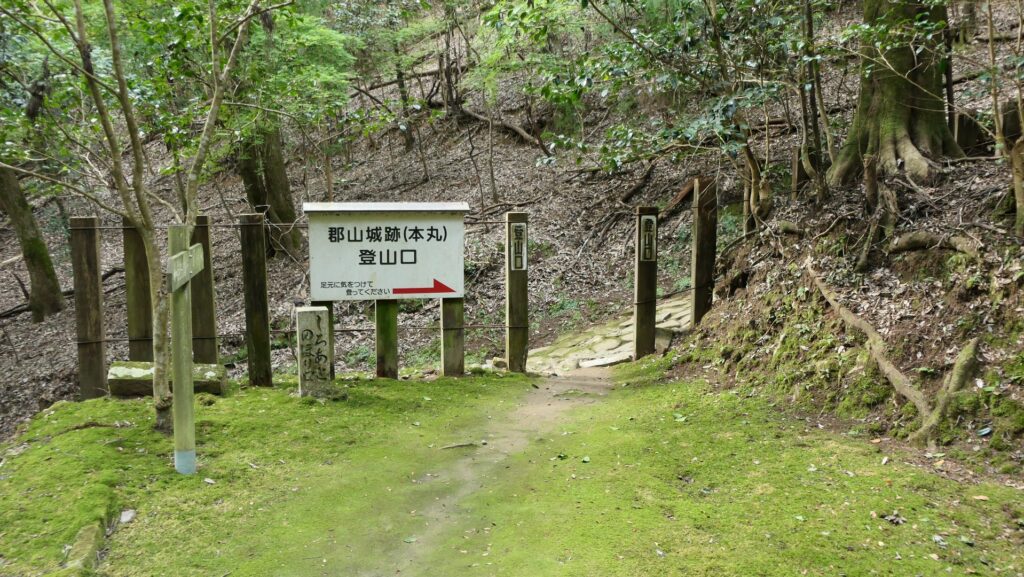
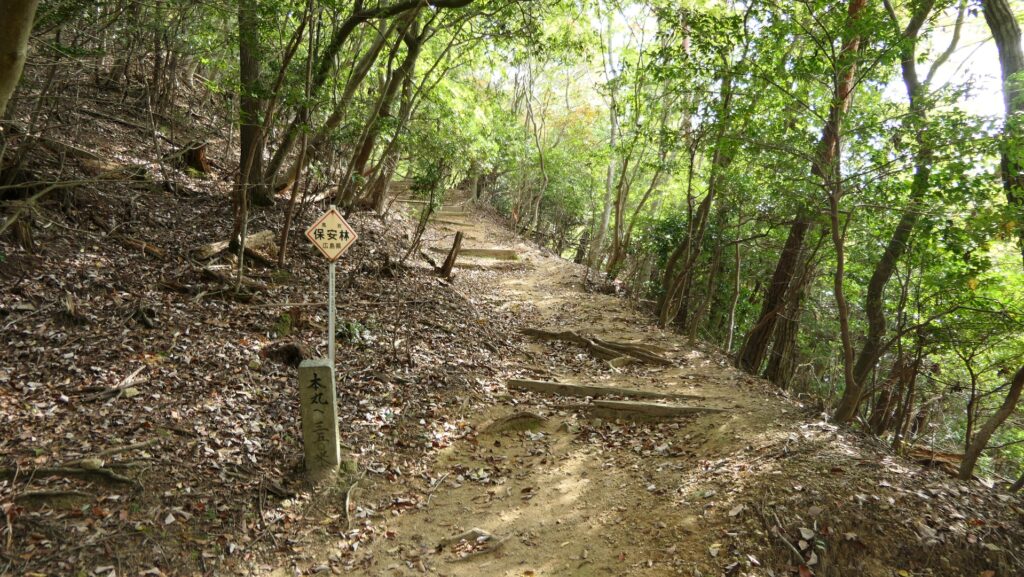
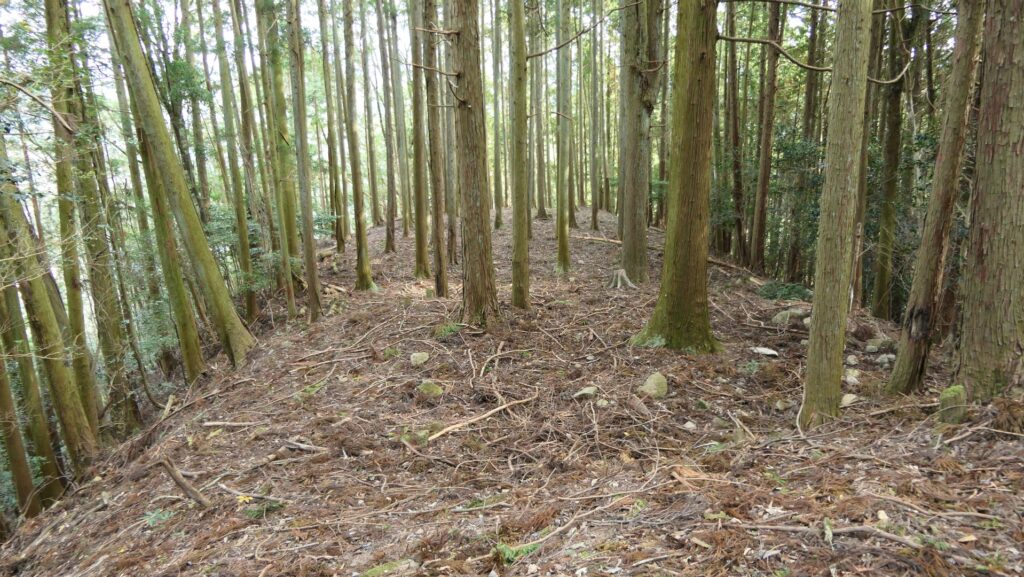
You can climb the trail to the top of the mountain from there, on one of its six ridges. It is basically a long trek which takes about 30 minutes to reach the top. You may find some ditches dividing the enclosures or wild animals like deer. Be careful not to provoke them.
The starting point of the trailThe trail goes on the ridgeA ditch dividing the enclosuresMeeting with a deer
Enclosures on Top of Mountain
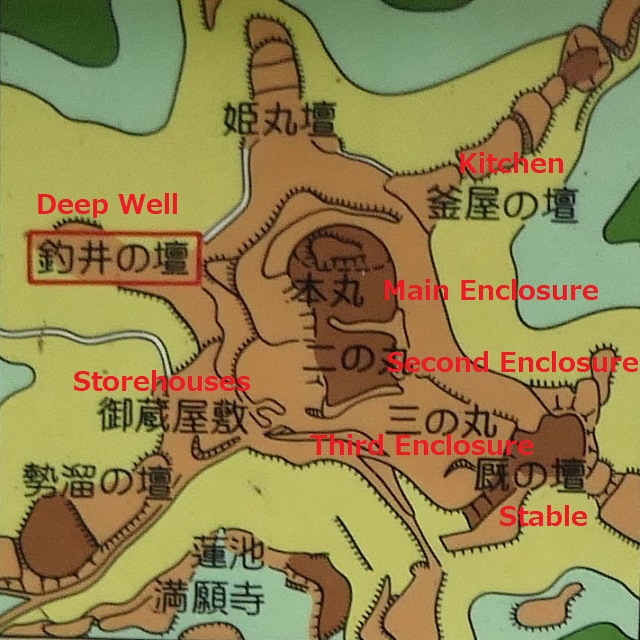
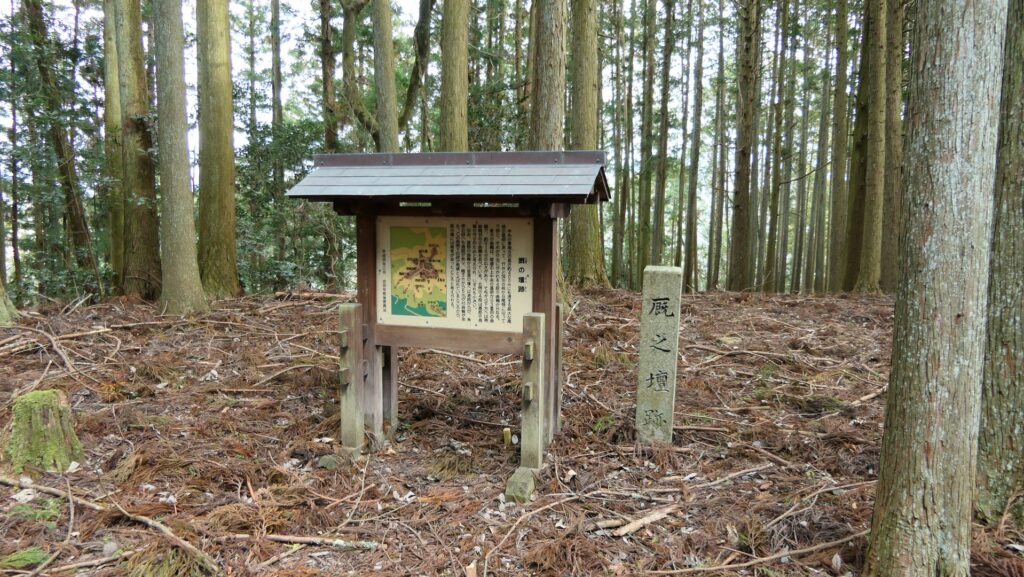
You will eventually arrive at the ruins of Okurayashiki or the Storehouses below the top. The top consists of three tiered enclosures of the Main, Second and Third. The six ridges spread from the top which also have so many enclosures.
The ruins of the StorehousesThe topographical map of the mountain top, from the signboard at the site, adding the red letters
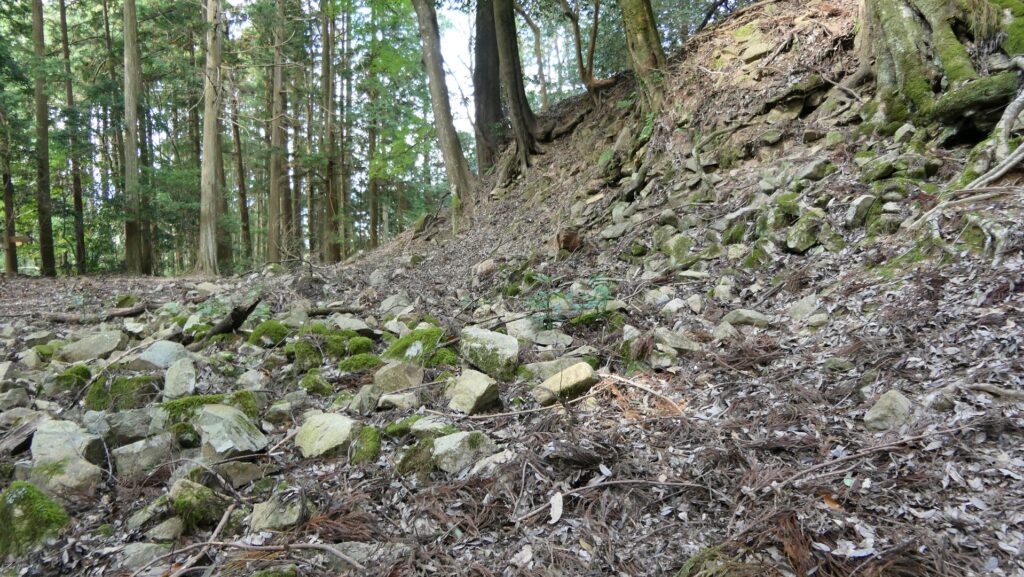
You will find countless stones collapsed which lie around the Storehouses Ruins. It is thought that this was caused by the Asano Clan following the shogunate’s instruction after the Shimabara Rebellion. These stones have been left there for nearly 400 years. However, if you walk around the wall of the Third Enclosure, you will notice some stone walls remaining as they were.
The collapsed stones lying around the Storehouses RuinsSome remaining stone walls of the Third Enclosure
You can also walk around some enclosures on the six ridges such as Tsurii or the Deep Well, Umaya or the Stable, and Kamaya or the Kitchen. There will be a sign warning visitors not to enter that unstable area. Please make you don’t enter that area since it’s very unstable and could cause the land to collapse. Watch your steps as they are reclaiming to nature.
The Deep Well EnclosureThe Stable EnclosureThe ridge over the Stable EnclosureThe Kitchen EnclosureSone ridges are not allowed to enter as of October 2022
Yoshida-Koriyama Castle was located in Aki Province which is modern day the western part of Hiroshima Prefecture. It was also located in a central mountainous area in the Chugoku Region. It started off as a small mountain castle on one ridge of Koriyama Mountain, which was built by a local lord of the Mori Clan sometime in the Middle Ages. The lord of the clan in the Sengoku Period, Motonari Mori developed the castle covering the whole mountain as he governed almost all the region, he became a great warlord.
The range of Aki Province and the location of the castle
The Mori Clan had been basically a typical local lord which governed Yoshida manor since the 13th Century. As time passed by, their relatives became the clan’s senior vassals such as the Fukuhara and Katsura Clans. Even in the beginning of the 16th Century during the Sengoku Period, the lord of the clan lived in the small Yoshida-Koriyama Castle while the senior vassals lived in their own castles or halls. On the other hand, they had a strong allegiance. This was one of the reasons why they were finally successful in the region.
The relief map around the castle, the home bases of the senior vassals were in different places from the castle
Motonari has many Difficulties
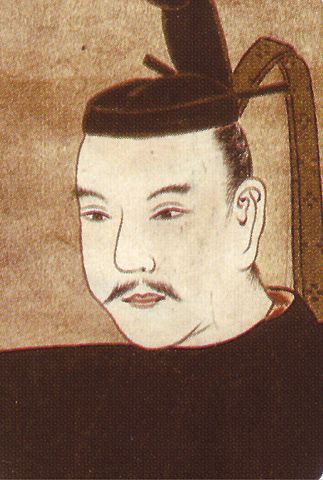
When Motonari first entered Yoshida-Koriyama Castle to become the lord of the clan in 1524, the situation was already bad. The previous lords all died young, as a result, the power of the clan continued to decrease. In addition, the Aki Province was divided by about 30 small local lords like Motonari. Meanwhile, strong warlords were growing in power as the Ouchi Clan in Suo Province, west of Aki, and the Aamago Clan in Izumo Province, north of Aki. The local lords in Aki had to support either clan, otherwise, they would have been defeated. The Mori Clan supported the Amago Clan, however, the clan tried to remove Motonari from being the successor and supported another person whom they can easily control. However, Motonari somehow survived with his senior vassals’ support.
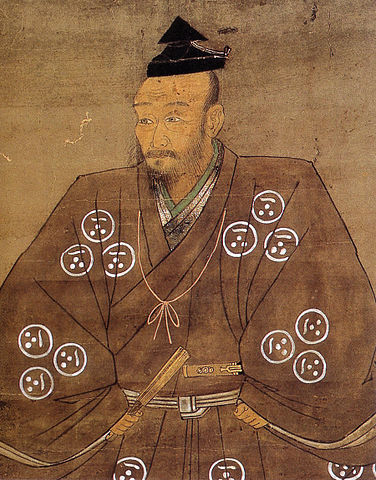
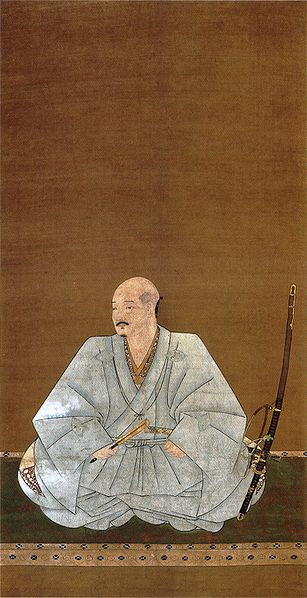
The portrait of Motonari Mori, owned by Mori Museum (licensed under Public Domain via Wikimedia Commons)The portrait of Tsunehisa Amago, the lord of the clan at that time, owned by Doukouji Temple (licensed under Public Domain via Wikimedia Commons)
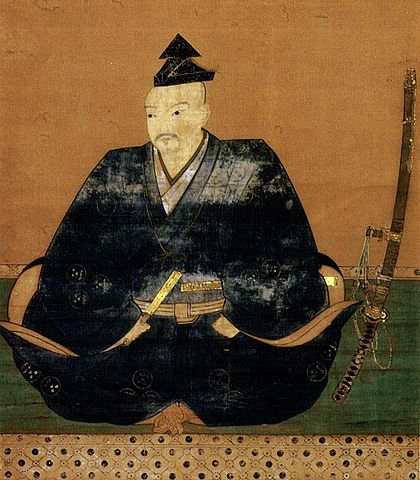
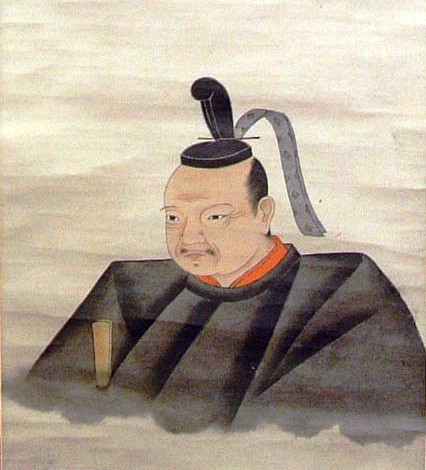
To survive under these difficult situations, Motonari acted like a mediator, not a ruler, in his province. For example, he proposed making a peace treaty with the competitive Shishido Clan in his province by marrying his daughter with the clan’s successor. The clan eventually became another senior vassal of Motonari. He also made alliances with local lords in Aki and Bingo (east of Aki) Provinces with a round-robin contract. A round-robin contract is an equal opportunity for everyone involved with no true leader. He always managed to persuad his three son’s Takamoto, Motoharu and Takakage to be united for the clan’s prosperity (That would create the popular episode, called Three Arrows, sometime later. It refers that Motonari tried to demonstrate the strength of teamwork by using arrows. First, he asked them to break one arrow which was easy. However, when he asked them to break all three arrows at the same time, it was impossible. This was to show his 3 sons that working together was better than working independently.). After that, he sent Motoharu and Takakage as the successors of the Kikkawa and Kobayakawa Clans which also became his relatives. However, he sometimes decided to fight, for instance, when he defeated his senior vassal, the Inoue Clan because they got out of control.
The portrait of Takamoto Mori, owned by Joeiji Temple (licensed under Public Domain via Wikimedia Commons)The portrait of Takamoto Mori, owned by Waseda University Library Temple (licensed under Public Domain via Wikimedia Commons)The portrait of Takakage Kobayakawa, owned by Beisanji Temple (licensed under Public Domain via Wikimedia Commons)
A big crisis came to Yoshida-Koriyama Castle in 1540 after Motonari changed his allegiance from the Amago Clan to the Ouchi Clan. The Amago Clan with about 30 thousand troops surrounded the castle in September. The castle seemed to look small, but Motonari was besieged with about 8 thousand people including warriors and farmers for 4 months, waiting for the reinforcement from the Ouchi Clan. It finally came in December before the Amago troops had to withdraw. This failure of the Amago Clan was said to be the first sign of their destruction which was done in the battle of Gassan-Toda Castle in 1566 by Motonari.
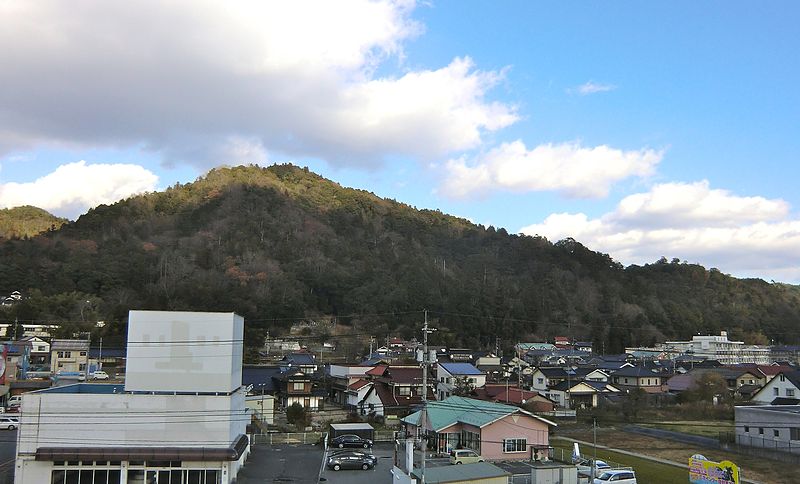
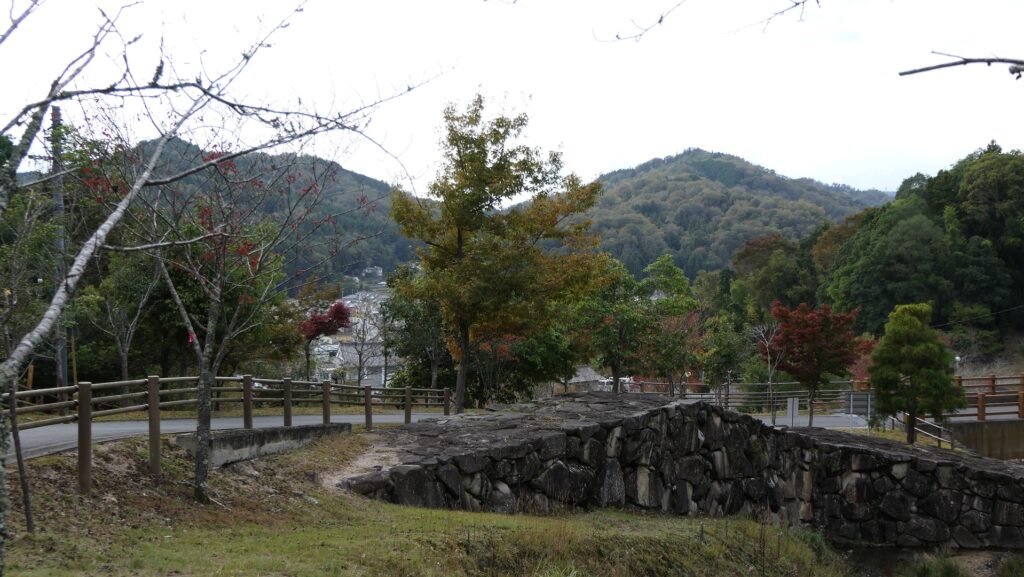
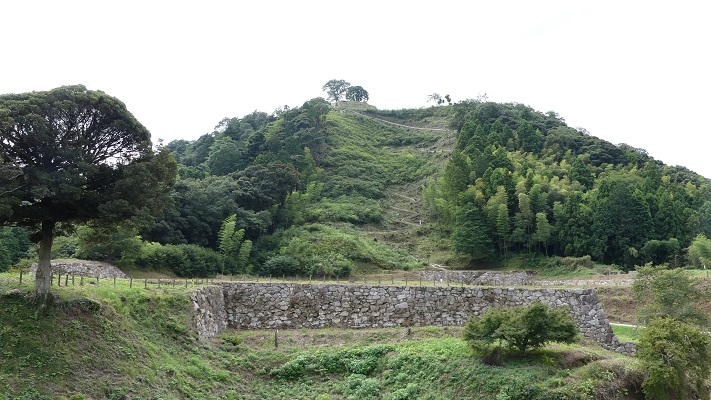
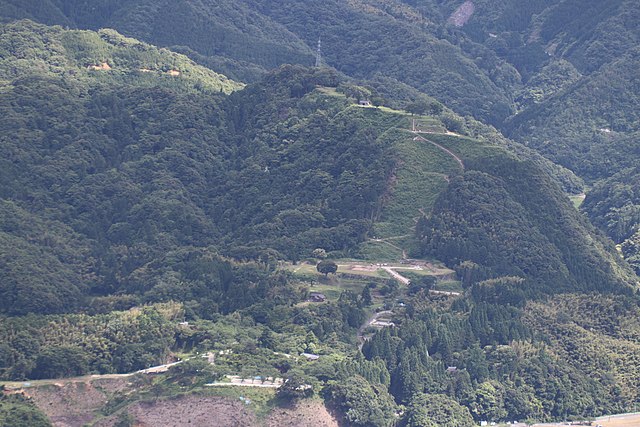
The portrait of Haruhisa Amago, the lord of the clan at that time, owned by Yamaguchi Museum (licensed under Public Domain via Wikimedia Commons)A distant view of the ruins of Yoshida-Koriyama CastleA distant view of Aoyama (on the left) and Mitsuiyama (on the right) Mountains where the Amago troops encampedThe ruins of Gassan-Toda Castle
Retainers gather on Whole Mountain
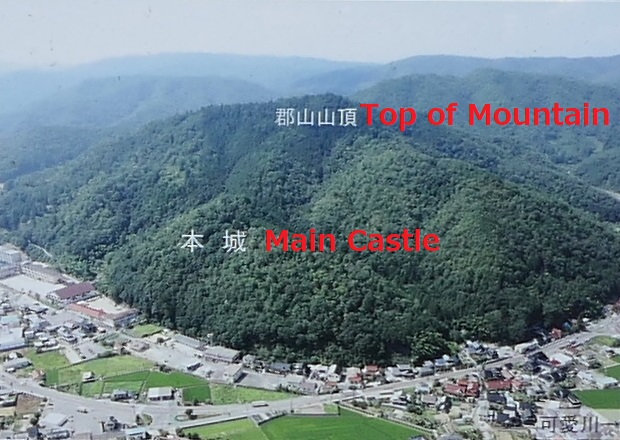
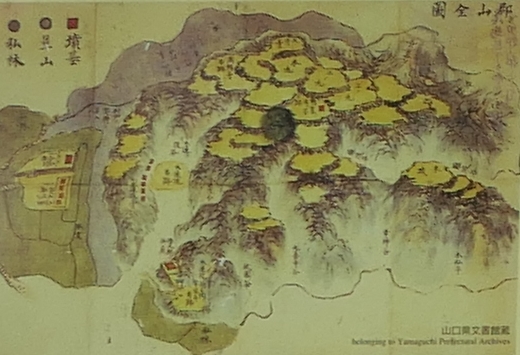
After that, Motonari became a great warlord through many battles, schemes and tricks, such as the Battle of Miyajima against the Sue Clan which followed the Ochi Clan in 1551. During his enterprise, he appointed the his son, Takamoto to be the new leader in 1546, but he still had the power. He moved from the ridge where the castle was first built to the top of the mountain, which would be called the Main Enclosure. Takamoto continued to live in the ridge, which would be called Honjo or the Main Castle, instead of Motonari. However, he eventually moved closer to Motonari by building a new enclosure because it was tough for him to communicate with his father by coming and going. Other retainers also got together on the mountain, as a result, the castle had about 270 enclosures over the mountain as the clan got more power.
The locations of the top and the Main Castle, from the signboard at the site, adding the red letters“The whole illustration of Koriyama”, owned by Yamaguchi Prefectural Archives, from the signboard at the site
Motonari’s grandchild, Terumoto moves to Hiroshima
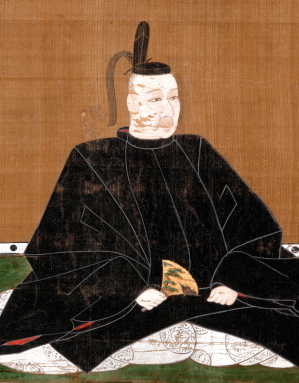
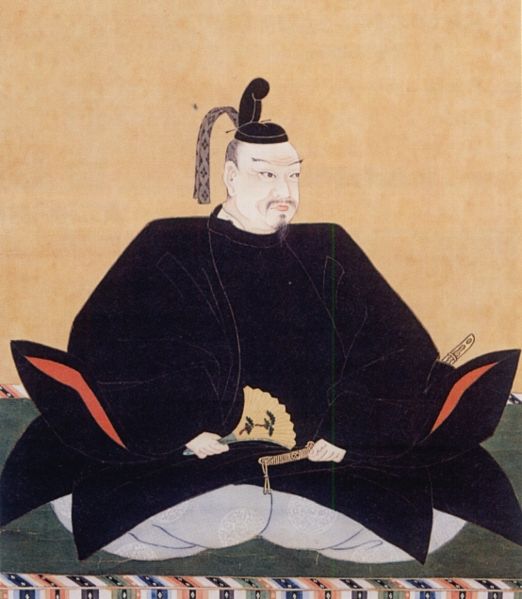
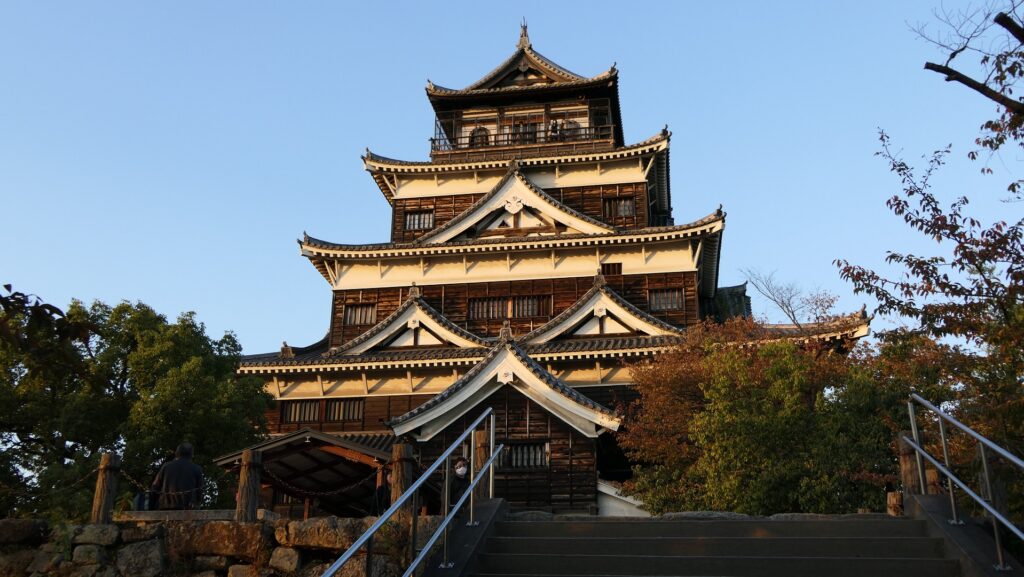
After the deaths of Takamoto in 1563 and Motonari in 1571, Takamoto’s son, Terumoto Mori followed them. He also improved and modernized the castle by building stone walls, however, he built and moved to his new home base, Hiroshima Castle in 1591. Yoshida-Koriyama Castle was eventually abandoned.
The portrait of Terumoto Mori, owned by the Mori Museum(licensed under Public Domain via Wikimedia Commons)The present Hiroshima Castle
この大きな山城は、過酷な籠城戦を戦い抜きました。 This large mountain castle fought severe sieges.
月山富田城の中心部~The center of Gassan-Toda Castle
立地と歴史~Location and History
山陰地方は現在、どちらかというと地味なイメージがあります。しかしながら、近代以前、この地方は人口面でも経済面でも繁栄していました。かつては沿岸航海が主要な交通手段でした。この地方の都市はこの経路に沿っていました。ここには石見銀山もあり、世界遺産になっています。戦国時代には、この鉱山からの銀は世界の3分の1のシェアがあったと言われています。山陰には鉄鉱山とその関連産業まであって、武器製造に生かされました。 San-in region now has a comparatively quiet image. However, before the Modern Ages, the region flourished in both population and economy. Sailing along the coast was a major way of transportation. The cities in the region were among the route. It also had Iwami Silver Mine, which has become a World Heritage Site. It is said that the silver from the mine was shared with one third of the world in the Warring States Period. San-in even had iron mines and relative industries which could produce weapons.
山陰地方の関連史跡の位置~The location of relative historic sites in San-in region
尼子氏はこの3つの重要資源を握っていて、有力な戦国大名となりました。月山富田城はもっと以前からあったのですが、尼子経久が15世紀後半にこの城を拡張しました。
The Amago clan had three important resources, then became great warlords. Though Gassan-Toda Castle was founded in earlier times, Tsunehisa Amago improved the castle in the late 15th century.
尼子経久肖像画、洞光寺蔵~The portrait of Tsunehisa Amago, owned by Doukouji Temple(licensed under Public Domain via Wikimedia Commons)
城は、靴のような形の月山の上に築かれました。そこには約500の曲輪があり、城下町の民衆を収容できるようになっていました。靴の形の甲の部分にあたる、城の中心である山中御殿に至るには3つのルートがありました。詰め城である本丸、二の丸、三の丸の各曲輪は、靴の形の頂点の部分にあり、御殿とは「七曲り」と呼ばれるたった一本の曲がりくねった山道でつながっていました。尼子は支城のネットワークも作り、本拠地の月山富田城を支えていました。 It was on Mt. Gassan, which looks like a shoe. It had about five hundred enclosures and could accommodate people in the castle town. There were three routes to reach Sanchu hall, the center of the castle, which was located on the upper part of the shoe shape. The last area of the castle, Honmaru, Ninomaru and Sannonaru enclosures were on the top part of the shoe shape, connected with the hall by only one zigzagged trail called “Nana-magari”. Amago made a network of branch castles as well to support the home base Gassan-Toda.
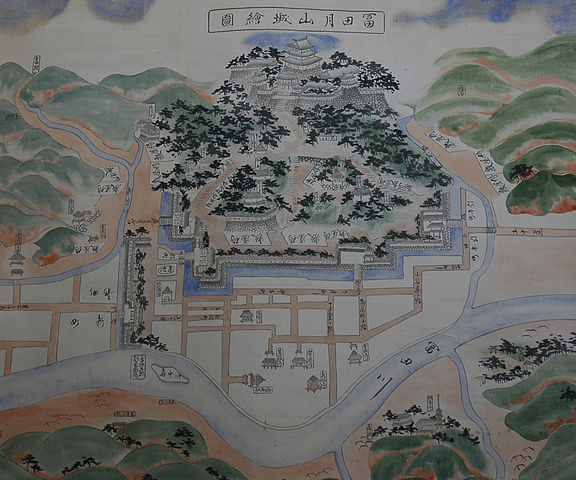
月山~Mt. Gassan(licensed by 安来市政策秘書課 via Wikimedia Commons)月山富田城絵図(模写)、安来市立歴史資料館蔵~GassanーToda Castle old map (replica), owned by Yasugi City History Museum(licensed under Public Domain via Wikimedia Commons)
大内氏がこの城を1543年に攻撃しましたが、失敗し撤退しました。このことで大内氏の影響力が低下し、1551年の滅亡につながりました。大内氏の後継である毛利氏はより慎重に準備しました。毛利はあらかじめ尼子から石見銀山と支城を奪いました。毛利元就は、1565年に約3万の軍勢をもってこの城を攻撃しました。この攻撃は、尼子義久と約1万の守兵により再び退けられました。元就は戦術を変え、城を包囲し、多くの砦を築きました。この包囲戦は1年7ヶ月続きます。元就は尼子に内輪揉めを仕掛け、兵糧も尽きたため、義久はついに降伏しました。
The Ouchi clan attacked the castle in 1543, but failed and withdrew. It reduced their influence, and led to the destruction of the clan in 1551. The Mori clan following Ouchi, prepared more carefully. Mori took Iwami Mine and the branch castles away from Amago in advance. Motonari Mori with about 30,000 soldiers attacked the castle in 1565. This attack was repelled by Yoshihisa Amago with 10,000 defenders as well. Motonari changed his tactic, and surrounded the castle, building many fortresses. The siege lasted for one year and seven months. In the end, Yoshihisa surrendered after Motonari caused internal trouble in Amago, and supplies ran out.
毛利元就肖像画、毛利博物館蔵~The portrait of Motonari Mori, owned by Mori Museum(licensed under Public Domain via Wikimedia Commons)
尼子の遺臣である山中鹿之助は1569年に尼子の仇を討とうとしました。彼は6千の同志とともにこの城を攻撃しましたが、そのときにはたった300名の守兵しかいませんでした。ところが城は持ちこたえ、毛利からの援軍が到着したことで鹿之助は撤退せざるを得なくなります。
The surviving retainer of Amago, Shikanosuke Yamanaka tried to avenge his clan in 1569. He attacked the castle with 6,000 supporters, while just 300 defenders were in the castle. However, the castle withstood the attack. Shikanosuke had to give up when reinforcements for Mori arrived.
山中鹿之助肖像画部分、安来市立歴史資料館蔵~Part of the portrait of Shikanosuke Yamanaka, owned by Yasugi City History Museum(licensed under Public Domain via Wikimedia Commons)
徳川氏の統治となって、1600年に堀尾氏がこの城に移されてきました。彼らは本拠地を新しい城、松江城に移すことにしました。月山富田城は1611年に廃城となります。
During the Tokugawa clan’s governance, the Horio clan was transferred to the castle in 1600. They decided to move their base to a new one called Matsue Castle. Gassan-Toda castle was abandoned in 1611.
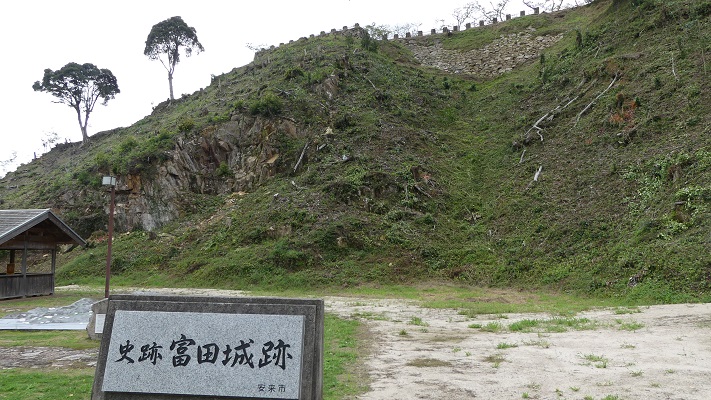
月山富田城の遺跡~The ruins of Gassan-Toda Castle
特徴~Features
現在、観光客の人たちは通常、道の駅「広瀬・富田城」近くの、三つの登り口の一つ、菅谷口から登り始めます。山中御殿跡までたどり着くのに、いくつもの曲がりくねった道、曲輪、堀、そして関門を超えていかねばなりません。 Now, visitors usually start to climb up from Sugatani Route, one of three routes to the castle, near the roadside station “Hirose-Todajo”. You have to climb over several winding roads, enclosures, moats and gates to reach Sanchu hall ruins
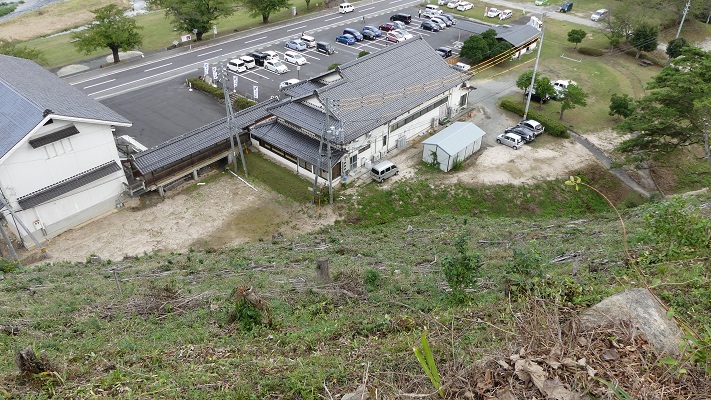
城周辺の航空写真~The aerial photo around the castle 菅谷口~The entrance of Suganani Route菅谷口を進みます~Going on Suganani Route道の駅「広瀬・富田城」を見下ろします~Looking down the roadside station “Hirose-Todajo”
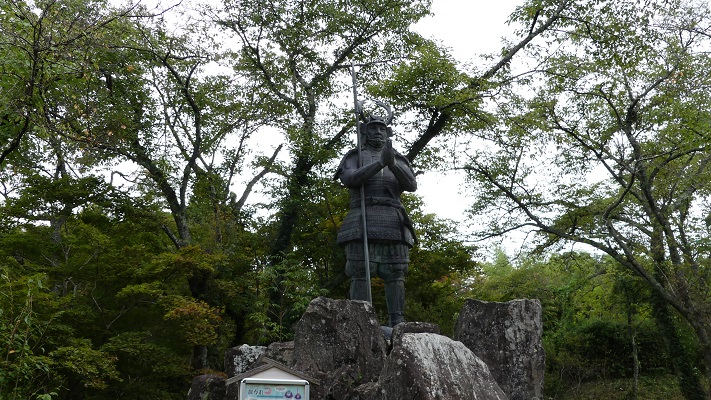
その途中には鹿之助の銅像もあります。 You can see the statue of Shikanosuke on the way.
山中鹿之助銅像~The statue of Shikanosuke Yamanaka
山中御殿の前には、花の壇曲輪の上に復元された木造建物があります。 There are also restored wooden buildings on Hananodan enclosure in front of Sanchu hall.
花の壇曲輪に向かいます~going to Hananodan enclosure花の壇にある復元された木造建築物~The restored wooden buildings on Hananodan
城の主は通常は御殿の方に住んでいました。 The lords of the castle usually lived in the hall.
花の壇から見た城の中心部~The center of the castle from Hananodan山中御殿跡~The ruins of Sanchu Hall
城で戦いが起こったときには、七曲りの山道を通って頂上の方に移動しました。尼子と毛利は、この山道を巡って戦ったと言われています。 When a battle happened there, they moved to the top area through Nanamagari trail. It is said that Aamago and Mori fought each other along the trail.
七曲りの山道~Nanamagari trail
頂上の区域は、手前から奥に向かって三の丸、二の丸、本丸となっています。想像していたよりずっと広かったです。それで尼子は長い間持ちこたえられたのでしょう。 The top area includes Sannomaru, Ninomaru and Honmaru from the front to the back. The area is larger than I expected. That might make Amago keep the castle for a long time.
三の丸~Sannnomaru enclosure手前が二の丸、奥が本丸~The front is Ninomaru, the back is Honmaru本丸~Honmaru enclosure本丸から二の丸を見ています~Looking at Ninomaru from Honmaru
頂上からは海まで広がる地域一帯を見渡せます。尼子もまたここから自らの領地を見下ろしたことでしょう。 You can see a great view of the area below to the sea, from the top. Amago must have looked over this territory, too.
頂上からの眺め~A view from the top城の前部と町を見下ろします~Looking over the front of the castle and the town
その後~Later Life
城跡は1934年に国の史跡に指定されました。また自治体も歴史公園として整備を行ったことで、気軽に訪れることができるうようになっています。
The castle ruins were designated as a National Historic Site in 1934. In more recent years, they were also developed as a historical park by officials. We can easily visit them.
七曲りの道も舗装されています~Even Nanamagari trail is paved
私の感想~My Impression
御籠り口と呼ばれるもう1つの城への登り口は車で通行可能です。今日では、山中御殿の近くにある駐車場まで車で行くことができます。でもお時間があれば、是非全部の行程を歩いて、城の大きさを実感していただきたいです。
Another route for the castle called Okomori Route is available for cars. Today, you can reach the parking lot near Sanchu hall by car. But, I recommend you to walk all the way on foot and feel how large the castle was, if you have time.
御籠り口~Okomori Route山中御殿跡近くの駐車場~The parking lot near Sanchu Hall Ruins
ここに行くには~How to get There
ここに行くには車がお勧めです。山陰自動車道安来ICから約20分、JR安来駅から約20分かかります。安来駅には米子空港から米子駅経由の電車で1時間前後かかります。 I recommend using a car to get there. It takes about 20 minutes from the Yasugi IC on Sanin Expressway, or about 20 minutes from JR Yasugi Station. The station is around one hour from Yonago Airport by train via Yonago Station.







.jpg)