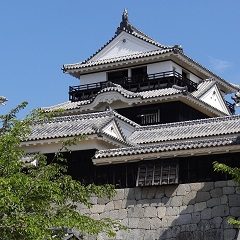
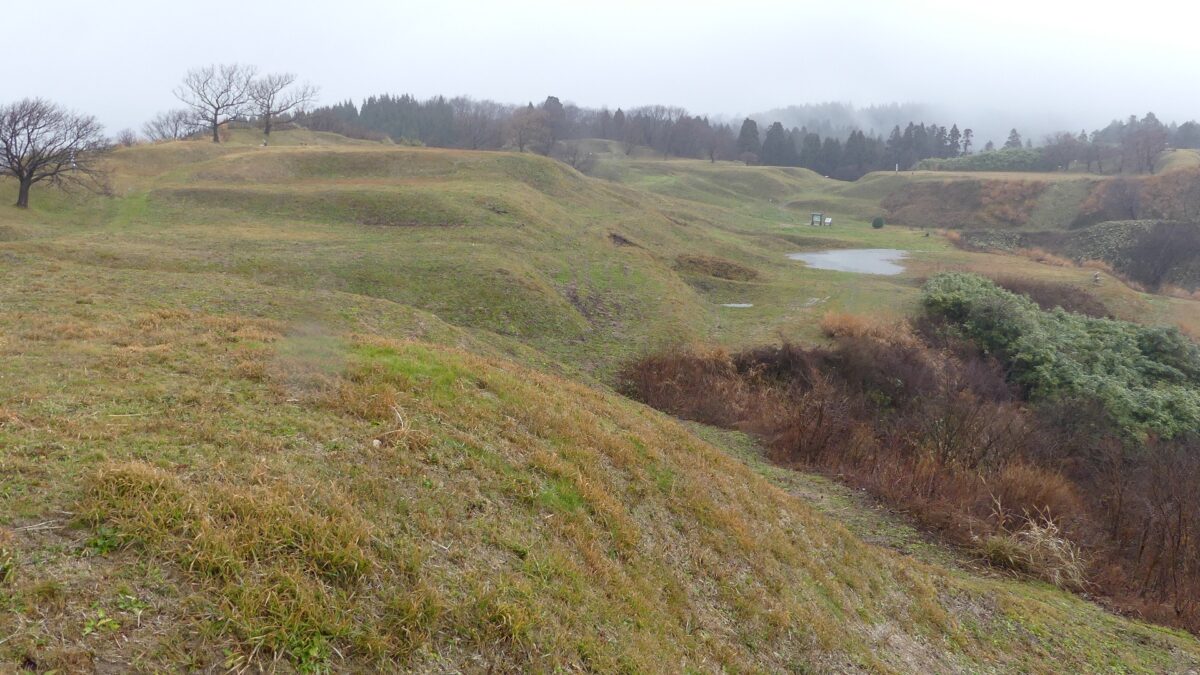
106.脇本城~Wakimoto Castle

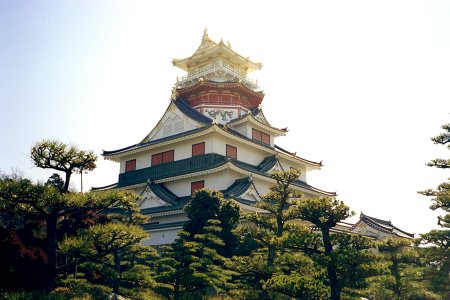
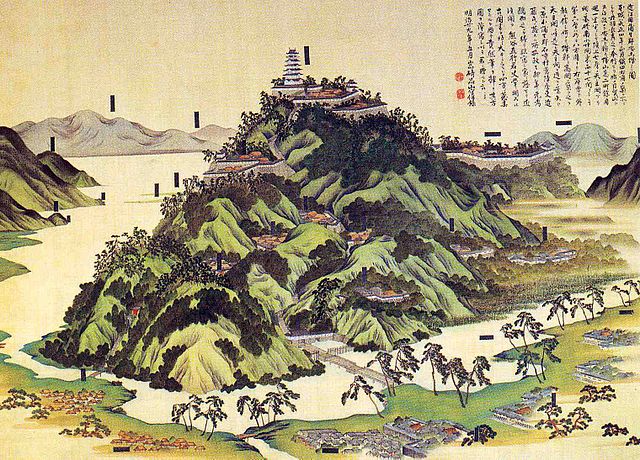
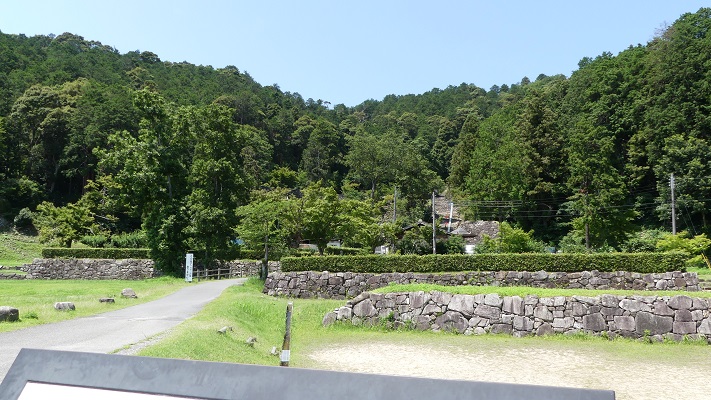
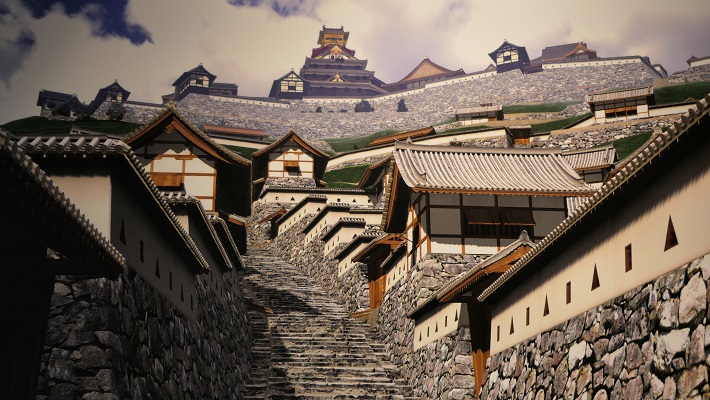
安東氏が最盛期のときの城
The castle when the Ando clan was its peak

立地と歴史~Location and History

舟運で繁栄した出羽国~Dewa Province Prospering by Ships

近代以前、大量輸送は船によって行われましたが、海上での航海は危険でした。船が十分発達していなかったからです。日本の場合、中世においては、商業船は主には太平洋ではなく、瀬戸内海や日本海などの内海を航行していました。そのため、当時は内海沿いの大きな港をもつ地域が繫栄しました。出羽国(現在の秋田、山形県を合わせた範囲)はそのような地域でした。
Before the Modern times, mass transportation was done by ships, but sailing on ocean could be dangerous because ships were not developed enough. In the case of Japan, in the Middle Ages, merchant ships sailed mainly on islands seas, such as the Seto Island Sea and the Japan Sea, not on the Pacific Ocean. For this reason, areas with a large port along the island seas prospered at that time.
Dewa Province (combining what is now Akita and Yamagata Prefectures) was one such areas.
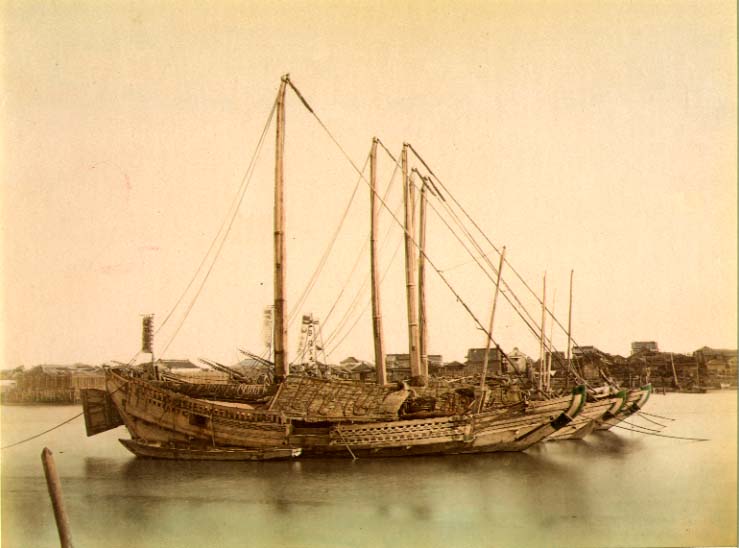
1860年代の日本古来の弁財船~Traditional Japanese junks in 1860s (licensed under Public Domain via Wikimedia Commons)

秋田で力をつけた安東氏~Ando Clan has power at Akita

安東氏は、北出羽(大体今の秋田県)を根拠地として海上交通を支配して大きな勢力となりました。戦国時代(日本中の地方大名が覇権をめぐって争った時代)には安東氏は、檜山安東氏と湊安東氏の2つのグループに分かれていました。檜山安東氏は北秋田にあった檜山城に住み、湊安東氏は南秋田にあった湊城を拠点としていました。
The Ando Clans had a great power to manage the marine transportation based in the north Dewa (roughly now Akita Prefecture). In the “Sengoku” Period- a period when local clans around Japan were fighting for control over all of the country- the Ando Clans was divided into two groups namely the Hiyama-Ando Clan and the Minato-Ando Clan. The Hiyama-Ando Clan lived in Hiyama Castle which was located on the northern part of Akita, while the Minato-Ando Clan lived in Minato Castle located on the southern part of Akita.

城の位置~The location of the castle

安東愛季は、最初は檜山安東氏の総領でしたが、湊安東氏に固有の跡継ぎがいなかったため、取り込むことに成功しました。彼は、秋田全域を統治することで最も有力な戦国大名の一人になったのです・
Chikasue Ando was at first the lord of the Hiyama-Ando, but was able to take over the Minato-Ando as it didn’t have its own successor. As a result, he ruled over the entire Akita and became known as one of the greatest warlords.
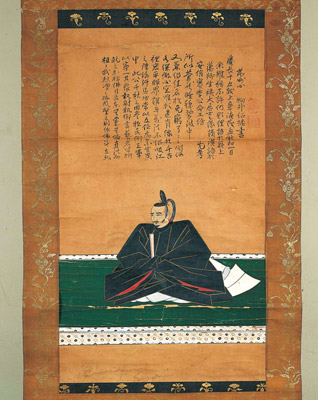
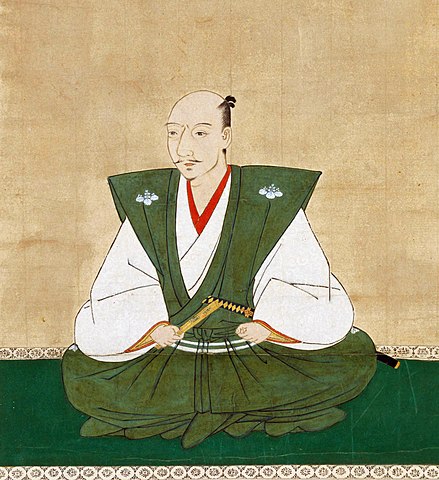
安東愛季の肖像画、東北大学附属図書館蔵~The portrait of Chikasue Ando, owned by Tohoku University Library (licensed under Public Domain via Wikimedia Commons)

安東愛季が脇本城を拡張~Chikasue Ando develops Wakimoto Castle

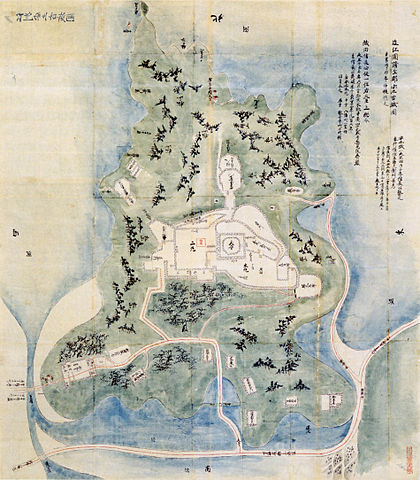
愛季は1577年、彼の本拠地を檜山城と湊城の間にある城に移しました。彼が選んだ城が脇本城だったのです。この城は最初は15世紀に築かれたと言われていますが、その後愛季が東日本では有数の規模の山城にまで拡張しました(約150ヘクタール)。この城は、男鹿半島の根元にある100mの高さの丘の上に築かれ、重要な商業港であった土崎湊の近くでもありました。また、主要道路の「天下道」が城の中を通っているため、非常に戦略的な立地であり、城の領主は完全に交通を制御することができました。
Chikasue moved his home base to a castle located between Hiyama and Minato Castles in 1577. The castle that he chose was the Wakimoto Castle. The castle is said to be first built in the 15th century, then Chikasue developed the castle as one of the largest mountain castles in eastern Japan (about 150 hectare). The castle was located on a 100m high hill in the connecting part of Oga Peninsula, near an important trading port called Tsuchizaki-minato. This location proved to be very strategic as a main road called “Tenga-michi” ran between the two sides of the castle giving the Lord full control over transportation.
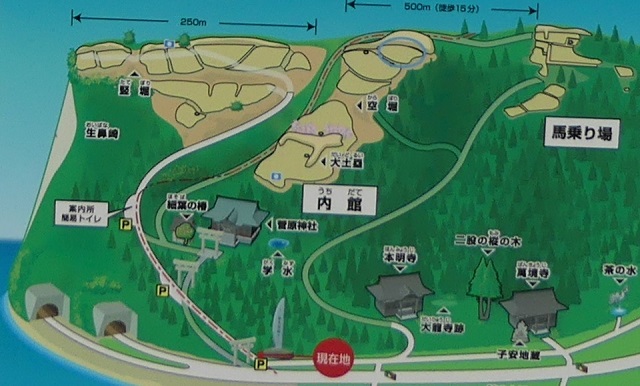
遺跡の全体図、現地案内板より~The whole map of the ruins, from the signboard at the site

愛季は支配者として絶頂期にあって、領土を拡張する一方、織田信長といった外の有力戦国大名とは手紙や贈り物により親交を深めました。ところが、1587年の戦いのさ中、彼は突然の病に倒れ、亡くなってしまいます。彼の息子、実季は湊城に住み、最終的には1602年に徳川幕府により関東地方に移されてしまいました。脇本城はそれから廃城となってしまったようです。
Chikasue was at the peak of his career as an administrator expanding his territory and building relationship with other great warlords such as Nobunaga Oda by sending letters and gifts. However, during a battle in 1587 he suddenly fell ill and died. His son, Sanesue lived in Minato Castle and was lastly transferred to Kanto Region by the Tokugawa Shogunate in 1602. Wakimoto Castle seemed to be abandoned since then.
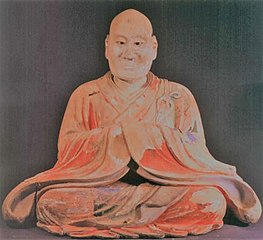
安東実季木造、羽賀寺蔵~The wooden statue of Sanesue Ando, owned by Haga-ji Temple (licensed under Public Domain via Wikimedia Commons)

特徴~Features

城跡へ登っていく~Walking up to Castle Ruins

現在、脇本城跡は今もって非常に広大であり、5つの地区に分けられています。しかしながら、5つの地区全てが等しく整備されているわけではありません。そこで、私の訪問時には、一番整備されている「内館」1箇所を見学しました。ここは城の中心部分であり、現在はより整備されていて、観光客が訪れやすいようになっています。
Now, the ruins of Wakimoto Castle are still very large, and they are divided into five areas. However, not all the 5 areas have been developed equally. So, when I visited, I covered the one that was most developed which is “Uchidate”. This was the main portion of the castle, and now is further developed for tourists to visit easily.

城周辺の航空写真~The aerial photo of around the castle

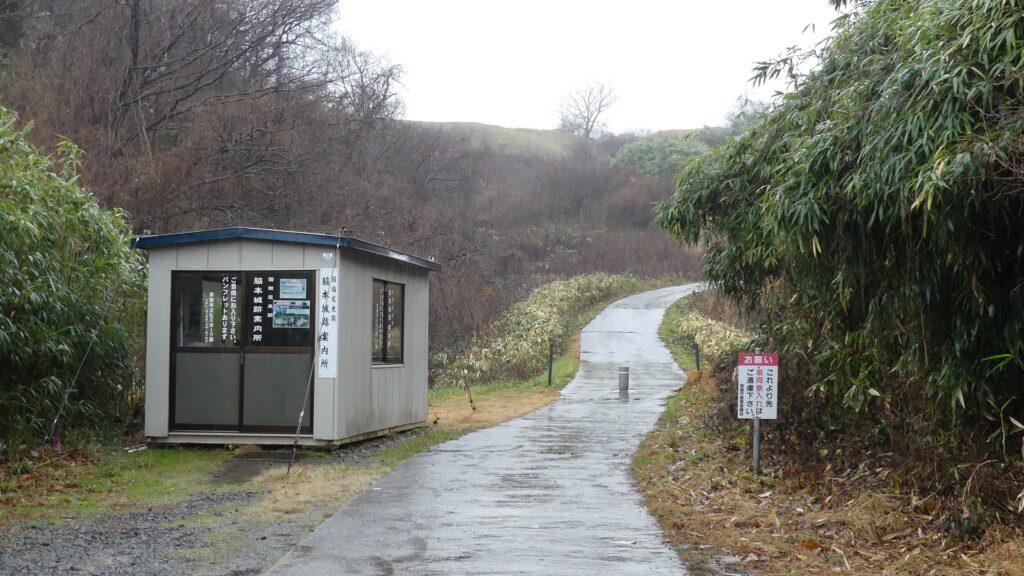
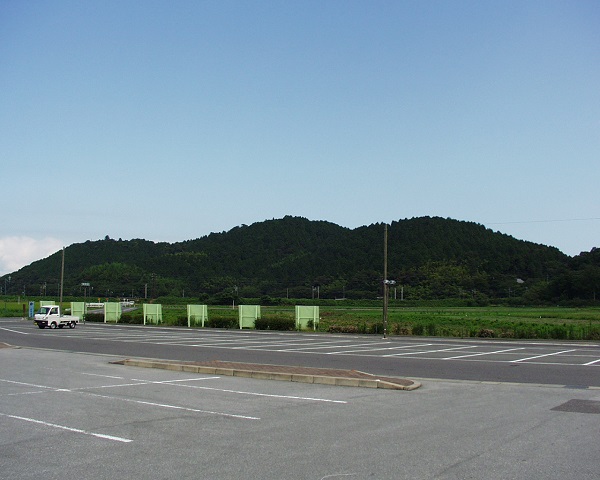
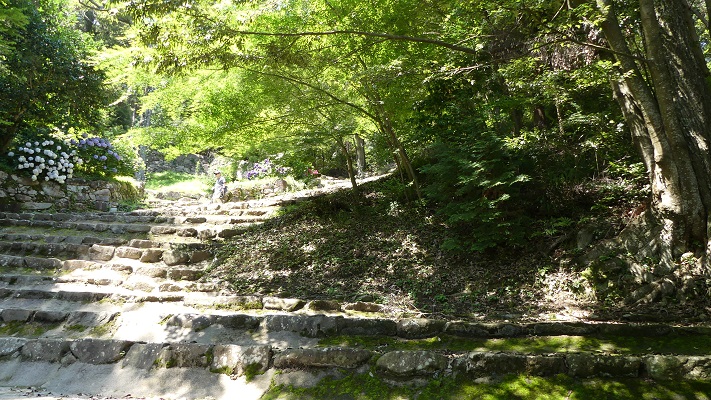
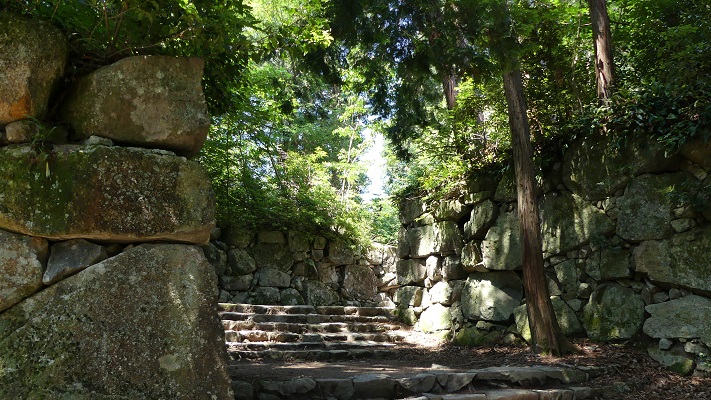
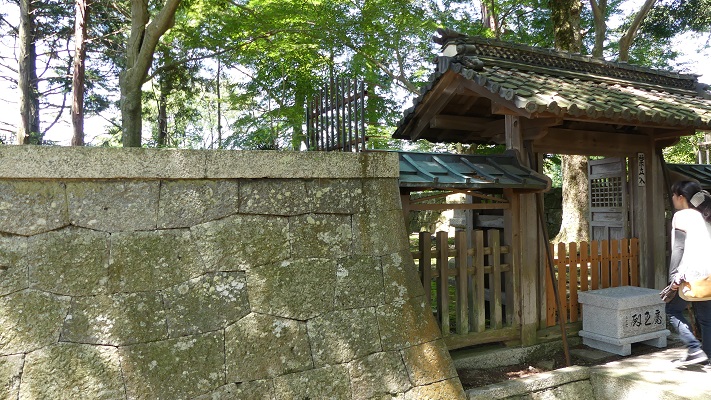
城跡の入口は国道101号線沿いにあります。車で来られた方のために駐車場があります。そこから城跡への道を登っていく必要がありますが、それはかつてからある「天下道」の一部分です。更に進んで城跡の案内所を過ぎると、丘の頂上部分が見えてきます。
The entrance of the ruins is alongside National Route 101. You can park at a parking lot if you are driving. Then, you need to walk up the road to the ruins which was part of the old road, “Tenga-michi”. When you go farther passing through the guide house of the ruins, you will see the top of the hill.
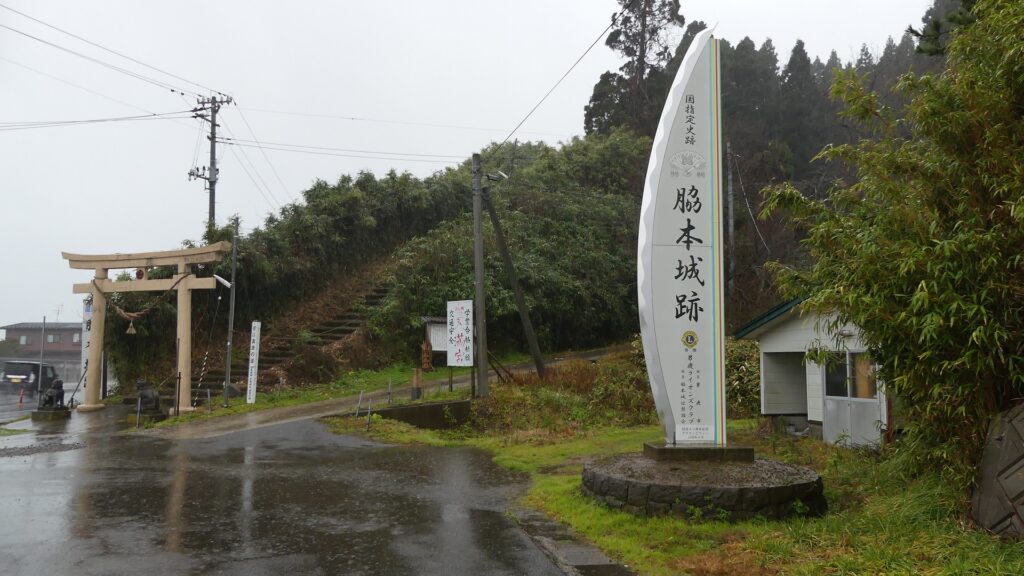
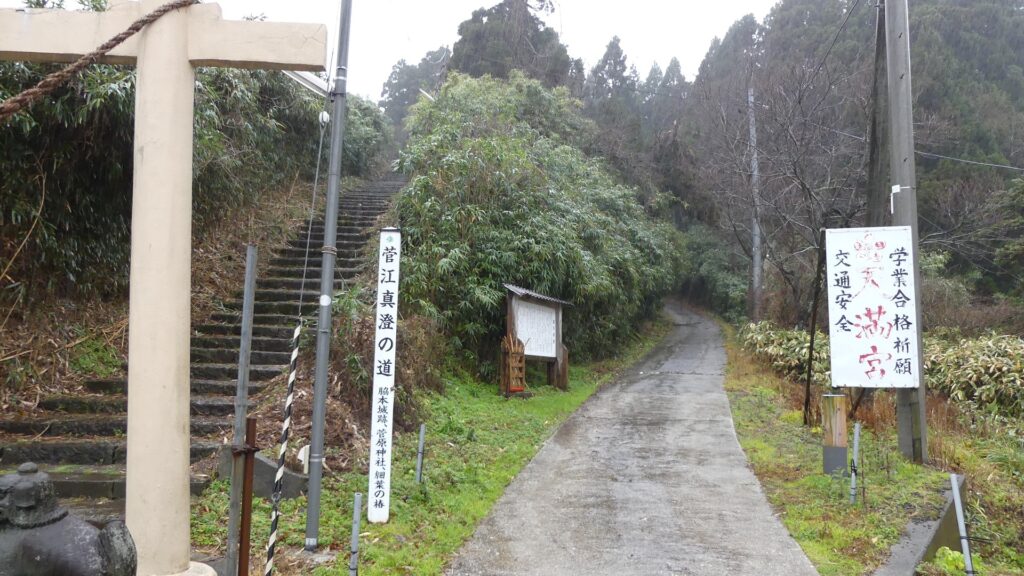
城跡の入口~The entrance of the castle ruins
残っている「天下道」~The remaining “Tenga-michi” road
案内所を越えて頂上へ~Passing the guide house to the top

生鼻崎周辺~Around Oihana-saki Cape

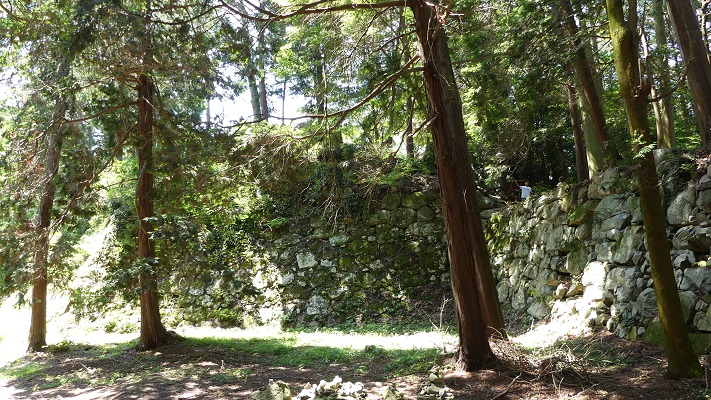
基本的に、戦国時代の東日本では、城の基礎部分は土造りでした。城跡には建物はありませんが、土塁、空堀、虎口などが残っています。丘の頂上に登ってみると、左手(西の方角)には、海に突き出ている「生鼻崎」という岬の上にたくさんの曲輪があるのがわかります。それらの曲輪は岬の先端に向かって列を作って並んでいます。実はかつてはもっと多くの曲輪が岬と共に海に伸びていたのですが、江戸時代の地震のときに崩壊してしまいました。歴史家はこれらの曲輪は安東氏の家臣の屋敷地として使われたのではないかとしています。岬の先端では、日本海の荒々しい姿が見えます。
Basically, the foundations of the castles, in eastern Japan during the Sengoku Period, were made out of soil. The ruins have no buildings, instead they have earthen walls, dry moats, entrances, etc. When you climb on top of the hill, you will see a lot of enclosures on a cape called “Oibana-saki”, sticking out to the sea on the left on the west direction. You can see that these enclosures are in lines towards the top of the cape. In fact, there were many more enclosures with the cape spread to the sea in the past, but they collapsed when an earthquake happened in the Edo Period. Historians speculate that they were used for the Ando clan’s retainers’ houses. At the top of the cape, you can also have a wild view of the Japan Sea.
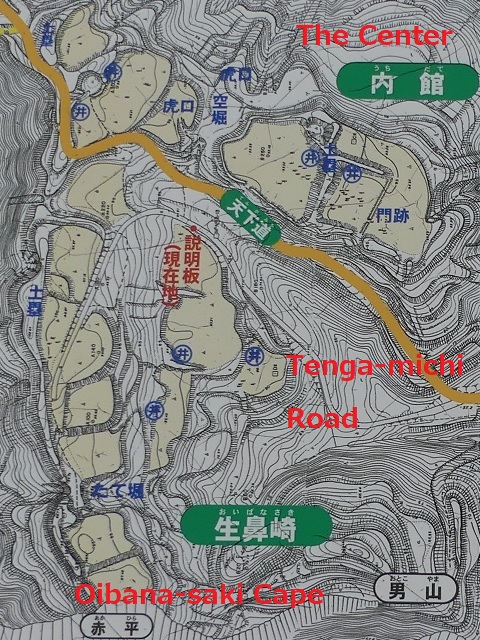
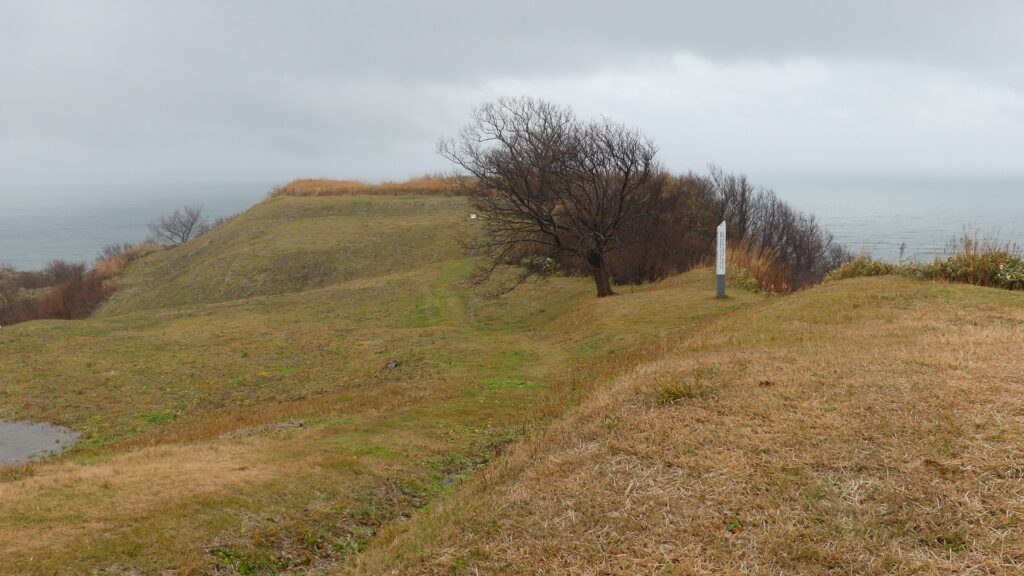
内館地区の地図、現地案内板に注記~The map of Uchidate Area, from the signboard at the site, adding notes
岬に伸びる曲輪~The enclosures spreading to the cape
生鼻崎周辺の想像図、現地案内板より~The imaginary drawing around Oibana-saki Cape, from the signboard at the site
日本海の眺め~A view of the Japan Sea

城の中心部分~Center of Castle

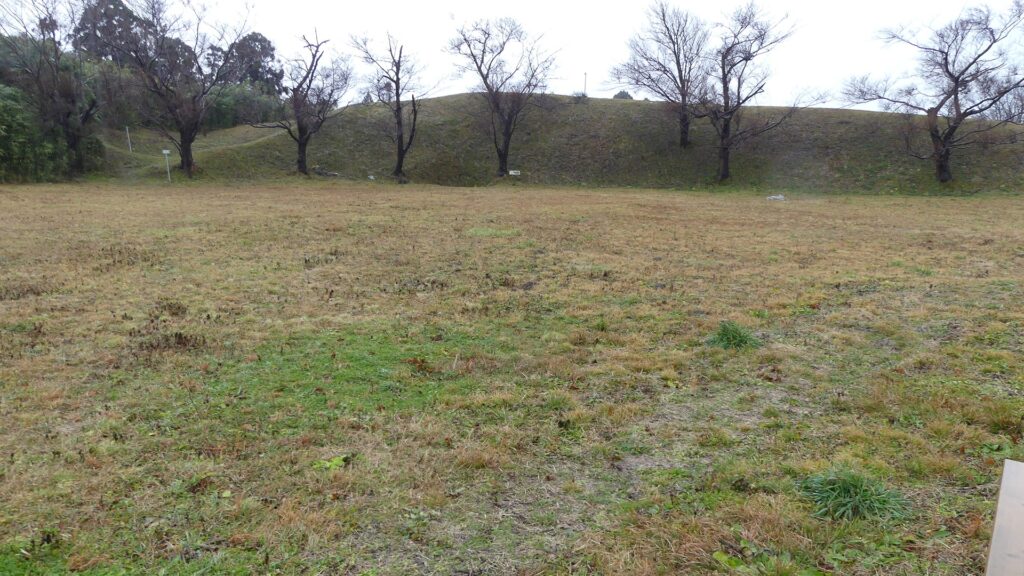
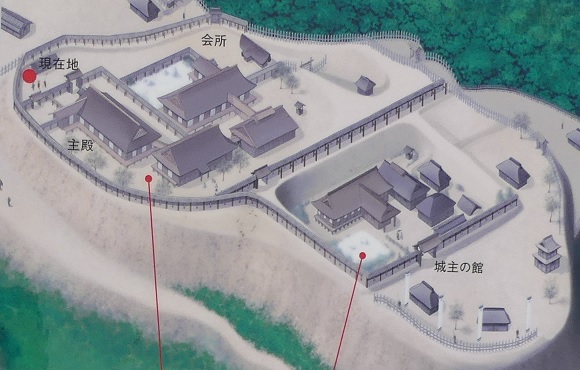
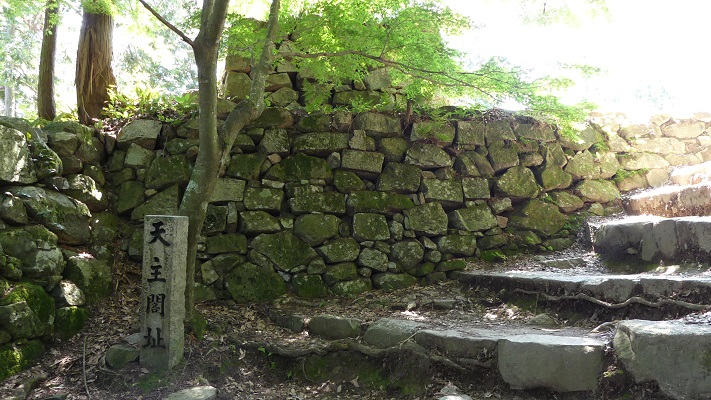
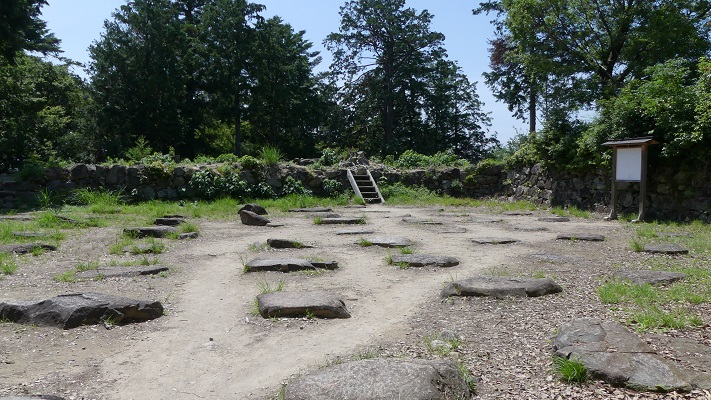
道の反対側の東の方向には、空堀に囲まれたもっと大きな曲輪があります。この辺りが、城の中心地であったと考えられます。歴史家は、北側には別々の目的で作られた2つの建物があったと推定しています。一つは公式の儀式で使われた「主殿」という建物で、もう一つはお客をもてなす「会所」という建物です。
There are two larger enclosures surrounded by dry moats on the opposite side of the route on the east direction. They are supposed to be the center of the castle. Historians also speculate that two buildings on the northern side were used for other purposes. For example one of them was used as the building for the public ceremonies called “Shuden’ and the other for hosting the guests called “Kaisho”.
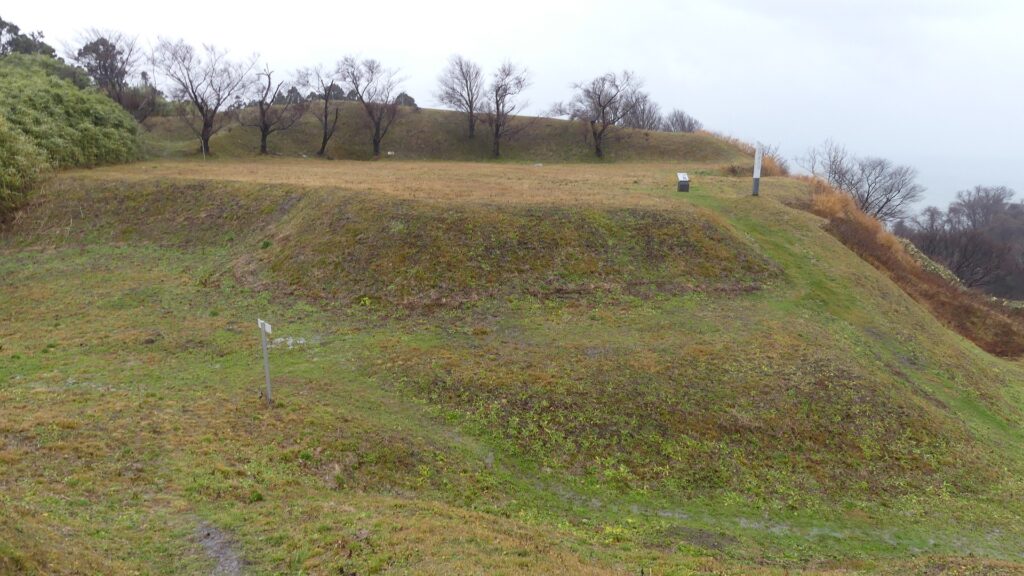
城の中心部分~The center of the castle
空堀~The dry moat
北側の曲輪~The north enclosure
中心部の想像図、現地案内板より~The imaginary drawing around the center, from the signboard at the site

もう一つの南側の曲輪は高くて太い土塁に囲まれており、これもまたとても大きいものです。ここには城主の館があったと考えられています。愛季が住んでいたのでしょうか。この曲輪からは、海岸線とかつては城下町であった街並みの素晴らしい景色が望めます。
The other southern enclosure is surrounded by high thick earthen walls, and it is also very large one. This is thought to be used as the house of the lord. I wonder if Chikasue lived in it. From the enclosure, you can also have a great view of the coast line and the town which was once the castle town.
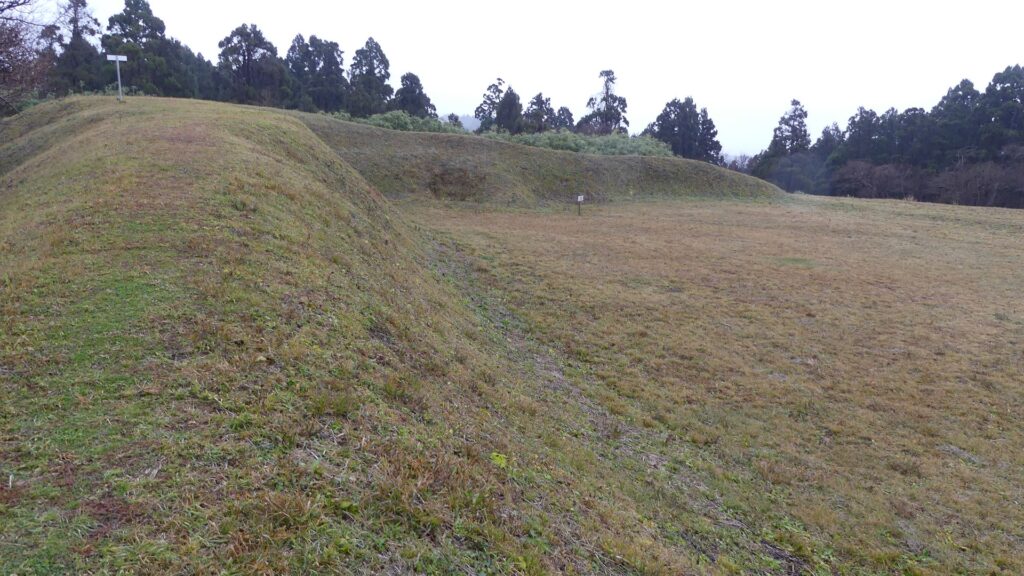
土塁に囲まれた南側の曲輪~The south enclosure surrounded by the earthen walls
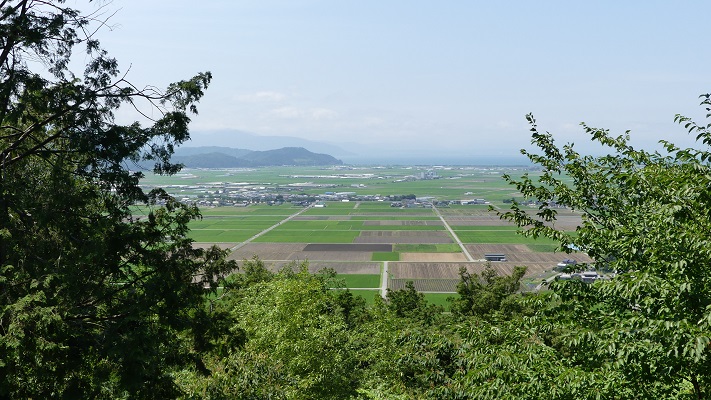
海岸線の景色~A view of the coast line

その後~Later History

江戸時代の1804年、有名な旅行家の菅江真澄が脇本城の城跡を訪れています。彼は日記に城跡のことを記録し、スケッチも残しました。1993年からは調査が行われており、この城が非常に大きな規模であったことがわかりました。そのため、城跡は2004年に国の史跡に指定されました。
In 1804 of the Edo Period, a famous traveler, Masumi Sugae visited the ruins of Wakimoto Castle. He recorded the ruins on his diary and left his sketches of them. Investigations have been done since 1993 and it was found out that the castle had a huge scale. Because of it, the ruins were designated as a National Historic Site in 2004.
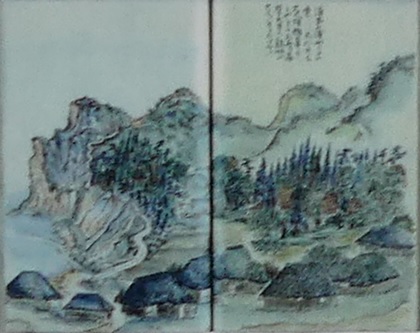
菅江真澄の脇本城のスケッチ、現地案内板より~One of Sugae’s sketches for Wakimoto Castle, from the signboard at the site

私の感想~My Impression

私が脇本城跡に行ったときは、ひどい天気でした。更に「内館」地区しか行っていません。それでもこの城跡が大変な規模だということは言えます。もし晴れた日に十分時間が取れれば、もっと城跡を満喫できると思います。他の有名な城に比べてこの城の研究は始まったばかりです。この城から新たな発見がもたらされるのが楽しみです。
When I visited the ruins of Wakimoto Castle, the weather was very bad. In addition, I saw only one area called “Uchidate”, but I was able to witness the large scale of the ruins. If you have enough time to visit the ruins in a fine day, you can enjoy them more! I think the study for the castle have just started compared with other famous castles. I will be looking forward to seeing the new discovery from the castle.
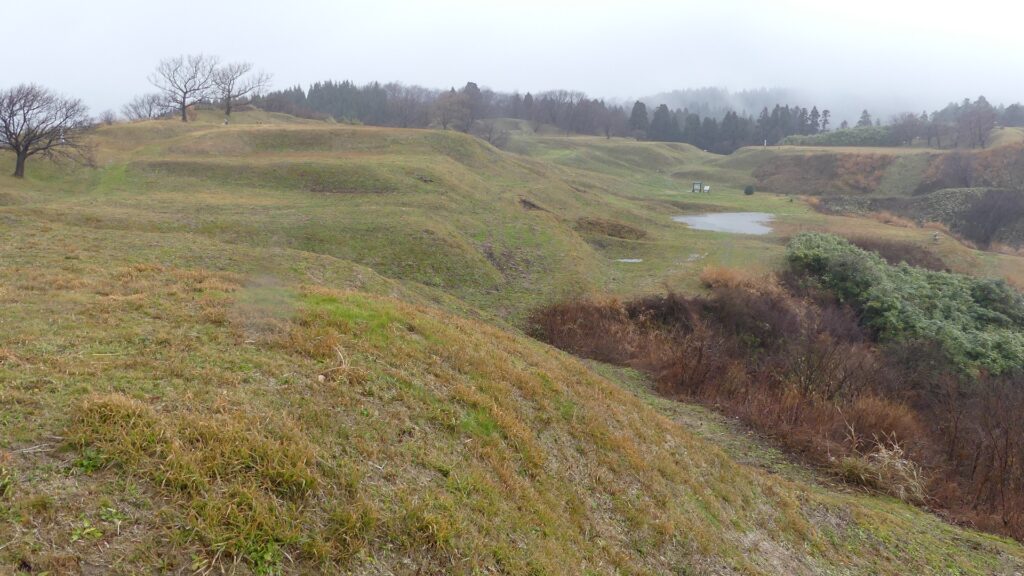
岬側からの城跡の風景~A view of the castle ruins from the cape

ここに行くには~How to get There

車で行く場合:秋田自動車道昭和男鹿ICから約30分かかります。城跡の入口に駐車場があります。
電車の場合、JR男鹿線脇本駅から城跡まで歩いて約30分かかります。
東京から脇本駅まで:新幹線に乗り、秋田駅で男鹿線に乗り換えてください。
If you want to go there by car: It takes about 30 minutes from the Showa-Oga IC on Akita Expressway. There is a parking lot at the entrance of the ruins.
By train, It takes about 30 minutes from Wakimoto Station on JR Oga line to the ruins on foot.
From Tokyo to Wakimoto Station: Take the Shinkansen super express and transfer to Oga line at Akita Station.

リンク、参考情報~Links and References

脇本城跡、男鹿市観光協会(Oga city tourism association)
・「日本の城改訂版第150号」デアゴスティーニジャパン(Japanese Book)
・「土崎港(秋田港)の「みなと文化」/渡辺英夫」(Japanese Paper)
43.犬山城~Inuyama Castle

この城には、様々な魅力があります。
This castle attracts you in several perspectives.

立地と歴史~Location and History

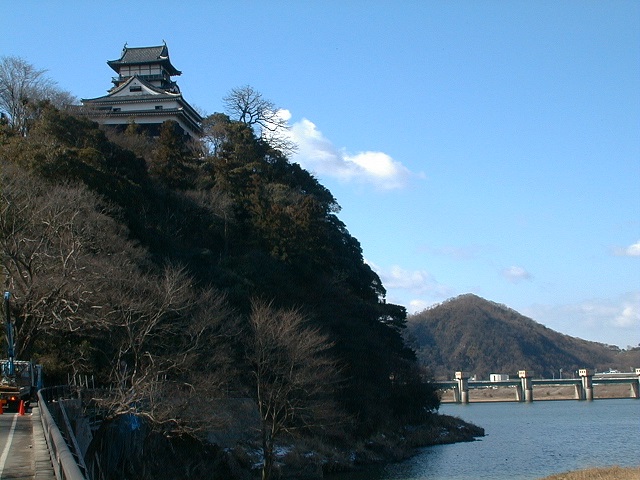
犬山城は、その古風な天守や、眺望がよく知られています。でもこの城にはもっと知られるべき見どころがあるのです。
Inuyama Castle is known for its old Main Tower or “Tenshu” and their landscape. But the castle has more attractions you can find.

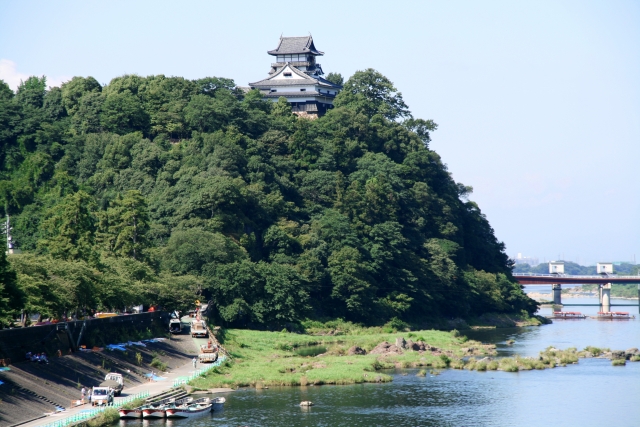
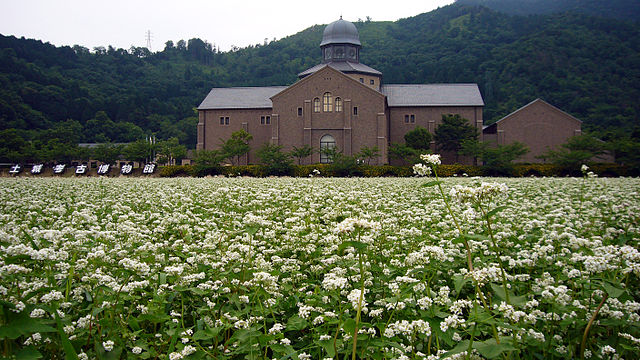
犬山城の遠景~A distant view of Inuyama Castle(taken by nagabutinana from photoAC)
国境に立地~It is located around the boder of provices

この城は最初は1537年に地方領主の織田信安により築かれたと言われています。木曽川の畔、40mの高さの丘の上にあります。この地点は尾張国(現在の愛知県の一部)の端に当たり、尾張国と美濃国(現在の岐阜県の一部)の国境のすぐ近くでした。また、水上交通の要所でもありました。
It is said that the castle was first built in 1537 by a local clan, Nobuyasu Oda. It was located at the top of a 40m height hill beside Kisogawa River. The spot was on the edge of Owari Province ( now part of Aichi Pref.), right next to the border between Owari and Mino Province ( now part of Gifu Pref.), and it was also important for water transportation.

城の位置と尾張国の範囲~The location of the castle and the range of Owari Province

有力戦国大名の標的に~Great warlords targets it

結果として、戦国時代には多くの有力な戦国大名がこの城を手に入れようとしました。最初は、織田信長が美濃攻略の足掛かりとしてこの城を得ました。次には、豊臣秀吉が1584年の徳川家康との小牧長久手の戦いのときに、この城に本陣を構えました。
As a result, many great warlords aimed to capture the castle in the Warring States or “Sengoku” Period. First, Nobunaga Oda got the castle as the foothold before he invaded Mino. Secondly, Hideyoshi Toyotomi used the castle as his stronghold when he fought with Ieyasu Tokugawa in the Battle of Komaki and Nagakute in 1584.

織田信長肖像画、狩野宗秀作、長興寺蔵、16世紀後半~The portrait of Nobunaga Oda, attributed to Soshu Kano, owned by Chokoji Temple, in the late 16th century(licensed under Public Domain via Wikimedia Commons)
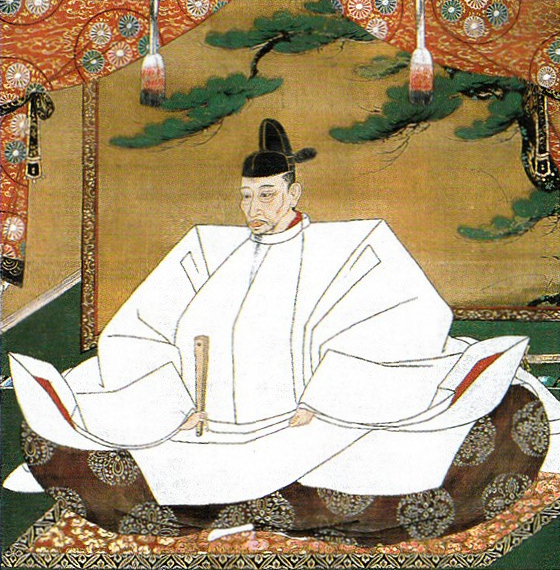
豊臣秀吉肖像画、加納光信筆、高台寺蔵~The Portrait of Hideyoshi Toyotomi, attributed to Mitsunobu Kano, ownd by Kodaiji Temple(licensed under Public Domain via Wikimedia Commons)

成瀬氏が城と町を支配~Naruse clan governs the castle and town

最終的には、徳川幕府が確立すると、幕府は成瀬正成を徳川の親藩である尾張藩の付家老として、この城に据えました。成瀬氏は大名ではありませんでした。それでも、江戸時代の間中例外として、大名のように犬山城と城下の支配を許されたのです。
Lastly, after the Tokugawa Shogunate was established, it placed Masanari Naruse at the castle as the Attendant Chief Retainer for Tokugawa’s relative Owari Domain. The Naruse clan was not a lord. However, they were allowed to govern Inuyama Castle and the castle town like a lord all through Edo Period as an exception.

成瀬正成肖像画、白林寺所蔵、江戸時代~The portrait of Masanari Naruse, owned by Hakurinji Temple, in the Edo Period(licensed under Public Domain via Wikimedia Commons)
犬山城古図、犬山市城とまちミュージアム蔵、江戸時代~The Old Map of Inuyama Castle, owned by Inuyama Cultural Assets Museum, in the Edo Period(licensed under Public Domain via Wikimedia Commons)

特徴~Features

城周辺の地図~The map around the castle

三方は急崖~Steep cliffs in three directions

現在、天守だけが現存していますが、城がどんなだったかは今でも見て取ることができます。城は北の方角の背後に木曽川があり、自然の要害になっています。城がある丘は三方向(北、東、西)が急崖であり、このようなしつらえはよく「後ろ堅固」と呼ばれます。更には、この崖はより垂直になるよう削られていて、このことを「切岸」といいます。その上、この辺りは深い空堀に囲まれていました。
Now, only the Tenshu remains, but we can still see how the castle was. The castle has a natural hazard as Kisogawa River in the back of the north side. The hill of the castle also has steep cliffs in three directions ( north, east and west). Such a condition is often called “back secure” or “Ushiro-Kengo”. In addition, the cliffs are cut more vertically which is called “Kirigishi”. Moreover, the area was surrounded by a deep dry moat.

北側の急崖~The steep cliff in the north side

南方に大手道~Main Route in the south

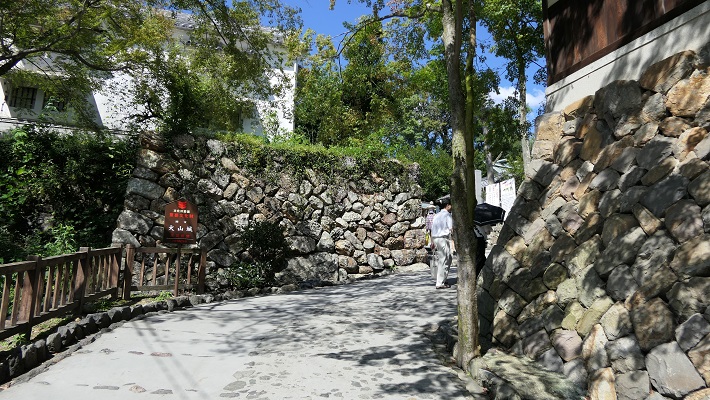
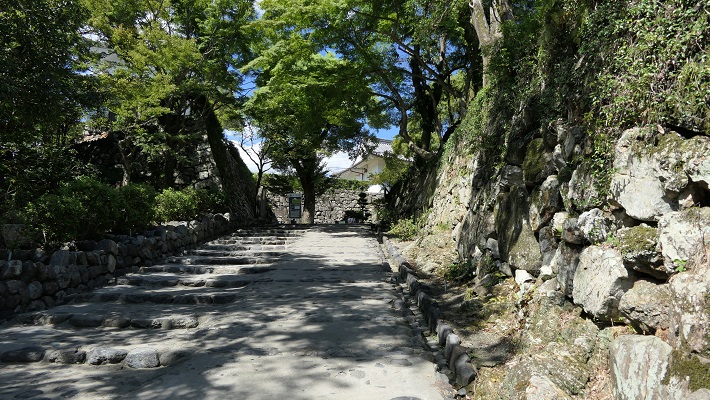
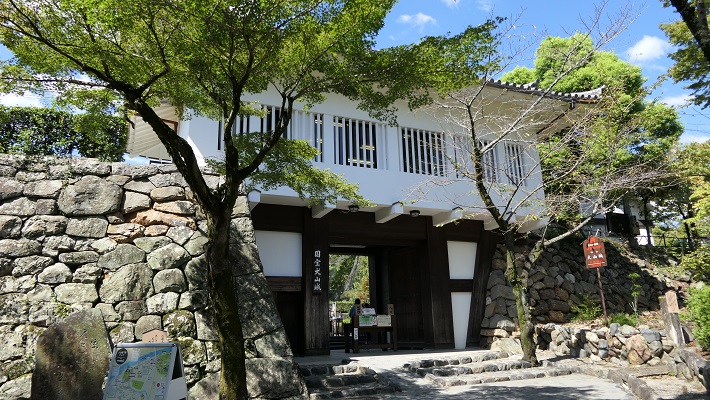
城は、南の方角に「大手道」と呼ばれる一本道でのみ開かれていました。今はその道に沿って簡単に城の中心と天守に行くことができますが、過去においては、5つの門によって厳重に守られていました。
The castle is open to only one route in the south called the Main Route or “Ote-michi”. It is easy to go to the center of the castle and Tenshu through the route now, but it was heavily guarded by five gates in the past.

大手道~The Main Route

門の間にまっすぐな部分がありますが、ここもまた高い壁と櫓がある曲輪に挟まれていました。最後の門である「鉄門」は再建されています。
The straight part of the route between the gates was also sandwiched by enclosures with high walls and turrets. The last gate called “Kurogane-mon” has been reconstructed.

まっすぐな部分~The straight part
再建された鉄門~The rebuilt Kurogane-mon Gate

天守の謎~Tenshu is mysterious

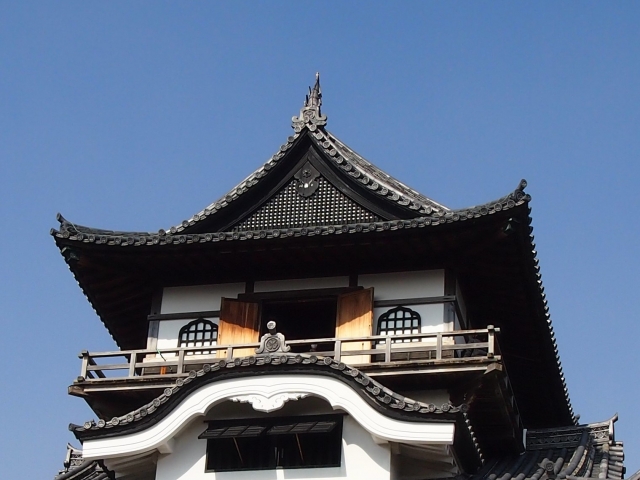
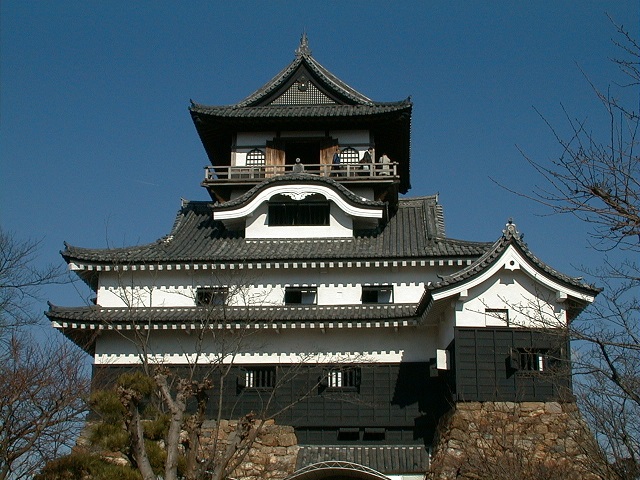
天守は国宝で、3層4階+地下2階となっています。初期の天守の形式である望楼型で、日本の現存天守では最古であるかもしれません。但し事はそう単純ではなくて、歴史家や建築家は天守は3段階で作られたと言っています。最初は2層の櫓として作られました。現存の1階と2階は古い工具と方法で作られています。
The Tenshu is a National Treasure. It has three layers and four levels with two extra basements. It shows the first Tenshu style called lookout tower type, and may be the oldest remaining Tenshu in Japan. But it is not that simple. Historians and architects say that Tenshu was built in three steps. The first step built a two story turret, as the remaining first and second floors are made with older tools and in practice.

犬山城天守~The Tenshu of Inuyama Castle
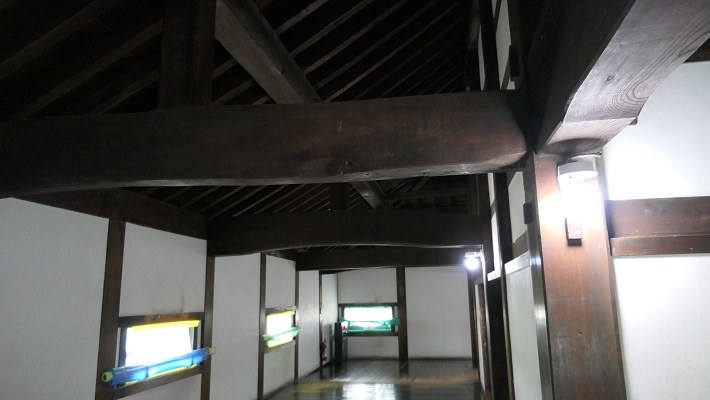
2階の内部~The interior of the second floor

3階と4階は塔のように外を見渡す用途で、新しい工法を使い、2段階目に付け加えられました。最後の段階で成瀬氏が、天守に唐破風や高欄を付けたりして装飾したのです。問題は、いつ最初の建築がなされたかです。もしそれが城の創建と同じ時期であれば、間違いなく最古の天守と言えるでしょう。将来明らかになるかもしれません。
The third and forth floors were added to look outside like a tower, using newer methods in the second step. Lastly the Naruse clan decorated Tenshu by adding a Chinese style gable called “Kara-Hafu” and a veranda at the top floor in the last step. The question is when the first step was done. If it is the same age as the castle itself, it is definitely the oldest Tenshu. It may be proven in the future.

天守の上層部分~The upper layer of the Tenshu(taken by マッハGGG from photoAC)

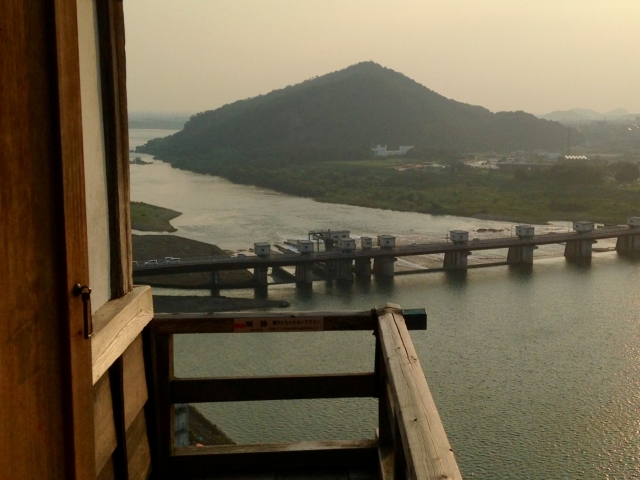
最上階が開放的なので、木曽川とその周辺の素晴らしい景色が眺めることができます。手摺を含む高欄は残っているそのままです。城主の大名と全く同じ体験ができるわけです。
You can see a great view of Kisogawa River and the area around from the open top floor. The veranda including its handrail is original. We can enjoy the exact same experience as the lords who owned the castle.

天守からの木曽川の眺め~A view of Kiso-gawa River from Tenshu
元来からの高欄の手摺~The original handrail of the veranda(taken by ACJOE from photoAC)

その後~Later History

明治維新後、犬山城は廃城となり、天守を除く全ての建物は撤去されました。1891年、濃尾地震により天守が半ば倒壊しました。その後、以前の領主だった成瀬氏が、彼ら自身で復旧することを条件に再び城を保有しました。犬山城は最近まで私有されていたのです。その間、天守は国宝に指定されました。2008年、犬山城白帝文庫という法人が設立され、将来への保存のため、城を保有することになりました。それ以来、調査研究が続けられています。
After the Meiji Restoration, Inuyama Castle was abandoned and all its buildings were demolished excluding the Tenshu. In 1891, the Tenshu collapsed partly due to the Nobi Earthquake. After that, the former lord, the Naruse clan owned the castle again on the condition that they would restore it. Inuyama Castle had been privately owned until recently. Meanwhile, it was designated as a National Treasure. Such a case was very rare. In 2008, a corporation called Inuyama-jo Hakutei-bunko was established and it has owned the castle to preserve it in the future. Since then, investigations and developments have been done.

2019年修繕中の天守~Tenshu under repairing in 2019

私の感想~My Impression

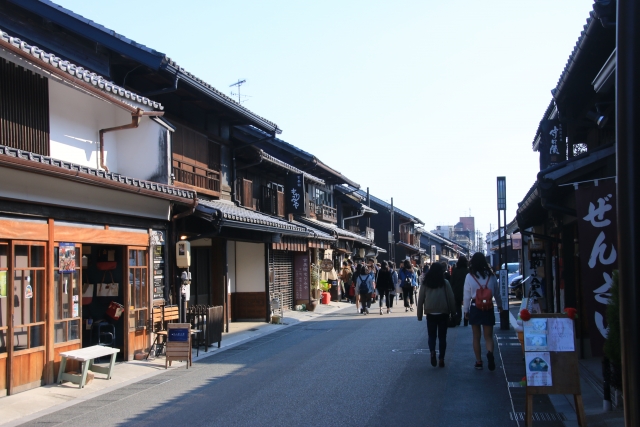
元々、犬山城は戦いのために築かれました。江戸時代には美しい眺望でも知られるようになりました。成瀬氏は城下町も発展させました。その雰囲気は今に残ります。城に行く途中で通って行けます。この城は今や重要な歴史遺産になりました。この城のいろんな側面を見ていただきたいと思います。
Originally, Inuyama Castle was built just for battle. It also became a beautiful landscape in the Edo Period. The Naruse clan developed the castle town, too. Its atmosphere remains even now. You can enjoy it on the way to the castle. The castle is now becoming more important for cultural heritage. I hope you will see many perspectives of the castle.

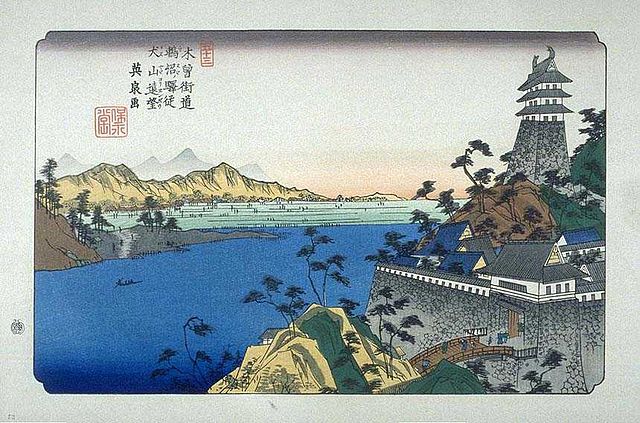
浮世絵に描かれた犬山城、「木曽街道鵜沼宿」渓斎英泉作、江戸時代~Inuyama Castle in a Ukiyoe painting, “Unuma on Kiso-kaido Road” attributed to Eisai Keisai in the Edo Period(licensed under Public Domain via Wikimedia Commons)
現在の城下町~The castle town now(taken by fuku41 from photoAC)

ここに行くには~How to get There

ここに行くには、電車をおすすめします。
犬山駅から:途中城下町を通って歩いて約20分です。
犬山遊園駅から:木曽川沿いを通って歩いて約15分です。
名古屋から両駅まで:名鉄名古屋駅から名鉄犬山線の快速特急に乗ってください。
車の場合は、東名高速道路の小牧ICから約12kmですが、城周辺の道路は混雑気味で、駐車場もあまりありません。
I recommend using the train to get there.
From Inuyama station: it takes about 20 minutes on foot, going through the castle town on the way.
From Inuyama-Yuen station: it takes about 15 minutes on foot, going along Kisogawa River.
From Nagoya to both stations: Take the rapid limited express on Meitetsu Inuyama line from Meitetsu Nagoya Station.
If you want to go there by car, it is about 12 km from the Komaki IC on the Tomei Expressway. But the roads around the castle tend to be crowded, and there are a few parking lots.

リンク、参考情報~Links and References

国宝犬山城Inuyama Castle, National Treasure
・「よみがえる日本の城3」学研(Japanese Book)
・「城の科学、萩原さちこ著」講談社ブルーバックス(Japanese Book)

51.安土城~Azuchi Castle

この城が、典型的な日本の城スタイルの始祖なのです。
This castle is the origin of typical Japanese castles.

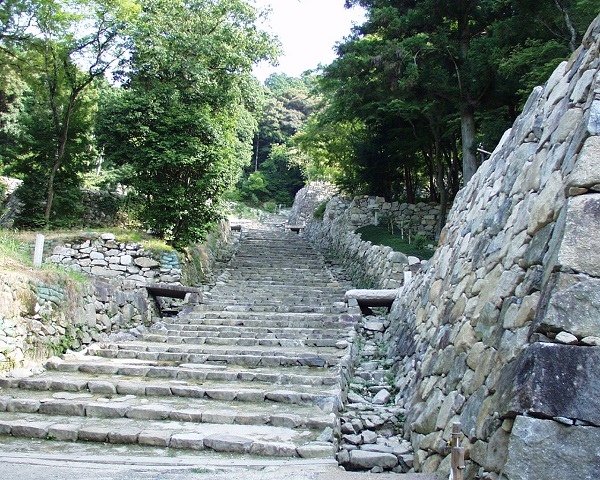
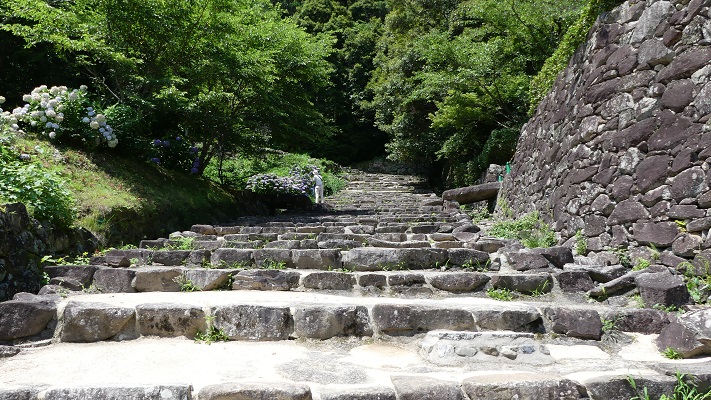
安土城の大手道~The Main Street of Azuchi Castle

立地と歴史~Location and History

高くそびえる天守、高石垣の上には多くの櫓と漆喰の壁、大きな門構え、そして周りには水堀をたたえる・・・これらが我々の持つ日本の城の直感的なイメージですが、これらは安土城から始まっているのです。それぞれのパーツは以前の城にもありましたが、有力な戦国大名、織田信長がそれらを統合し、彼の城として表現したのでした。そして日本の城の歴史に決定的なインパクトを与えました。
A tall standing Tenshu keep, many turrets and plaster walls on high stone walls, large entrance gates, and water moats around… These are our intuitive images of Japanese castles come from Azuchi Castle. Though each part can be found in castles earlier than that, the great warlord Nobunaga Oda integrated and expressed them as his castle. It has definitely had a huge impact on the history of Japanese castles.

織田信長肖像画、狩野宗秀作、長興寺蔵、16世紀後半~The portrait of Nobunaga Oda, attributed to Soshu Kano, owned by Chokoji Temple, in the late 16th century(licensed under Public Domain via Wikimedia Commons)

信長は、日本の統一事業を進めていく中で、自らの本拠地を尾張国(現愛知県)から西の方へ最初は岐阜(現岐阜県)、そして安土(現滋賀県)に移していきました。
As Nobunaga increased his work of unifying Japan, he moved his home base from Owari Province (now Aichi Pref.) to the west, at first Gifu (now Gifu Pref.), and Azuchi (now Shiga Pref.).

信長の根拠地移動ルート~Nobunaga’s route for his home base

この地は中山道に沿って、琵琶湖に面しており水上交通に便利でした。安土は大体京都と岐阜の中間点に当たり、信長は緊急時には両方に駆け付けられました。
The site was along the Nakasendo Road and faced Biwa Lake which was useful for water transportation. Azuchi is around the middle point of Kyoto and Gifu, so Nobunaga could rush to both cities in emergency.

城周辺の航空写真~The aerial photo around the castle

江州安土古城図、国立国会図書館蔵、城の周りは湖と堀です~The map of old Azuchi Castle in Omi Province, owned by National Diet Library, Around the castle is the lake and the moat(licensed under Public Domain via Wikimedeia Commons)

信長は1576年に、部下に対して高さ198mの安土山に城を築くよう命じました。彼は1579年5月から天主に住み始めました。実は、信長は普段から天主に住んでいた最初で最後の人物だと言われています。そこは彼にとって崇高で且つ権威そのものを表す場所だったようで、天主の中には滅多に他人を入れませんでした。信長はまた城下町を作り、人々に自由に商売と往来をさせ、これは「楽市楽座」と言われました。人々は大歓迎でこれを受け入れました。この当時はそれぞれの戦国大名がそれぞれの場所で高い税金をかけていたからです。
Nobunaga ordered his men to construct the castle on Mt. Azuchiyama which is 198m height, in 1576. He started to live in the Tenshu keep on May 1579. In fact, he is said to be the first and last person who usually lived in the Tenshu. It seemed to be spiritual and an authorization for him, so he rarely invited others to the inside of Tenshu. He also created the castle town below the castle and made people free to do business and transportation called “Rakuichi-Rakuza”. People welcomed it because each warlord charged high taxes on both of them in each place at that time.

安土山~Mt. Azuchiyama
三重県伊勢市にある安土城の模擬天主~The imitation of Azuchi Castle Tenshu in Ise City, Mie Pref.(licensed by D-one via Wikimedia Commons)

ところが、この城は短命に終わりました。1582年、完成からわずか3年後、信長が京都で本能寺で殺されたとき、原因不明の火事で天主が焼け落ちます。その後、織田の一族がしばらくこの城を使いましたが、1585年に近くに八幡山城が新しくできたことで廃城となりました。
However, the castle had a short life. In 1582, just after three years from the completion, An unidentified fire burned the Tenshu when Nobunaga was killed at Honnoji Temple in Kyoto. After that, Oda’s relatives used the castle for a while, it was abandoned in 1585, as Hachimanyama Castle was newly built nearby.

安土城図、大阪城天守閣蔵~The illustration of Azuchi Castle, owned by Osaka Castle Museum(licensed under Public Domain via Wikimedeia Commons)

特徴~Features

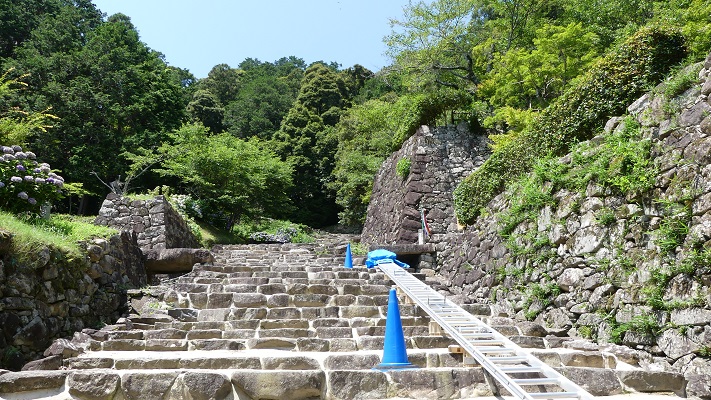
現在、城跡は国の特別史跡に指定されています。この場所は総見寺が所有しています。入り口から広くまっすぐな「大手道」が山の上の方に伸びています。ここは最近発掘され復元されました。また、このような道の作り方は明らかに防御には不利なので、他の山城とは随分異なっています。
Now, the ruins of the castle are designated as a National Special Historic Site. The site belongs to Sokenji Temple. From the entrance, the wide and straight Main Street “Ote-Michi” leads up to the mountain. It was excavated and restored recently. It is also different from other mountain castles, because such a road is clearly a disadvantage for defenders.

城跡の入り口、かつてはこの周辺に水堀がありました~The entrance of the castle ruins, there were water moats around in the past
大手道~The Main Street

歴史家の中には、信長はこの道を彼の都の大通りとしていたと推測する人もいますし、単にこの城の権威を示すものだという人もいます。いずれにしろ、天主はこの道から見えたはずですし、周りを信長の家臣の屋敷が取り囲んでいました。
Some historians speculate Nobunaga regarded it as the central street of his capital. Others argue it just showed the authority of the castle. Anyway, the Tenshu should have been seen from the street, with the halls of Nobunaga’s retainers along it.

安土城大手道周辺の想像図~The imaginary drawing of around the Main Street at Azuchi Castle(岐阜城展示室)

道は、山の中腹から曲がりくねり、「七曲り」と呼ばれます。そして城の主要部に向かっていきます。
The street gets zigzagged, called “Nana-Magari”, from the midslope of the mountain towards the main part of the castle.

道の七曲り部分~The zigzaged part of the street

主要部は黒金門から始まりますが、この門は巨石を使い、権威を見せつけています。
The main part starts from “Kurogane” Gate ruins which was made using huge stones for showing authority.

黒金門跡、The ruins of Kurogane Gate

次に来るのは二の丸跡で、信長の廟所があります。ここは元々一族の御殿があったかもしれない所です。
Next comes Ninomaru ruins where Nobunaga’s mausoleum remains, where his inner palace might have originally been.

二の丸にある信長の廟所~The mausoleum of Nobunaga Oda at Ninomaru

本丸は城の中心です。当時は多くの建物がひしめいていました。その一つは特に天皇のための宮殿だったと言われています。貴族の日記に天皇がこの城に行幸する予定があったと書いてあります。信長は天皇をそこに住まわせ、天主から見下ろし、自身の影響下におきたかったとも、そうではなくただの訪問だとも言われています。
Honmaru is the center of the castle. Many buildings were packed at that time. One of them is particularly said to be the palace for the Emperor. A noble’s diary says there was a plan of the Emperor’s visit to the castle. Some speculate Nobunaga tried to make the Emperor live in the palace and be under control ,looking down from Tenshu. Others say it was just a visit.

本丸跡~The ruins of Honmaru

天主は本丸のとなりに立っていました。天主台とその内側に礎石が残っています。
Tenshu stood next to Honmaru. The base remains where you can see cornerstones inside.

天主台の石垣~The stone walls of the Tenshu base
天主台内の礎石~The cornerstones inside the Tenshu base
天主台からの眺め、かつては琵琶湖が見えたはずです~A view from the base, it should be Biwa Lake in the past

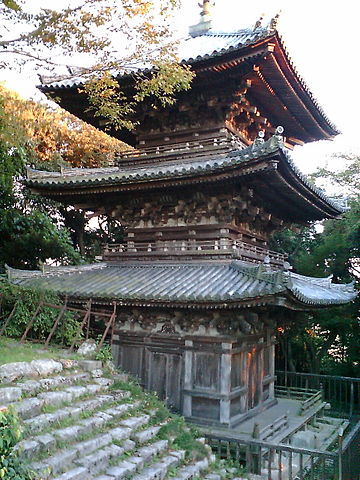
帰りの道は「諸々橋」口と呼ばれていて、信長が設立した総見寺の元の敷地を通り過ぎます。この寺は江戸時代に火災に遭いましたが、三重塔などいつくか建物が残っています。ポルトガルからの宣教師ルイス・フロイスは、信長はこの寺を自身を崇拝させるために建立したと言いました。これもまた謎めいています。
On the return route called “Dodobashi” Route, you will pass the ruins of original Sokenji Temple that Nobunaga founded. The temple suffered a fire in the Edo Period, but several buildings like the three-story pagoda still remain. A missionary from Portugal, Luis Frois said Nobunaga created it to celebrate himself. That is also controversal.

現存している総見寺三重塔~The remaining three-story pagoda of Sokenji Temple(licensed by Haruno Akiha via Wikimedia Commons)

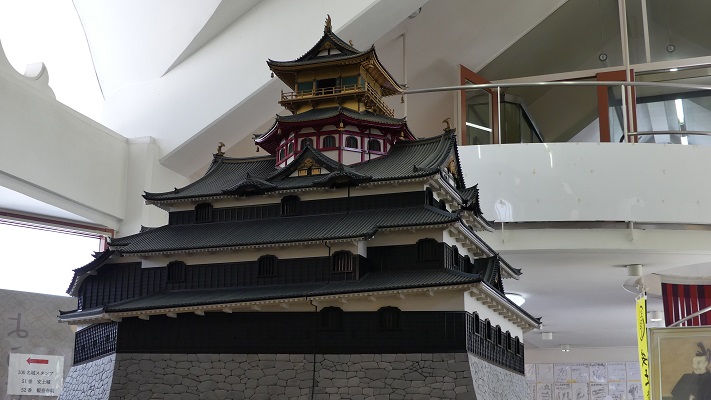
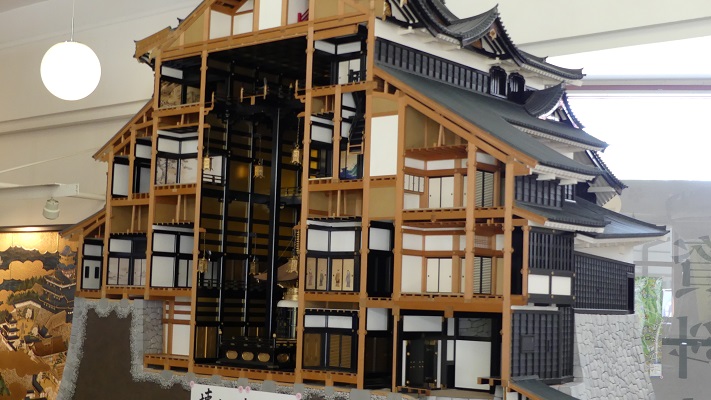
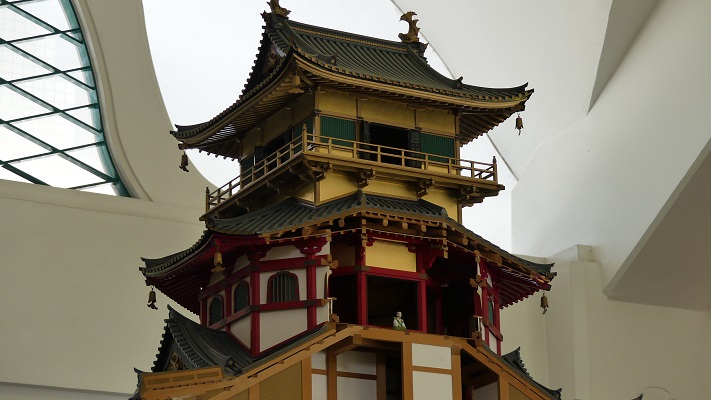
安土城郭資料館では、安土城天主の20分の1スケールの模型を見ることができます。これは古文書、図面、発掘の成果から製作されました。この模型では、天主は5層の外観で、地階を含めて7階建てです。それぞれの階は違う形と色をしています。5階は赤色の八角形で内側は仏画が描かれ、最上階の6階は金色の四角形で古代中国の聖人が描かれています。
You can see the one-twentieth scale model of Azuchi Castle’s Tenshu keep at Azuchi Castle Museum. It was created based on old documents, drawings and excavation. According to this model, it had a five-layer appearance, and seven floors including the basement. Each floor had a different shape and color. The 5th floor was octagonal of red with Buddhist wall paintings inside, and the top 6th floor was square of gold with paintings of ancient legendary Chinese saints.

安土城天主のミニチュアモデル~The miniature model for Tenshu of Azuchi Castle(安土城郭資料館~Azuchi Castle Museum)

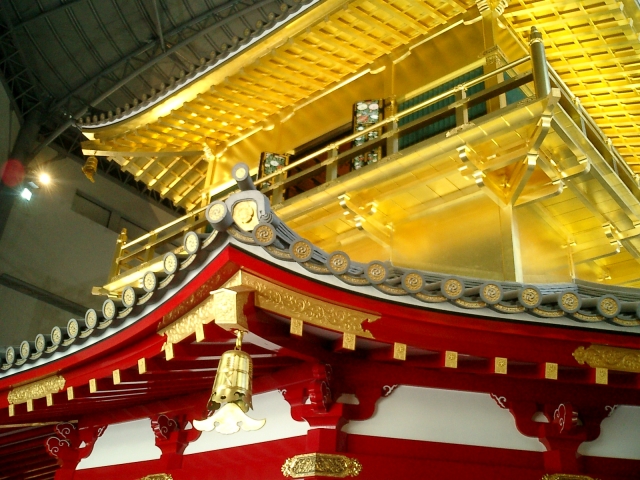
この両方の階の実寸大のレプリカが、信長の館で展示されています。
Both floors have been restored as the full scale replica at the House of Nobunaga.

信長の館にある天主5・6階のレプリカ~The replica of the 5th and 6th floors of Tenshu at the House of Nobunaga(taken by あけび from photoAC)

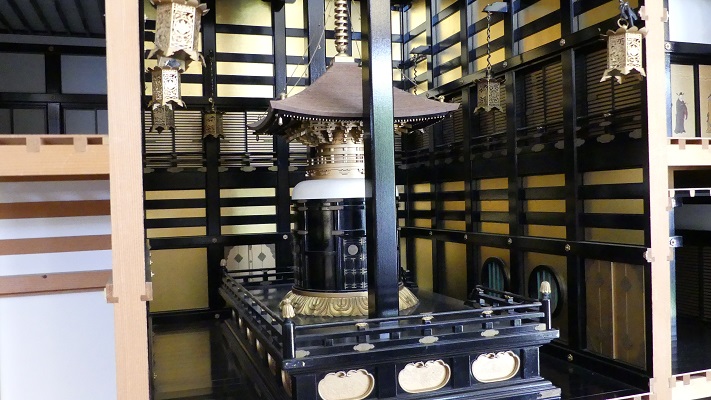
天主の地階から3階までは吹き抜けになっていて、地面には仏塔が設置してあったようです。これらは、信長の天主がとても象徴的かつ宗教的な存在であったことを示しています。
There was the stairwell inside Tenshu through BF to 3F, where the pagoda seemed to be set on the ground. These suggestions show Nobunaga’s Tenshu was very symbolic and religious.

ミニチュアモデルの吹き抜け部分~The stairwell part of the miniature model
ミニチュアモデル内の仏塔~The pagoda in the miniature model

その後~Later Life

城跡の領域は、江戸時代の間ずっと総見寺に所有されていました。火事があった後、寺の建物は現在の大手道周辺に再建されました。そして寺の石垣がこの道を覆って築かれました。時が過ぎるにつれ、人々はその石垣が安土城のものと思うようになります。1989年に安土城の調査整備事業が開始され、20年間続きました。その中で、寺の石垣の下にこのような広く長い通り道が発見され人々を驚かせたのです。総見寺は寺の石垣を撤去し、元の通りを復元することに協力しました。
The domain of the castle ruins was owned by Sokenji Temple all through the Edo Period. After the fire, the temple buildings were rebuilt around what is now Ote-michi street. They made their own stone walls across the street. As time has passed by, people got used to thinking the stone walls might come from Azuchi Castle. The investigation and development project for Azuchi Castle Ruins started in 1989. It lasted for 20 years. People were surprised to see that such a wide, long street was discovered under the stone walls. The temple cooperated to remove their stone walls and restore the original street.

発見された大手道~The discovered Main Street

安土城考古博物館では、この事業の成果を見ることができます。
Azuchi Castle Archaeological Museum shows the achievement of the project.

安土城考古博物館~Azuchi Castle Archaeological Museum(licensed by 663highland via Wikimedia Commons)

私の感想~My Impression

安土城は、私の最も好きな日本の城の一つです。この城は信長の考え方を直接表していると思うからです。信長はときに過酷と言われますが、彼は当時の常識に対して自らの信念を貫いたと思うのです。しかし、彼の思想は歴史家の議論を経てもなお謎のままです。ですので、ここに来て、何かを感じ、自分で考えてみることが大事です。
Azuchi Castle is one of my most favorite castles in Japan, because the castle must directly show Nobunaga’s way of thinking. While Nobunaga is sometimes said to be cruel, I think he kept his faith against the common sense of that time. However, his basic idea is still mysterious after historians’ discussions. So it is important to come there , feel something, and think by yourself.

天主ミニチュアモデルの上部~The top of the Tenshu miniature model(安土城郭資料館~Azuchi Castle Museum)

ここに行くには~How to get There

車で行く場合は、名神自動車道の八日市ICか竜王ICから約30分かかります。先程ご紹介した城跡と博物館に駐車場があります。
電車の場合は、レンタル自転車を使うことをお勧めします。城跡と博物館が点在しているからです。JR安土駅の前に2件のレンタル店があります。そこに荷物を預けることもできます。
東京から安土駅まで:東海道新幹線で米原駅まで行き、JR琵琶湖線に乗り換えてください。
大阪から安土駅まで:大阪か新大阪駅からJR京都線に乗ってください。
If you want to go there by car, it takes about 30 minutes from the Yokaichi IC or the Ryuo IC on Meishin Expressway. The ruins and the museums mentioned above offer a parking lot.
When using train, I recommend you to use a rental bicycle, because the ruins and the museums are spread out. There are two rental bicycle shops in front of JR Azuchi Station. You can also leave your baggage there.
From Tokyo to Azuchi st.:
Take the Tokaido Shinkansen superexpress to Maibara station, and transfer for JR Biwako line.
From Osaka to Azuchi st.:
Take the train on JR Kyoto line from Osaka or Shin-Osaka station.

リンク、参考情報~Links and References

安土城跡(滋賀県観光情報)Azuchi Castle Ruins
織田信長の安土城と総見寺(Only Japanese)
あづち周遊(Only Japanese)
・「信長の城/千田嘉博著」岩波新書(Japanese Book)
・「安土 信長の城と城下町/滋賀県教育委員会」(Japanese Book)
・「現代語訳 信長公記/太田牛一著、中川太古訳」新人物文庫(Japanese Book)

error: Content is protected !!