中世と近世が同居している城
A castle mixed with the Middle Ages and the Modern times
立地と歴史~Location and History
武田信玄の本陣~Stronghold for Shingen Takeda
長野県長野市にある松代城は、真田氏の城下町として有名な観光地です。この城には長い歴史があります。16世紀に武田氏が最初に築城し、その頃は海津城と呼ばれていました。この城の建設の理由は、近くの川中島が越後国(現在の新潟県)の上杉氏との最前線であったからです。城は北側が千曲川に接していて、土塁や水堀に囲まれていました。また、城の門の外側には馬出しという武田氏独特の防御システムが備えられていました。城は実際に、1561年の非常に有名な上杉謙信との川中島の戦いにおいて武田信玄の本陣として使われました。 Matsusshiro Castle is a famous attraction in Nagano City, Nagano Prefecture, which was known as a Sanada Clan castle town. The castle has a long history. It was first built by the Takeda Clan in the late 16th Century and was called Kaizu Castle. The reason for the construction was that the area nearby called Kawanakajima was the front line against the Uesugi Clan in Echigo Province (what is now Niigata Prefecture). The castle bordered Chikuma-gawa River on the north and was surrounded by earthen walls and water moats. It is also said that it was equipped with the Takeda Clan’s unique defense system called Umadashi outside the castle gates. The castle was actually used as the stronghold for Shingen Takeda when he fought with Kenshin Uesugi in the very famous fourth Battle of Kawanakajima in 1561.
城の位置~The location of the castle
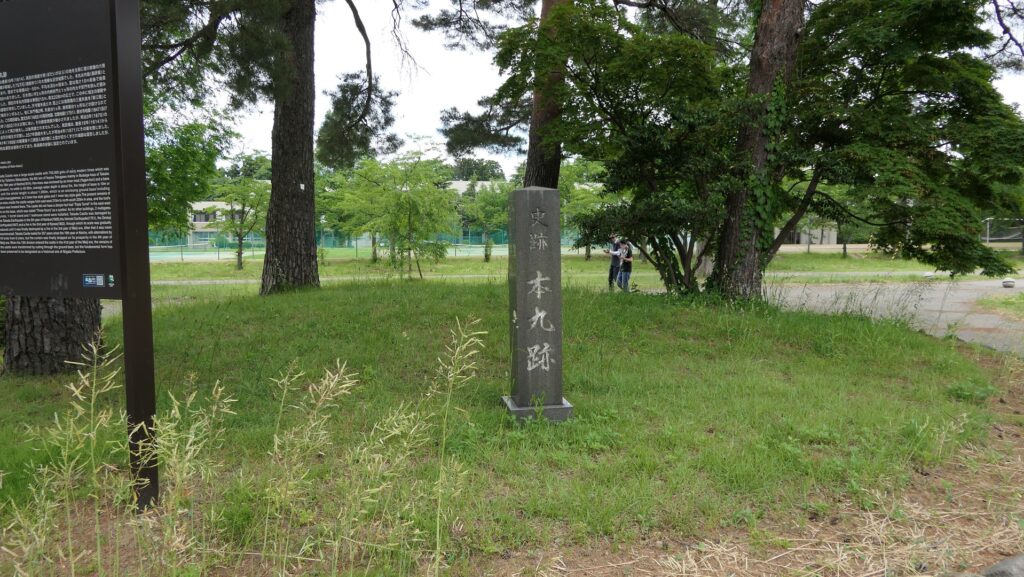
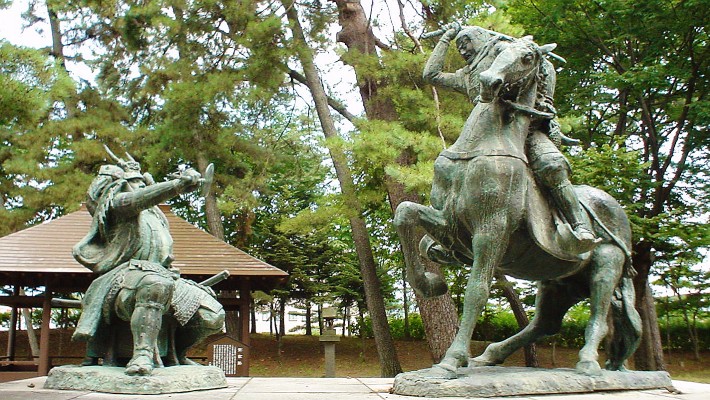
城内にある「海津城」の碑~The monument of “Kaizu Castle” in the castle川中島古戦場にある武田信玄と上杉謙信の銅像~The statues of Shingen Takeda and Kenshin Uesugi at the Kawanakajima Battlefield (licensed under Public Domain via Wikimedia Commons)
真田氏による統治~Governance by Sanada Clan
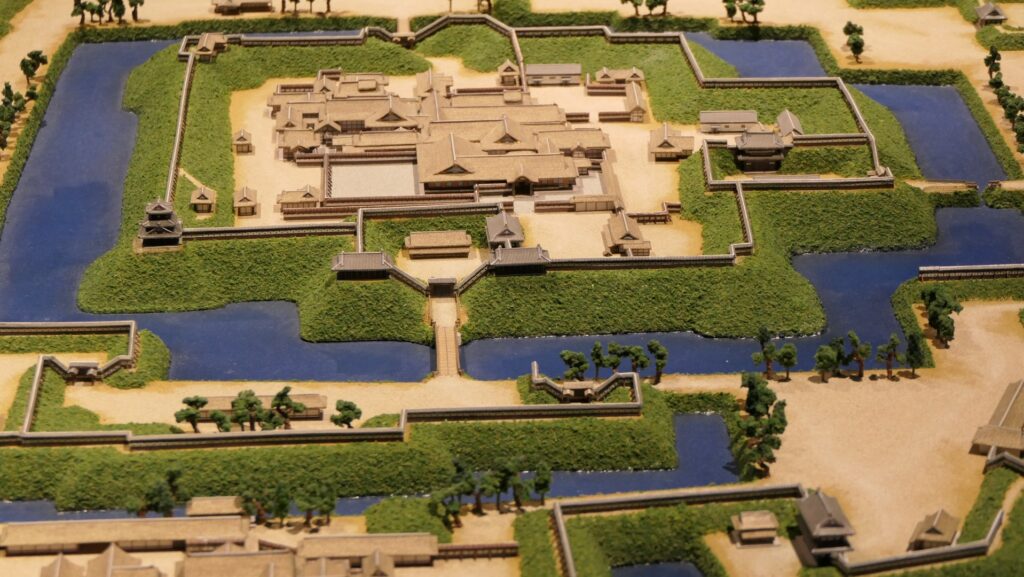
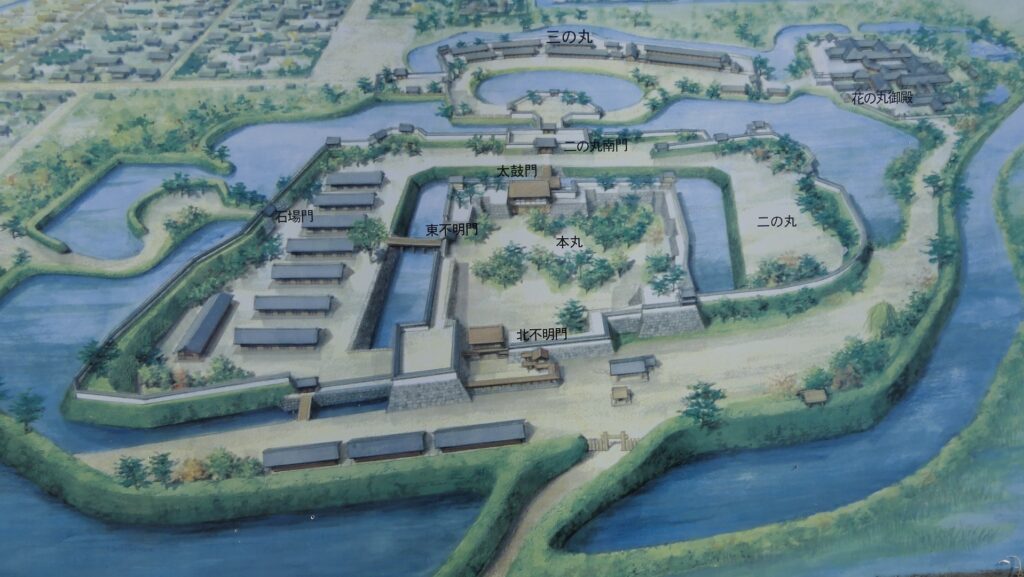
1582年に武田氏が織田氏により滅ぼされた後は、この城の城主は何度も変わりました。最終的には真田氏が、城と城下町を含む松代藩を1622年から江戸時代末まで支配しました。また、1711年には徳川幕府により、城の名前が松代城と変更されました。城はそれまでに改修が続けられます。例えば、城の中心地である本丸は、内堀とともに石垣によって囲まれました。石垣の四隅の上には4基の櫓が築かれ、3基の門が本丸の入口に設置されました。本丸の内部には御殿があり、城主が住んでいました。一方、外堀とともに本丸と内堀を囲む二の丸は、まだ土塁があるだけでした。また、恐らくは武田時代に由来する馬出しも残っていました。 After the Takeda Clan was defeated by the Oda Clan in 1582, the lords of the castle were changed several times. The Sanada Clan finally governed the Matsushiro Domain including the castle and the castle town from 1622 until the end of the Edo Period. The castle was also renamed Matsushiro Castle by the Tokugawa Shogunate in 1711. The castle continued to be improved until then. For example, the center of the castle called the Main Enclosure was surrounded by stone walls with the Inner Moat. Four turrets were built on the four corners of the stone walls, and three gates were set at the entrances of the enclosure. The Main Hall was inside of the enclosure where the lord lived. On the other hand, the Second Enclosure with the Outer Moat surrounding the Main Enclosure and InnerMoat still had the earthen walls. The Umadashi system which probably originated in Takeda’s period, also remained.
城の想像図(正面)~The imaginary drawing of the castle (the front) (現地説明板より~from the signboard at the site)城の想像図(背面)~The imaginary drawing of the castle (the back) (現地説明板より~from the signboard at the site)
新しい御殿~New Main Halls
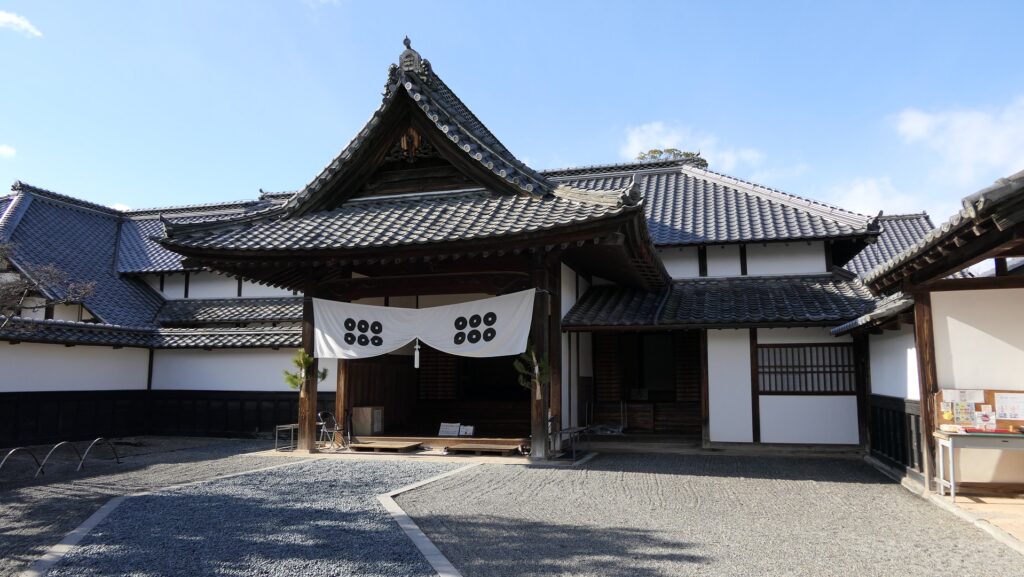
しかしながら、この城の川に近い立地は防御には有利でしたが、統治や居住には不利でした。城は洪水の被害に何度も見舞われました。火災による被害もあり、真田氏は居宅を城の中心地から南西部分に移すことを決め、花の丸御殿を建設します。江戸時代末には城から離れた地に、親族関係者(婦女子)のための新御殿も建てました。 However, this castle’s location near the river was positive for defense, but negative for governance and living. The castle suffered damage from floods several times. It was also damaged by fires, so the Samada Clan decided to escape their home from the center of the castle to the southwest part, building Hananomaru Main Hall. The clan also built the New Main Hall for their relatives (women and children) far from the castle at the end of the Edo Period.
新御殿~The New Main Hall
特徴~Features
江戸時代末期のように復元~Restored like End of Edo Period
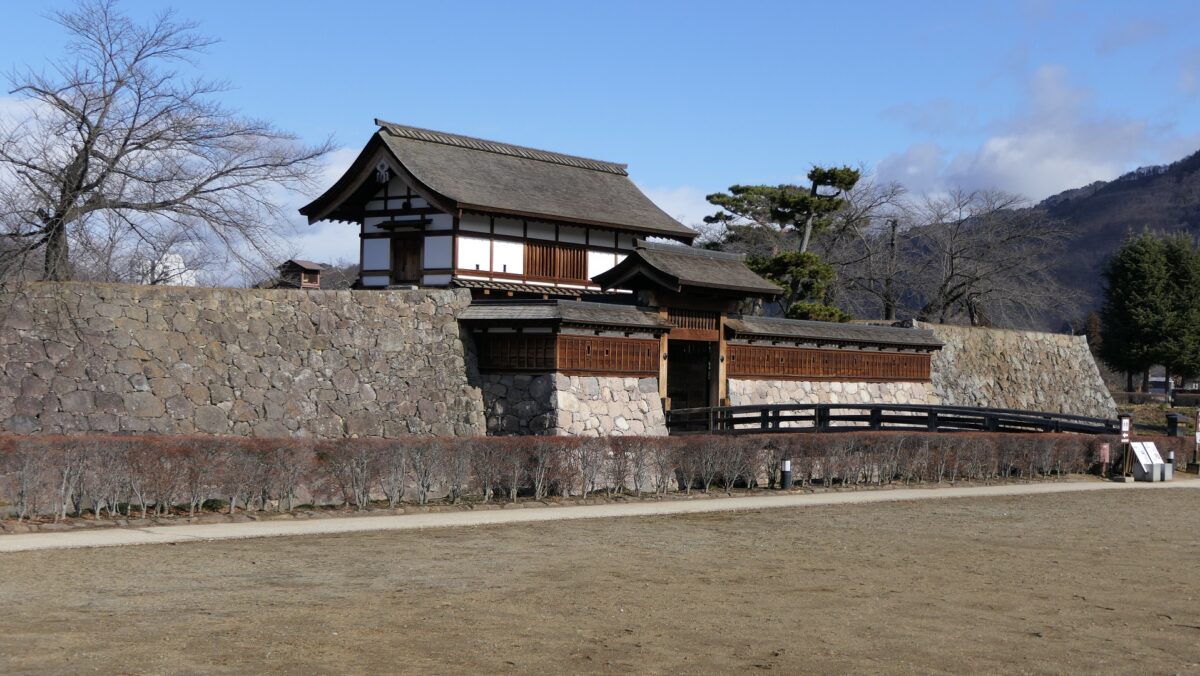
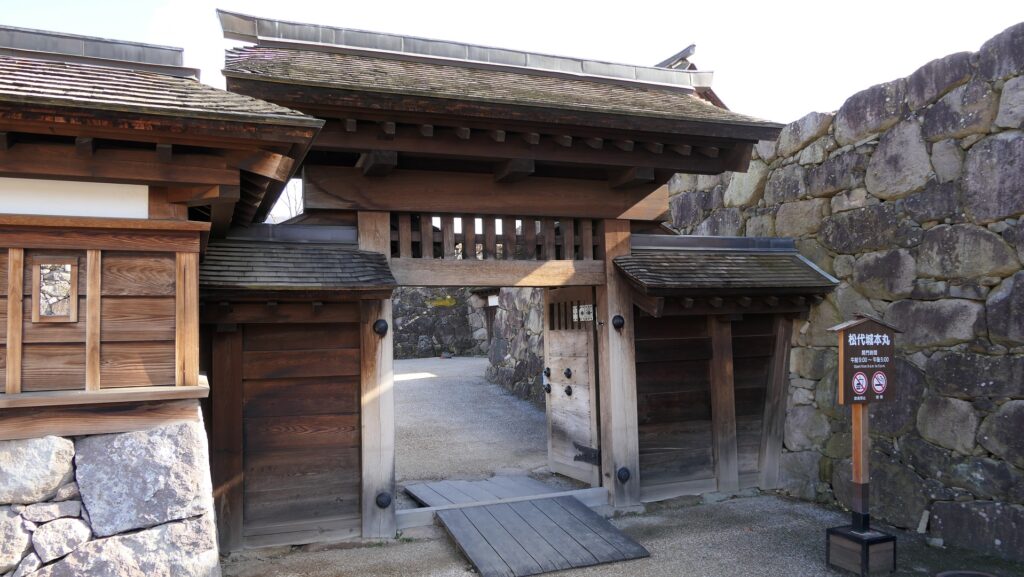
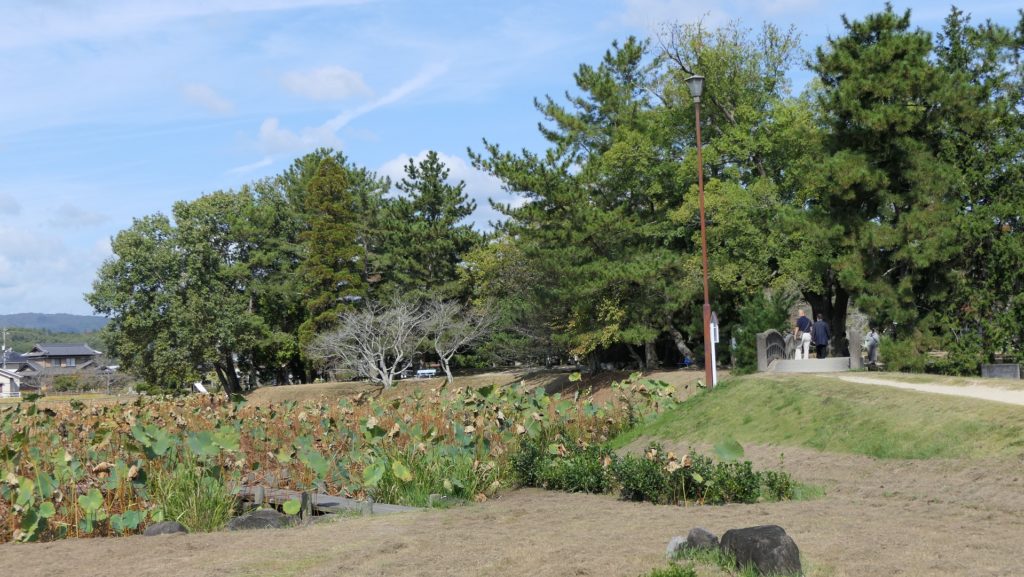
現在、松代城の中心部は以前の姿に似通って見えます。本丸の石垣のみが現存しているのですが、本丸の2つの門、内堀と2つの橋、そして二の丸を囲む土塁さえもが長野市によって復元されています。市の関係者によると、江戸時代末期の姿を再現したということです。 Now, the center of Matsushiro Castle looks similar to its former appearance. Only the stone walls of the Main Enclosure are original, but two gates to the Main Enclosure, the Inner Moat with two bridges, and even earthen walls surrounding the Second Enclosure have been restored by Nagano City. The city officials say they tried to restore the castle to show its appearance at the end of the Edo Period.
復元された本丸~The restored Main Enclosure
城周辺の航空写真~The aerial photo around the castle
対照的な二の丸と本丸~Contrastive Second and Main Enclosures
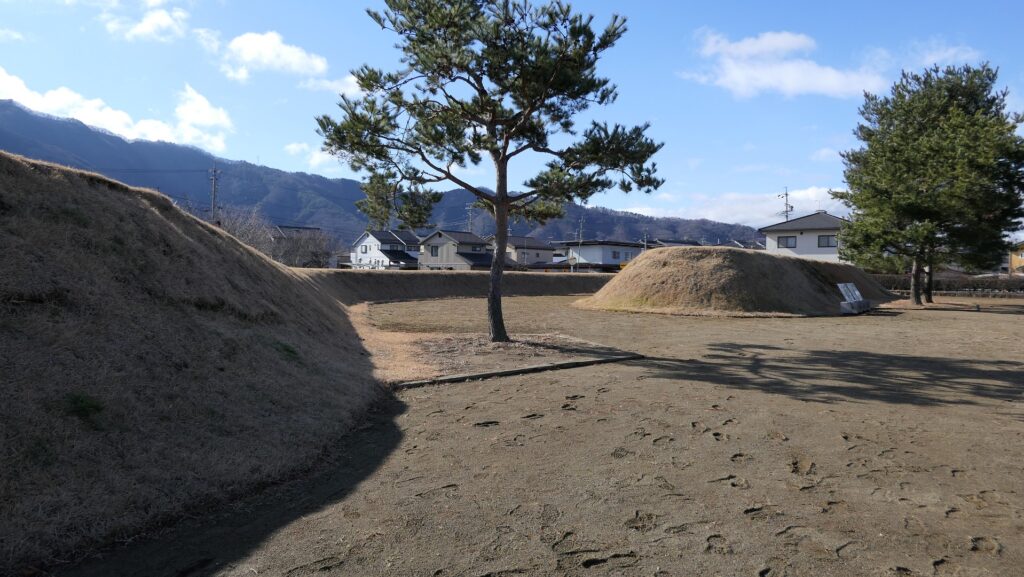
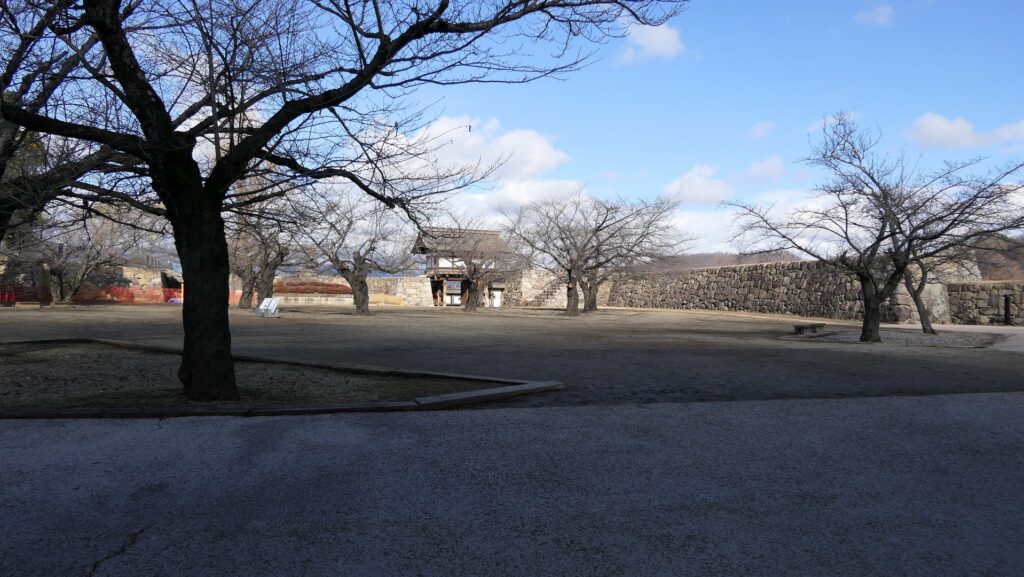
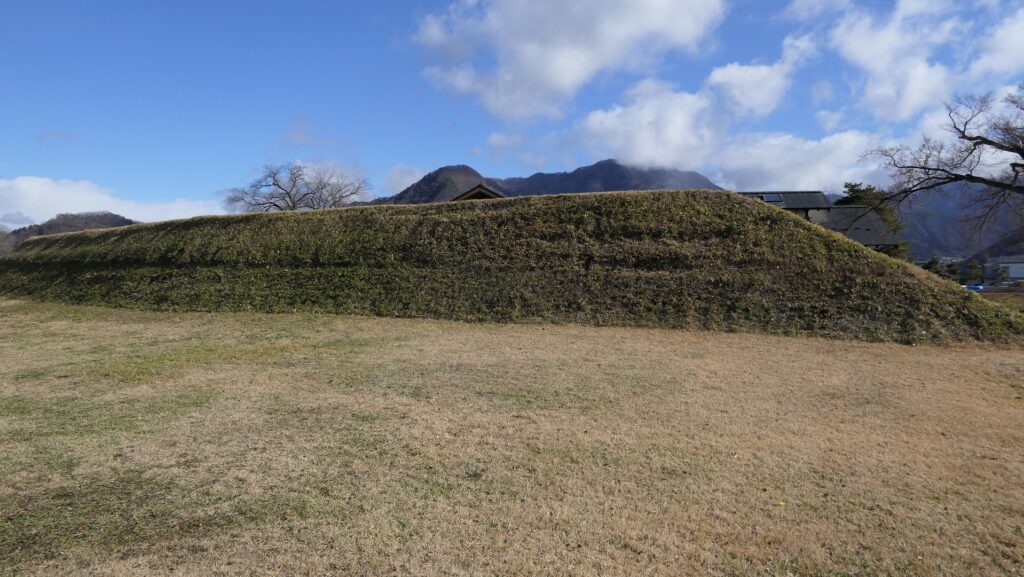
観光客は通常、二の丸の入口である南門跡から城に入っていきます。この門跡は、復元された土塁に囲まれていて、その近くには馬出しの痕跡がわずかに残っています。この土塁と本丸の石垣はとても対照的です。それぞれが元々は別の時代に作られたからです。土塁は中世の戦国時代に由来し、石垣は主に江戸時代に作られました。 Visitors usually enter the castle through the ruins of the South Gate, the entrance of the Second Enclosure. The ruins are surrounded by the restored earthen walls and the trace of the Umadashi system slightly remains nearby. The earthen walls and the stone walls of the Main Enclosure are very contrastive because both of them come from different periods. The earthen walls are from the Sengoku Period of the Middle Ages and the stone walls are mainly from the Edo Period of the Modern Times.
南門跡~The ruins of the South Gate復元された二の丸~The restored Second Enclosure
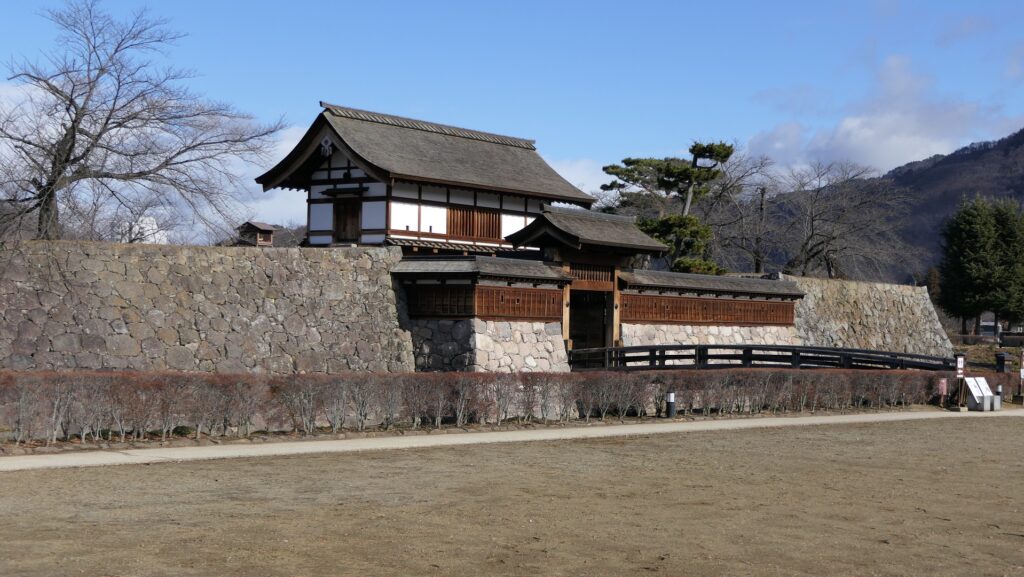
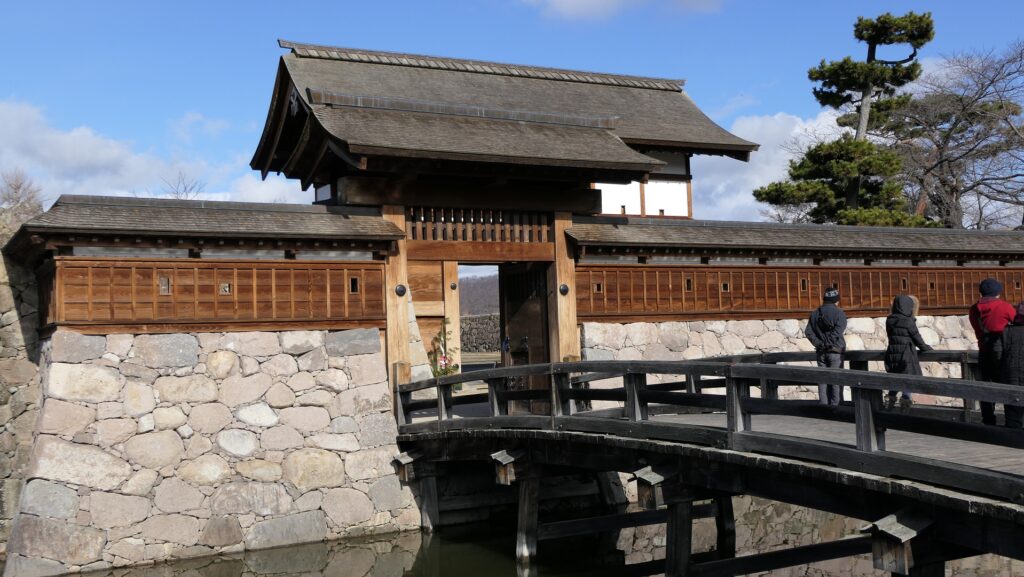
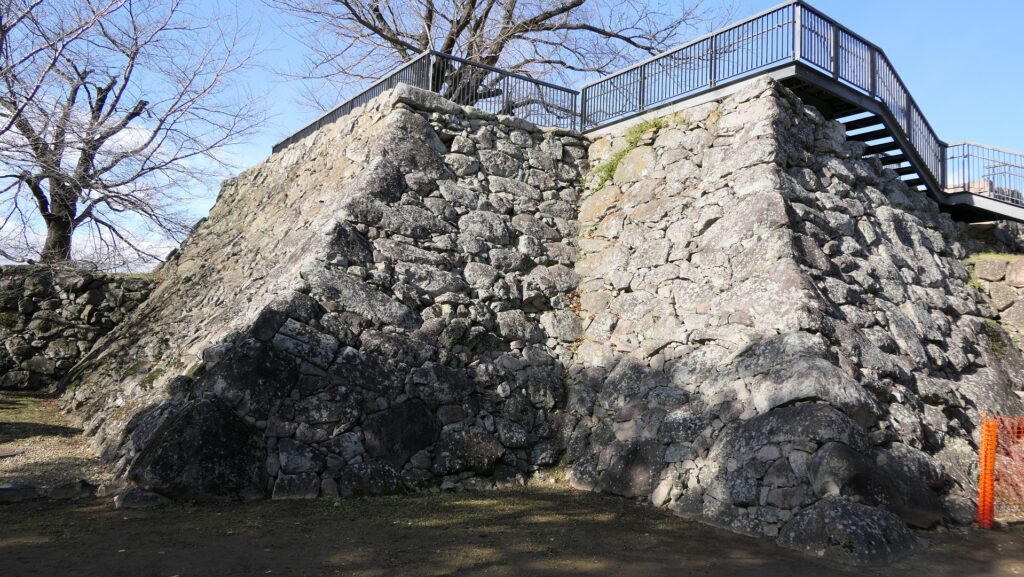
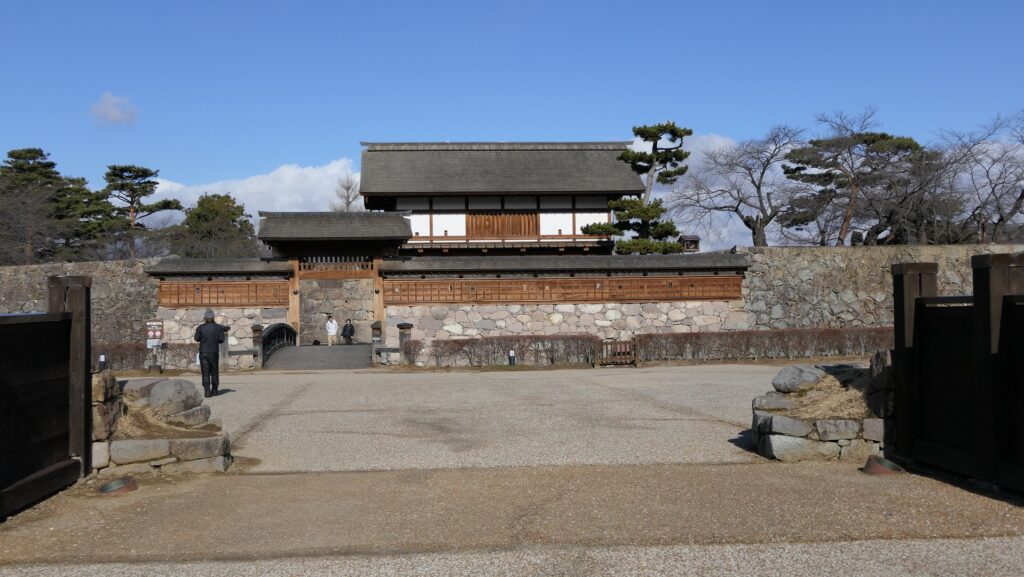
本丸へは内堀にかかっている橋を渡り、太鼓門を通って入ります。これらは皆復元されたもので、城の新しいシンボルになりました。本丸の内側は1717年の大火以降は空き地になっています。角にあった4つの櫓は復元されていませんが、石垣は残っています。北西角のものは一番大きく、櫓の以前には天守が立っていたのではないかと言われています。また、この櫓の石垣とその積み方は他のものよりは古風であり、とても荒々しく見えます。櫓台の上に階段で登り、城周りの景色を見ることができます。 You can enter the Main Enclosure through the Taiko-mon Gate after crossing the bridge over the Inner Moat. These structures have all been restored and have become new symbols of the castle. The inside of the Main Enclosure has remained empty since the great fire in 1717. The four turrets on the corners have not been restored, but their stone wall bases remain. The northwest one is the largest and it is said that the Main Tower might have stood on it before the turret. Its stone walls and the method for piling them are also older than other stone walls, so they look very rough. You can go up the stairs to the top of the base to see a view around the castle.
太鼓門~The Taiko-mon Gate本丸の内部~The inside of the Main Enclosure北西櫓石垣(内側)~The stone walls for the Northwest Turret (the inside)北西櫓石垣(外側)~The stone walls for the Northwest Turret (the outside)
独特な構造~Unique Structures
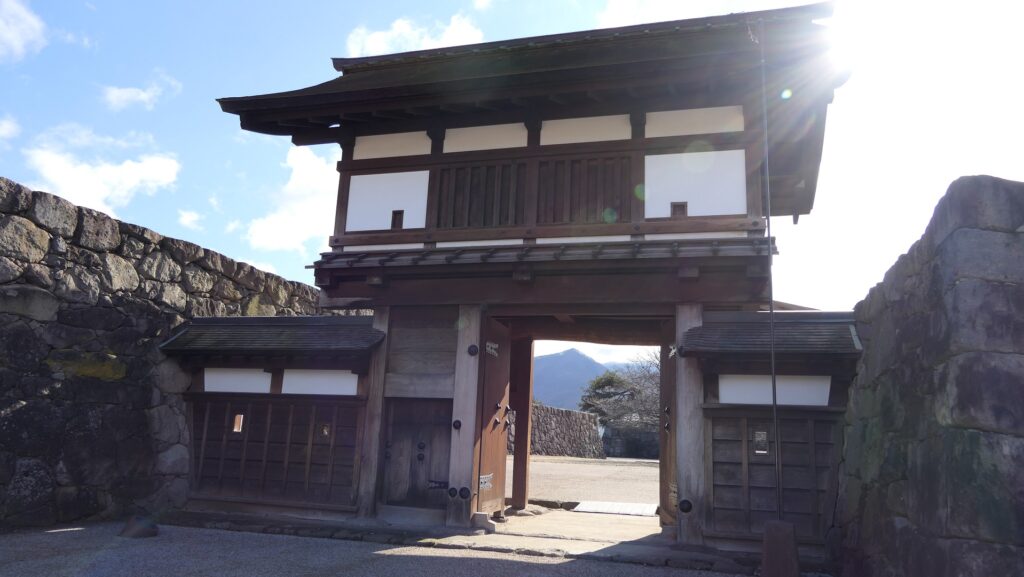
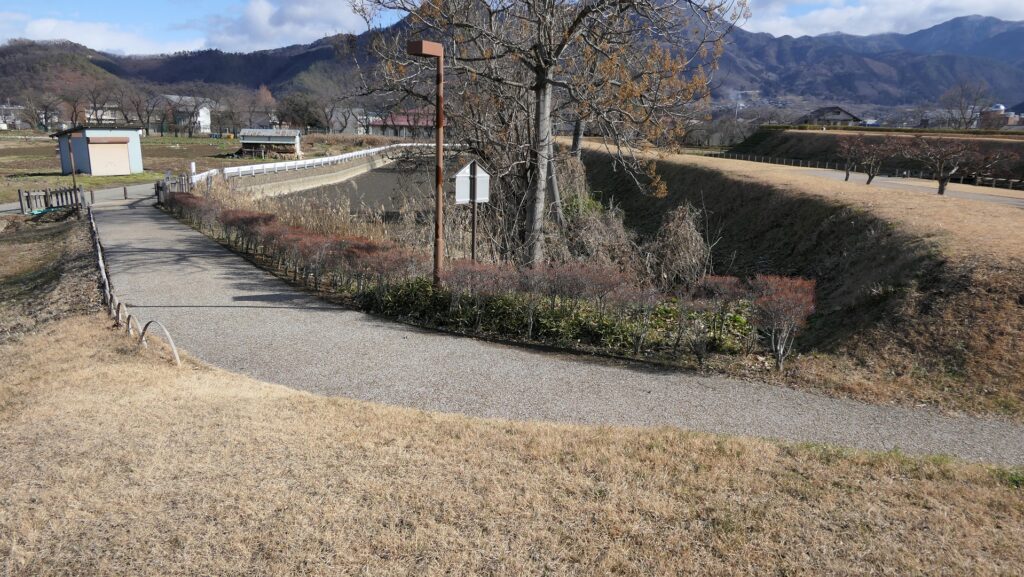
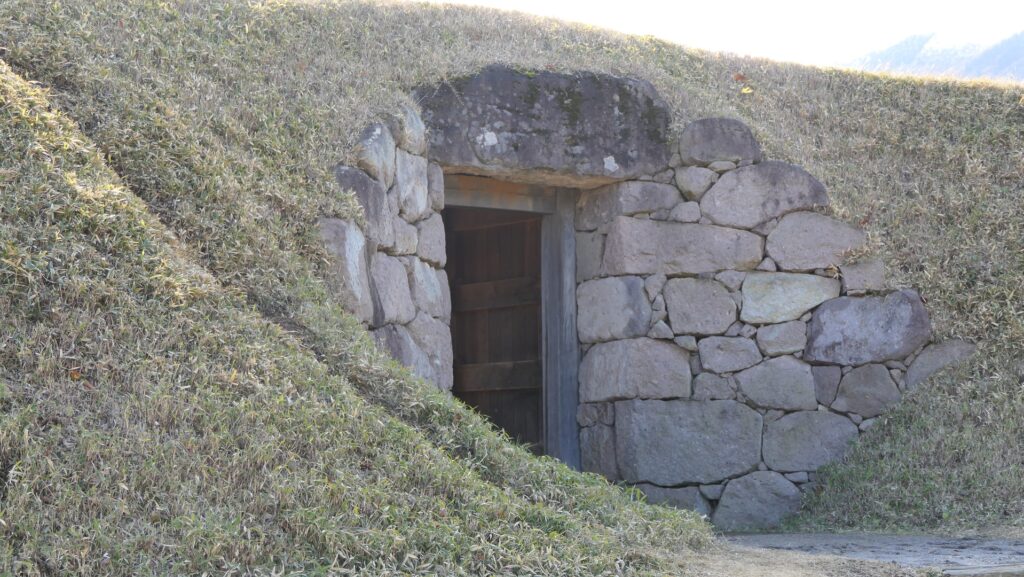
本丸の北側にはもう一つの復元された北不明門があります。その門をくぐっていくと、本丸を囲んでいる二の丸に戻っていきます。二の丸の北外側は、かつては千曲川でした。江戸時代に洪水を防ぐため、川の流路が替えられたのです。面白いものとしては、埋門という復元された小さな門が二の丸の土塁の所にあります。土塁に通した穴の中に組み込まれていますが、戦が始まったときには埋められるようになってました。 The northern side of the Main Enclosure has another restored gate called Kita-Akazu-mon. You can go through the gate back to the Second Enclosure surrounding the Main Enclosure. The outside of the Second Enclosure on the north was the Chikumagawa-River in the past. The route of the river was changed in the Edo Period to prevent floods. There is an interesting small, restored gate called Uzumi-mon in the earthen walls of the Second Enclosure. It was originally set in a hole through the walls which would have been filled when a battle happened.
北不明門(櫓門部分)~The Kita-Akazu-mon Gate (the turret gate part)北不明門(表門部分)~The Kita-Akazu-mon Gate (the front gate part)二の丸の北外側~The outside of the Second Enclosure on the north復元された埋門~The restored Uzumi-mon Gate
その後~Later History
明治維新後、松代城は廃城となり、ほとんどの建物は売られるか撤去され、ほとんどの土地は元藩士に分け与えられ農地となりました。1904年、元藩主であり新御殿に住んでいた真田家は土地の一部を買い戻し、城跡を公園として公開しました。最終的には1951年にその土地を公共のものとして寄付しました。1981年には城跡は国の史跡に指定されましたが、当時は城の中心部に石垣だけが残っている状態でした。長野市は城跡を調査しいくつかの門、橋、土塁、水堀の復元を開始します。その復元は2004年に完了し、現在私たちは城が過去どのような姿であったか目にすることができるのです。 After the Meiji Restoration, Matsushiro Castle was abandoned, most of its buildings were sold or demolished, and most of its land was divided by former warriors to be turned into farm. In 1904, the former lord of the castle, the Sanada Clan, living in the New Main Hall, bought part of the land back to open the ruins of the castle as a park. The clan lastly donated the land to the officials in 1951. The ruins of the castle were designated as a National Historic Site in 1981, but only the stone walls remained at the center of the castle at that time. Nagano City investigated the ruins and started to restore some of gates, bridges, earthen walls and water moats. The restoration was completed in 2004 and we can now see what the castle looked like in the past.
復元中の城跡~The castle ruins being restored復元後の城~The castle after the restoration
私の感想~My Impression
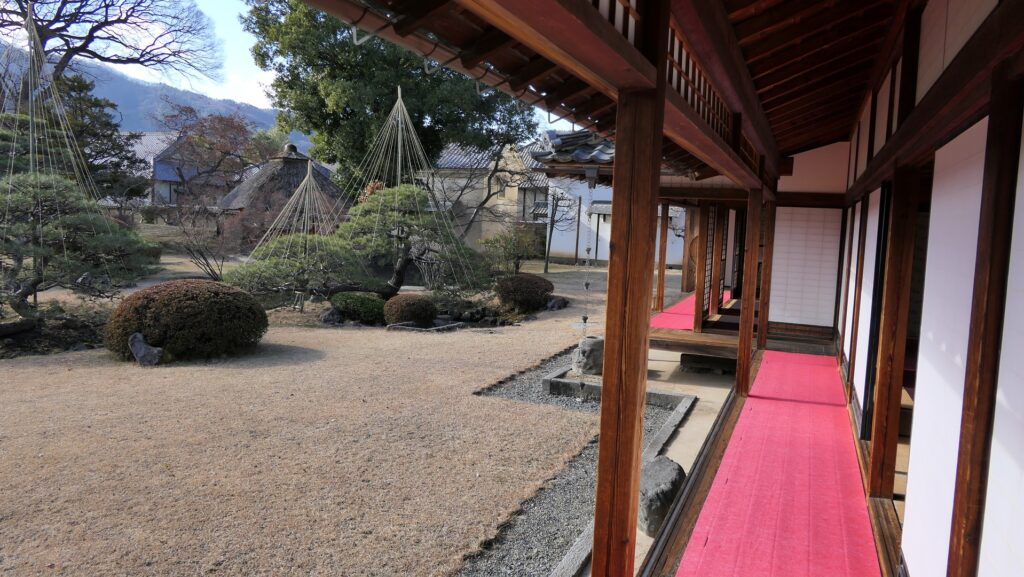
松代城には、異なる時代の異なる特徴が同居しており、独特の雰囲気があると思います。石垣と土塁の面白い組み合わせを見ることができるからです。加えて、城から250m南にある真田邸をご覧になることをお勧めします。真田邸は実は新御殿の現在の名前なのです。城に関連する数少ない現存建物の一つです。これもまた国の史跡となっています。もともと藩主の近親者のために作られたものなので、その内装はとても優雅です。 I think that Matsushiro Castle has a unique atmosphere because it has different perspectives from different periods. You can see the interesting combination of its stone walls and earthen walls. In addition, I recommend that you visit the Sanada Hall, about 250m south of the castle. In fact, Sanada Hall is the present name of the New Main Hall, one of the few remaining buildings that form part of the castle. It is also designated as a National Historic Site. Its interior is very elegant as it was first built for the lord’s relatives.
本丸の石垣~The stone walls of the Main Enclosure二の丸の土塁~The earthen walls of the Second Enclosure真田邸の内装~The interior of the Sanada Hall真田邸の御居間~The living room of the Sanada Hall真田邸の縁側と庭園~The veranda and garden of the Sanada Hall
ここに行くには~How to get There
上信越自動車道の長野ICから約5分のところです。城の周りにいくつか駐車場があります。 公共交通機関を使う場合は、長野駅からバスに乗り、松代駅バス停で降りてください。 It takes about 5 minutes from Nagano IC on Joshinetsu Expressway. There are parking lots around the castle. If you want to go there by public transportation, take the bus from Nanano Station and get off at the Matsushiro-eki bus stop.
リンク、参考情報~Links and References
・松代城の環境整備、長野市(Nagano City Official Website) ・よみがえる日本の城14、学研(Japanese Book) ・「日本の城改訂版第7号」デアゴスティーニジャパン(Japanese Book)
困難を乗り越え奇跡的に生き残った最高の城
The best castle that miraculously survived difficulties
概要~Overviews
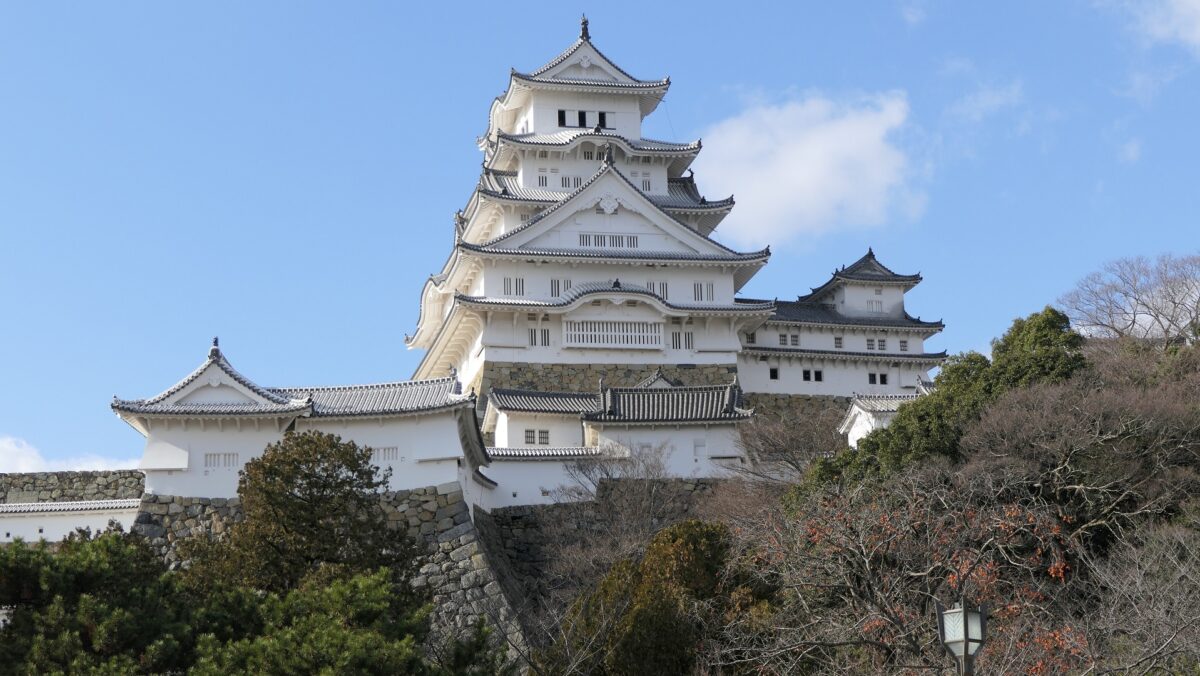
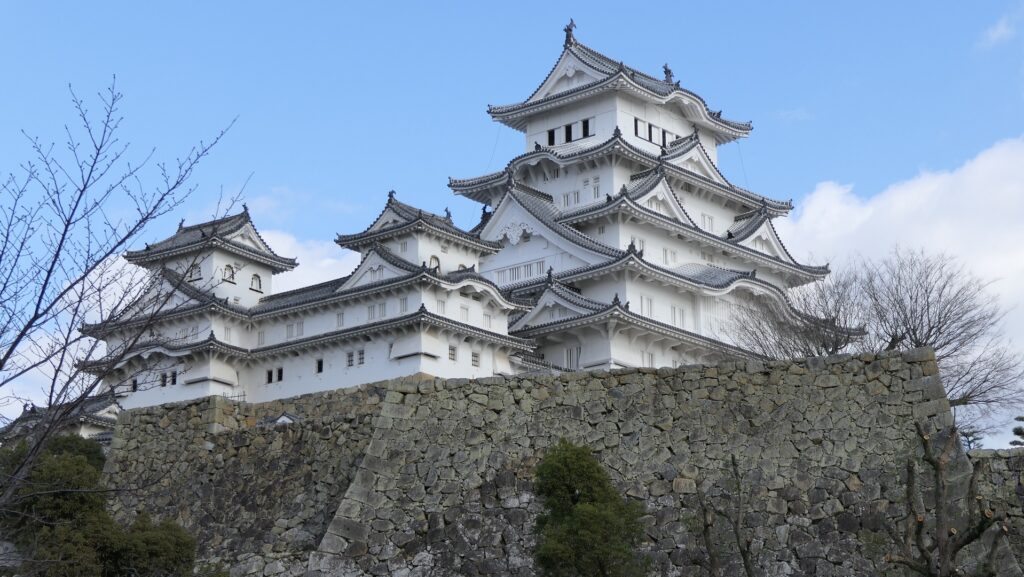
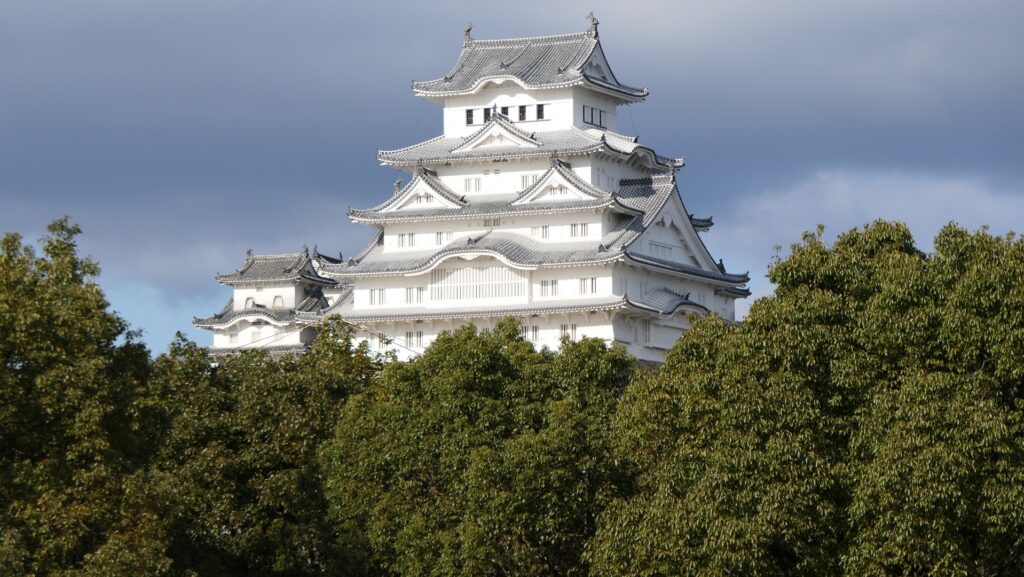
姫路城は、その白亜の天守群を世界中に知られており、よく「白鷺城」という別名で呼ばれたりしています。大天守は、日本の城で現存している12天守の中では最大のものであり、31.5mの高さ(天守台石垣を含めると45.35m)があります。大天守、3基の小天守、その他の構造物と合わせた一体が国宝に指定されています。 Himeji Castle is known around the world for its beautiful group of white Main Towers and is often nicknamed White Heron Castle or “Shirasagi-jo”. The Large Main Tower is the largest one out of the 12 remaining main towers in Japanese castles, which is 31.5m high (45.35m including the stone wall base). The Large Main Tower, the three Small Main Towers, and the other structures on the property have been designated as National Treasures of Japan.
姫路城の天守群~The group of the Main Towers of Himeji Castle
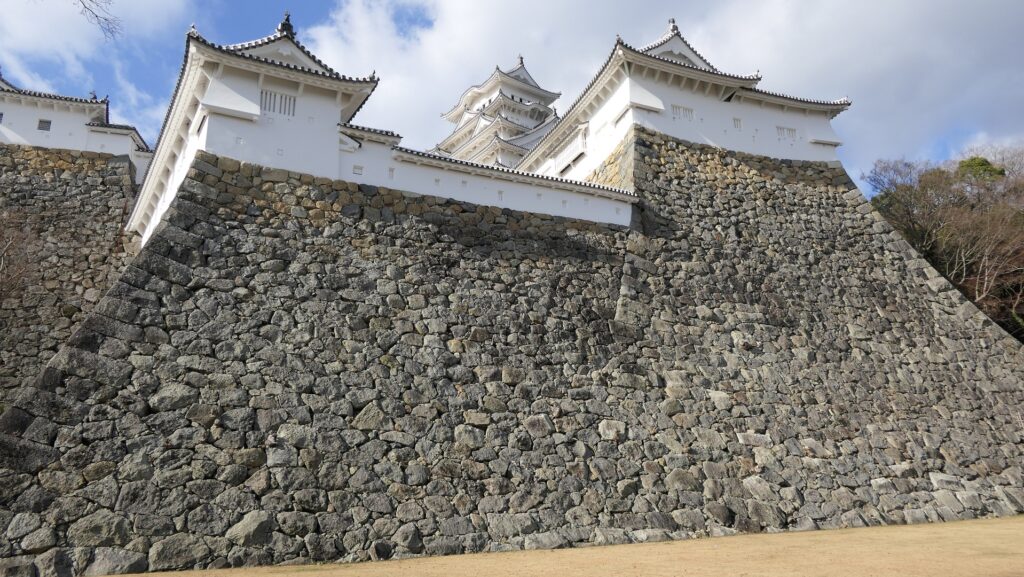
更には、多くの曲輪、石垣、水堀など、城の基礎部分が、ほとんどそのまま残っていて、天守を取り囲んでいます。これら城の主要部分はまた、国の特別史跡に指定されています。27基の櫓、15基の門、32枚の塀という、数多くの建物がその基礎の上に現存しています。これらは全て国の重要文化財に指定されています。 In addition, the current structure of the castle mostly consists of a lot of enclosures, stone walls, and water moats surrounding the Main Tower. The main portion of the castle is designated as a National Special Historic Site. The remaining buildings on the structure include as many as 27 turrets, 15 gates and 32 walls. They have all become Important Cultural Properties.
天守を囲む櫓と石垣~One of the turrets and stone walls surrounding the Main Tower
その上に、この城は日本の歴史の中で重要な役割を担いましたが、それは後述します。その役割を終えた後でも、幸運もあったかもしれませんが、日本の人々はこの城を守り続けました。現在この城は、姫路市の最も有名で且つ大事なシンボルとなっています。1993年からは日本では初となる世界文化遺産にも指定されています。 Moreover, the castle had an important role in Japanese history, which I will describe later. Even after that role ended, the people of Japan continued to maintain the castle, although some people might say it survived by good luck. Now, people consider the castle as the greatest, most respected symbol in Himeji City. It has been a cultural site on the World Heritage List since 1993, which was the first case in Japan.
天守(正面)~The Main Tower (the front)
これらのことから私は、一般的に日本のどの城がベストかと聞かれた場合、それぞれの方に好みがあるにしても、それは姫路城ですと明言できます。 For those reasons, if I am asked from someone which castle is the best in Japan generally, I can clearly answer it is Himeji Castle, though each has his/her own preference.
立地と歴史~Location and History
姫路城は、兵庫県西部の播州平野にある標高45.6m姫山の上にあります。この城は、最初は14世紀に赤松氏によって築かれたと言われていますが、詳細は不明です。城周辺の地域は肥沃で交通の要所であり、山陽街道が通っていました。ただしこの城は、周りにある多くの城のうちの一つに過ぎませんでした。この状況は戦国時代の16世紀、黒田官兵衛が城を所有していた時に変わりました。東には織田氏、西には毛利氏が姫路城周辺の地を狙っている中、官兵衛は織田氏に味方することを決意しました。官兵衛は、姫路城を織田の家臣である羽柴秀吉に差し出したのです。秀吉は、後に天下人である豊臣秀吉となります。 Himeji Castle is located on 45.6m high Himeyama mountain in the Banshu Plain, the western part of Hyogo Prefecture. It is said that the castle was first built by Akamatsu Clan in the 14th century, but the details are uncertain. The area around the castle was fertile and important for transportation where the Sanyo Road passed through, but the castle was among the many castles around. The situation changed in the late 16th century during the Sengoku Period when Kanbe Kuroda owned the castle. With the Oda Clan on the east and the Mori Clan on the west, aiming to invade the area around the Himeji castle, Kanbe decided to support the Oda Clan. He offered his Himeji Castle to Oda’s retainer, Hideyoshi Hashiba, who later became the ruler of Japan and subsequently changed his name to Hideyoshi Toyotomi.
城の位置~The location of the castle
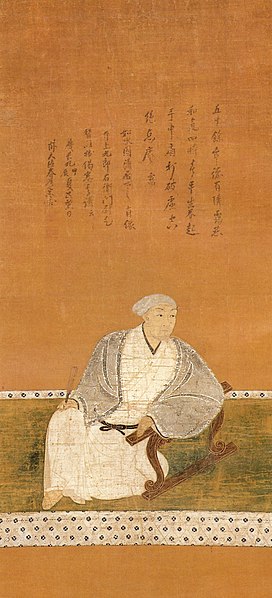
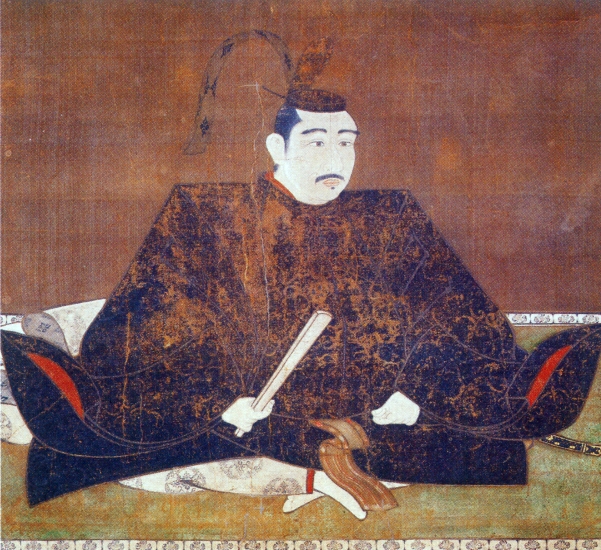
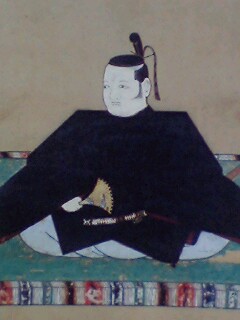
黒田官兵衛肖像画、崇福寺蔵~The portrait of Kanbe Kuroda, owned by Sofukuji Temple (licensed under Public Domain via Wikimedia Commons)
秀吉は毛利の領地を侵略するため、この城を根拠地とし、城の拡張を行いました。秀吉時代の城には三層の天守がありましたが、詳細はその遺跡が現在の天守の下にあるため明らかになっていません。城の基本的な構造はこの時代に確立したと言われています。1582年、秀吉と官兵衛は姫路城から100km近く西方にある備中高松城を攻撃していました。そのとき本能寺の変が起こり、秀吉と官兵衛の主君である織田信長が明智光秀により殺されました。秀吉は直ちに西方の毛利氏と講和を結びます。これにより秀吉は、主には徒歩による移動で重い荷物を自ら運ぶしかなかった前近代の軍隊を、わずか3日で姫路城に戻すことができたのです。彼はこの城で準備を整えてから出陣し、光秀を倒した後、天下を掌握することに成功しました。 Hideyoshi was based at the castle to invade Mori’s territory, and developed the castle. The castle of Hideyoshi’s period had a three-layer Main Tower; the details of which are uncertain because its ruins are under the present Main Tower. It is said that the basic structure of the castle was established at that time. In 1582, Hideyoshi with Kanbe attacked Bicchu-Takamatsu Castle, nearly 100km away from Himeji Castle on the west. The Honnoji Incident happened where Hideyoshi’s and Kanbe’s boss, Nobunaga Oda was killed by Mitsuhide Akechi. Hideyoshi quickly made peace with the Mori Clan. This allowed Hideyoshi to quickly return to Himeji Castle within 3 days with pre-modern large troops travelling mainly by foot and transporting heavy items. He prepared and left the castle to beat Mitsuhide and was successful in taking over control of Japan.
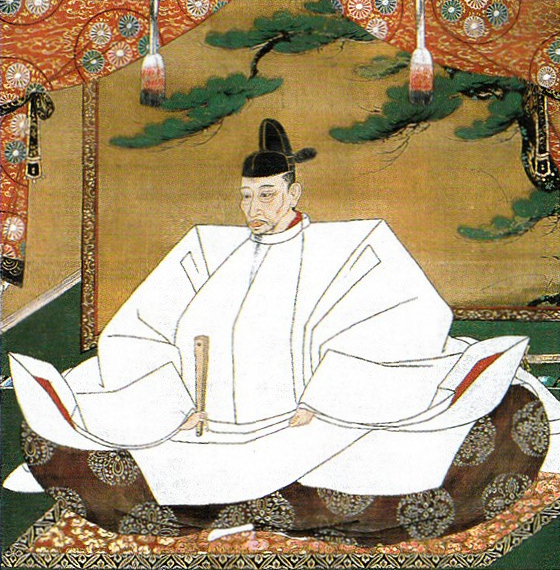
豊臣秀吉肖像画、加納光信筆、高台寺蔵~The Portrait of Hideyoshi Toyotomi, attributed to Mitsunobu Kano, ownd by Kodaiji Temple(licensed under Public Domain via Wikimedia Commons)備中高松城跡~The ruins of Bicchu-Takamatsu Castle
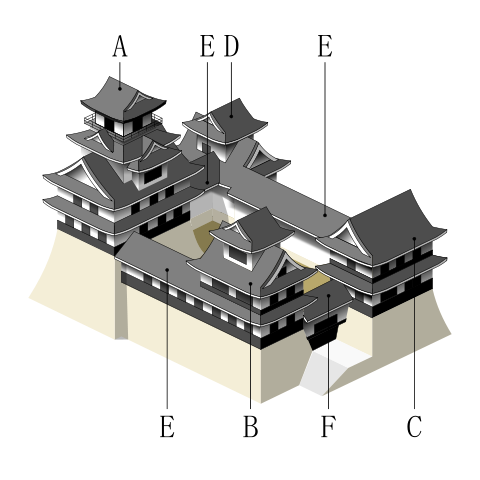
秀吉の死後、豊臣氏に代わって徳川家康が1600年に実権を握りました。家康は、娘婿である池田輝政を吉田城から姫路城に移しました。輝政は後に姫路藩の初代藩主になります。輝政の役目は、大坂城にいた豊臣氏をいまだ支持するかもしれない西国大名を監視することでした。彼は1601年から1609年の間に城の大改修を行います。天守は、5層の大天守と3基の小天守に置き換えられました。これらは、渡櫓によりつながっていて「連立式」天守と呼ばれます。輝政は姫山の上にある秀吉の城の構造を引き継ぎつつも、多くの櫓、門、練塀、石垣を加えたのです。結果的に城は、小さな曲輪を複雑に組み合わせたものとなりました。例えば、今でも観光客は天守にたどり着くまで10以上もの門を通らなければなりません。 After Hideyoshi died, Ieyasu Tokugawa got the power instead of the Toyotomi Clan in 1600. Ieyasu transferred his son-in law, Terumasa Ikeda, from Yoshida Castle to Himeji Castle. Terumasa later became the founder of the Himeji Domain. Terumasa’s role was to monitor the lords in western Japan, who might still support the Toyotomi Clan at Osaka Castle. He did major renovations to the castle between 1601 and 1609. The Main Tower was replaced with the five-layer Large Main Tower and three Small Main Towers. They are connected by the Roofed Passage Turrets, which are called Connected Type or “Renritsu-shiki”. Terumasa followed Hideyoshi’s structure of the castle on Himeyama mountain, but he added lots of turrets, gates, plaster walls, and stone walls. As a result, the center of the castle became very complex with combined small enclosures. For example, visitors must pass through as many as over 10 gates to reach the Main Tower.
池田輝政肖像画、鳥取県立美術館蔵~The Portrait of Terumasa Ikeda, owned by Tottori prefectural art museum (licensed under Public Domain via Wikimedia Commons)連立式天守:大天守(A)、小天守(B,C,D)、渡櫓(E)、櫓門(F)~Connected Type :Large Main Tower(A), Small Main Tower(B,C,D), Roofed Passage Turrets(E), Turret Gate(F)(licensed by Mukai via Wikimedia Commons)
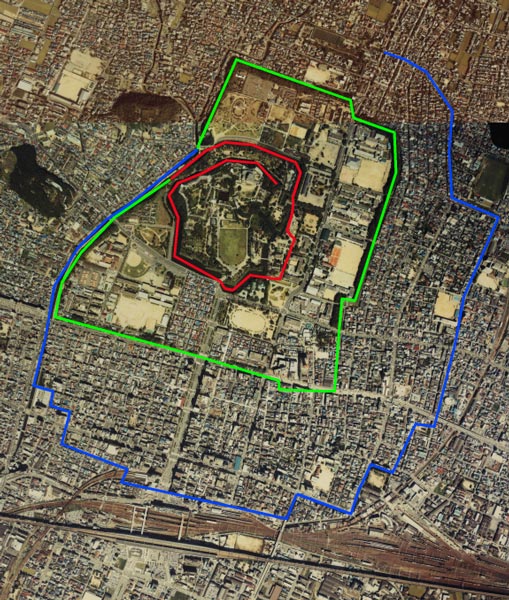
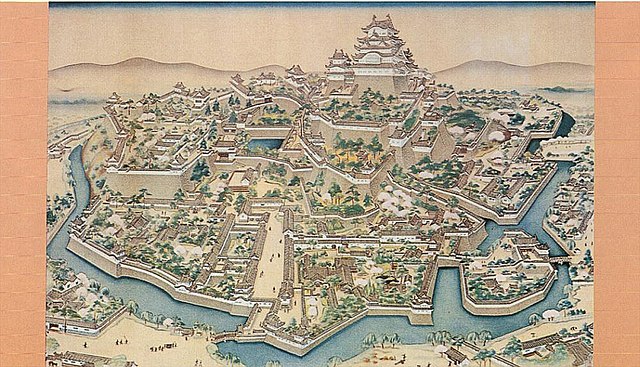
更には、城は姫山の西にある鷺山を取り込んで拡大しました。鷺山の上には西の丸が築かれました。三の丸が姫山の南の平地に築かれました。城の水堀は、城の裏側から渦巻き状に広がっていました。一周目は、姫山の上にある城の中心部と、二の丸と三の丸を囲んでいて、内堀と呼ばれました。二周目は中堀と呼ばれ、武士の屋敷を含む区域を囲んでいました。外堀は、中堀の途中から分かれ出て、南方と東方にあった城下町までも囲んでいました。輝政は、現在私たちが見ているものと、ほとんど近い所まで城を築き上げました。 In addition, the castle was extended to take in the Sagiyama mountain, the west of Himeyama. The Nishinomaru or the Western Enclosure was built on the Sayima mountain. The Sannomaru or the Third Enclosure was built on the plain area to the south of Himeyama. The water moats of the castle started from the back and spread like swirling. The first turn surrounded the center of the castle on Himeyama, Nishinomaru, and Sannnomaru, which was called the Inner Moat. The second turn called the Middle Moat surrounded the area including warriors’ houses. The Outer Moat separated from the halfway of the Middle Moat and even surrounded the castle town on the south and east directions. Terumasa built the castle nearly like what we see now.
輝政は残念ながら1613年に亡くなってしまいます。徳川幕府は城主を、幕府の重臣である本多忠政に変えました。忠政は城の造営を続け、西の丸を改築したり、運河を掘ったりしました。西の丸は更に広大となり、多くの兵士を収容できるようになりました。よって、中心部の曲輪とは異なる広々とした外観です。。1615年に豊臣氏は幕府により倒されましたが、幕府は姫路城主に西国大名の監視を担わせ続けました。そのため、有能な人材を宛がうため、何度も城主は交替させられます。18世紀の中頃からは、酒井氏が幕末まで城を統治しました。恐らくは社会が安定したからでしょう。城の創建以来、一度もここで戦が起こらなかったため、度々「不戦の城」とも呼ばれています。 After Terumasa unfortunately died in 1613, the Tokugawa Shogunate changed the lord of the castle to Tadamasa Honda, a senior vassal of the Shogunate. Tadamasa continued work on the castle such as improving the Nishinomaru and developing a canal. Nishinomaru became more spacious which could accommodate large troops, so it looks different from other central enclosures. Though the Toyotomi Clan had been defeated by the Shogunate in 1615, it still made the lord of Himeji Castle stay to monitor the lords in western Japan. For this reason, the lord of the castle was replaced by a capable person several times by the Shogunate. From the middle 18th century, the Sakai Clan continued to govern the castle until the end of the Edo Period. Perhaps it could be because the society became stable. No battles have occurred at the castle since it was built, so it is sometimes called “an anti-war castle”.
本多忠政肖像画~The portrait of Tadamasa Honda (licensed under Public Domain via Wikimedia Commons)明治初期の姫路城の外観~The appearance of Himeji Castle in the first Meiji Era (licensed under Public Domain via Wikimedia Commons)
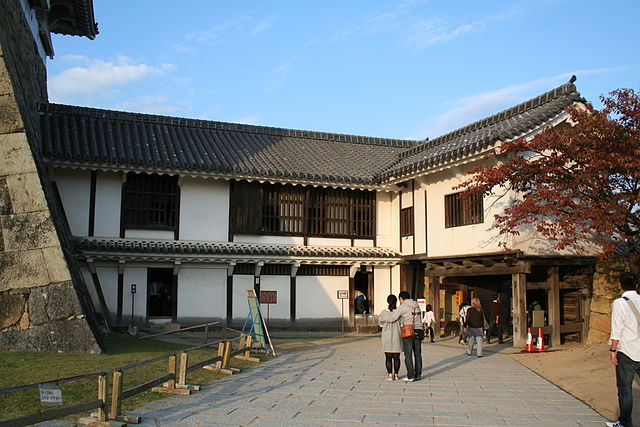
しかしながら、幕末になってこの城は初めての危機を迎えます。1868年に岡山藩などの他藩を含む新政府軍により包囲されたのです。これは酒井氏が幕府の要職についていたためです。城にいた武士たちは降伏を申し出ましたが、攻撃側は受け入れず砲撃を始めました。備前門という門の瓦が幾枚か破損しましたが、それだけでした。単なるパフォーマンスだったのかもしれません。その後城の武士たちは降伏し、城を新政府に引き渡しました。 However, at the end of the Edo Period, the castle faced its first crisis. The New Government Army including other domains, such as Okayama, surrounded the castle in 1868. This is because the Sakai Clan was in charge of an important position for the Shogunate. The warriors in the castle had sworn allegiance, but the attackers didn’t accept it and opened fire. Some tiles of a gate called Bizen-mon were destroyed, but that was all. It may have been like a performance. The warriors in the castle later surrendered and handed over control of the castle to the New Government.
備前門~The Bizen-mon Gate (licensed by Corpse Reviver via Wikimedia Commons)
その後~Later History
明治維新後、姫路城の一部は日本陸軍によって使用されました。三の丸周辺の建物は撤去されました。天守を含む他の建物も売られたが、買主は撤去する費用が高すぎたために権利を放棄したとも言われています。真相は不明です。もし本当なら、城にとって第2の危機でした。 After the Meiji Restoration, part of Himeji Castle was used for the Japanese Army. Some buildings around Sannomaru were demolished. It is said that other buildings including the Main Tower were also sold, but the buyer waived the right, because it was too expensive for him to demolish them. This story is unclear. If true, it was the second crisis of the castle.
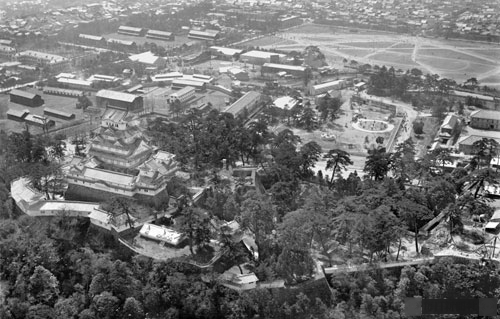
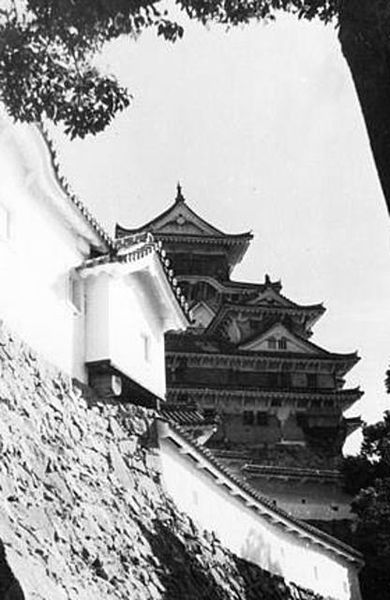
1936年時点の姫路城の写真~The photo of Himeji Castle in 1936 (licensed under Public Domain via Wikimedia Commons)
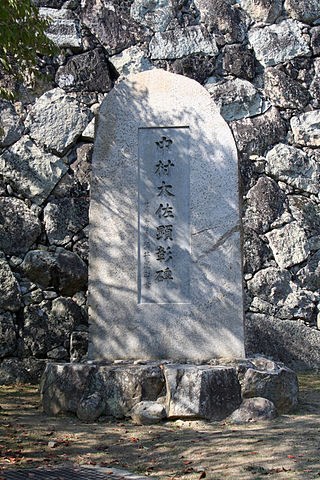
1878年、中村重遠大佐が姫路城と名古屋城を保存することを陸軍に提案しました。その提案は政府によって認められ、城を維持するための予算が組まれました。これは、城が文化遺産として認められた最初の事例であり、画期的なことでした。1910年に明治の大修理が行われました。実は、天守がその自重により少しずつ傾いてきていたのです。 In 1878, a military officer, Shigeto Nakamura suggested the need to preserve Himeji and Nagoya Castles to the Japanese Army. It was allowed by the government who created a budget to maintain the castles. This is the epoch-making event that castles were considered as cultural properties for the first time. The Meiji Great Repairs was done in 1910. In fact, the Main Tower was leaning little by little due to its own weight, before it was repaired.
城内にある中村重遠の顕彰碑~The monument of Shigeto Nakamura in the castle (licensed by Corpse Reviver via Wikimedia Commons)
第二次世界大戦中の1945年、姫路空襲の時に最後の危機が城に迫りました。姫路市の市街地はほとんど焼き尽くされましたが、城は無事でした。焼夷弾が天守に飛び込んできたのですが、幸い不発だったのです。残念ながら、同じく政府により維持されてきた名古屋城は、爆撃により燃えてしまいました。終戦直後、姫路の人たちは無傷であった姫路城に大変勇気づけられたといいます。現在、2回の大修理(昭和と平成)の後、姫路城は往時のような輝きを取り戻しています。城のために大変な努力をした人々と幸運に感謝しなければならないでしょう。 The last crisis came to the castle when the Himeji Air Raid happened in 1945 during World War II. The town area of Himeji City was mostly burned, but the castle wasn’t affected. A firebomb was dropped into the Main Tower, luckily it didn’t explode. Unfortunately, the Nagoya Castle, which was also being maintained by the government was burned down by bombs. People in Himeji were very encouraged by the fact that Himeji Castle was still intact just after the war. Today, after two more great repairs (Showa and Heisei), Himeji Castle gets the brilliance back like its peak time. I think we have to be thankful for the great effort of the people at the castle and for good fortune.
空襲に備え黒い網をかけられた大天守~The Large Main Tower covered by the black screen to prevent from an air raid (licensed under Public Domain via Wikimedia Commons)