85.福岡城~Fukuoka Castle

この城に天守はあったのでしょうか?
Did the castle have a Main Tower or not ?

立地と歴史~Location and History

古代から重要な地~Important place from Ancient times

城の位置と筑前国の範囲~The location of the castle and the range of Chikuzen Province

福岡城は元々、現在の福岡市にあたる、赤坂山とその脇にあった草ヶ江入り江周辺の地域にありました。古代には、ここには鴻臚館という中国や朝鮮からの人々をもてなす迎賓館がありました。中世の鎌倉時代に、武士たちが元の襲来を撃退したとき、ここで戦いがありました。1600年黒田氏は、筑前国福岡藩52万3千石の石高を、徳川幕府により与えられました。彼らは当時福崎と呼ばれていたこの場所に新しい城を作ることにしました。
Fukuoka Castle was originally an area around a mountain called Akasaka-yama and an arm of the sea called Kusagae beside the mountain, in what is now Fukuoka City. In ancient times, there was a guest house called Kouro-kan to used to host people from China and Korea. In the Kamakura Era of the Middle Ages, when the warriors repelled the Mongol Invasion, they battled the enemy there. In 1600, the Kuroda clan was granted the Fukuoka Domain of Chikuzen Province with an earning of 523,000 koku in rice by the Tokugawa Shogunate. They decided to build a new castle in this area called Fukuzaki then.
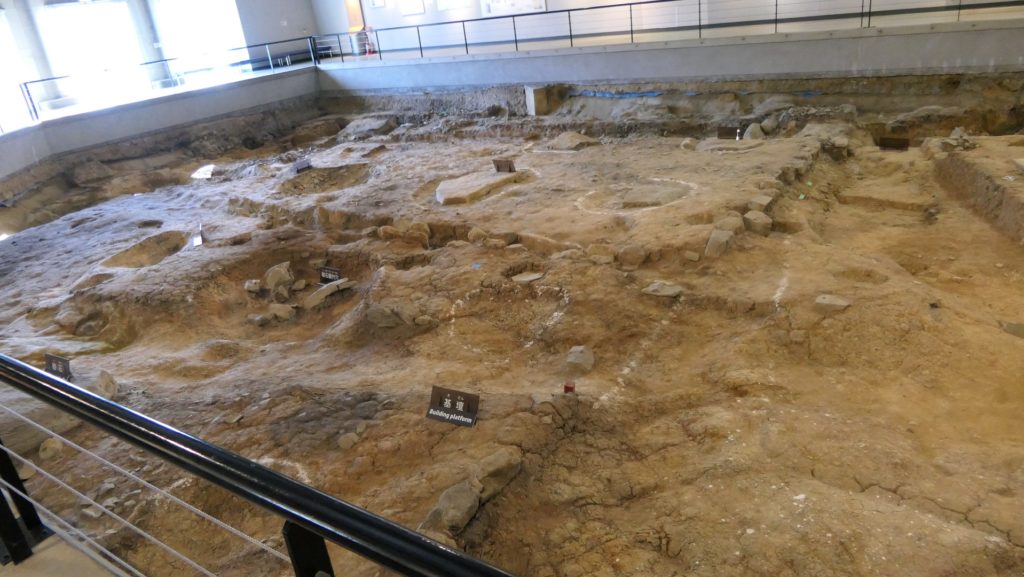
鴻臚館の遺跡~Thr ruins of Kouro-kan
赤坂の戦い、「蒙古襲来絵詞」より~Battle of Akasaka from “The picture scrolls of the Mongol invasion attempts against Japan”(licensed under Public Domain via Wikimedia Commons)
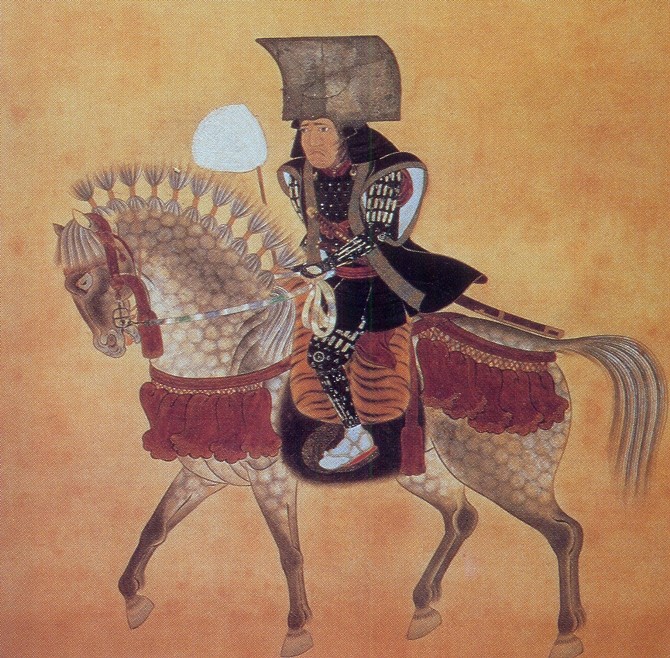
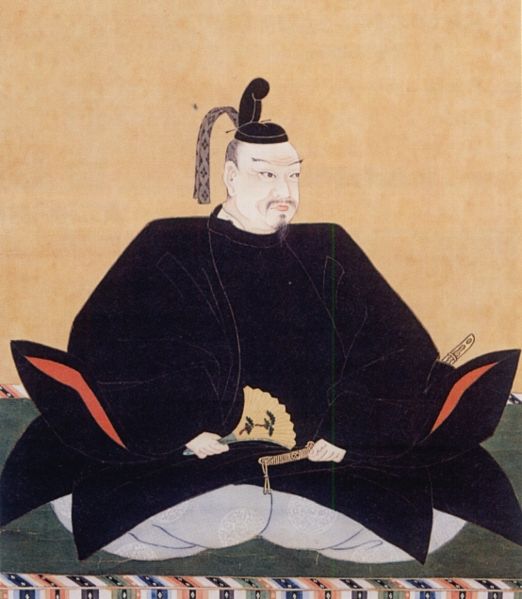
福岡藩初代藩主、黒田長政肖像画、福岡市博物館蔵~The Portrait of Nagamasa Kuroda, the first lord of Fukuoka Domain, owned by Fukuoka City Museum(licensed under Public Domain via Wikimedia Commons)

山と入り江を大改造~They reformed Mountain and Arm of Sea

彼らは山の形を整え、谷を埋め、本丸、二の丸、三の丸といった曲輪を南から北に向かって配置しました。また、山の部分を囲む内堀を、西側は草ヶ江入り江を利用することで、他の方角は掘削することで作り出し、城の東側にある那珂川と接続させました。
They reshaped the mountain and filled valleys, and set the Main Enclosure or “Honnmaru”, the Second Enclosure or “Ninomaru”, and the Third Enclosure or “Sannomaru” from south to north. They also created the inner water moat surrounding the mountain part by using the Kusagae arm of the sea as the western part, digging other direction parts, and connecting to the Naka River, the east of the castle.
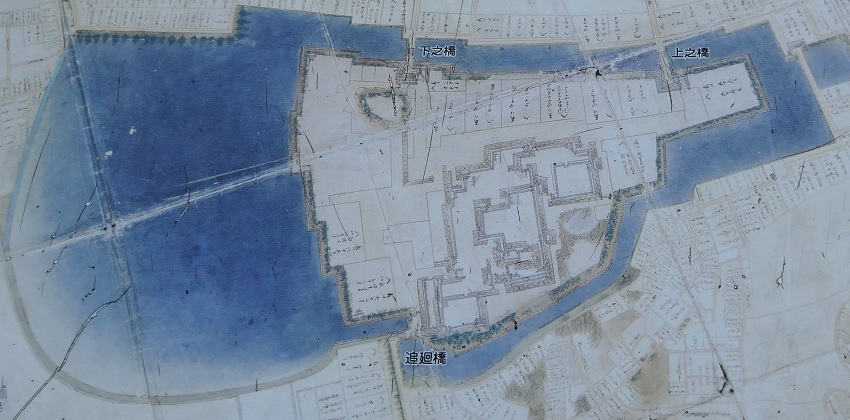
福岡城下絵図~Part of an illustration of Fukuoka Castle(現地説明板より、from a sign board at the site)

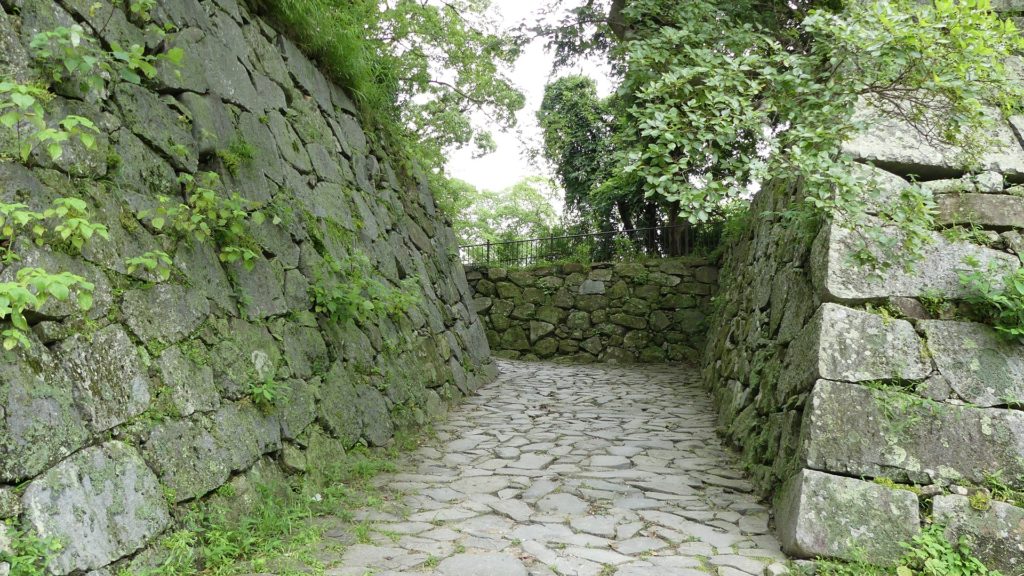
結果的にこの地域は、広大な要塞となりました。これが福岡城です。城の正面は北の方角の海に向いており、「下ノ橋大手門」「上ノ橋大手門」「赤坂門」という3つの大きな門がありました。本丸がある城の後方には「追廻橋」という裏門が1つあるだけでした。本丸だけでも20もの櫓が高く屈曲した石垣にそびえていました。
As a result, the area became a huge scale fortress called Fukuoka Castle. The front of the castle faced the sea in the north with three large gates called “Shimonohashi-Ote-mon”, “Kaminohashi-Ote-mon”, and “Akasaka-mon”. The back of the castle, where Honmaru was located, had only one back gate called “Oimawashi-bashi” bridge. Honmaru itself had as many as twenty turrets on high and curved stone walls.
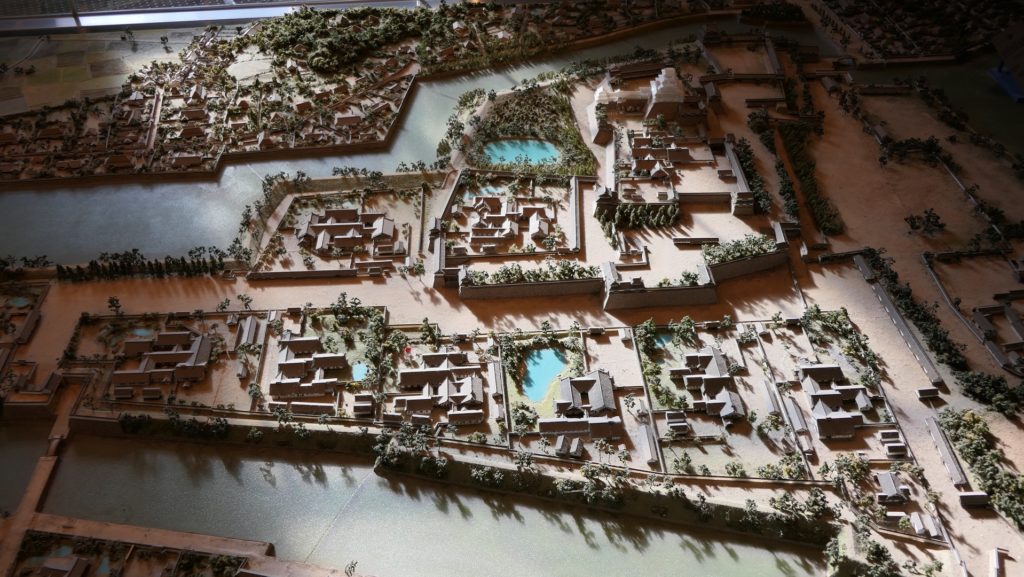
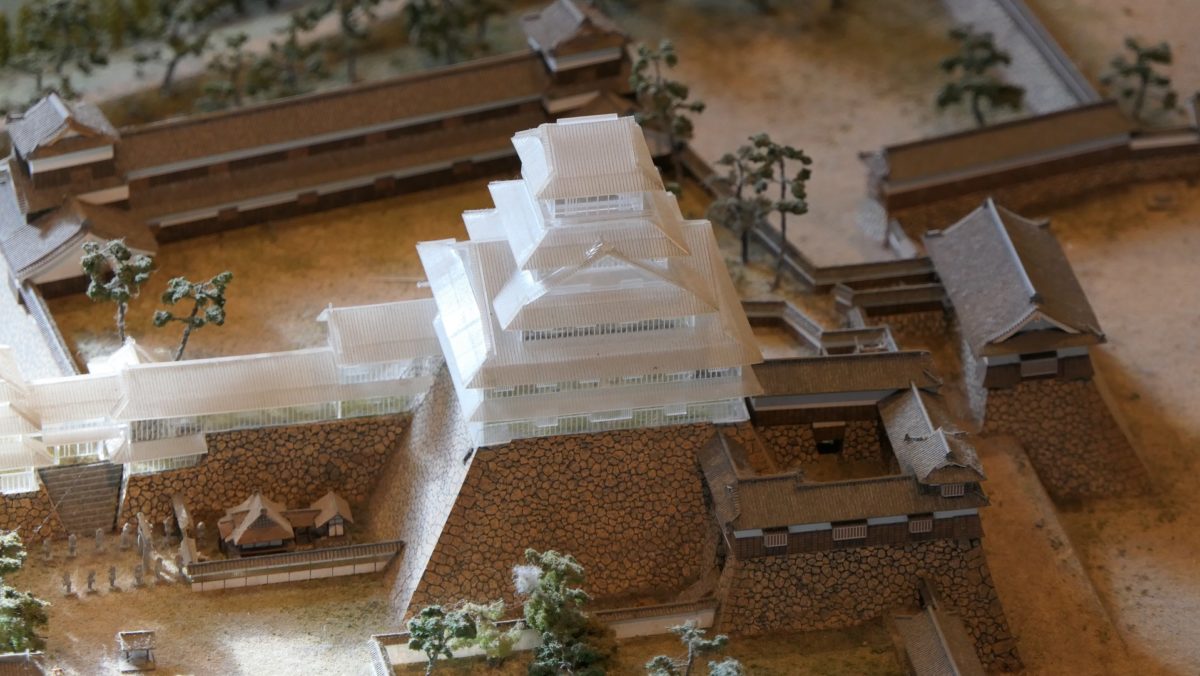
福岡城の模型~A miniature model of Fukuoka Castle(福岡城むかし探訪館~Fukuoka Castle Ruins Visitor Center)

天守の謎~Mystery of Main Tower

この城に関して興味深いことは、天守があったかどうかです。石垣の天守台は確かにありました。しかし、遺物、文献、図面といった天守の証拠となるものは見つかっていません。ところが、歴史家の中には、天守はあったはずと言う人もいます。江戸時代初期のある大名の手紙に、黒田候は幕府がどう思うか心配なので、天守を壊すことにしたと書いてあるのです。実に興味をそそる記述です。
An interesting question regarding the castle is if it had a Main Tower (“Tenshu”) or not. It had the stone wall base for Tenshu, but there are no evidence of Tenshu such as relics, documents, and drawings. However, some historians say that the castle must have had Tenshu, as a letter in the early Edo Period written by another lord says Kuroda would destroy their Tenshu because they were afraid of what Tokugawa Shogunate might think. It’s very intriguing.
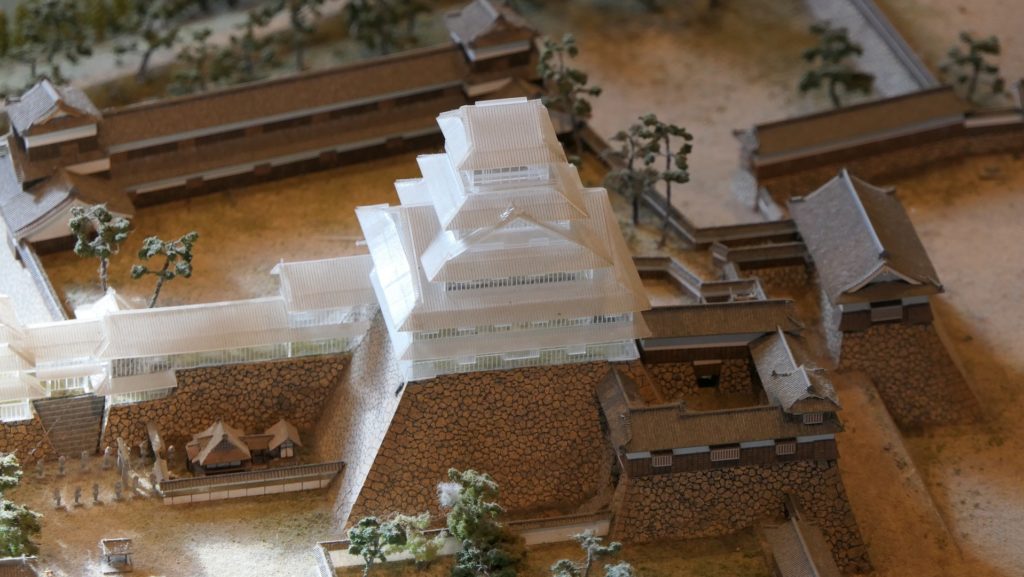
上記の模型の天守部分は無色になっています~The part of the Main Tower is made uncolored in the model

特徴~Features

城周辺の航空写真~The aerial photo of around the castle

二つの公園~Two Parks

現在、福岡城跡は2つの公園に別れています。1つは舞鶴公園で、城の主要部分に当たります。もう1つは大濠公園で、もともとは草ヶ江入り江だったものが、大濠と呼ばれた城の内堀となった所です。ただ、大きな池のようにも見えます。それは、大昔は海の一部だったからなのです。
Now, the ruins of Fukuoka Castle are divided into two parks. One of them is Maiduru Park which was the primary part of the castle. The other one is Ohori Park which was originally Kusagae arm of the sea, then became an inner moat of the castle, called Large Moat or “Ohori”. Ohori Park still has the large moat, but it looks like a large pond. You can see that`s because it was part of the sea a long time ago.

大濠公園~Ohori Park

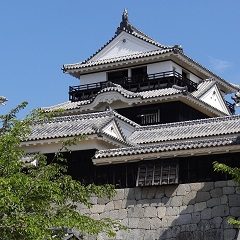
舞鶴公園は、更に広々としています。多くの遺跡が散らばっています。城の北部にあった三の丸の3つの門のうち、下ノ橋大手門だけが現存しています。2階建ての櫓門であり、ほぼ元あった通りの姿となっています。この門は明治時代に一旦単層に改造されました。2000年に一部が火災に遭った後、現在あるように復元されました。
Maiduru Park is even more spacey, so a lot of ruins are disseminated. Only the Shimonohashi-Ote-mon Gate remains out of the three front gates at Sannomaru, the north part of the castle. It is a two-story turret gate which looks nearly like the original one. It was once modified to a one-story gate in the Meiji Era. After the gate partly burned in 2000, it was restored as it is today.

下ノ橋大手門(遠景)~Shimonohashi-Ote-mon Gate, A distant view
下ノ橋大手門(近景)~Shimonohashi-Ote-mon Gate, A close-range view

三の丸地区~Area of Third Enclosure

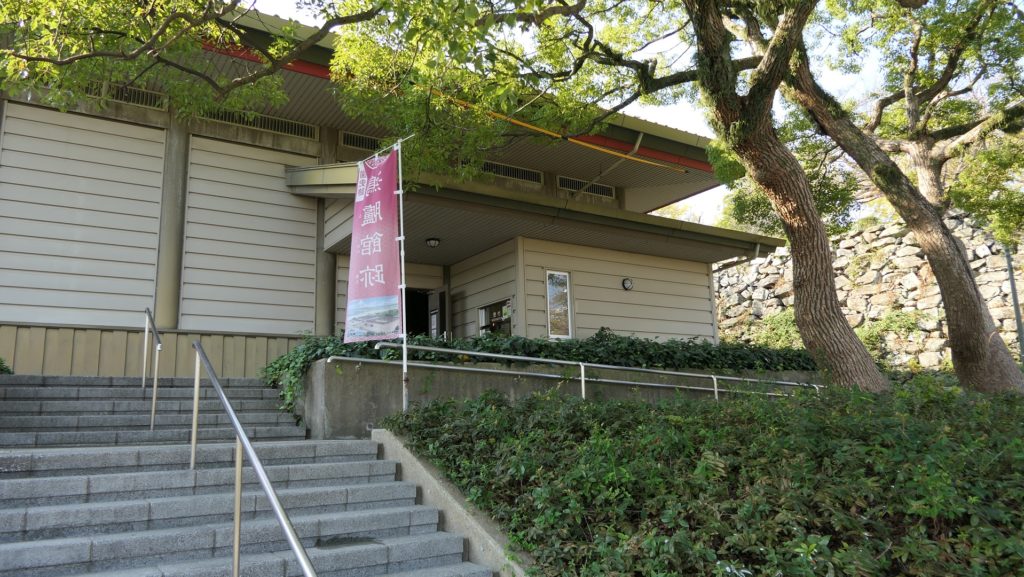
上ノ橋大手門跡の方から公園に入ると、大きな空き地があります。江戸時代、ここには三の丸の多くの居住や統治のための屋敷がありました。その後は、平和台球場のような近代施設が建設されました。1999年に球場が撤去された後発掘が行われ、城があった遥か前には迎賓館である鴻臚館があったことがわかりました。鴻臚館跡展示館では、発見された遺物が展示されています。また、福岡城むかし探訪館では福岡城の歴史を学ぶことができます。
If you enter in the park through the ruins of Kaminohashi-Ote-mon Gate, you can see a large vacant area. There were many halls for living and governance at Sannomau in the Edo Period. After that, modern facilities were built there, such as the Heiwadai Stadium. After the stadium was demolished in 1999, the Excavation team found out that there was an ancient guest house called Kouro-kan long before the castle. You can see the findings of the excavation in Kourokan Ruins Exhibition Hall, as well as the history of the castle in Fukuoka Castle Ruins Visitor Center.

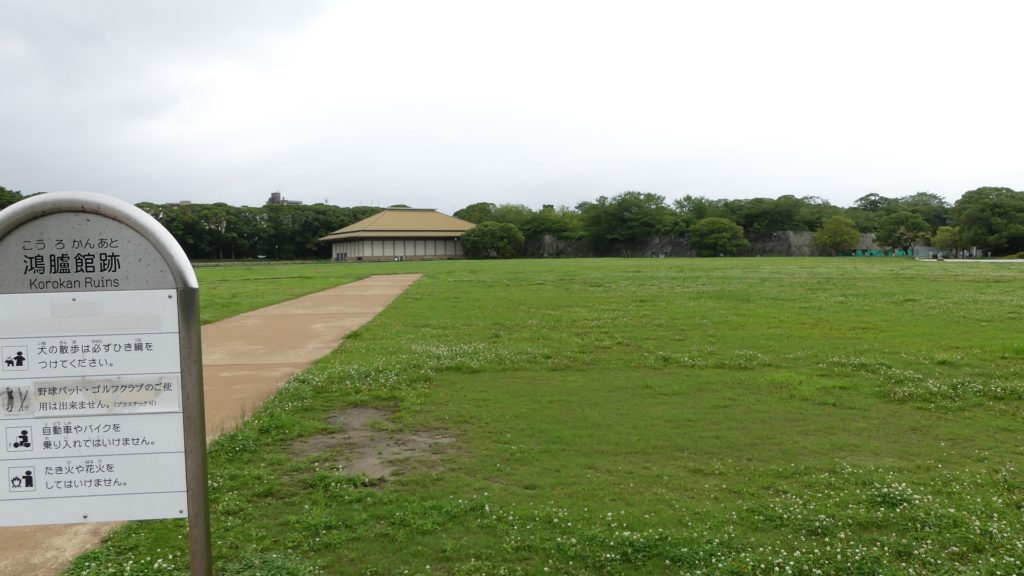
上ノ橋大手門跡~The ruins of Kaminohashi-Ote-mon Gate
現在の三の丸~The present Third Enclosure
平和台球場の記念碑~The monument of the Heiwadai Stadium
鴻臚館跡展示館~Kourokan Ruins Exhibition Hall
鴻臚館の遺物~Some of the findings of the excavation in Korokan Ruins Exhibition Hall

二の丸、本丸へ~To Second and Main Enclosures

城周辺の地図~The map around the castle

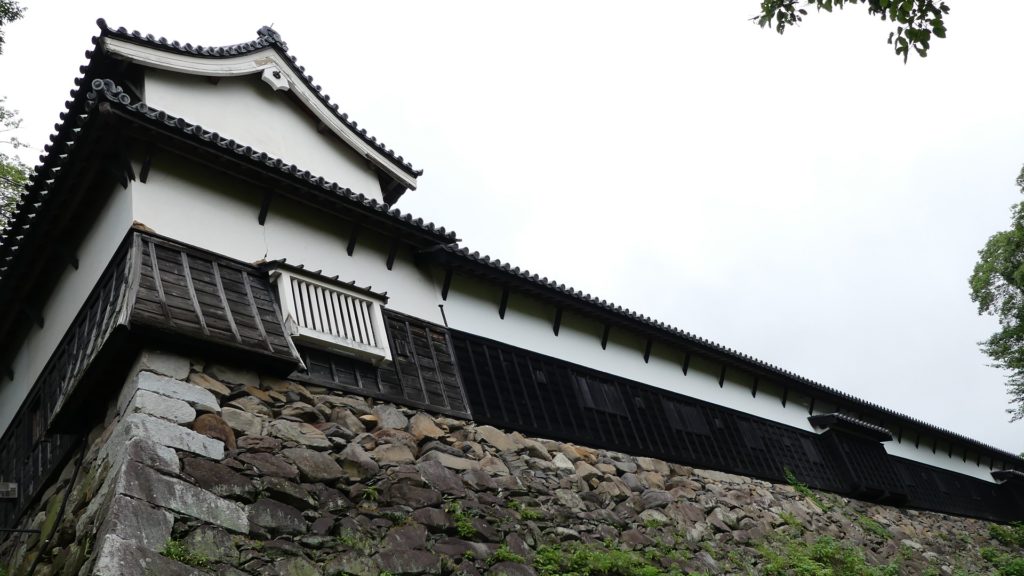
二の丸と本丸へは、三の丸から登っていきます。二の丸は本丸を囲んでいます。二の丸に関しては、2階建てで50mの長さがある多門櫓が現存しています。この櫓は城の裏口にあり、現在も堅く守っているように見えます。1971年には重要文化財にも指定されました。
You can climb from Sannomaru to Ninomaru and Honmaru. Ninomaru is surrounding Honmaru. Regarding to Ninomaru, there is a two-story and over 50m long turret called “Tamon-Yagura” that remains in its original state. It was located at back entrance of the castle, so even now it looks very defensive. It was also designated as an Important Cultural Property in 1971.
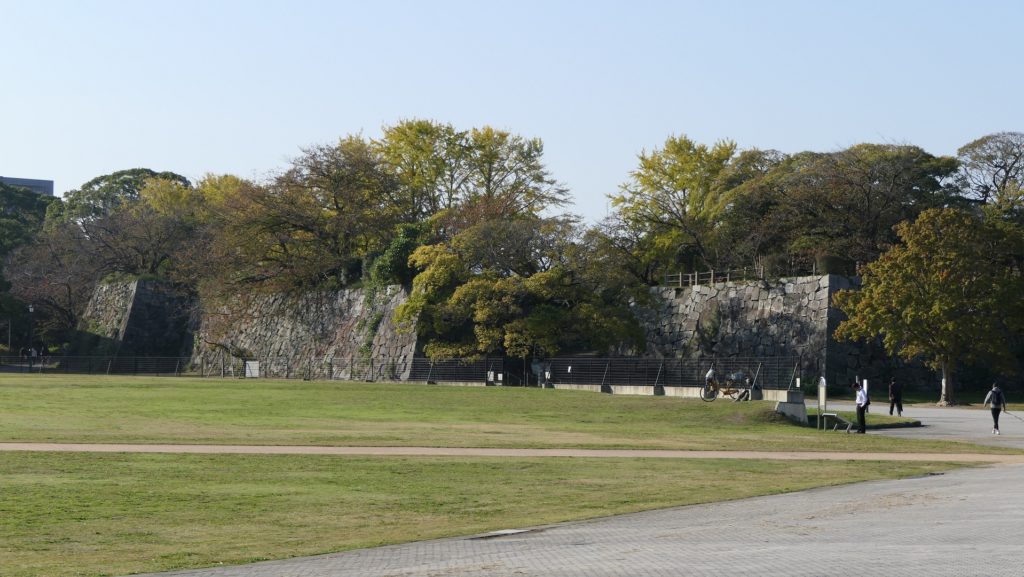
三の丸から見た二の丸~The Second Enclosure from the Third Enclosure
現存する多門櫓~The remaining Tamon-Yagura Turret

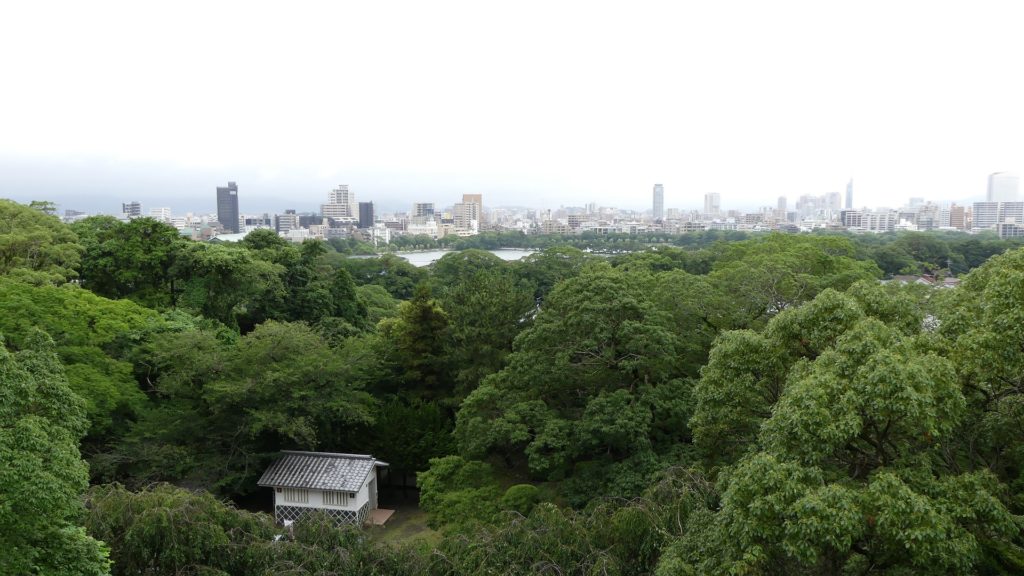
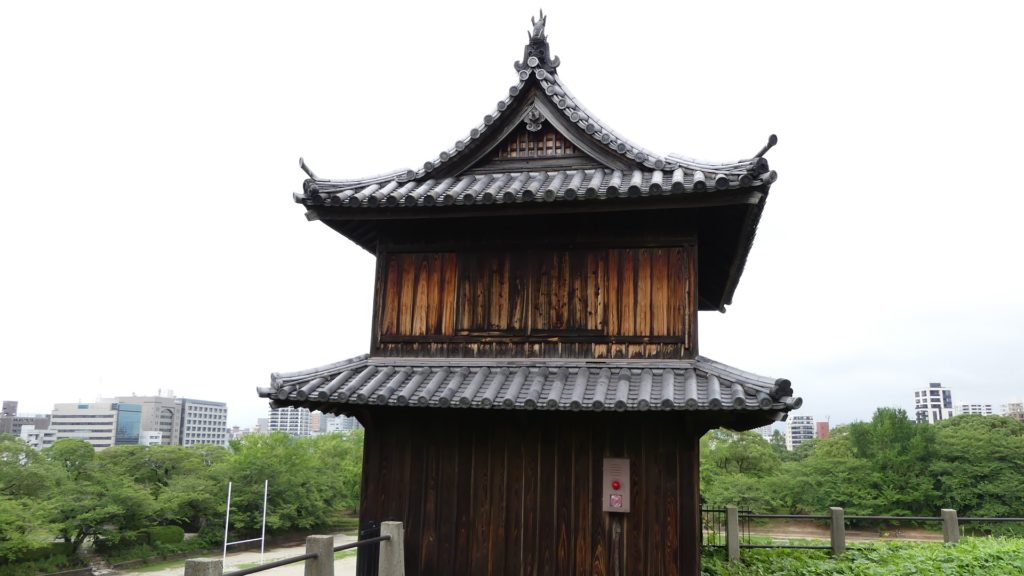
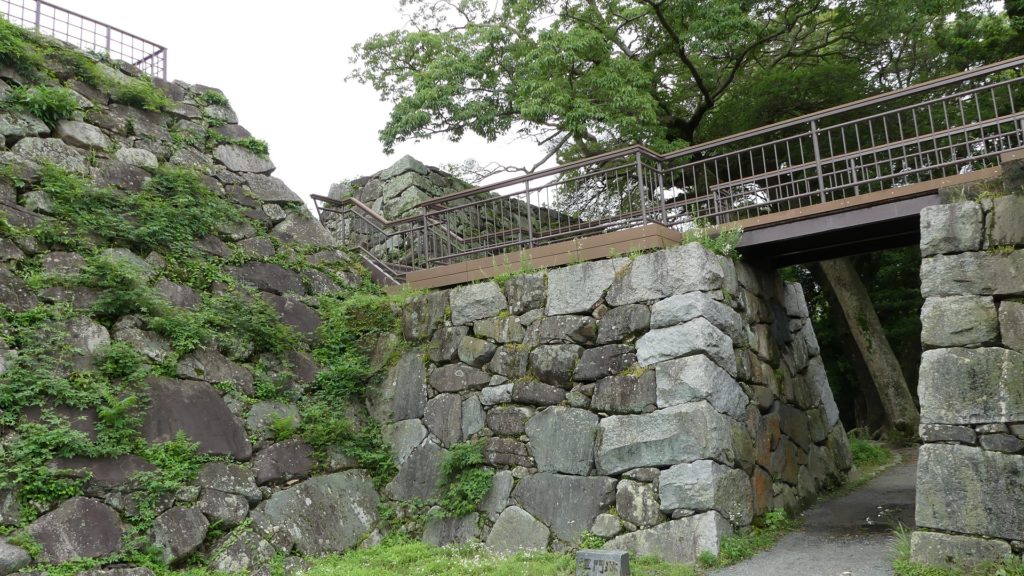
本丸は城のもっとも高い位置にあります。巨大な天守台に石垣が際立っています。前述した通り、研究者はこの石垣の上に天守があったのかどうか考察しています。ここからは福岡市一帯を見渡すことができます。祈念櫓は本丸で唯一残っている建物です。この櫓は一旦他の場所に移されましたが、1983年に元の場所に戻されました。
Honmaru was at the highest point of the castle. The large stone wall base for Tenshu is outstanding. Researchers wonder if the Tenshu was on the base, as I mentioned above. You can observe the whole area of Fukuoka City from there. Kinen Turret is the only remaining building at Honmaru. It was once moved to another, but returned to its original position in 1983.
天守台(外側)~The base for the Main Tower, the outside
天守台(内側)~The base for the Main Tower, the inside
天守台からの眺め~A view from the base for the Main Tower
祈念櫓~Kinen Turret

その後~Later History

黒田氏は、現在は福岡市として知られている城とその城下町を江戸時代末期まで統治しました。明治維新後、城のほとんどの建物は撤去されるか、近代施設に置き換えられました。第二次世界大戦前は軍の基地、戦後は平和台球場といった具合です。城跡は舞鶴公園と大濠公園となっています。最近、福岡市はこの2つの公園を合わせたセントラルパーク構想を発表しました。また、残っている文書を基に福岡城のいくつかの櫓を、発掘の成果を基に鴻臚館の建物を復元するとのことです。それには長い期間がかかります。
The Kuroda clan continued to govern Fukuoka Castle and the castle town, that are now known as Fukuoka city, until the end of the Edo Period. After the Meiji Restoration, most of the buildings in the castle were demolished or replaced with modern facilities like the Army base before World War II, or the Heiwadai Stadium after the war. The ruins of the castle have been turned into Maiduru Park and Ohori Park. Recently, Fukuoka City has announced that it will develop the Central Park, including the two existing parks. The city will also restore some of Fukuoka Castle’s turrets, based on the documents that remain as well as the buildings of Kouro-kan, based on the excavation’s findings. They expect the restoration will take a long time.

1990年頃の城周辺の航空写真~The aerial photo of around the castle around 1990

私の感想~My Impression

私は、福岡城には一時完成したか、建設中の天守があったのではないか、ただし幕府の権威を憚って計画的に自ら解体したのではないかと思っています。それが天守があった証拠が見つからない理由でしょう。また、最近の人たちはあまり福岡城跡を歴史公園として見てこなかったように思います。レジャー、運動、そしてオフィスビルとしての用途のためです。しかしながら、この城跡はまだまだ史跡として大きな潜在能力を持っています。今後城の建物が充実してきたら、また訪れてみようと思います。
I guess that Fukuoka Castle once sported a completed or under construction Main Tower, but Kuroda had to destroy it systematically by themselves considering the Shogunate’s authority. That’s why there is no evidence of the Main Tower.
I also think that recent people have not been interested in the ruins of Fukuoka Castle as a historical park. They think the parks are for leisure, exercise, or officials buildings. However, the ruins still have a great potential for a historic site. I will be waiting for some buildings to be renovated so I can visit them again.
裏御門跡~The ruins of the Back Gate

ここに行くには~How to get There

福岡市地下鉄空港線の赤坂駅または大濠公園駅から徒歩で10分以内です。
車の場合:都市高速の天神北または西公園ランプから約3kmのところです。舞鶴公園に駐車場があります。
It takes less than 10 minutes From Akasaka or Ohori-Koen station on Kuko line, Fukuoka City Subway to get there on foot.
If you want to go there by car: It is about 3 km away from the Tenjin-kita or Nishi-koen Ramp on Urban Expressway. Maiduru park offers a parking lot.

リンク、参考情報~Links and References

福岡城むかし探訪館~Fukuoka Castle Ruins Visitor Center(Only Japanese?)
・「よみがえる日本の城20」学研(Japanese Book)
・福岡市「セントラルパーク構想」(Fukuoka City Official Document)
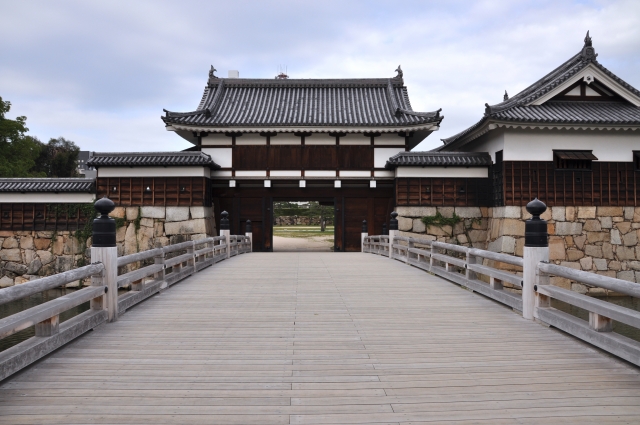
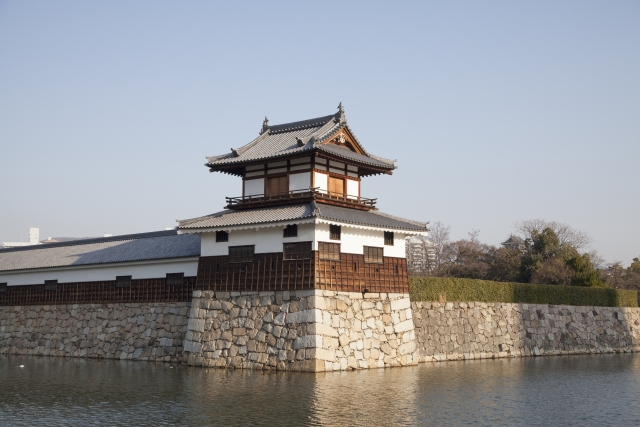
73.広島城~Hiroshima Castle

広島は平和都市ですが、城からできた都市でもあるのです。
Hiroshima is a city of peace, but also a city from the castle.

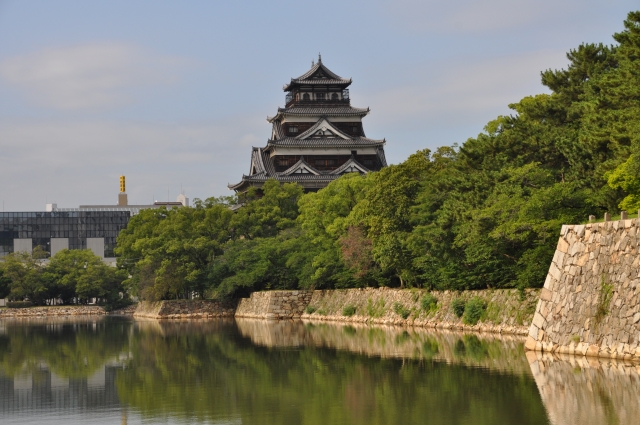
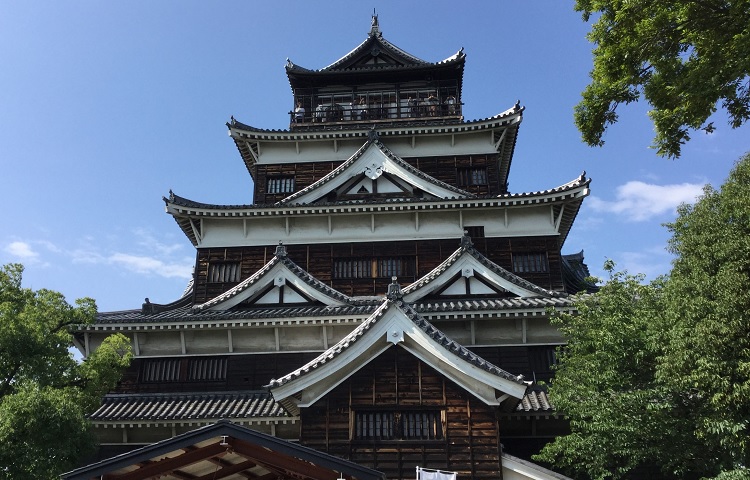
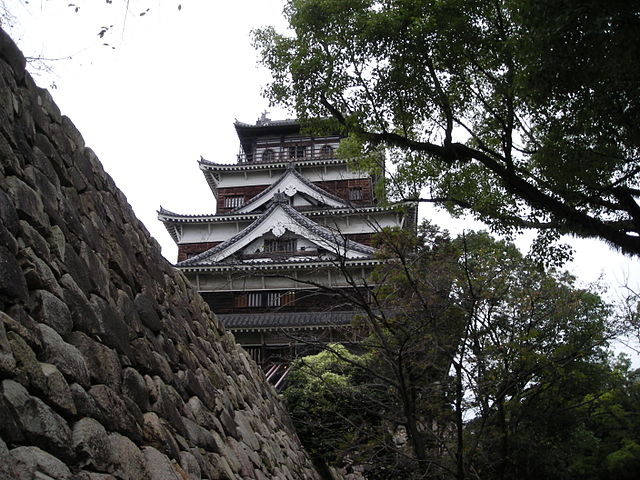
広島城の外観復元天守~The apparently restored Tenshu keep of Hiroshima Castle(licensed by Taisyo via Wikimedeia Commons)

立地と歴史~Location and History

広島は今、平和を希求する都市となっています。この都市は毛利氏により築かれた広島城から始まりました。毛利氏もともと吉田郡山城という広大な山城に住んでいましたが、その城は戦国時代において防御力に優れていました。しかし統治や通商には不向きだったのです。豊臣氏による天下統一の後、毛利輝元は当時の他の事例にならい、本拠地を他の地に移すことにしました。彼は1589年に太田川のデルタ地帯にある島の上に新しい城を築きはじめました。この城と城下町は南方の海の方角に向かって広がっていきました。
Hiroshima is now a city for promoting peace. The city comes from Hiroshima Castle built by the Mori clan. The clan originally lived in a large mountain castle called Yoshida-Koriyama which was specialized for defense in the Warring States Period. But it was not convenient for governance and business. After the unification of the whole country by the Toyotomi clan, Terumoto Mori decided to move his home base to another place by emulating other cases at that time. He started to build a new castle on an island on the delta of Otagawa River in 1589. The area of the castle and its town spread towards the sea in the south.

毛利輝元肖像画、毛利博物館蔵~The portrait of Terumoto Mori, owned by the Mori Museum(licensed under Public Domain via Wikimedia Commons)
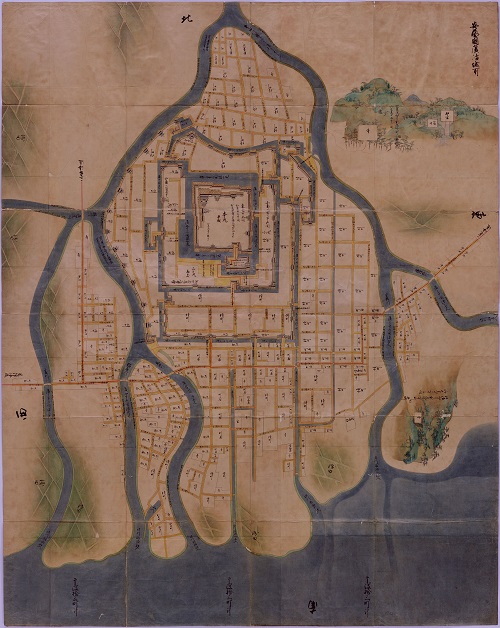
安芸国広島城所絵図、江戸時代~The illustration of Hiroshima Castle in Aki Province, in the Edo Period(出典:国立公文書館)

徳川幕府が設立されてから後に、福島氏が城を完成させたと言われています。城には5層の天守の他、88もの櫓がありました。主要な曲輪は水堀により区切られて、橋でのみつながっていました。また、他の川や堀によっても囲まれていました。代わりにこのような環境下では、洪水から被害を受けやすくなります。福島は洪水の度に城を補修せざるを得ませんでした。しかながら、頻繁な工事は幕府に福島が反乱を起こすのではないかと疑念を生じさせ、福島は1619年に改易となってしまいます。
After the Tokugawa Shogunate was established, it is said that the Fukushima clan completed the castle. It had a five layer Tenshu keep and 88 turrets. Primary enclosures were separated by water moats, connected by only bridges. They were also surrounded by many other rivers and moats. Instead, in such conditions, it could suffer from flooding. Fukushima had to repair the castle constantly after floods. However, frequent constructions made the Shogunate doubt Fukushima might be against the Shogunate. Fukushima was fired in 1619.

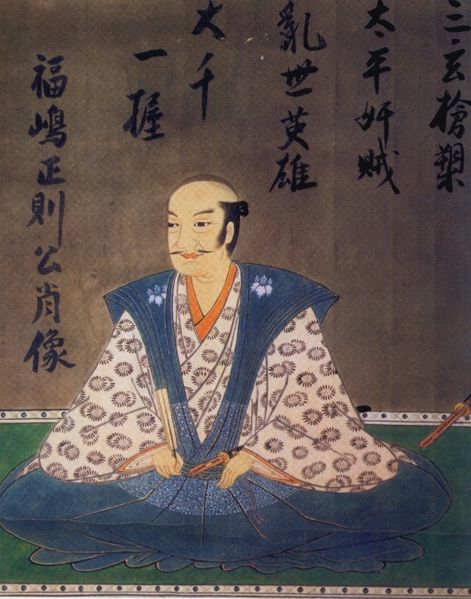
広島城の城主だった福島正則肖像画、東京国立博物館蔵~The portrait of Masanori Fukushima, the lord of Hiroshima Castle, owned by the Tokyo National Museum(licensed under Public Domain via Wikimedia Commons)

その後、浅野氏が広島を250年以上統治しました。浅野氏は城をほとんど同じ状態で維持しましたが、市街地や農地を埋め立てにより拡張しました。埋め立て地は、広島市の礎になっています。
After that, the Asano clan governed Hiroshima for 250 years. They had kept the castle almost the same as original. They continued to reclaim land for towns and fields. The reclaimed area is the foundation of Hiroshima City.

広島市周辺の現代の地図~The present map around Hiroshima City

特徴~Features

現在、主に本丸と二の丸の跡地が内堀に囲まれて残っています。そこには現存建物はありません。天守は本丸の北西隅に外観復元されています。その内部は歴史博物館として使われていて、広島市や広島城の歴史を学ぶことができます。二の丸は外部から本丸に向かう途中に、出丸のようになっていて、周りの内堀により独立しています。とても独特なスタイルです。
Now, ruins of mainly Honmaru and Ninomaru enclosures surrounded by the inner moat remain. No remaining buildings are there. The Tenshu has been apparently restored at the north-west corner of Honmaru. Its interior is used as a historical museum where you can learn about the history of the city and castle. Ninomaru is like a barbican on the way from outside to Honmaru, isolated by the inner moat around. It’s a very unique style.

城周辺の航空写真~The aerial photo around the castle

外観復元天守~The apparently restored Tenshu(taken by NR1000 from photoAC)

二の丸では、表御門や太鼓櫓といったいくつかの建物が最近になって元来の工法で復元されています。
Several buildings like the Front Gate and the Drum Turret were recently restored in the original way at Ninomaru.

復元された二の丸の表御門~The restored Front Gate at Ninomaru(taken by NR1000 from photoAC)
復元された二の丸の太鼓櫓~The restored Drum Turret at Ninomaru(taken by acworks from photoAC)

その後~Later Life

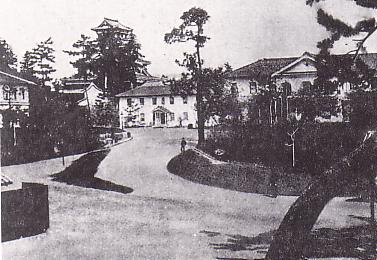
この城の近代の歴史はより過酷だったかもしれません。明治維新後、城跡は日本陸軍の広島鎮台の用地に転用されました。多くの城の建物は軍施設に置き換わりました。特に、1894年の日清戦争時には大本営が移ってきました。明治天皇が東京からここに来て、直接軍隊を指揮したのです。近くの宇品には大きな軍港もあり、広島は第二次世界大戦までは軍都として繁栄したのでした。
The modern history of the castle might be stormier. After the Meiji Restoration, the ruins of the castle were turned into the ground for Hiroshima Chindai of the Japanese Army. Many castle buildings were replaced with military facilities. In particular, the Imperial Headquarters was relocated there during the Sino-Japanese War in 1894. Emperor Meiji moved there from Tokyo to order his soldiers. There was a large navy port called Ujina nearby, and Hiroshima had been a military-based city until World War II.

右側が広島大本営の建物~The building of the Imperial Headquaters on the right(licensed under Public Domain via Wikimedia Commons)

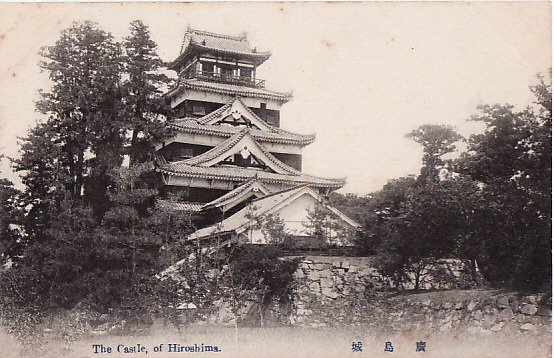
1945年8月、広島の人たちはなぜ大きな空襲がここにはないのか訝しんでいました。それは、広島が原子爆弾の標的の一つだったからでした。8月6日の朝、8時15分、原爆は非戦闘員、婦女子を含む約15万人もの人たちを殺し、市街地のすべての建物を破壊しました。現存していた広島城の天守は、原爆の爆風により一瞬のうちに倒壊し、それから燃え出しました。
In August 1945, people in Hiroshima were wondering why they didn’t suffer from large air raids. That was because the city was one of the targets of the atomic bombs. At 8:15 AM on August 6, the bomb killed around 150,000 people including non-combatants, women and children as well as all of the buildings in the city area. The remaining Tenshu keep of Hirosima Castle collapsed in an instant by the bomb blast before burning out.

第二次世界大戦まで現存した天守~The remaining Tenshu until World War II(licensed under Public Domain via Wikimedia Commons)

戦争直後の城周辺の航空写真~A aerial photo of around the castle just after the World War II

戦後になって、人々は焼土となった城跡をどう扱うべきか議論を行いました。1951年の広島国体の間のみ仮の天守が作られました。そのとき人々は広島の平和と復興のシンボルとして天守が必要だと気付いたのです。そのため、現在の天守が1958年に外観復元されました。
After the war, people discussed how they should treat the burned ruins of the castle. When the temporary Tenshu was built in 1951 just during a National Sports Festival in Hiroshima, they realized that they need to rebuild the Tenshu as a symbol of peace and restoration for the city. That’s why the present Tenshu was apparently restored in 1958.

復元された天守~The restored Tenshu

私の感想~My Impression

広島城は、城の存在意義が戦争から平和のためにと変わっていった典型例でしょう。日本のプロ野球球団、広島東洋カープの「カープ」という名前は、この城の愛称「鯉城」から来ています。この城が末永く平和と繁栄のシンボルであり続けるよう願ってやみません。
Hiroshima Castle is a typical example of a castle’s role being turned from war into peace. Hiroshima Toyo Carp is a Japanese pro baseball team. The name “Carp” comes from the castle’s nickname, the Carp Castle “Ri-Jo”. I hope that the castle will be a symbol of peace and prosperity now and forever.

広島城の堀にいる鯉~Carps in the water moat of Hiroshima Castle(taken by tomo3368 from photoAC)

ここに行くには~How to get There

広島駅から:徒歩で約25分かかります。市内電車の場合1・2・6番電車に乗り、紙屋町東停留所で降りてください。バスの場合は広島駅南口バスターミナルで7・8・9番乗り場から乗り、合同庁舎前バス停で降りてください。
車で行く場合:山陽自動車道の広島ICから約10分かかります。城の周りにいくつか駐車場があります。
From Hiroshima station: It takes about 25 minutes on foot. Or take the tram line 1, 2, or 6, and take off at the Kamiyacho-Higashi stop. Or take the bus line 7, 8, or 9 at Hiroshima Station south exit bus terminal, and take off at the Godochosha-Mae bus stop.
If you want to go there by car: It takes about 20 minutes from the Hiroshima IC on San-yo Expressway. There are several parking lots around the castle.

リンク、参考情報~Links and Rererences

広島城公式ホームページ~Hiroshima Castle
・広島城400年、中国新聞社編、第一法規(Japanese Book)
・決戦!広島城、松永弘高著、朝日新聞出版(Japanese Book)
・よみがえる日本の城7、学研(Japanese Book)

21.江戸城その1~Edo Castle Part1

江戸城は間違いなく日本で最大の城です。なぜなら城が東京そのものになったからです。時々、外国からの旅行者の方は、どこに有名な城や城跡があるのかと尋ねられます。もし、そこが東京の中心地であるなら、もうそこは城の中かもしれません。
Edo Castke was definitely the largest castle in Japan, because it became Tokyo itself. Some foreign tourists ask that where famous Japanese castles and ruins are. They may be standing among castles if they are in the center of Tokyo.

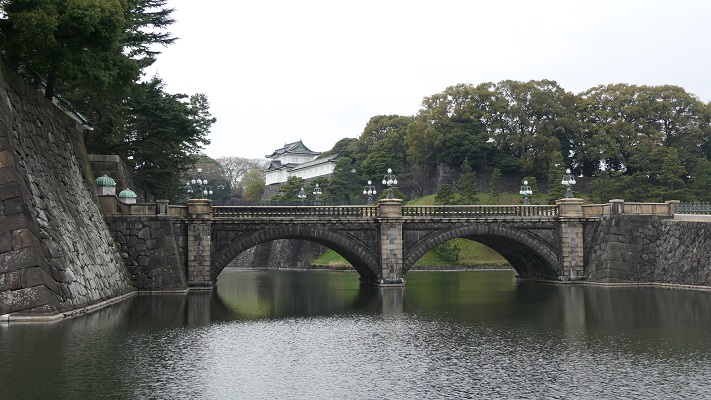
皇居正門石橋と伏見櫓~The Imperial Palace Main Entrance Bridge and Fushimi Turret

立地と歴史~Location and History

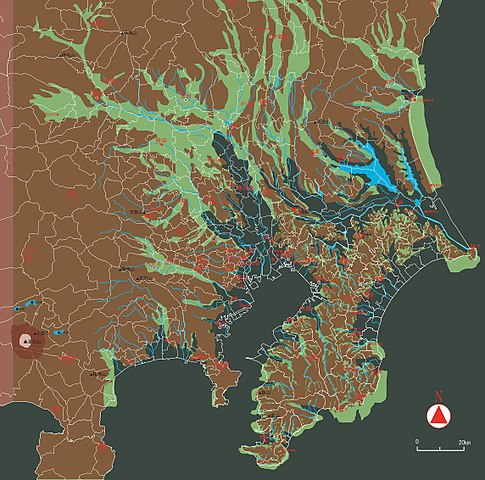
東京を含む関東平野には、中世までは大きな湿地帯がありました。この理由から、はるか昔の東海道は西日本から伸びてきて、 海を越えて房総半島に至っていました。利根、渡良瀬、隅田といった大河が直接江戸湾に注いでいたのです
The Kanto Plain including Tokyo had large waterlogged area until the Middle Ages. For this reason, the Tokaido road went from eastern Japan to Boso peninsula over the sea hundreds years ago. Large rivers like Tone, Watarase, and Sumida directly flow into what is now Tokyo Bay.

古代の関東平野の海岸線~The coastline of Kanto Plain in ancient times(licensed by Llhoi2013 via Wikimedia Commons

江戸城は1457年に太田道灌によって最初に築かれました。彼には敵との境界線であった利根川の近くに城を築く必要があったのです。その後この城は、戦国時代の間関東地方の支配者であった北条氏の支城の1つであり続けました。しかし、地理的な制約から武士たちの都とするには不十分でした。
Edo Castle was first built by Dokan Ota in 1457. He needed to build the castle near the border with his enemy, Tone River. After that, the castle had been one of the branch castles of the Hojo clan who were the ruler of Kanto region during the Warring States Period. But the castle still didn’t deserve warrior’s capital because of its geographical features.

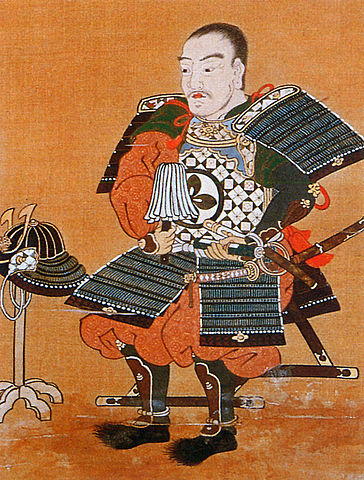
太田道灌肖像画、大慈寺蔵~The portrait of Dokan Ota, owned by Daijiji Temple(licensed under Public Domain via Wikimedia Commons)

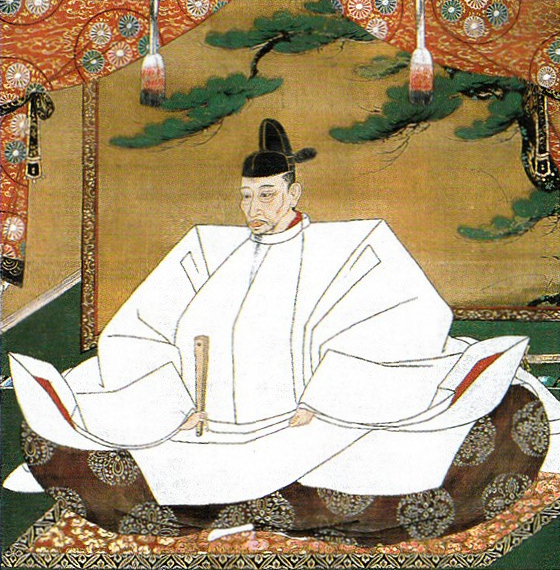
豊臣秀吉は1590年に北条氏を滅ぼし、徳川家康に対し、北条氏に代わり関東地方に転封するよう命じました。秀吉はまた、家康の首府として江戸を指定したと言われています。秀吉は、彼による攻撃を3ヶ月間も耐えた北条氏の首府、小田原に家康が居座るのを恐れたからといいます。
Hideyoshi Toyotomi defeated Hojo clan in 1590, and ordered Ieyasu Tokugawa to move to Kanto region instead of Hojo. It is said that he also designated Edo as Ieyasu’s capital because he feared Ieyasu would settle at Hojo’s capital Odawara which could withstand Toyotomi’s attack for three months.

豊臣秀吉肖像画部分、加納光信筆、高台寺蔵~part of the Portrait of Hideyoshi Toyotomi, attributed to Mitsunobu Kano, owned by Kodaiji Temple(licensed under Public Domain via Wikimedia Commons)

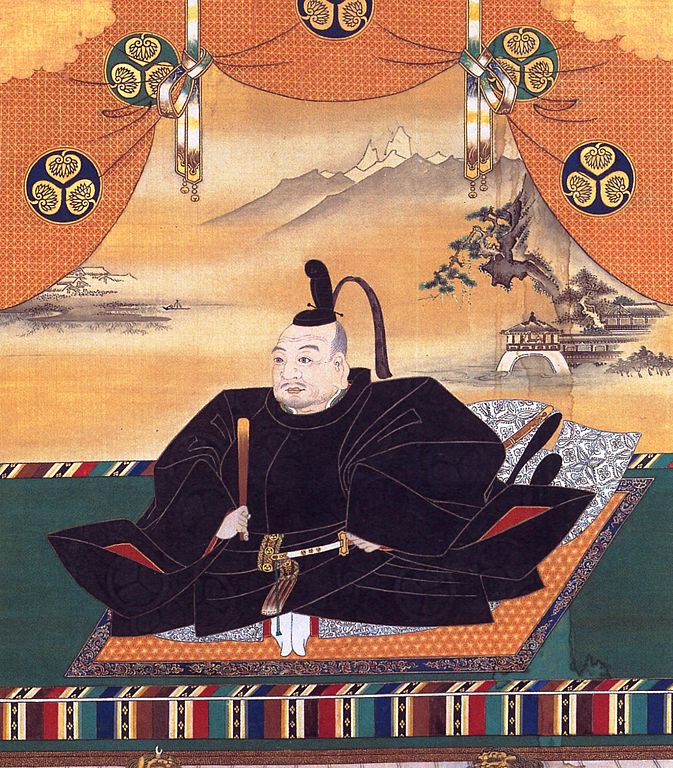
家康は江戸に到着した直後から、江戸城への驚くべき大改造を開始しました。これは、日本人による湾岸地域での都市作りの初めての試みと言われています。
Immediately after Ieyasu arrived at Edo, he started an incredible renovation of Edo Castle. It is said that it was the first attempt for Japanese people to build a city on a waterfront area.

徳川家康肖像画、加納探幽筆、大阪城天守閣蔵~The Portrait of Ieyasu Tokugawa, attributed to Tanyu Kano, owned by Osaka Castle Museum(licensed under Public Domain via Wikimedia Commons)

初期の江戸城は、現在の山の手地域にありました。現在の下町地域は、海面下か湿地帯でした。そして、江戸前島と呼ばれた砂州がありました。また、陸地と砂州の間には日比谷入江が入り込んでいました。
The first Edo Castle was in the present uptown area. The present down town area was below the Sea or waterlogged. There was a sand bank called Edo-Maeto. There was also the Hibiya arm of the sea between the land and the bank.

赤い線は現在の地図に残された江戸前島と日比谷入江の痕跡~The red line shows the remaining trace of Edo-Maetou and Hibiya Arm of the Sea on the present map

徳川家臣団は、水上交通のために江戸前島を横切る運河を掘り、川の流路を付け替えたりしました。彼らはまた、このような湾岸都市であったため、上下水道の設備も整えなければなりませんでした。その結果、江戸は水の都となったのです。
Tokugawa team created a canal across Edo-Maeto and change the route of rivers for water transportation. They also had to build a system for water supply and sewerage on such a waterfront city. As a result, Edo became a city of waterways.

戦前の東京の航空写真、まだ水路がたくさん残っていました~A aerial photo of Tokyo before the World War II, a lot of wateways still remained.

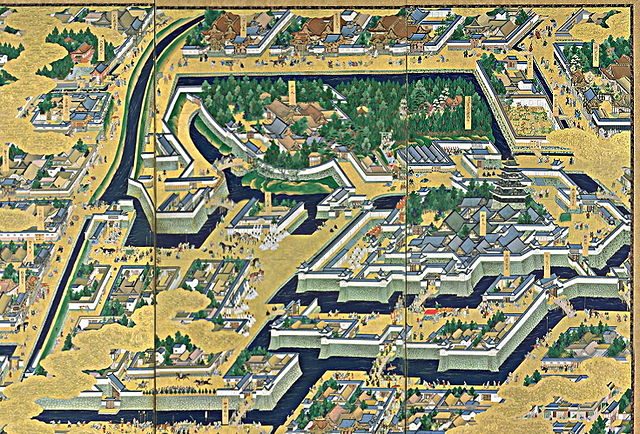
家康が1600年に天下を取った後、彼は全国の諸大名に天下普請と呼ばれる城の拡張工事を命じました。日比谷入江は城の用地拡大と防衛上の必要のため、埋め立てられました。この大規模な工事により、天守を含む多くの建物が作られ、多くの堀が掘られ、石垣が高く積まれました。
After Ieyasu got the power in 1600, he ordered lords of the whole country to improve the castle called Tenka-Bushin. They reclaimed Hibiya arm of the sea to spread the ground for the castle as well as the need for defense. Many buildings including Tenshu keep were built, many moats were dug, and high stone walls were built by the large scale construction.

「江戸図屏風」左隻部分、17世紀、国立歴史民俗博物館蔵~Part of “View of Edo” left screen. pair of six-panel folding screens, in the 17th century, owned by National Museum of Japanese History(licensed under Public Domain via Wikimedia Commons)

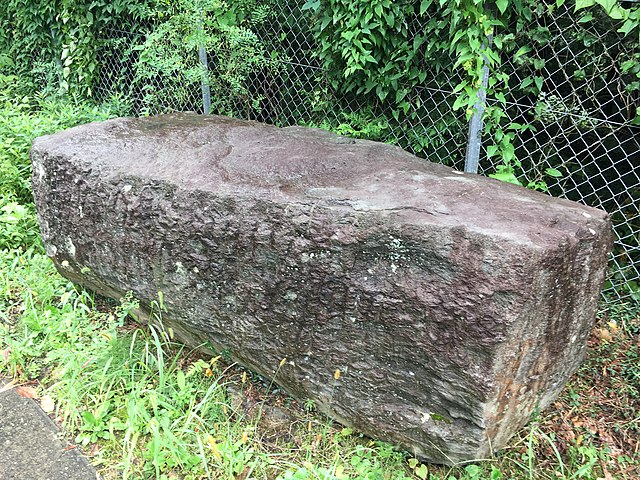
大名たちは少なくとも6万個もの百人石と呼ばれた4トン石を、伊豆半島から海を越えて江戸まで運ばねばなりませんでした。1603年から1660年まで続いた天下普請は江戸を日本一の大城郭に仕立てたのです。
These lords had to carry at least 60,000 four ton stones called Hyakunin-Ishi from Izu Peninsula to Edo over the sea. Tenka-Bushin between 1603 and 1660 resulted in Edo Castle being the largest castle in Japan.

伊豆半島に残されている江戸築城石~A quarry stone for building Edo Castle left in Izu Peninsula(licensed by GuchuanYanyi via Wikimedia Commons)

江戸城は、内郭と外郭に分かれていました。内郭は内堀の内側で、城の中心部分で、主要な曲輪である本丸、二の丸、西の丸から構成されていました。その外周は8km近くありました。そこには天守、それぞれの曲輪に御殿があり、そして警備のために多くの櫓や門がありました。
Edo castle was divided into Naikaku and Gaikaku. Naikaku was the inside of the inner moat, and consisted of the center portion of the castle including main enclosures Honmaru, Ninomaru, and Nishinomaru. Its perimeter was nearly 8 km. It had the Tenshu keep, halls for each main enclosure, many turrets and gates for security.

今に残る内郭部分の航空写真~The aerial photo of the remaining Naikaku portion

外郭は、外堀に囲まれていた区域で、その外周は約16kmもありました。見附と呼ばれた大型の門と橋のセットが約50ヶ所、主要街道と堀との交差点に置かれ、民衆と交通を監視していました。
Gaikaku was the surrounding area by outer moat whose perimeter was about 16 km, even including the city area. About 50 sets of a large gate and bridge called Mitsuke were placed at the intersections of the moat and major roads to check people and transportation.

江戸古地図上での外郭範囲~The range of Gaikaku on the old Edo map(licensed by Tateita via Wikimedia Commons)

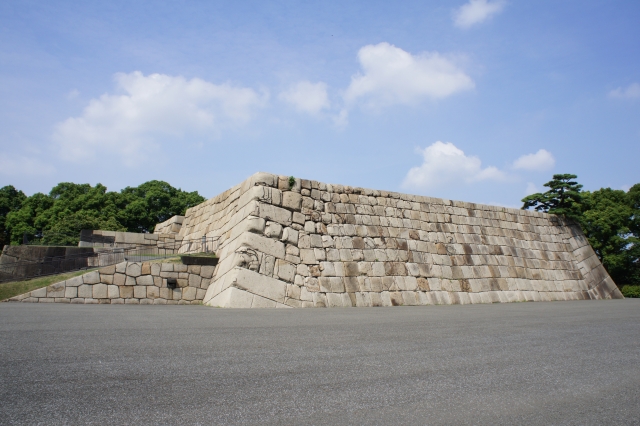
その完璧な構造にも関わらず、この城は敵からではなく、火災による被害を受けました。もっとも有名なのは1657年に発生した明暦大火です。この大火により、大半の江戸市域、江戸城、そして3代目の天守が焼け落ちました。大火の後、4代目天守の再建工事が開始されましたが、中止となりました。そのための天守台は今でも見ることができます。
Despite the perfect structure, the castle suffered not from enemies, but from fires. The most famous one was the great fire of Meireki in 1657. It burned out most of Edo City, Edo Castle, and the third Tenshu keep. After the fire, the rebuilding of a fourth Tenshu was launched, but canceled. We can now see the prepared Tenshu base for it.

4代目天守台~The base of the forth Tenshu keep(taken by 松波庄九郎 from photoAC)

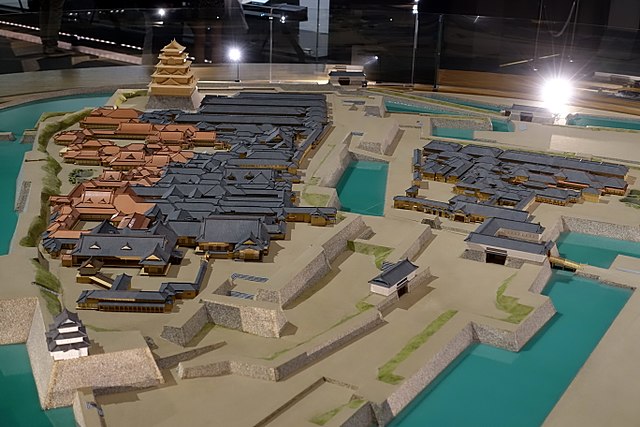
将軍は本丸御殿に住み、統治を行いましたが、御殿も火災での焼失と再建を繰り返しました。幕末になってから、将軍は焼けた本丸御殿から通常は隠居した将軍が住む西の丸御殿に移らなければなりませんでした。予算がなかったからです。
Shogun lived and governed in Honmaru hall, but the hall was also burned down and restored several times. At the end of the Edo Period, Shogun had to move from the burned Honmaru hall to Nishinomaru hall where retired Shogun usually lived, because of the lack of money.

江戸東京博物館にある本丸と二ノ丸御殿の模型~The miniature model of Honmaru and Ninomaru halls at Edo-Tokyo Museum(licensed by Daderot via Wikimedeia Commons)

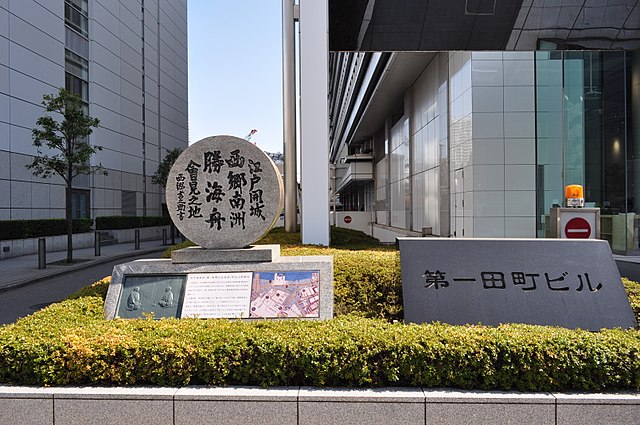
明治維新のとき、西日本の方で新政府と幕府の間で戦いが起こりました。結果として、西郷隆盛と勝海舟との会談が行なわれ、江戸城は新政府に平和裏に引き渡されました。
During the Meiji Restoration, a battle between the New Government and Shogunate was fought in eastern Japan. As a result, Edo Castle was handed over to New Government without war after the meeting between Takamori Saigo and Kaishu Katsu.

西郷・勝会談の記念碑~The monument of the meeting between Saigo and Katsu(licensed by 江戸村のとくぞう via Wikimedia Commons)

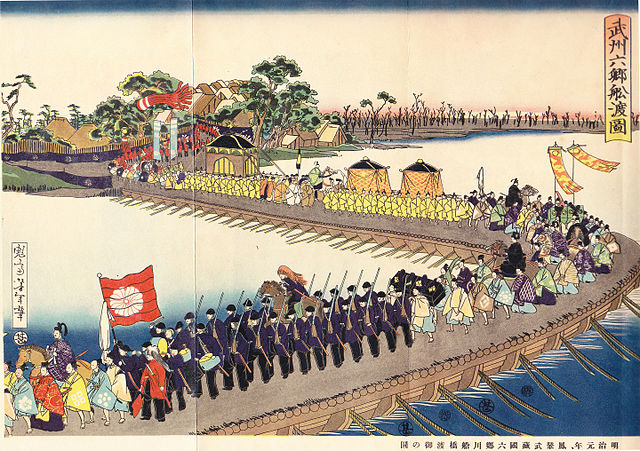
1869年、江戸は東京と名前を変え、日本の首都となりました。そして明治天皇が将軍と入れ替わりで、古都京都から東京の江戸城西の丸御殿に移りました。そのため、現在西の丸は皇居の一部となっています。
In 1869, Edo was renamed Tokyo which became the capital of Japan, before the Emperor Meiji move from old capital Kyoto to Nishinomaru hall of Edo Castle in Tokyo instead of Shogun. That’s why Nishinomaru is now part of the Imperial Palace.

明治天皇の東京到着を描いた錦絵~The picture that shows the arrival of Emperor Meiji to Tokyo(licensed under Public Domain via Wikimedia Commons)

「江戸城その2」に続きます。~To be continued in “Edo Castle Part2”

error: Content is protected !!