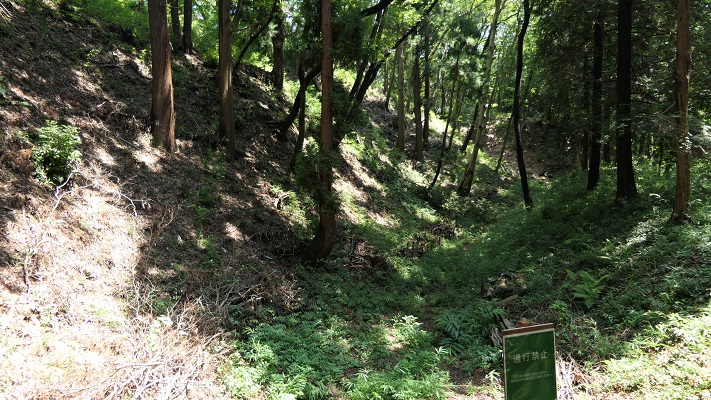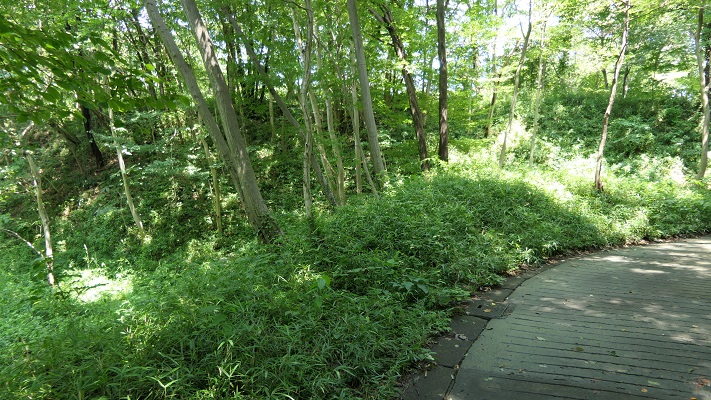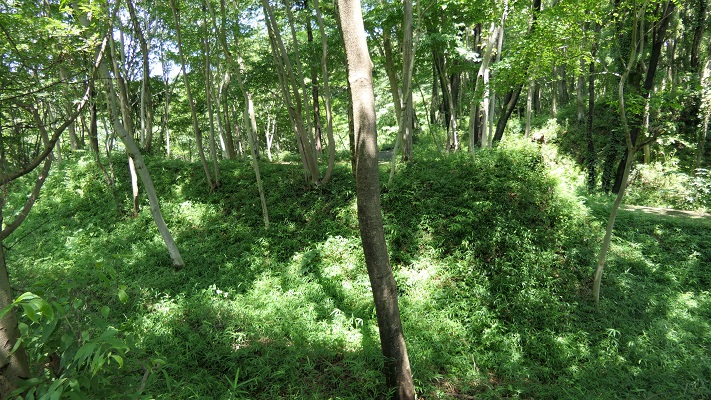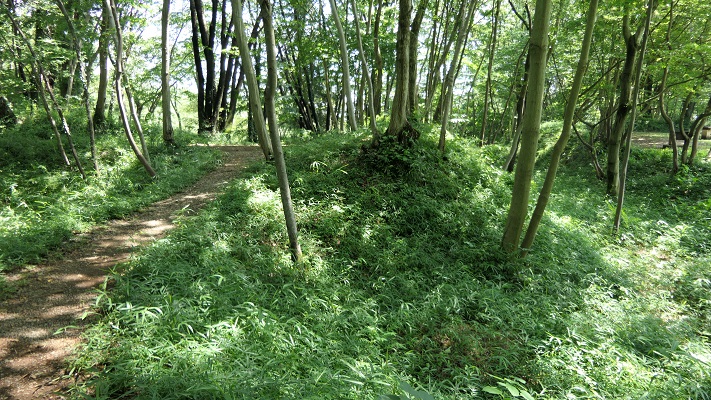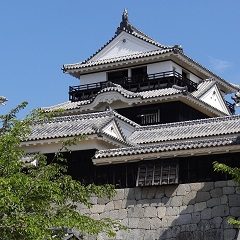
26.松代城~Matsushiro Castle

中世と近世が同居している城
A castle mixed with the Middle Ages and the Modern times

立地と歴史~Location and History

武田信玄の本陣~Stronghold for Shingen Takeda

長野県長野市にある松代城は、真田氏の城下町として有名な観光地です。この城には長い歴史があります。16世紀に武田氏が最初に築城し、その頃は海津城と呼ばれていました。この城の建設の理由は、近くの川中島が越後国(現在の新潟県)の上杉氏との最前線であったからです。城は北側が千曲川に接していて、土塁や水堀に囲まれていました。また、城の門の外側には馬出しという武田氏独特の防御システムが備えられていました。城は実際に、1561年の非常に有名な上杉謙信との川中島の戦いにおいて武田信玄の本陣として使われました。
Matsusshiro Castle is a famous attraction in Nagano City, Nagano Prefecture, which was known as a Sanada Clan castle town. The castle has a long history. It was first built by the Takeda Clan in the late 16th Century and was called Kaizu Castle. The reason for the construction was that the area nearby called Kawanakajima was the front line against the Uesugi Clan in Echigo Province (what is now Niigata Prefecture). The castle bordered Chikuma-gawa River on the north and was surrounded by earthen walls and water moats. It is also said that it was equipped with the Takeda Clan’s unique defense system called Umadashi outside the castle gates. The castle was actually used as the stronghold for Shingen Takeda when he fought with Kenshin Uesugi in the very famous fourth Battle of Kawanakajima in 1561.

城の位置~The location of the castle

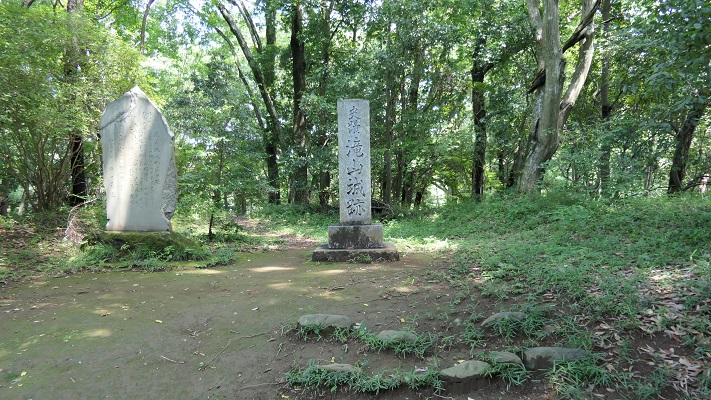
城内にある「海津城」の碑~The monument of “Kaizu Castle” in the castle
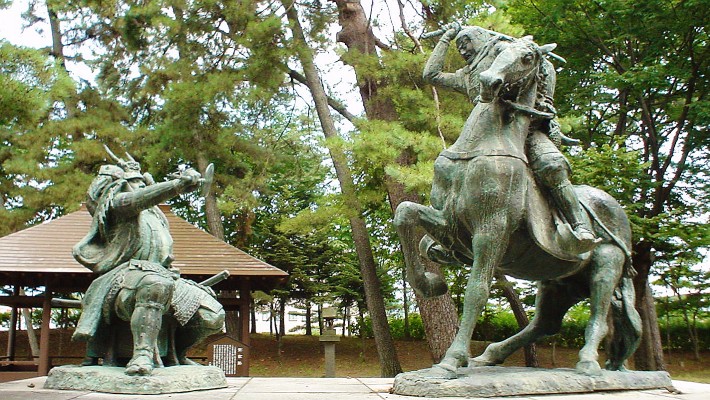
川中島古戦場にある武田信玄と上杉謙信の銅像~The statues of Shingen Takeda and Kenshin Uesugi at the Kawanakajima Battlefield (licensed under Public Domain via Wikimedia Commons)

真田氏による統治~Governance by Sanada Clan

1582年に武田氏が織田氏により滅ぼされた後は、この城の城主は何度も変わりました。最終的には真田氏が、城と城下町を含む松代藩を1622年から江戸時代末まで支配しました。また、1711年には徳川幕府により、城の名前が松代城と変更されました。城はそれまでに改修が続けられます。例えば、城の中心地である本丸は、内堀とともに石垣によって囲まれました。石垣の四隅の上には4基の櫓が築かれ、3基の門が本丸の入口に設置されました。本丸の内部には御殿があり、城主が住んでいました。一方、外堀とともに本丸と内堀を囲む二の丸は、まだ土塁があるだけでした。また、恐らくは武田時代に由来する馬出しも残っていました。
After the Takeda Clan was defeated by the Oda Clan in 1582, the lords of the castle were changed several times. The Sanada Clan finally governed the Matsushiro Domain including the castle and the castle town from 1622 until the end of the Edo Period. The castle was also renamed Matsushiro Castle by the Tokugawa Shogunate in 1711. The castle continued to be improved until then. For example, the center of the castle called the Main Enclosure was surrounded by stone walls with the Inner Moat. Four turrets were built on the four corners of the stone walls, and three gates were set at the entrances of the enclosure. The Main Hall was inside of the enclosure where the lord lived. On the other hand, the Second Enclosure with the Outer Moat surrounding the Main Enclosure and InnerMoat still had the earthen walls. The Umadashi system which probably originated in Takeda’s period, also remained.

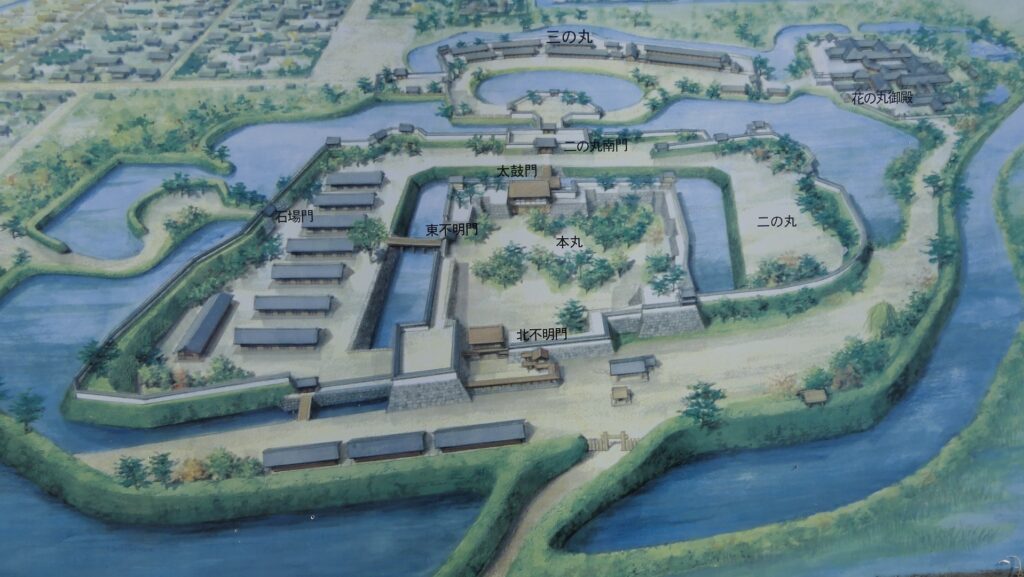
城の想像図(正面)~The imaginary drawing of the castle (the front) (現地説明板より~from the signboard at the site)
城の想像図(背面)~The imaginary drawing of the castle (the back) (現地説明板より~from the signboard at the site)

新しい御殿~New Main Halls

しかしながら、この城の川に近い立地は防御には有利でしたが、統治や居住には不利でした。城は洪水の被害に何度も見舞われました。火災による被害もあり、真田氏は居宅を城の中心地から南西部分に移すことを決め、花の丸御殿を建設します。江戸時代末には城から離れた地に、親族関係者(婦女子)のための新御殿も建てました。
However, this castle’s location near the river was positive for defense, but negative for governance and living. The castle suffered damage from floods several times. It was also damaged by fires, so the Samada Clan decided to escape their home from the center of the castle to the southwest part, building Hananomaru Main Hall. The clan also built the New Main Hall for their relatives (women and children) far from the castle at the end of the Edo Period.
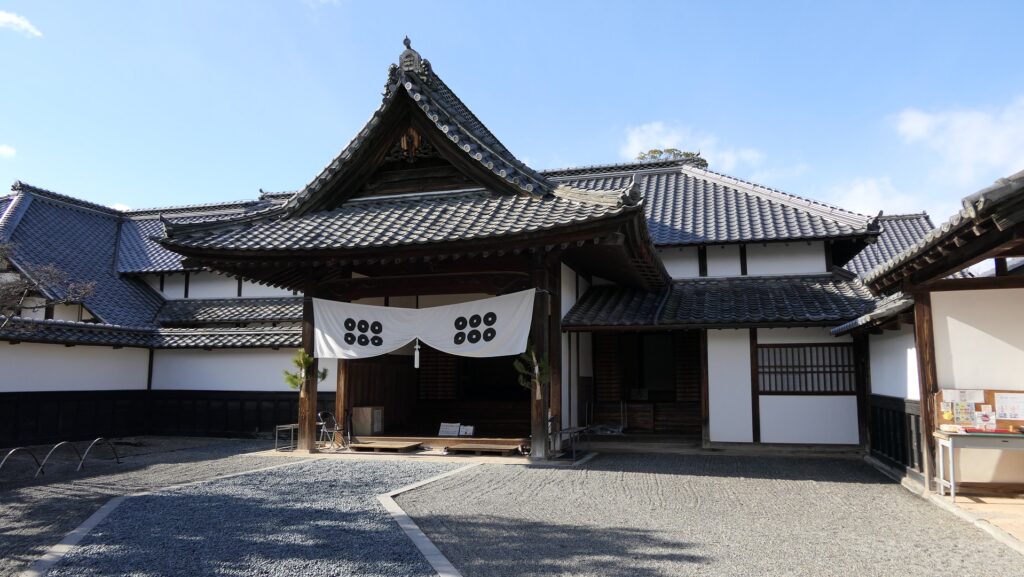
新御殿~The New Main Hall

特徴~Features

江戸時代末期のように復元~Restored like End of Edo Period

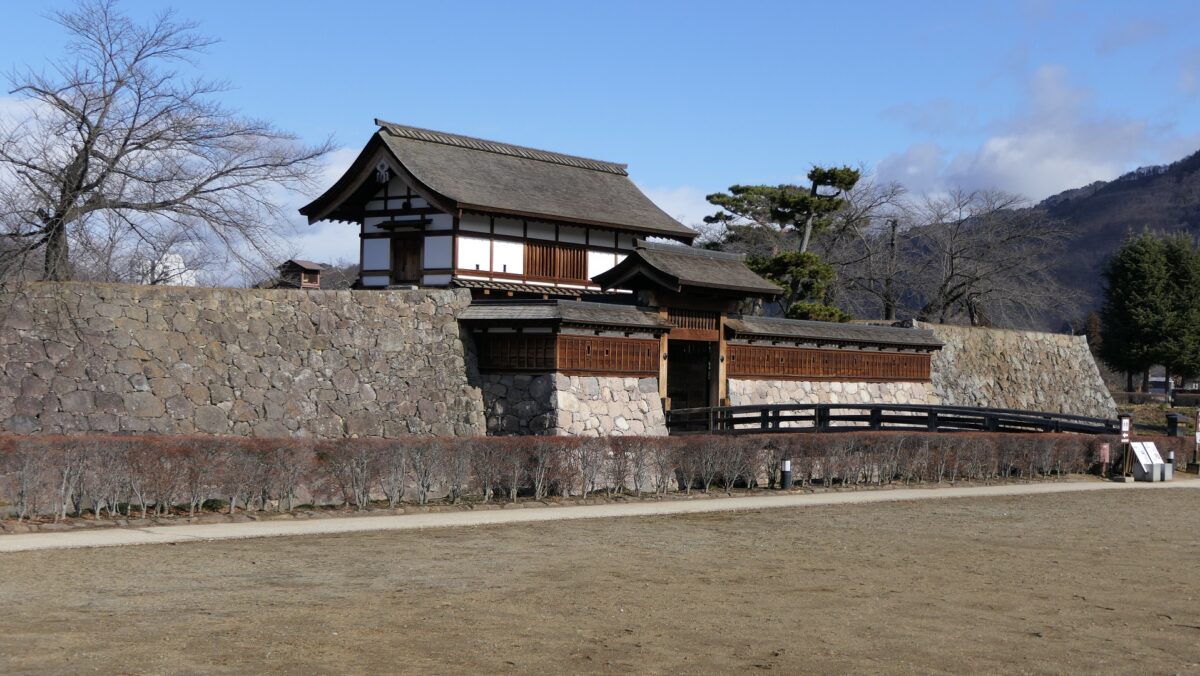
現在、松代城の中心部は以前の姿に似通って見えます。本丸の石垣のみが現存しているのですが、本丸の2つの門、内堀と2つの橋、そして二の丸を囲む土塁さえもが長野市によって復元されています。市の関係者によると、江戸時代末期の姿を再現したということです。
Now, the center of Matsushiro Castle looks similar to its former appearance. Only the stone walls of the Main Enclosure are original, but two gates to the Main Enclosure, the Inner Moat with two bridges, and even earthen walls surrounding the Second Enclosure have been restored by Nagano City. The city officials say they tried to restore the castle to show its appearance at the end of the Edo Period.
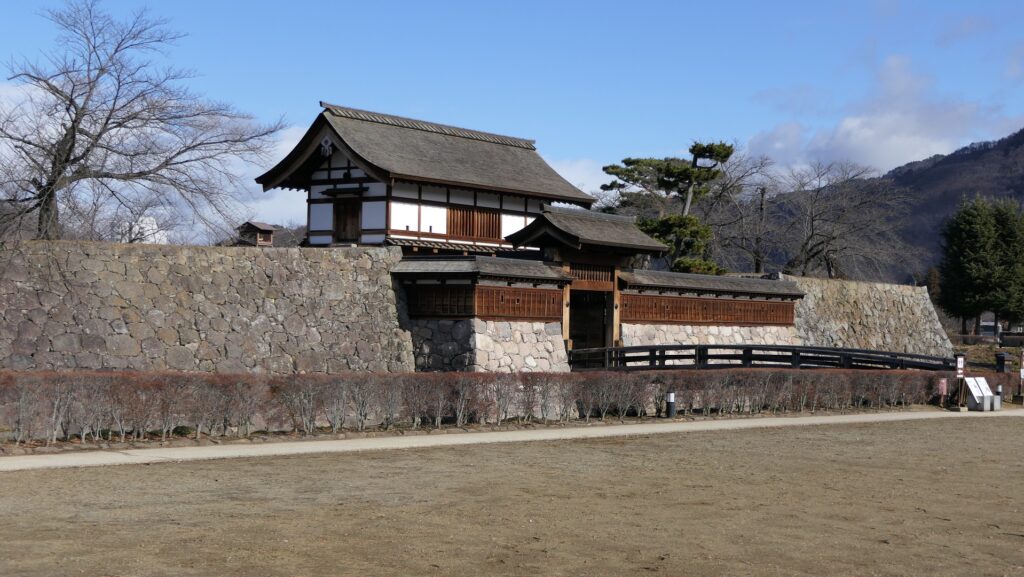
復元された本丸~The restored Main Enclosure

城周辺の航空写真~The aerial photo around the castle

対照的な二の丸と本丸~Contrastive Second and Main Enclosures

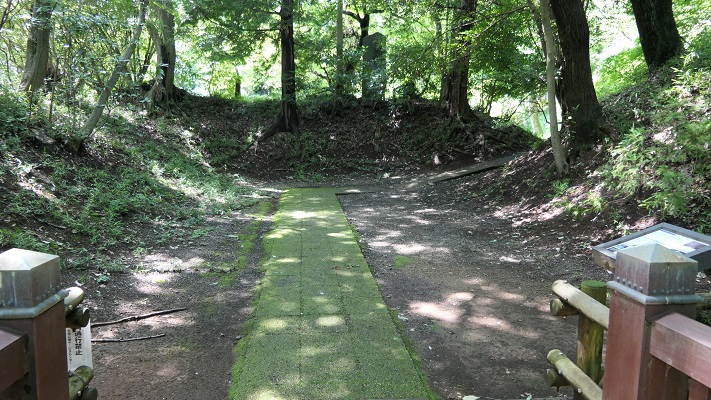
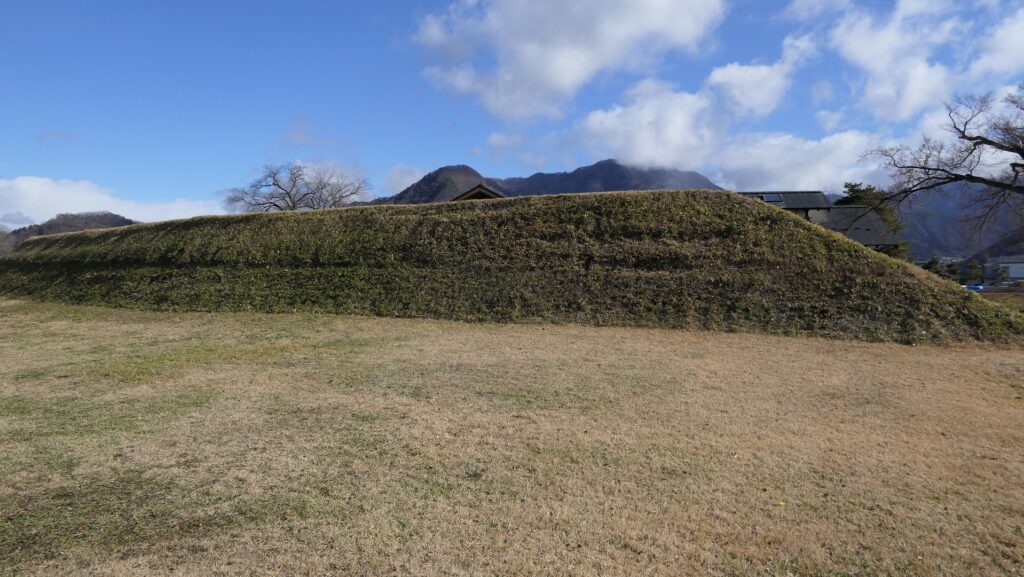
観光客は通常、二の丸の入口である南門跡から城に入っていきます。この門跡は、復元された土塁に囲まれていて、その近くには馬出しの痕跡がわずかに残っています。この土塁と本丸の石垣はとても対照的です。それぞれが元々は別の時代に作られたからです。土塁は中世の戦国時代に由来し、石垣は主に江戸時代に作られました。
Visitors usually enter the castle through the ruins of the South Gate, the entrance of the Second Enclosure. The ruins are surrounded by the restored earthen walls and the trace of the Umadashi system slightly remains nearby. The earthen walls and the stone walls of the Main Enclosure are very contrastive because both of them come from different periods. The earthen walls are from the Sengoku Period of the Middle Ages and the stone walls are mainly from the Edo Period of the Modern Times.

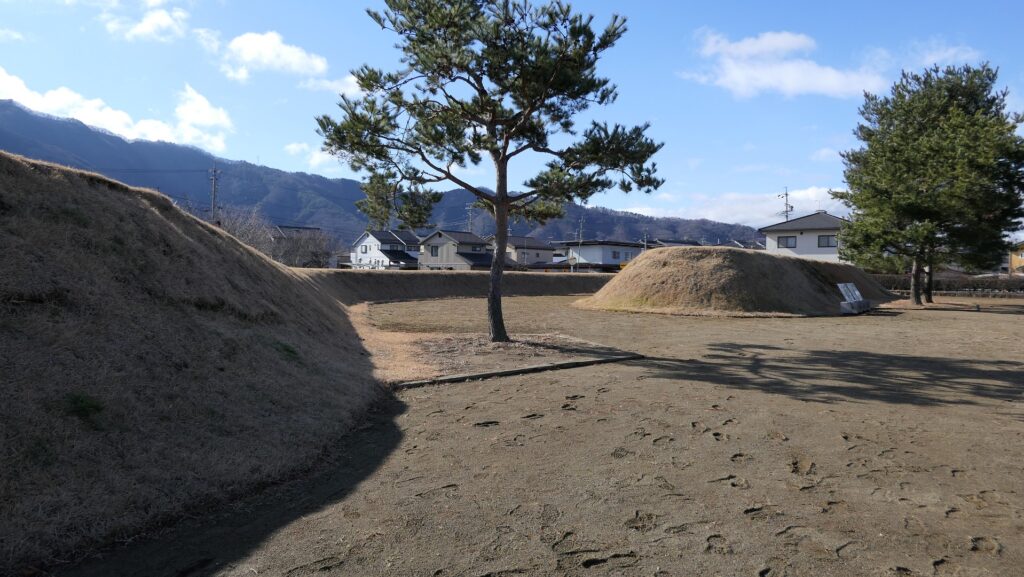
南門跡~The ruins of the South Gate
復元された二の丸~The restored Second Enclosure

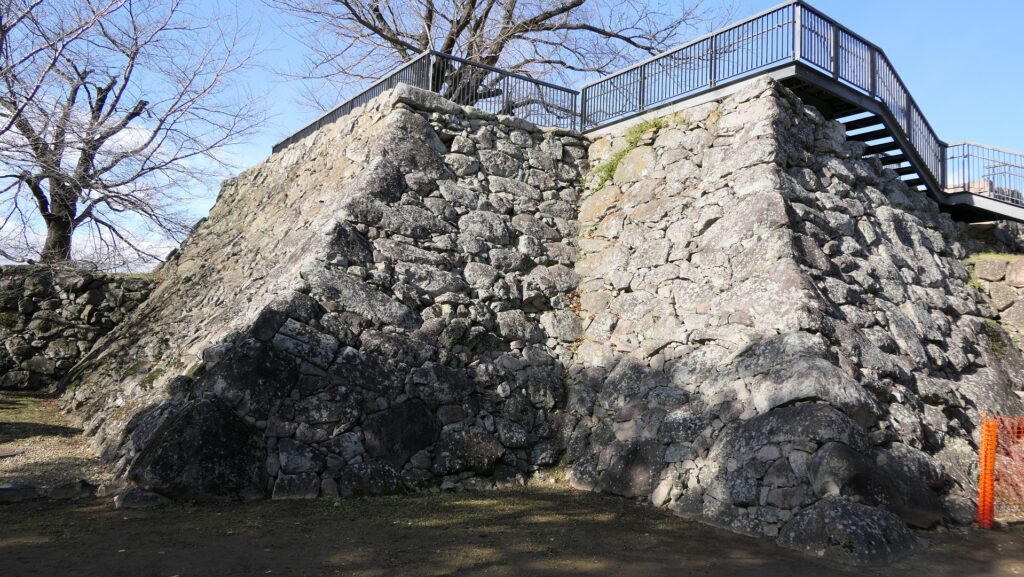
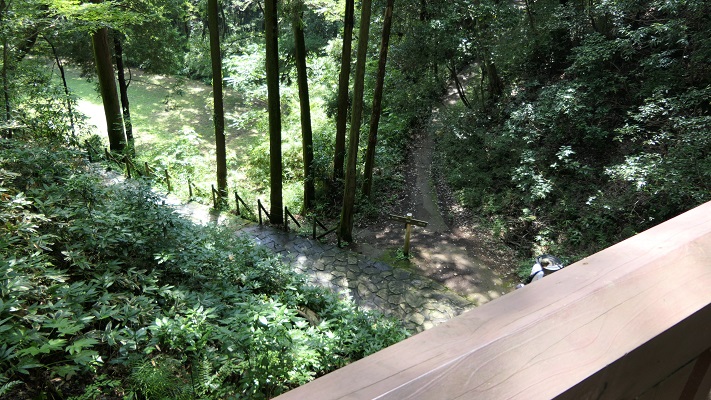
本丸へは内堀にかかっている橋を渡り、太鼓門を通って入ります。これらは皆復元されたもので、城の新しいシンボルになりました。本丸の内側は1717年の大火以降は空き地になっています。角にあった4つの櫓は復元されていませんが、石垣は残っています。北西角のものは一番大きく、櫓の以前には天守が立っていたのではないかと言われています。また、この櫓の石垣とその積み方は他のものよりは古風であり、とても荒々しく見えます。櫓台の上に階段で登り、城周りの景色を見ることができます。
You can enter the Main Enclosure through the Taiko-mon Gate after crossing the bridge over the Inner Moat. These structures have all been restored and have become new symbols of the castle. The inside of the Main Enclosure has remained empty since the great fire in 1717. The four turrets on the corners have not been restored, but their stone wall bases remain. The northwest one is the largest and it is said that the Main Tower might have stood on it before the turret. Its stone walls and the method for piling them are also older than other stone walls, so they look very rough. You can go up the stairs to the top of the base to see a view around the castle.
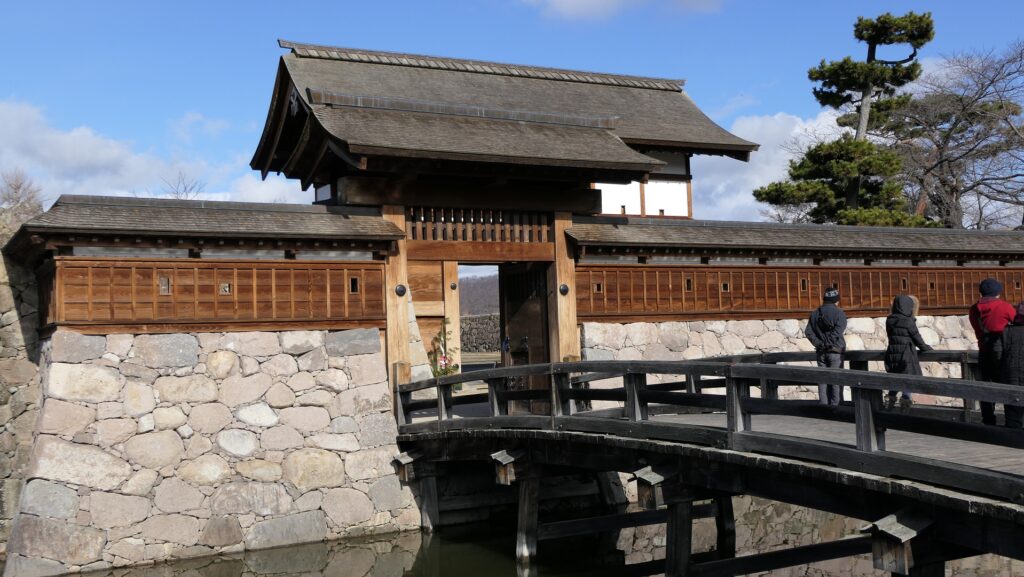
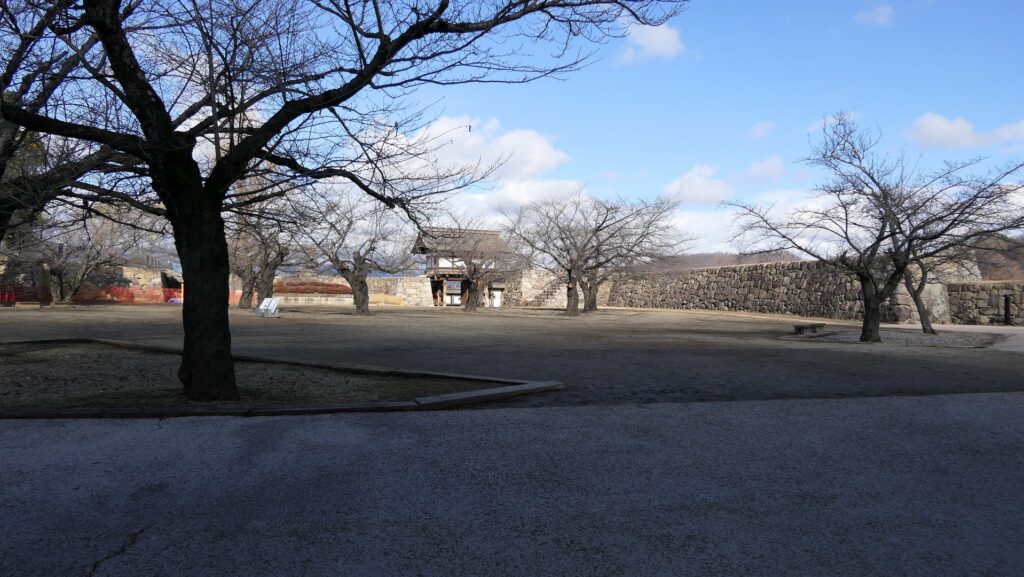
太鼓門~The Taiko-mon Gate
本丸の内部~The inside of the Main Enclosure
北西櫓石垣(内側)~The stone walls for the Northwest Turret (the inside)
北西櫓石垣(外側)~The stone walls for the Northwest Turret (the outside)

独特な構造~Unique Structures

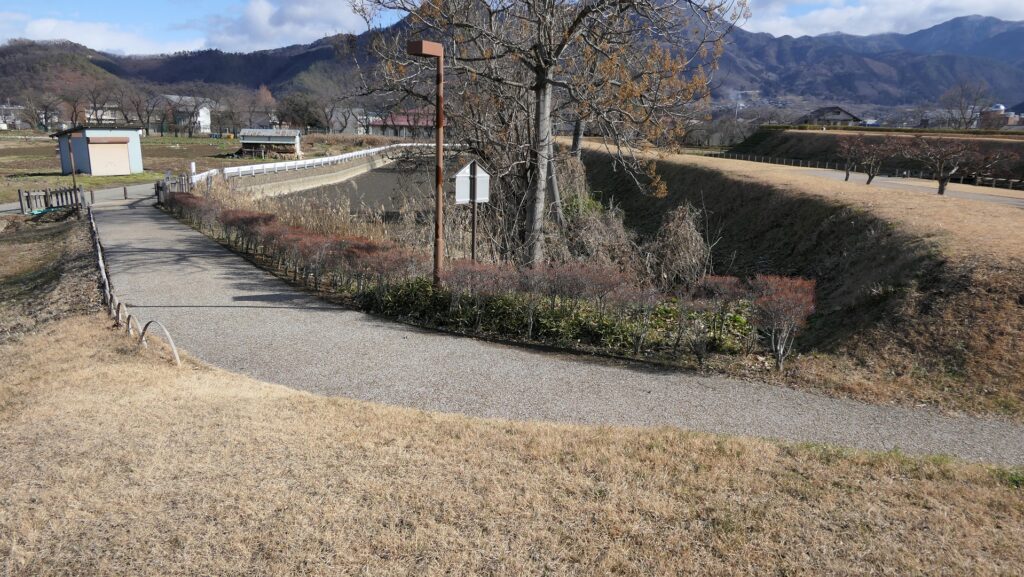
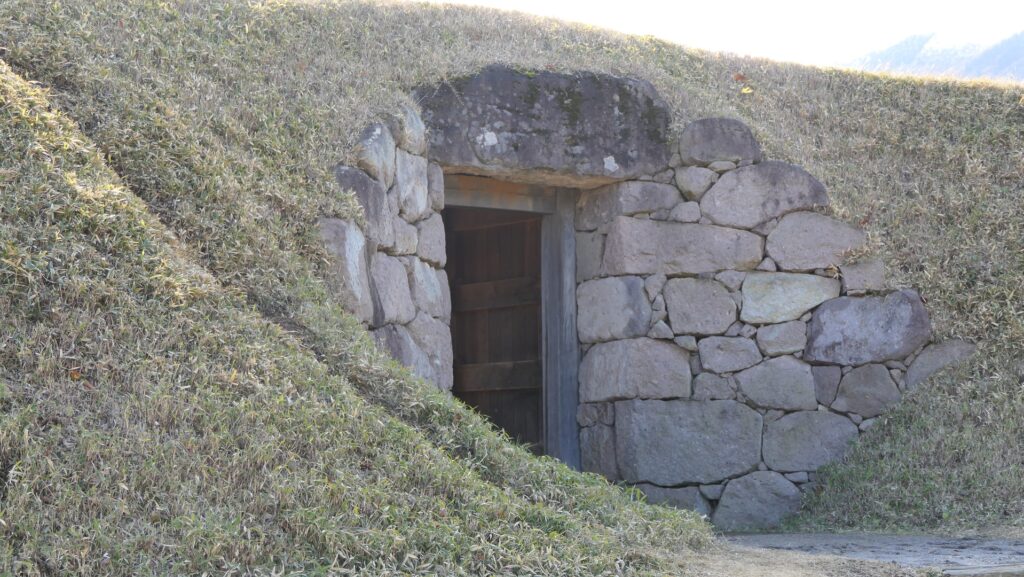
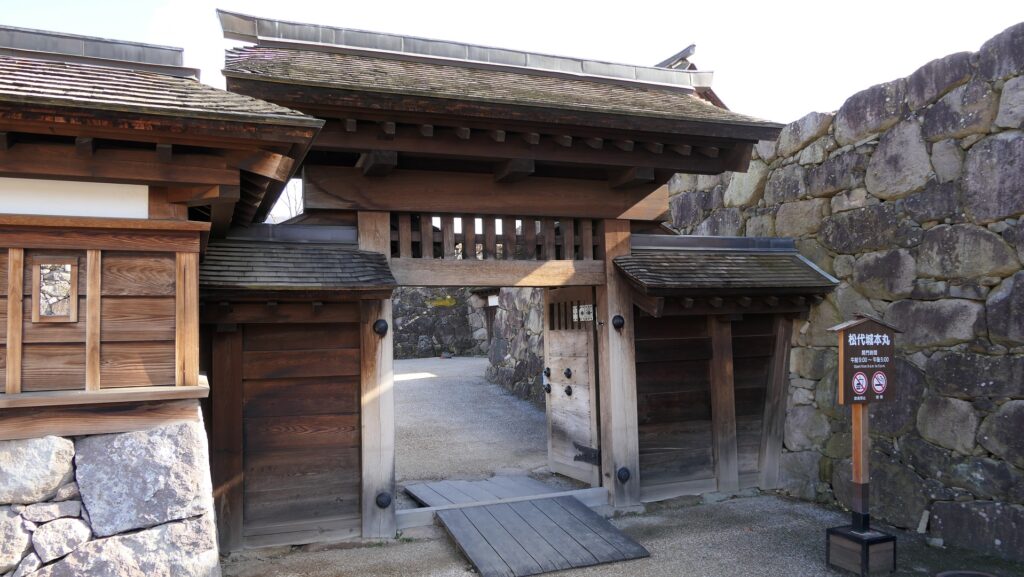
本丸の北側にはもう一つの復元された北不明門があります。その門をくぐっていくと、本丸を囲んでいる二の丸に戻っていきます。二の丸の北外側は、かつては千曲川でした。江戸時代に洪水を防ぐため、川の流路が替えられたのです。面白いものとしては、埋門という復元された小さな門が二の丸の土塁の所にあります。土塁に通した穴の中に組み込まれていますが、戦が始まったときには埋められるようになってました。
The northern side of the Main Enclosure has another restored gate called Kita-Akazu-mon. You can go through the gate back to the Second Enclosure surrounding the Main Enclosure. The outside of the Second Enclosure on the north was the Chikumagawa-River in the past. The route of the river was changed in the Edo Period to prevent floods. There is an interesting small, restored gate called Uzumi-mon in the earthen walls of the Second Enclosure. It was originally set in a hole through the walls which would have been filled when a battle happened.
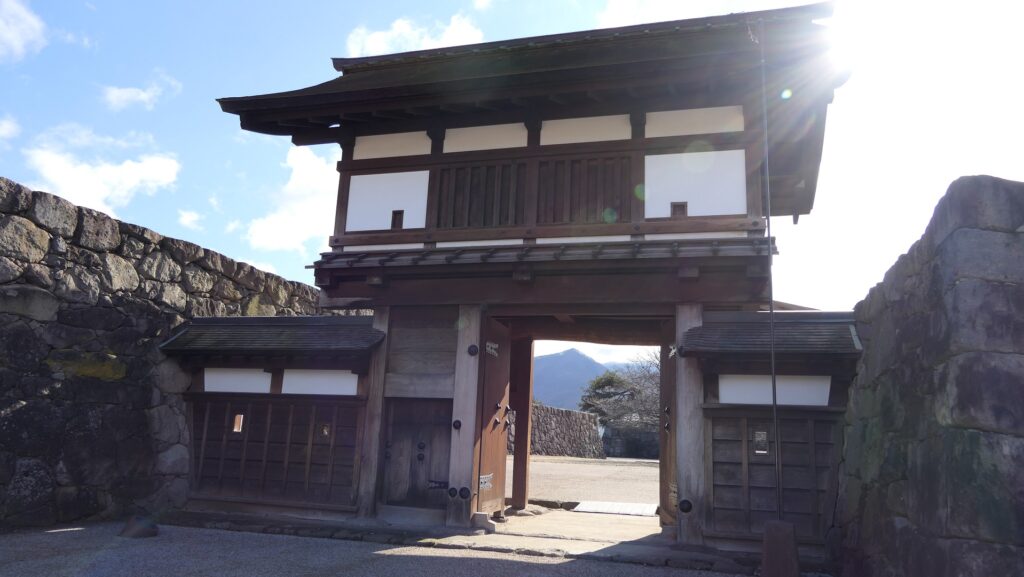
北不明門(櫓門部分)~The Kita-Akazu-mon Gate (the turret gate part)
北不明門(表門部分)~The Kita-Akazu-mon Gate (the front gate part)
二の丸の北外側~The outside of the Second Enclosure on the north
復元された埋門~The restored Uzumi-mon Gate

その後~Later History

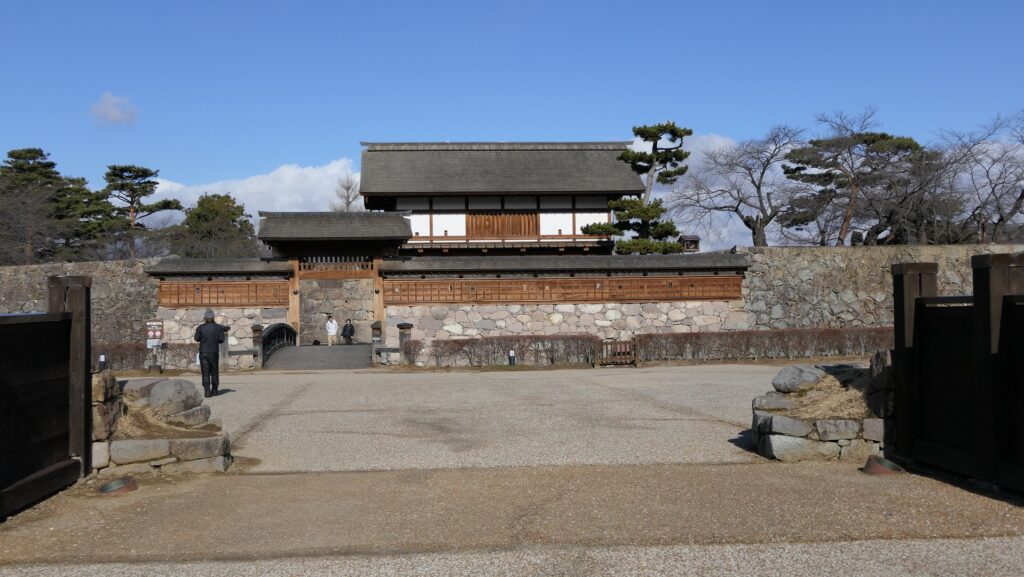
明治維新後、松代城は廃城となり、ほとんどの建物は売られるか撤去され、ほとんどの土地は元藩士に分け与えられ農地となりました。1904年、元藩主であり新御殿に住んでいた真田家は土地の一部を買い戻し、城跡を公園として公開しました。最終的には1951年にその土地を公共のものとして寄付しました。1981年には城跡は国の史跡に指定されましたが、当時は城の中心部に石垣だけが残っている状態でした。長野市は城跡を調査しいくつかの門、橋、土塁、水堀の復元を開始します。その復元は2004年に完了し、現在私たちは城が過去どのような姿であったか目にすることができるのです。
After the Meiji Restoration, Matsushiro Castle was abandoned, most of its buildings were sold or demolished, and most of its land was divided by former warriors to be turned into farm. In 1904, the former lord of the castle, the Sanada Clan, living in the New Main Hall, bought part of the land back to open the ruins of the castle as a park. The clan lastly donated the land to the officials in 1951. The ruins of the castle were designated as a National Historic Site in 1981, but only the stone walls remained at the center of the castle at that time. Nagano City investigated the ruins and started to restore some of gates, bridges, earthen walls and water moats. The restoration was completed in 2004 and we can now see what the castle looked like in the past.

復元中の城跡~The castle ruins being restored
復元後の城~The castle after the restoration

私の感想~My Impression

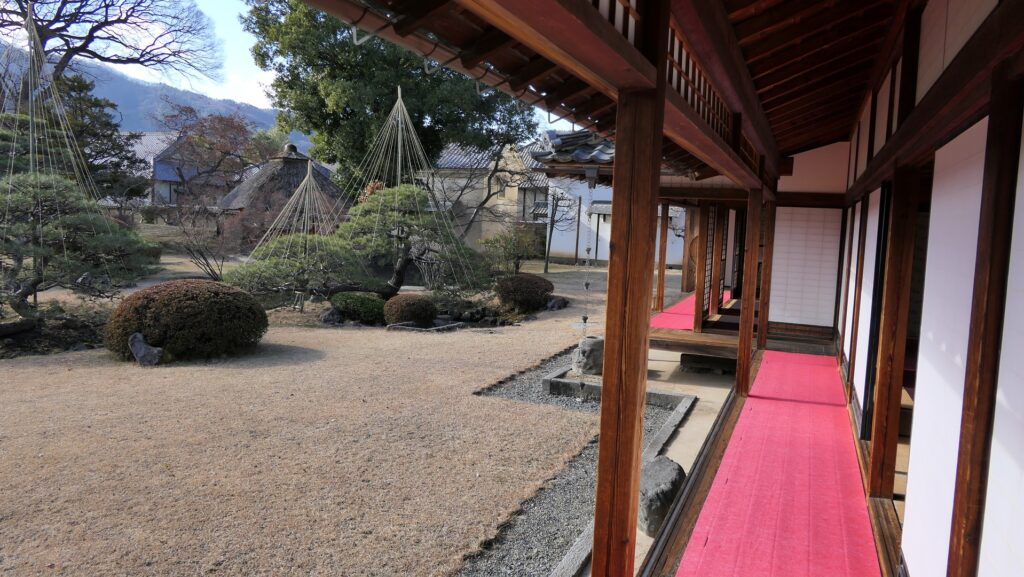
松代城には、異なる時代の異なる特徴が同居しており、独特の雰囲気があると思います。石垣と土塁の面白い組み合わせを見ることができるからです。加えて、城から250m南にある真田邸をご覧になることをお勧めします。真田邸は実は新御殿の現在の名前なのです。城に関連する数少ない現存建物の一つです。これもまた国の史跡となっています。もともと藩主の近親者のために作られたものなので、その内装はとても優雅です。
I think that Matsushiro Castle has a unique atmosphere because it has different perspectives from different periods. You can see the interesting combination of its stone walls and earthen walls. In addition, I recommend that you visit the Sanada Hall, about 250m south of the castle. In fact, Sanada Hall is the present name of the New Main Hall, one of the few remaining buildings that form part of the castle. It is also designated as a National Historic Site. Its interior is very elegant as it was first built for the lord’s relatives.

本丸の石垣~The stone walls of the Main Enclosure
二の丸の土塁~The earthen walls of the Second Enclosure
真田邸の内装~The interior of the Sanada Hall
真田邸の御居間~The living room of the Sanada Hall
真田邸の縁側と庭園~The veranda and garden of the Sanada Hall

ここに行くには~How to get There

上信越自動車道の長野ICから約5分のところです。城の周りにいくつか駐車場があります。
公共交通機関を使う場合は、長野駅からバスに乗り、松代駅バス停で降りてください。
It takes about 5 minutes from Nagano IC on Joshinetsu Expressway. There are parking lots around the castle.
If you want to go there by public transportation, take the bus from Nanano Station and get off at the Matsushiro-eki bus stop.

リンク、参考情報~Links and References

・松代城の環境整備、長野市(Nagano City Official Website)
・よみがえる日本の城14、学研(Japanese Book)
・「日本の城改訂版第7号」デアゴスティーニジャパン(Japanese Book)
150.古宮城~Furumiya Castle

この城は武田氏の最前線にありました。
This castle was on the frontlines of the Takeda clan.

立地と歴史~Location and History

信玄が作った橋頭堡~Shingen mede a bridgehold

古宮城は、現在の愛知県新城市にあたる作手高原の上にありました。この地域は、戦国時代には徳川氏が本拠としていた三河国に属していました。有力な戦国大名、武田信玄は甲斐国(現在の山梨県)から三河国を侵略しようとしました。彼はそのための橋頭堡を築いたと言われています。それが古宮城でした。
Furumiya Castle was located in Tsukurite hills in what is now Shinshiro city, Aichi Pref. This area belonged to Mikawa Province where the Tokugawa clan was based during the “Sengoku” or Warring States Period. Shingen Takeda, a strong warlord from Kai Province (now Yamanashi Pref) aimed to invade Mikawa Province. It is said that he built a bridgehead for it. That was Furumiya Castle.

城の位置と三河国の範囲~The location of the castle and the range of Mikawa Province

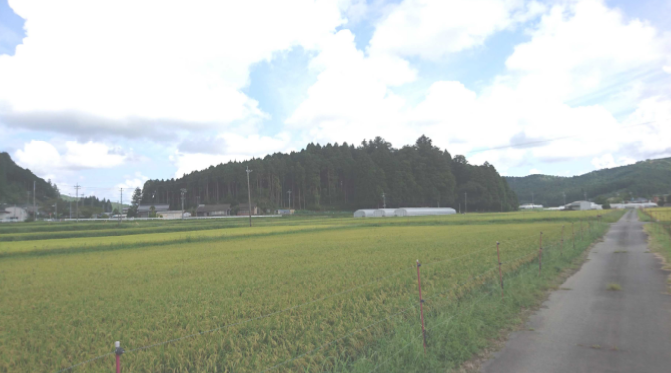
古宮城遠景~A distant view of Furumiya Castle(新城市Websiteより引用)

勝頼が完成させる~Katsuyori completed it

信玄の死後、彼の息子勝頼は1574年、再度試み、そのため古宮城を改良、完成させました。この城は比高が30mしかない宮山という小山にありましたが、地域を見渡せる場所です。一般に城は戦いのためだけでなく、居住、統治、そしてシンボルとしても使われました。古宮城は戦さに特化しており、500名くらいの兵が駐屯していたようです。この地域は武田と徳川との間で緊張状態にあり、兵士たちは常に臨戦態勢にありました。
After Shingen died, his son Katsuyori tried again in 1574, therefore he improved and completed the castle. The castle was on a small hill called Miya-yama which is just 30m relative height, but it overlooked the entire area. Castles were usually used not only for battle, but also for residence, governance, and as a ​symbol. Furumiya Castle was specialized for battle, with an estimated garrison of 500 soldiers. This area was under tense conflict between the Takeda and Tokugawa. The soldiers seemed under arms all the time.

城周辺の航空写真~The aerial photo of around the castle

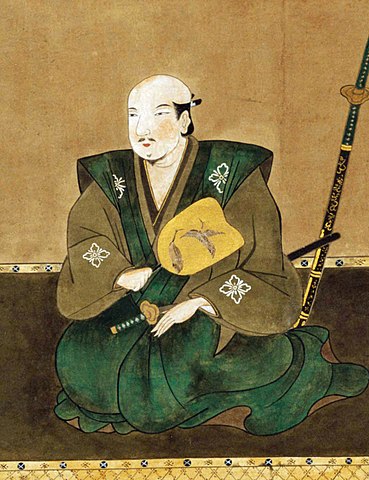
武田勝頼肖像画、高野山持明院蔵、16世紀後半~The Portrait of Katsuyori Takeda, ownd by Koyasan Jimyoin, in the late 16th century(licensed under Public Domain via Wikimedia Commons)

勝頼の敗戦により終焉~Katsuyori’s defeat ended it

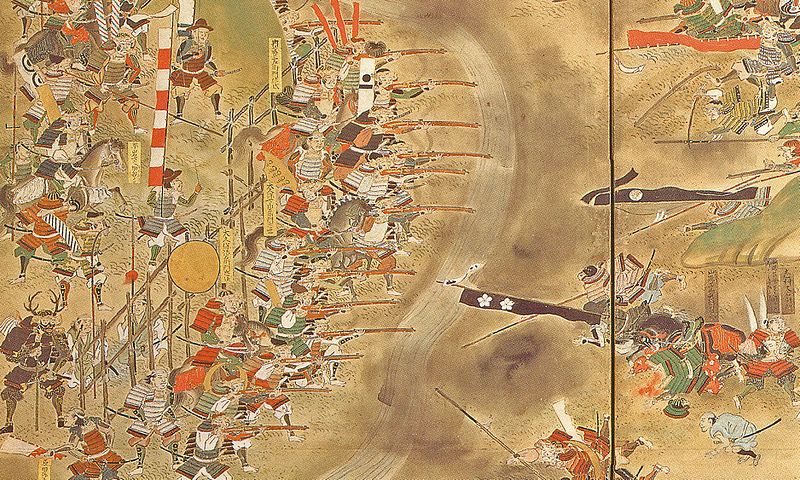
勝頼は、三河国の東、遠江国にあった高天神城を手に入れ、1575年5月に古宮城と同じ国あった長篠城を攻撃しました。彼は、徳川、そして同盟関係にあった織田氏に決戦を挑み、倒そうとしました。ところが、逆に完全に返り討ちにあってしまいます。勝頼は何とか本拠に逃げ帰ることができましたが、多くの家臣や兵士を失いました。彼は二度と三河国に戻ってくることはありませんでした。古宮城は、長篠の戦いの後、放棄されたか、徳川に占拠されたようです。
Katsuyori captured Takatenjin Castle in Totoumi Province the east of Mikawa Province, and attacked Nagashino Castle in the same province as Furumiya Castle in May 1575. He aimed to invite Tokugawa and their allies, the Oda clan, to a showdown, and defeat them. However, he was completely countered by them instead. Katsuyori was somehow able to escape back to his home, while a lot of retainers and soldiers were lost. He would never return to Mikawa Province, so Furumiya Castle seemed to be abandoned or taken by the Tokugawa after the Battle of Nagashino.

長篠合戦図屏風部分、徳川美術館蔵~Part of “Battle of Nagashino”folding screens, owned by Tokugawa Art Museum(licensed under Public Domain via Wikimedia Commons)

特徴~Features

城跡の概要~The overview of the ruins

城跡の航空写真にコメントとラインを付加~The aerial photo of the ruins adding my comments and lines(出典:国土地理院)

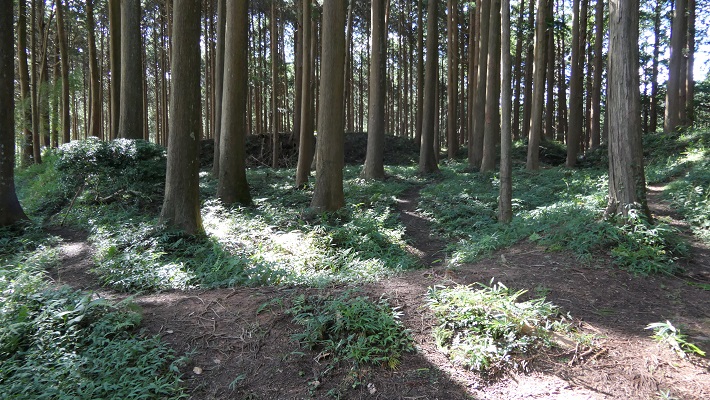
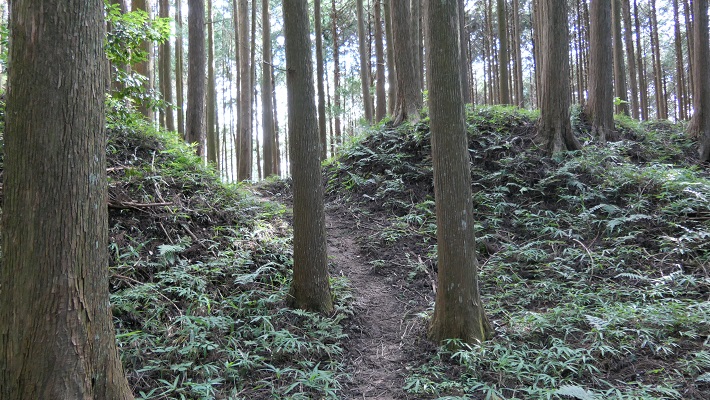
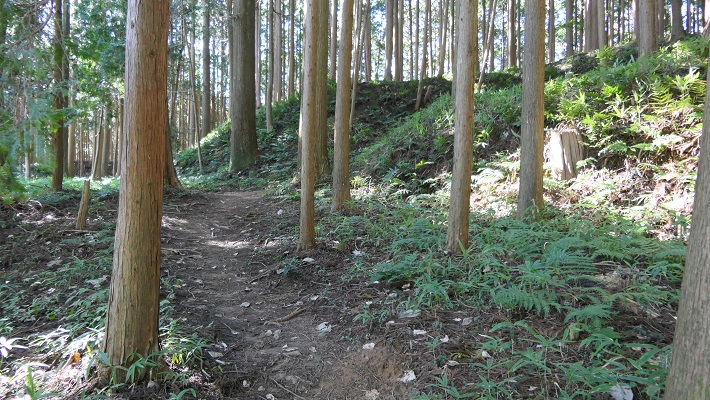
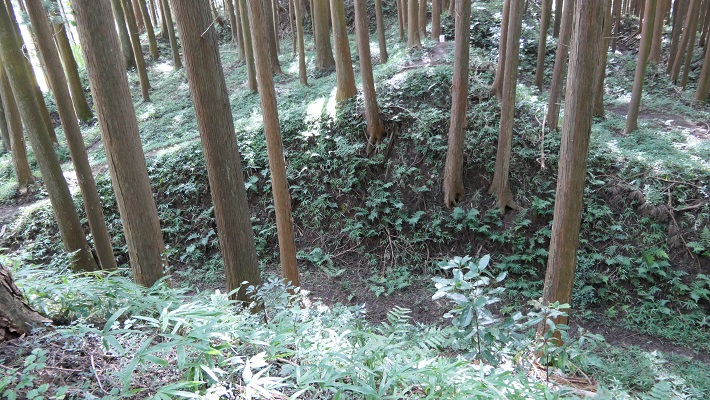
現在、古宮城跡には現存建物はなく、木々に覆われていますが、土造りの基礎が武田氏の築城法をよく残していると言われています。この城は、深い空堀により東西の部分に分かれています。
Now, the ruins of Furumiya Castle have no standing buildings and is covered with trees, but it is said that its foundation made of earth shows the Takeda clan’s method of building castles. The castle was divided into an eastern and western part by a deep dry moat.

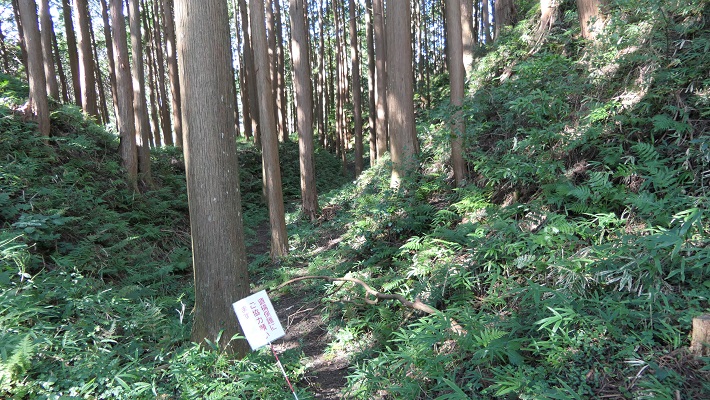
深い空堀~The deep dry moat

主要な曲輪~Primary enclosures

東部分には、恐らくは司令部があった「主郭」がありました。その入り口は「桝形」と呼ばれ、厳重な防御のため四角く区切られていました。西部分には「二の曲輪」があり、主郭から突き出ていて、空堀を渡るただ一本の土橋によりつながっていました。この構造は、武田独特の防御システムである「馬出し」に似ています。
The eastern part had the Main Enclosure or “Shukaku” where probably the command post was. Its entrance was made in square shaped for strict defense called “Masugata”. The western part had the Second Enclosure or “Nino-Kuruwa” which sticks out from Shukaku and is just connected by one earthen bridge across the dry moat. This structure is similar to Takeda’s unique defense system called “Umadashi”.

主郭の入口「桝形」~The entrance of the Main Enclosure called “Masugata”
二の曲輪~The Second Enclosure
主郭と二の曲輪を結ぶ土橋~The earthen bridge connecting the Main and Second Enclosures

厳重な防御~Its strict defence system

この部分は西側にある道路に向かって大手口が開いていたようです。訪問者でも敵でも二の曲輪に達するためには曲がりくねった道を登っていく必要がありました。特に、二の曲輪の北西側には空堀が何重にも取り巻いていました。武田が、徳川がこの方角から攻めてくると思ったからかもしれません。
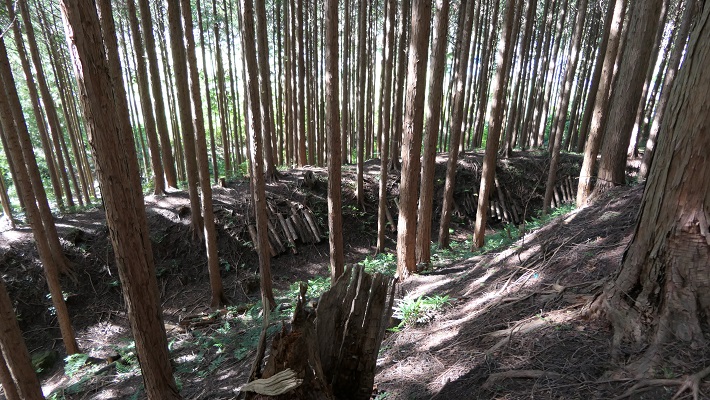
The part seemed to open the main entrance to a road in the western direction. Visitors or enemies would have to climb up winding routes to reach Nino-Kuruwa. In particular, there were multiple dry moats in the north-west of the enclosure, as Takeda might have thought that Tokugawa would attack this castle from the direction.

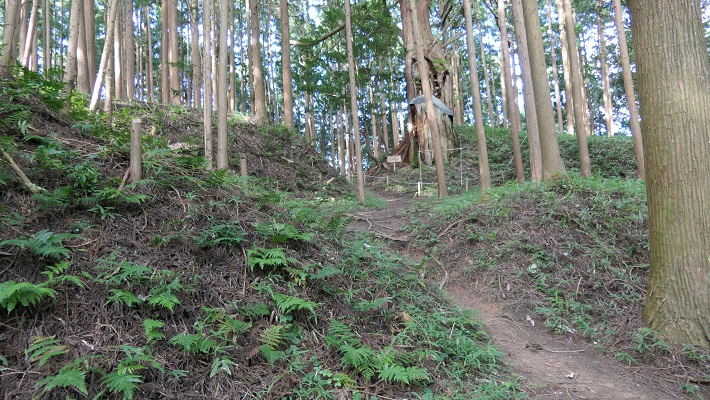
二の曲輪の土塁~The earthen walls of the Second Enclosure
多重空堀の一部~One of the multiple dry moats

城跡の楽しみ方~How to enjoy the ruins

現在の城跡入り口は神社の脇にあり、元あった場所とは異なります。この入り口を通って、主郭に向けて直接登って行くことができます。城のレイアウトは、これまで述べた通り残っています。城を理解するポイントを押さえておけば、城は昔はどんな風だったのか想像する楽しみがあります。
The present entrance the ruins is set beside a shrine at a different place from the original. You can go straight up to Shukaku through the entrance. The layout of the castle remains as mentioned above. If it is possible to keep the key points of the castle in mind, you can also enjoy imagining how the castle was in the past.

現在の城跡入り口~The present entrance of the ruins
主郭は入口のすぐ近くです~The Main Enclosure is close to the entrance

その後~Later History

古宮城がは廃城となってからは、1617年には山麓に古宮白鳥神社が設立されました。作手高原は過去においては大方湿地帯でした。そのため白鳥がよく見られたそうです。この地期の人たちは白鳥を愛し、それに関わる神社を設立したのです。城跡は、この神社のおかげで長い間維持されてきたようです。
After Furumiya Castle was abandoned, Furumiya-Shiratori Shrine was established at the foot of the hill in 1617. Tsukurite hills was mainly waterlogged in the past, so cranes could be seen at that time. People in the area loved them and established many shrines related with them (Shiratori means crane). The ruins of the castle seemed to have been kept by these shrines for a long time.

古宮白鳥神社~Furumiya-Shiratori Shrine

私の感想~My Impression

古宮城跡には、現存建物も、石垣も、案内所さえもありません。歴史家は、古宮城には元々小屋、簡単な櫓、木柵くらいしかなかっただろうと推測しています。更には外側から見れば城跡は木がこんもりした小山にしか見えないかもしれません。でも一旦中に入って城の痕跡に気づけば、武士や作業者たちががこの城を築くのにどんなに大変だったか見て取れるでしょう。城を見ることの面白さの一つは、限られた資材や資源を基に、城がいかに効率的に、しかし強力に作られたか理解することだと思うのです。
Frumiya Castle Ruins don’t have any standing buildings, stone walls, or even a guide house. Historians speculate that even the original Furumiya Castle had just huts, simple turrets, and wooden fences. In addition, you may think the ruins look like a hill with forests from the outside. But once you have realized the traces of the castle inside, you can see how hard the warriors and workers made efforts to build the castle. I think that one of the most interesting things to see castles is to understand how they are built efficiently but strongly using limited materials and resources.

主郭から二の曲輪を見下ろす~Looking down the Second Enclosure from the Main Enclosure

ここに行くには~How to get There

ここに行くには車がおすすめです。新東名高速道路の新城ICから国道151号と301号を通って約40分程です。神社の前に小さいですが、駐車スペースがあります。
公共交通機関を利用する場合には、新城駅近くの新城栄町バス停で新城市バス(作手線)に乗り、鴨ヶ谷口バス停で降りてください。バス停から徒歩約10分で現地に着きます。
東京、名古屋または大阪から新城駅まで:東海道新幹線で豊橋駅まで行き、JR飯田線に乗り換えてください。
I recommend using a car to get there. It takes about 40 minutes from the Shinshiro IC on Shin-Tomei Expressway through Route 151 and 301. There is a small parking lot in front of the shrine.
If you want to use public transportation, take the Shinshiro city bus (Tsukurite line) at the Shinshiro-Sakaemachi bus stop near Shinshiro station, and get off at the Kamogayaguchi bus stop. It takes about a 10-minutes walk from the bus stop to get there.
From Tokyo, Nagoya or Osaka to Shinshiro st.: Take the Tokaido Shinkansen super express to Toyohashi Station, and transfer for JR Iida line.

リンク、参考情報~~Links and References

・古宮城跡、新城市~Komiya ruin of a castle, Shinshiro City
・「歴史群像143号、戦国の城/三河古宮城」学研(Japanese Magazine)
・「趣味どきっ/お城へ行こう! 第二の陣 武田氏の城造り」NHK、2016年(Japanese TV Program)

123.滝山城~Takiyama Castle

城跡は自然とともに残っています。
The castle ruins remain with nature.

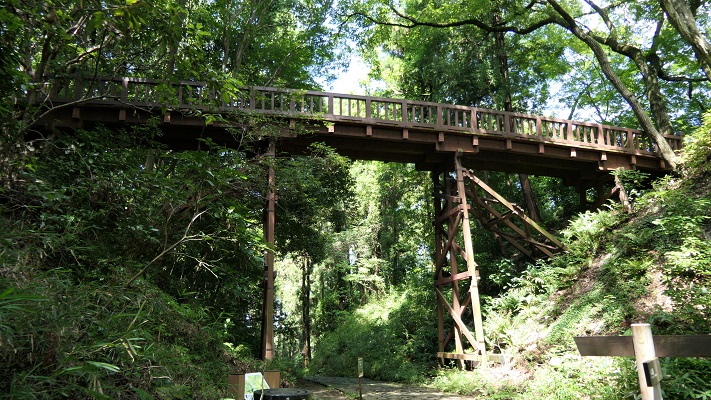
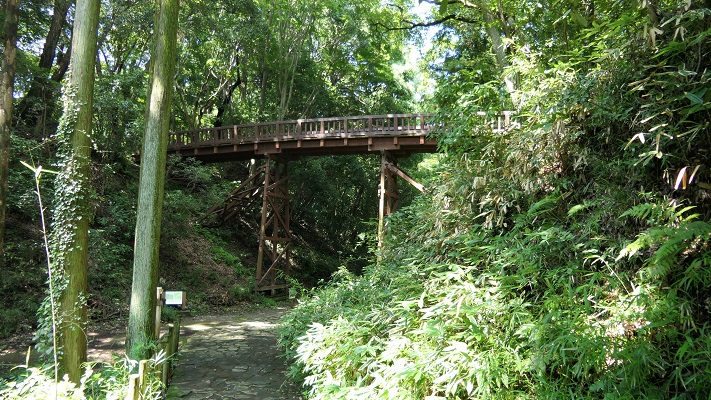
本丸と中の丸をつなぐ曳橋~The movable bridge between Honmaru and Nakanomaru

立地と歴史~Location and History

滝山城は現在の八王子市の多摩川南岸の河岸段丘上にありました。この城の起源は、戦国時代のいずれかの時点で大石氏によると言われていますが、1560年の上杉謙信の関東侵攻をきっかけとして、北条氏照が拡張、完成させました。この城の使命は、小田原城の防御線になることと、小田原と北関東とのルートを確保することでした。
Takiyama Castle was located on the southern bank terrace of Tamagawa River in what is now Hachioji City, Tokyo. The origin of the castle is said to be by the Oishi clan sometime in “Sengoku” or the Warring States Period, but Ujiteru Hojo improved and completed the castle, inspired by the Kenshin Uesugi’s Kanto invasion in 1560. The mission of the castle was to be the defense line for Odawara Castle and to hold the route between Odawara and the northern Kanto region.

滝山城の位置、赤い線は1560年の上杉謙信の侵攻概略ルート、青い線は1569年の武田信玄のもの~The location of Takiyama Castle, the red line shows the rough attack route of Kenshin Uesugi in 1560, the blue line is that of Shingen Takeda in 1569

この城の北側は多摩川に沿って急な崖となっていて、攻めるには困難でした。この城の3つの主な通路は、川の反対側にある滝山街道につながっていました。これらの通路は全て二の丸に集まっていました。二の丸は防衛の中心拠点であり、桝形という方形の入り口と、馬出と呼ばれる障壁となる関門が通路に向かって設置されていました。
The northern side of the castle was a steep cliff along Tamagawa River which is difficult to attack. The three main routes to the castle were connected from the Takiyama Road, the opposite side of the river. The routes all gathered the Ninomaru enclosure. The enclosure was the defensive center which had square entrances called Masugata and gateway barriers called Umadashi heading towards these routes.

城周辺の起伏地図~The relief map around the castle

二の丸の後ろには、中の丸と本丸がありました。双方が曳橋という可動橋によってつながっており、緊急時には容易に取り外しが可能でした。本丸は、中心でかつ最後の曲輪となりますが、比較的小さいように思えます。歴史家は、そこが土豪が作ったこの城の最初の場所だったのだろうと推測しています。
The back of Ninomaru are Nakanomaru and Honmaru enclosures. Both were tied by a movable bridge called Hikihashi that could be removed easily for in emergency. Honmaru was the main and last enclosure which looked relatively small. Some historians speculate it could be the origin of the castle for a local clan.

城周辺の地図~The map around the castle

1569年、甲斐(現在の山梨県)から武田信玄が北条の領地に侵入し、この城を攻撃しました。信玄は二の丸に迫りましたが、諦めて小田原の方に向かったと言われています。氏照は滝山城を守り切ったのです。
In 1569, Shingen Takeda from Kai Province (now Yamanashi Pref.) invaded Hojo’s territory and attacked the castle. It is said that Shingen approached Ninomaru, but gave up and transferred to Odawara. Ujiteru was successful in keeping Takiyama Castle.

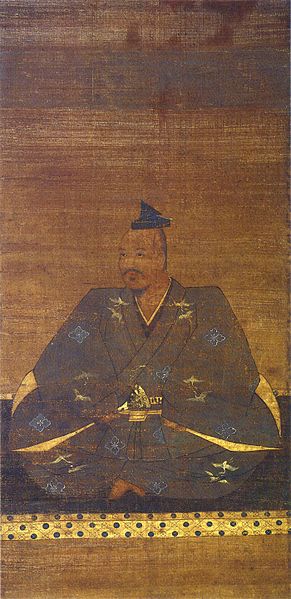
武田信玄肖像画、高野山持明院蔵、16世紀~The portrait of Shingen Takeda, owned by Jimyo-in, in the 16th century(licensed under Public Domain via Wikimedia Commons)

1584年前後、氏照は城下町ごと八王子城の方に移っていきました。この理由は歴史家によって分かれています。一つは、武田との戦いの結果から北条がより強い城を必要としたというものです。もう一つは、1578年に謙信が死に、1582年に武田が滅亡したので滝山城はもう必要なくなったというものです。
Around 1584, Ujiteru moved to Hachioji Castle with the castle town. Historians’ opinion about the reason remain divided. One is that Hojo needed a stronger castle than Takiyama because of the result of battle with Takeda. The other is that there would be no need for Takiyama Castle after Kenshin died in 1578, and Takeda was destructed in 1582.

二の丸周辺~Around Ninomaru

特徴~Features

城周辺の航空写真~The aerial photo of around the castle

現在、城跡は都立滝山公園という自然公園の一部になっています。木々、植物、そして花に囲まれたハイキングコースがあります。車かバスを使った場合には、三の丸と小宮曲輪に挟まれた通路から入っていきます。
Now, the ruins of the castle are inside of a nature park called Metropolitan Takiyama Park. There are hiking trails among trees, plants and flowers. When using cars or buses, you will enter one of the routes sandwiched Sannnomaru and Komiya enclosures.

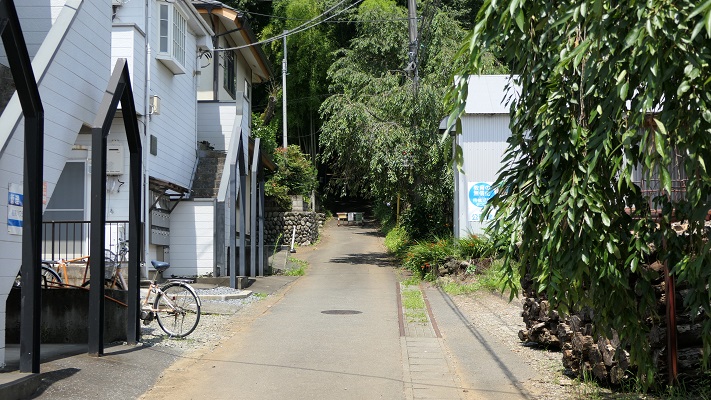
駐車場かバス停からの通路~The route from the parking lot or the bus stop

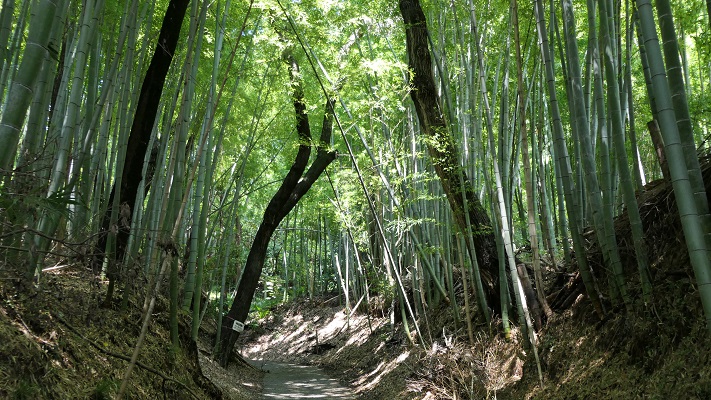
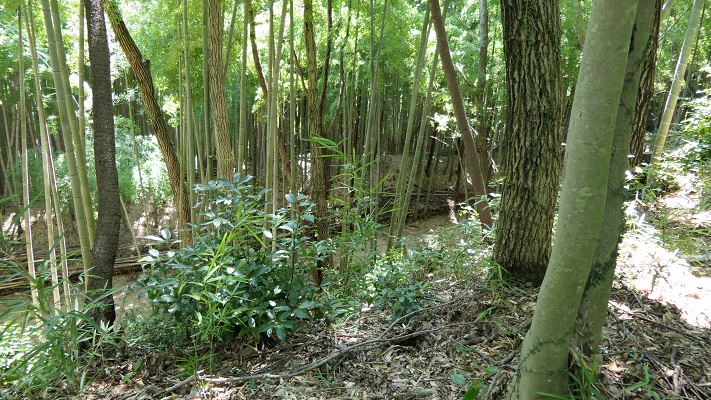
このルートは狭く、美しい竹林の合間をまっすぐ登っていきます。
The route is narrow and straight up among a beautiful bamboo forest.

竹林に囲まれた通路~The route surrounded by the bamboo forest

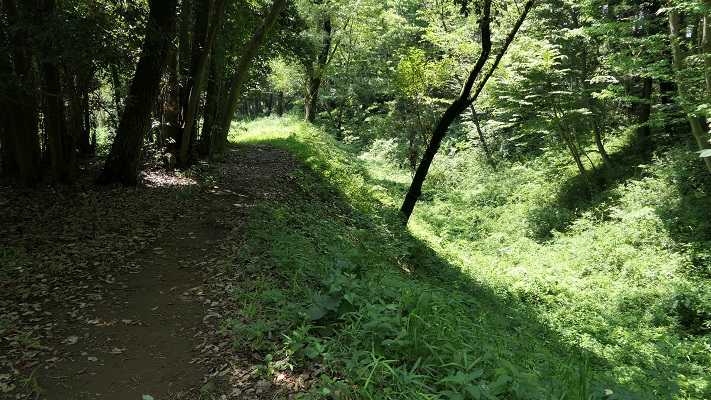
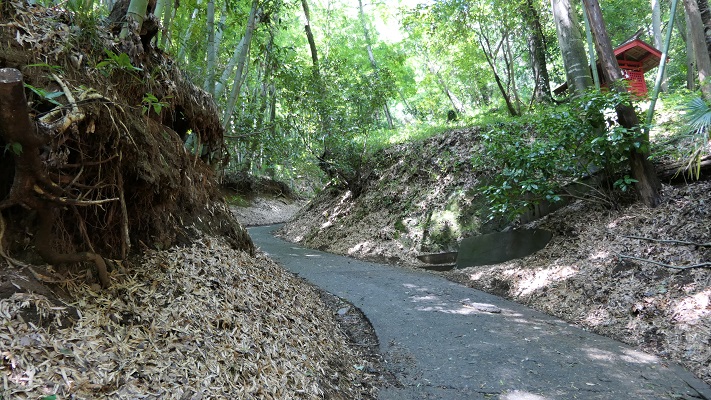
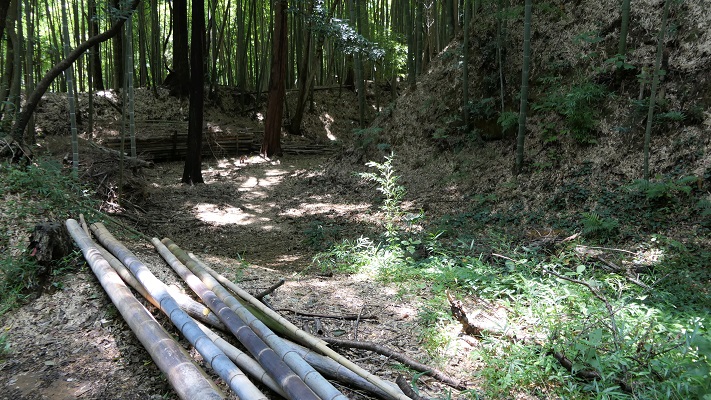
城跡の入り口は折れ曲がっていて、かつては城全体を囲んでいた長い空堀が目に入ってきます。
The entrance of ruins is zigzagged and you can see a long dry moat that surrounded the whole castle area in the past.

城跡の入り口~The entrance of the castle ruins
城跡を囲む空堀~The dry moat surrounding the castle ruins

敵は、周りの曲輪による両側からの反撃を受けることになります。1569年の武田の攻撃によりこの辺りは占領されてしまったと言われています。
Enemies had to break counterattacks from both sides of the enclosures around. It is said that Takeda’s attack in 1569 was able to capture this area.

三の丸を見上げる~Looking up Sannomaru enclosure

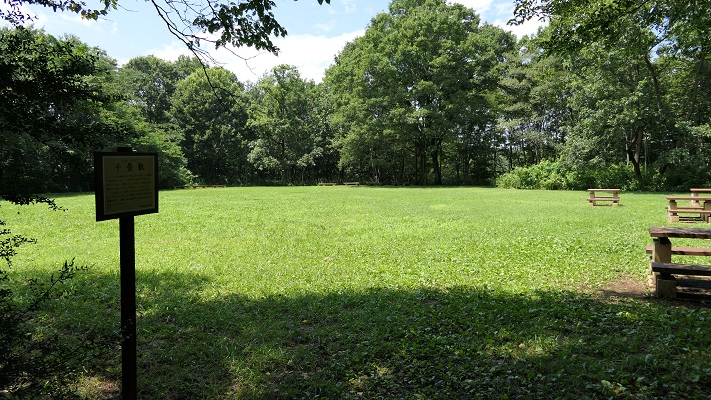
道は左手に深い谷を見ながら進み、千畳敷と呼ばれる広場を過ぎ、防御の中心拠点二の丸に至ります。ここには馬出しと桝形の遺構があります。
The route goes on next to a deep valley on your left. Then, passing a wide area called Senjojiki, you will reach the defense center Ninomaru. There are the ruins of Umadashi and Masugata.

左手は深い谷です~The deep valley on the left
千畳敷~The area called Senjojiki
馬出し跡、正面~The ruins of Umadashi, the front side
馬出し跡、背面~The ruins of Umadashi, the back side
二の丸の中心地~The center of Ninomaru

その後、中の丸と本丸の間にかかった曳橋が見えてきます。
After that, you can see the restored movable bridge between Nakanomaru and Honmaru.

本丸と中の丸をつなぐ曳橋~The movable bridge between Honmaru and Nakanomaru
曳橋~The movable bridge
中の丸から見た橋~The bridge from Nakanomaru

中の丸からは多摩川周辺の風景を眺めることができます。
You can also see a view of around Tamagawa River from Nakanomaru.

中の丸~Nakanomaru enclosure
中の丸からの眺め~A view from Nakanomaru

最近の発掘により、本丸には桝形があり、その床には自然石が敷き詰めてあり、排水の仕組みもあったとのことです。
The recent excavation found that Honmaru had a Masugata gate on the floor covered with natural river stones, and a draining system.

本丸の桝形跡~The ruins of Honmaru Masugata gate
本丸の内部~The inside of Honmaru

その後~Later History

この城は、戦国時代のうちに放棄されました。そのため、当時の城の構造がよい状態で自然とともに残っているのです。城跡は、1951年に国の史跡にも指定されました。
The castle was abandoned during the Warring States Period. That’s why the structure of a castle at that time remains well with nature. The ruins were designated as a National Historic Site in 1951 as well.

曳橋からの風景~A view from the movable bridge

私の感想~My Impression

城跡となっている場所は、主に自然公園として使われています。小道を歩き回っている観光客の人たちがたくさんいます。歴史ファンというよりは自然愛好家という感じです。これも史跡を活用する一つのやり方と思います。また、この城が自然の地形をうまく活用して作られたとも言えるでしょう。
The site of the castle ruins is mainly used as a natural park. You can see many tourists walking around the trails. They look like nature lovers rather than history fans. I think this is one of the ways to use historical sites. It also proves the castle was built using natural terrain very well.

小宮曲輪から通路を見下ろす~Looking down the route from Komiya enclosure

ここに行くには~How to get There

車で行く場合:中央自動車道の八王子ICから約15分かかります。国道411号(滝山街道)沿いに観光駐車場があります。
JR八王子駅または京王八王子駅からバスで行く場合:戸吹、秋川駅、または戸吹スポーツ公園入口行きバスに乗り、滝山城址下バス停で降りてください。
If you want to go there by car: It takes about 15 minutes from the Hachioji IC on Chuo Expressway. There is the parking lot for tourists along Route 411 (Takiyama Road).
If you want to go there by bus from JR Hachioji station or Keio-Hachioji station: Take the bus for Tobuki, Akikawa-eki or Tobuki-sports-koen-iriguchi and take off at the Takiyama-joshi-shita bus stop.

リンク、参考情報~Links and References

・都立滝山公園・滝山城跡、八王子市~Hachioji City
・よみがえる滝山城(Only Japanese)
・「関東の名城を歩く 南関東編/峰岸純夫、齋藤慎一編」吉川弘文館(Japanese Book)
・「歴史群像37号、戦国の堅城・滝山城」学研(Japanese Magazine)
・「越山、上杉謙信侵攻と関東の城」埼玉県立嵐山史跡の博物館(Japanese illustrated book)

error: Content is protected !!