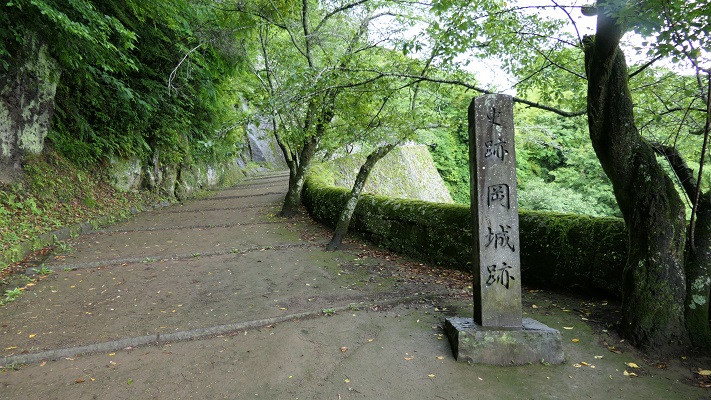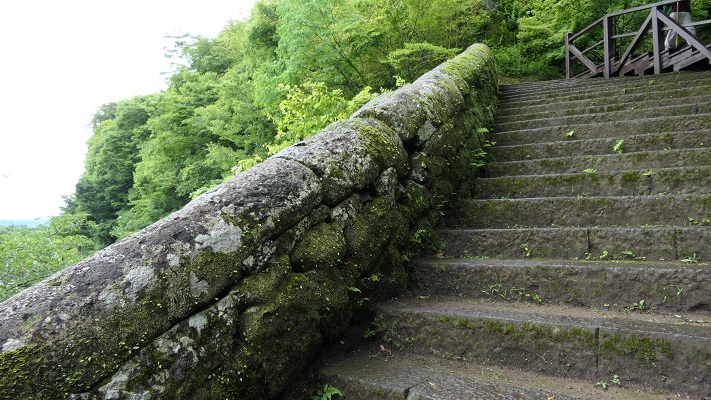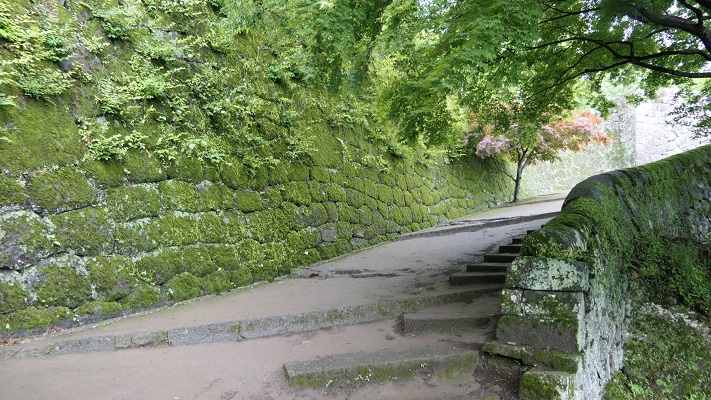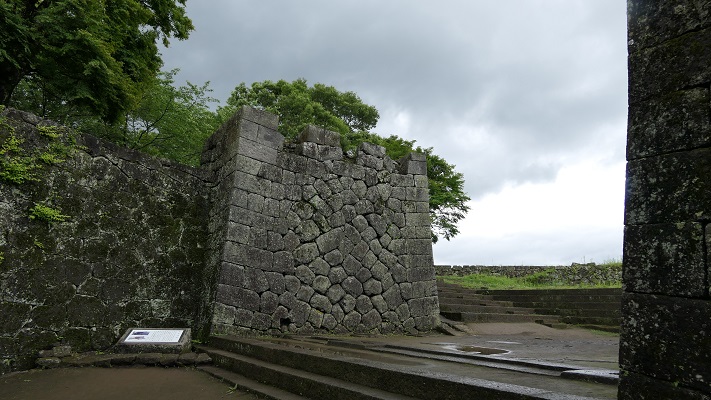
117.岩櫃城(Iwabitsu Castle)

岩櫃城は、防りが固そうに見えますが、実は攻撃のための城なのです。
Iwabitsu Castle looks like defensive, but actually aggressive.

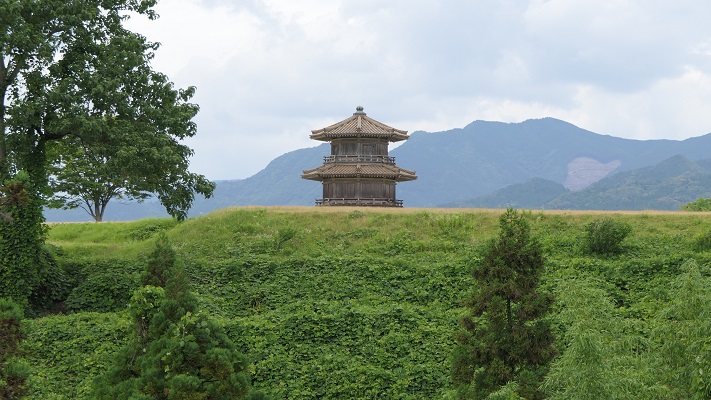
岩櫃山と潜龍院跡(Mt. Iwabitsu and the ruins of Senryuin)

Location and History

過去において信濃国(現在の長野県)と上野国(群馬県)の間を結ぶ街道がいくつかありました。最も有名なのは中山道ですが、その他の一つとして信州街道があり、信濃の上田と上野の沼田をつないでいました(現在の国道145号線に相当します)。戦国時代の後半に武田氏配下であった真田氏は、この信州街道に沿って信濃から上野に向けて攻撃を仕掛けました。岩櫃城はこの途上にあり、真田氏が改修を行い、上野攻略のための重要拠点としました。
There were several roads between Shinano Proivnce (now called Nagano Prefecture) and Kozuke Province (Gunma Prefecture) in the past. The most famous one was Nakasendo, and one of the others was Shinshu-Kaido connecting Ueda in Shinano and Numata in Koduke (equivalent to current the National Route 145). In the late Warring States Period, the Sanada clan under the Takeda clan attacked from Shinano to Koduke along this Shinshu-Kaido. Iwabitsu Castle was on the way, renovated by the Sanada clan to be an important site for the capture of Koduke.


国道145号線の周辺地図と岩櫃城の位置(The map around National Route 145 and the location of Iwabitsu Castle)

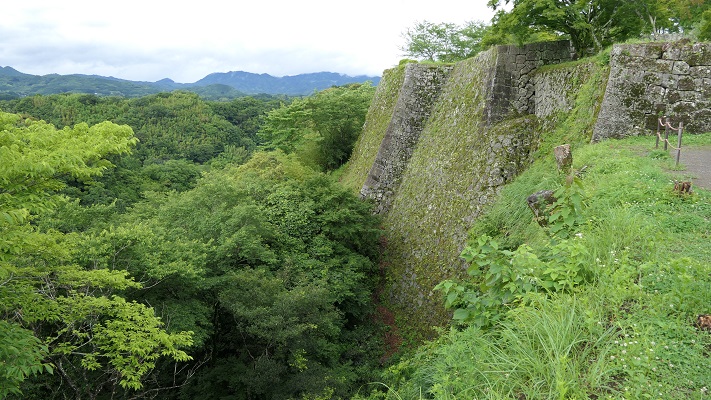
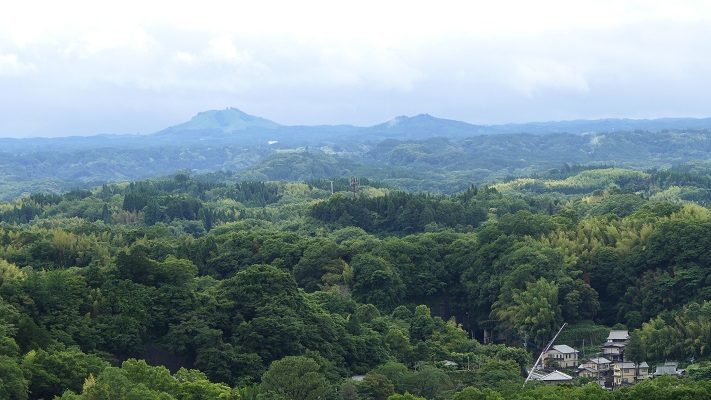
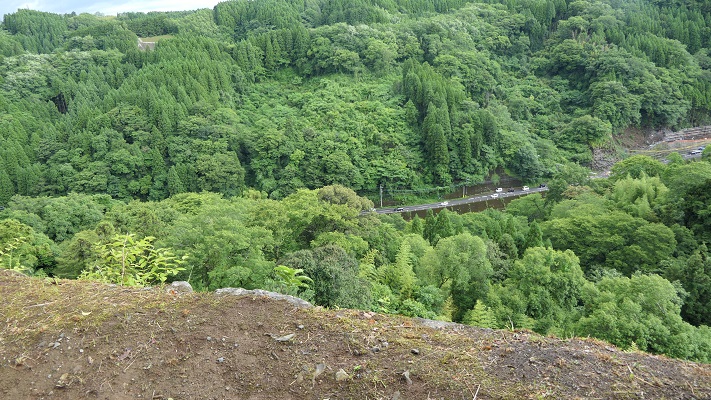
この城は岩櫃山にありましたが、山頂ではありませんでした。そこは岩山で危険であったからです(現在でも登頂には登山の装備が必要です)。それで城の中心は、山の中腹にありました。つまり、城の背後は自然の要害である岩山により守られていたということです。また、もう一つの障壁として吾妻川にも守られていました。
The castle was located on Mt.Iwabitsu, but not on the top, because the spot is too rocky and dangerous to stay (Even now, climbing to the top requires a modern climbing equipment). So the center of the castle was halfway up the mountain. This means that the behind the castle was protected by rock as a natural hazard. The castle also had another hazard, the Agatsuma River.

現地案内所にある城のミニチュアモデル(The miniature model of the castle at the information center at the site)

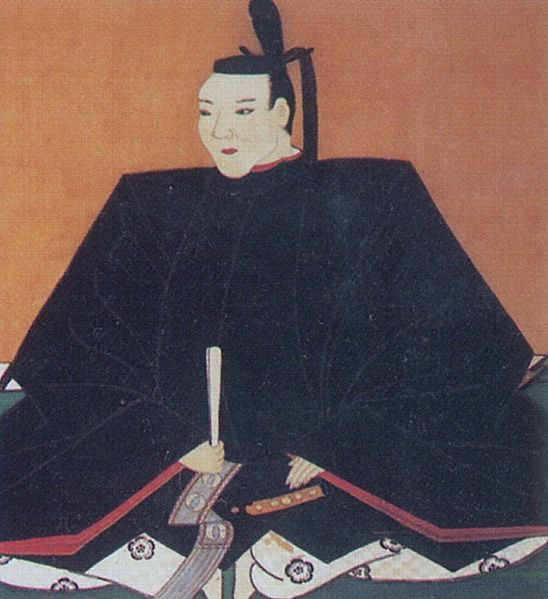
この城は最初は南北朝時代に土豪により作られたと言われています。その後真田幸隆が大変な苦労をしてこの城を手に入れました。そして彼の息子である真田昌幸が改修したのです。
It is said the castle was first built in the North-South Court Period by a local clan. After that, Yukitaka Sanada got it with great difficulty. His son, Masayuki Sanada renovated it.

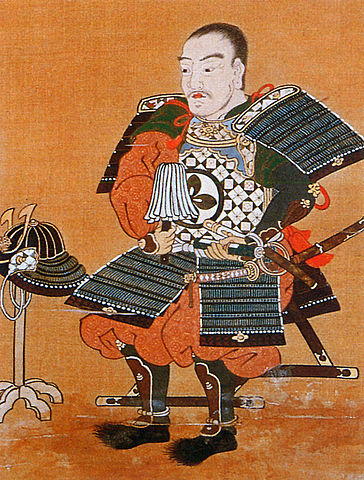
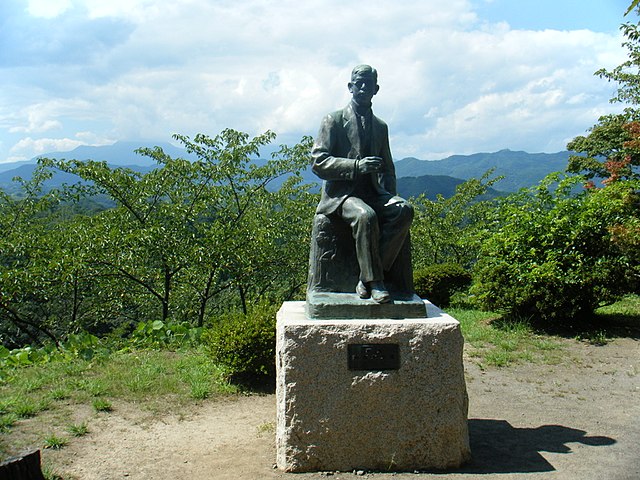
真田昌幸像、個人蔵(The portlait of Masayuki Sanada, privately owned)licensed under Public Domain, via Wikimedia Commons

1582年3月、真田の主君である武田勝頼は織田信長の侵攻により滅亡の危機を迎えていました。昌幸は、勝頼をこの城に迎え入れ、支えていくことを考えました。彼はまた、勝頼のために山の麓に館を作りました(現在の潜龍院跡)。しかしながら、勝頼がすぐに死んでしまったため、計画は実現しませんでした。
Sanada’s master, Katsuyori Takeda faced the crisis of destruction due to Nobunaga Oda’s invasion in March 1582. Masayuki thought about accommodating and supporting the master in this castle. He built the hall for Katsuyori at the foot of the mountain as well(What is now called “the ruins of Senryuin”).However, it didn’t happen as Katsuyori died shortly.

潜龍院跡(The ruins of Senryuin)

一方、真田は何とかこの城を維持することができましたが、戦国時代が終わったとき、この城は必要がなくなったため、1614年に昌幸の息子、真田信之により廃城とされました。
On the other hand, Sanada somehow manage to keep this castle. When the Warring States Period ended, the castle was not needed, and was abandoned by Masayuki’s son, Nobuyuki Sanada in 1614.

真田信之像、個人蔵(The portlait of Nobuyuki Sanada, privately owned)licensed under Public Domain, via Wikimedia Commons

Features

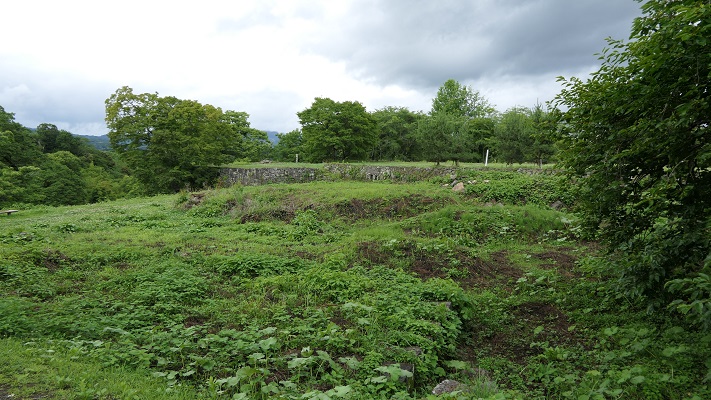
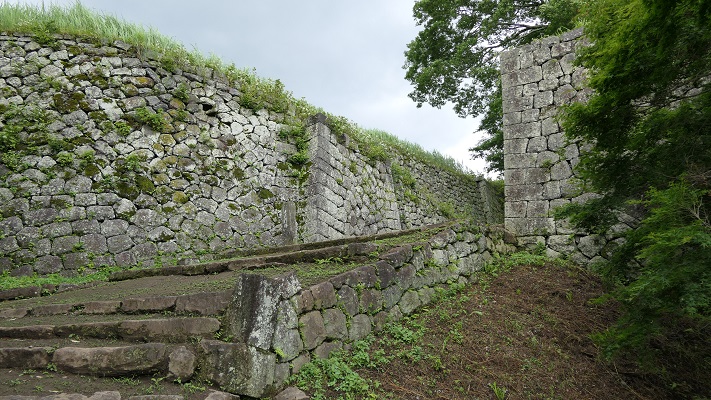
岩櫃山は南に向かって岩の頂が際立っていますが、城跡は北西の方向に向いており、山の背後に残されています。城跡は、山の尾根の上にあり、そこから「本丸」「二の丸」「中城」といった曲輪が広がっており、それらもまた自然の障壁に守られていました。
Mt.Iwabitsu has a great rocky looking part facing the south, but the castle ruins remain at back of the mountain facing the north east direction. They are on a ridge of the mountain spreading down several enclosures called “Honmaru”, “Ninomaru” and “Nakashiro” surrounded by natural hazards.

岩櫃山の正面(The front of Mt. Iwabitsu)

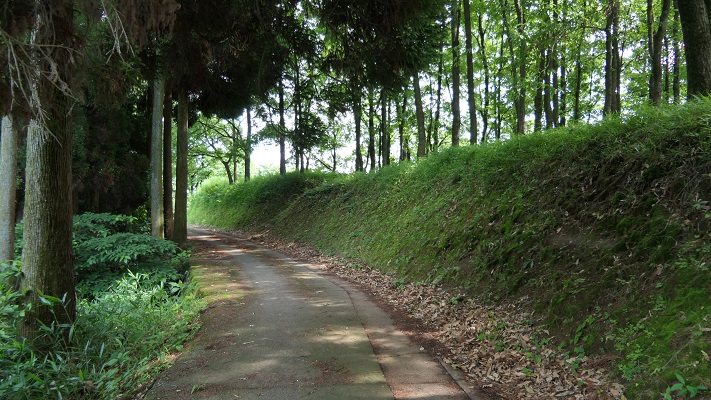
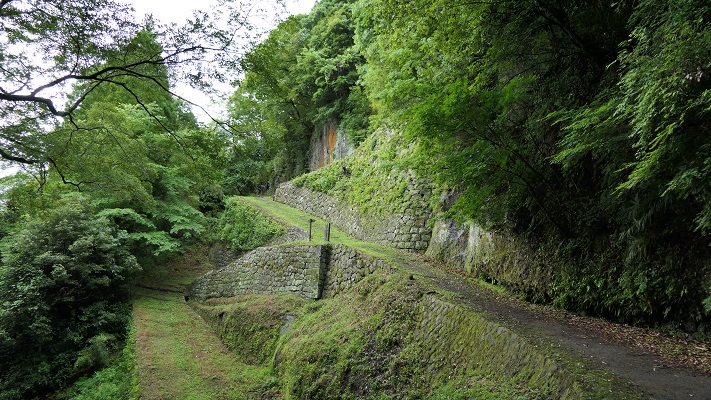
城跡の麓にたどり着くには、たった一本の細く曲がりくねった道しかありません。その入り口はまた「柳沢城」という支城によっても守られていました。
There is only one narrow and winding road to reach the foot of the ruins. The entrance was also protected by the branch castle called “Yanagisawa Castle”.

城跡への道(The road to the ruins)

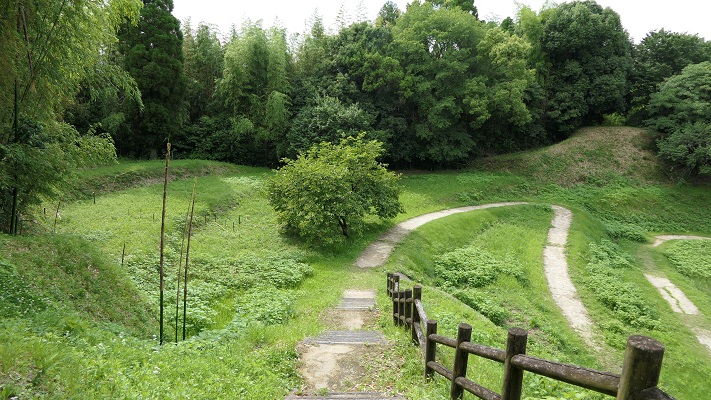
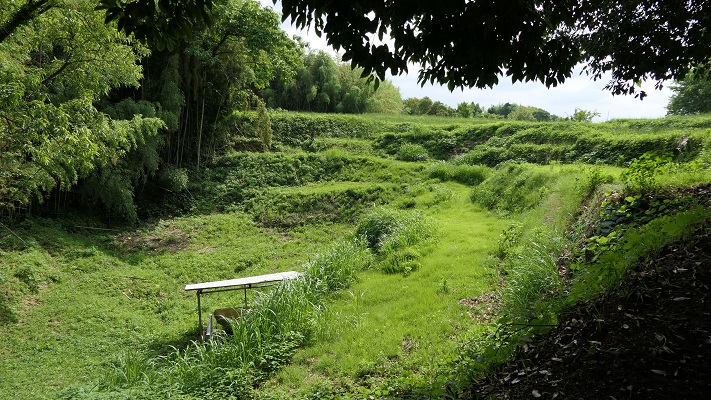
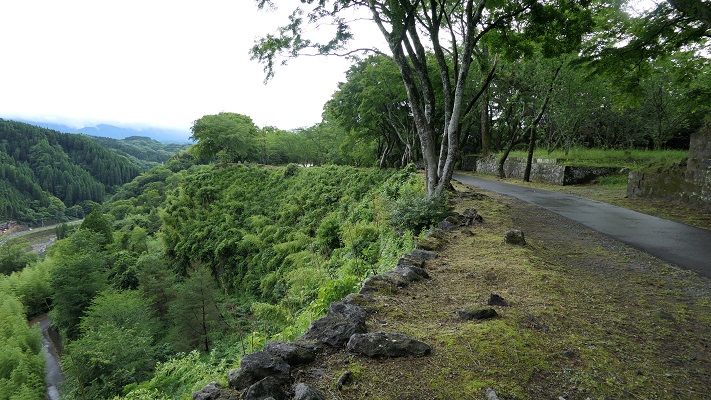
ここまで聞くと、この城は守りがとても固いと思われるでしょうが、この城には別の側面もあるのです。まず、尾根の上の曲輪は空堀や溝により区切られていますが、まるでネットワークのようです。これらは敵を防ぐためだけではなく、連絡のためにも使われたようです。
You may feel the castle was very defensive, however it had a different perspective. First, enclosures on the ridge are separated by dry moats or ditches like network. The network seemed to be used not only for preventing enemies, but also for connection.

空堀、兼通路(Dry moats or passages)

この城にはまた、山麓に天狗丸と呼ばれる曲輪と城下町があり、多くの兵士や住民を収容できました。
The castle also had an enclosure called Tengu-Maru and the castle town at the foot that could accommodate a large numbers of soldiers or residents.

天狗丸跡(The ruins of Tengu-Maru)

更には、尾根の上の本丸はそれ程大きくなく、指令所として使われたのではないでしょうか。
In addition, Honmaru on the ridge is not so large that might be used for the headquarter.

本丸跡(The ruins of Honmaru)

つまるところ、この城は真田の攻撃拠点として使われたと思うのです。郷土史家の山崎一は、このような城のレイアウト(縄張り)を「陽の縄」と言っています。
Overall, I think the castle was used for Sanada’s base to attack. Hajime Yamazaki, a local historian says that such a layout is called a bright layout “You-no-Nawa”.

二の丸から本丸を見上げる(Lookimg up Honmaru from Ninomaru)

Later Life

この城の立地のこともあり、廃城後の岩櫃城の遺跡は長い間そのまま放置されてきました。山崎氏が最初に城跡を調査したのは、1970年代のことでした。彼は調査の結果を公表し、それがきっかけで城跡は1972年に町の史跡に指定されました。そしてつい最近の2019年10月に国の史跡にも指定されました。これからこの城跡がどうのように整備されるのかとても楽しみです。
Because of its location, the ruins of Iwabitsu Castle had been left as they were for a long time after being abandoned. Yamazaki first investigated the ruins in the 1970s. He published his achievement, then the ruins were designated as a local historic site in 1972. They also became a national historic site just recently in October 2019. I’m looking forward to seeing how they are developed in the future.

本丸にある岩櫃城の標柱(The signpost of Iwabitsu Castle at Honmaru)

My Impression

歴史に「もしも」はないと言われますが、多くの歴史ファンはもし勝頼が岩櫃城に来ていたらどうなっていただろうと空想を逞しくしています。私ももしそうであれば、武田と織田の戦いは長引いたと思うのです。この城であれば大軍を前にしばらくは持ちこたえられるからです。そうしたら、歴史は史実と変わっていたでしょう。なぜなら信長の予想外の大勝利は彼を自己満足や自信過剰に陥らせたからです。それが、この勝利からわずか3ヶ月後の本能寺の変での彼の死につながったのです。
It is said that there is no “if” in history. But many history fans enjoy speculating what would happen if Katsuyori came to Iwabitsu Castle. I imagine the battle between Takeda and Oda would be longer as the castle could hold out against large troops for a while. Then, history might change from that fact, because Nobunaga’s unexpected great victory made him complacent and overconfident. That led to his death in the Honnoji Incident in June 1582, just three months after the victory.

岩櫃山の麓にある潜龍院跡(The ruins of Senryuin on the foot of Mt. Iwabitsu)

How to get There

岩櫃城跡へは:車の場合は、平沢登山口に駐車してください。電車の場合はJR吾妻線群馬原町駅から駐車場まで歩いて約40分です。駐車場から本丸までは更に歩いて約20分です。
To the ruins of Iwabitsu Castle: When using car, park at the Hirasawa starting point for a climb. When using train, it takes about 40 minutes on foot from the Gunma-Haramachi station on JR Agatsuma line to the parking lot. it takes another about 20 minutes on foot from the parking lot to Honmaru.

潜龍院跡へは:車の場合は、古谷登山口に駐車してください。電車の場合はJR吾妻線郷原駅から駐車場まで歩いて約20分です。駐車場から潜龍院跡までは更に歩いて約15分です。
To the ruins of Senryuin: When using car, park at the Furuya starting point for a climb. When using train, it takes about 20 minutes on foot from the Gobara station on JR Agatsuma line to the parking lot. it takes another about 15 minutes on foot from the parking lot to the ruins.

東京駅から群馬原町駅または郷原駅まで:上越新幹線に乗り、高崎駅で吾妻線に乗り換えてください。
From Tokyo to Gunma-Haramachi or Gobara station: Take the J0etsu Shinkansen super express to Takasaki station, and transffer to Agatsuma local line.

Links and References

岩櫃なび(Iwabitsu Navi, only Japanese?)
・「群馬の古城 北毛編/山崎一」あかぎ出版(Japanese Book)
・「真田太平記 1岩櫃の城/池波正太郎」朝日新聞社(Japanese Book)

6.盛岡城(Morioka Castle)

盛岡城跡はまるで石作りの鎧をまとった武者のようです。
Morioka Castle Ruins look like a warrior wearing an amour made of stone.

盛岡城の石垣(The stone walls of Morioka Castle)

Location and History

岩手県の県都である盛岡市は、この城から始まりました。盛岡はまた、この城の城主であった南部氏により名付けられました。この城はもともと北上川と中津川の合流地点の北側にある丘の上に築かれました。(現在、北上川は西の方角に付け替えられています。)
Morioka City, the capital of Iwate Prefecture, started from this castle. Morioka was also named by the lord of the castle, the Nanbu clan. The castle was originally located on a hill in the north of the meeting point of Kitakami River and Nakatsu River (Now, Kitakami River has been replaced in the western direction).

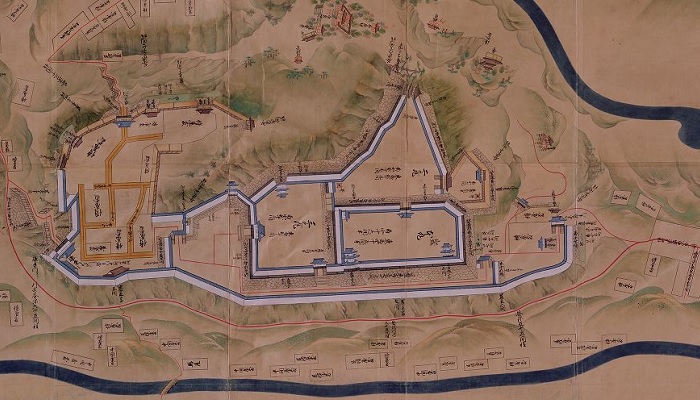
南部領盛岡平城絵図部分、江戸時代(Part of the illustration of Morioka Castle in Nanbu Domain in Edo Period)|出典:国立公文書館

最新の城周辺の地図(The latest map around the castle)


南部氏は、北東北地方の有力な戦国大名の一族で、その運営は一族の合議によりなされてきました。三戸城の南部信直がやがて力を持ち、天下人の豊臣秀吉に南部氏の頭領であると認められました。
Nanbu clan had been a great warlord group in the north Tohoku region with their operations run by the relatives’ council. In the end of the Civil War Period, Nobunao Nanbu in Sannohe Castle had an influence, and he was allowed to be the head of the clan by the ruler, Hideyoshi Toyotomi.

南部信直像、もりおか歴史文化館蔵(The portlait of Nobunao Nanbu, owned by Morioka History and Culture Museum)licensed under Public Domain via Wikimedia Commons

彼は、豊臣の配下である蒲生氏郷や浅野長吉らの助けを借り、九戸城で反乱を起こした一族の九戸政実を滅ぼしました。そして彼は一旦九戸城に移り、そこを「福岡」と名付けました。しかし福岡は南に広がっていた南部領にとって北にありすぎました。そこで蒲生や浅野は再度南の方に移るよう提案しました。それが不来方(盛岡の前の名前)だったのです。そこで信直は1598年から新しい城造りを始めました。
He beat a rebellious relative, Masazane Kunohe in Kunohe Casle with the help from Toyotomi’s men such as Ujisato Gamo and Nagayoshi Asano. Then, he once moved to Kunohe Castle and renamed it “Fukuoka”. But Fukuoka was too much on the north because Nanbu’s territory spread to the south. So, Gamo and Asano suggested Nobunao to move again to another southern place. That was Kozukata (the former name of Morioka) where Nobunao started to build a new castle in 1598.

九戸城跡(The ruins of Kunohe Castle)

蒲生と浅野は更にその城を、西日本で一般的であった総石垣作りとするよう提案しました。その当時の東日本おいては、より強い防御力を持つ特別な城となったのです。城の建設には長い時間を要し、信直の息子、利直の代の1615年に完成しました。利直はそのとき不来方を盛岡と改名したのです。
Gamo and Asano also suggested to build the castle made up entirely of stone walls that was popular in the western Japan. That style would be more defensive and special in the eastern Japan at the point. The construction took a long time before its completion in 1615 by Nobunao’s son, Toshinao who renamed Kozukata, Morioka then.

本丸(右)と二の丸(左)(Honmaru on the right and Ninomaru on the left)

南部氏は、江戸時代を通して盛岡城とその城下町を支配しました。城はしばしば火事、地震そして洪水の被害を受けましたが、その度に修復され、部分的には拡張されました。
Nanbu clan governed Morioka Castle and town all through the Edo Period. The castle sometimes suffered from fires, earthquakes and floods, but were repaired and partly improved.

腰曲輪の石垣(The stone walls of Koshi-Guruwa)

Features

現在、盛岡城跡には、たった一つ現存している「彦御蔵」を除いては、建物がない石垣だけが残っています。それでも石垣の存在は際立っています。城跡のどこに行っても素晴らしい石垣が見れます。全てが地元産の白花崗岩を使っています。それではいくつか代表例を見てみましょう。
Now, the ruins of Morioka Castle remain stone walls without buildings except for only one warehouse called “Hiko-Okura”, but they are even more outstanding. Wherever you get around the ruins, you can see amazing stone walls. They are all made of white granite locally produced. Let’s look at some typical stone walls we can see in the ruins.

現存する「彦御蔵」(The remaining Hiko-Okura)

盛岡城跡の地図、マーカーは以下の写真を撮った位置
(The map of Morioka Castle Ruins, Markers show the points pictures below were taken)


・本丸周りの石垣:基本的に自然石を積み上げ、隅石には加工石を用いており「野面積み」と呼ばれます。城跡では一番古く、築城が始まった直後に築かれたと考えられています。
・The main enclosure “Honmaru” surrounded stone walls: They consist of piled-up natural stones basically, and processed stones in the corner, called “Nozura-Dumi”. They are thought to be the oldest in ruins, and might have been made in the earliest time since the castle began to be built.

本丸周りの石垣(Honmaru surrounded stone walls)

・腰曲輪石垣:ここに使われている石は粗く加工されてから積まれており、「乱積み」と呼ばれます。この方法は城が完成した時期に使われました。一部は最近元の方法で積み直されています。
・The bounded enclosure “Koshi-Guruwa” stone walls: These stones are roughly processed and piled called “Ran-Dumi”. The method was used around the same time as the castle was completed. Part of them were restored recently in the original way.

腰曲輪石垣(Koshi-Guruwa stone walls)

・二の丸西側石垣:四角くカットされた石を使い、整列させて積み上げたもので「布積み」と呼ばれます。17世紀になって北上川が付け替えられてから築かれました。
・The second enclosure “Ninomaru” west side stone walls: They are made with square cut stones and piled with aligning called “Nuno-Dumi”. They were added in the late 17th century, after the replacement of Kitakami River.

二の丸西側石垣(Ninomaru west side stone walls)

上記の通り、異なる時代や方法による様々な石垣があります。新しく進んだ方法による石垣がお好みとは限りませんよ。
As mentioned above, there are many types of stone walls from different times and methods. New and advanced ones are not always the best for you.

腰曲輪石垣からもう一枚(Another photo from Koshi-Guruwa stone walls

Later Life

明治維新後、城の建物は撤去されました。城は荒廃していき、周辺の人たちはそれを憂いました。そこで岩手県がその地を借り受け(後に盛岡市が購入)、岩手公園として1906年に一般に公開しました。城跡はまた、1941年に国の史跡に指定されました。
After the Meiji Restoration, the buildings of the castle were demolished. The castle went to ruin, people around were worried about it. Then, Iwate Prefecture rented it (Morioka City bought it later), and opened to the public as the Iwate Park in 1906. After that, the ruins were designated as a National Historic Site in 1941 as well.

公園内の石垣と木々(Stone walls and trees in the park)taken by NR1000 from photoAC

My Impression

最近、盛岡市はこの公園に「盛岡城跡公園」という愛称を付けました。この主な理由は観光のためなのでしょうが、どうやら建物の再建を含めた城の復元方法を模索しているようなのです。私は将来も城跡をこのまま維持することが最善と思います。なぜなら石垣の上に建物が復元されてしまうと、人々の関心が分散してしまうからです。
Recently, Morioka City nicknamed the park “Morioka Castle Ruins Park”. The main reason for it should be for tourism, while the city seems to be searching for the way of restoring the castle including some buildings. I think that keeping the ruins is in the future would be the best way. Because if a building is restored on the stone walls, people’s interest might be destructed by them.

二の丸から木々を見下ろす(Ninomaru overlooking the trees)

石垣に囲まれた城跡は、できてから400年以上経ちます。木々や植物のおかげで城跡はより美しく見えます。ある作家は、自身による石垣の写真に添えて「春は花、夏は緑、秋は紅葉、冬は雪」と述べています。
The ruins surrounded by stone walls are over 400 years old. Trees and plants help them look more beautiful. A writer says “Flowers in spring, green in summer, leaves in autumn, snow in winter” with his pictures of the stone walls.

石垣に桜の花(The stone walls featuring cherry blossoms)taken by 政宗っ。from photoAC

How to get There

車で行く場合:東北自動車道盛岡ICから約10分です。城跡公園に地下駐車場があります。
盛岡駅からバスで行く場合:西口バス16番乗り場から循環バス「でんでんむし」に乗り、盛岡城跡公園バス停で降りてください。駅から歩くと約20分です。
東京から盛岡駅まで:東北新幹線に乗ってください。
If you want to go there by car: It takes about 10 minutes from the Morioka IC on Tohoku Expressway. The park offers an underground parking lot.
If you want to go there by bus from Morioka station: Take the Den-Den-Mushi bus at the east exit bus terminal bus stop No.16, and take off at the Morioka-Joato-Koen bus stop. Or it takes about 20 minutes on foot from the station.
From Tokyo to Morioka st.: Take the Tohoku Shinkansen super express.

Links and References

盛岡城跡公園(岩手公園)~盛岡市(Morioka Castle Ruins Park (Iwate Park)~Morioka City)
・「史跡盛岡城跡整備基本計画/盛岡市」(Japanese Document)
・「盛岡城の石垣/高橋喜平」(Japanese Book)

5.根城(Ne Castle)

根城は、地元の人たちと行政の多大な努力により再建された城です。
Ne Castle is a castle which has been rebuilt thanks to the great effort of the local people and officials.

復元された本丸主殿(The restored Honmaru Main Hall)

Location and History

この城は現在の青森県八戸市にありました。この地域は東北地方の北部としては開けた場所で、中世から商業で栄えてきました。
The castle was located in what is now Hachinohe City, Aomori pref. which has been the opening for the northern Tohoku region and has flourished through trading since the Middle Ages.

八戸市の位置(The position of Hachinohe City)licensed by Lincun via Wikipedia Commons

南北朝時代において南朝方により、南部師行が陸奥国にこの地域を統治するために派遣されてきました。彼は1334年に、以前の支配者であった北条氏の館があった糠部郡の丘の上に、初めて根城を築きました。
In the period of the Northern and Southern Courts, Moroyuki Nanbu was sent to Mutsu Province by the Southern Court to govern this area. He first built Ne Castle on a hill in Nukanobu district after the former ruler Hojo’s hall in 1334.

八戸博物館前の南部師行像(The statue of Moroyuki Nanbu in front of the Hachinohe Museum)licensed via Wikipedia Commons

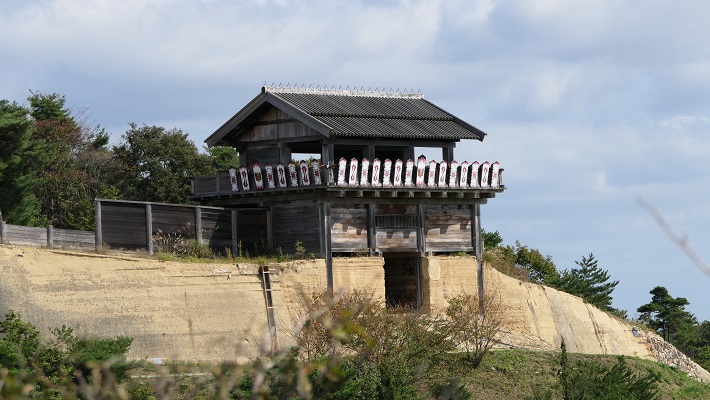
この城には、主殿及び関連する建物が立つ本丸があり、柵と空堀により囲まれていました。「虎口」と呼ばれたその入り口は、橋によりつながれており、非常時には落とされました。主殿は、代替わりなどのときを含め16回建て替えられました。その間、城の領域は、「館」と呼ばれる7つの同様の曲輪により拡張されました。これは中世における典型的な城の作り方の一つでした。
The castle had the main enclosure “Honmaru” with the main palace and related buildings surrounded by fences and dry moats. The entrance called “Koguchi” was accessed by a bridge which would be destroyed in an emergency. The main hall was rebuilt even16 times ,for example, when inheritance. During that time, the castle area was expanded adding seven similar enclosures called “Date”. This is one of typical castle styles in the Middle Ages.

本丸入り口の橋(The entrance bridge of Honmaru)

南部氏は、250年以上に渡ってこの城に居続けましたが、戦国時代の終わりに三戸城にいた一族の南部信直が力を持ち、天下人の豊臣秀吉に南部の頭領であると認められました。秀吉は根城の破却を命じましたが、実際には虎口が壊され、堀が埋められた程度でした。その後主殿はしばらく使用されましたが、1627年にはついに廃城になりました。
The Nanbu clan had been staying at the castle for over 250 years, but at the end of the Warring States Period, Nobunao Nanbu, a relative in Sannohe Castle had great influence and was admitted to be the head of the Nanbu clan by the ruler Hideyoshi Toyotomi. Toyotomi ordered Ne Castle to be destroyed, however, it was not done as completely as just the Koguchi was removed and moats were filled. After that, the main hall was used for a while, but it was finally abandoned in 1627.

堀の跡(The ruins of a moat)

Features

現在、本丸部分はかつてのように復元されています。空堀の上の橋を渡り、虎口を通ってそこに入ります。本丸の内部は木柵により囲まれています。
Now, the Honmaru area is restored to show it was. You can go across the bridge on the dry moat and pass the Koguchi to enter the area. The inside is surrounded by a wood fence.

本丸の木柵(The wood fence around Honmaru)

また、復元された本殿に入ることもでき、中では新年の儀式の様子を再現した人形や、城の歴史の説明パネルを見学できます。
You can also see and enter the restored main palace where figures represent a new-year ceremony and panels of its history are shown.

復元された本殿(The restored Main Palace)licensed by 小池隆 via Wikimedia Commons

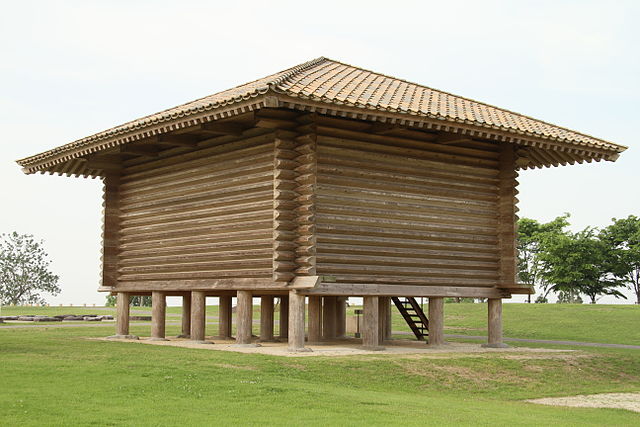
更に関連する建物として、馬小屋、工房、倉庫、鍛冶場などがあります。鎧や什器などがそっくりそのままに作られて置かれています。
There are also restored related buildings such as a stable, workshops, warehouses, and a forge. Many things like armor and utensils are placed inside exactly like the original ones.

復元された馬小屋(The restored stable)licensed by 小池隆 via Wikimedia Commons
復元された工房(The restored workshop)
工房の内部(The inside of the workshop)

これらの文物を見ていると、中世の世界に入り込んだような気がしてきます。ここにあるものは、1592年に城が廃城となる直前の時代を想定して再現されています。
These items make you feel like you are in the world of the Middle Ages. They are recreated according to the same specifications as the period just before the destruction of the castle in 1592.

本丸内部全景(The whole view of Honmaru inside)

Later Life

廃城となった後、根城の辺りは畑か住居として使われたようです。ここは1941年という比較的早い時期に国の史跡に指定されました。第二次世界大戦後、行政側は遺跡が開発され完全に破壊されてしまうことを心配していました。そこで1972年から土地の公有化を進め、1978年に遺跡の環境整備計画を作成しました。そして1989年までに本丸が発掘され、その後どのように遺跡を展示するか考えるにあたり、平面展示ではなく、多くの人に理解してもらえるよう復元することにしました。
After being abandoned, the area of Ne Castle seemed to be used for farming and residences. It was designated as a national historic site, comparatively early in 1941. After World War II, officials were worried about the ruins being developed and completely destroyed. They started to make the land public in1972, make the plan for developing environment of the ruins in 1978, and excavated Honmaru area until 1989. After that, they also thought about how to show the ruins not a flat exhibit, but a restoration to make them understood by many people.

根城の航空写真、一部が住宅化している(The aeriel photo of Ne Castle, Part of it has become residential area)


しかしながら、いくつか問題がありました。最も困難だったのは、建物の詳細です。発掘して出てくるのはほとんどがおびただしい柱の穴でした。研究者は何とかそれを分類し、個々の建物のレイアウトを推定しました。次には、類似の地域や時代の事例から3次元で建物の復元設計を行いました。ついには、1994年にこの再建工事が完成し、「史跡根城の広場」として一般に公開されました。
However, there would be some problems.. The most difficult one was the unclear details of the buildings. The excavation mostly shows plenty of holes for pillars. Researchers somehow managed to sort them and estimate the layout of each building. Next, they tried to design three-dimensional restored buildings from examples in similar regions and periods. Finally, the reconstruction was completed and the site was open to the public in 1994 as “Nejo Castle Site”.

復元された建物の柱の位置(The restored positions of pillars of a building)

My Impression

八戸市の人たちや行政は、50年近くの長きに渡り根城史跡の整備を行ってきました。これは驚くべき成果であり、心から尊敬します。復元された建物や文物は、伝統的手法で作られており、その維持には特別な修繕や多額の予算が必要です。ここを訪れることもその維持に貢献します。もちろん根城は、訪れるに値しますし、是非中世の雰囲気を味わっていただきたいです。
People and officials in Hachinohe City have been developing the Ne Castle Site for nearly 50 years. This is a significant achievement. I really respect them. The restored buildings and objects are made in the traditional way. Keeping them for a long time requires specific maintenance and much funding. Visiting the site helps keep it as well. Of course Ne Castle is worth visiting to feel the atmosphere of the Middle Ages.

復元された倉庫の内部(The inside of a restored warehouse)

How to get There

車で行く場合:八戸自動車道八戸ICから約10分かかります。
八戸駅からバスで行く場合:バス1番乗り場から南部バスに乗り、根城バス停で降りてください。
東京から八戸駅まで:東北新幹線に乗ってください。
If you want to go there by car: It takes about 10 minutes from the Hachinohe IC on Hachinohe Expressway.
If you want to go there by bus from Hachinohe station: Take the Nanbu bus at the bus terminal plarfoem 1, and take off at the Ne-Jo bus stop.
From Tokyo to Hachinohe st.: Take the Tohoku Shinkansen super express.

Links and References

VISITはちのへ(VISIT HACHINOHE)
・「日本の遺跡19根城跡/佐々木浩一」同成社(Japanese Book)

error: Content is protected !!