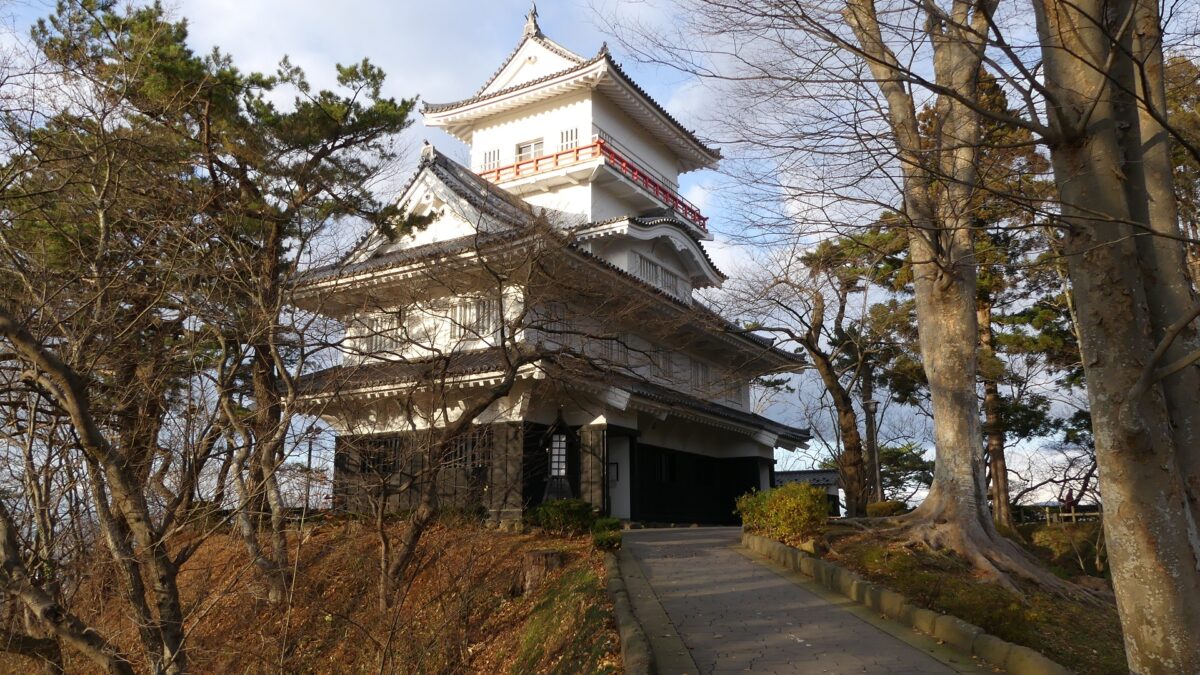
9.久保田城~Kubota Castle

佐竹氏による土造りの城
The castle made of earth by the Satake Clan

立地と歴史~Location and History

佐竹氏が新しく作った城~New Castle Satake Clan built

佐竹氏は古代の終わり頃から常陸国(現在の茨城県)を拠点としてきました。16世紀後半、彼らは水戸城に住み、その領土は54万8千石もの石高に相当しました(その当時の日本で8番目の大大名)。ところが、1602年に徳川幕府により東北地方の秋田に移されてしまいます。1600年に起こった関ヶ原の戦いにおいて、幕府をはっきりとは支持しなかったからです。その領土は20万石まで削減されましたが、新しい土地で新しい城を築くことを決心しました。それが久保田城でした。
The Satake Clan had been based in Hitachi Province (what is now Ibaraki Prefecture) since around the end of the Ancient times. In the late 16th century, they lived in Mito Castle and their territory was worth as much as an earning of 548 thousand Koku in rice (the 8th largest lord in Japan at that time). However, they were transferred to Akita in Tohoku Region by the Tokugawa Shogunate in 1602, as they didn`t firmly support the Shogunate when Battle of Sekigahara happened in 1600. The size of their territory was reduced (to 200 thousand Koku in rice), but they decided to build their new castle in the new land. This was Kubota Castle.

城の位置~The location of the castle

お家芸だった土の城~Building Castles of earth was their Specialty

久保田城は、旭川沿いの標高40mの神明山の上に築かれました。この城には天守はなく、ほとんどが土造りによるものでした。その理由としては、佐竹氏には石垣や天守を作る技術がなかったからとか、幕府の権威を恐れたためと言われてきました。佐竹氏が秋田に移った当時は、他の大名たちにとっては、石垣と天守がある城を作るのが普通でした。しかしながら、土造りの城を作ることは佐竹氏のお家芸だったのです。その証拠として、水戸城も挙げられます。佐竹氏はそこで技術を進化させ、佐竹氏の後の徳川氏はその土造りの城を最後まで使い続けました。佐竹氏は土造りだけで強力な城を作ることができたのです。
Kubota Castle was built on a 40m high mountain called Shinmei-yama alongside Asahigawa River. The castle was almost all made of earthworks with no Main Tower. It has been said that the reason for it is that Satake had no ability and techniques for building stone walls and a Main Tower, or they feared the Shogunate`s authority. In the same period as Satake moved to Akita, it was usual for other lords to build a castle with stone walls and a Main Tower. However, building a castle of earthworks was the specialty of the Satake Clan. There is evidence also with Mito Castle, Satake Clan improved this technique, and it was used by the Tokugawa Clan following Satake as a castle of earthworks till the end. That meant Satake could build a strong castle using only earthworks.
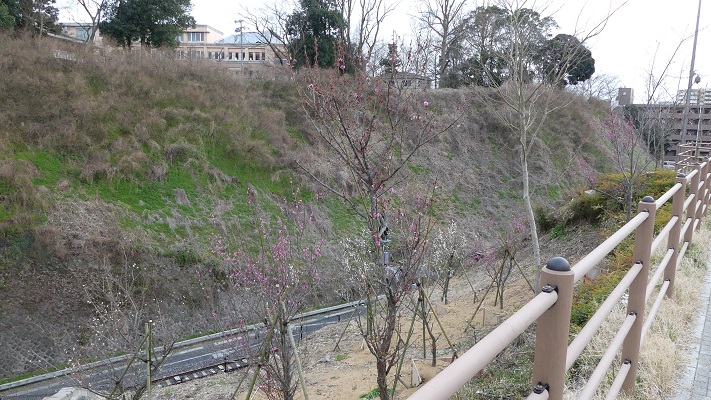
土造りの水戸城~Mito Castle made of earthworks

自然地形を生かした巧みな配置~Clever Arrangement using Natural Terrain

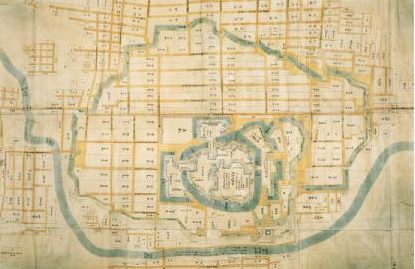
城の中心部は、内堀に囲まれ、二段になっていました。上段は「本丸」であり、下段は「二の丸」になっていました。中心部の周りは「三の丸」となっていて、外堀に囲まれていました。更には、三の丸の外側且つ川の内側には「西曲輪」「北の丸」が設置されていました。本丸には御殿があり、領主が住んでいました。本丸には5つの門がありましたが、外部からは二の丸を通らなけらば行けないようになっていました。佐竹氏は、自然の地形を生かしながら巧みな配置を行い、20年以上の工事の後、城を完成させました。
The center of the castle had two tiers, surrounded by the inner moat. The upper tier was called “Honmaru” or the Main Enclosure, and the lower tier was called “Ninomaru” or the Second Enclosure. Around the center, there was “Sannnomaru” or the Third Enclosure, surrounded by the outer moat. In addition, “Nishikuruwa” or the Western Enclosure and “Kitanomaru” or the Northern Enclosure were placed outside the Third Enclosure inside the river. The Main Enclosure had the Main Hall where the lord lived, and four turrets instead of the Main Tower. It also had five gates, but anyone from the outside the castle had to go through the Second Enclosure to reach it. Satake complete the castle with clever arrangement and using natural terrain after over 20 year construction.

出羽国秋田郡久保田城画図部分、江戸時代~Part of the illustration of Kubota Castle in Akita District, Dewa Province, the Edo Period(出典:国立公文書館)

佐竹氏は江戸時代の期間中、久保田藩を統治しましたが、その支配は安定しませんでした。秋田は強風地帯であり、藩の民衆は風害による飢饉や、洪水や風雨による被害に苦しみました。これらにより一揆が頻発し、藩は予算不足に陥りました。久保田城も度々火災に見舞われますが、その都度再建されました。
Satake governed their Kubota Domain all through the Edo Period, but their governance was not stable. Akita was a very windy area, so the people of the Domain suffered several famines from dry winds, flood and water damage. It often caused riots, as a result, the Domain lacked resources. Kubota Castle also suffered fires, but was repaired and restored each time.
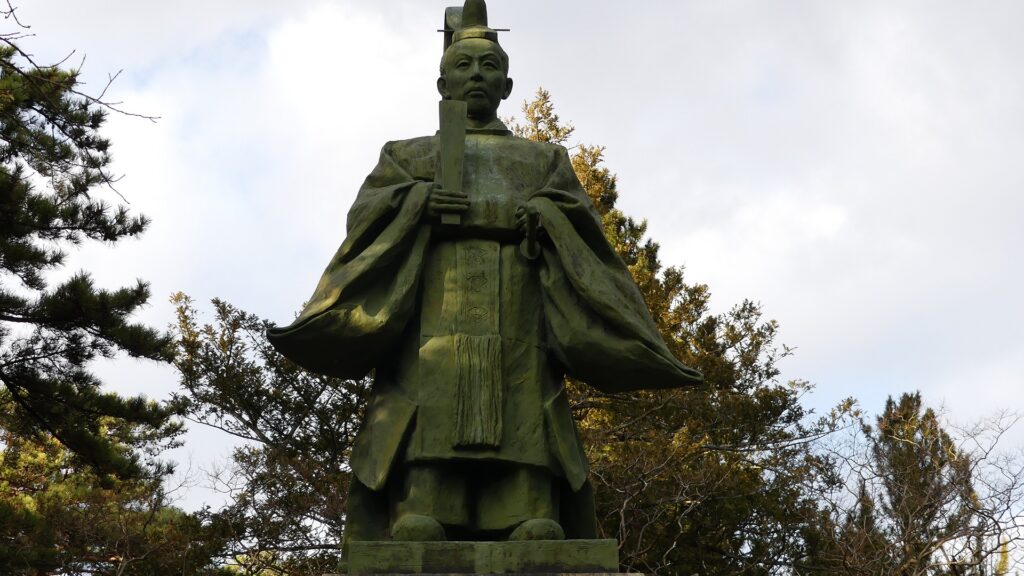
最後の藩主、佐竹義堯の銅像、千秋公園~The statue of Yoshitaka Satake, the last lord of Kubota Domain

特徴~Features

城周辺の航空写真~The aerial photo of around the castle

城跡の千秋公園へ~To Senshu Park as Castle Ruins

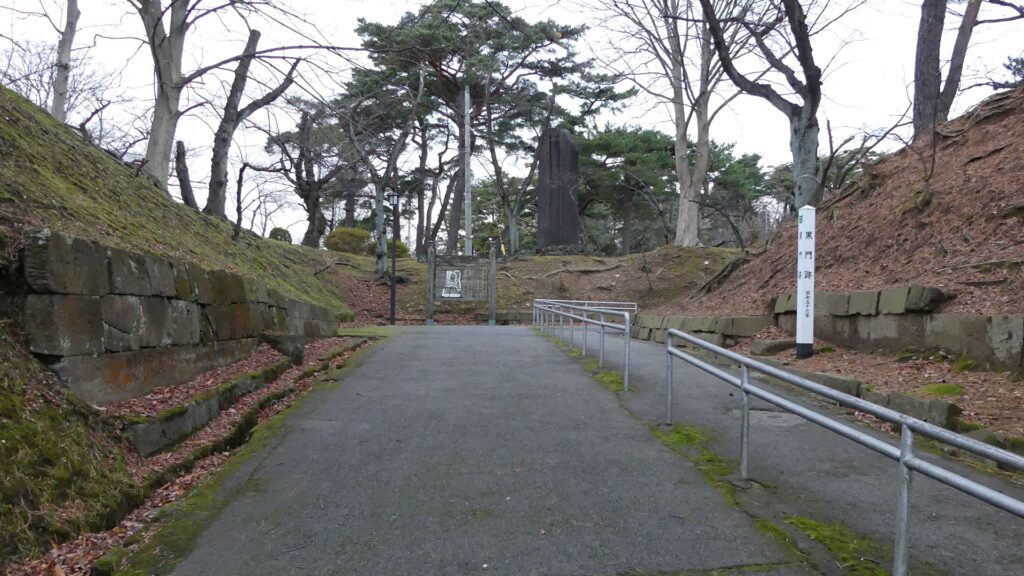
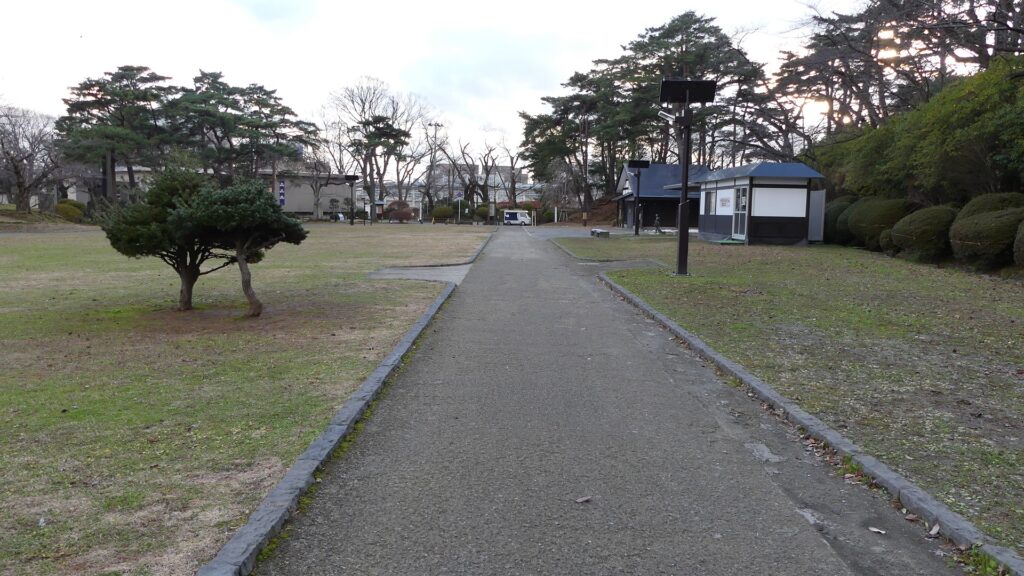
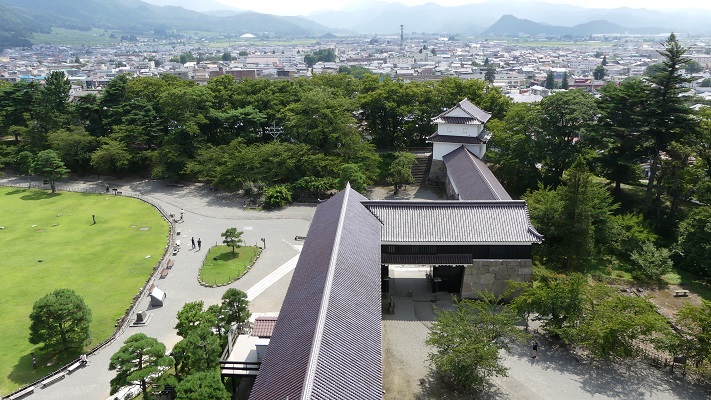
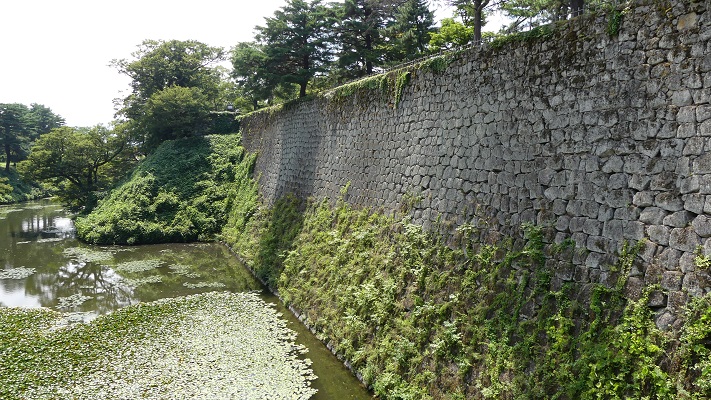
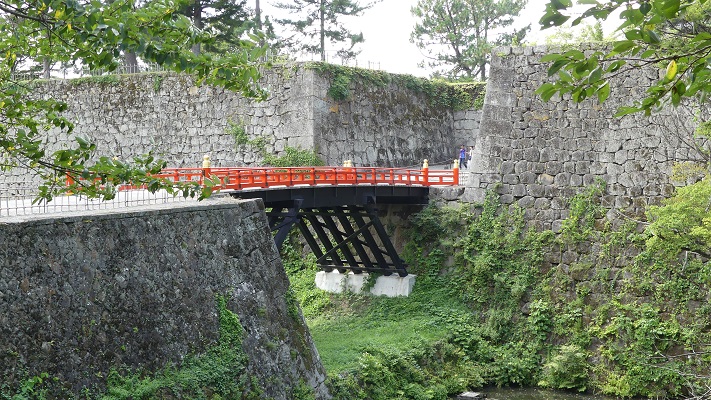
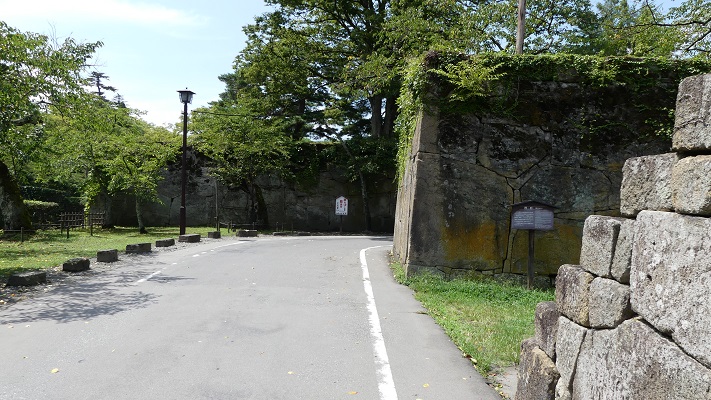
現在、久保田城跡は千秋公園となっています。観光客は通常南から中土橋を通って現存する外堀を渡って三の丸や二の丸に向かいます。過去は東側にある黒門が城の正門でした。二の丸には広い敷地があり、かつては官庁や倉庫などの建物がありました。佐竹史料館では、久保田藩や佐竹氏に関する展示を行っています。
Now, the ruins of Kubota Castle has become Senshu Park. Visitors usually go across the remaining Outer Moat through Nakadobashi Bridge on the south to the Third and Second Enclosures. In the past, Kuro-mon Gate on the east was the front entrance of the castle. The Second Enclosure has a large space where buildings such as offices and warehouses were built. Satake Historical Museum exhibits the histories of Kubota Domain and the Satake Clan.
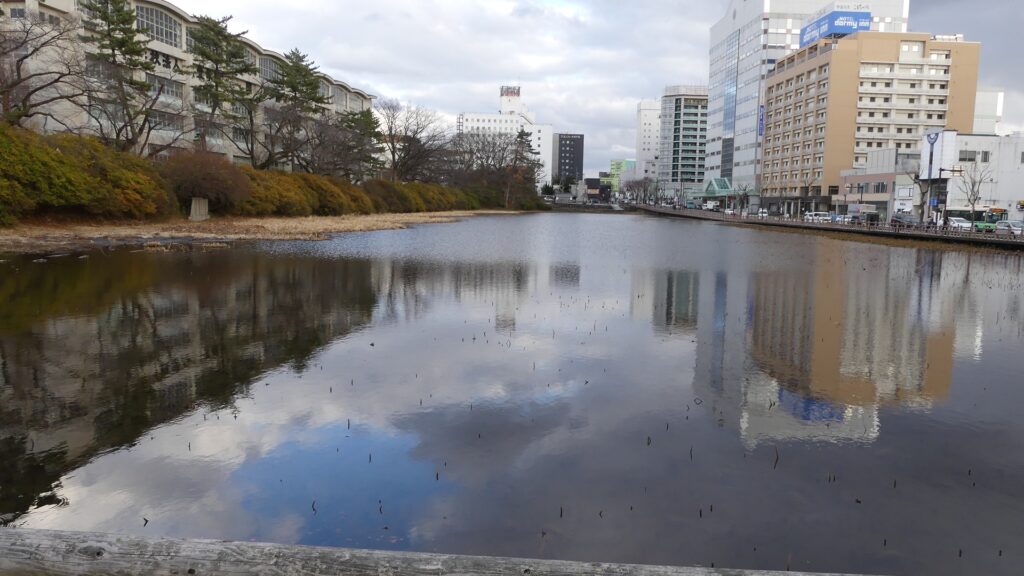
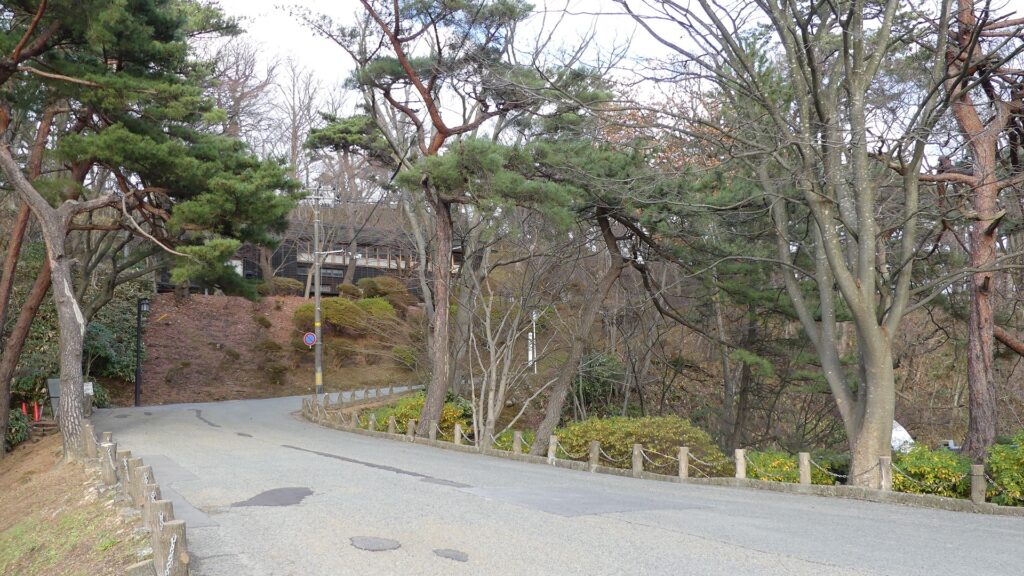
外堀~The Outer Moat
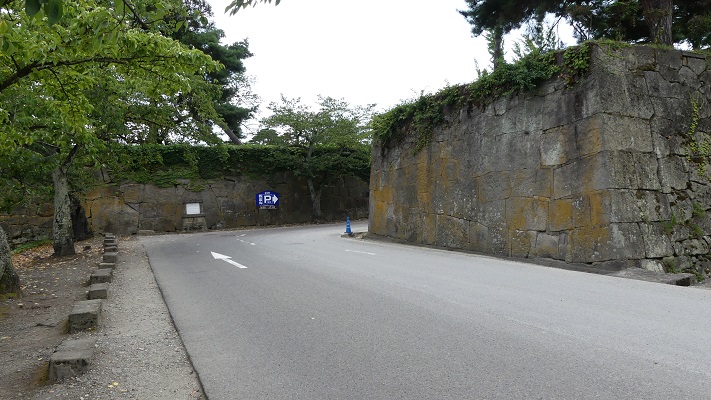
城に向かう道~The road to the castle
黒門跡~The ruins of Kuro-mon Gate
二の丸~The Second Enclosure

本丸への長い坂~Long Slope to Main Enclosure

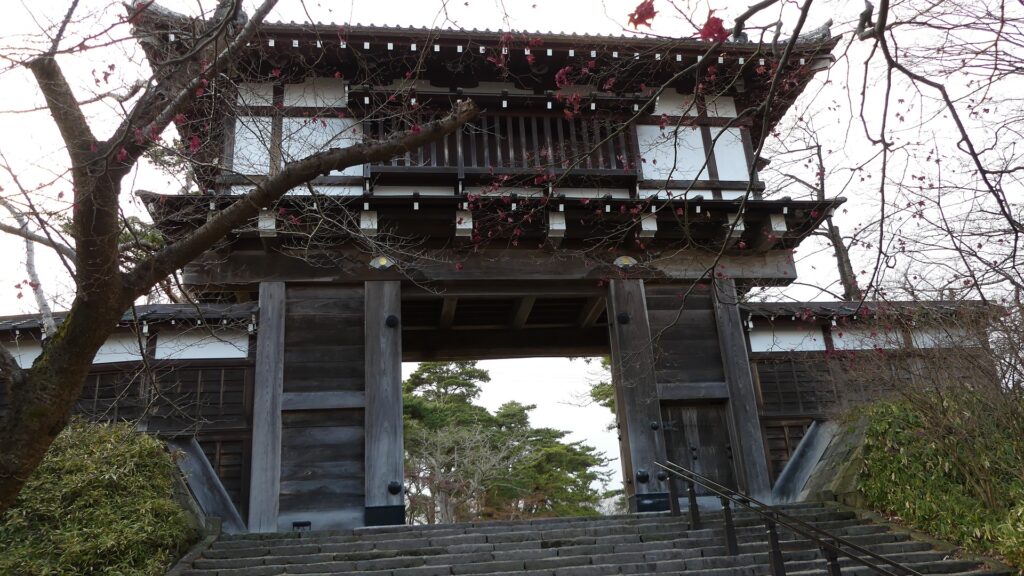
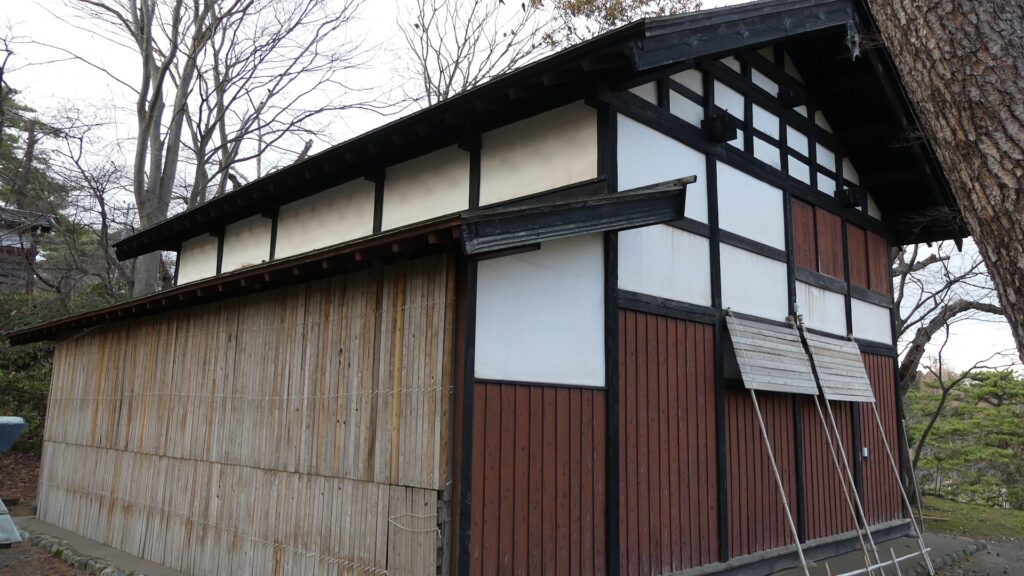
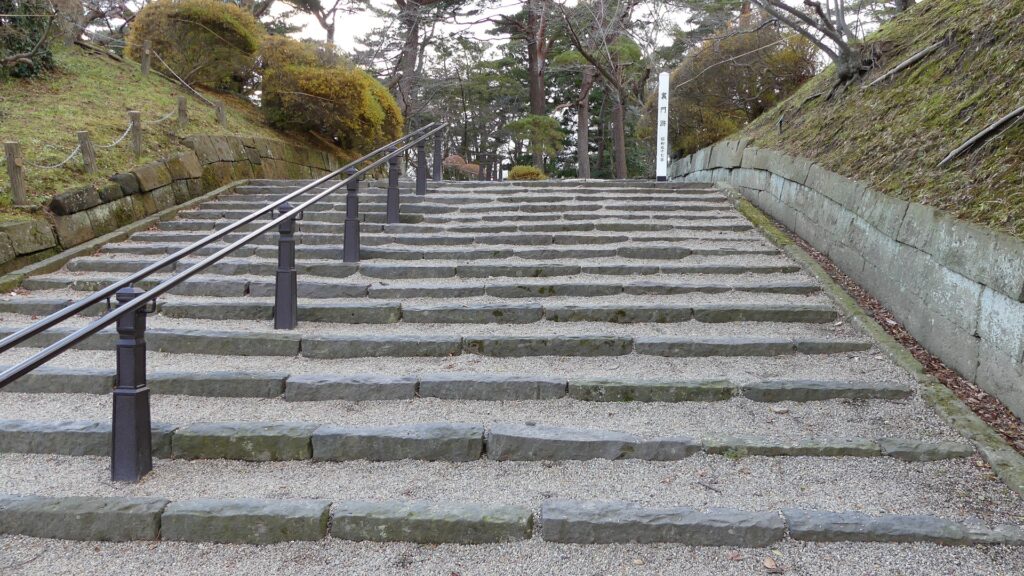
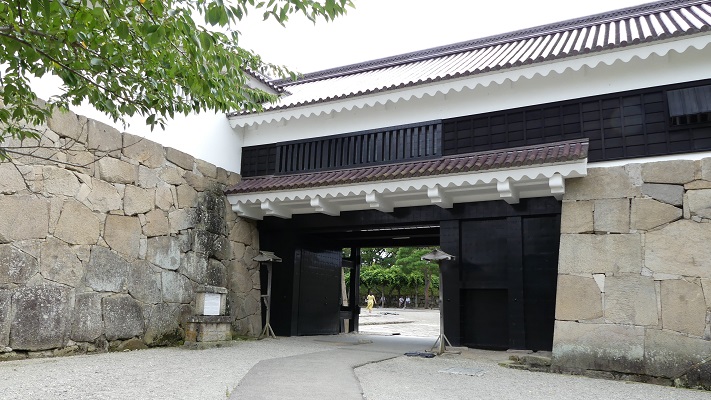
本丸へは、「長坂」と呼ばれる長く曲がりくねった階段を通って登っていきます。この場所はとても重要だったため、一部石垣が使われています。「長坂門」という門がちょうど曲がっている箇所に立っていました。階段を登り切った所には、本丸の正門である表門が復元されています。門の傍らには「御物頭御番所」という警護所が城で唯一の現存建物として残っています。
You can walk up to the Main Enclosure through a long and curved stairways called “Nagasaka” or the Long Slope. Stone walls have been partly used, as this spot was very important. A gate called “Nagasaka-mon” stood at the curved part. At the end of the stairways, Omote-mon Gate, the front gate of the Main Enclosure has been restored. There is the guardhouse called “Omono-gashira Gobansho” which is the only remaining building in the castle beside the gate.
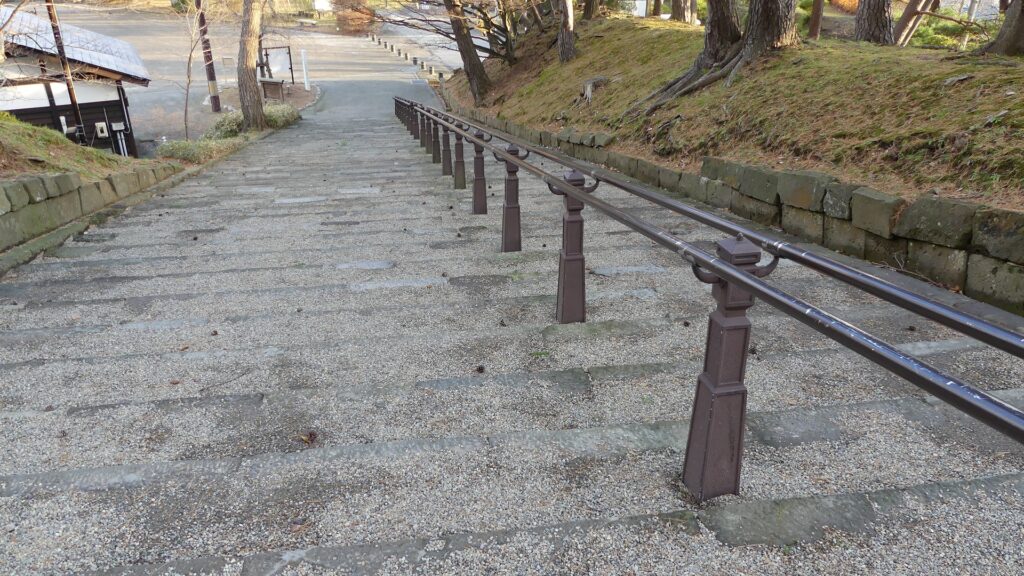
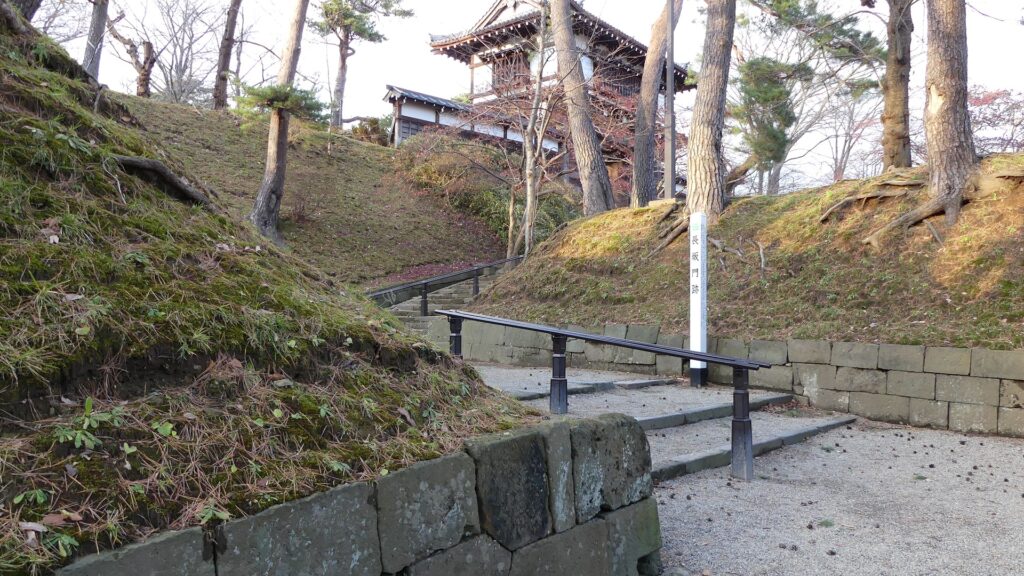
長坂~The Long Slope
長坂門跡~The ruins of Nagasaka-mon Gate
復元された表門~The restored Omote-mon Gate
現存している御物頭御番所~The remaining guardhouse

土造りの本丸~Main Enclosure made with Earthworks

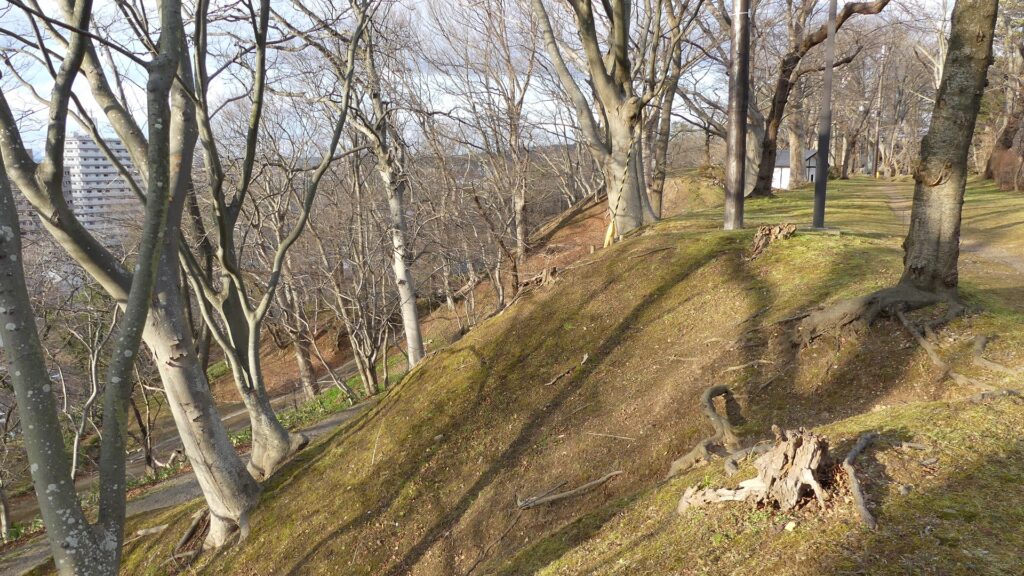
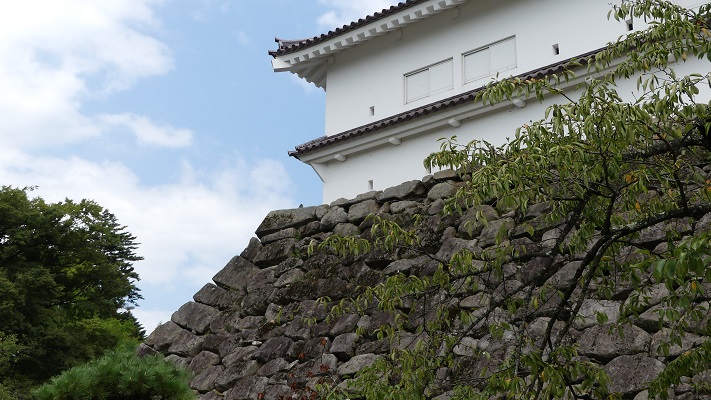
本丸の中心には神社と最後の領主の銅像があります。城のようには見えないかもしれませんが、本丸を歩き回ってみれば、城の基礎は土だけですが、とても頑丈にできていることがわかると思います。櫓の一つ、御隅櫓が曲輪の北西角に再建されています。見晴らしをよくするために、元あったものより高く作られています。本丸にはいくつか出入口があるので、登ったり降りたりしてみると、この城がいかに自然の地形をうまく生かしているかが見て取れるでしょう。
The center of the Main Enclosure has a shrine and the statue of the lord of the castle. It may not look like a castle, however if you walk around the Enclosure, you can find the foundation of the castle is made of only earth, but strongly. One of the turrets, Osumi-yagura Turret has been rebuilt at the northwest corner of the Enclosure. It is built much higher than the original one for viewing. The Enclosure has several entrances such as the Back Gate, so you can also walk up and down enjoying how the castle uses natural terrain cleverly.
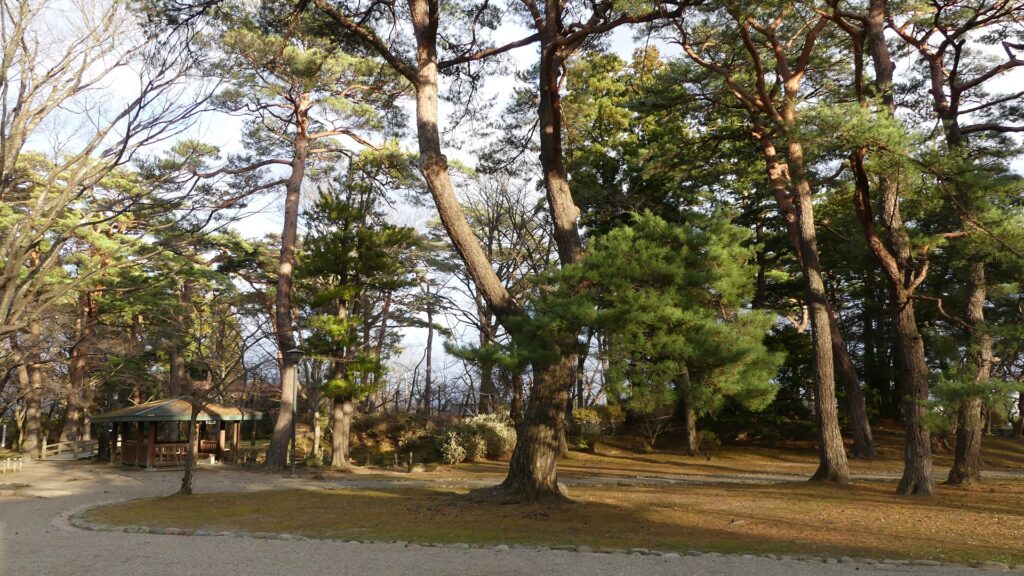
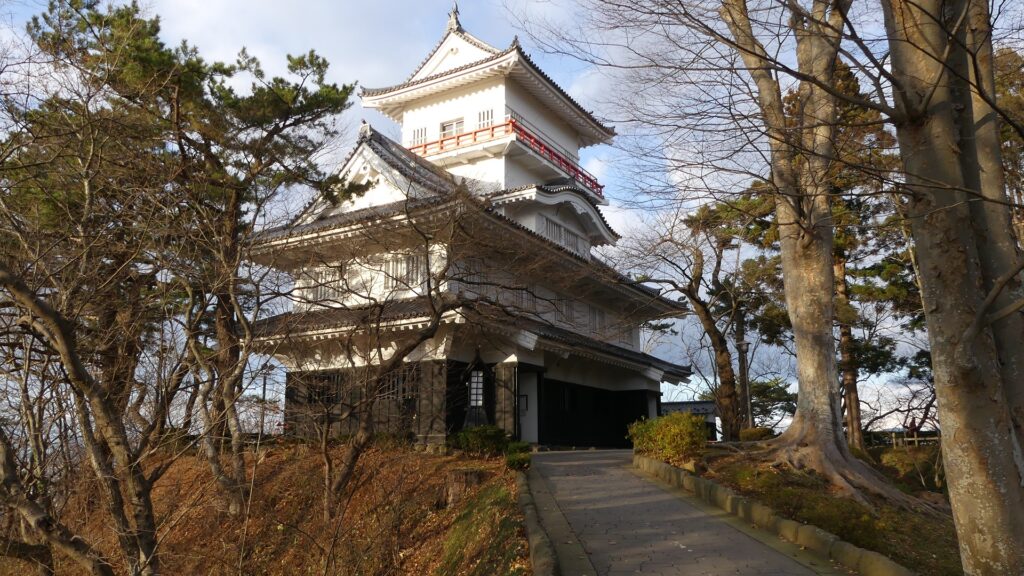
本丸~The Main Enclosure
再建された御隅櫓~The rebuilt Osumi-Yagura Turret
裏門跡~The ruins of the Back Gate
本丸の土塁~The earthen walls of the Main Enclosure

その後~Later History

明治維新後、久保田城は1872年に秋田県庁舎となりました。この城はまた、秋田県と秋田市の始まりともなったのです。ところが、1880年にほとんどの城の建物は燃えてしまいます。1890年になって以前の領主、佐竹氏が城跡を買い上げ、秋田市に土地を公園として貸し出し、千秋公園と名付けられました。久保田藩の元藩士たちは1892年に公園に桜の苗を寄付しました。そのため、公園は桜の花でも有名になっています。
After the Meiji Restoration, Kubota Castle became the Akita prefectural office in 1872. That meant the castle also was the origin of Akita Prefecture and Akita City. However, most of the castle buildings were burned down in 1880. In 1890, the former lord, Satake Clan bought the castle ruins and lent the land to Akita City as a park named Senshu Park. Former warriors of the Kubota Domain donated cherry plants for the park in 1892, so that’s why the park has also become famous for its cherry blossoms.
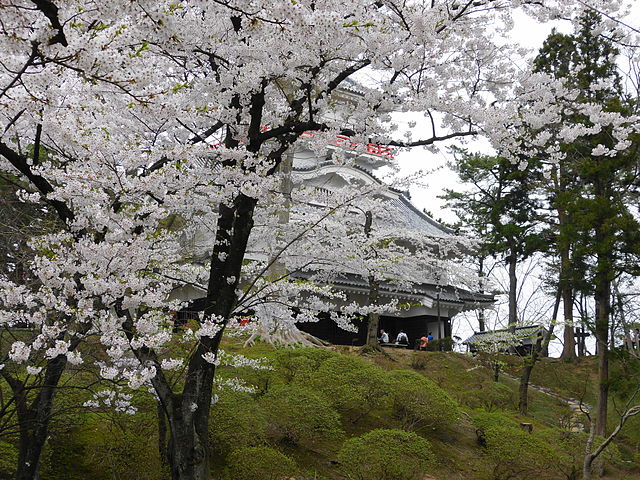
御隅櫓と桜~Osumi-Yagura Turret with cherry blossoms(licensed by アラツク via Wikimedia Commons)

私の感想~My Impression

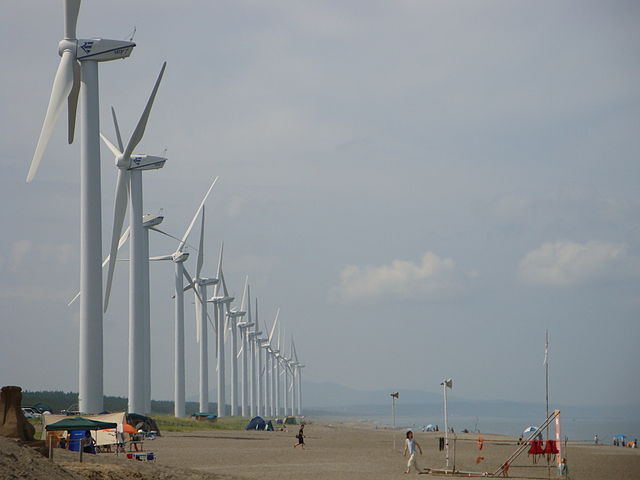
久保田城跡は、かつて近代公園として整備されたため、単なる公園としてしか見えないかもしれません。城跡の基礎部分をよく見れば、本当は土でできた城だとも気付いていただけると思います。この城と、これも佐竹氏が築いた水戸城とを比べてみるのもいいでしょう。秋田県は今、かつては苦しめられた風が強い気候を生かし、風力発電を推進しています。一方、現職(2021年3月現在)の秋田県知事は佐竹氏の子孫の方です。秋田は、伝統と革新の両方を重んじているようです。
You may find the ruins of Kubota Castle just like a park, because they were once developed as a modern park. You can also find the ruins was really a castle made of earth if you look at the foundation of the ruins carefully. It may be a good idea to compare this castle with Mito Castle that the Satake Clan built as well. Akita Prefecture is now developing lots of wind farms using the windy climate that they suffered from in the past. On the other hand, the governor of Akita Prefecture right now (Mar2021) is a descendant of the Satake Clan. I think Akita is trying to take good care of both tradition and innovation.
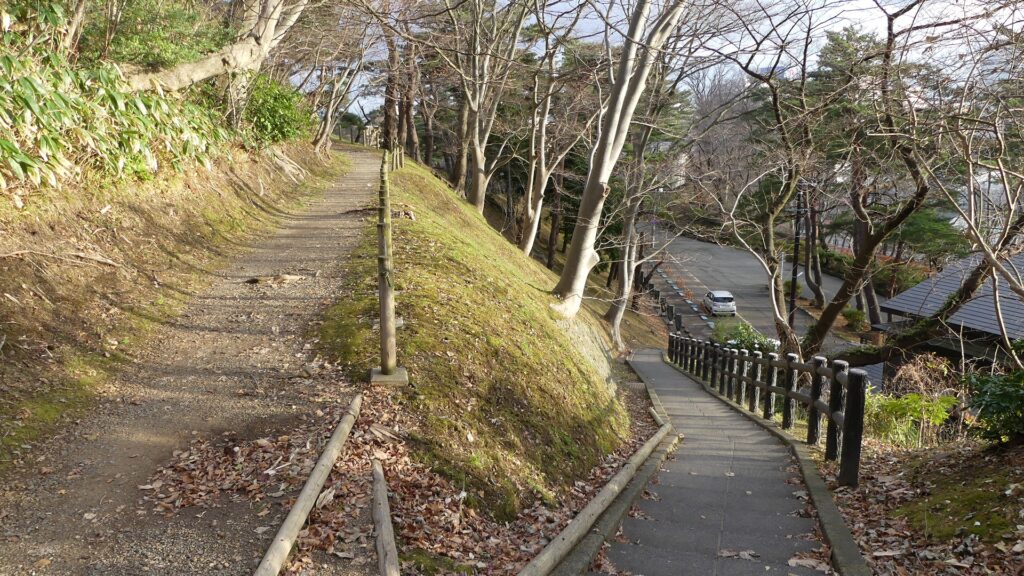
本丸に登る小径~The trail to the Main Enclosure
秋田県の風力発電所~A wind farm in Akita Prefecture(licensed by 8-Forest via Wikimedia Commons)

ここに行くには~How to get There

城跡までは、JR秋田駅西口から歩いて約10分です。
東京から秋田駅まで:秋田新幹線に乗ってください。
車で行く場合:秋田自動車道の秋田中央ICから約20分です。千秋公園に駐車場があります。
It takes about 10 minutes from the west entrance of JR Akita station to the castle ruins on foot.
From Tokyo to Akita st.: Take the Akita Shinkansen super express.
If you want to go there by car: It takes about 20 minutes from the Akita-Chuo IC on Akita Expressway. Senshu Park offers a parking lot

リンク、参考情報~Links and References

久保田城、秋田市公式サイト(Akita City Official Website)
・「よみがえる日本の城9」学研(Japanese Book)
・「日本の城改訂版第60号」デアゴスティーニジャパン(Japanese Book)
12.若松城~Wakamatsu Castle

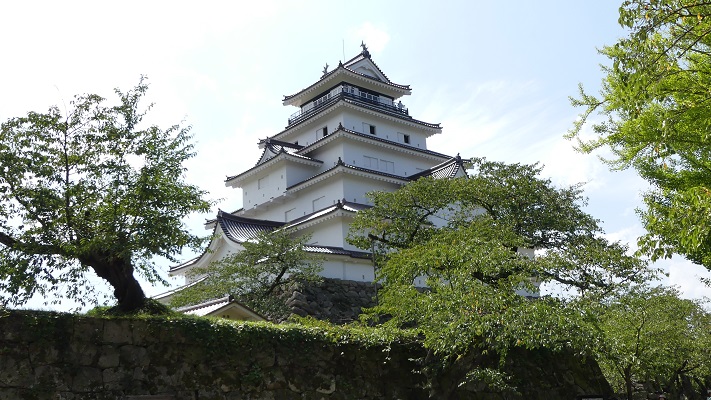
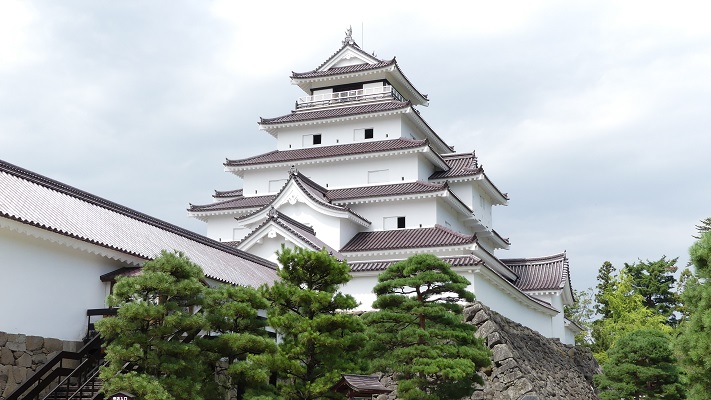
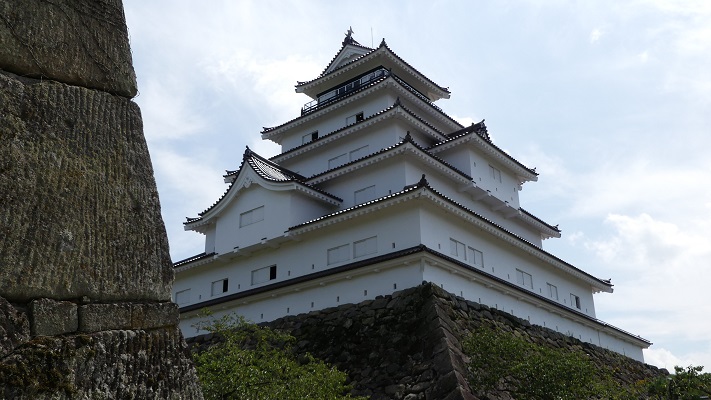
この城の天守は東北地方唯一の5層天守です。
Its Main Tower has been the only five-layer one in Tohoku Region.

若松城の外観復元天守~The apparently restored Tenshu keep of Wakamatsu Castle

立地と歴史~Location and History

葦名氏が築城~Ashina clan first built it

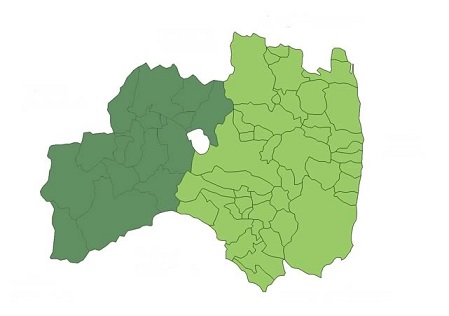
現在の福島県の会津地域は、鉄道や自動車が普及する以前は交通の要地でした。戦国時代にはこの地域を巡って葦名氏と伊達氏がしのぎを削りました。葦名氏が最初に、恐らくは後の若松城と同じところに黒川城を築きました。城は会津盆地の低台地の西端にあり、その南北を二つの川に挟まれていました。
The Aizu area in now Fukushima Prefecture was an important point for transportation before the rise in trains and automobiles. In the “Sengoku” or Warring States Period, the Ashina clan and the Date clan battled each other over the area. Ashina first built Kurokawa Castle probably at the same place as later Wakamatsu Castle. The castle was on the western edge of a mild plateau in Aizu Basin sandwiched by two rivers in the north and south directions.

福島県の地図、深緑部分が会津地域~The map of Fukushima Prefecture, the part of dark green is Aizu area(licensed under Public Domain via Wikimedia Commons)

城の位置~The location of the castle

蒲生氏郷が天守を建設~Ujisato Gamo constructed Tenshu

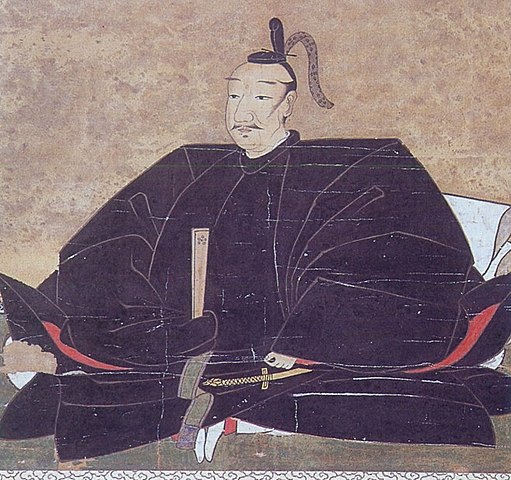
1590年、天下人の豊臣秀吉は「奥州仕置」を宣言し、東北地方で彼の裁量による領地の配分を行い、黒川城にやってきました。秀吉はそのとき領主であった伊達からこの城を取り上げ、配下の蒲生氏郷に与えました。氏郷は城の大改修を始め、東北地方では初めて石垣を使った台上に天守を築き、城の名前を「若松」と改めました。更に、この天守は7層の建物であったと言われ、きっとこの地方の人たちを驚かせたことでしょう。
In 1590, the ruler Hideyoshi Toyotomi declared “Oshu-Shioki” which refers to the assessment of his territorial ownership in Tohoku Region, and came to Kurokawa Castle. He took the castle away from Date, the lord of it then, and gave it his men, Ujisato Gamo. Gamo started the renovation of it, built the first “Tenshu” or Main Tower on its base using stone walls for the region, and renamed the castle “Wakamatsu”. It is said that the Tenshu was even a seven-layer building that must have surprised people in the region.

蒲生氏郷肖像画、会津若松市立会津図書館蔵~The portrait of Ujisato Gamo, owned by Aidu Wakamatsu Library(licensed under Public Domain via Wikimeidia Commons)

加藤氏が新天守と出丸で強化~Kato clan improved it with new Tenshu and Demaru

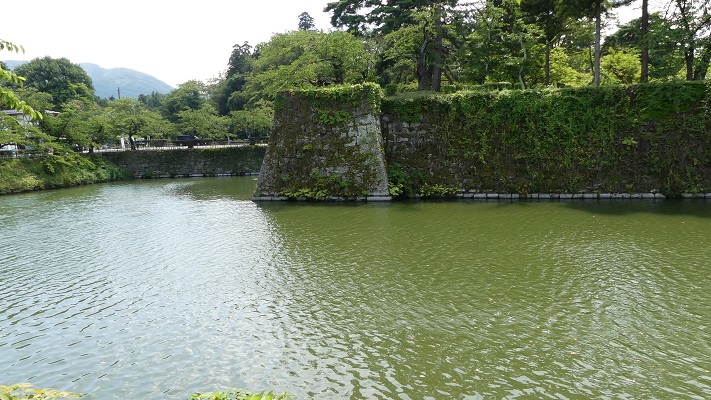
城の後継の領主、加藤氏もまた城を強化しました。加藤は地震で傾いていた天守を5層の新しい天守に置き替え、天守がある「本丸」は高石垣と堀に囲まれていました。加藤はまた「出丸」と呼ばれる強力な防御拠点を、本丸を守るためその北方と西方に築きます。この城には「二の丸」や「三の丸」といった曲輪が東方にあり、自然の障壁として湯川がありました。その上に、総構えと呼ばれる外堀、土塁と16つの門から成る外郭があり、その外周は約6kmでした。
The following lord of the castle, the Kato clan also improved it. Kato replaced the Tenshu, which had leaned due to an earthquake, with a new five-layer one at “Honmaru” enclosure that were surrounded by high stone walls and moats. They also built the defense strongpoints called “Damaru” in the north and west to protect Honmaru. The castle had other enclosures such as “Ninomaru” and “Sannonaru” in the east, and a natural hazard as Yukawa River. Moreover, the castle had an outline called “Sou-Gamae” with outer moats, earthen walls and 16 gates whose perimeter wad about 6 km.

若松正保城絵図、福島県立博物館蔵、江戸時代~The illustration of Wakamatsu Castle in Shoho Era, owned by Fukushima Prefectural Museum, in the Edo Period(福島県資料より引用)

若松城が標的に~Wakamatsu Castle was targeted

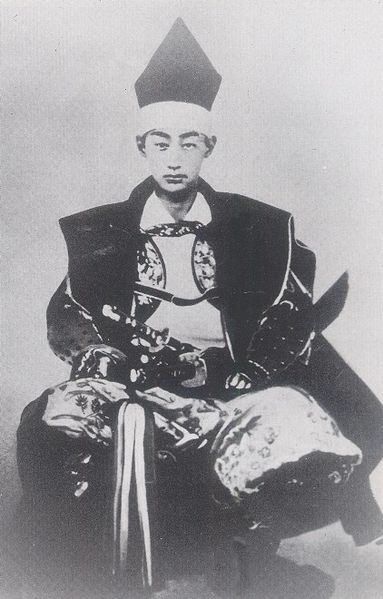
その後、松平氏が長年城と町を統治していました。彼らは精強さと徳川幕府への忠誠で知られていました。そのため幕末の京都において反体制者と戦うことになります。最後の領主、松平容保は幕府から京都守護職に任命され、孝明天皇からも信頼されました。ところが状況が変わり、長州藩、薩摩藩といった反体制側が今後は明治天皇のもと新政府となってしまったのです。新政府は幕府が降伏した後は、容保がいる会津藩を罰しようとしました。その標的が若松城でした。
After that, Matsudaira clan governed the castle and town for many years. They were known for strength and their loyalty to the Tokugawa Shogunate. That made them fight with dissidents in Kyoto at the end of the Edo Period. The last lord, Katamori Matsudaira was assigned for the Military Governor of Kyoto by the Shogunate, and supported by Emperor Komei. However, the situation was changed, the dissidents such as the Choshu and Satsuma Domains became the New Government under Emperor Meiji instead. The government tried to punish the Aizu Domain under Katamori after the surrender of the Shogunate. Its target was Wakamatsu Castle.

松平容保写真、会津若松市蔵~The photo of Katamori Matsudaira, owned by Aizu-Wakamatsu City(licensed under Public Domain via Wikimeidia Commons)

出丸が敵を撃退し籠城戦に~Demaru repelled enemy, and held castle long

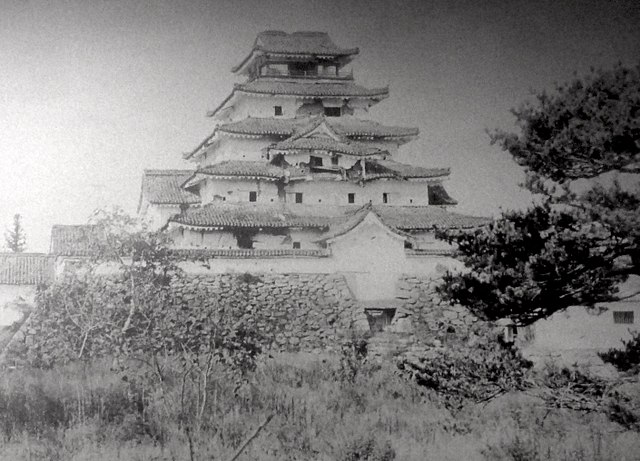
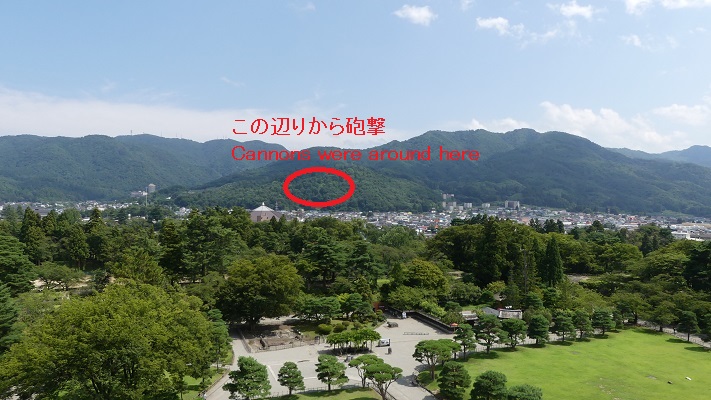
1868年8月23日、近代装備の政府軍が城を攻撃しましたが、撃退されました。北出丸が防御したのです。200年以上前に出来た防衛システムが、近代戦争においてさえその頑丈さを証明したのです。軍は方針を変え、外郭を取り囲み、遠くから城に砲撃を加えました。城はかなりの損害を被りましたが、武士たちは闘志を失いませんでした。包囲戦は1ヶ月続きます。やがて援軍の見込みもなくなり、政府軍は総攻撃により外郭を突破しました。容保は9月22日に降伏しました。少年兵による白虎隊を含む会津藩士の死体は、新政府により埋葬を許されなかったといいます。
The Government Army with modern equipment attacked the castle on August 23, 1868, but was warded off. The north Demaru blocked it. The defense system established over 200 years ago proved its toughness even in a modern war. The army changed the way, surrounded the outline, and shot cannons into the castle from far away. The castle was so damaged, but the warriors kept fighting spirit. The siege lasted for one month. There would be no hope to have a reinforcement, and the army launched a full-scale attack to break the outline. Katamori had to surrender on September 22. It is said that the war dead of Aizu Domain, including a boy military unit, called Byakkotai were not allowed to be buried by the Government.

戦いで損傷した天守~The Tenshu damaged by the battle(licensed under Public Domain via Wikimeidia Commons)
天守から見た砲撃陣地跡~A view of the former artillery position from Tenshu

特徴~Features

復元された5層天守~Restored 5-layer Tenshu

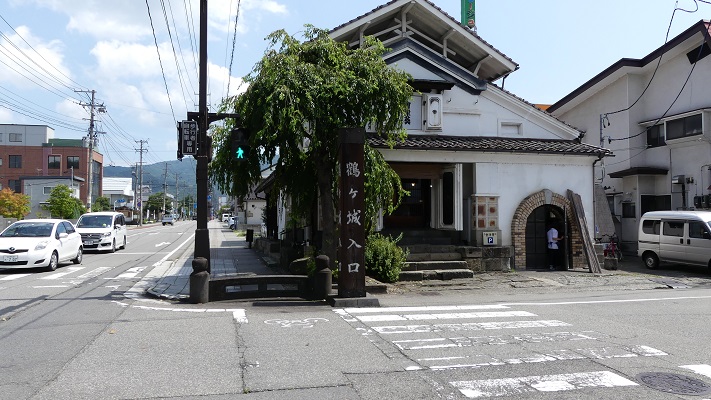
現在、地元の人たちは通常この城のことを、よく知られた愛称である「鶴ヶ城」と呼んでいます。城跡は「鶴ヶ城公園」という名の歴史公園として、城の中心の基礎部分が復元天守とともに残っています。天守は外観復元され、博物館としても使われています。加藤が築いた5層天守を、蒲生が築いた元からの石垣の上に再現しています。
Now, local people usually call the castle “Tsuruga-jo”, its famous nickname. The ruins of castle remain as a historical park called Tsuruga-jo Park with the foundation of the central castle and the restored Tenshu . Tenshu is apparently restored and also used as a museum. It emulates Kato’s five-layer Tenshu on Gamo’s original stone walls.

外観復元された5層天守~The apparently restored five-layer Tenshu

その石垣は天守に比して少し大きいようにも見えますが、蒲生の7層天守にはピッタリだっともいいます。
The stone walls look little large for the Tenshu because Gamo’s seven-layer one might be fitter.

建物と石垣の境目部分~The border part between the building and the srone walls

更には天守の瓦が最近赤いものに取り替えられました。これが元来の様式であり、寒い気候でも耐久性があるとのことです。
In addition, the roof tiles of Tenshu were recently replaced with red colored ones which were original style and durable under cold climate.

赤瓦~The red rooftiles(taken by 松波庄九郎 from photoAC)

他の建物と遺跡~Other buildings and ruins

城周辺の航空写真~The aerial photo of around the castle

他には、鉄門、干飯櫓といった建物が復元され、漆喰塀により天守とつながっています。
Other buildings like Kurogane Gate and Hoshii Turret were also restored connected with Tenshu by plaster walls.

天守から見た鉄門と干飯櫓~Kurogane Gate and Hoshii Turret from Tenshu
鉄門~Kurogane Gate

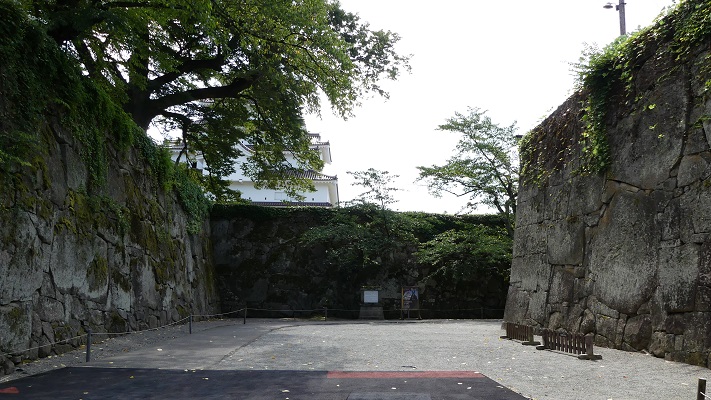
それから本丸の東側に沿っている加藤が最初に築いた高石垣は必見です。
You should check out the remaining high stone walls along the east side of Honmaru that Kato first built.

本丸東側の高石垣~The high stone walls along the east side of Honmaru
高石垣は本丸東口を防御します~The high stone walls guard the east entrance of Honmaru

また、本丸の北側と西側には「出丸」の構造が残っていますので、是非ご覧ください。
You can also see the structure of the defense system “Dameru” in the north and west of Honmaru.

北出丸の入り口~The entrance of the north Demaru
西出丸の入り口~The entrance of the west Demaru

外郭の遺跡としては僅かですが甲賀町口郭門跡などがあります。
There are few ruins of the outline such as the Kogamachi Gate Ruins.

その後~Later History

元武士が保存のため買い上げ~Fromer warrior bought it to preserve

明治維新後、1874年に一般に公開後、城の全ての建物は撤去されました。元会津藩士の遠藤敬止は城跡の土地を買い上げ、1890年に以前領主だった松平家に寄付し、その保全を図りました。昭和初期、市が城跡を公園地として保有し、最終的には1934年に国の史跡に指定されました。
After Meiji Restoration, all the buildings of the castle were demolished after the exhibition to the public in 1874. Keishi Endo, a former warrior of Aizu Domain bought the land of the castle ruins and donated them to the former lord Matsudaira to keep them in 1890. In the first Showa Era, the city owned the ruins for a park. In 1934, they were lastly designated as a National Historic Site.

現在の天守は1965年に復元~The present Tenshu restored in 1965

私の感想~My Impression

会津藩は敗れてしまいましたが、会津の多くの人たちは明治時代に、女性を含め教育界や官界などで活躍しました。高い教育を受けていたからです。その歴史を知れば、会津への旅はもっと有意義になると思います。
Despite Aizu Domain being beaten, many people in Aizu succeeded in the Meiji Era, for example, in the educational and the official worlds, including women. Because they were well educated. I think leaning more about the history of Aizu will make your travel there more interesting.

本丸の北入口、太鼓門~The north entrance of Honnmaru called “Taiko-mon” or the Drum Gate

ここに行くには~How to get There

東京などの都市から東北新幹線を使ってこられるのでしたら、郡山駅から高速バスに乗るのが便利です。城の近くに直接行きつけるからです。郡山駅西口でバスに乗って、鶴ヶ城合同庁舎前バス停で降りてください。北出丸から入っていけます。
If you use the Tohoku Shinkansen super express to get there from cities like Tokyo, it can be useful to take the express bus from Koriyama station. Because it takes you directly to near the castle. Take the bus at the west exit of Koriyama station, and take off at the Tsurugajo-Godochosha-Mae bus stop. You can enter at the north Damaru.

城の北入口~The north entrance of the castle
北出丸の外観~The appearance of the north Demaru

会津若松駅からは、6番バス乗り場からハイカラさんバスに乗り、鶴ヶ城入口、鶴ヶ城北口、または鶴ヶ城三の丸口で降りてください。
車の場合は、磐越自動車道会津若松ICから約15分です。公園には西出丸、東口、南口に駐車場があります。
From Aizu-Wakamatsu station, you can take the Haikara-san bus at the No.6 bus stop, and take off at the Tsurugajo-Iriguchi, Tsurugajo-Kitaguchi or Tsurugajo-Sannomaru-Guchi bus stop.
If you want to go there by car: It takes about 15 minutes from the Aizu-Wakamatsu IC on Banetsu Expressway. The park offers parking lots at the west Demaru, the east entrance and the south entrance.

リンク、参考情報~Links and References

会津若松観光ビューローAIZU WAKAMATSU CITY
・「よみがえる日本の城17」学研(Japanese Book)
・「歴史群像119号、戦国の城/会津若松城」学研(Japanese Magazine)

10.山形城~Yamagata Castle

日本で5本の指に入るほど大きな城でした。
It was one of the five largest castles in Japan.

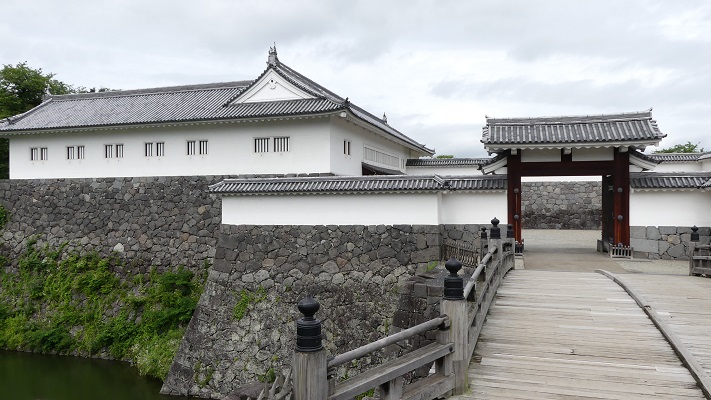
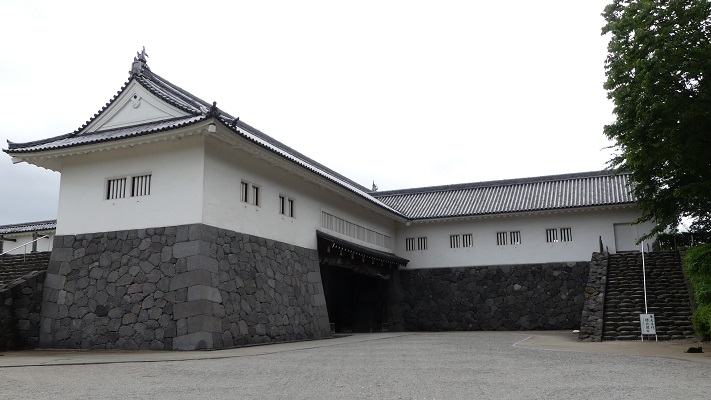
復元された二の丸東大手門~The restored East Main Entrance Gate at Ninomaru

立地と歴史~Location and History

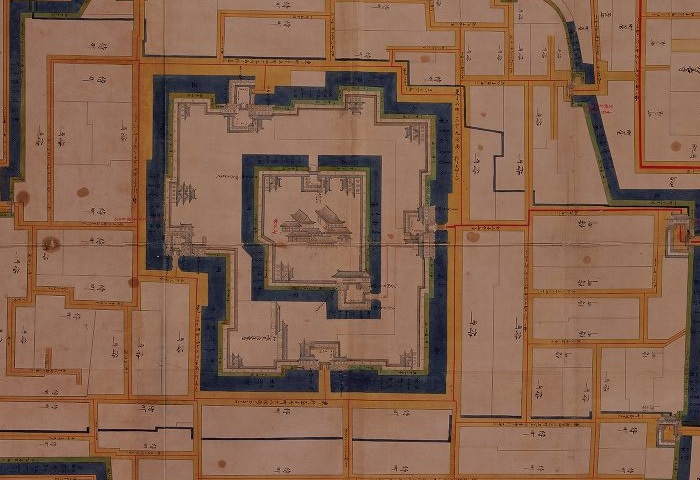
山形城は山形県南部の山形盆地にありました。現在、この地域は県都である山形市として発展してきています。南北朝時代に、斯波氏が羽州(現在の山形県と秋田県に相当)探題として送られてきて、最初にこの城を築きました。初期の頃この城は、足利氏館のように一重の堀に囲まれた四角い土地の上に館があったと思われます。そして、戦国時代のころには、三重の堀に囲まれるまでに拡張されました。
Yamagata Castle was located in the Yamagata Basin in the eastern part of Yamagata Pref. Now, this area has been expanding up to Yamagata City as the prefectural capital. In the Period of Southern and Northern Courts, the Shiba clan was sent to this area as the local commissioner in Ushu (combining now Yamagata and Akita pref.), and first built the castle. The early castle seemed to be a hall on a square land surrounded by a single moat like the Ashikaga clan hall. Then, the castle was improved to be surrounded by triple moats in the Warring States Period.

出羽国最上山形城絵図部分、江戸時代~Part of the illustration of Mogami Yamagata Castle in Dewa Province, the Edo Period(出典:国立公文書館)

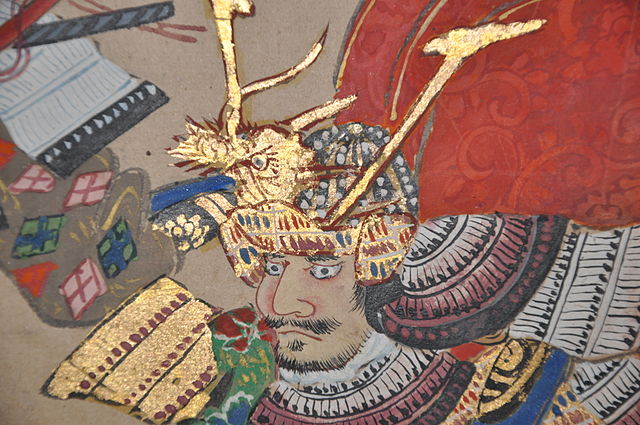
斯波氏の子孫である最上義光が、この城を日本で5指に入る大きな城として完成させました。彼は、南では伊達氏と、北では天童氏と、西では大宝寺氏と戦いました。義光は山形城を本拠地とし、そして戦いに備えるため約50もの支城を築きました。このうち最も有名なものは長谷堂城で、ここで1600年に最上氏と上杉氏が戦いました。
Shiba’s descendent, Yoshiaki Mogami, completed the castle making it one of the five largest castles in Japan. He fought with Date in the south, Tendo in the nouth, and Daihoji in the west. He set Yamagata Castle as his home, and built about 50 branch castles to prepare for battle. The most famous one was Hasedo Castle where Mogami and Uesugi battled in 1600.

長谷堂合戦図屏風に描かれた最上義光~Yoshiaki Mogami from Battle of Hasedo Standing Screen(licensed under Public Domain via Wikimedia Commons)

結果として、義光は徳川幕府から57万石を与えられました。彼はその時点では日本で3番目の大大名となったのです。不幸なことに、後に最上氏はお家騒動により、幕府から改易されてしまいました。その後、いくつかの大名が城を維持するよう努めました。しかし、この城は大名たちにとって大きすぎました。最上氏以降の大名は皆石高がずっと少なかったからです。江戸時代の後半には城の一部分は既に荒廃していたと言われています。
As a result, Yoshiaki was given a fief of 570 thousand koku of rice by Tokugawa Shogunate. He became the third largest lord in Japan at that point. Unfortunately, Mogami clan was fired by the Shogunate later due to their internal troubles. After that, several lords tried to keep the castle. But the castle was too large for the lords because their earnings were much less than Mogami’s. It is said that part of the castle already fell into ruin in the late Edo Period.

二ノ丸南大手門跡~The ruins of South Main Entrance Gate at Ninomaru

特徴~Features

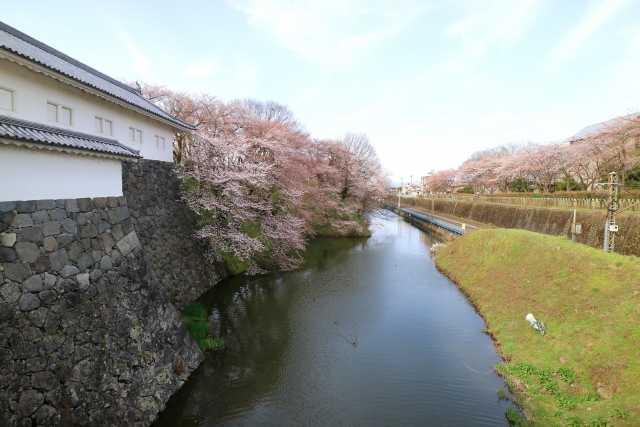
現在、二重目の堀の内側は、霞城公園として使われています。堀の外側はかつての三の丸に該当しますが、山形市の市街地になっています。堀の内側は中心に向かって二の丸、本丸という構成です。四角い形をしていて、その一辺は500mほどです。
Now, the inside of the second rounding moat is used as a park called Ka-jo Park. The outside of the moat, once called Sannnomaru, has become the Yamagata city area. The inside consists of Ninomaru and Honmaru towards the center. It is square shaped and one side is about 500 meters long.

霞城公園の航空写真~The aerial photo of Ka-jo Park

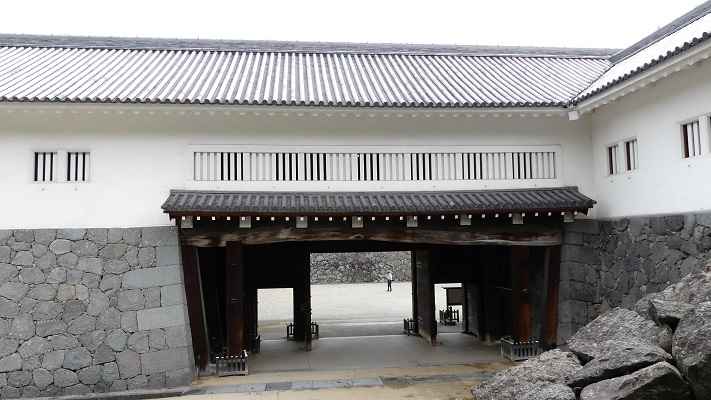
霞城公園は、何年にもわたって史跡公園として整備されてきました。その整備の一環で二の丸の東大手門が1991年に復元されました。この門は相当に大きくて、将軍が住んでいた江戸城の門にも匹敵するといいます。門の内側では、馬に乗った最上義光の銅像も見ることができます。
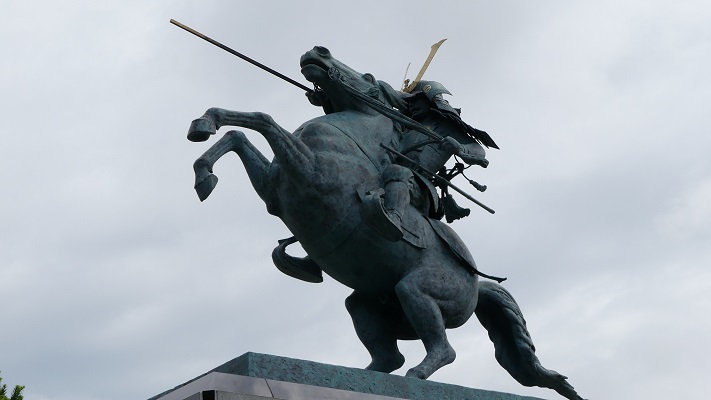
Ka-jo Park developed as a historical park over many years. With the development, the East Main Entrance Gate at Ninomaru called “Higashi-Otemon” was first restored in 1991. The gate is so large that its size might be as much as those of Edo Castle where the Shogun lived. You can see the statue of Yoshiaki Mogami riding a horse inside the gate.

東大手門の外側~The outside of East Main Entrance Gate
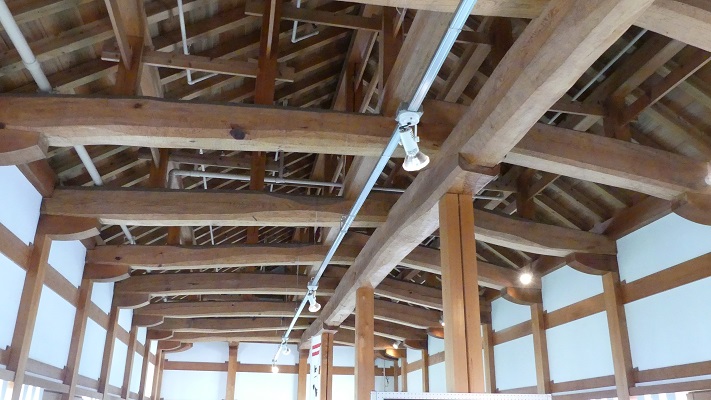
建物の内部~The inside of the building
東大手門を公園側から見た姿~The view of East Main Entrance Gate from the park side
最上義光の銅像~The statue of Yoshiaki Mogami

本丸は、現在発掘と整備の最中です。山形市は、本丸を復元するために古文書、
古写真、古図面の類を提供してもらうよう市民に呼び掛けています。しかし確かな証拠となるようなものは集まっていないようです。今のところ、本丸の正門である一文字門が、発掘の成果により部分的に復元されています。
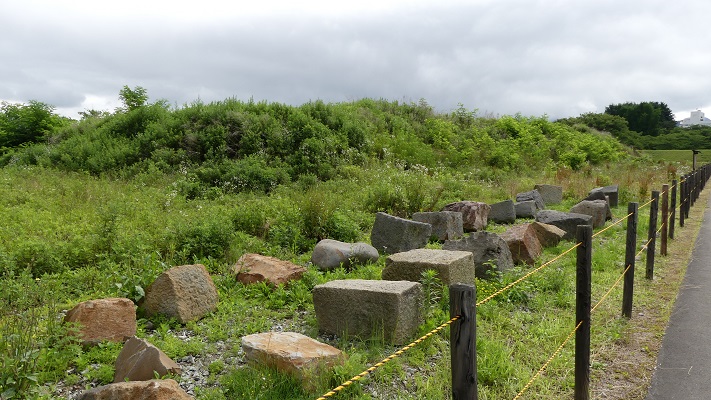
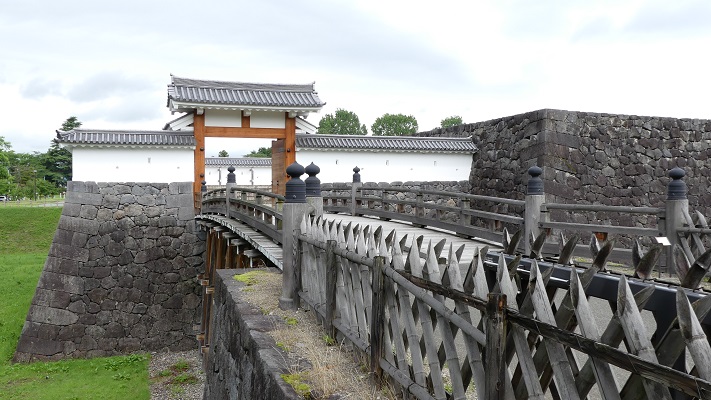
You can also see Honmaru being excavated and developed now. Yamagata City has been asking people to send in old documents, pictures, and drawings to restore Honmaru. But it seems to be difficult to get certain evidence for doing it. So far, the main entrance of Honmaru, called Ichimonji-Gate, was partly restored recently with the excavation.

発掘中の本丸~Honmaru being excavated now
部分的に復元された一文字門~The partly restored Ichimonji-Gate

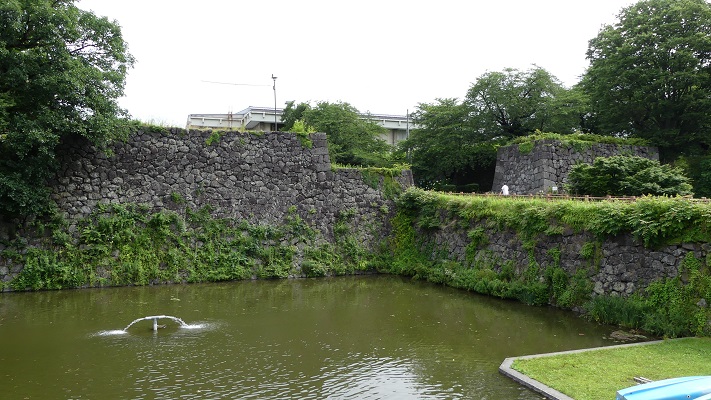
周辺の内堀もまた掘り返されています。本丸には天守はありませんでしたが、御殿が存在していました。市は御殿に関する何らかの展示を検討しています。また、2033年までに発掘を完了させ、本丸北虎口の復元を計画中です。
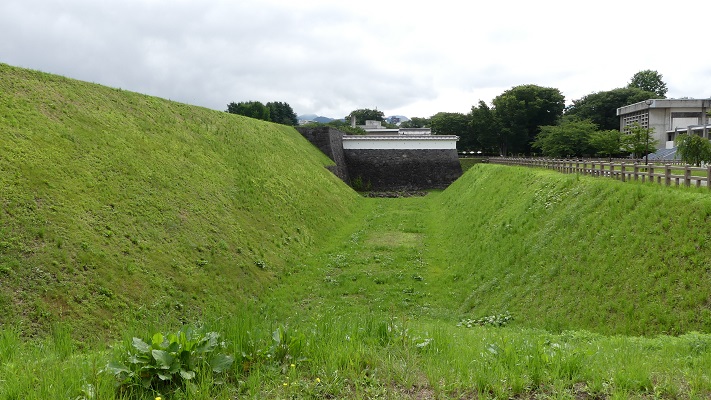
The inner moat around was also dug up again. Honmaru didn’t have the Tenshu keep, but had the Main Hall. The City is thinking about making an exhibition about it. It also plans to complete the excavation and restore the northern entrance of Honmaru by 2033.

本丸の空堀~The dry moat of Monmaru

その後〜Later Life

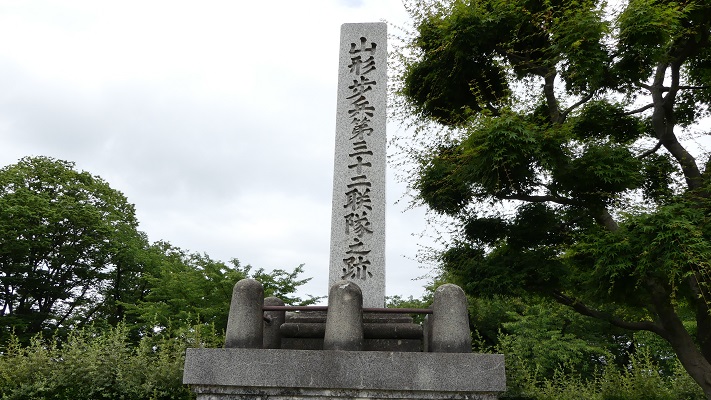
明治維新後、山形城は廃城となりました。本丸と二の丸の区域は、山形市に売られていきました。山形市は、その土地を日本陸軍の第32歩兵連隊に基地用地として提供しました。軍隊は内部を平らにするために内堀を埋め、本末の土塁を取り崩しました。一方で桜の木を植えて、それが新たな名所になったりしました。
After the Meiji Restoration, Yamagata Castle was abandoned. The area of Honmaru and Ninomaru was sold to Yamagata City. The city offered the area to the 32nd infantry regiment of the Japanese Amy for their base ground. They filled the inner moat and removed the Honmaru walls to make the inside plain, while they planted cherry blossoms which have become an attraction for people.

歩兵第32連隊の記念碑~The monument of the 32rd infantry regiment
霞城公園の桜(The cherry blossoms at Ka-jo Park)

第二次世界大戦後、この土地は霞城公園に転用されましたが、最初は運動公園としてでした。山形市は、公園についての整備方針を先程述べたように変更しています。野球場や体育館といった運動施設は、他の場所に移されているところです。三の丸区域は早い時期に町や畑になっていて、現在は山形市の市街地になりました。
After World War II, the area was turned into Ka-jo Park as a sports park first. Recently, Yamagata City has changed its policy about the park as mentioned above. Sport facilities like the baseball stadium and the gymnasium are being transferred to other places. The Sannomaru area turned early into towns and fields, now becoming the Yamagata city area.

1970年代の霞城公園の航空写真~The aerial photo of the area around Ka-jo Park in the 1970s

私の感想~My Impression

霞城公園は今なおとても大きなサイズです。山形市が観光を振興したい気持ちはよくわかります。でも歴史的建造物というのは、過去の大名たちがそうだったように維持にはとてもお金がかかります。一方で、運動、釣り、気晴らしなど他の目的をもった人たちもたくさん来ます。公園を整備するのにうまくバランスを取ってほしいと思います。
Ka-jo Park is still very large. I can understand what Yamagata City wants to do for tourism. But, historical facilities require a lot of funds for maintenance like lords used to do in the past. On the other hand, many people who have other purposes like exercise, fishing, and relaxing come every day. I hope that the city will take well-balanced control to develop the park.

東大手門からもう一枚~Another shot of East Main Entrance Gate

ここに行くには~How to get There

JR山形駅東口から二の丸東大手門まで歩いて約15分かかります。または、JR山形駅西口から二の丸南大手門跡まで歩いて約10分かかります。
東京から山形駅まで:山形新幹線に乗ってください。
車で行く場合:山形自動車道山形蔵王ICから15~20分かかります。霞城公園北門内側に駐車場があります。
It takes about 15 minutes From the east entrance of JR Yamagata station to the East Main Entrance Gate at Ninomaru on foot.
Or it takes about 10 minutes From the west entrance of JR Yamagata station to the ruins of South Main Entrance Gate at Ninomaru on foot.
From Tokyo to Yamagata st.: Take the Yamagata Shinkansen super express.
If you want to go there by car: It takes 15 to 20 minutes from the Yamagata-Zao IC on Yamagata Expressway. Ka-jo park offers a parking lot inside the north gate.

リンク、参考情報~Links and References

山形市:国指定史跡山形城跡「霞城公園」~Yamagata City:Nationally designated historic site Yamagata Castle “Kajo park”
・「東北の名城を歩く 南東北編: 宮城・福島・山形」吉川弘文館(Japanese Book)
・「最上義光の城郭と合戦」保角里志著、戒光祥出版(Japanese Book)
error: Content is protected !!